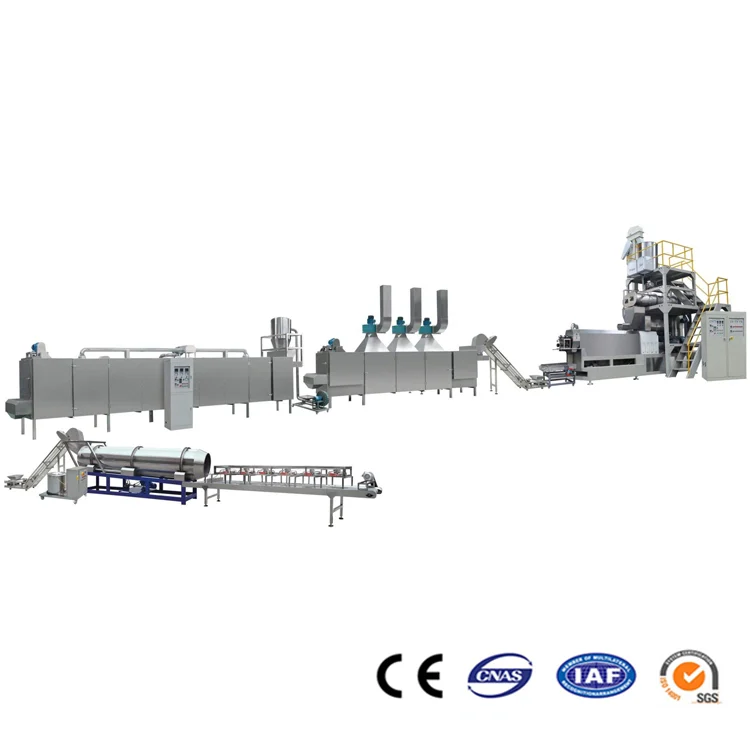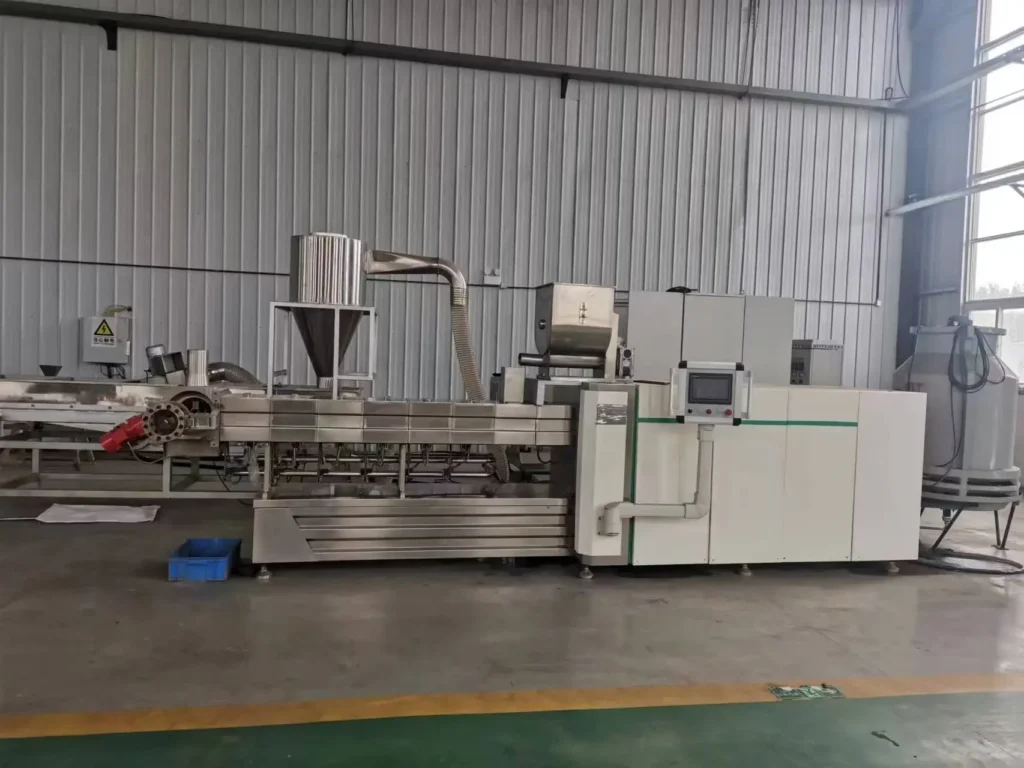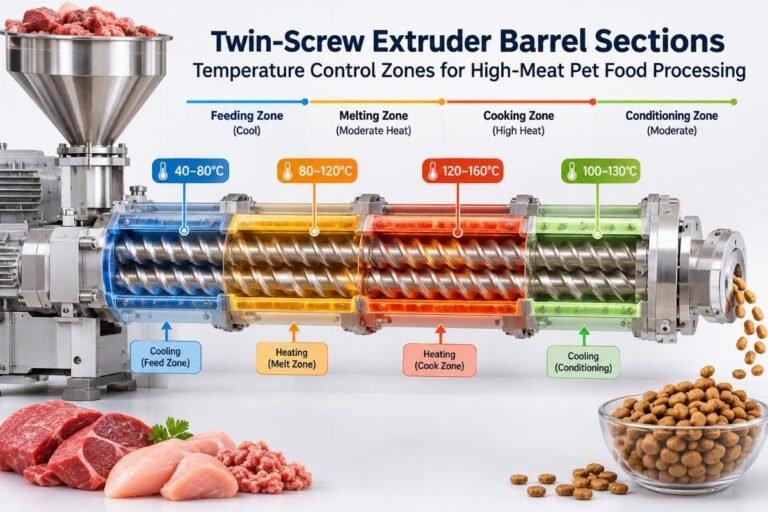

The extruder is rarely the most expensive component in a complete production facility.
The true 1 ton per hour dog food plant cost extends far beyond the bare extrusion machine; a complete turnkey setup requires budgeting for integrated drying, cooling, and flavoring systems to avoid severe budget overruns and operational bottlenecks.
Walking the exhibition floors in Hanover and Chicago over the years, I transitioned from workshop quality inspection to the frontlines of international trade. Early in my career, I quoted a North American client for a 1t/h line using only the bare extruder price, completely omitting the drying, cooling, and coating systems. The client’s landing costs ballooned unexpectedly, and the deal collapsed. Since that failure, I present this exact counter-example before calculating any turnkey quotation. Equipment selection and cost accounting leave no room for missing links; data must lead the way. When evaluating the 1 ton per hour dog food plant cost, buyers must look past the initial machine quote and understand the entire ecosystem required for continuous, food-grade production.
What is the Real Price Breakdown of a 1t/h Dog Food Line?
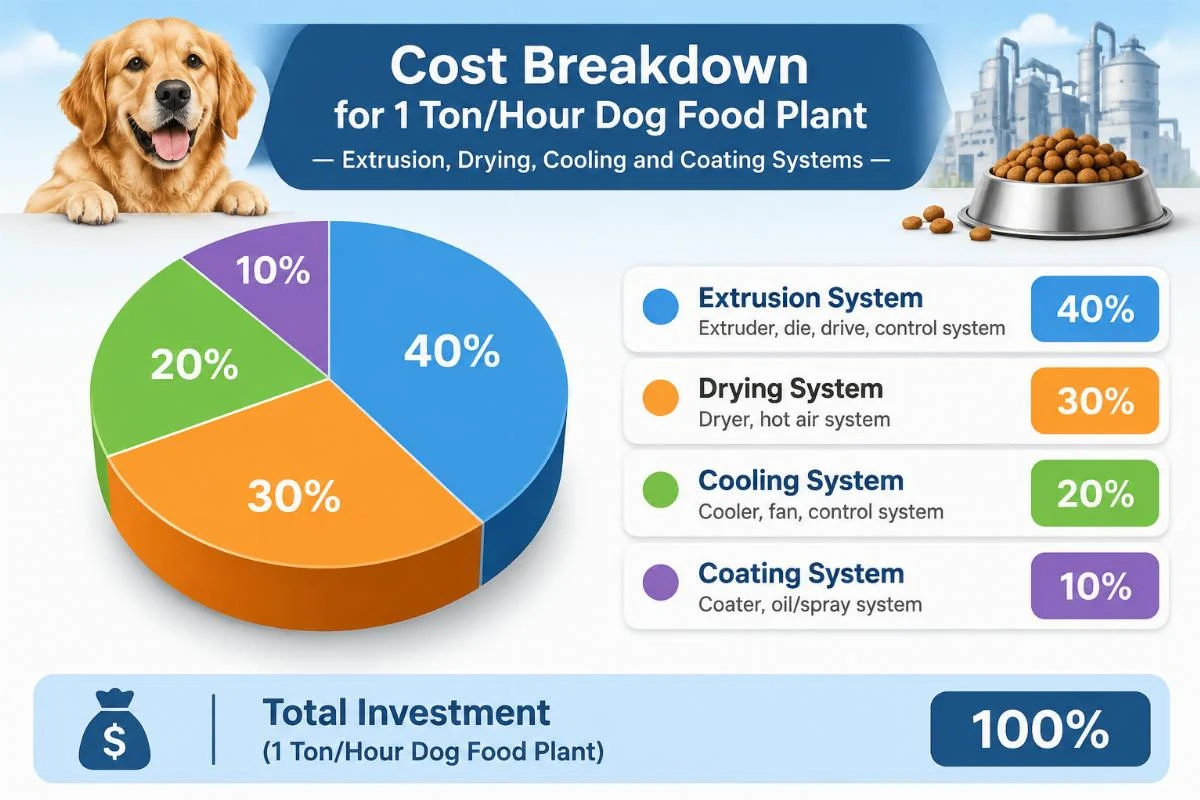
A genuine turnkey cost encompasses extrusion, multi-layer drying, cooling, and coating, not just the bare extrusion host.
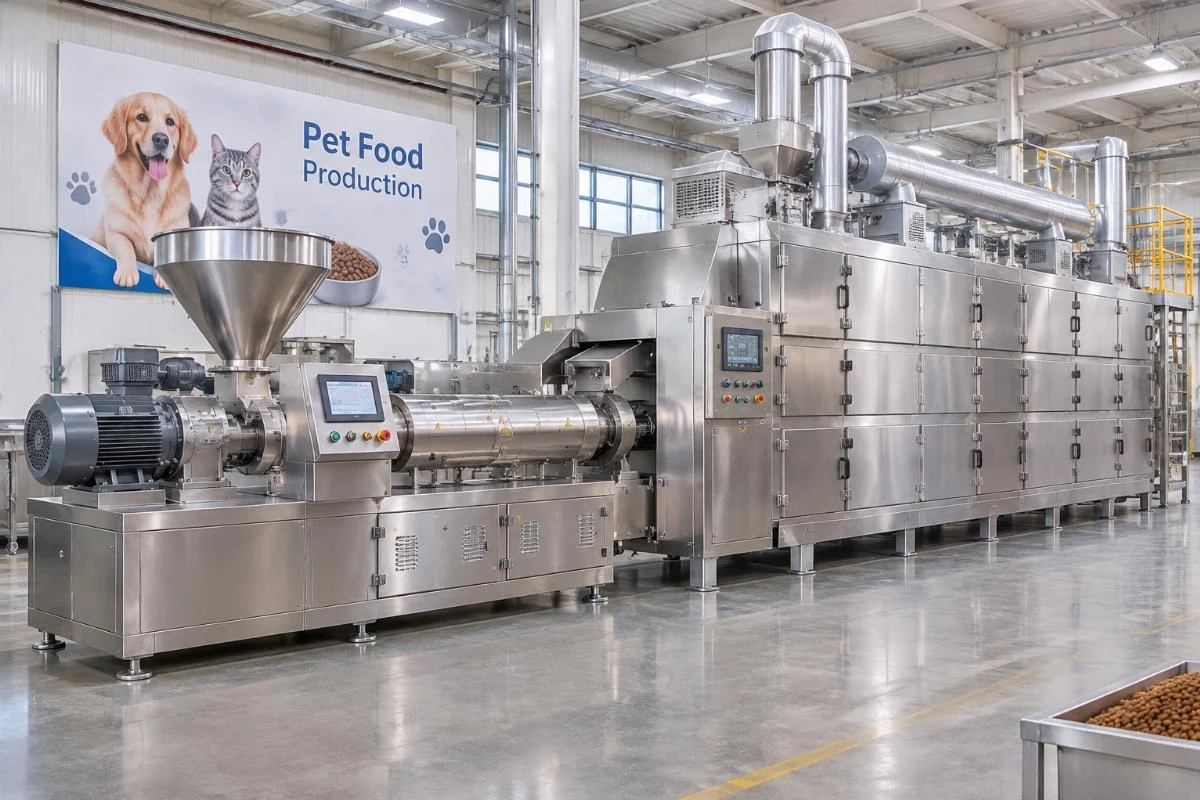
Most startup owners focus their initial capital expenditure entirely on the twin-screw extruder, assuming the auxiliary equipment is a minor afterthought. This is a fundamental miscalculation. In a continuous 1 ton per hour dog food plant cost structure, the multi-layer drying and coating systems often account for a substantially larger equipment proportion than the extruder itself. The extruder merely shapes the kibble; the downstream systems dictate the final moisture content, shelf stability, and palatability..
Consider the thermal dynamics involved. After extrusion, the kibble exits at high moisture and temperature levels. If the drying phase is undersized or poorly designed, the product will mold during storage. If the cooling section lacks proper airflow distribution, the coating application will fail, leading to uneven fat distribution and rancidity. The 1 ton per hour dog food plant cost must reflect food-grade stainless steel construction for all contact parts, ensuring compliance with sanitary standards..
When I consult with new entrants, I emphasize that the physical footprint and the electrical load of the drying ovens frequently exceed those of the extruder. The heating elements, circulation fans, and exhaust systems require significant power and structural support. Ignoring these factors during the initial budgeting phase leads to immediate project stalls.
Why Do Standalone Extruder Quotes Lead to Massive Budget Overruns?
Missing auxiliary systems force costly retrofits, create severe production bottlenecks, and inflate long-term operational expenses.
It is a common misconception that purchasing standalone machines from different vendors saves money. In reality, mismatched auxiliary equipment causes massive hidden operational losses. When a buyer purchases an extruder from one supplier and a dryer from another without integrated control logic, the moisture removal rate rarely matches the extrusion output rate. This mismatch forces the entire line to run at a fraction of its designed capacity.
A North American startup once underestimated the auxiliary systems, specifically the drying and coating phases. They opted for the cheapest standalone dryers available. The result was a significant budget overrun percentage when they had to completely rip out the inadequate dryers and install a custom multi-layer pass-through oven to handle the continuous 1t/h throughput. The 1 ton per hour dog food plant cost they originally projected was shattered by the retrofit expenses and the months of lost production revenue..
Furthermore, energy recovery design in the drying phase is critical. An African startup faced crippling utility costs because their dryer lacked proper heat recovery loops. The exhaust air, still rich in thermal energy, was simply vented outside. By contrast, a properly engineered turnkey system recycles this heat, drastically reducing the per-ton energy consumption..
The 1 ton per hour dog food plant cost is not just about the purchase price; it is about the total cost of ownership. Standalone quotes hide the integration engineering, the custom ductwork, and the control panel programming required to make disparate machines talk to each other.

How to Compare Turnkey vs. Piecemeal Equipment Investments?
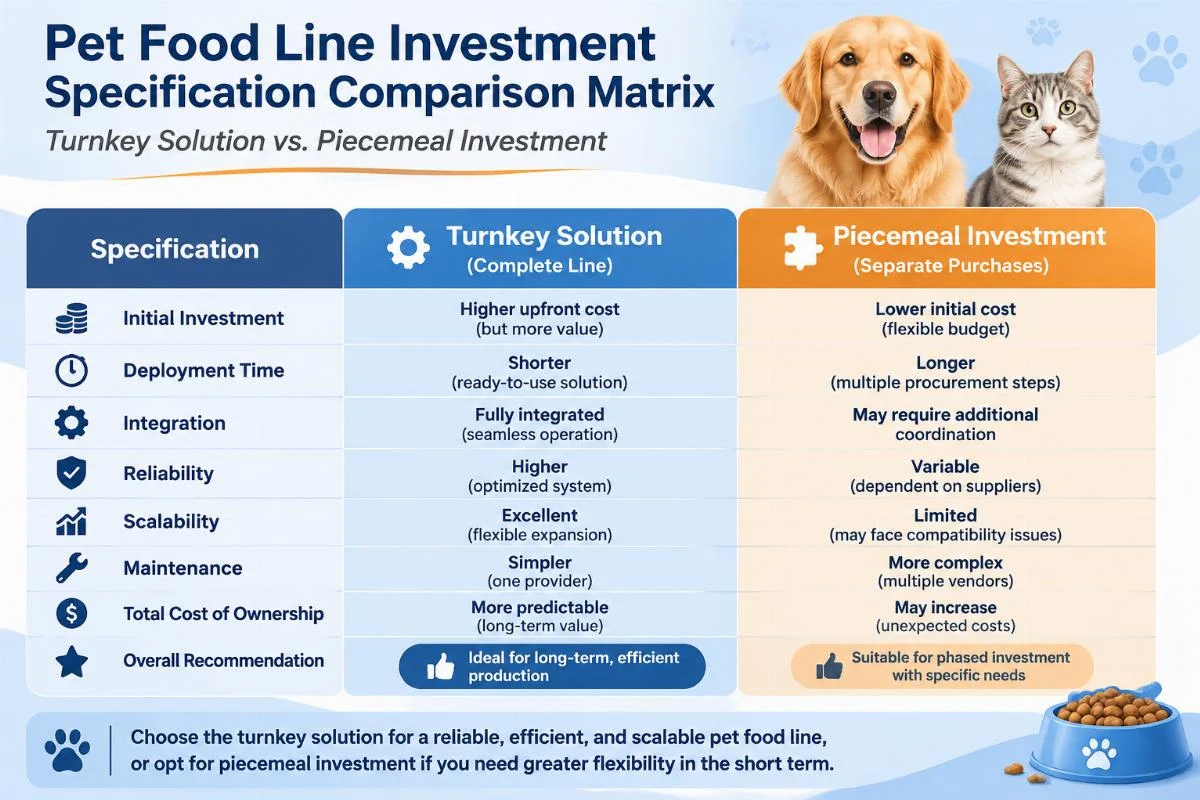
A comprehensive matrix reveals that turnkey integration minimizes hidden risks, accelerates installation, and ensures consistent product quality.
When securing funding, presenting a realistic CAPEX estimate is non-negotiable. Below is a specification comparison matrix evaluating the true investment dynamics.
| Evaluation Factor | Turnkey Integrated Line | Piecemeal Standalone Setup |
|---|---|---|
| Initial CAPEX Visibility | Full batch-level transparency | Self-reported, fragmented quotes |
| System Integration | Verifiable, pre-tested logic | Vulnerable, requires on-site debugging |
| Material Traceability | Certified 304/316 stainless across all zones | Uncontrolled, mixed vendor standards |
| Energy Efficiency | Noticeably reduced via heat recovery | Substantially extended payback period |
| Production Continuity | Robust, matched throughput rates | Fragile, bottleneck-prone |
.
The matrix highlights a critical reality: the 1 ton per hour dog food plant cost for a turnkey solution appears higher on paper because it includes everything. However, the piecemeal approach invites severe budget overruns during installation. A Southeast Asian contractor needed multi-protein formula flexibility, requiring specific screw configuration investments and precise drying profiles for different protein densities. By sourcing a complete line from a single manufacturer like Meiteng, the screw geometry and the dryer’s retention time were engineered in tandem. This eliminated the guesswork and ensured the 1 ton per hour dog food plant cost delivered a fully operational, formula-ready facility.
Meiteng’s 200-2000kg/h turnkey solutions are designed around this philosophy. The integrated drying and coating systems are not afterthoughts; they are engineered from day one to match the extruder’s output, eliminating the hidden cost traps that plague fragmented purchases. On-site installation and operator training ensure that the theoretical 1 ton per hour dog food plant cost translates directly into actual production yield.
What Hidden Costs Should Startups Prepare For?
Formula R&D, operator training, and food-grade certification compliance represent the invisible iceberg beneath the equipment price.
The hardware is only half the equation. The 1 ton per hour dog food plant cost must also absorb the soft costs of getting the facility operational and compliant. Formula development is a rigorous process. Transitioning from a kitchen recipe to a commercial 1t/h extrusion process requires adjusting moisture levels, starch gelatinization degrees, and protein texturization parameters..
Startups often allocate zero budget for professional formula R&D support. When the kibble fails to expand correctly or lacks the necessary density, the blame is wrongly placed on the extruder. In reality, the formulation lacks the necessary structural carbohydrates. Having access to in-house application labs and formula development support prevents costly raw material waste during the trial-and-error phase.
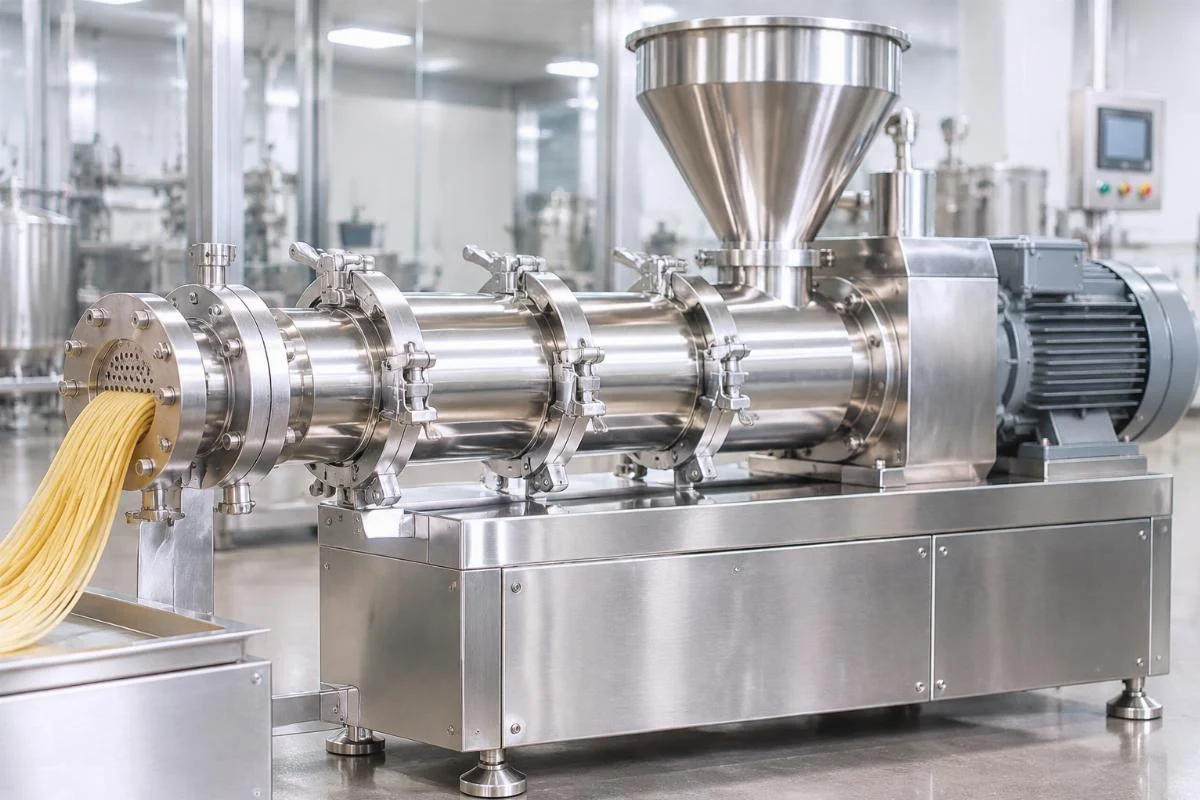
Operator training is another critical hidden cost. A twin-screw extruder is a highly dynamic system. If the operators do not understand the relationship between screw speed, feed rate, and specific mechanical energy input, the 1 ton per hour dog food plant cost will be wasted on off-spec product. Comprehensive training ensures the team can manage recipe changeovers efficiently, minimizing transition waste.
Finally, food-grade certification compliance cannot be ignored. Equipment must meet international safety standards, requiring proper documentation, material certificates, and sanitary design features like quick-disassembly clamps and sloped surfaces to prevent water pooling..
Conclusion
Accurate capital planning requires looking beyond the bare extruder to the entire thermal and coating ecosystem.
The 1 ton per hour dog food plant cost is a comprehensive reflection of extrusion, multi-layer drying, cooling, and integrated flavoring systems. Avoiding the trap of standalone quotes and embracing a turnkey methodology ensures that hidden operational losses, energy inefficiencies, and integration bottlenecks are eliminated before production begins. True project success relies on aligning mechanical engineering with formula science and rigorous operator training.