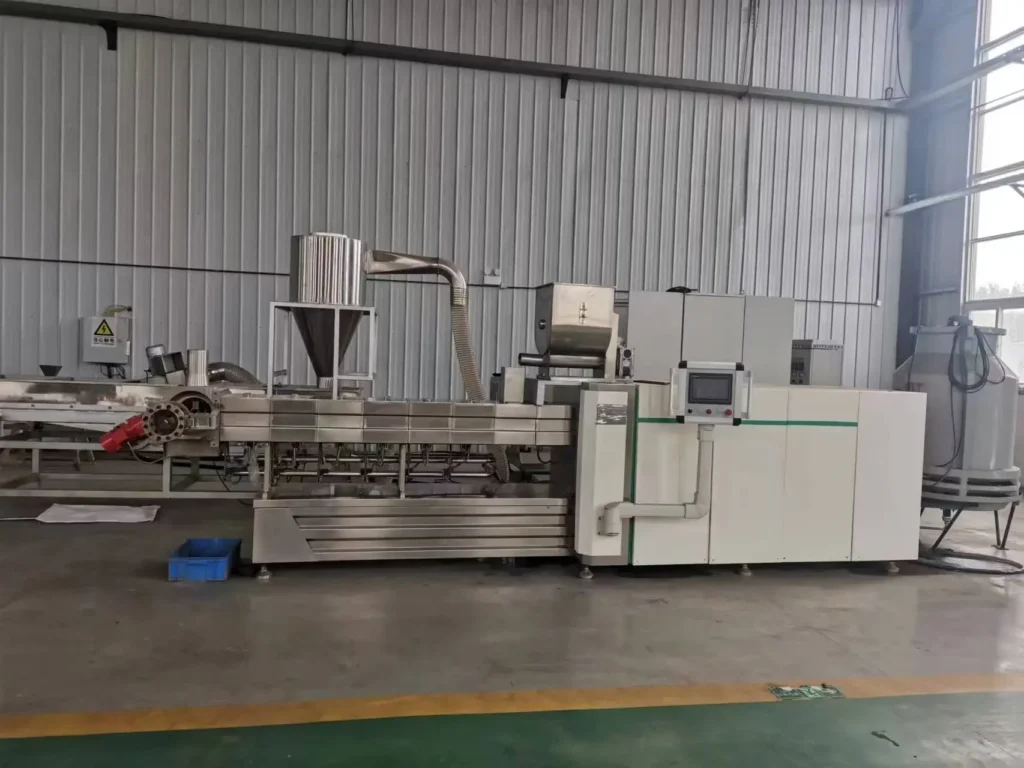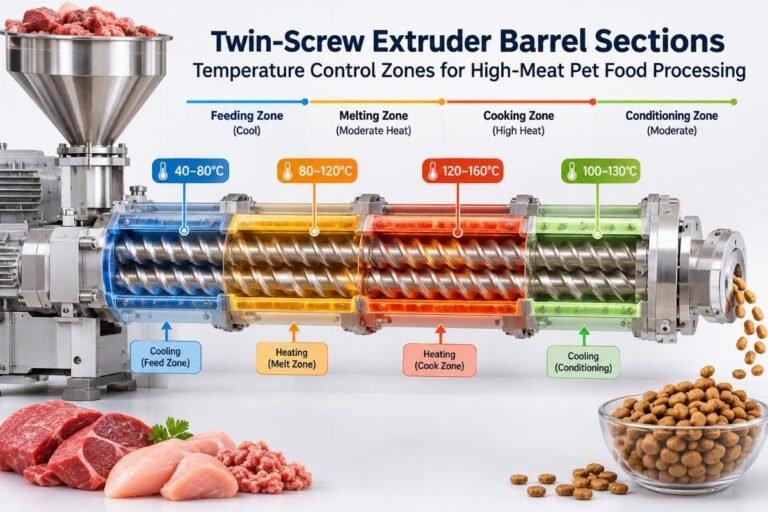

Most buyers assume full automation means zero human intervention, but the reality is that you need skilled PLC operators, not manual laborers.
A fully automated dog food line requires only a minimal number of workers per shift, as automated control in extrusion, drying, and coating drastically cuts manual intervention. When evaluating how many workers for dog food production line setups, the exact staffing needs depend heavily on line capacity and equipment quality, but a well-integrated automated pet food extruder line labor cost structure typically keeps headcount exceptionally low.
Years ago, when I was sourcing pet food ingredients, I made the mistake of purchasing a twin-screw extruder from a small, unverified manufacturer to cut upfront costs. The screw material was substandard, and when we tried processing high-meat formulas, the expansion rate was unacceptable. The forming rate barely reached a fraction of our target, and the entire line had to shut down constantly for manual mold cleaning. After taking that massive hit, I switched to the equipment side of the business. Now, when I guide clients through turnkey solutions, the first thing I show them is the food-grade stainless steel screws and automated temperature controls on our DS70 and DS95 models. Choosing a dog food line should never be about fixating on the initial price tag; screw wear resistance and whole-line automation are the actual lifelines for stable profitability. Understanding the real operational dynamics of automated dog food line workers is the first step toward optimizing your manufacturing ROI.
Transitioning from manual processing to a fully integrated system requires a clear understanding of how capacity, station bottlenecks, equipment metallurgy, and operator skill sets interact to define your daily staffing requirements.
How Does Line Capacity Dictate Staffing?
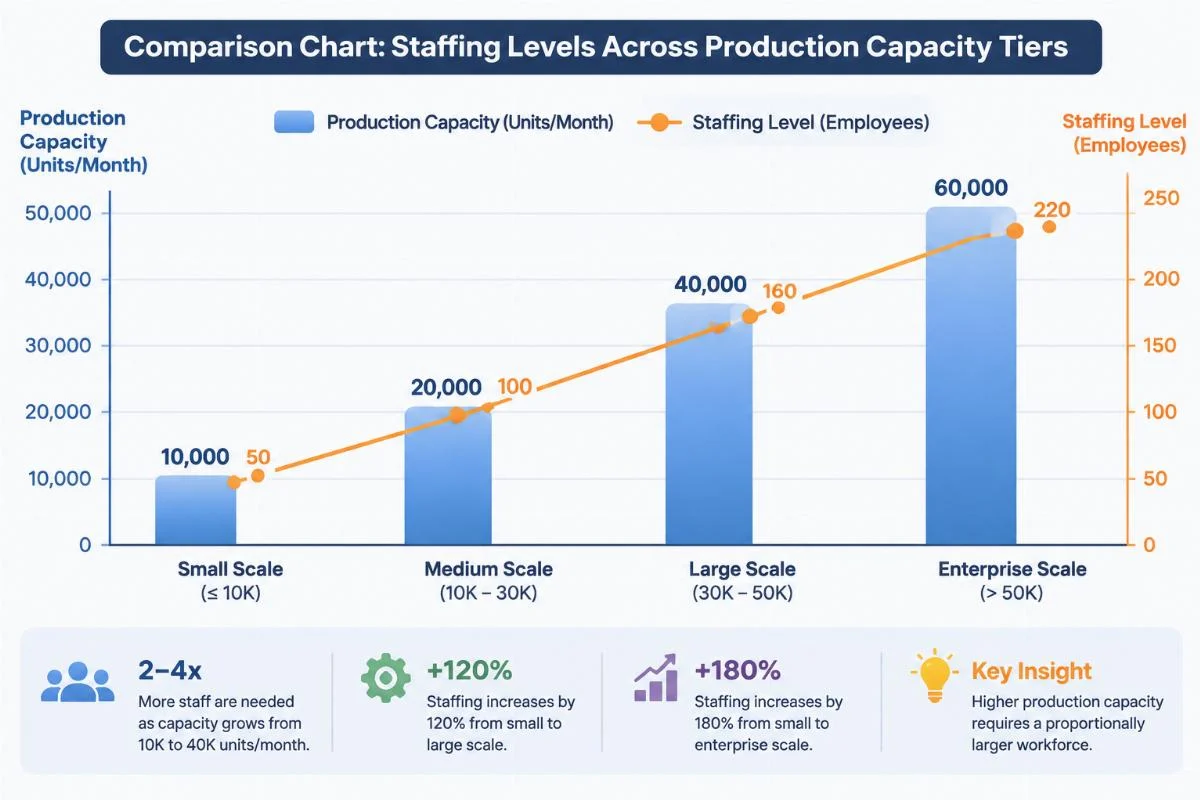
Automation scales inversely with capacity; higher output lines require significantly fewer workers per kilogram of produced kibble. When calculating the optimal headcount, manufacturers must look at the labor-to-capacity ratio rather than just the total number of machines. A centralized PLC system allows a single operator to monitor the entire extrusion and drying section, regardless of whether the line is running at a medium or maximum throughput.
| Capacity Tier | Extrusion Control | Drying Integration | Typical Shift Staffing |
|---|---|---|---|
| Entry-Level | Manual valve adjustments | Batch cooling | Noticeably higher manual handling |
| Mid-Range (DS70) | Automated temp/pressure | Continuous multi-layer | Standard automated monitoring |
| High-Volume (DS95) | Centralized PLC mapping | Integrated continuous flow | Substantially reduced per kg |
A pet food startup in Southeast Asia recently scaled up their medium-capacity line. By integrating an auto-coating system, their shift labor dropped noticeably, eliminating the need for manual flavor application crews. The core argument here is that investing in higher-tier automated dog food line workers’ efficiency pays off by shrinking the payroll burden per ton of output. According to industry benchmarks, the labor-to-capacity ratio improves drastically as throughput increases, provided the drying and coating stages are seamlessly linked.
Which Stations Require the Most Manual Labor?
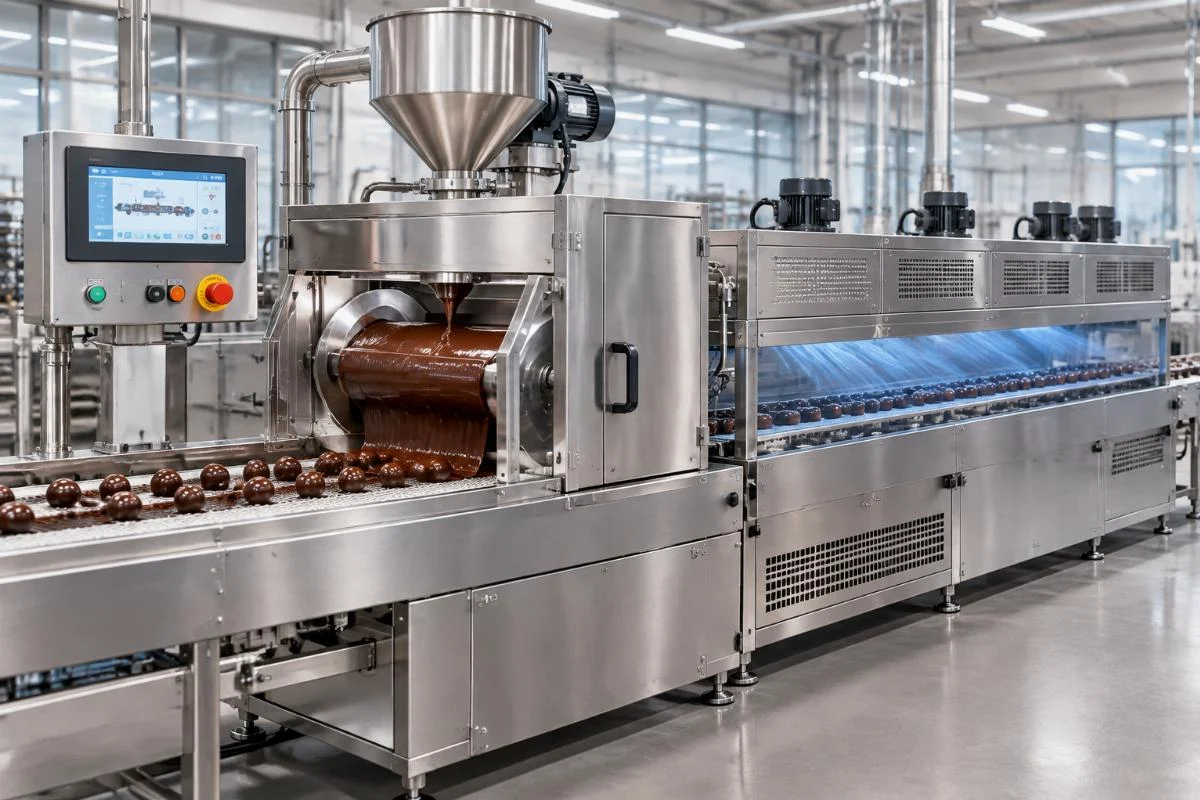
Flavor coating and packaging remain the most labor-heavy stations if they are not fully integrated into the automated workflow. Many buyers focus entirely on the extruder and forget that the downstream processes can easily negate the labor savings achieved in the mixing and膨化 (extrusion) phases. If the coating drum relies on manual spray timing, or if the packaging hoppers require constant manual intervention to prevent bridging, your automated pet food extruder line labor cost will remain artificially high.
To minimize manual touchpoints, the entire sequence from the twin screw extruder dog food automation core to the final cooling belt must share a single communication protocol. A European contract manufacturer once struggled with frequent line stoppages because their coating application was disconnected from the main extruder PLC. The resulting uneven flavor distribution required a dedicated crew to manually sort and rework off-spec batches. By upgrading to a synchronized coating system that adjusts spray rates based on real-time extruder throughput, they eliminated that secondary sorting crew entirely. The lesson is clear: any station operating independently of the central control node will demand extra hands.
How Does Equipment Quality Affect Labor Costs?
Poor screw wear resistance forces frequent downtime cleaning, effectively doubling the required shift labor. This is a counter-intuitive reality for many new entrants. Cheap extruders might save you money on the invoice, but they require extra workers just for frequent manual mold cleaning due to poor wear resistance. When processing high-meat or high-fat formulas, inferior metallurgy leads to rapid degradation of the screw flight edges and the die face.
Early in my career, the cheap twin-screw machine I mentioned earlier required the crew to scrape the die face every few hours. The material buildup caused inconsistent pellet sizes and frequent motor overloads. In contrast, modern food-grade stainless steel screws with specialized surface treatments resist abrasion and corrosion, maintaining their precision over extended service life. This means the die face stays clean, and the extrusion parameters remain stable without constant human scraping. A Middle East producer switching to high-wear-resistant screws reported that their mold-cleaning downtime dropped noticeably, allowing the same crew to manage multiple extruders instead of babysitting a single failing machine. Equipment quality directly dictates whether your automated dog food line workers are producing value or just fighting the machinery.

What Skills Should Your Workers Have?
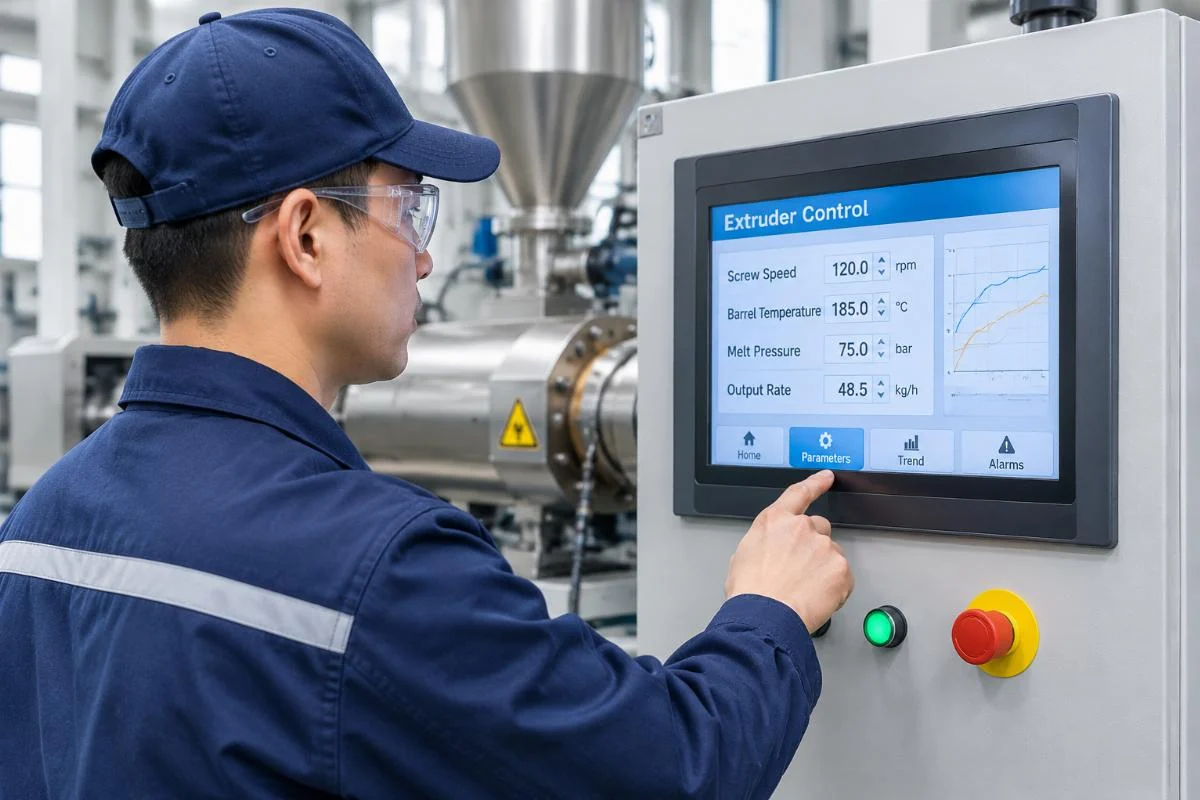
The role has shifted from manual material handlers to PLC-literate machine tenders. Operating an advanced automated pet food extruder line labor cost structure requires a different breed of employee. You no longer need heavy lifters to move ingredient bags or workers to manually scrape dies; you need technicians who can read HMI screens, interpret temperature curves, and troubleshoot sensor feedback.
When deploying a DS95 twin-screw system, the training focus must be on process logic rather than physical labor. The operator needs to understand how moisture content in the preconditioner affects the specific mechanical energy inside the barrel. If a worker only knows how to press start and stop, they will miss the subtle signs of a developing blockage or a degrading ingredient batch. Proper operator training ensures that the centralized control nodes are utilized to their full potential, preventing minor anomalies from escalating into major line stoppages. Investing in technical training for your automated dog food line workers is just as critical as investing in the hardware itself.
Conclusion
Optimizing your staffing model requires aligning equipment quality with downstream automation. By selecting wear-resistant extruders and integrating all coating and drying stages under a centralized PLC, manufacturers can drastically reduce manual intervention and lower the overall automated pet food extruder line labor cost. The true measure of a successful line is not just the speed of the twin screw extruder dog food automation, but the minimal, highly skilled team required to keep it running smoothly.