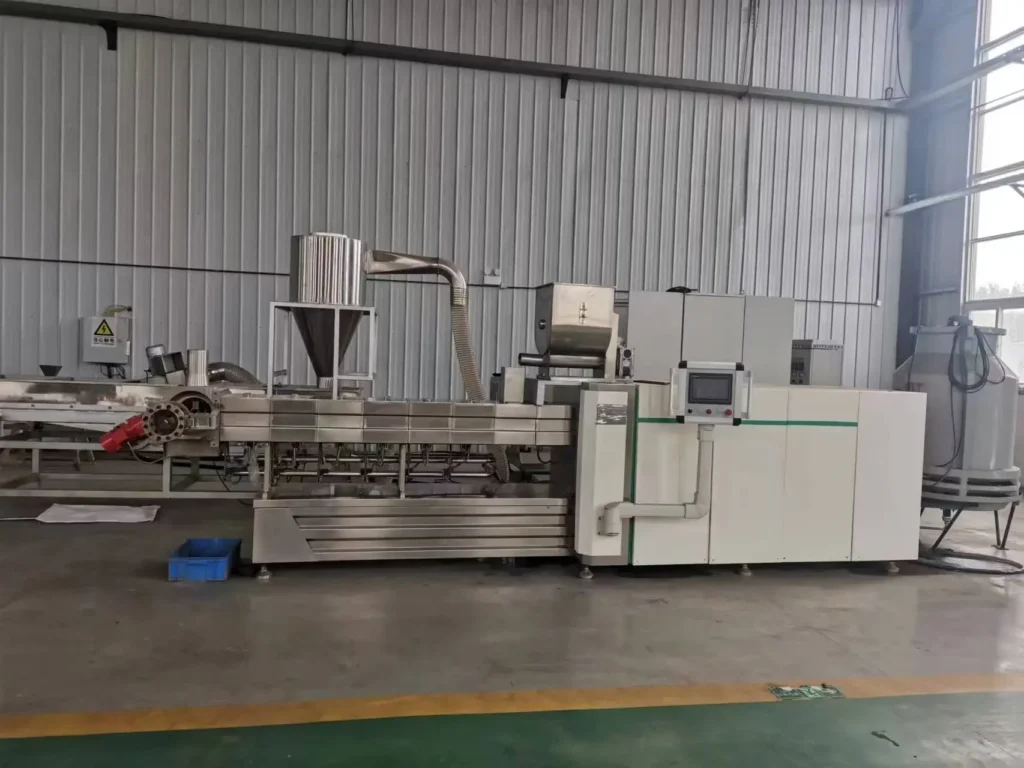

Skipping the purge cycle to save an hour will cost you a mid-six-figure loss in barrel replacement and line downtime.
Cleaning pet food extruder safely requires a strict sequence of thermal purging, mechanical disassembly, and precise reassembly to prevent catastrophic barrel scoring and screw jamming in heavy-duty twin-screw configurations.
Years ago, I was commissioning a heavy-duty twin-screw line at a pet food facility in Monterrey, Mexico. The production manager, desperate to hit a weekend quota, bypassed the standard purging protocol and forced the machine to restart with a new high-protein recipe. The residual moisture and dense material flash-boiled, welding the flight tips to the barrel wall. We spent the next two weeks living in the车间 (wait, no Chinese, strictly English: living in the facility), using micrometers to measure the deep gouges carved into the hardened steel barrel while the screw elements were completely seized. That disaster was entirely preventable. When you are Cleaning pet food extruder safely, the sequence of thermal management and mechanical extraction is non-negotiable, especially for DS70 and DS85 models where the torque limits are exceptionally high.
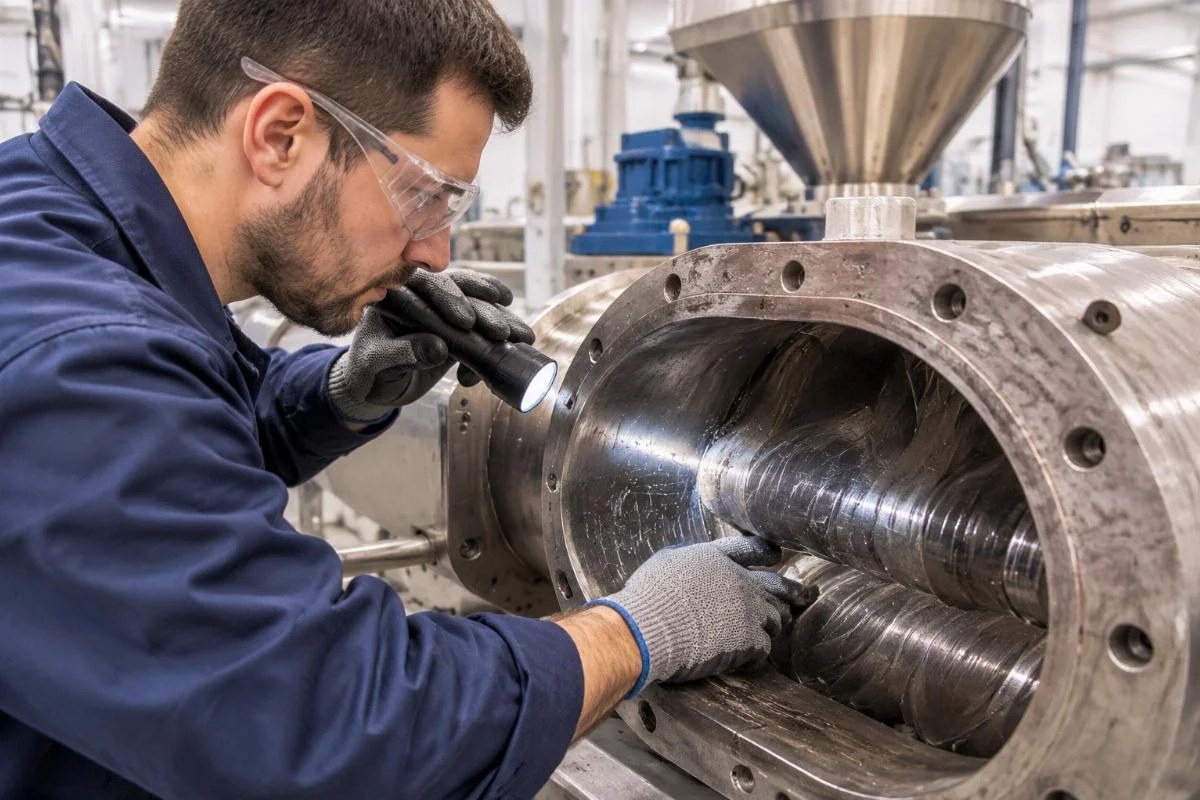
Let us break down the exact methodology required to execute this without destroying your equipment.
How to Execute a Safe Recipe Changeover Protocol
A proper changeover relies on thermal purging to soften residual compounds before any mechanical force is applied to the screw elements.
The fundamental principle behind a safe recipe changeover is managing the rheological state of the residual material inside the barrel. When transitioning between recipes, especially from high-starch to high-protein or high-fat formulations, the remaining material can carbonize or harden if cooled improperly. Understanding this material behavior is the first step in Cleaning pet food extruder safely.
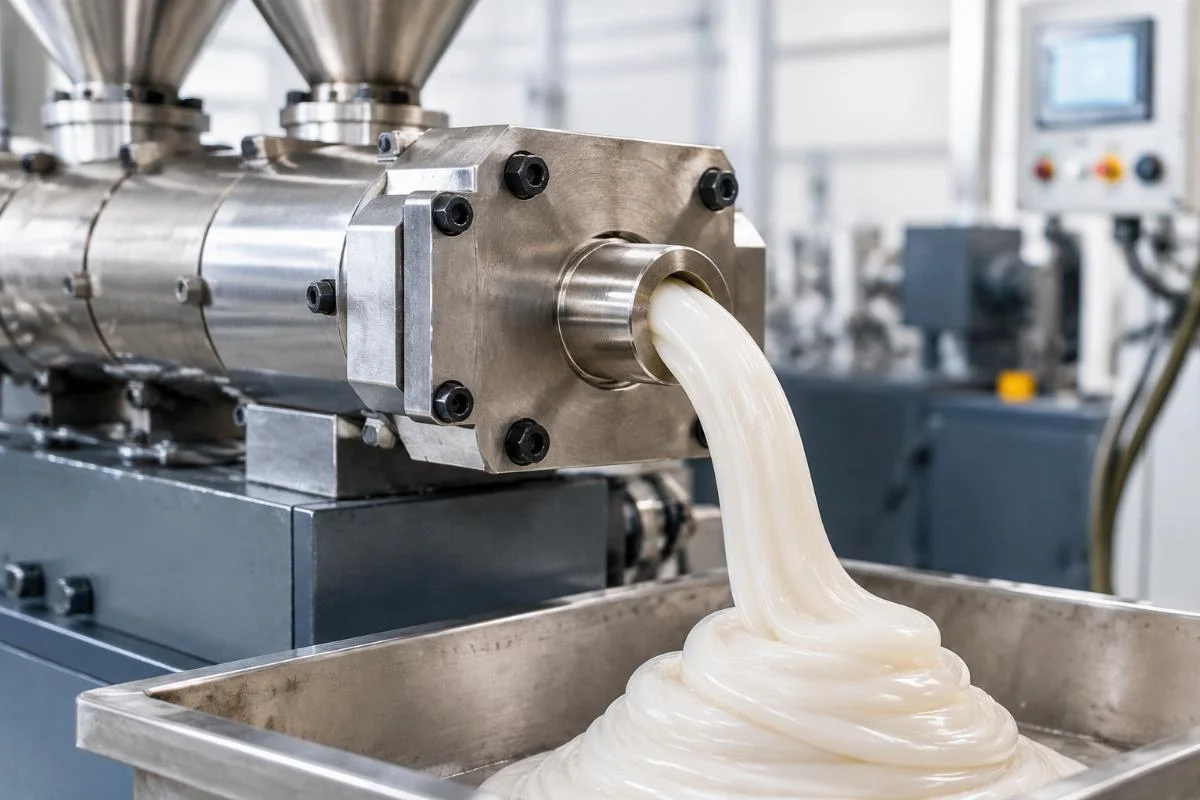
- Thermal Purging Phase: Introduce a dedicated purging compound or a high-moisture, low-viscosity carrier material (like raw corn meal) into the feed hopper. Maintain the barrel zones at their maximum operating temperatures to reduce the viscosity of the residual recipe.
- Continuous Extrusion: Run the extruder until the discharge is visually and texturally uniform, indicating the old recipe is fully evacuated.
- Controlled Cooling: Gradually reduce the barrel zone temperatures to a safe handling level, but never drop them below the softening point of the purging material to prevent internal solidification.
- Power Isolation: Engage the main disconnect switch and apply lockout/tagout procedures before approaching the barrel face.
During a contract manufacturing run for a South American startup, the operators skipped the thermal purge and tried to wash out a high-fat treat recipe with cold water. The thermal shock caused the residual fat to solidify into a concrete-like mass inside the barrel. The subsequent motor startup attempt triggered an immediate overload trip, burning out the main drive coupling. Cleaning pet food extruder safely demands patience during the purging stage.
Mechanical Disassembly and Component Extraction
Forcing seized screw elements out of the barrel using excessive mechanical leverage is the primary cause of irreversible barrel scoring.
Once the barrel is purged and cooled to a safe temperature, the mechanical disassembly phase begins. The DS85 extruder maintenance protocol requires specific attention to the alignment of the screw shafts and the barrel liner.
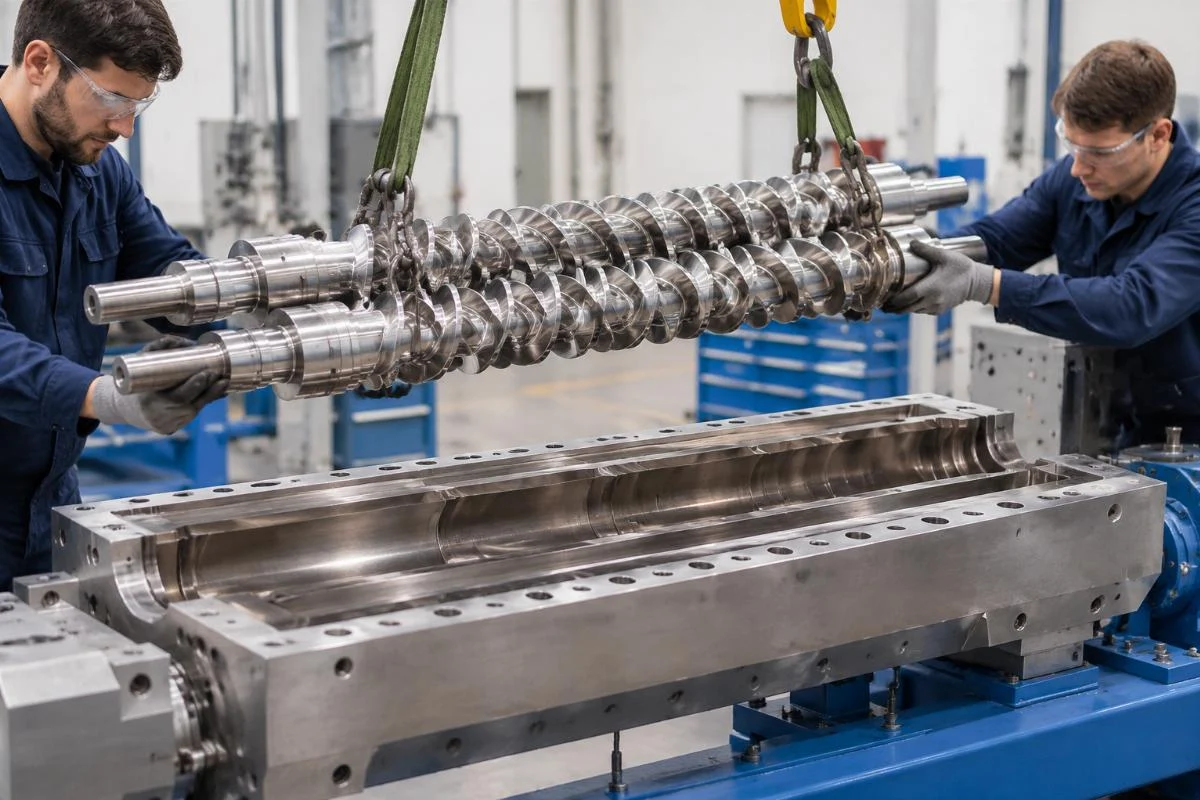
- Barrel Opening: Loosen the barrel clamping bolts in a star pattern to prevent warping of the barrel halves. Use hydraulic spreaders if the barrel sections are heavily gasketed.
- Screw Extraction: Attach the dedicated screw extraction carriage or pulling tool to the shaft ends. Apply a steady, low-torque pulling force. Never use impact hammers or excessive manual leverage.
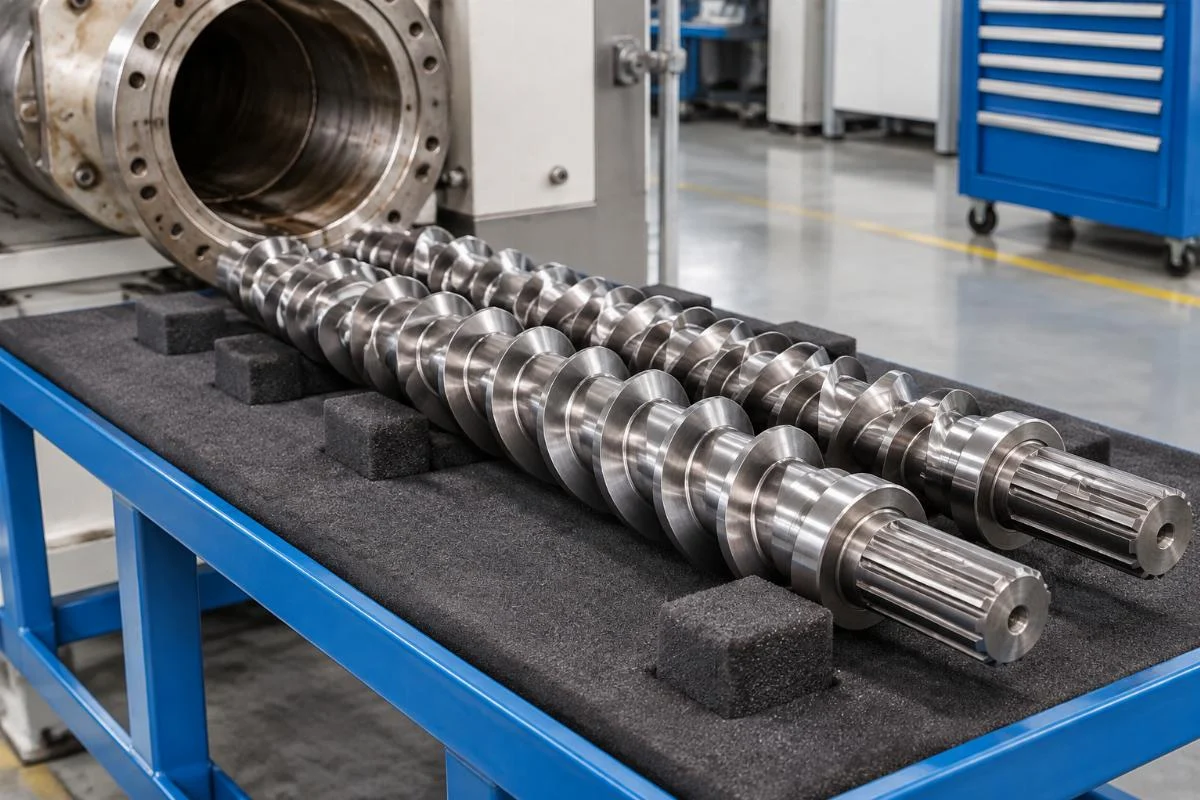
- Element Separation: Once the screw shafts are clear of the barrel, place them on a dedicated, clean wooden or padded metal rack. Begin separating the screw elements and spacers using brass drifts and soft-face mallets.
- Barrel Bore Inspection: Immediately inspect the internal bore of the barrel halves using a high-intensity inspection light to check for any micro-scratches or carbon buildup.
I recall a facility in the Middle East where a technician used a steel hammer to tap the screw shafts during extraction. The resulting metal-on-metal impact created a deep longitudinal groove in the barrel liner. That single scratch compromised the pressure seal, leading to massive material leakage and a complete barrel replacement. When Cleaning pet food extruder safely, the extraction tools must be strictly non-marring.
Surface Preparation and Material-Safe Cleaning Agents
Using abrasive metallic tools or highly alkaline industrial degreasers on food-grade stainless steel barrels permanently alters the surface finish and introduces contamination risks.
The cleaning of the extracted components must align with sanitary standards. The DS70 and DS85 models utilize food-grade stainless steel that requires specific chemical and mechanical care.
- Component Soaking: Submerge the screw elements and barrel halves in a warm, food-safe alkaline cleaning solution. Allow sufficient dwell time to soften any baked-on carbohydrates or proteins.
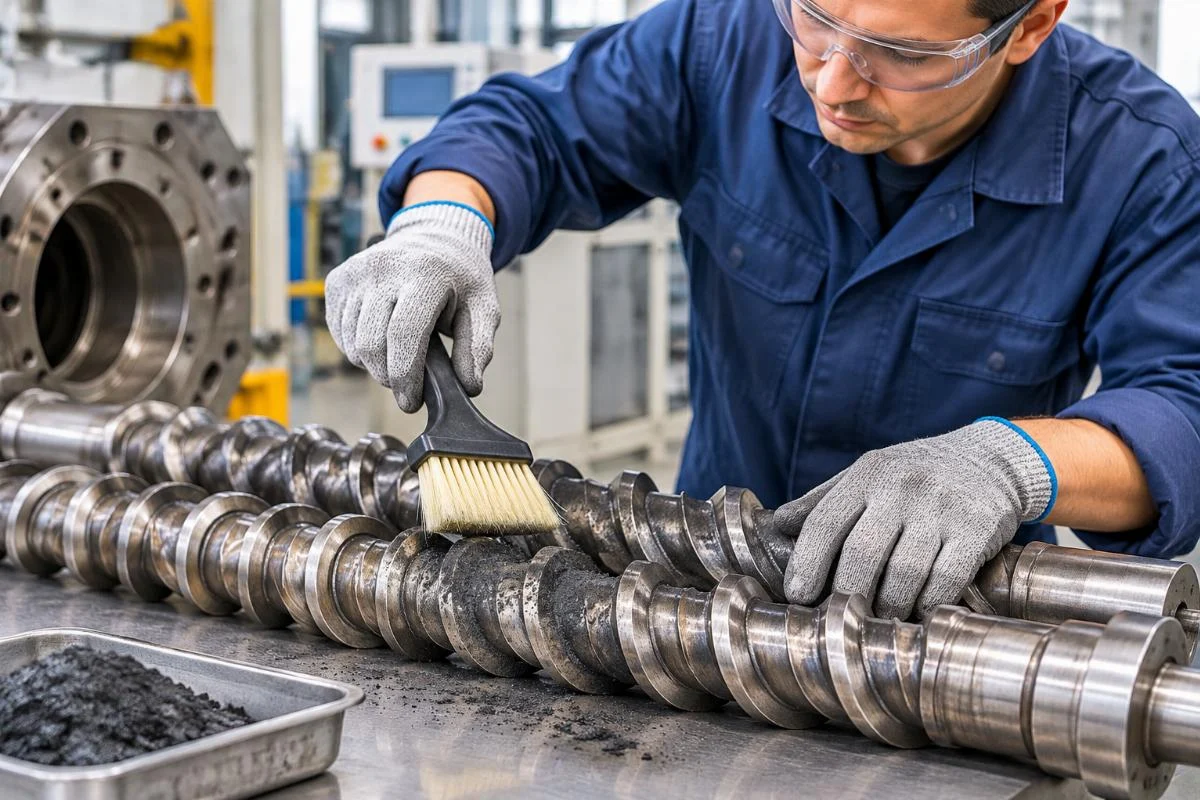
- Non-Abrasive Scrubbing: Use nylon bristle brushes, copper wool, or specialized polymer scraping tools to remove softened residue. Never use steel wire brushes or steel scrapers.
- Rinsing and Drying: Rinse all components thoroughly with clean, potable water to remove any chemical residue. Use compressed air to blow out the deep flight channels and blind holes, followed by complete air drying to prevent flash rusting.
- Lubrication Application: Apply a thin, even coat of high-temperature, food-grade anti-seize lubricant to the screw shaft splines and the inner bore of the barrel before reassembly.
A European contract manufacturer once used a standard steel wire wheel on a grinding tool to clean carbon buildup off the screw flights. This stripped the passivation layer of the stainless steel and introduced microscopic iron particles. The next batch of premium puppy food tested positive for heavy metal contamination, resulting in a massive product recall. Cleaning pet food extruder safely means respecting the metallurgy of your equipment.
Precision Reassembly and Alignment Verification
Improper lubrication and incorrect assembly sequences during reassembly drastically increase the friction coefficient, leading to immediate motor load spikes upon startup.
Reassembly is not simply the reverse of disassembly; it is a precision alignment process. The safe recipe changeover pet food machine protocol relies on exact torque specifications and alignment checks.
- Screw Element Configuration: Rebuild the screw profile on the shafts according to the specific recipe requirements, ensuring the correct sequence of conveying, kneading, and mixing elements. Use a soft-face mallet to seat the elements tightly against the shaft shoulders.
- Barrel Alignment: Carefully lower the barrel halves over the screw shafts, ensuring the shafts are perfectly centered and not dragging against the barrel walls. Guide the shafts using alignment pins if available.
- Torque Sequencing: Tighten the barrel clamping bolts in a strict cross-pattern sequence, gradually increasing the torque in multiple passes to ensure even gasket compression and barrel alignment.
- Drive Coupling Engagement: Connect the screw shafts to the gearbox output splines, ensuring full engagement and smooth rotation by hand before closing the electrical cabinets.
During a startup line commissioning, the maintenance team forgot to apply anti-seize compound to the shaft splines during reassembly. The dry metal-to-metal contact created immense friction. When the main motor engaged, the amperage spiked instantly, tripping the variable frequency drive and shearing the gearbox coupling pins. Cleaning pet food extruder safely requires meticulous attention to the reassembly details.
Conclusion
Mastering the cleaning and changeover protocol is the most critical factor in extending the service life of heavy-duty extrusion equipment.
Executing a rigorous thermal purge, utilizing non-marring extraction tools, applying food-safe cleaning agents, and performing precision reassembly will prevent catastrophic mechanical failures. By adhering to these structured methodologies, operators can ensure consistent product quality and protect their capital investment from avoidable downtime and repair costs.
Machines Mentioned in This Article

cat food machine
Pet Food Processing Equipment Plant Manufacturer Dog Food
View Machine
cat food machine
Dry Dog Food Production Line Pet Food Pellet Machine
View Machine
cat food machine
Dog Food Pellet Making Machine Line, Automatic Pet
View Machine
cat food machine