Choosing the heating source based solely on the initial equipment quote is the fastest way to bankrupt a new pet food production line.
The decision between an electric and steam heating preconditioner hinges entirely on your local grid capacity, regional energy costs, and specific gelatinization requirements, rather than the base price of the extruder itself.
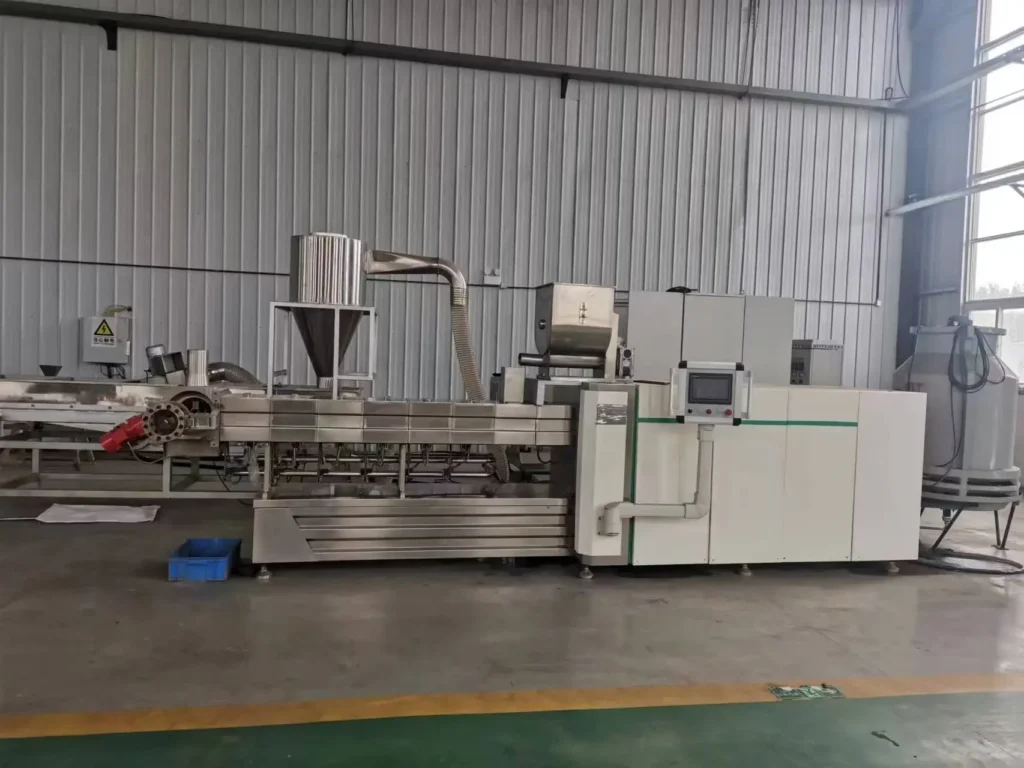
Working on the factory floor in Jinan early in my career, I spent years inspecting twin-screw extruders before transitioning to international trade. Over time, I have seen countless buyers stumble right at the preconditioning stage. Just last year, a startup in Southeast Asia insisted on an all-electric setup to avoid the capital expense of a steam boiler. When the equipment arrived, the local industrial grid simply could not handle the massive power draw. The electric elements heated too slowly, resulting in severely inadequate gelatinization, and they eventually had to spend a fortune retrofitting steam piping. Evaluating the Electric vs Steam Heating Preconditioner debate requires looking far beyond the supplier’s proforma invoice; you must calculate the local energy ledger and your non-negotiable process baselines.
Let us break down the real-world mechanics and hidden costs of both systems to help you configure a viable extrusion line.
How Do Electric and Steam Preconditioners Differ in Pet Food Extrusion?
Electric systems offer precise digital control but demand massive continuous power, whereas steam provides rapid, uniform thermal transfer ideal for high-gelatinization recipes.
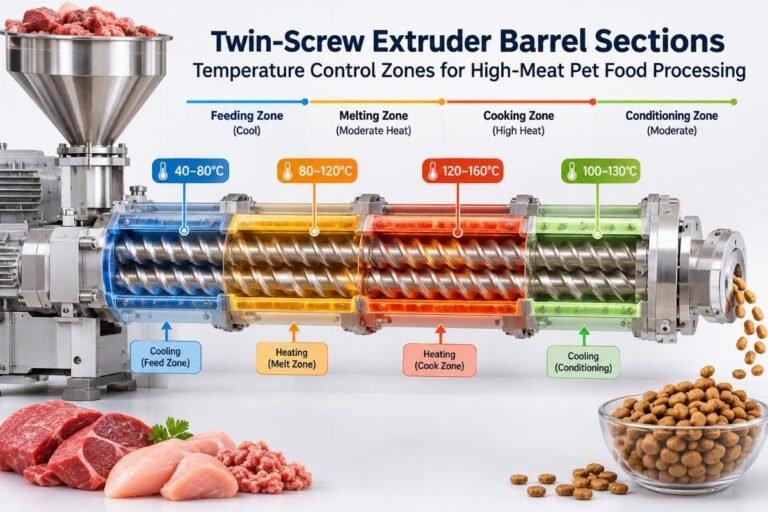
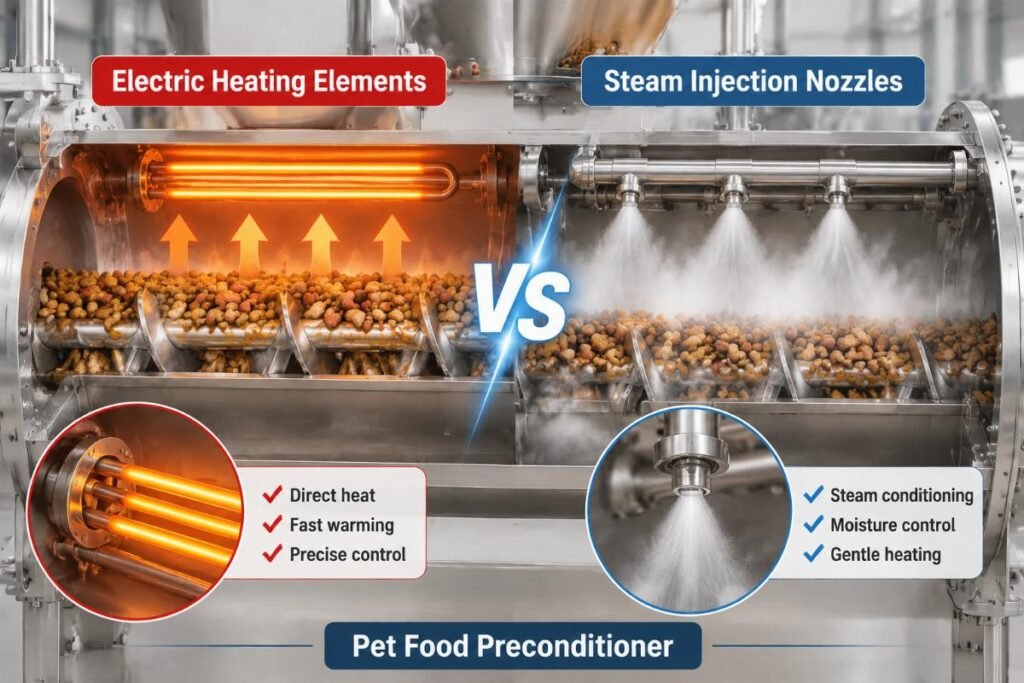
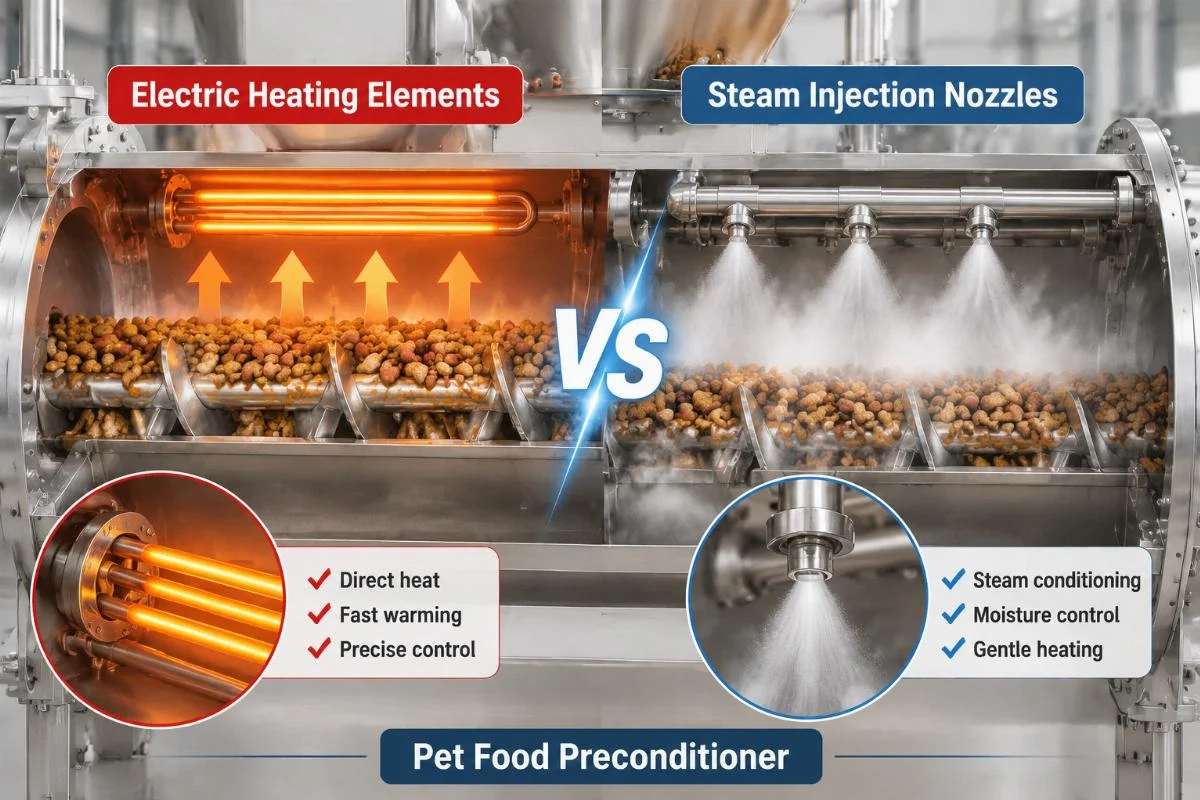
When evaluating the Electric vs Steam Heating Preconditioner options, the fundamental difference lies in how thermal energy is transferred to the raw material matrix. Electric preconditioners rely on resistive heating elements wrapped around the conditioning barrel or inserted directly into the mixing chamber. This method allows for exact temperature profiling via PLC touchscreens. However, the thermal mass of the ingredients requires significant electrical current to raise the temperature uniformly.
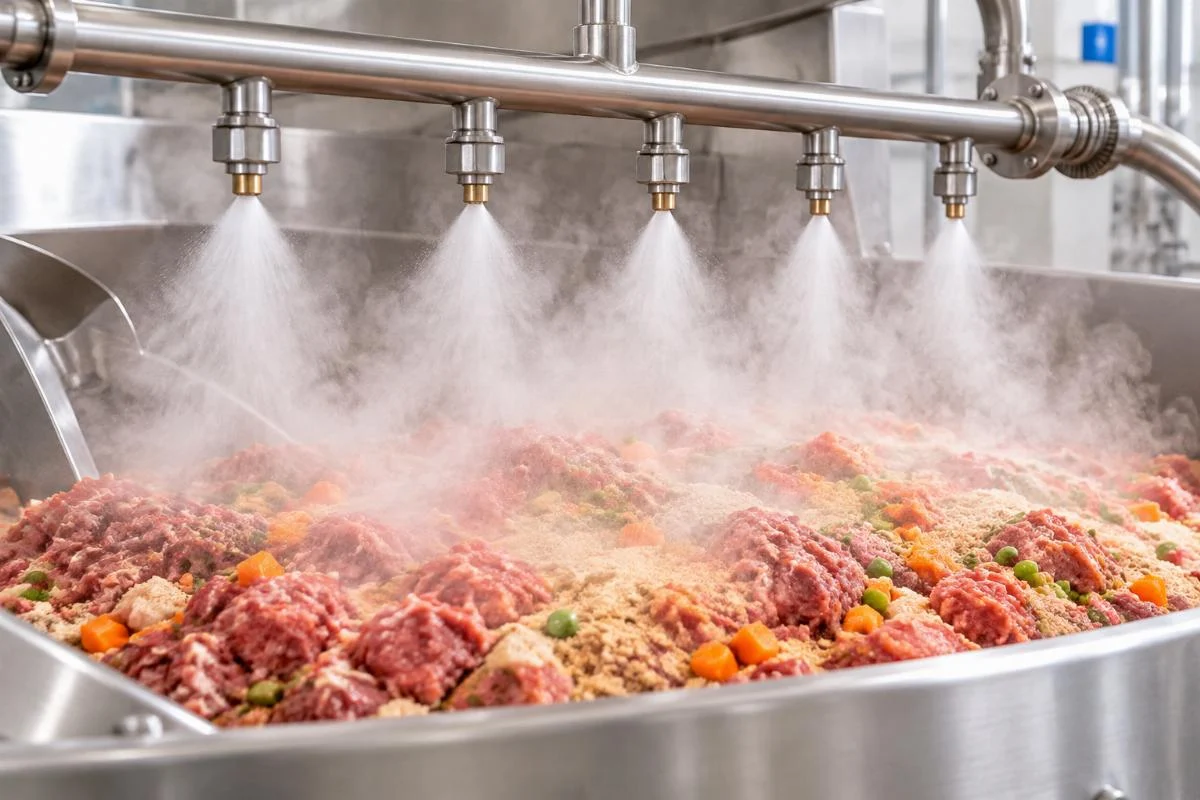
Conversely, steam preconditioners inject live steam directly into the ingredient bed. The latent heat of vaporization transfers energy almost instantaneously upon condensation, simultaneously adding the exact moisture required for starch gelatinization. This direct injection method is far more aggressive and uniform than conductive electric heating. For a pet food extrusion preconditioner comparison, the choice dictates your downstream extruder load. If you choose the wrong path, your main extruder motor will either stall from cold, dense mash or overwork to compensate for poor preconditioning.
What Are the Hidden Infrastructure Costs of Electric Heating?
Local grid limitations and mandatory transformer upgrades often completely erase the initial capital savings of avoiding a steam boiler.
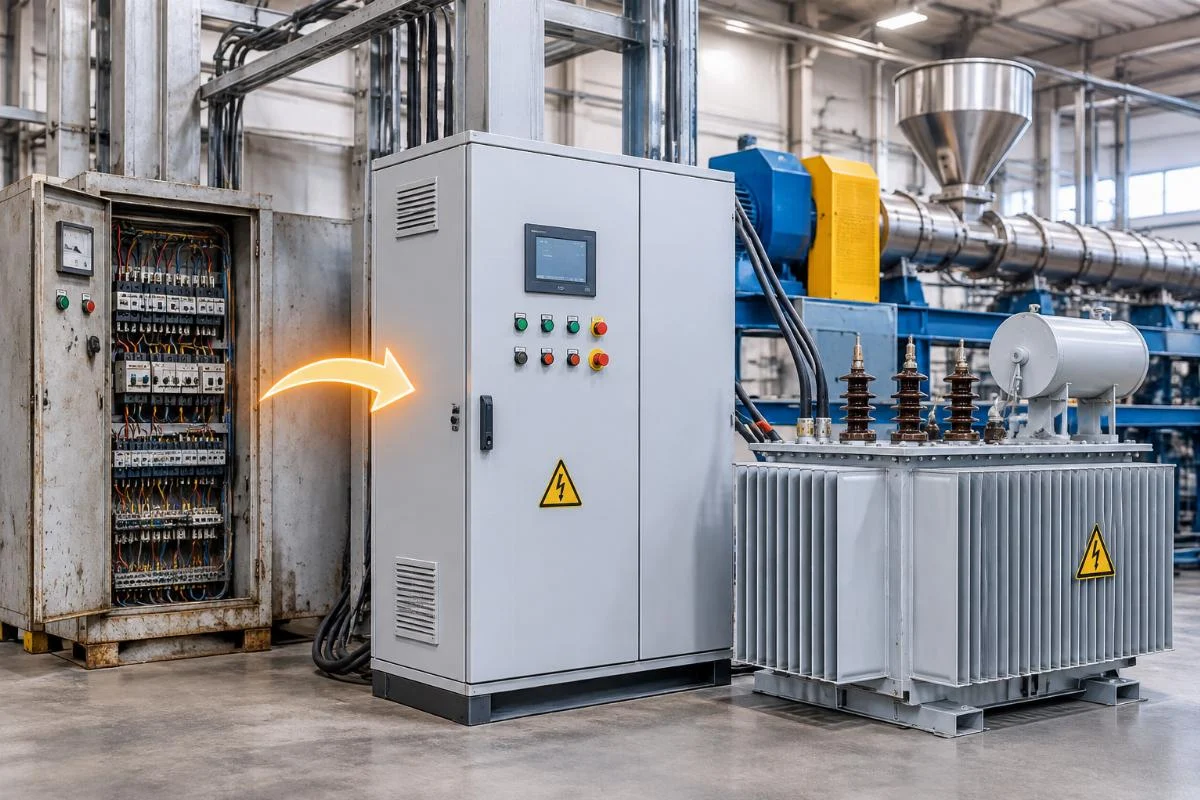
Many startup owners look at the Electric vs Steam Heating Preconditioner debate and assume electric is cheaper because they do not have to buy a boiler. This is a dangerous misconception. The true cost of an electric preconditioner is buried in your facility’s electrical infrastructure. High-capacity electric heating elements draw enormous amperage. If your factory’s existing transformer cannot support this sudden, continuous load, you must pay the local utility company to upgrade the transformer and run heavy-gauge cabling. In many industrial zones, these infrastructure upgrades cost several times more than a commercial gas-fired steam generator.
Furthermore, modern gas or steam generators have simplified maintenance significantly, debunking the myth that steam requires complex, high-labor boilers. A compact, automated steam generator requires minimal footprint and routine water treatment, whereas a high-draw electric panel demands specialized electrical maintenance and poses severe risks if the local grid experiences voltage drops. A voltage dip instantly drops the heating temperature, ruining the batch. When calculating the pet food production line energy cost, the electrical infrastructure upgrade is a hidden capital trap that catches many unprepared buyers.
| Infrastructure Factor | Electric Heating Setup | Steam Heating Setup |
|---|---|---|
| Initial Boiler/Generator Cost | None | Moderate Investment |
| Grid Transformer Upgrade | High Probability / High Cost | Not Required |
| Maintenance Complexity | Specialized Electrical | Standard Mechanical |
| Grid Voltage Fluctuation | Highly Vulnerable | Completely Resistant |
| Footprint Requirement | Large Electrical Panels | Compact Generator Unit |
How Does Heating Method Impact Gelatinization and Extruder Stability?
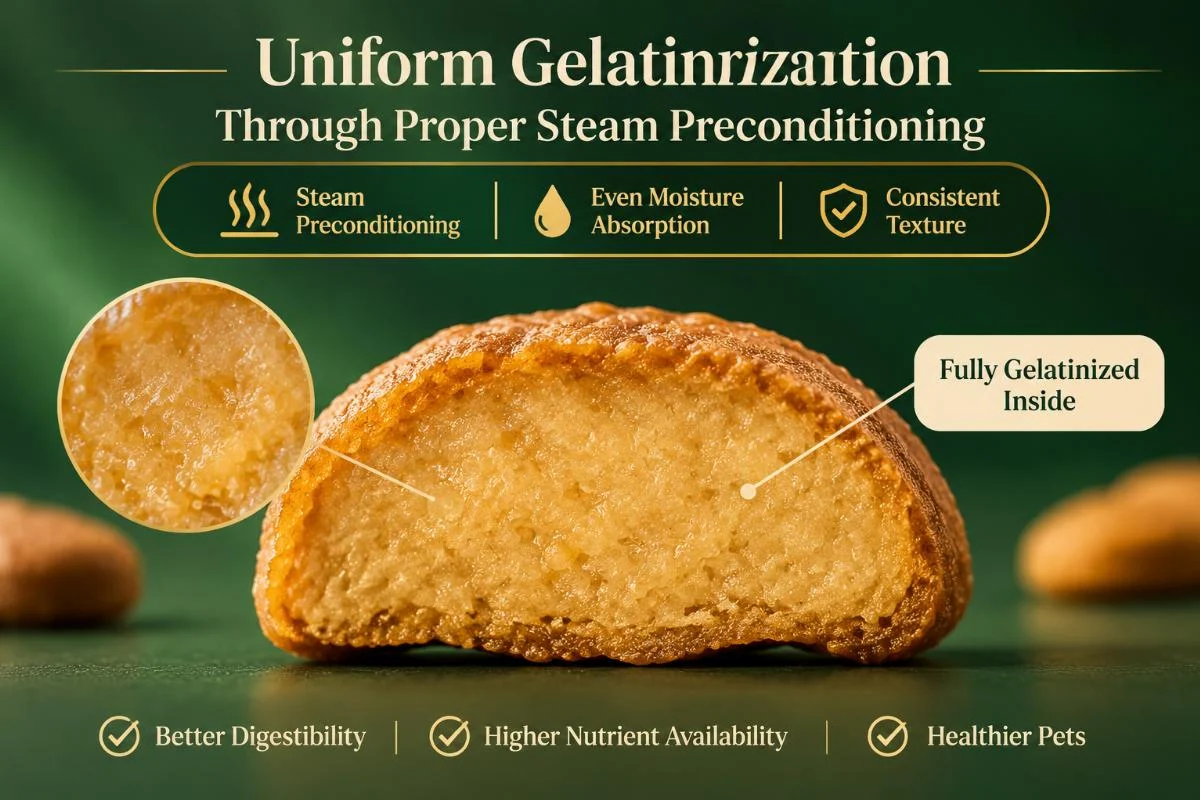
Steam injection ensures consistent moisture and heat transfer, which is absolutely crucial for pet food digestibility and kibble durability.
The core purpose of preconditioning is to initiate starch gelatinization before the material enters the extruder barrel. If you are producing high-meat or high-starch formulas, the Electric vs Steam Heating Preconditioner choice directly impacts your product’s physical integrity. Steam injection provides simultaneous heat and moisture. The moisture acts as a plasticizer, lowering the mechanical energy required from the extruder screws and ensuring the starch granules swell and rupture uniformly.
Electric heating, lacking direct moisture injection, relies entirely on the recipe’s baseline moisture and the slow conduction of heat. This often leads to a temperature gradient—where the outer layers of the mash overheat while the core remains under-processed. The result is inconsistent gelatinization. In the final kibble, this manifests as poor durability, excessive fines in the bag, and uneven digestibility. A contract manufacturer in Latin America learned this the hard way. They used a small electric preconditioner for varying small-batch treat recipes. While the electric system had a fast response time for simple recipes, it completely failed to maintain stability when switching to complex, high-fiber formulas. The lack of steam moisture control caused severe torque fluctuations in the main extruder, ultimately capping their throughput and ruining batch consistency.
Which Preconditioner Fits Your Pet Food Production Line Capacity?
You must match the heating source to your target capacity and local energy landscape for optimal turnkey line performance.
When scaling a pet food extrusion preconditioner comparison for capacities ranging from entry-level to heavy industrial output, the physics of heat transfer become the ultimate bottleneck. For smaller capacities, such as specialized treat lines, an electric preconditioner might suffice if the local grid is robust and recipes are simple. The fast response time of electric elements allows for quick changeovers between minor recipe tweaks.
However, as you move toward medium and large-scale production, the Electric vs Steam Heating Preconditioner debate heavily favors steam. A MENA pet food plant recently upgraded their entire medium-capacity line to a steam-injected system. The steam injection efficiency drastically improved their moisture control, which in turn stabilized the extruder motor load and increased their overall throughput noticeably. The steam system handled the thermal demand effortlessly, whereas their previous electric setup was constantly running at maximum capacity, risking element burnout.
This is exactly where professional engineering consultation becomes critical. At Meiteng, our engineering team does not just sell you a machine; we evaluate your local infrastructure during the initial production line consulting phase. Whether you need a compact line or a massive industrial setup, we customize the optimal heating solution—electric or steam—based on your specific utility landscape. Our turnkey pet food extrusion lines integrate the correct preconditioning technology seamlessly with our integrated drying, cooling, and flavor-coating systems, ensuring your facility operates efficiently from day one.
Conclusion
The right heating method is dictated by your local power grid and recipe complexity, not the equipment catalog.
Evaluating the Electric vs Steam Heating Preconditioner requires a holistic view of your facility’s electrical limits and your product’s gelatinization needs. Steam offers superior thermal efficiency and stability for demanding recipes, while electric suits niche applications with robust power supplies. Partnering with an experienced manufacturer ensures your line is engineered around your actual operational reality, securing both product quality and long-term profitability.
Machines Mentioned in This Article

cat food machine
Pet Food Processing Equipment Plant Manufacturer Dog Food
View Machine
cat food machine
Dry Dog Food Production Line Pet Food Pellet Machine
View Machine
cat food machine
Pet Food Production Line Manufacturer
View Machine
cat food machine