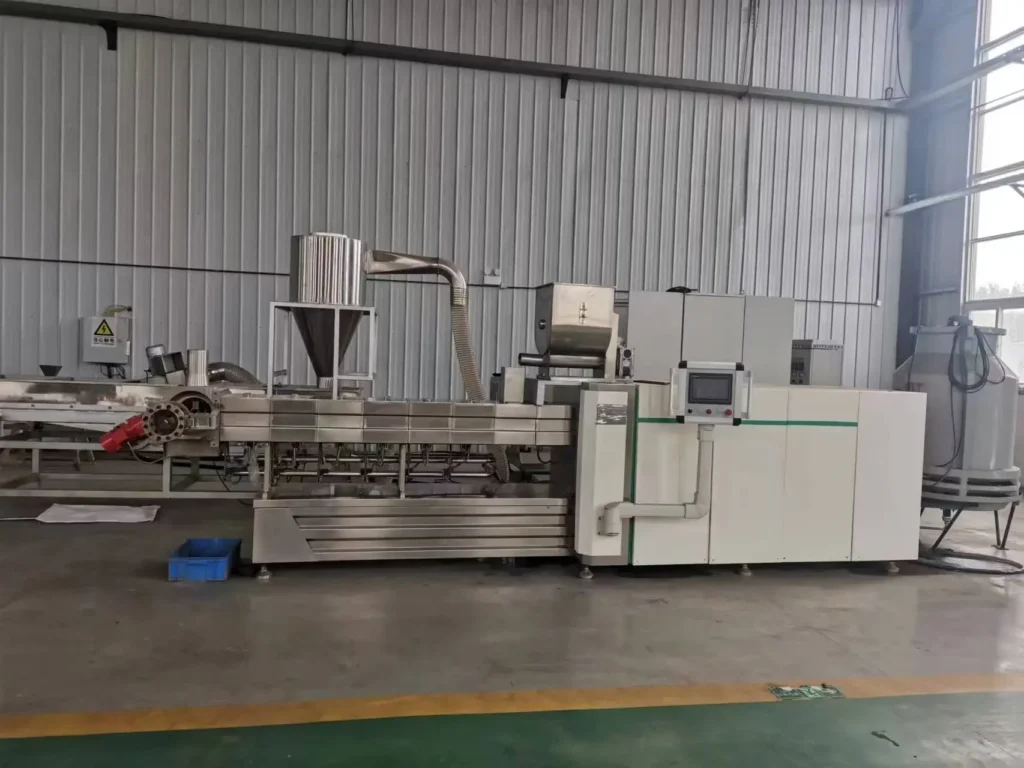

Motor overload and surging are rarely electrical faults; they are almost always the result of mismatched feed rates, high moisture, or improper screw configurations causing severe pressure spikes.
When the main motor current spikes and the alarm triggers, the immediate instinct is to blame the drive or the motor itself. However, after years of troubleshooting on the factory floor, I can tell you that the real culprit is usually a process imbalance. Mastering pet food extruder motor overload troubleshooting means looking past the electrical cabinet and focusing on the material flow dynamics inside the barrel.
I remember standing in a production facility in Chicago right after a trade show. A client was running a trial on a DS70 line to produce dry dog food. Suddenly, the main motor current spiked violently, and the machine tripped. The screw was completely jammed with expanded dough. I opened the control panel to check the inverter, but the electricals were fine. The issue was that the front-end feeder was lagging behind the screw RPM, creating a starvation zone followed by a sudden flood, combined with raw material moisture sitting too high. This caused the cavity pressure to skyrocket. This exact scenario is the core of effective pet food extruder motor overload troubleshooting.
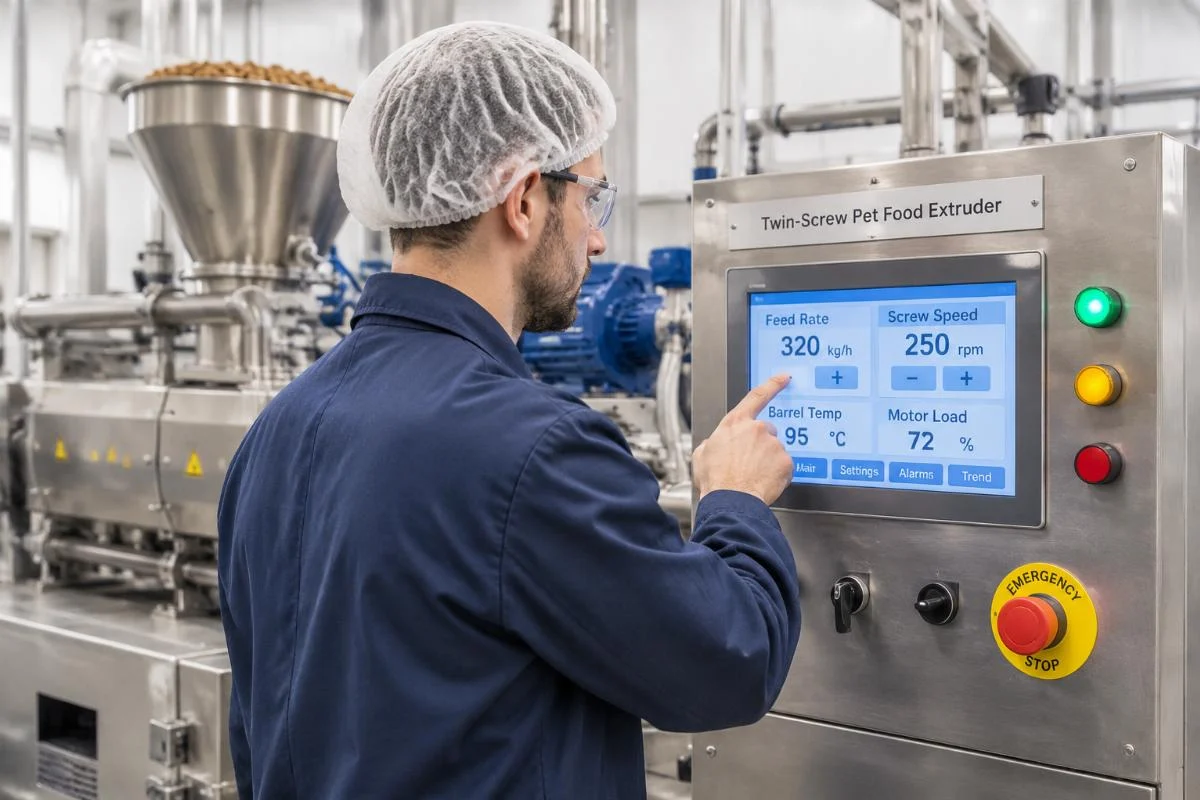
Let us break down the exact steps to stabilize your extrusion process and prevent these costly downtime events.
Why Does My Pet Food Extruder Surge and Overload?
Surging and overloading are symptoms of process instability, not mechanical or electrical failures.
Many plant managers assume that a pet food extruder jammed screw means the motor is too weak or the gearbox is failing. In reality, the motor is simply reacting to an unresolvable physical blockage caused by incorrect material states. When the specific mechanical energy (SME) required to push the dough exceeds the motor’s torque limit, the system overloads.
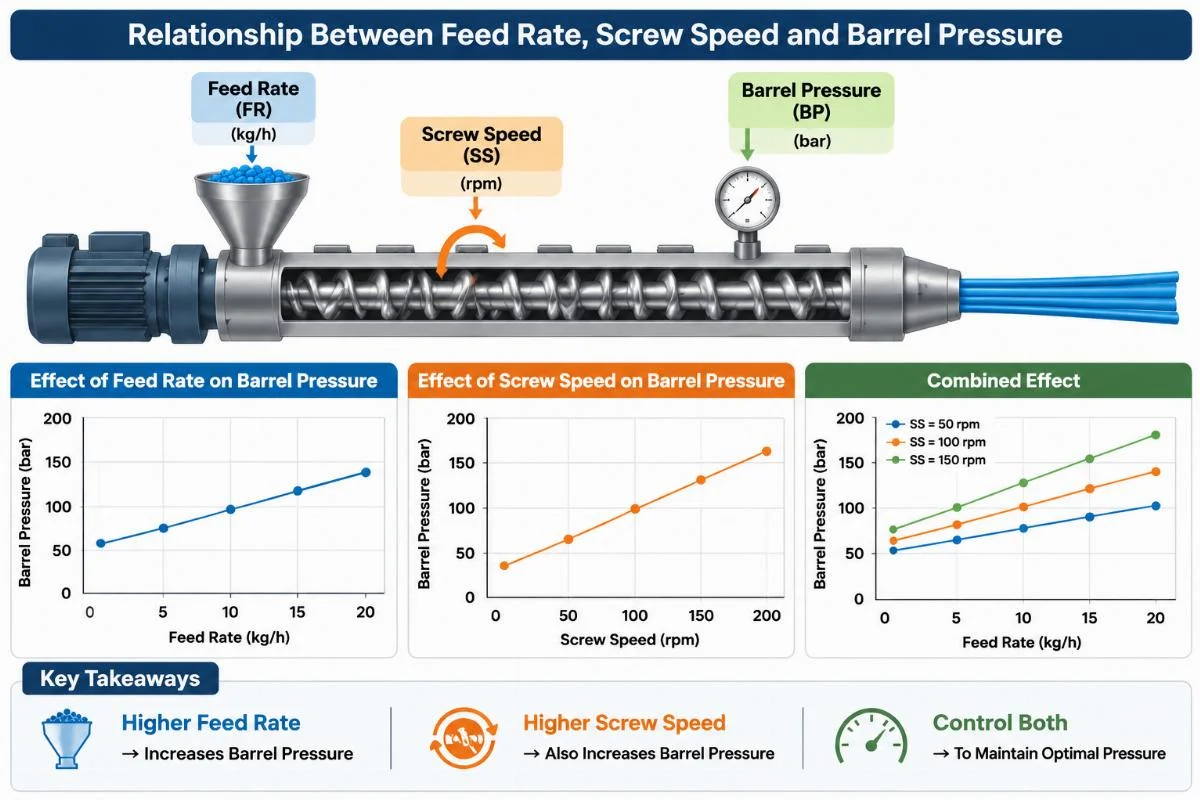
The root cause distribution per ISO 15243 and general extrusion engineering principles indicates that the majority of these trips stem from feed-to-speed mismatches. If the feeder delivers material faster than the screw can convey it, the flight roots flood, and pressure builds exponentially. Conversely, if the feeder starves the screw, the material slips, friction drops, and then a sudden surge of material enters, causing a massive extruder motor current spike. Understanding this cause-and-effect relationship is the first step in pet food extruder motor overload troubleshooting.
How to Check and Balance Feed Rate vs. Screw Speed?
Synchronizing feeder output with screw RPM prevents material starvation or flooding, which are the primary triggers for surging.
A common counter-intuitive reality in extrusion is that increasing the feed rate to boost output actually worsens surging. Reducing the feed slightly often stabilizes the pressure. To execute proper pet food extruder motor overload troubleshooting, you must calculate and maintain the correct feed-to-screw speed ratio.
Here is the step-by-step method to balance your line:
- Establish the Baseline Ratio: Determine the target throughput for your specific recipe. Set the screw RPM to a stable baseline.
- Monitor the Ammeter: Watch the main motor ammeter. The current should be steady, typically sitting around a stable operational percentage of the motor’s rated capacity, without wild fluctuations.
- Adjust the Feeder Incrementally: If the current is creeping up, the screw is flooded. Reduce the feeder speed in small increments. If the current drops and the motor sounds like it is running empty (lower pitch), the screw is starved. Increase the feeder speed slightly.
- Lock the Variance: Once the ammeter stabilizes, lock in the parameters. The acceptable variance between the feeder output and screw conveyance capacity should be tightly controlled to prevent the twin-screw extruder surging causes associated with flow pulsation.
During the Chicago DS70 trial, we adjusted the feed-to-speed ratio. The feeder was simply set too high for the initial screw RPM. By dropping the feeder speed to match the screw’s conveyance capability, the current normalized immediately. This ratio adjustment is the most critical phase of pet food extruder motor overload troubleshooting.
| Parameter State | Motor Current Behavior | Material Flow Status | Process Action Required |
|---|---|---|---|
| Feeder Too High | Spikes and fluctuates wildly | Flooding / High pressure | Reduce feeder speed |
| Feeder Too Low | Drops below normal baseline | Starvation / Slipping | Increase feeder speed |
| Balanced Ratio | Steady and stable | Fully filled, consistent flow | Maintain settings |
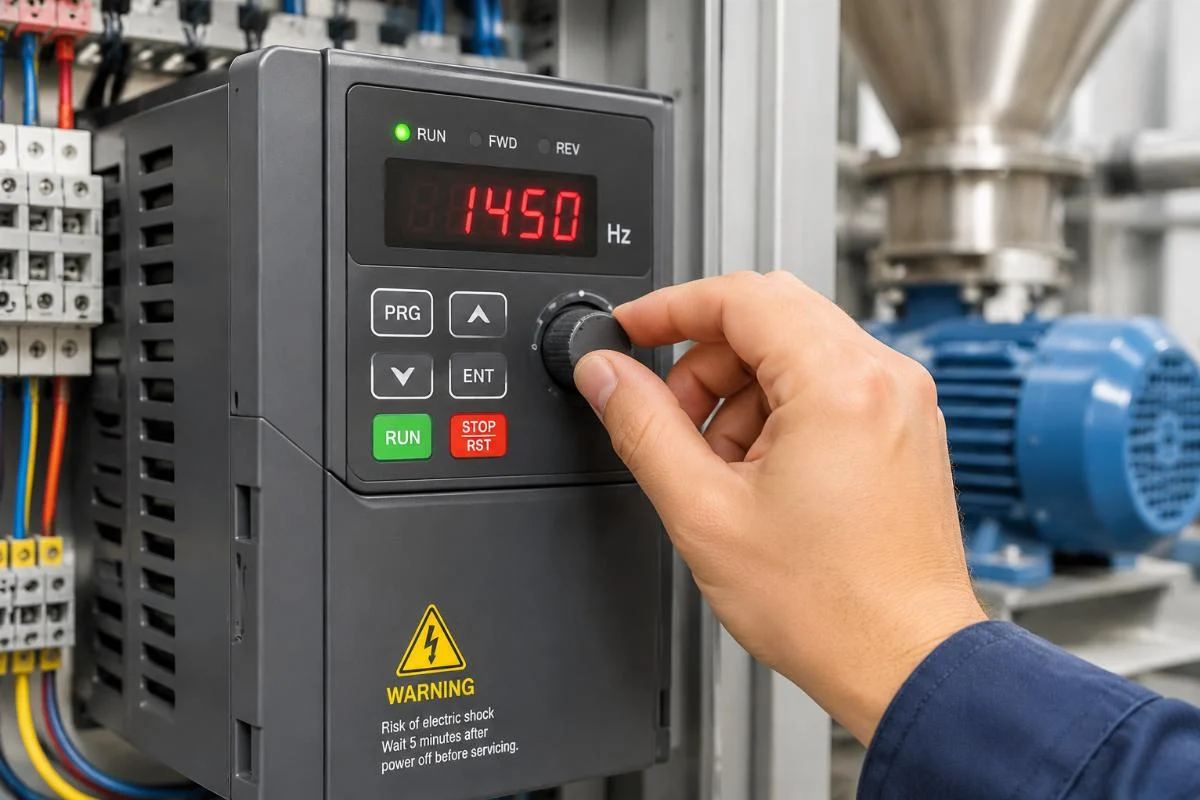
What Role Does Moisture and Temperature Play in Surging?
Controlling raw material moisture and barrel zones ensures stable viscosity and pressure, preventing sudden resistance spikes.
Moisture acts as a plasticizer in the extrusion process. If the raw material moisture exceeds the acceptable limits, the dough becomes too fluid and slippery in the initial zones, failing to build necessary friction. Then, as it moves toward the die, the sudden temperature change causes a massive viscosity shift, leading to a pressure spike and an extruder motor current spike.
Conversely, if the material is too dry, it acts like sand, creating immense friction and immediately overloading the motor. Barrel temperature profiling is equally critical. If the cooling zones are not functioning, the heat generated by friction cannot be dissipated, leading to a thermal runaway and a pet food extruder jammed screw.
To resolve moisture-related surging during pet food extruder motor overload troubleshooting:
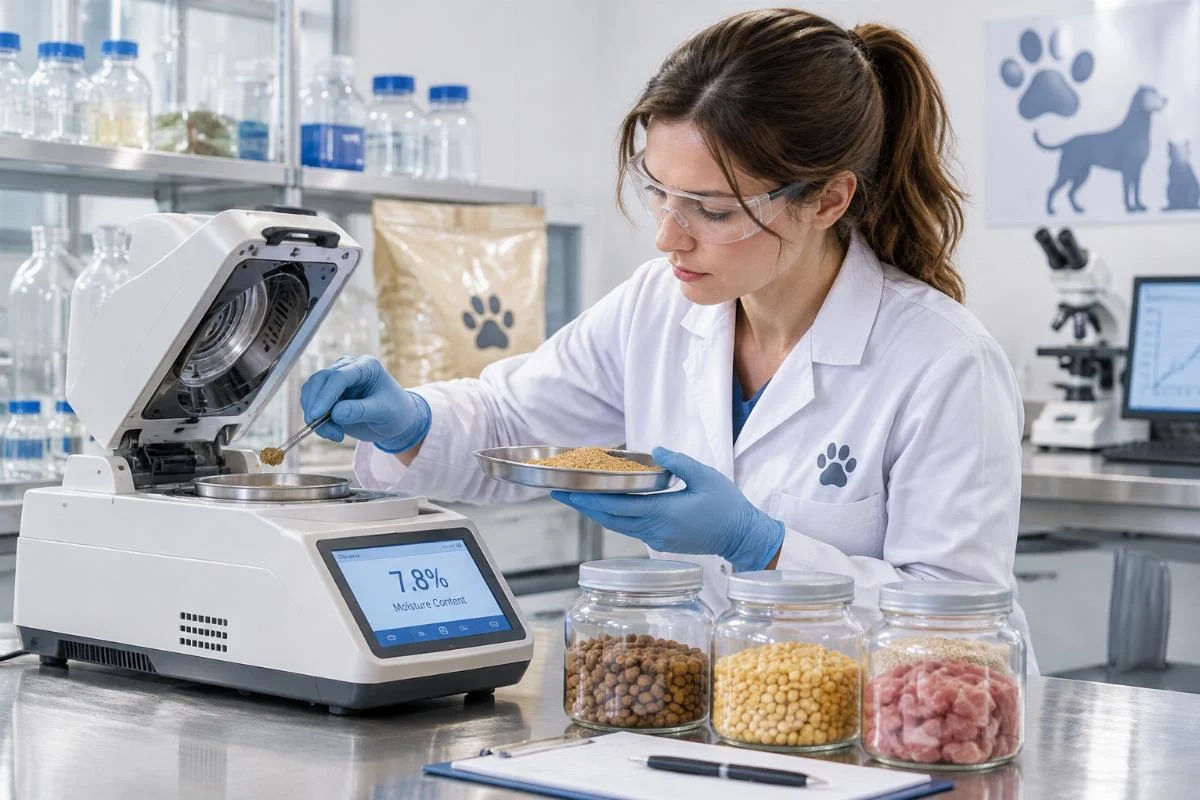
- Test Incoming Raw Materials: Use a moisture analyzer to check the blend before it enters the preconditioner. The moisture content must be strictly controlled and reduced if it exceeds the recipe specification.
- Optimize Preconditioning: Use steam injection in the preconditioner to hydrate the starch properly before it enters the extruder barrel. This reduces the mechanical work required inside the barrel.
- Profile Barrel Zones: Ensure the cooling water circuits on the barrel jackets are active. The temperature in the compression and metering zones must be monitored to prevent the dough from becoming too soft and losing its conveyance friction.
In a high-moisture pet treat extrusion project, the client experienced severe surging. The raw material moisture was simply too high for the specific screw configuration. By controlling the moisture and adjusting the barrel temperature zones to ensure stable viscosity, the pressure stabilized. Moisture management is a non-negotiable element of pet food extruder motor overload troubleshooting.
How to Optimize Screw Configuration to Prevent Jams?
Proper compression ratios and element arrangement maintain consistent material flow and prevent mechanical blockages.
The screw configuration dictates the physical transformation of the raw material. If the compression ratio is too aggressive for the recipe, the material cannot escape the compression zone fast enough, resulting in a massive pressure buildup and a pet food extruder jammed screw. If the mixing elements are placed too early, the material might melt prematurely, losing the friction needed for conveyance.
When optimizing the screw profile for pet food extruder motor overload troubleshooting, consider the following:
- Analyze the Compression Ratio: The transition from the feed section to the metering section must be gradual. Adjusting the compression ratio by modifying the pitch or the flight depth of the screw elements can relieve excessive pressure.
- Reconfigure Element Arrangement: Move kneading blocks downstream if the motor is overloading in the front half of the barrel. This allows the material to be conveyed as a solid plug before it is subjected to intense shear and melting.
- Monitor Specific Mechanical Energy: Use SME monitoring to ensure the screw design is not demanding more energy than the motor can provide for the given recipe.
Designing the correct screw logic is complex. This is where partnering with an experienced manufacturer becomes vital. Meiteng provides comprehensive turnkey line design, including custom screw arrangements tailored to your specific recipe and capacity requirements. Our engineering team ensures the extrusion logic is optimized from the start, preventing the mechanical mismatches that cause overloads. Furthermore, our on-site installation and operator training ensure your maintenance team understands the underlying mechanics of the screw configuration, empowering them to handle future adjustments confidently.

Conclusion
Motor overload is a process imbalance, not a mechanical failure. By synchronizing the feed rate with screw speed, strictly controlling raw material moisture, and optimizing the screw compression ratio, you can eliminate surging and ensure stable, continuous production. Mastering these variables is the ultimate key to successful pet food extruder motor overload troubleshooting.
Machines Mentioned in This Article

cat food machine
Pet Food Processing Equipment Plant Manufacturer Dog Food
View Machine
cat food machine
Dry Dog Food Production Line Pet Food Pellet Machine
View Machine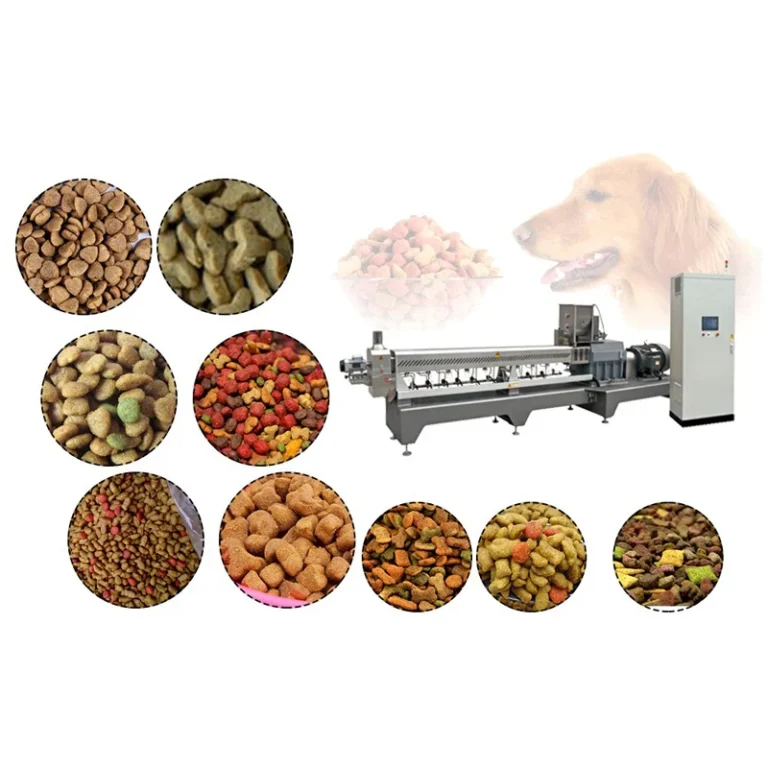
cat food machine
Dog Food Pellet Making Machine Line, Automatic Pet
View Machine
cat food machine