Higher RPM does not solve pulse mixing; high torque at lower RPM is the actual key to avoiding friction damage.
To successfully process high-pulse, grain-free recipes, you need a grain-free kibble extruder with high torque density, specialized screw elements, and wear-resistant barrels to ensure proper gelatinization and prevent rapid screw degradation.
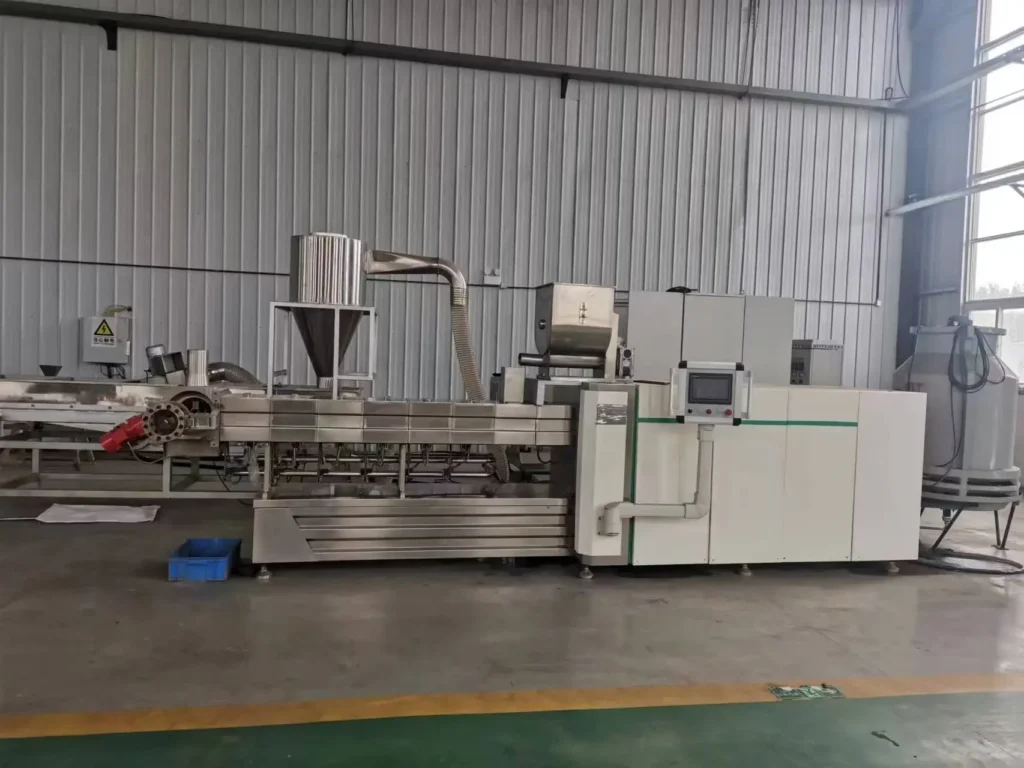
I started on the assembly floor in Jinan, wrenching together twin-screw barrels before moving into overseas commissioning. These days, I am usually on-site in West Africa. Once in Lagos, a client bought a cheap machine for a grain-free diet. The high-protein mix chewed up their screws in weeks. The kibble came out under-gelatinized, crumbling in the bag, and the whole line sat idle for a month while we flew in replacements. That mess highlighted exactly why pulse-enhanced twin-screw tech is not just a spec-sheet buzzword. Standard low-torque machines cannot handle the abrasive, low-starch nature of pulses. When evaluating a grain-free kibble extruder, you must look past the brochure and check how the barrels handle high-stress, meat-heavy recipes under continuous load.
Moving from that costly shutdown to a stable run requires understanding the mechanical realities of pulse processing.
Why Do Standard Extruders Fail on High-Pulse Recipes?
Standard machines fail because they lack the torque density required to shear and gelatinize hard pulse starches without relying on destructive friction.
Pulses like peas, lentils, and chickpeas have low starch content and high fiber compared to traditional grains like wheat or corn. In a standard single-screw or low-torque twin-screw setup, achieving the necessary Specific Mechanical Energy (SME) input forces the operator to increase the screw speed. This generates excessive frictional heat rather than the controlled shear needed for proper gelatinization.
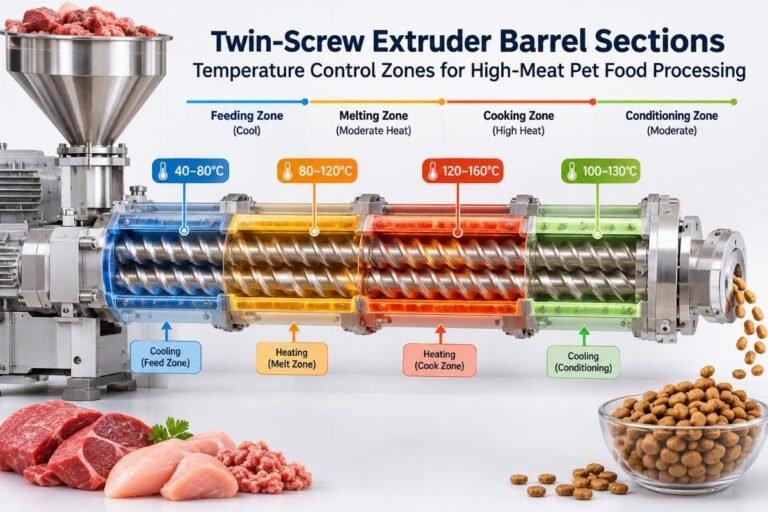
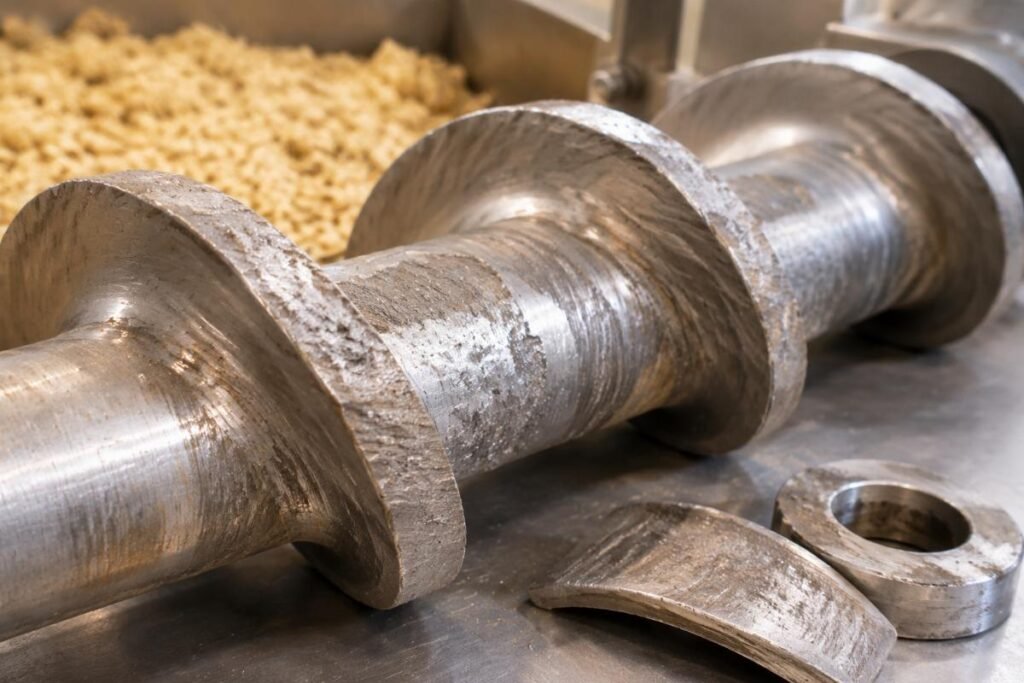
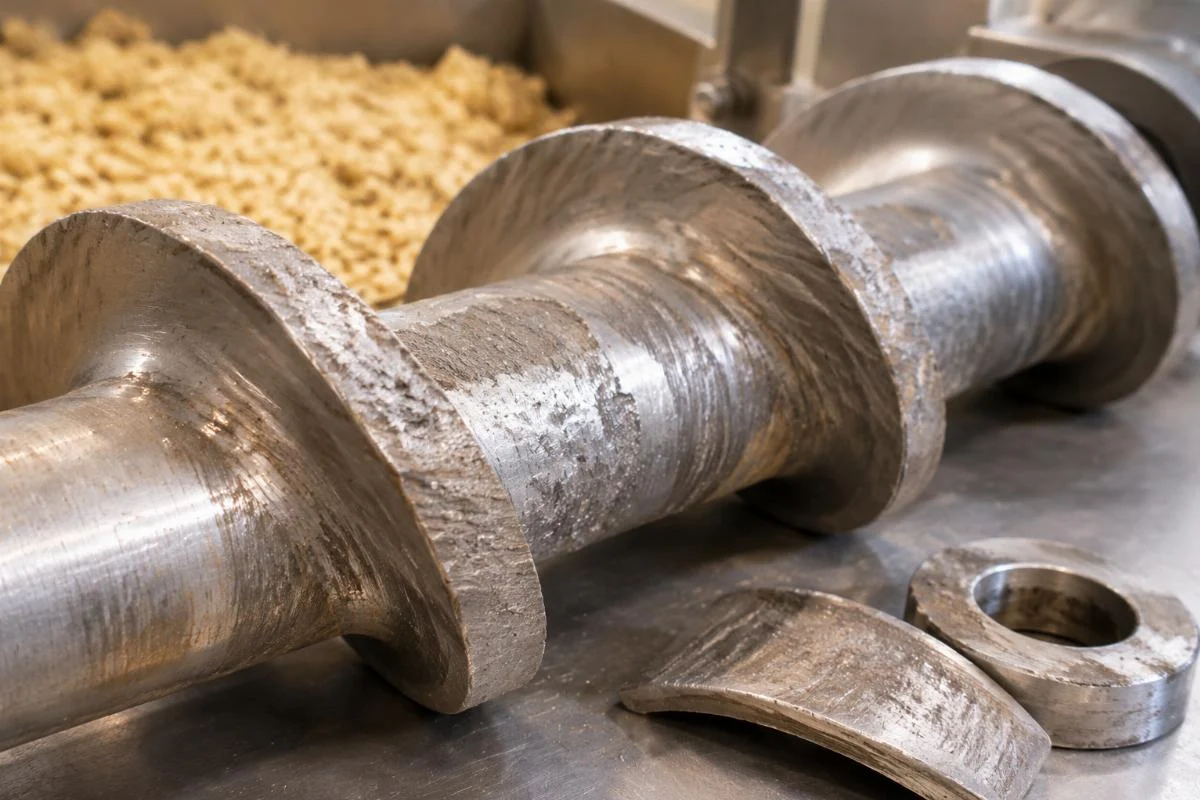
The consequences are immediate and expensive. First, the abrasive nature of pulse fiber accelerates wear on standard flight surfaces. Second, the reliance on friction leads to uneven temperature profiles. You get a machine that is either cooking the outside of the kibble while leaving the core raw, or burning the product entirely. A grain-free kibble extruder designed for these recipes must deliver high torque at lower RPMs to push the dense, low-moisture melt through the die without destroying the screw elements.
What Twin-Screw Specs Are Non-Negotiable for Grain-Free Kibble?
High torque density, specialized screw configurations, and wear-resistant barrel liners are mandatory for consistent expansion and equipment longevity.
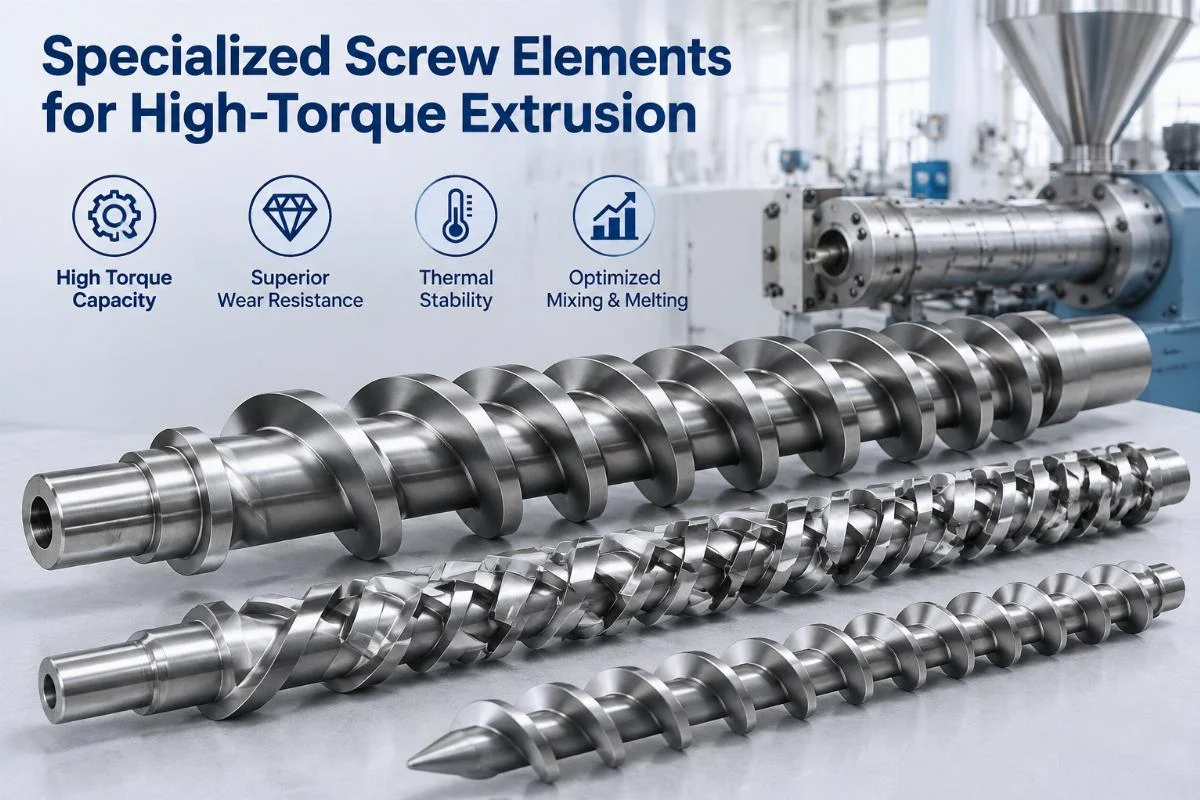
When sourcing a twin-screw extruder for grain-free dog food, the specification sheet must reflect the harsh realities of pulse processing. Standard stainless steel barrels will not survive the abrasive friction of high-pulse recipes. You need specialized wear-resistant liners or bimetallic barrel constructions to maintain dimensional stability over extended runs.
Here is how a proper specification matrix looks for high-pulse applications:
| Specification Factor | Standard Extruder | Optimized Grain-Free Kibble Extruder |
|---|---|---|
| Torque Density | Basic | Robust |
| Barrel Liner | Standard Stainless | Wear-Resistant Alloy |
| Screw Configuration | Standard Conveying | Specialized Kneading & Shearing |
| SME Control | Uncontrolled | Controlled |
| Wear Resistance | Vulnerable | Resistant |
The screw configuration is equally critical. A grain-free kibble extruder must feature interchangeable screw elements that allow for precise L/D ratio optimization. You need high-kneading blocks to break down the pulse matrix, followed by reverse elements to build pressure before the die. This ensures the starch network forms correctly, preventing the kibble from crumbling post-cooling.
How to Verify an Extruder’s Capability Before Buying?
Request factory trials with your exact pulse formula and verify the SME data and wear metrics, rather than relying solely on brochure specifications.
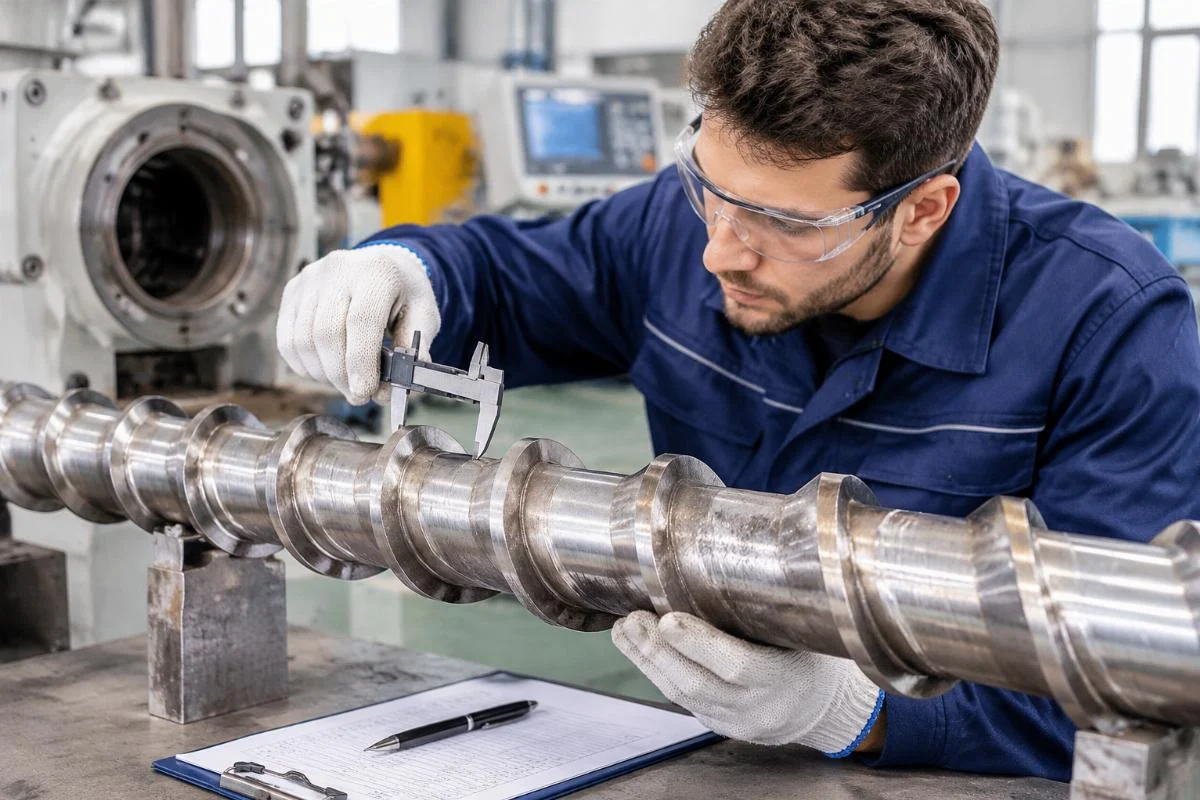
Do not accept theoretical capacity claims. The only way to verify a grain-free kibble extruder is to run your specific high-pulse recipe through the machine. During the trial, monitor the motor amperage to ensure the torque density is sufficient without tripping the drives. More importantly, inspect the screw elements and barrel liners after the run. If you see noticeable scoring or material loss on standard alloys, the machine will fail in continuous production.
A contract manufacturer in North America recently evaluated a supplier by running a high-lentil formula. The supplier’s standard machine produced acceptable kibble initially, but post-trial inspection revealed severe wear on the kneading blocks. By demanding a trial with wear analysis, they avoided a mid-six-figure mistake. Always ask for the Specific Mechanical Energy data recorded during the trial. If the manufacturer cannot provide SME metrics or dismisses wear as normal, walk away. A true twin-screw extruder for grain-free dog food will have the data to prove its metallurgical superiority.
What Support Do You Need for a Successful Grain-Free Line?
Turnkey integration, formula development, and on-site commissioning are essential to prevent costly startup mistakes and ensure product stability.
Buying a grain-free kibble extruder is only the first step. The real challenge lies in integrating it into a complete line that handles the unique drying and coating requirements of high-protein, low-starch kibble. Pulse-based recipes often have different moisture migration rates during drying compared to grain-based diets. If your dryer is not calibrated for this, the kibble will either remain too moist, risking mold, or become too brittle, leading to dust and breakage.
This is where comprehensive line consulting becomes critical. You need a partner who understands the entire thermodynamic profile of the process. From the pre-conditioner to the multi-pass dryer and the flavor coater, every stage must be synchronized. Furthermore, formula development support is invaluable. Adjusting the binding agents and moisture levels in a high-pulse recipe requires deep extrusion expertise to ensure the kibble expands properly and maintains its structural integrity in the bag.
On-site commissioning and operator training bridge the gap between equipment installation and stable production. Your operators need to understand how to adjust the feed rate, water injection, and screw speed in real-time as the pulse flour batch variations occur. A manufacturer that provides turnkey solutions, including formula R&D and hands-on training, ensures your grain-free kibble extruder delivers consistent quality from day one.

Conclusion
Processing high-pulse recipes demands more than just a machine; it requires engineered torque, specialized metallurgy, and integrated process expertise.
Standard extruders will inevitably fail under the abrasive, low-starch conditions of grain-free diets, leading to rapid wear and poor gelatinization. By prioritizing high torque density, wear-resistant barrels, and rigorous factory trials, you secure a grain-free kibble extruder capable of delivering stable, high-quality production.