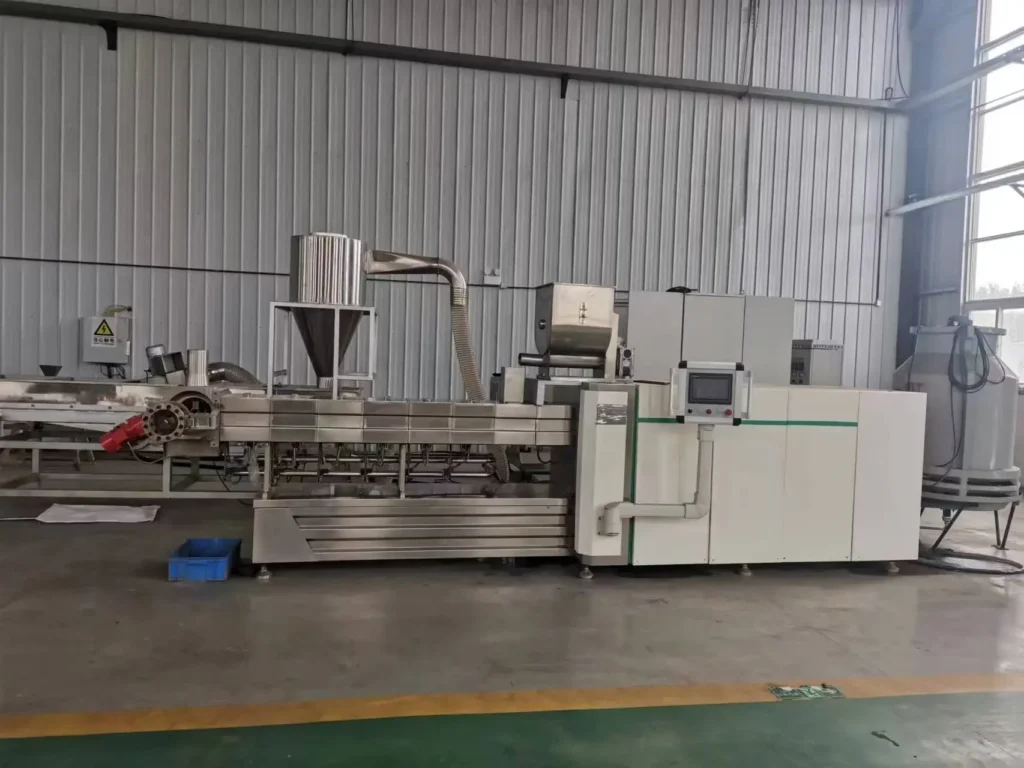

Grain-free formulations are not inherently easier to process; they introduce severe hygroscopic risks that can ruin an entire production batch.
Navigating pet food extrusion trends requires mastering twin-screw shear dynamics for high-moisture fresh meat and strict moisture control for alternative starches, backed by comprehensive turnkey line consulting that covers everything from formulation rheology to cross-border transit packaging.
Early in my career handling customs documentation in Ningbo, I coordinated a full turnkey line shipment to Southeast Asia. The client had shifted toward grain-free recipes, heavily relying on pea protein and cassava starch. I simply classified the DS85 twin-screw extruder and the drying oven under separate HS codes, completely ignoring how cassava starch behaves during the monsoon season. By the time the container reached the destination port, the hygroscopic raw materials had caked inside the silos, and the entire shipment was held up due to HS classification disputes and severe material degradation. The resulting demurrage fees were a mid-six-figure loss. Transitioning to project coordination later, I realized that delivering a turnkey line means absolutely nothing if you do not rigorously align formulation characteristics, moisture-proof packaging, and清关 (customs clearance) codes from day one. Understanding current pet food extrusion trends means looking far beyond the machine itself.
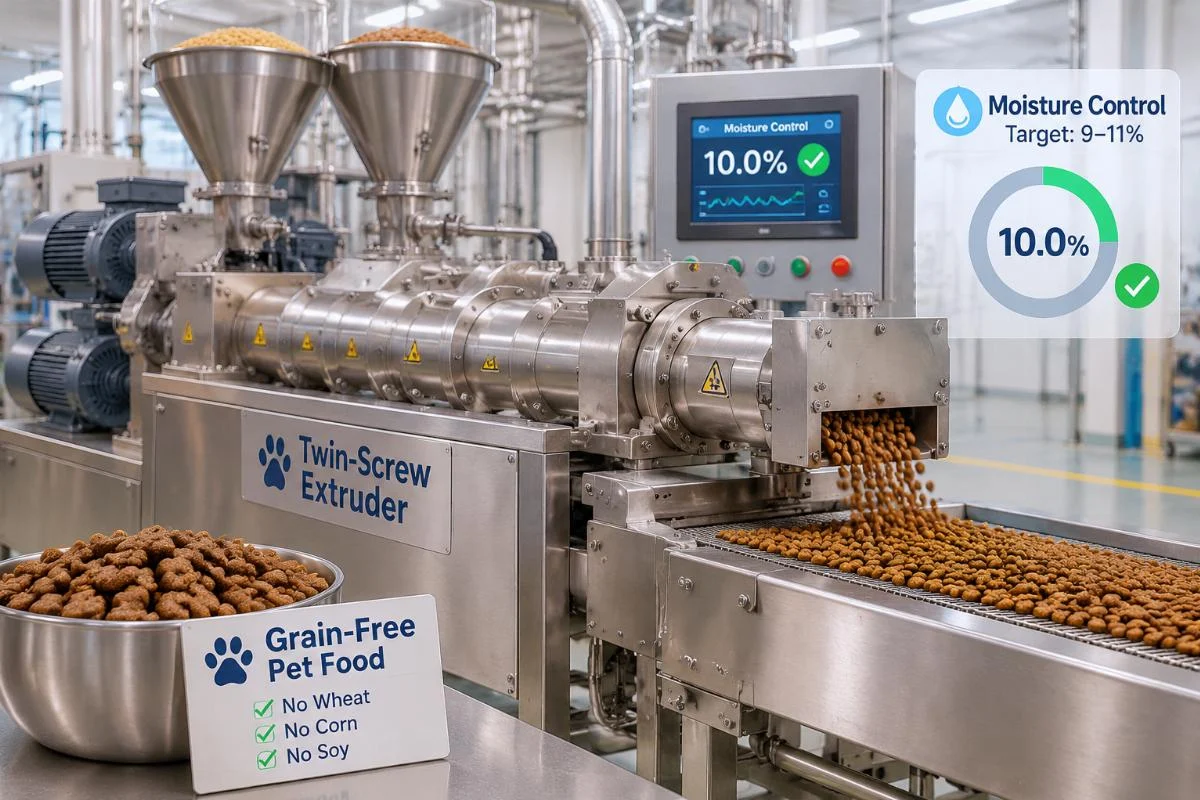
Transitioning from traditional cereal bases to alternative starches fundamentally rewrites the thermal and mechanical rules of extrusion.
How are grain-free starches changing extrusion parameters?
Alternative starches demand rigorous moisture thresholds and precise gelatinization curves to prevent catastrophic barrel blockages.
The shift away from wheat and corn has accelerated rapidly over the past decade, driven by consumer demand for hypoallergenic diets. However, replacing traditional grains with legumes or tubers introduces severe rheological challenges. Cassava and pea starches are highly hygroscopic. When ambient humidity fluctuates, these alternative flours absorb moisture unpredictably, altering their gelatinization temperature curves.
During a site visit to a contract manufacturer in South America, I observed their DS70 twin-screw extruder repeatedly tripping the main drive motor. The root cause was not the machine’s power rating, but the uncontrolled moisture absorption of the cassava flour during the rainy season. The material turned into a dense, sticky paste inside the barrel rather than undergoing proper plasticization. To counter this, modern pet food extrusion trends dictate the integration of advanced pre-conditioners with real-time moisture monitoring. The screw configuration must also be adjusted to provide higher shear energy to break down the resilient cellular structures of legume proteins. Without these adjustments, the extrudate suffers from poor expansion and inconsistent density.
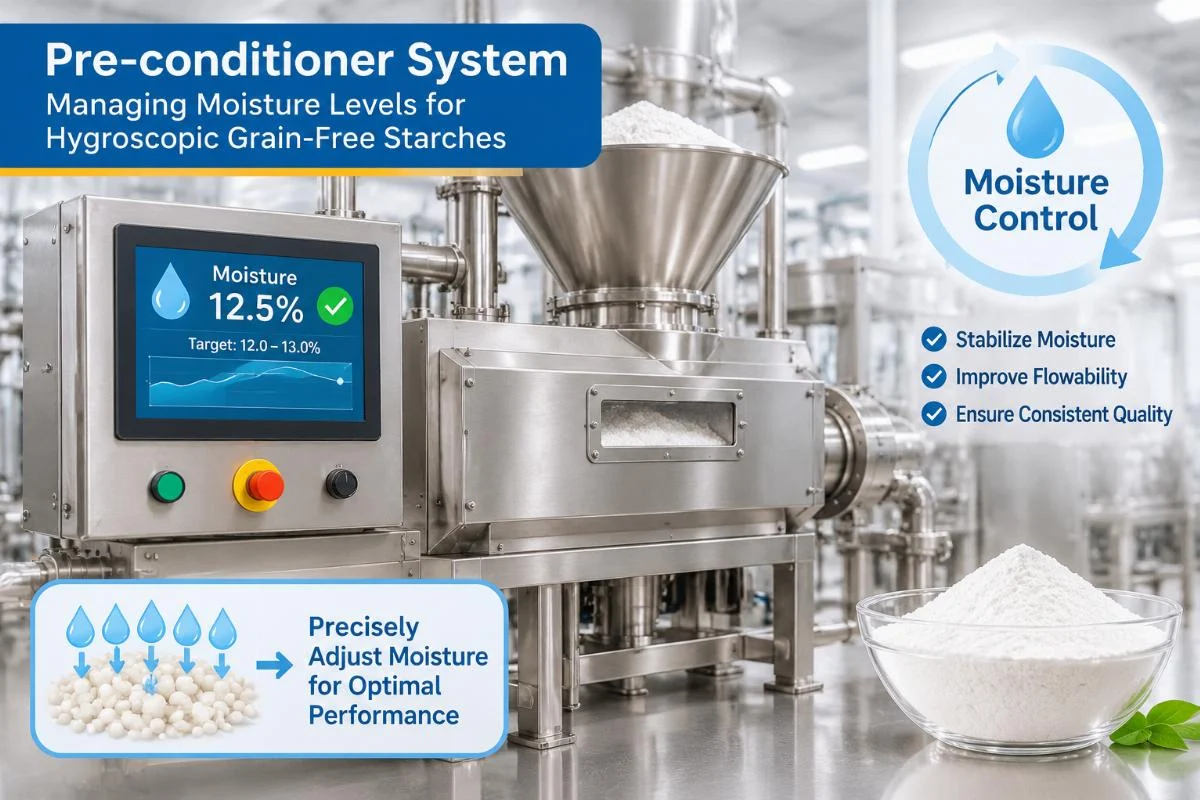
The lesson is clear: alternative starches do not just change the recipe; they demand a complete recalibration of the thermal and mechanical profile inside the barrel.
What equipment adjustments are needed for fresh meat inclusion?
High-moisture fresh meat inclusion requires entirely different screw shear profiles and specialized pre-conditioning to prevent material spoilage.
Another major shift in pet food extrusion trends is the push for fresh meat inclusion, moving away from reliance on rendered meat meals. Incorporating high-moisture fresh meat is not as simple as swapping out a liquid feeder. Fresh meat introduces a massive thermal load and requires specialized screw configurations to manage the additional moisture without turning the process into a boiling mess.
I consulted for a startup in Europe that wanted to pump a high proportion of fresh chicken directly into their existing single-screw setup. The result was a complete process failure; the meat puree simply slipped through the flights without achieving the necessary shear and homogenization. For fresh meat applications, twin-screw technology is non-negotiable. The DS85 extruder, for instance, allows for modular screw element rearrangement. By introducing high-shear kneading blocks followed by reverse-pitch elements, the machine can mechanically work the fresh meat proteins, generating the frictional heat needed for proper cooking while managing the excess moisture.
Furthermore, the pre-conditioner must be equipped with specialized injectors to handle the viscous meat emulsion, ensuring it is evenly distributed before entering the extruder barrel. This prevents localized spoilage and ensures the final kibble maintains structural integrity after drying.
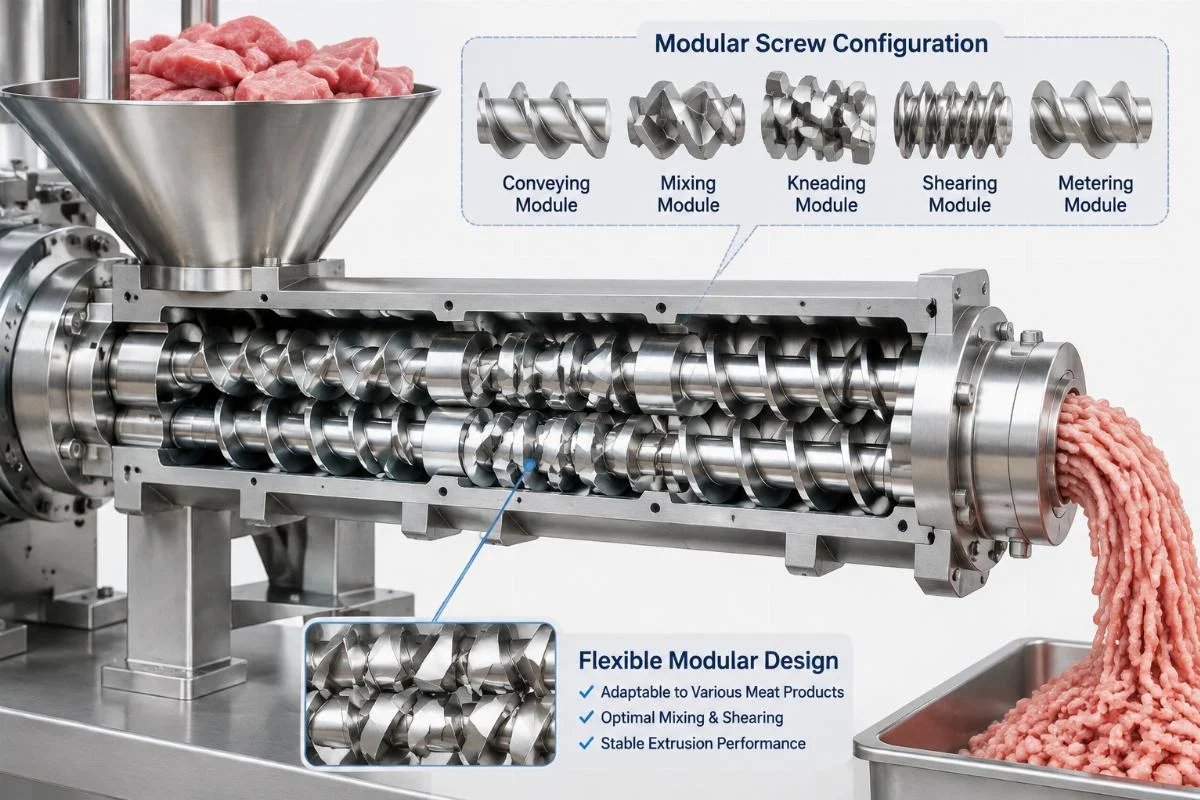
Successfully processing fresh meat relies on mechanical shear and precise temperature profiling, not just adding a new feeder to an old machine.
Why do turnkey lines fail in cross-border transit?
Hygroscopic raw materials and complex machinery classifications demand specialized moisture-proof packaging and accurate HS code alignment.
Even with perfect extrusion parameters, a turnkey line can fail before it ever produces a single kilogram of kibble if cross-border logistics are mishandled. The physical journey of a production line across multiple climate zones is a critical, yet often overlooked, phase in pet food extrusion trends.
Recall the Southeast Asia project I mentioned earlier. The delay was exacerbated because the spare parts and wear components were packed in standard wooden crates without adequate desiccants. When the vessel passed through the equatorial doldrums, the temperature swings caused condensation inside the containers, leading to surface rust on the precision-machined barrel sleeves. Moreover, the HS code mismatch between the extruder and the integrated drying system triggered a customs audit, freezing the cargo for weeks.
To prevent this, comprehensive turnkey solutions must include vacuum-sealed packaging for all hygroscopic spare parts and critical wear components. Additionally, the commercial invoice and packing list must reflect the integrated nature of the line, ensuring that auxiliary equipment like coolers and flavor coaters are correctly classified under the main extrusion line’s HS code to avoid arbitrary customs delays. Proper documentation and climate-controlled packaging are just as vital as the extruder’s motor capacity.
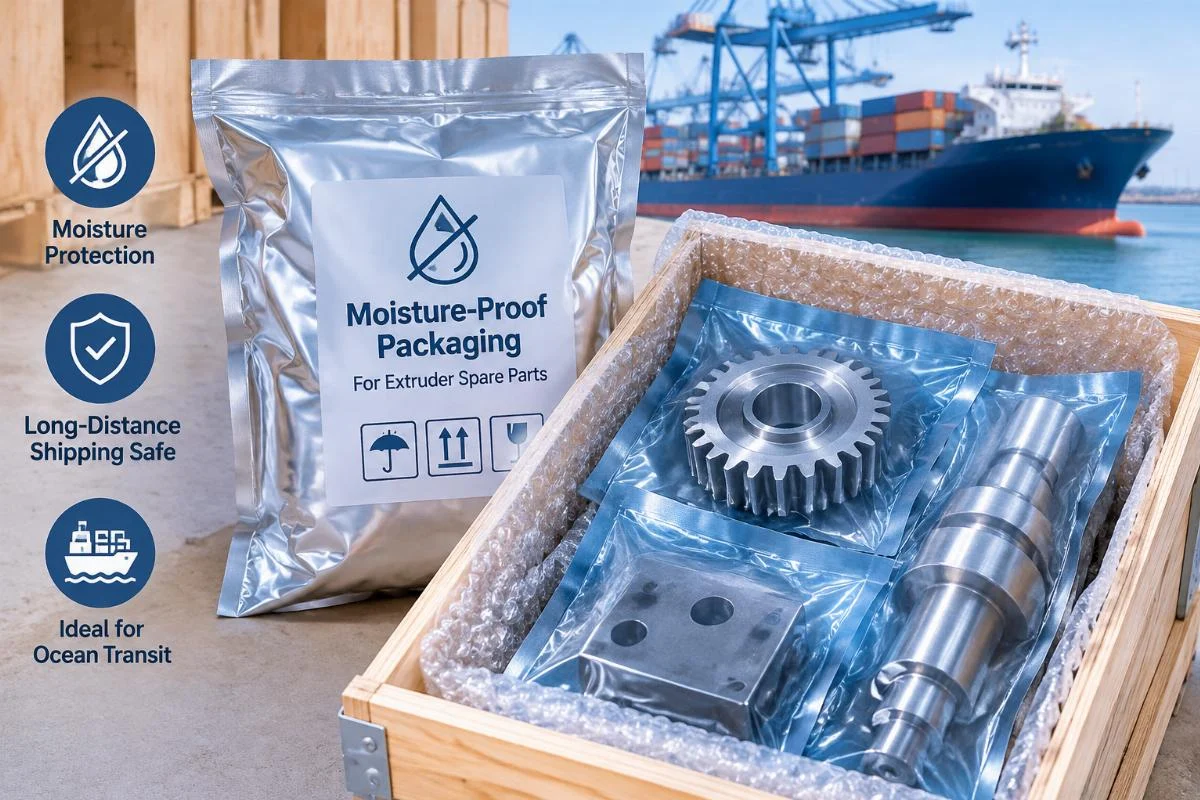
Logistical foresight prevents physical degradation and bureaucratic delays, ensuring the line arrives ready for immediate commissioning.
How to build a flexible pet food production line?
Modular twin-screw systems enable rapid recipe switching between fresh meat and grain-free formulations without compromising output stability.
The ultimate goal for modern manufacturers is agility. Market demands shift rapidly, and being locked into a single product format is a massive liability. Current pet food extrusion trends heavily favor modular designs that allow producers to pivot between different formulations seamlessly.
A flexible line relies on a twin-screw platform where the barrel length and screw profile can be reconfigured in hours, not days. For a contract manufacturer in the Middle East, we designed a line utilizing the DS95 platform. This allowed them to run high-meat, grain-free treats in the morning by adjusting the screw L/D ratio and shear intensity, and switch to standard dry kibble in the afternoon by modifying the temperature zones and feeder rates.
Building this flexibility also extends to the downstream equipment. The dryer must have multi-zone airflow control to handle the varying moisture outputs of different recipes. The flavor coating system needs precise dosing pumps to accommodate both dry powders and liquid slurries. By integrating these modular components, manufacturers can future-proof their operations against evolving consumer preferences, ensuring they can capture new market segments without purchasing entirely new production lines.
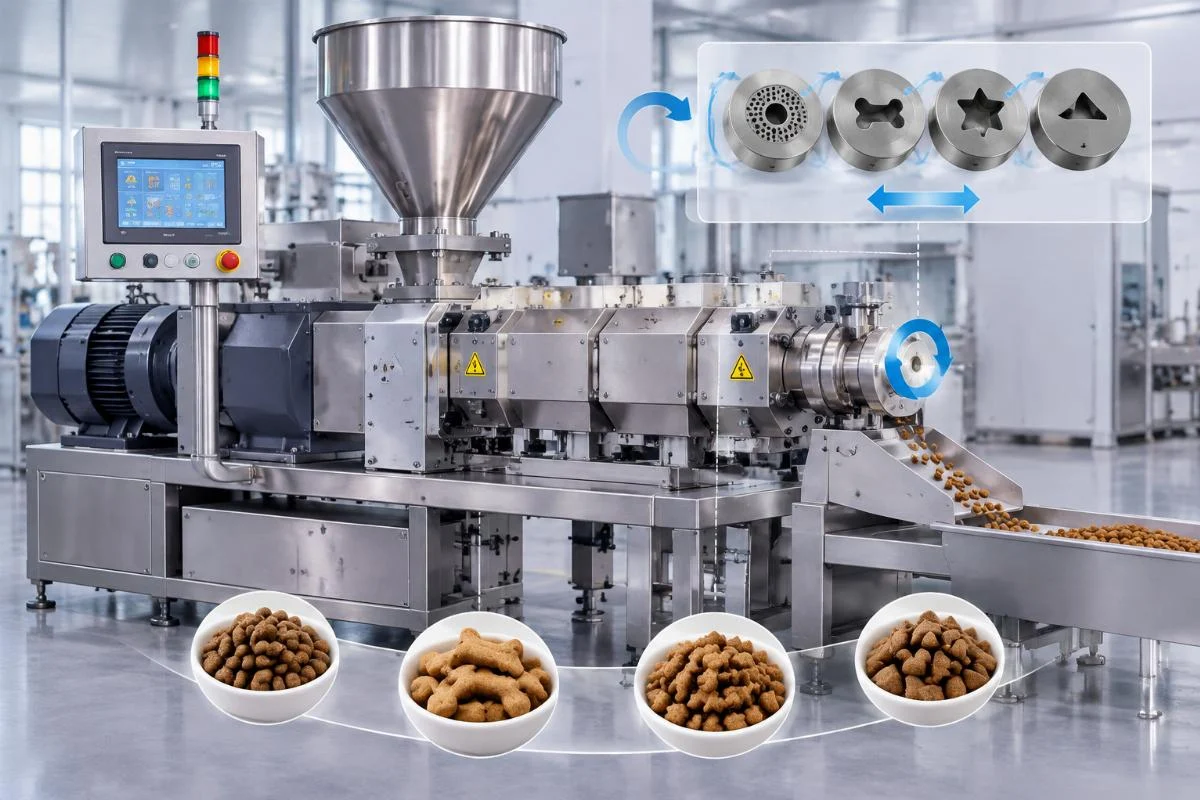
Flexibility is achieved through modular hardware and integrated downstream control, allowing manufacturers to adapt to market shifts instantly.
Conclusion
Mastering modern extrusion requires aligning mechanical shear, moisture dynamics, and logistical foresight. The evolution of pet food extrusion trends demands more than just powerful motors; it requires a deep understanding of ingredient rheology and comprehensive turnkey planning. From managing the hygroscopic nature of alternative starches to configuring twin-screw profiles for fresh meat, every parameter must be precisely controlled. Ultimately, success lies in treating the entire production ecosystem—from formulation to cross-border transit—as a single, integrated process.
Machines Mentioned in This Article

cat food machine
Pet Food Processing Equipment Plant Manufacturer Dog Food
View Machine
cat food machine
Dry Dog Food Production Line Pet Food Pellet Machine
View Machine
cat food machine
Dog Food Pellet Making Machine Line, Automatic Pet
View Machine
cat food machine