
Most buyers assume higher torque guarantees better extrusion, but matching shear characteristics to your recipe is what actually prevents nutrient destruction and barrel sticking.
Selecting the right pet food production line buyer guide requires evaluating screw length-to-diameter ratios and internal polishing grades against fresh meat percentages, rather than just comparing maximum output capacity.
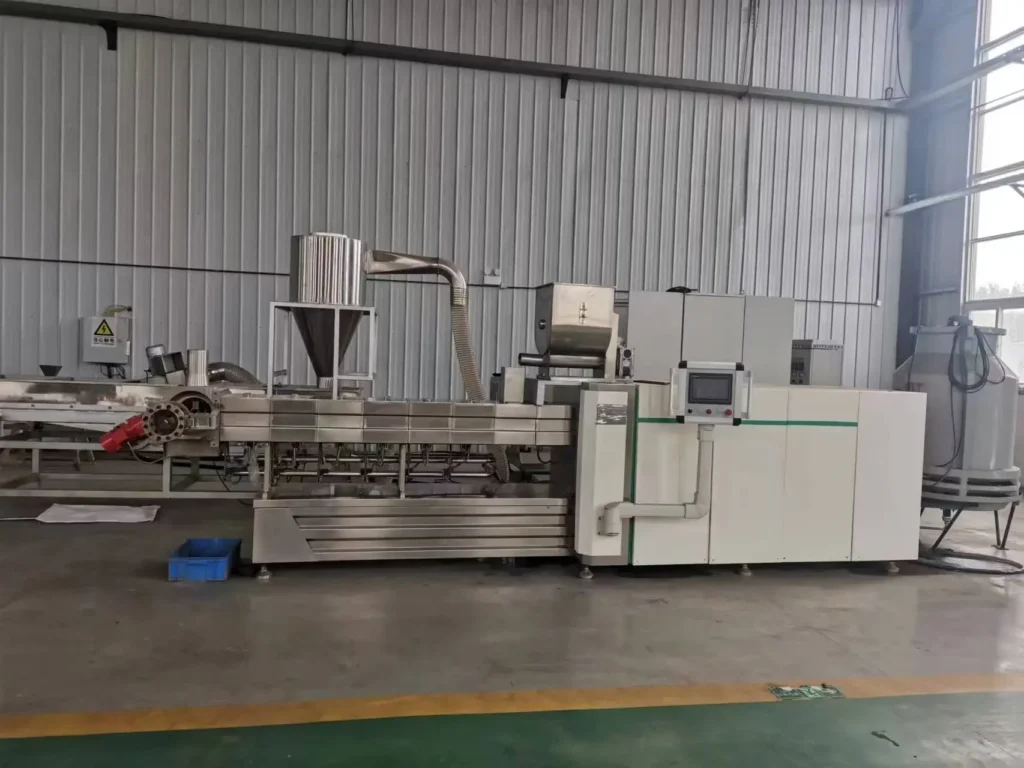
Walking the floor at the Chicago pet trade show, I watched a contract manufacturing buyer from the States zero in on our DS70 twin-screw extruder. During the live trial, his high fresh-meat recipe completely glued to the barrel. Older colleagues who trained me in this business always warned that chasing raw output numbers is a trap. The client hadn’t clarified his initial moisture content, and we hadn’t pushed hard enough on the barrel inner-wall polishing details required for strict sanitary compliance. Once the shear heat spiked with that high meat ratio, a standard polished surface simply couldn’t hold the material. Years of navigating overseas exhibitions have made one thing clear: when selling equipment for this industry, you cannot just boast about specific torque. You have to break down the screw length-to-diameter ratio and shear profiles, integrating them directly into the process design, otherwise, on-site trials turn into absolute disasters.
Let us break down how to navigate these technical nuances when evaluating your next processing setup.
How to Match Extruder Specs to High-Meat Recipes?
Matching the screw length-to-diameter ratio and shear profiles to fresh meat percentages is the only reliable way to prevent barrel sticking and ensure proper protein denaturation.
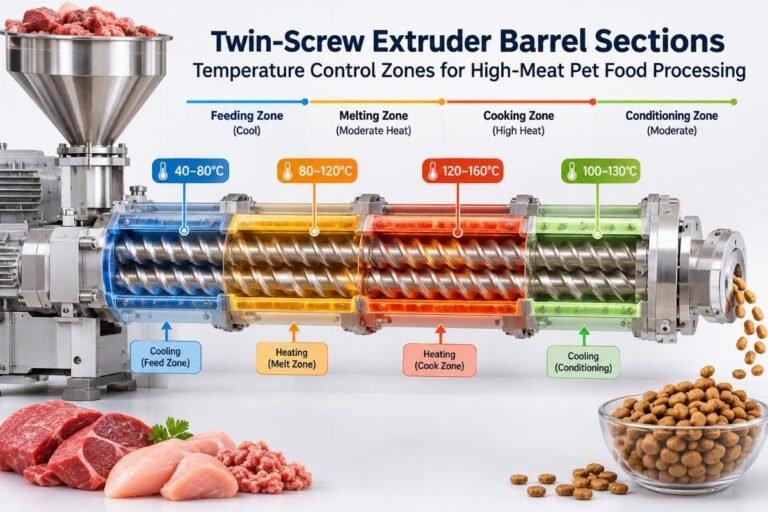
When formulating with high fresh meat inclusion, the physical behavior of the dough changes drastically. The fat and moisture release earlier in the barrel, requiring a screw configuration that manages shear heat without cooking the product prematurely. A standard pet food production line buyer guide often overlooks how internal surface finishes interact with sticky, high-fat doughs. If the barrel polishing grade is insufficient, the high meat content will adhere to the walls, creating dead zones that eventually burn and contaminate the batch.
To illustrate this, consider a specification comparison matrix for high-meat extrusion:
| Configuration Factor | Standard Single-Screw Setup | Optimized Twin-Screw Setup |
|---|---|---|
| Shear Heat Management | Uncontrolled / Vulnerable to hot spots | Controlled / Even thermal distribution |
| Barrel Surface Finish | Basic / Prone to high-fat adhesion | Certified / Mirror-polished for easy release |
| Screw Flexibility | None / Fixed geometry | Full batch-level / Modular element arrangement |
| High-Meat Throughput | Noticeably reduced / Frequent blockages | Robust / Consistent material conveyance |
A European contract manufacturer once struggled with a recipe containing a massive percentage of fresh chicken. Their previous equipment caused severe sticking, leading to extended downtime for manual scraping. By switching to a DS70 pet food extruder specifications setup that featured modular screw elements and a higher polishing grade, they eliminated the adhesion issue entirely. The shear characteristics were perfectly tuned to the recipe, preventing the fat from separating too early.
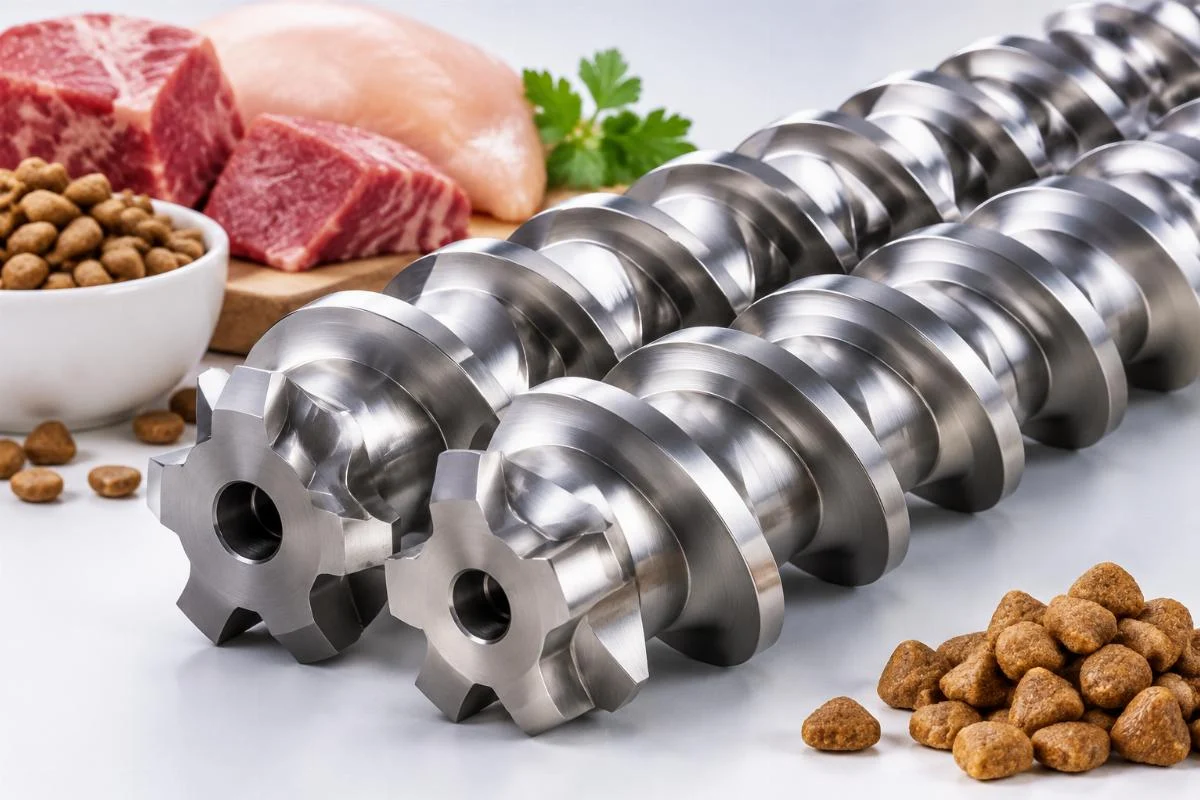
The takeaway is simple: do not just look at the motor size. Evaluate how the screw geometry and barrel finish handle the specific rheology of your high-meat dough.
Why Do Trial Runs Fail with High-Moisture Formulas?
Precise moisture control and specialized screw configurations are critical for achieving proper expansion and final kibble density in high-moisture recipes.
Moisture mismatch is a silent killer in extrusion trials. Many startups focus heavily on the ingredient list but fail to clarify the initial moisture percentage of their fresh meat or wet binders. When the initial moisture is too high, the material slips through the barrel without building enough pressure, resulting in poor expansion and a dense, unstable final product. Conversely, if the moisture is too low, the dough becomes too abrasive, accelerating wear on the screw elements.
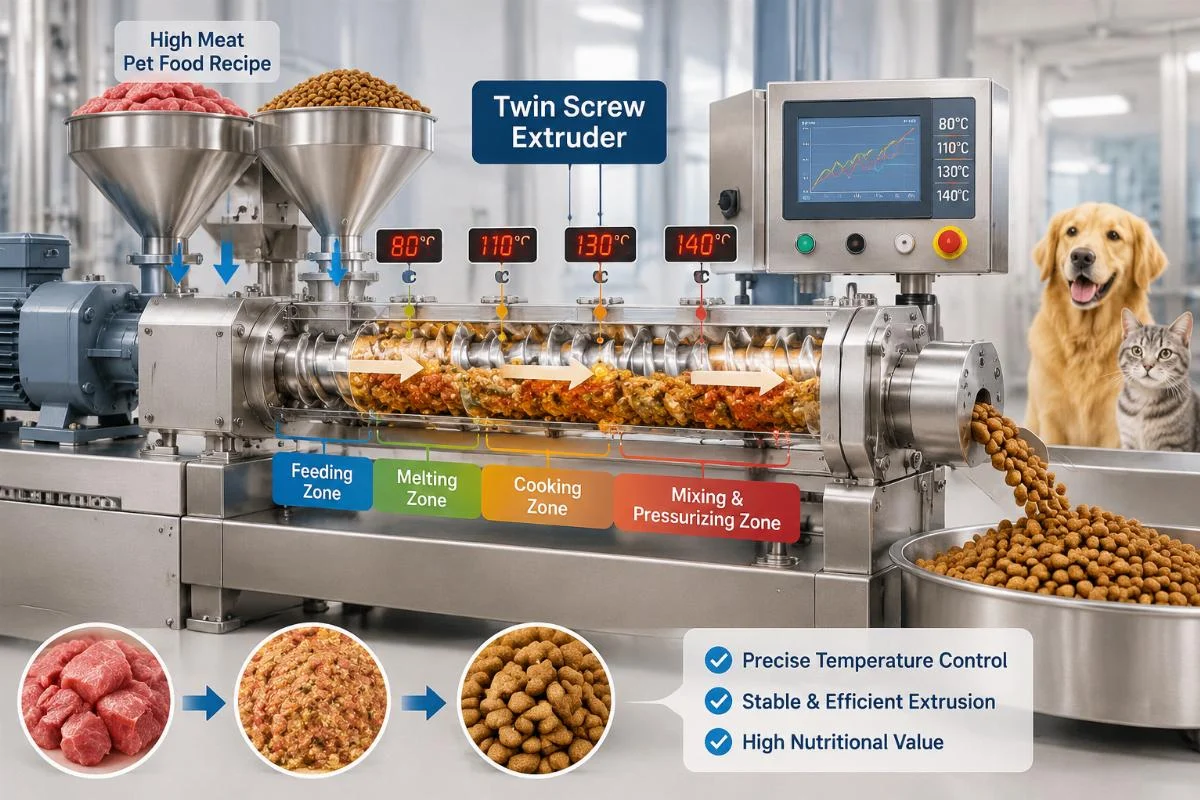
A reliable pet food production line buyer guide must address how the equipment handles these moisture retention curves. The DS70 twin-screw extruder for high meat pet food applications is designed with specialized venting zones and precise temperature control zones to manage this exact challenge. By allowing steam to escape at the right stage, the system prevents the product from becoming overly dense while maintaining the structural integrity needed for expansion.
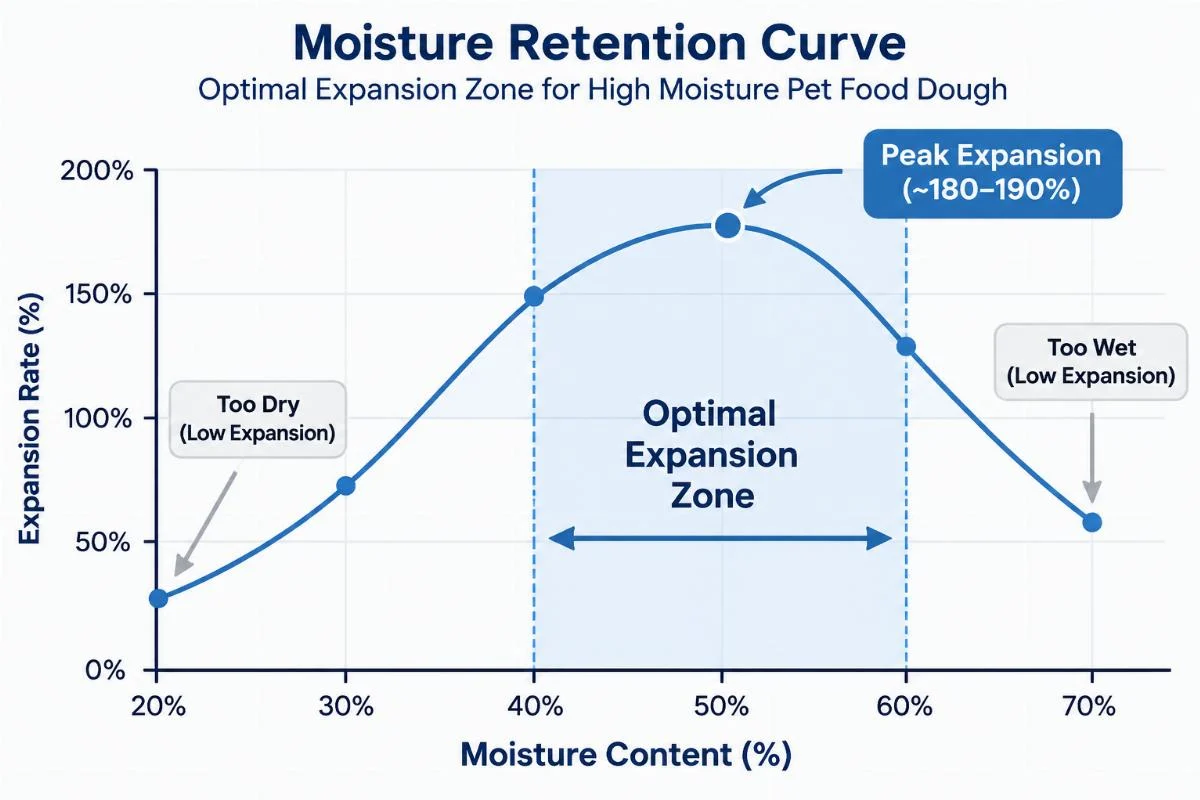
During a trial with a wet-fresh meat formula, a startup owner noticed the kibble was coming out too dense and sinking in water, despite using a floating feed setup. The issue wasn’t the recipe’s nutritional profile; it was the unclarified moisture content combined with a screw configuration that lacked adequate venting. Adjusting the initial moisture percentage and utilizing a screw profile with dedicated degassing sections resolved the density issue immediately.

Always map your initial moisture targets against the machine’s venting capabilities before committing to a trial run.
What Sanitary Standards Ensure Food Safety?
Adhering to strict sanitary polishing standards and utilizing food-grade stainless steel are non-negotiable for preventing contamination and ensuring easy cleaning in pet food manufacturing.
Food safety is not just a regulatory hurdle; it is the foundation of brand trust. When dealing with high-meat recipes, the risk of bacterial growth in dead zones or porous surfaces is substantial. A comprehensive pet food production line buyer guide must emphasize the importance of surface roughness values and material certifications. Equipment that meets strict sanitary standards ensures that no residual material is left behind after cleaning, which is critical when switching between different protein sources or adding sensitive vitamin premixes.
Meiteng constructs its turnkey pet food manufacturing line components using food-grade stainless steel, ensuring that every contact surface meets rigorous hygiene requirements. The DS70 pet food extruder specifications include barrel interiors polished to a mirror finish, drastically reducing the surface area where fats and proteins can hide. This level of finishing is essential for passing audits and maintaining a sterile production environment.
| Sanitary Feature | Basic Commercial Grade | Food-Grade Sanitary Compliant |
|---|---|---|
| Material Certification | Self-reported / Unverified | Verifiable / Food-grade stainless steel |
| Surface Roughness | Uncontrolled / Micro-pockets present | Certified / Mirror-polished to eliminate harborage |
| Cleaning Protocol | Vulnerable / Requires aggressive chemicals | Resistant / Easy clean-in-place compatibility |
| Cross-Contamination Risk | High / Dead zones in seams | Robust / Seamless design with sanitary gaskets |
A Middle East pet food producer faced repeated audit failures due to trace fat residues found in their extruder barrels during swab tests. Their existing equipment had standard commercial finishes that trapped microscopic fat particles. Upgrading to a line with certified sanitary polishing and seamless design eliminated the harborage points, allowing them to pass subsequent inspections effortlessly.

Never compromise on surface finish and material traceability; they are your first line of defense against contamination.
How to Scale from Lab to Full Production?
Integrating a complete turnkey system from raw material mixing to final coating ensures consistent quality and seamless scaling from initial trials to commercial capacities.
Scaling up from a successful lab batch to full commercial production is where many startups face their biggest hurdles. A recipe that works perfectly in a small mixer often behaves differently when processed through a continuous, high-capacity line. The transition requires more than just a bigger extruder; it demands a holistic approach to material handling, drying, and flavor application. A well-structured pet food production line buyer guide will highlight the importance of line integration over isolated machine purchases.
Meiteng specializes in providing a full turnkey pet food manufacturing line that covers every step of the process. From the initial intake and mixing of dry and wet ingredients to the precise extrusion, continuous drying, and even flavor coating, the entire system is designed to work in harmony. This integrated approach ensures that the thermal and mechanical history of the product remains consistent, regardless of the batch size. The DS70 twin-screw extruder for high meat pet food acts as the heart of this line, but it is the surrounding systems—like the multi-pass dryers and precision coating drums—that guarantee the final product meets commercial standards.

A North American startup initially bought just an extruder, hoping to integrate it with their existing, mismatched drying equipment. The result was inconsistent moisture levels in the final kibble, leading to shelf-life issues. By switching to a fully integrated turnkey line, they synchronized the extrusion output with the drying capacity, stabilizing the final moisture content and extending the product’s shelf life significantly.
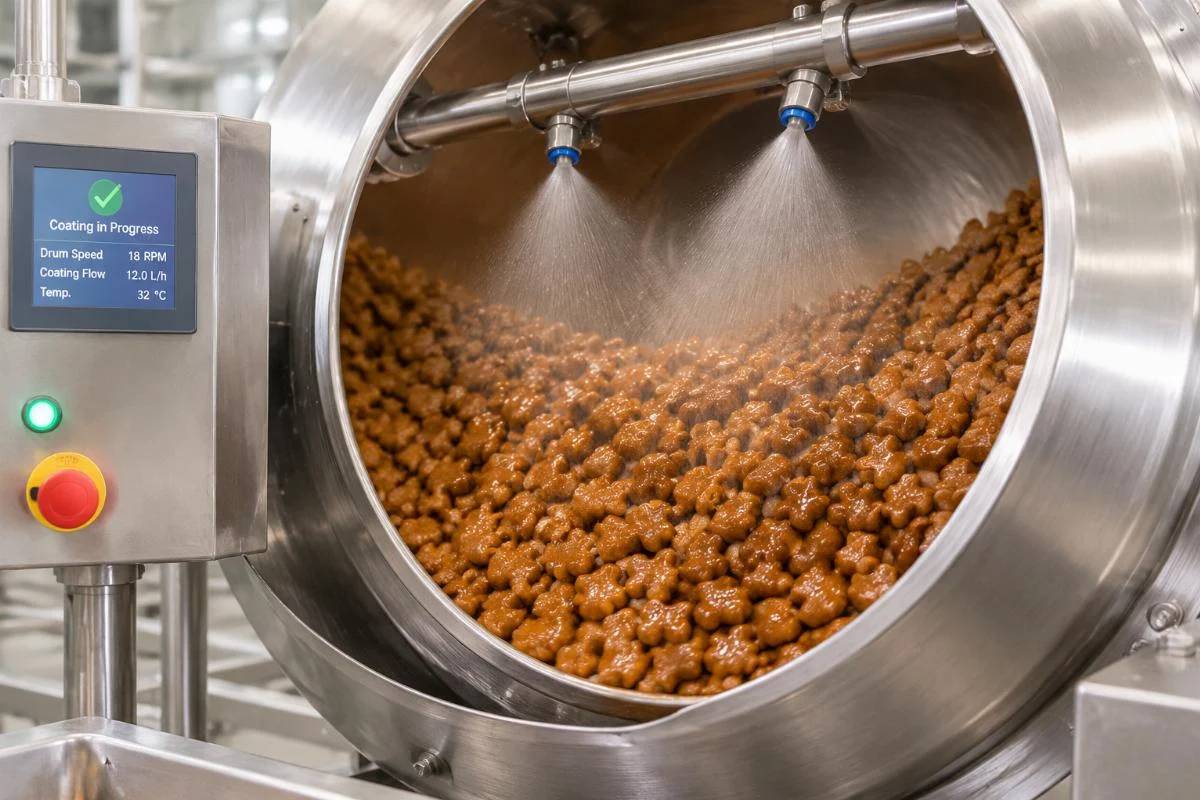
Invest in the entire process flow, not just the core extrusion machine, to ensure your lab success translates to commercial reality.
Conclusion
Successful extrusion relies on matching shear profiles to your recipe, not just maximizing motor torque. Selecting the right equipment requires a deep understanding of how screw geometry, moisture management, and sanitary finishes interact with high-meat formulations. By focusing on these technical details and embracing a fully integrated approach, manufacturers can avoid costly trial failures and build a reliable, scalable production foundation.