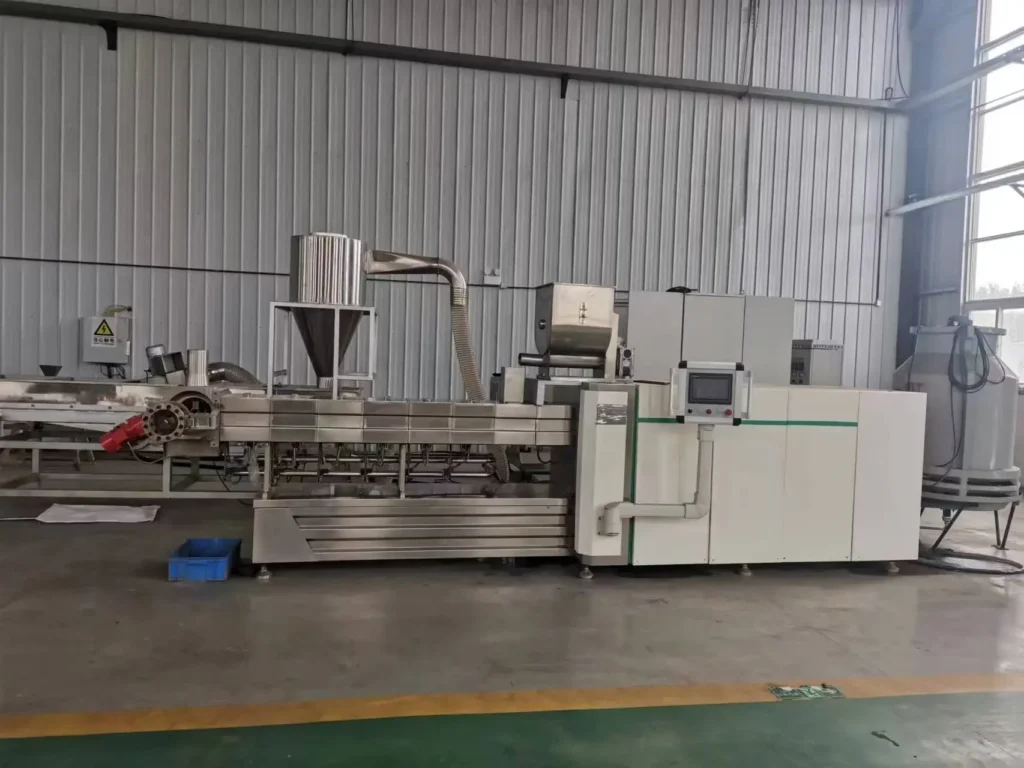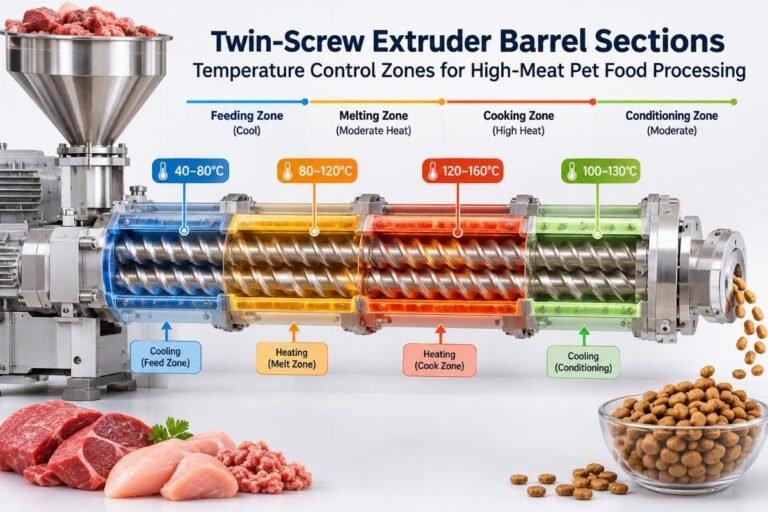

Higher theoretical capacity never guarantees a better return on investment for a new processing facility. The real reason most new plants fail to reach their financial targets is a fundamental mismatch between the local recipe and the internal shear profile of the machine. When selecting pet food extruder equipment Mexico buyers must prioritize recipe-specific screw configurations and template matching over mere capacity metrics.
I learned this the hard way years ago while commissioning a DS70 twin-screw extruder in Lagos. The client insisted on running a high-ratio cassava flour recipe. I relied on a standard screw arrangement instead of adjusting the element sequence for that specific starch profile. The machine blocked the die within minutes, forcing us to tear down the barrel and reconfigure the teeth at two in the morning. Since that exhausting night, I never look at a capacity chart first. My very first question to any client inquiring about pet food extruder equipment Mexico is always about their meat-bone meal ratio. The hardware is rigid, but the formula and the screw profile must remain flexible.

Choosing the right pet food extruder equipment Mexico requires looking past the brochure numbers and focusing on how the machine handles your specific raw materials. Let us break down the real engineering decisions that keep a plant running smoothly.
How to Match Extruder Capacity with Your Mexican Plant Scale?
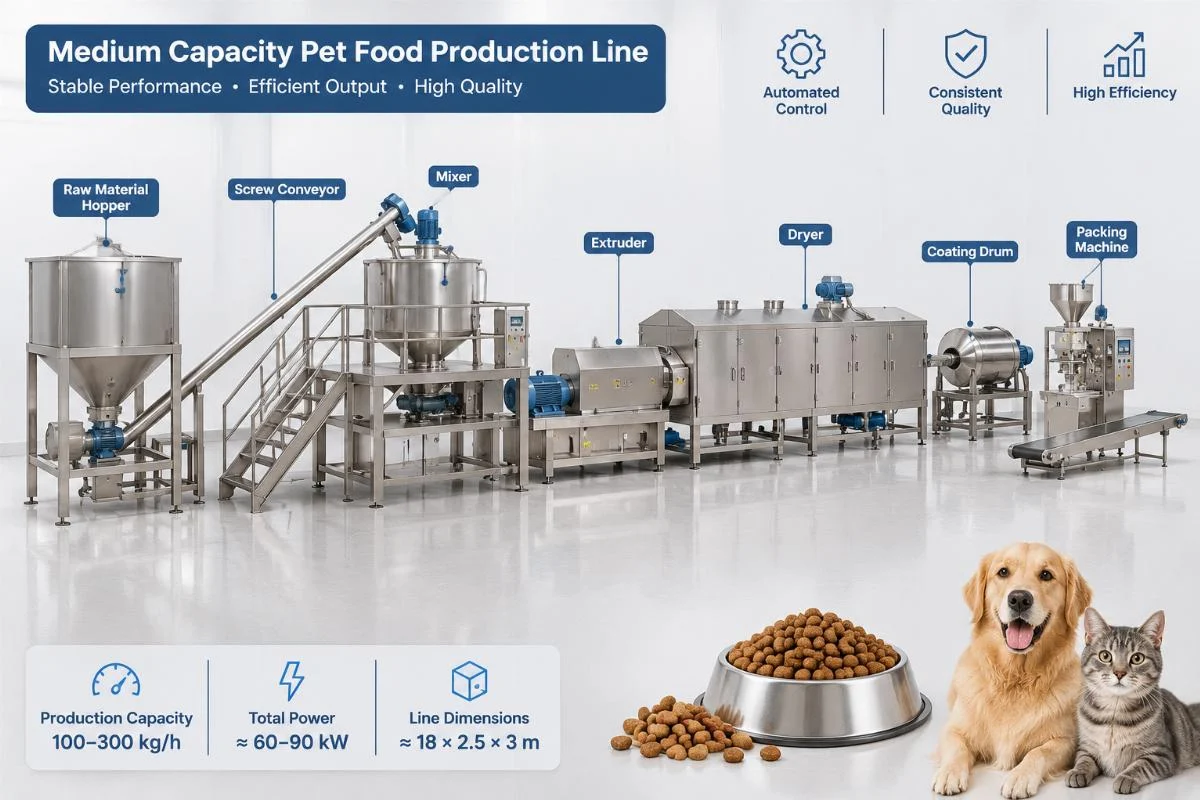
Selecting a line based on initial market testing rather than maximum theoretical output prevents severe capital waste. Many startup owners assume that buying the largest available pet food extruder equipment Mexico will future-proof their business. In reality, running a massive machine at a fraction of its designed capacity destroys the thermal and mechanical balance inside the barrel.
When you operate a large-volume twin-screw extruder for pet food at low throughput, the material residence time drops unpredictably. This leads to poor gelatinization and inconsistent kibble density. The specific mechanical energy input becomes impossible to control, resulting in a product that fails basic nutritional standards.
| Plant Stage | Recommended Line Scale | Operational Focus |
|---|---|---|
| Initial Market Testing | Small to Medium Capacity | Recipe validation and local taste testing |
| Regional Expansion | Medium Capacity | Consistent batch-to-batch uniformity |
| National Distribution | Large Capacity | Maximum throughput with automated dosing |
A local startup in Monterrey initially wanted a massive line to dominate the northern market. We advised them to start with a medium-capacity DS70 configuration. This allowed them to test different poultry and fish meal ratios without the nightmare of cleaning out tons of off-spec product during recipe tweaks. Once their formulas were locked and retail channels secured, the path to scaling up became a matter of adding parallel lines rather than gambling on a single oversized unit.
Why Do Screw Configurations Matter More Than Motor Power?
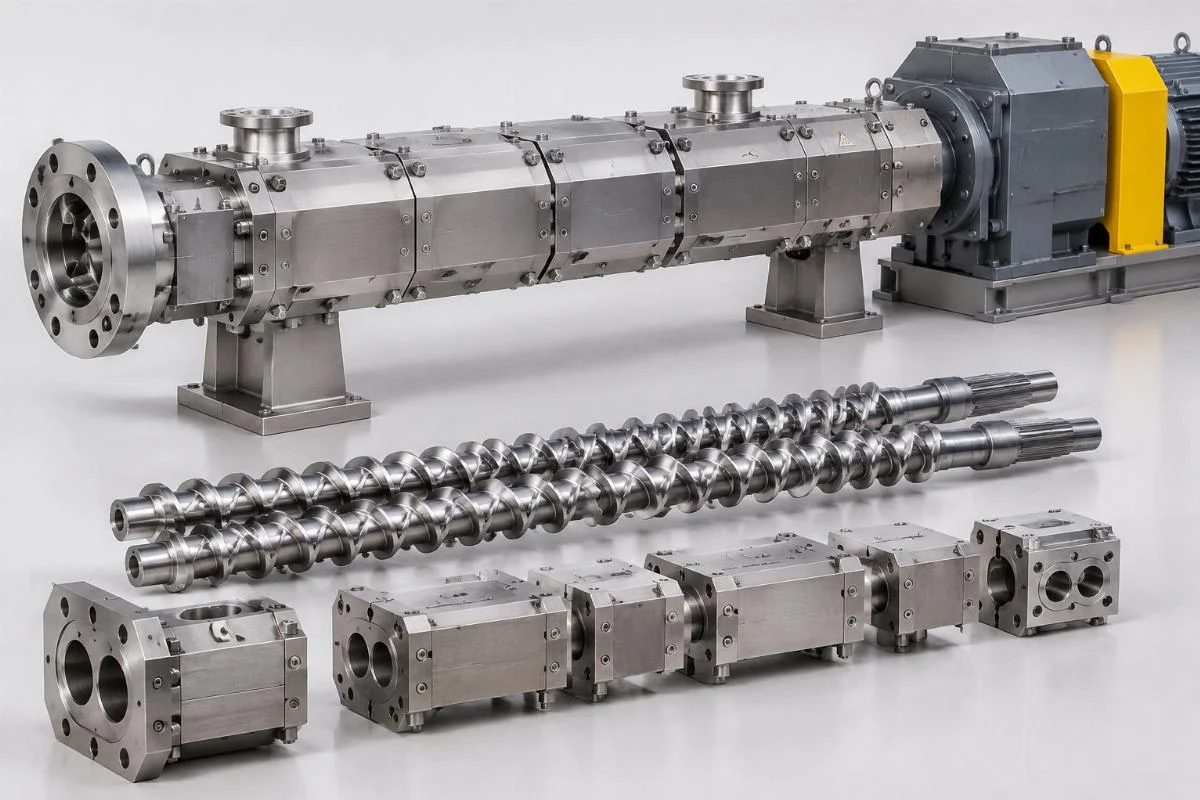
Customizing shear elements prevents die blockage and ensures proper texture when processing high meat-bone meal or local starches. The motor only provides the raw power; the screw configuration dictates how that power is transferred to the dough. For pet food extruder equipment Mexico, the local ingredient profile demands a highly tailored approach to the screw L/D ratio and element arrangement.
Consider a high meat-bone meal scenario. This recipe requires intense shear and pressure to properly emulsify the fats and proteins. A standard conveying setup will simply slip. You need a specialized DS95 twin-screw configuration with high-torque reverse elements to build the necessary pressure and friction.
Conversely, a high plant-based or local starch scenario behaves entirely differently. Starches can become overly viscous and sticky if subjected to excessive shear. If you use a high-meat screw profile on a corn-heavy recipe, the material will overwork, overheat, and eventually block the die. The solution lies in rearranging the screw elements to introduce more conveying and less kneading, ensuring a smooth flow without burning the carbohydrates.
| Recipe Profile | Required Shear Action | Screw Element Strategy |
|---|---|---|
| High Meat-Bone Meal | Intense Kneading & Pressure | Reverse elements, high torque transmission |
| High Plant-Based Starch | Gentle Conveying & Mixing | Forward elements, reduced kneading blocks |
| Multi-Formulation | Flexible Adaptation | Modular barrel, quick-change template design |
A contract manufacturer in Guadalajara faced constant downtime because they used a single standard screw set for both a high-poultry kibble and a vegetarian dog treat. The vegetarian mix kept burning, while the poultry mix was undercooked. By switching to a modular barrel design with interchangeable screw shafts, they could swap the internal profile in hours, not days. This flexibility is the true advantage of a modern twin-screw extruder for pet food.
What Turnkey Services Reduce Startup Risks in Mexico?
On-site installation, operator training, and local formula adaptation ensure smooth commissioning and regulatory compliance. Buying the iron is only the first step. The real risk in starting a pet food plant in Mexico lies in the transition from raw materials to a shelf-stable, nutritionally complete kibble that meets local and international standards.
Mexican regulations, including specific NOM standards for animal feed, require strict traceability and nutritional consistency. A machine that extrudes beautifully but produces a kibble that fails a proximate analysis is useless. This is where turnkey support becomes critical. The manufacturer must provide formula development support to balance the local availability of ingredients like sorghum, corn, and regional protein meals with the nutritional targets.
Furthermore, the physical installation of the pet food extruder equipment Mexico requires precise alignment of the entire line, including the pre-conditioner, the extruder itself, and the multi-layer drying ovens. Improper airflow in the dryer can lead to mold growth during storage, ruining the entire batch.
When we set up a facility in the Bajio region, the local operators had never worked with high-moisture preconditioning. We spent weeks on-site, not just turning wrenches, but teaching the staff how to read the steam pressure gauges and adjust the liquid dosing in real-time. This hands-on knowledge transfer is what separates a successful launch from a costly operational failure.

How to Verify Equipment Quality and Food Safety?
Demand food-grade stainless steel construction and sanitary design compliance to protect your brand and meet export standards. The environment inside a pet food plant is harsh, combining heat, pressure, moisture, and abrasive ingredients. If your pet food extruder equipment Mexico is not built to withstand this, it will contaminate your product and fail prematurely.
The contact parts must be constructed from certified food-grade stainless steel. This is non-negotiable for preventing heavy metal contamination and ensuring the kibble passes strict safety audits.
Beyond the raw materials, the sanitary design of the machine dictates how well you can clean it between batches. Dead zones where old dough can accumulate and rot are a massive biohazard. A well-designed twin-screw extruder for pet food features openable barrels and self-cleaning screw flights that minimize residue buildup.
When evaluating a supplier, ask for detailed cross-sectional drawings of the barrel and screw. Look for how the heating and cooling channels are arranged. Uniform temperature control is vital for consistent product quality. If the supplier cannot provide verifiable certifications or relies on vague promises about their steel grade, walk away. The cost of a product recall due to contamination dwarfs the initial savings on cheap machinery.

Conclusion
Successful pet food manufacturing relies on aligning mechanical shear with biological recipe requirements. Selecting the right pet food extruder equipment Mexico demands a deep understanding of your specific ingredients, from high-meat blends to local starches, and choosing a machine architecture that can adapt to those demands. Prioritize flexible screw configurations, rigorous sanitary construction, and comprehensive formula support over simple output numbers to build a resilient and profitable production line.
Machines Mentioned in This Article

cat food machine
Pet Food Processing Equipment Plant Manufacturer Dog Food
View Machine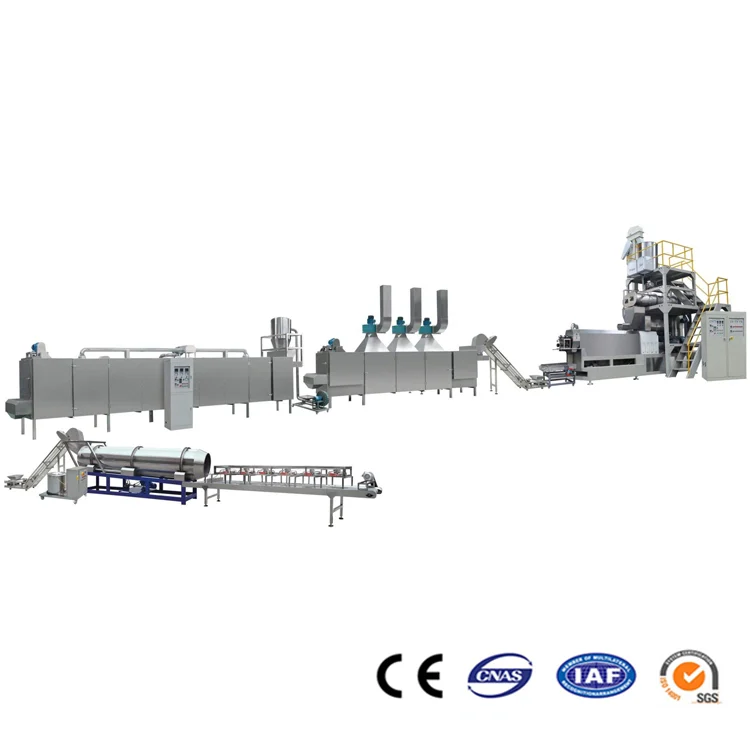
cat food machine
Dog Food Production Line Manufacturer Processing Plant
View Machine
dog food machine
Pet Food Dog Treats Production Line Manufacturer Plant
View Machine
cat food machine