
Picking the largest machine on the floor plan is the fastest way to bankrupt a new pet food brand.
Selecting the right pet food extruder capacity between 200 and 2000 kg/h relies entirely on matching the formula gelatinization degree and your three-year order scaling forecast, rather than just minimizing the initial day-one budget.
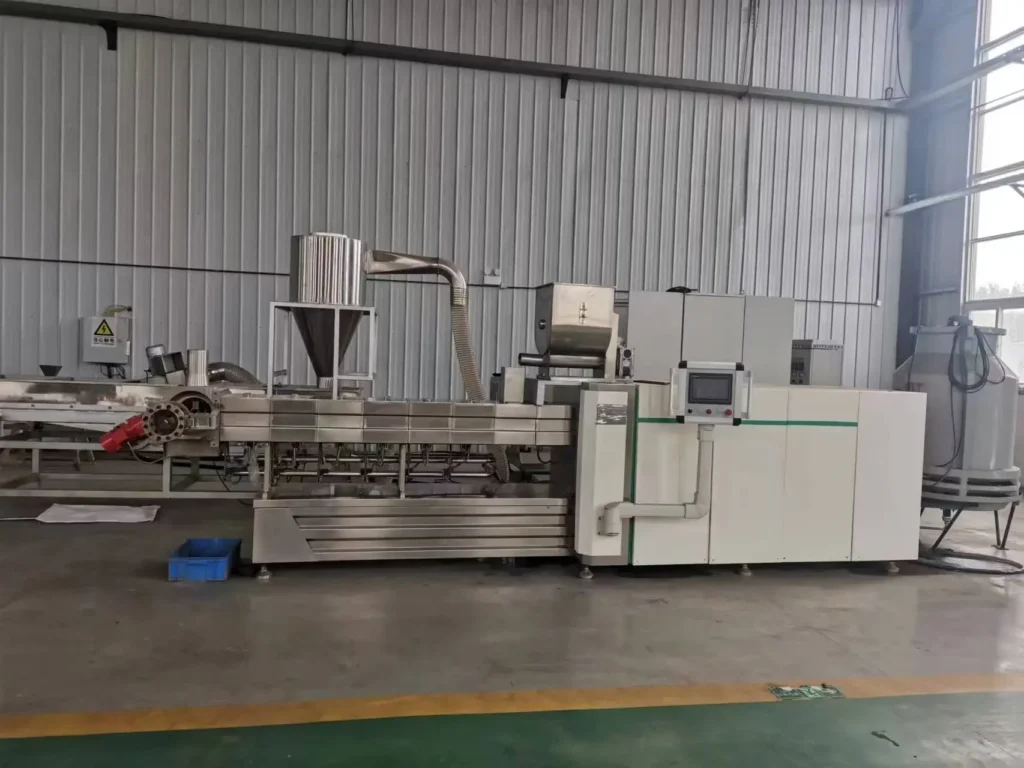
I still remember a startup project in Monterrey where the local owner insisted on buying the smallest rated machine to save capital. When the regional pet food market exploded, his daily demand consistently exceeded the machine’s actual stable output. The equipment ran in constant overload, and the screw wear rate accelerated so severely that unplanned downtime destroyed his profit margins. Moving from the assembly floor in Jinan to executing turnkey line installations across multiple regions, I have watched this exact capacity mismatch happen repeatedly. Sizing a pet food extruder capacity is never a guessing game; it requires balancing specific mechanical energy for starch gelatinization against realistic production scaling.

Let us break down how these capacity tiers actually perform on the factory floor.
What Determines the Right Extruder Capacity for Your Pet Food Line?
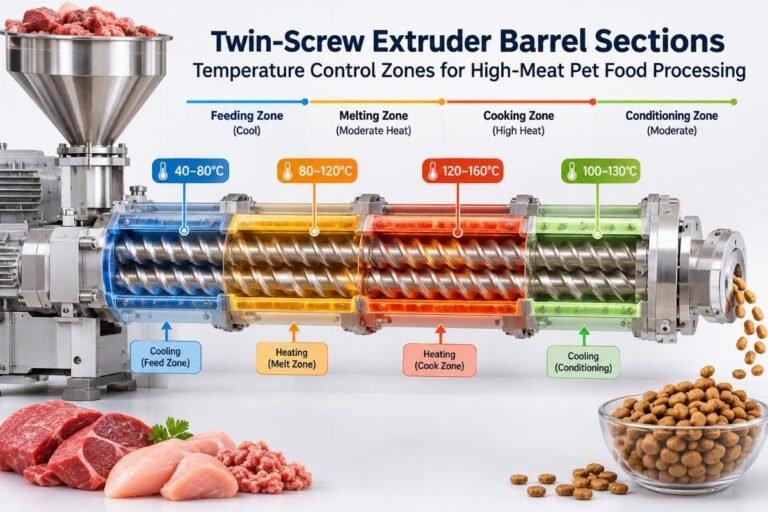
The true bottleneck in pet food manufacturing is never the motor nameplate; it is the thermal and mechanical history the dough receives inside the barrel.
When evaluating pet food extruder capacity, buyers often fixate on the throughput number. However, the actual determining factors are the formula’s gelatinization requirements and the motor power matching needed to maintain stable specific mechanical energy. If a machine is oversized for a specific recipe, the material residence time drops, leading to poor gelatinization and wasted energy at low loads. Conversely, an undersized machine forces the main motor to draw maximum amperage continuously, accelerating mechanical fatigue.
| Selection Factor | Undersized Equipment | Correctly Matched Equipment | Oversized Equipment |
|---|---|---|---|
| Gelatinization Stability | Uncontrolled (Overheating) | Controlled (Optimal) | Uncontrolled (Under-processed) |
| Screw Wear Rate | Noticeably increased | Standard | Substantially extended |
| Energy Efficiency | Vulnerable | Robust | Vulnerable |
| Recipe Flexibility | None | Full batch-level | Sample-level |
A contract manufacturer in Southeast Asia once tried to run a high-meat formula on a machine rated for standard cereal-based kibble. The lack of torque density meant the dough never reached the necessary thermal threshold, resulting in a full batch rejection. Proper pet food extruder capacity selection ensures the screw configuration delivers the exact shear and heat needed for the specific protein and starch matrix.

Ultimately, the right pet food extruder capacity is defined by the intersection of your target recipe’s rheology and your volume trajectory.
How Do 200-500 kg/h Extruders Fit Startup & Niche Production?
Small capacity lines are the ultimate sandbox for premium treats and clinical diets, but they demand absolute feed consistency to survive.
When launching a niche brand, the initial pet food extruder capacity usually falls into the lower tier. Models like the DS32 or DS50 are ideal for trials, small-batch functional treats, and prescription diets. The advantage here is agility. Recipe changeover times are minimal, and the material cost of a failed trial run is negligible. However, these machines require strict feed consistency. Even minor fluctuations in raw material moisture can cause the small barrel volume to choke or vent steam excessively.
| Production Scenario | Equipment Tier | Operational Reality |
|---|---|---|
| Premium Treat Trials | Entry-level | High flexibility, strict moisture control needed |
| Clinical Diet Batches | Entry-level | Excellent for specialized screw configs |
| Mass Market Kibble | Entry-level | Vulnerable to severe overload |
I worked with a startup producing hydrolyzed protein diets. They utilized a compact twin-screw setup to maintain precise temperature profiles required for preserving peptide structures. The pet food extruder capacity was perfectly aligned with their niche pharmacy-style distribution, avoiding the massive energy waste of running a large barrel at a fraction of its load.
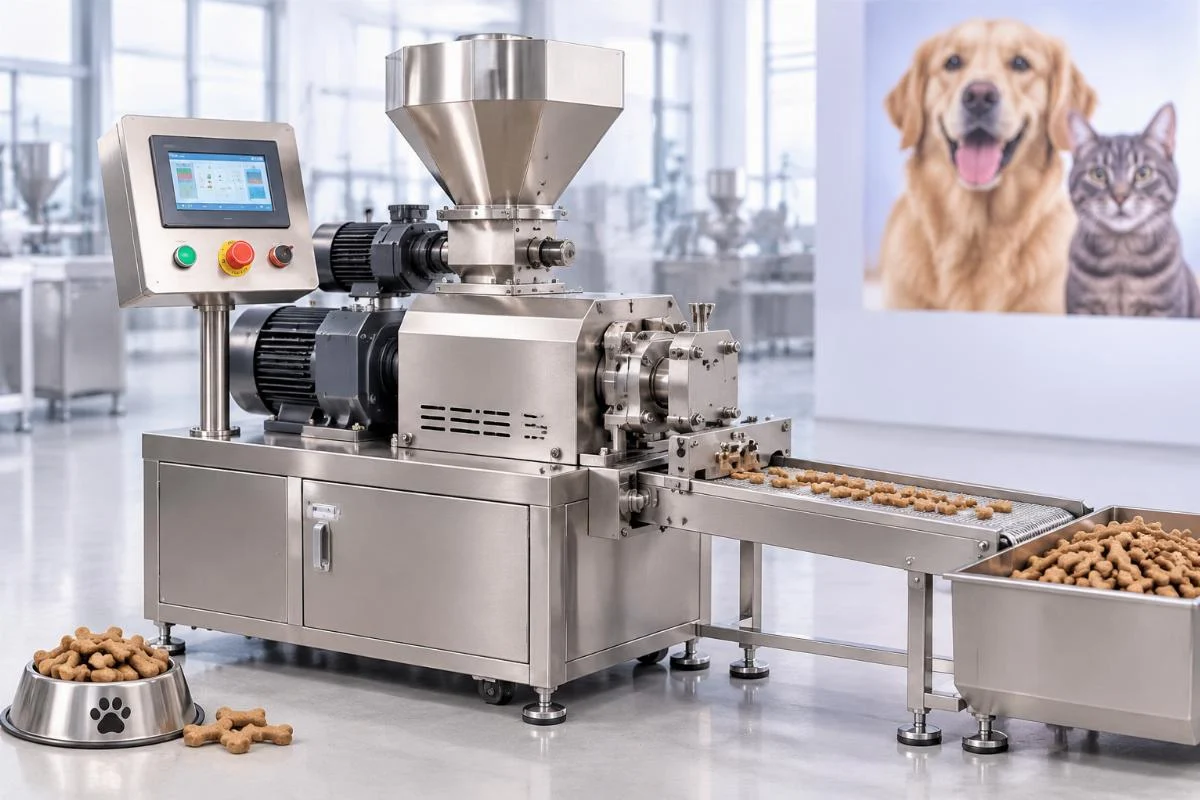
For startups, selecting this pet food extruder capacity means prioritizing formula development support and turnkey line design over raw tonnage.
Why Choose 600-1200 kg/h for Scaling Commercial Dry Food?
This tier is the undisputed workhorse for mainstream kibble, balancing massive throughput with the stable thermal history required for consistent shelf life.
Once a brand secures retail shelf space, the pet food extruder capacity must jump to handle continuous commercial runs. Machines in the DS65 to DS85 range provide the sweet spot. They offer enough barrel volume to ensure proper gelatinization of complex carbohydrate blends while delivering the tonnage needed for multi-shift operations. The screw L/D ratio in this tier is specifically engineered to maintain specific mechanical energy without overstressing the gearbox.
| Scaling Stage | Capacity Tier | Market Application |
|---|---|---|
| Regional Retail Expansion | Mid-tier | Standard adult/maintenance kibbles |
| Contract Manufacturing | Mid-tier | High flexibility for multiple brand recipes |
| Export Volume Production | Mid-tier | Robust continuous operation |
A scaling producer in the MENA region recently upgraded their line to this tier. They needed to double their output to fulfill a new national distribution contract. By matching the pet food extruder capacity to their new forecast, they achieved a rapid ROI payback period because the equipment ran at its designed optimal load, minimizing unplanned downtime and screw replacement costs.

Choosing this pet food extruder capacity guarantees that you can meet mainstream demand without sacrificing the nutritional integrity of the kibble.
When Should You Invest in 1300-2000 kg/h High-Capacity Lines?
Massive volume producers require this tier, but it demands advanced automation and robust downstream integration to prevent catastrophic bottlenecks.
At the upper end of the spectrum, the pet food extruder capacity reaches industrial mega-scale. Models like the DS135 are built for facilities running single recipes for weeks at a time. The engineering challenge here shifts from the extruder itself to the downstream drying and cooling systems. An extruder pushing this volume generates massive amounts of moisture flash-off. If the integrated dryer cannot handle the humidity load, the entire line halts.
| Facility Type | Capacity Tier | Integration Requirement |
|---|---|---|
| National Mass Producer | High-tier | Advanced automated recipe dosing |
| Global Export Hub | High-tier | Robust multi-pass drying integration |
| Custom Contract Flex | High-tier | Vulnerable to massive changeover losses |
I observed a facility that installed a massive single line instead of dual medium lines. When a major client requested a recipe change, the downtime required to purge and reconfigure the giant barrel cost them several times the savings they initially sought. In contrast, a smart contract manufacturer opted for dual lines in the 700 kg/h range, achieving massive flexibility and drastically reducing recipe changeover time.

Investing in this pet food extruder capacity is only logical when your order volume guarantees continuous, single-recipe runs that justify the heavy automation footprint.
Conclusion
Capacity is a thermal and mechanical promise, not just a production number. Matching your pet food extruder capacity to the specific gelatinization needs of your formula and the realistic trajectory of your orders ensures stable operation, protects your margins from premature wear, and builds a foundation for scalable growth.
Machines Mentioned in This Article

cat food machine
Pet Food Processing Equipment Plant Manufacturer Dog Food
View Machine
cat food machine
Dry Dog Food Production Line Pet Food Pellet Machine
View Machine
cat food machine
Pet Food Production Line Manufacturer
View Machine
cat food machine