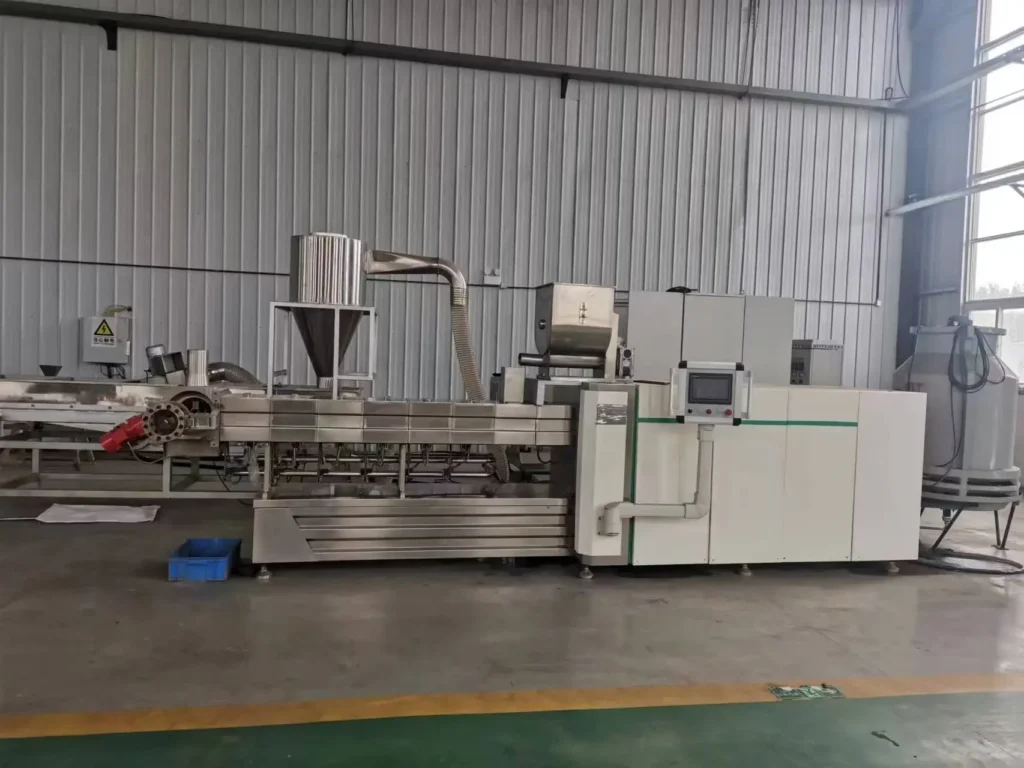
The lowest host machine price is rarely the best deal; suppliers often exclude essential auxiliary systems to win the bid.
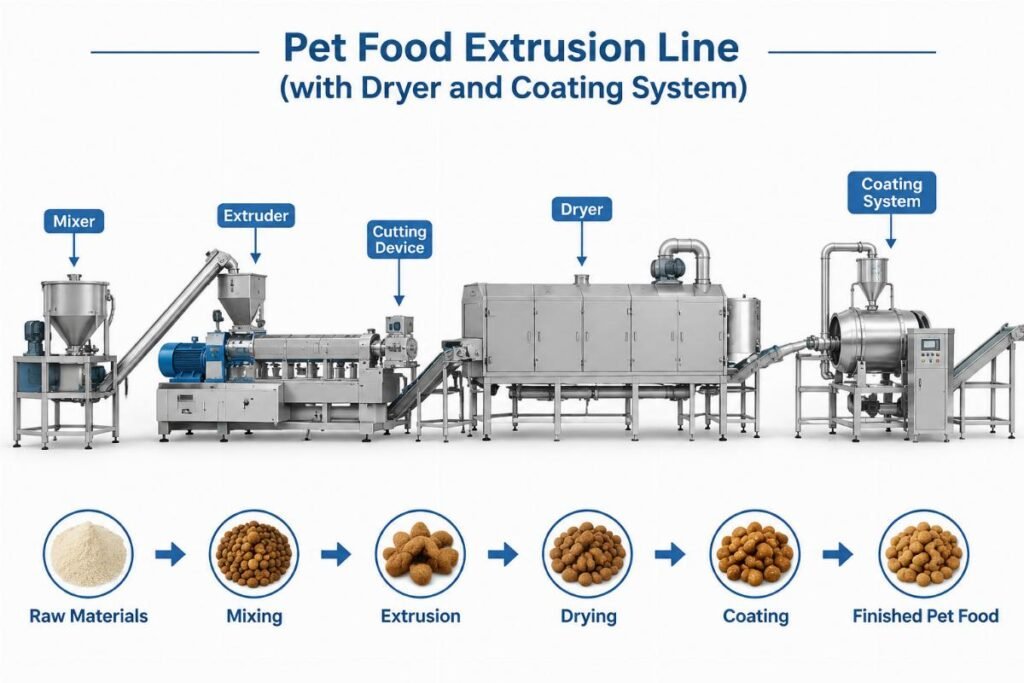
When evaluating a Pet Food Extruder for Sale, a complete quote must cover the entire turnkey line from raw material intake to packaging, including drying, cooling, and flavor-coating systems, matched with the correct screw configuration for your specific recipe.
I started my career beside a milling machine in a Suzhou workshop before transitioning into extrusion machinery export. Early on, I arranged a shipment of twin-screw pet food equipment from Ningbo Port to a client in Southeast Asia. I calculated the quote based solely on the host machine, completely omitting the drying and oil-coating systems from the total package. When the client turned on the machine, the moisture content would not drop, and the entire batch of kibble grew mold. That single mistake cost us the return freight and ruined our reputation in that region. From that day forward, whenever I review a Pet Food Extruder for Sale, I first map out the client’s target meat inclusion and capacity requirements. Only then do I lay out the specific torque, die hole diameter, and energy consumption data on the table. Buying equipment is never just about the unit price of the host machine; whole-line matching is the absolute core.

Let us break down how to properly evaluate the market and avoid hidden traps.
What Should a Complete Pet Food Extruder Quote Include?
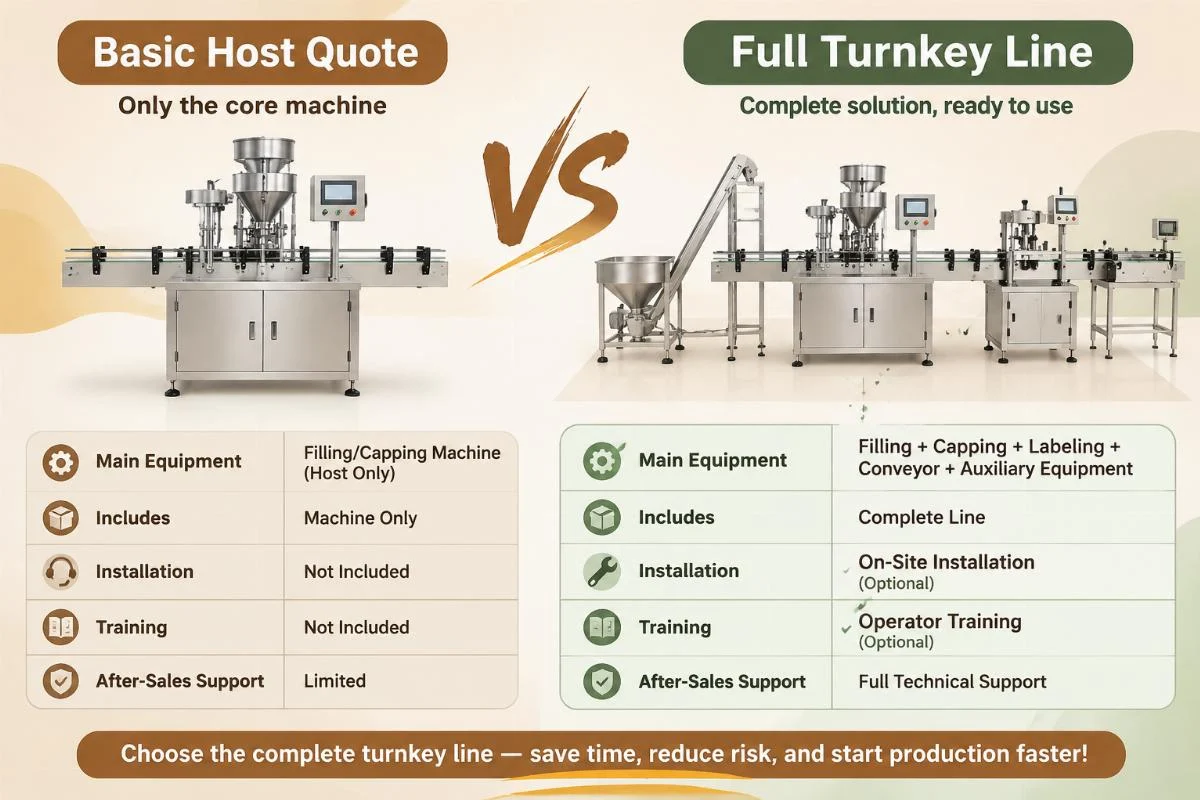
A valid quote must cover the entire turnkey line, not just the extruder host.
When buyers search for a Pet Food Extruder for Sale, they often focus entirely on the main extruder. However, extrusion is only the forming stage. A proper specification comparison matrix must include the mixer, the extruder host, the multi-layer dryer, the cooling conveyor, the flavoring drum, and the packaging scale.
Consider a Southeast Asian startup that focused exclusively on the host machine price. They ignored the drying system specifications. The result was a catastrophic moisture retention rate, leading to frequent mold issues and a high frequency of mold replacement due to improper material flow. When comparing a pet food production line quotation, you must verify that the dryer’s thermal efficiency and airflow distribution match the extruder’s output capacity.
| System Component | Basic Quote (Host Only) | Complete Turnkey Quote |
|---|---|---|
| Extruder Host | Included | Included |
| Drying System | Excluded / Optional | Fully matched for moisture reduction |
| Coating System | Excluded | Integrated for fat and palatability |
| Freight & Installation | Buyer’s risk | Comprehensive compensation ratio |
A Middle Eastern buyer once received a seemingly cheap quote. When the auxiliary systems were added later, the final cost was substantially higher than a comprehensive initial offer, and the mismatch caused extended installation delays. A transparent quote from a reliable manufacturer ensures food-grade safety and prevents these hidden gaps.
How Do Single and Twin-Screw Configurations Affect Pricing?
Twin-screw configurations handle high-meat recipes with higher torque but cost more; you must match the screw type to your meat content.
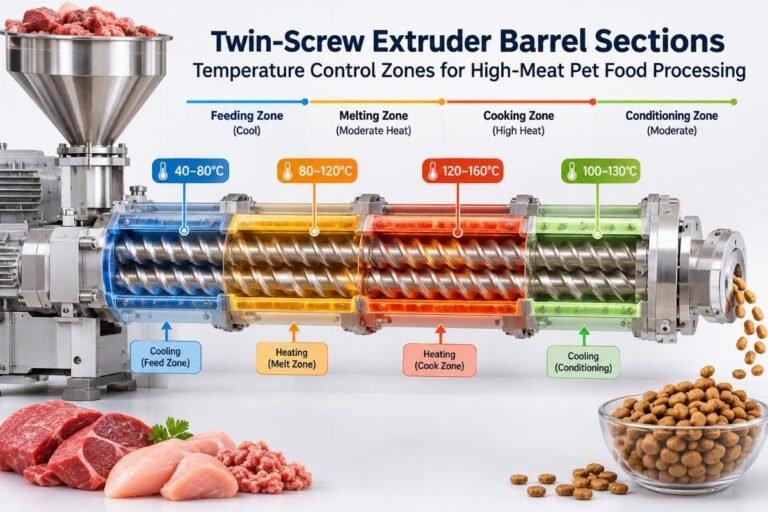
The twin screw pet food extruder price is inherently higher than a single-screw equivalent, and for good reason. If your formula relies heavily on fresh meat or high-fat content, a single-screw machine will struggle with material slippage and inconsistent gelatinization.
A Latin American contract manufacturer needed to process high meat inclusion recipes. They initially inquired about a single-screw setup to save on the twin screw pet food extruder price. However, the torque difference between single and twin-screw designs is critical here. Twin-screw extruders provide self-wiping action and positive conveying, which is mandatory for sticky, high-protein doughs.
| Feature | Single-Screw Configuration | Twin-Screw Configuration |
|---|---|---|
| Meat Inclusion | Low / Basic formulas | High / Fresh meat recipes |
| Torque Level | Standard | Substantially higher |
| Die Hole Wear | Noticeably faster | Substantially extended |
| Energy Cost per Ton | Higher for complex recipes | Optimized for high-meat |
If you choose the wrong configuration, the die hole wear rate increases dramatically, and the energy cost per ton skyrockets. When evaluating a Pet Food Extruder for Sale, ensure the supplier provides the specific torque data and L/D ratio relevant to your recipe, rather than just a generic brochure. Meiteng offers both configurations, utilizing food-grade 304/316 stainless construction to ensure that the high-torque environment of a twin-screw setup does not compromise hygiene.

Why Do Initial Quotes Often End Up Costing More?
Hidden costs arise from excluded drying, cooling, and flavor-coating systems, leading to mold and rework.
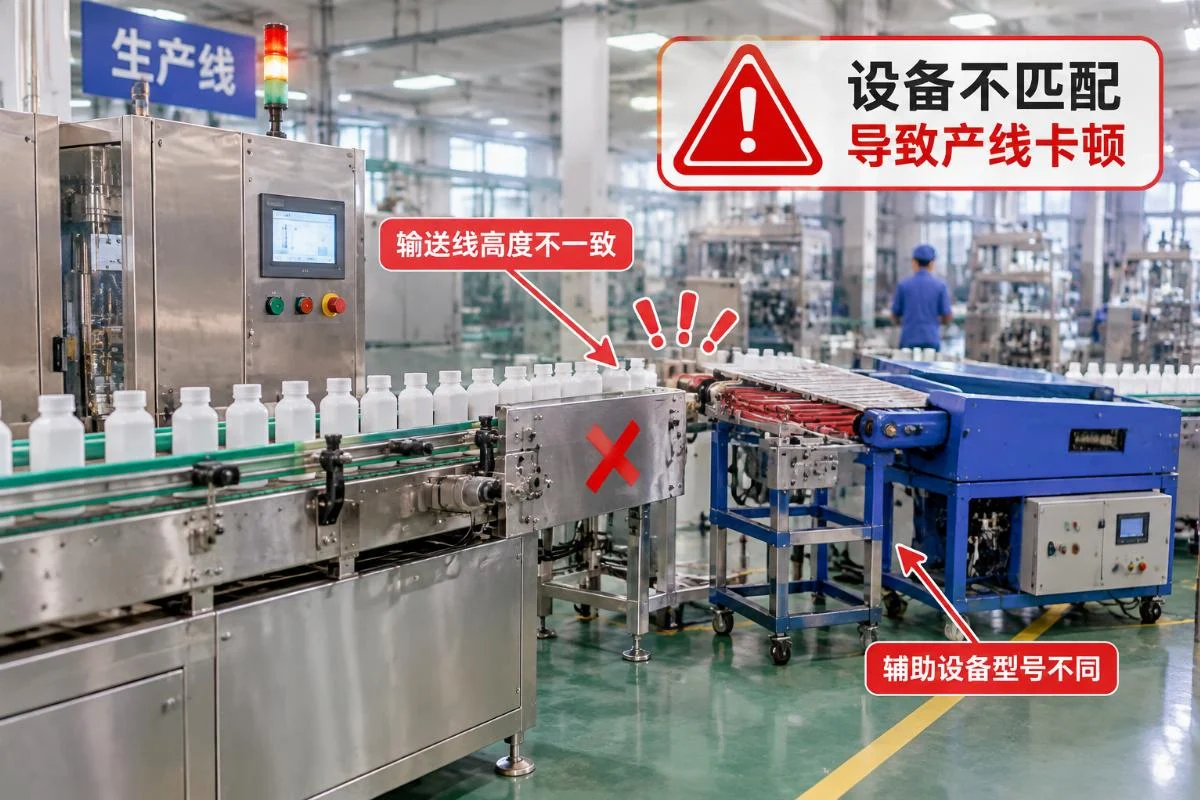
Most buyers think that securing the lowest initial quote is a victory. The real reason this is a fallacy is that suppliers often exclude essential auxiliary systems to win the bid. An African pet treat producer was scaling up capacity and accepted an initial quote that looked incredibly attractive. However, the quote lacked a properly sized cooling system and an automated flavor-coating drum.
The initial quote versus final turnkey cost gap ratio became a massive burden. They had to source auxiliary equipment locally, which did not match the extruder’s throughput. This mismatch led to higher energy waste and unacceptable product rejection rates.
When you request a pet food production line quotation, demand a detailed breakdown of the airflow in the dryer and the spray uniformity in the coater. A turnkey line design from an experienced manufacturer integrates these systems seamlessly. The installation delay days experienced by the African producer could have been avoided with a unified control system and matched mechanical design.
How to Compare Energy Consumption and Wear Parts?
Evaluate energy consumption per kilogram and die hole lifespan to calculate true long-term operational costs.
The true cost of a Pet Food Extruder for Sale is not the purchase price; it is the operational expenditure over its lifecycle. You must compare the specific energy consumption and the durability of the wear parts.
Suppliers will quote a machine price, but few will transparently list the energy consumption in kWh per kg of finished product. A machine that is cheaper upfront but consumes noticeably more electricity will erase any savings within the first year. Similarly, the barrel and screw elements in a twin-screw extruder are subject to intense abrasion, especially when processing high-ash or high-fiber recipes.
| Cost Factor | Low-Quality Supplier | Professional Manufacturer |
|---|---|---|
| Energy Consumption | Uncontrolled / High | Noticeably reduced per kg |
| Screw Material | Basic alloy | Wear-resistant treated alloys |
| Die Hole Lifespan | Vulnerable / Short | Substantially extended |
| Maintenance Frequency | Frequent downtime | Robust / Minimal |
Meiteng addresses this by providing comprehensive lifecycle data and using premium materials for the screw elements and dies. By focusing on the L/D ratio optimization and precise die hole diameter manufacturing, the extrusion process becomes smoother, reducing the load on the main motor and extending the service life of the wear parts. When comparing quotes, ask for the specific energy consumption data and the material grade of the screws. This is how you separate a true investment from a costly liability.

Conclusion
Comparing quotes requires looking beyond the host machine to evaluate the entire turnkey line.
A successful pet food production line depends on the seamless integration of the extruder, dryer, and coating systems, matched with the correct screw configuration for your specific recipe. By demanding transparent data on torque, energy consumption, and auxiliary integration, you avoid hidden costs and ensure long-term production success.
Machines Mentioned in This Article

cat food machine
Pet Food Extruder Machine Manufacturer Production Line
View Machine
cat food machine
Pet Food Pellet Extruder Machine Manufacturer for Dog Cat
View Machine
cat food machine
Dog Food Extruder Machine Manufacturer for Pet Food Kibble Making Line
View Machine
cat food machine