
Buying the cheapest pet food extruder spare parts is the fastest way to destroy your profit margin through hidden batch scrapping and energy waste.
To ensure continuous operation and avoid mismatched components, you must stock pet food extruder spare parts based on actual working conditions and material tolerances rather than just unit price. Prioritizing precise clearance tolerances and recipe-specific alloy treatments for screws, barrels, and cutting knives prevents catastrophic production downtime and product waste.
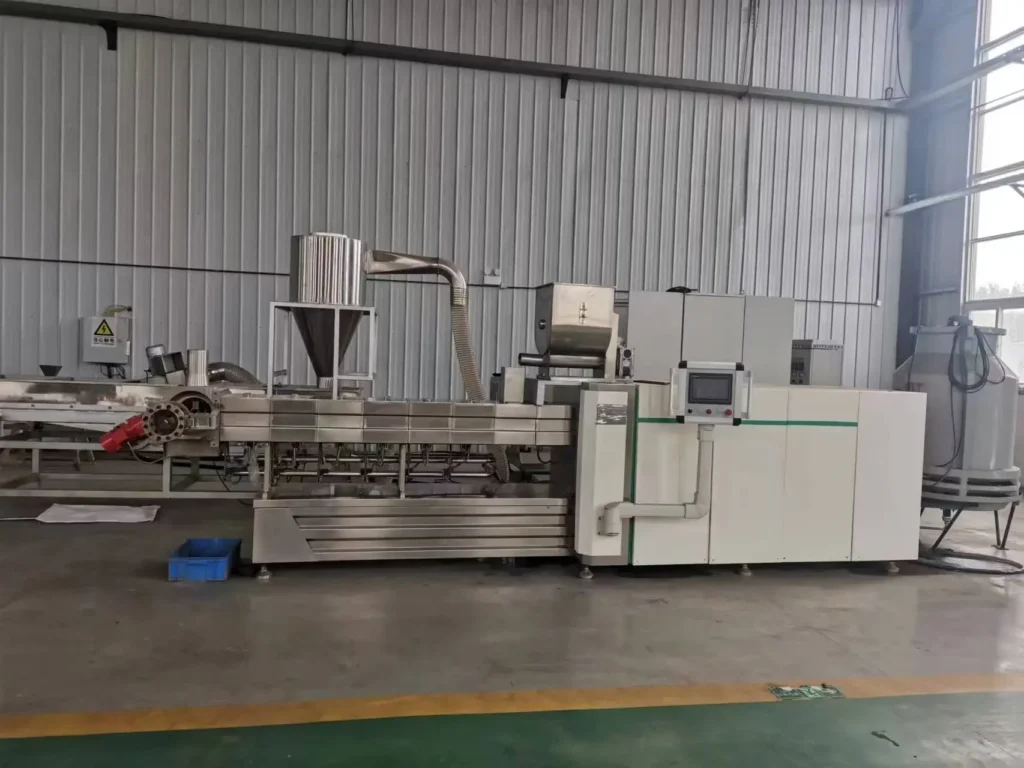
Years ago, when I was procuring equipment for a pet food plant, I ordered a batch of pet food extruder spare parts for our DS85 line. I focused entirely on slashing the unit price on the invoice and completely ignored the material tolerance sheets. Within half a year, the screws wore down severely, the puffing degree failed to meet standards, and we had to scrap an entire batch of dog food. The financial hit from that single downtime event cost several times the initial savings on the parts. That failure cycle shifted my entire approach to sourcing twin screw extruder wear parts. Now, when consulting for startup owners and contract manufacturers, I always break down the real cost of ownership before anyone signs a purchase order.
Let us break down how to build a resilient inventory and match components to your specific production reality.
Why Unit Price Isn’t the Only Metric for Extruder Spare Parts?
Focusing solely on the invoice price of pet food extruder spare parts ignores the massive hidden costs of poor tolerance matching and material incompatibility.
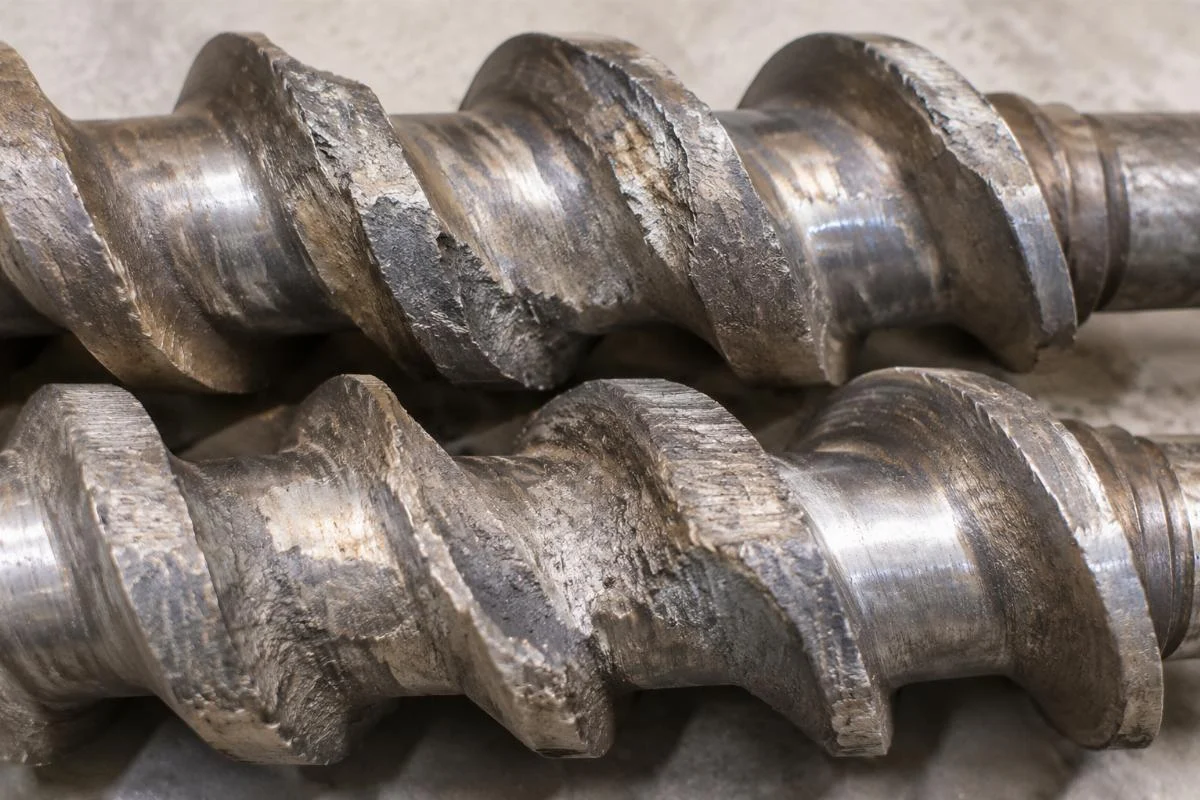
When you evaluate a DS85 extruder screw and barrel set, the initial quote is just the tip of the iceberg. The real financial risk lies in the microscopic gaps between the screw flight and the barrel内壁. If the clearance tolerance is not strictly controlled, the material slip increases dramatically. This leads to unstable puffing degrees and massive energy waste, as the extruder has to work much harder to generate the necessary shear heat.
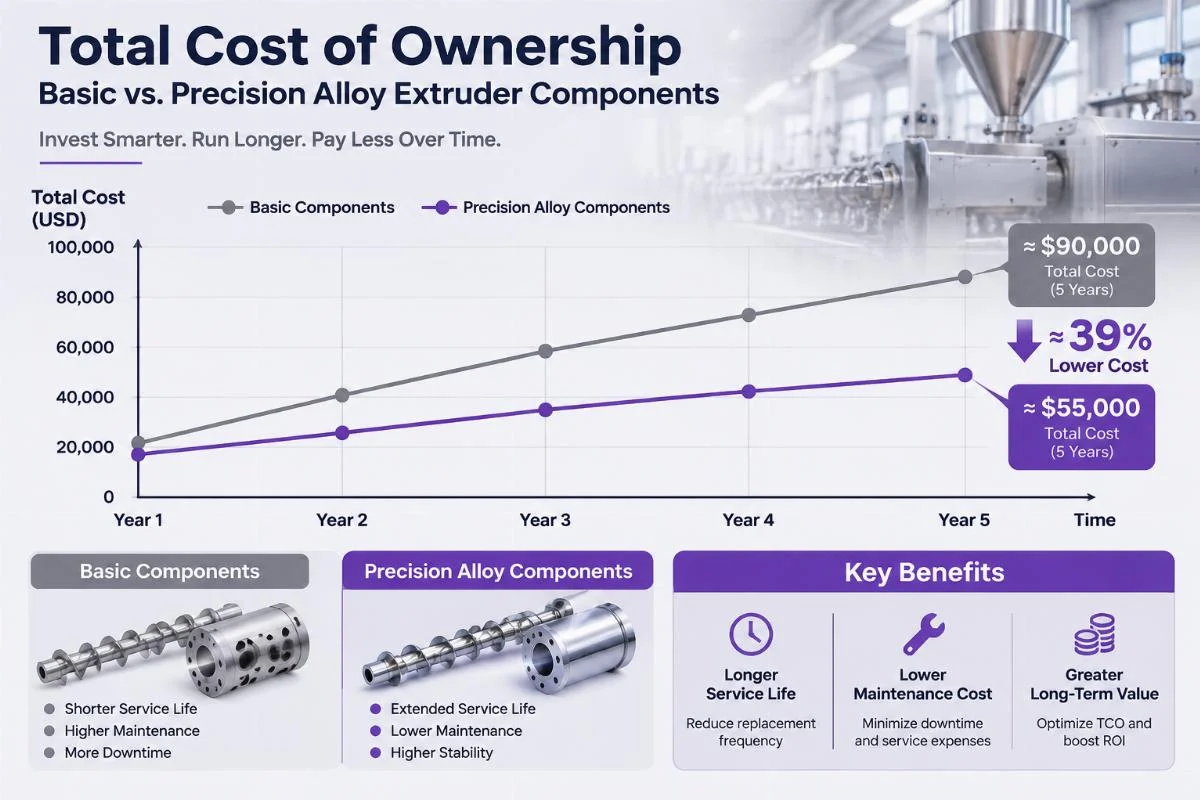
Consider a contract manufacturer I worked with in the Midwest. They decided to stock standard carbon steel barrels for a high-abrasion bone meal recipe to save on upfront capital. The result was a noticeable increase in the abrasion rate, leading to frequent line stops for cleaning and part replacement. The downtime losses and inconsistent kibble density ruined their client contracts. True cost of ownership requires looking at the wear lifecycle estimation based on throughput, not just the price tag.
| Evaluation Metric | Basic Carbon Steel Components | Precision Alloy Treated Components |
|---|---|---|
| Initial Unit Price | Low | Moderate to High |
| Tolerance Control | Uncontrolled | Controlled |
| Recipe Compatibility | Vulnerable | Robust |
| Hidden Energy Waste | Noticeably increased | Substantially reduced |
| Batch Consistency | Unstable | Highly stable |
Which Wear Parts Should You Stock for the First 1-2 Years?
A strategic inventory of pet food extruder spare parts for the first two years must prioritize screws, barrels, and cutting knives based directly on your specific recipe abrasiveness.
When launching a new line, you cannot afford to wait for a part to fail completely before ordering a replacement. The lead time for custom-machined parts can halt your entire operation. For a standard dry pet food line, your initial pet food extruder maintenance kit should include a full set of backup screws and barrels, plus multiple sets of cutting knives.
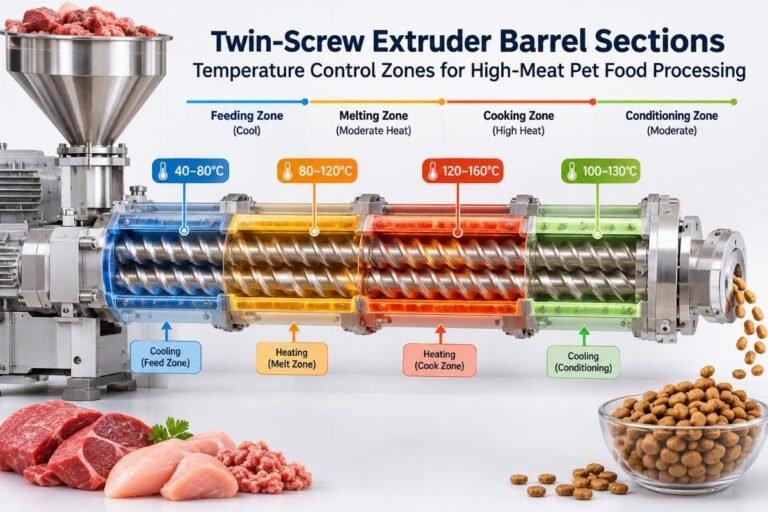
If you are processing high-fiber or bone-included diets, the abrasion index of your raw material dictates your stocking strategy. Standard parts will degrade rapidly. You need to stock components treated with specific alloy processes designed to resist high-wear environments. Furthermore, heating rings and thermal sensors are critical. I once saw a buyer focus entirely on the screw price while ignoring the heating ring matching. The result was a highly inconsistent expansion ratio and massive product waste.
For facilities running Meiteng DS series equipment, stocking genuine DS65/DS70/DS85 wear parts ensures that the food-grade 304/316 stainless steel construction and precise tolerance control are maintained. This prevents the nightmare of mismatched components that simply do not fit the original shaft geometry.

How to Match Spare Parts with Your Specific Pet Food Recipes?
Matching pet food extruder spare parts to your recipe requires analyzing the material hardness against the abrasiveness index of your specific formula.
Not all recipes are created equal. A standard chicken and rice formula behaves entirely differently from a high-protein rawhide chew or a bone-meal enriched treat. The material hardness, often measured in HRC for the base steel, must be selected to withstand the specific friction and corrosion of your ingredients.
Standard carbon steel is simply not enough for all recipes. High-fiber formulas act like sandpaper inside the barrel. If you use basic materials, the clearance tolerance between the screw and barrel will widen rapidly, causing a severe drop in capacity and product quality. You must compare material grades, such as standard nitrided steel versus advanced bimetallic alloys, to ensure the components can handle the chemical and physical stress of your specific diet.
When sourcing a pet food extruder maintenance kit for a new high-protein launch, verify that the supplier offers bimetallic barrel linings or specialized alloy treatments for the screw flights. Meiteng provides precise tolerance control across their DS series spare parts, ensuring that the food-grade 304/316 stainless steel construction meets the strict hygiene and durability requirements of modern pet food manufacturing. This alignment between recipe aggression and component metallurgy is what separates stable production from constant crisis management.
What Documentation and Testing Should You Require from Suppliers?
To avoid mismatched components, you must demand verifiable material certificates, dimensional reports, and trial fitting protocols from your pet food extruder spare parts suppliers.
Never accept a shipment of twin screw extruder wear parts based on a simple invoice and a handshake. The documentation is your only shield against catastrophic downtime. You need to require comprehensive material certificates that prove the alloy composition and the heat treatment process. Without these, you are just guessing if the part will survive your high-abrasion recipe.
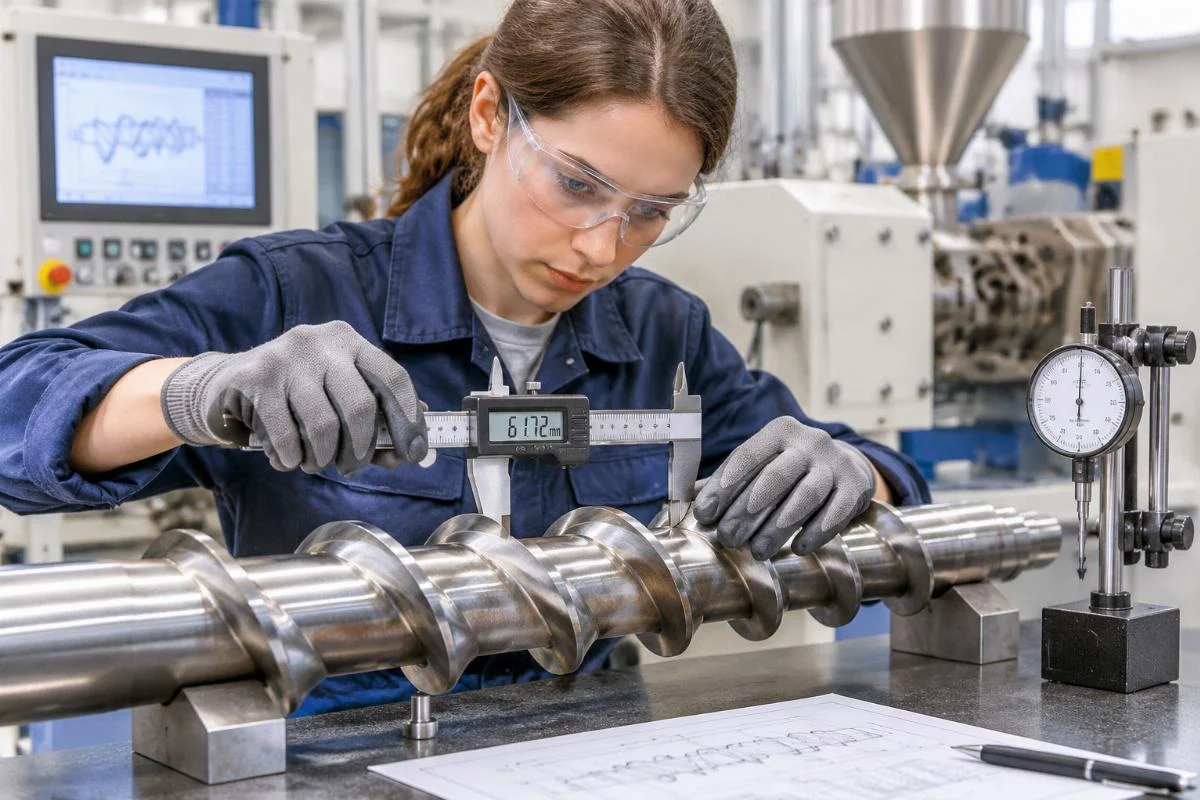
Dimensional reports are equally critical. You must verify the exact clearance tolerances and the micron-level precision of the screw flights. A supplier who cannot provide a detailed dimensional inspection report is likely cutting corners on the machining process. Furthermore, insist on trial fitting protocols or 3D scanning verification for complex DS85 extruder screw and barrel sets. This ensures that the new parts will mate perfectly with your existing gearbox and shaft, preventing assembly disasters on the factory floor.
Reputable manufacturers, like Meiteng, back their DS series spare parts with CE certification and ISO 9001 quality management systems. This means every batch of food-grade 304/316 stainless steel components comes with the traceability and testing data required by international food machinery safety standards. Demanding this level of transparency is not just about quality control; it is about protecting your entire production schedule from the ripple effects of a single failed component.
Conclusion
Treating spare parts as a simple commodity purchase is a guaranteed path to margin destruction. By prioritizing precise tolerance matching, recipe-specific alloy selection, and rigorous documentation, you transform your inventory from a cost center into a shield against downtime. Build your procurement strategy around the actual physics of your extrusion process, and your production line will reward you with consistent, high-quality output.
Machines Mentioned in This Article

cat food machine
Pet Food Processing Equipment Plant Manufacturer Dog Food
View Machine
cat food machine
Dry Dog Food Production Line Pet Food Pellet Machine
View Machine
cat food machine
Pet Food Production Line Manufacturer
View Machine
cat food machine