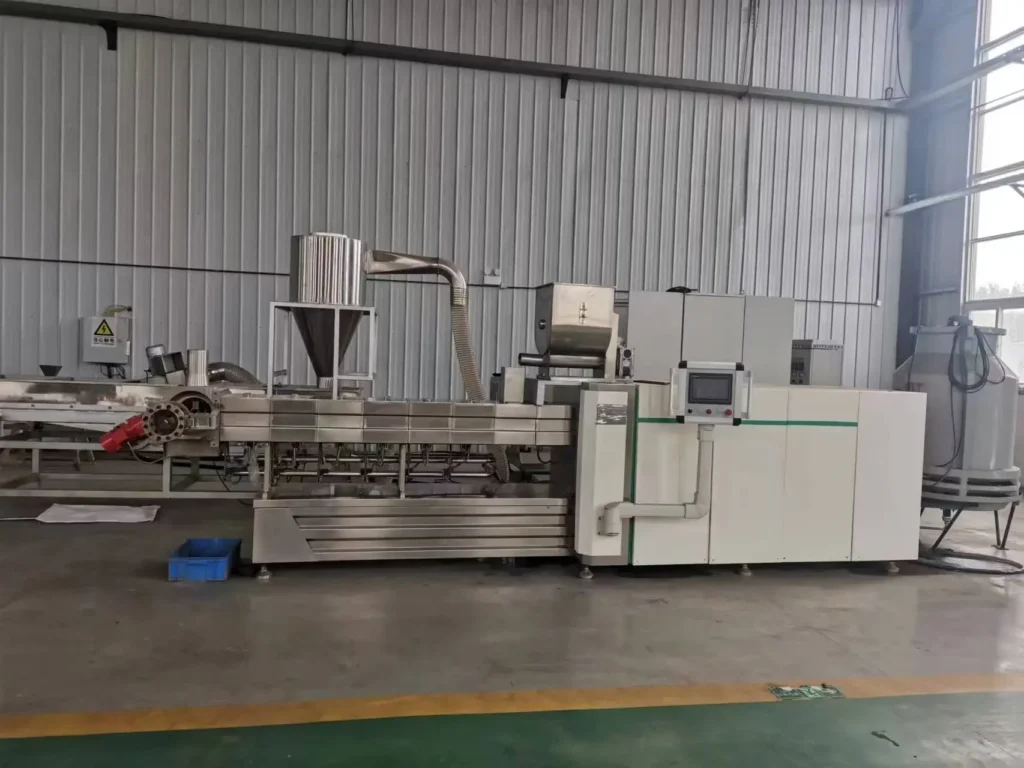
Higher screw speeds do not guarantee better output when processing high-fat local meat meals; in fact, they often cause severe jamming.
Selecting the right Dog Food Machine Buying Guide for the South American market requires adapting to local raw material characteristics, specifically high-fat meat meals, and unstable power grids, rather than merely copying standard parameters.
When I first started in this industry, my mentor took me straight to overseas installation sites. I spent years troubleshooting extrusion lines across the Middle East. During one assignment in Riyadh, we were commissioning a twin-screw line, and the local agent insisted on using cheap meat meal imported from Argentina. The fat and moisture ratios were completely unbalanced. The specific mechanical energy spiked, the screws locked up, and the entire line was shut down for two days. That incident made it crystal clear: configuring a Dog Food Machine Buying Guide for Brazilian and Argentine producers means looking far beyond the standard spec sheet. The local ingredient profile and electrical infrastructure are the true determinants of success.
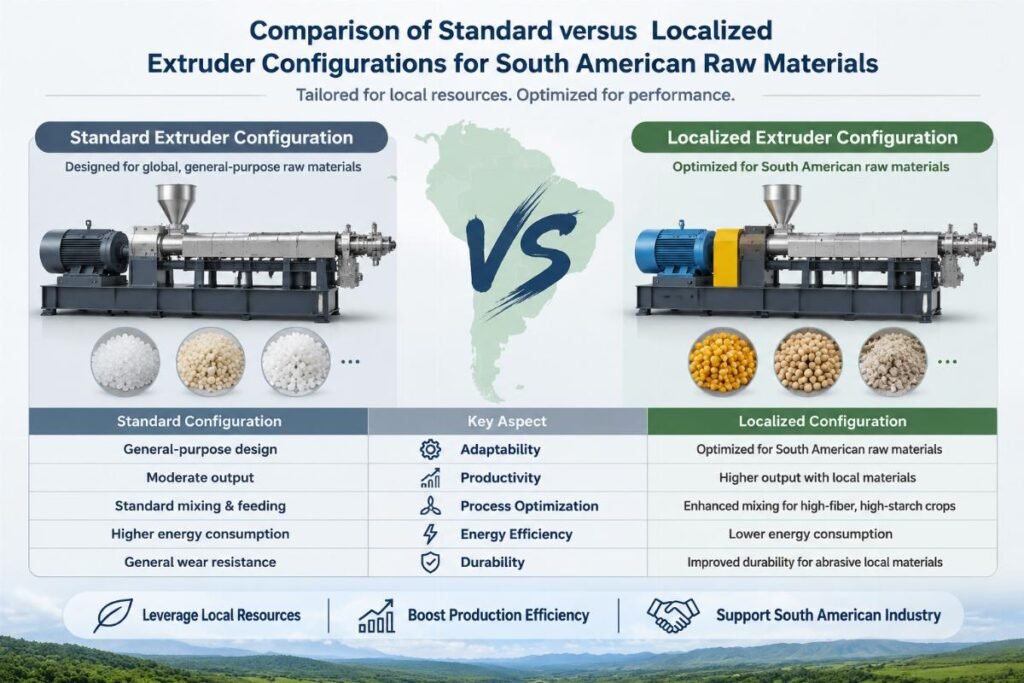
Transitioning from standard configurations to localized solutions is the first step toward stable production.
Why Standard Dog Food Machines Fail in South America?
Standard extrusion parameters fail in South America because they ignore the unique rheological properties of regional meat meals and the volatility of local electrical grids.
Many buyers assume that a machine performing well in Europe or North America will yield identical results in Brazil or Argentina. This is a fundamental misconception. The pet food industry in Latin America relies heavily on locally sourced poultry and beef by-products. These ingredients often have significantly higher lipid content and different moisture absorption rates compared to the leaner proteins used in other regions. When a standard barrel temperature profile and screw speed are applied to these high-fat materials, the friction heat generated inside the barrel exceeds the melting point of the fats, turning the mixture into a slippery paste that cannot be sheared properly.
Furthermore, the electrical infrastructure in many industrial zones across South America experiences frequent voltage fluctuations. A standard motor protection system designed for stable grids will trip continuously under these conditions, leading to costly downtime and inconsistent kibble expansion.
A contract manufacturer in Buenos Aires once tried to run a standard configuration on a new high-fat beef meal recipe. The standard Dog Food Machine Buying Guide parameters caused the main drive to overload repeatedly. They had to halt production, completely re-evaluate their shear force settings, and upgrade their electrical cabinet just to get the line running smoothly.

How to Choose the Right Twin-Screw Extruder for Local Ingredients?
Choosing the correct twin-screw pet food extruder Brazil requires matching the screw L/D ratio and barrel temperature zoning to the specific fat content of your local meat meal.
When evaluating a dog food making machine Argentina, the focus must shift from maximum output to process stability. The core argument here is that local high-fat materials require lower screw speeds to prevent jamming and ensure proper gelatinization.
Here is how to align the machine configuration with your ingredients:
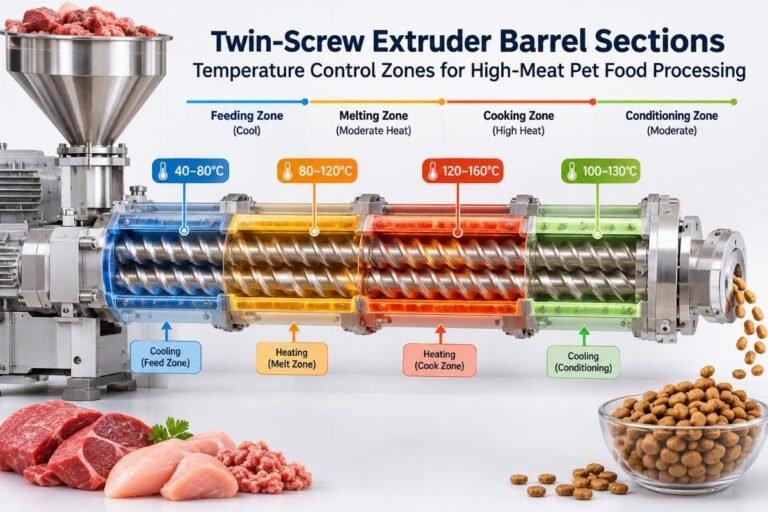
- Screw Configuration and Shear Force: For high-fat meat meals, you need a screw profile that provides gentle conveying in the initial sections and intense mixing in the later stages. Adjusting the specific mechanical energy calculation is crucial. If the speed is too high, the fat renders out too early, causing the material to slip against the barrel wall.
- Moisture and Oil Ratio Control: Local ingredients often require a moisture tolerance range that differs from standard formulas. The barrel zoning must be adjusted to allow for controlled steam injection, ensuring the dough reaches the necessary plasticity without adding excess water that would require prolonged drying later.
- Barrel Temperature Zoning: Instead of a uniform high-temperature profile, localized cooling zones in the feed and mixing sections are necessary to prevent premature fat melting.
A startup in São Paulo initially struggled with a greasy, poorly expanded kibble. By switching to a customized screw configuration that reduced the RPM and optimized the barrel zoning for their specific poultry meal, they achieved a perfectly porous structure. This adjustment is a critical chapter in any comprehensive Dog Food Machine Buying Guide for the region.

What Power Grid Adaptations Are Needed for Brazil and Argentina?
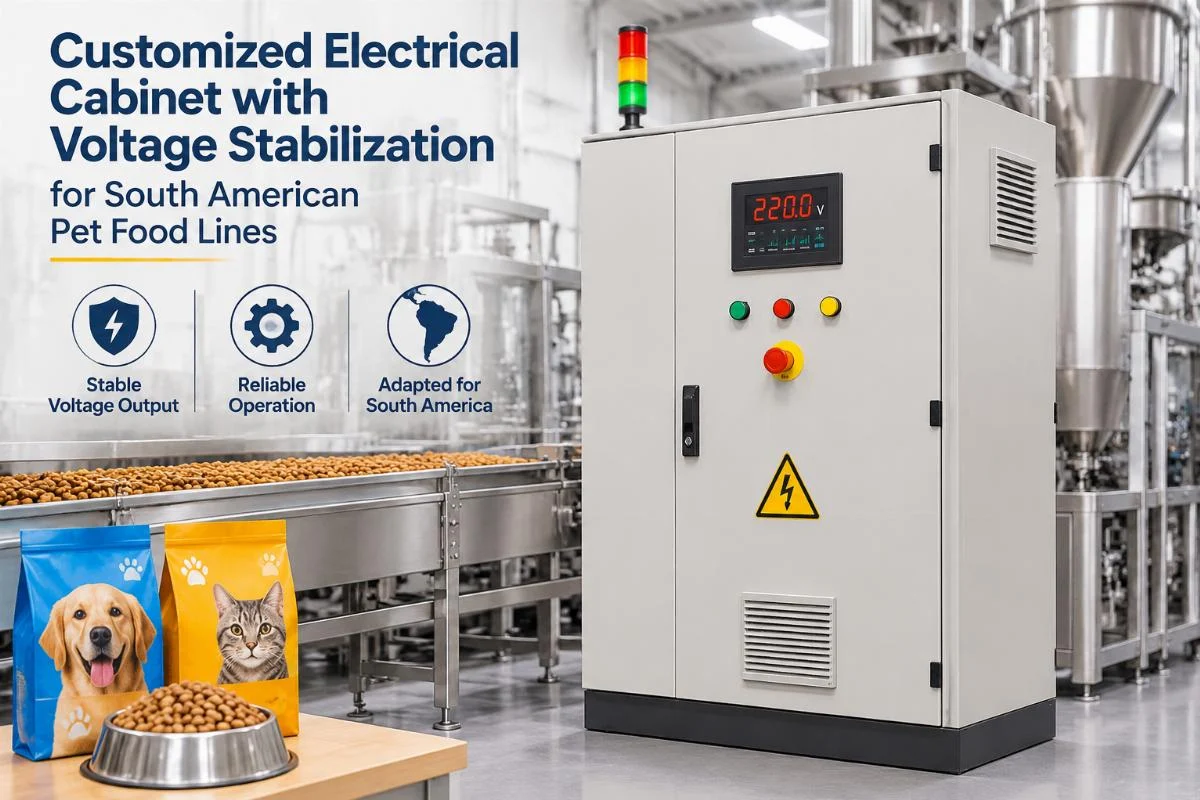
Customized electrical cabinets with advanced voltage stabilization are mandatory to prevent costly downtime caused by South American grid fluctuations.
It is a common myth that standard motors work everywhere. In reality, the voltage in many industrial parks in Brazil and Argentina can drop or surge dramatically within seconds. If your dog food making machine Argentina is not equipped with a customized electrical cabinet, these fluctuations will trigger the main breaker, stopping the extruder mid-process. This not only ruins the batch inside the barrel but also causes severe mechanical stress on the gearbox.
To ensure uninterrupted operation, the following electrical adaptations are essential:
- Voltage Compatibility: The control systems must be fully compatible with local voltage standards, whether it is 220V, 380V, or 440V, and must handle the specific frequency used in the region.
- Soft Starters and Variable Frequency Drives: Implementing advanced drives helps manage the massive inrush current when the extruder starts under a full load of heavy, high-fat dough.
- Overload Protection Calibration: The thermal overload relays must be calibrated to the specific ambient temperature and humidity levels of the local factory, preventing false trips while still protecting the motor from genuine overloads.
During an installation in Mendoza, the local grid experienced a sudden drop. Because the pet food production line South America was equipped with a customized cabinet featuring automatic voltage compensation, the system adjusted seamlessly, and the extrusion process continued without a single fault code. This level of electrical adaptation is non-negotiable for any serious Dog Food Machine Buying Guide.
How Does a Turnkey Solution Simplify Your Startup?
A turnkey solution simplifies your startup by integrating formula development, layout design, and on-site training, ensuring a smooth production launch tailored to local conditions.
Launching a new pet food brand or scaling a contract manufacturing business is complex. Relying on fragmented suppliers for the extruder, the dryer, the flavoring system, and the formula is a recipe for disaster. When the kibble doesn’t expand correctly, the extruder supplier blames the formula, and the formula provider blames the dryer.
A true turnkey approach eliminates these finger-pointing scenarios. It provides a unified responsibility chain from raw material intake to the final packaged product.
- Formula Development Support: Startups often have a target kibble size and nutritional profile but lack the technical know-how to balance local, high-fat ingredients. Integrated R&D support helps develop recipes that maximize the use of cost-effective local meat meals while meeting international nutritional standards.
- Capacity Scaling and Layout: Whether you need a pilot line for market testing or a full-scale pet food production line South America, the layout must be optimized for material flow, hygiene, and future expansion.
- On-Site Installation and Training: The physical installation is only half the battle. Training local operators to understand the nuances of the twin-screw pet food extruder Brazil, such as how to adjust the steam valves when the local meat meal batch varies in moisture, is what guarantees long-term success.
Meiteng approaches every project with this holistic mindset. By providing CE and ISO certified equipment alongside deep technical support, we ensure that the machinery is not just delivered, but fully integrated into the client’s operational reality. This comprehensive support is the ultimate value proposition in any Dog Food Machine Buying Guide.

Conclusion
Success in the South American pet food market hinges on adapting extrusion technology to local high-fat ingredients and volatile power grids, not on forcing standard parameters to work.
Selecting the right equipment requires a deep understanding of how specific mechanical energy interacts with regional meat meals, and how customized electrical cabinets protect your investment from grid instability. By prioritizing localized configurations and comprehensive turnkey support, producers can build resilient, efficient operations that turn local raw materials into premium pet food.
Machines Mentioned in This Article
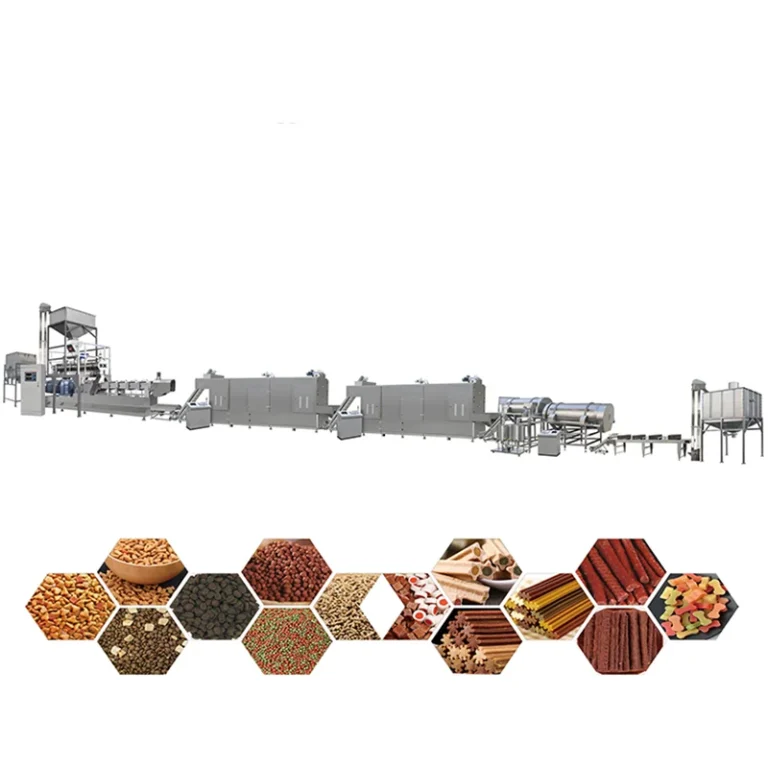
cat food machine
Dog Food Extrusion Machine Manufacturer Production Line
View Machine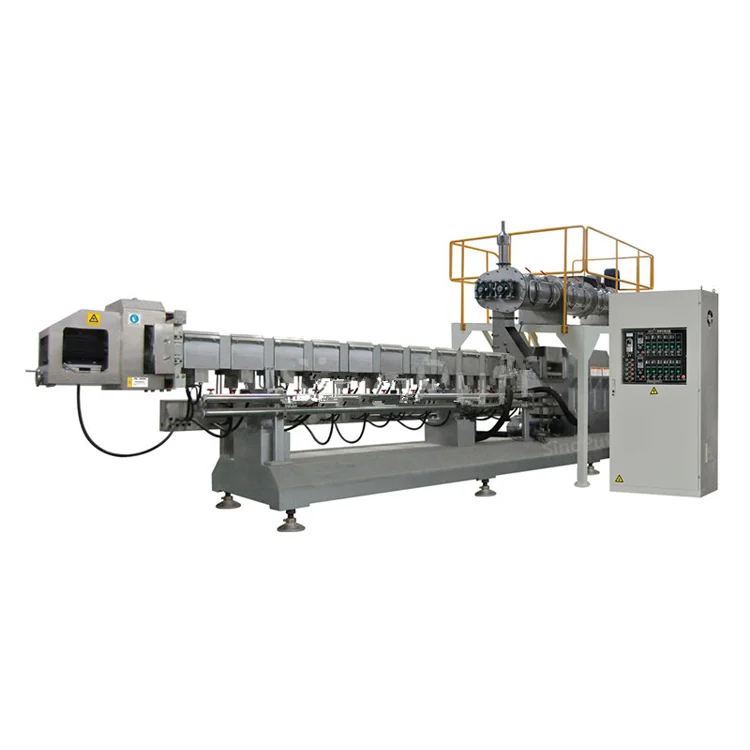
cat food machine
Dog Food Making Machine Manufacturer Production Line
View Machine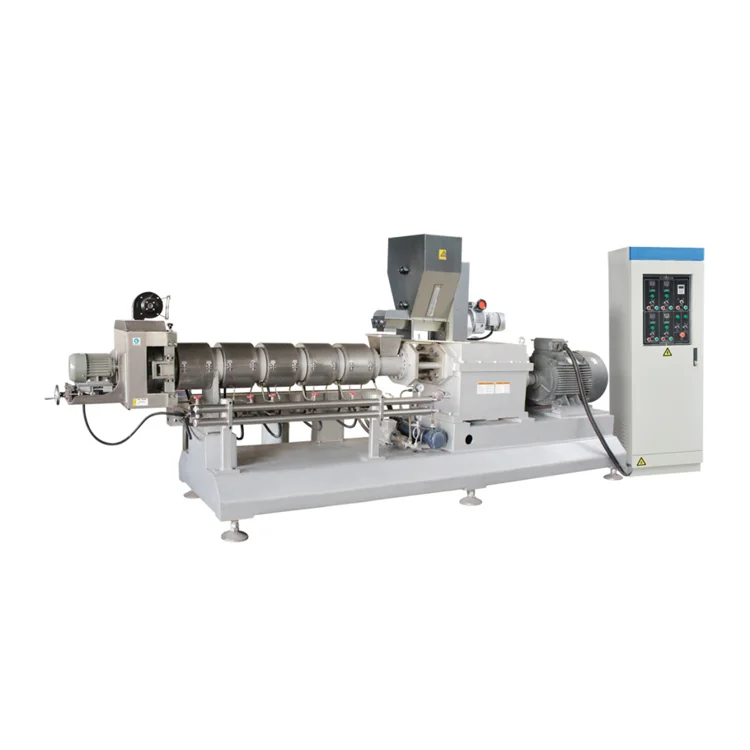
cat food machine
Pet Food Pellet Extruder Machine Manufacturer for Dog Cat
View Machine
cat food machine