Most buyers think the extruder host is the only bottleneck, but the real culprit behind high waste rates is often mismatched downstream drying and coating systems.
A successful twin screw extruder upgrade cat food plant requires holistic line matching and formula support, not just replacing the main host, to ensure product quality, optimize oil coating, and reduce waste.
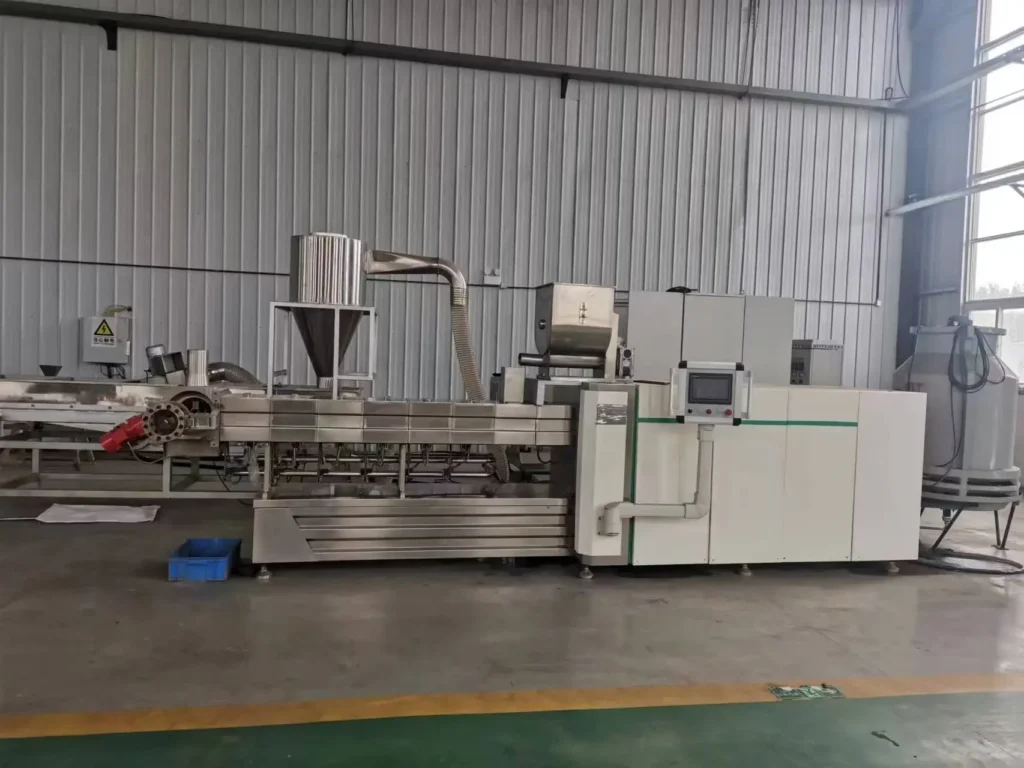
Years ago, while handling shipping documents at Shekou Port, I watched a batch of small extruders destined for Southeast Asia bake in the sun for days because the electromechanical certificates were missing. The client nearly rejected the shipment. Later, when I transitioned to sales in Dongguan and started following up on feline kibble facility expansions, I noticed a recurring pattern. Plant owners would aggressively haggle over the price of the main extruder host but refuse to spend extra on the drying and flavor coating systems. The result was always the same: the extruded kibble could not retain surface fats, waste rates skyrocketed, and they eventually had to pay us to reformulate the recipes. Understanding the mechanics behind a twin screw extruder upgrade cat food plant means looking past the main machine and focusing on the entire ecosystem.
Let us break down the real mechanics of scaling up and fixing these hidden mismatches.
Why Upgrade from Single to Twin-Screw for Cat Food?
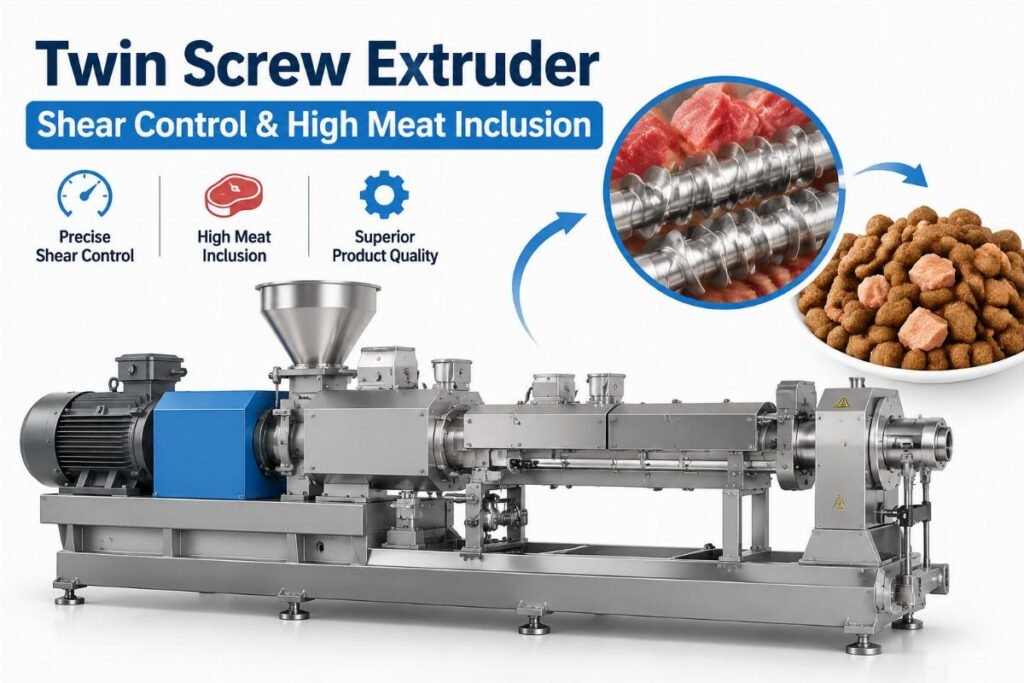
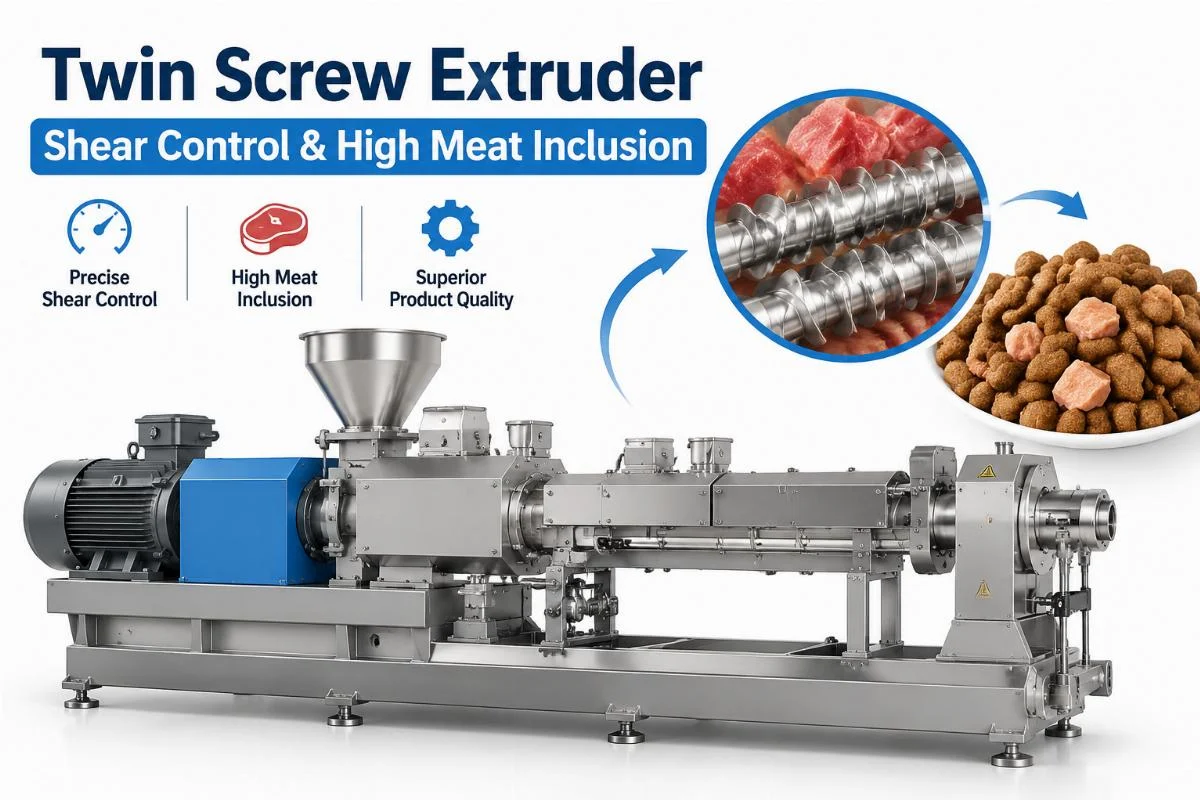
Transitioning to a twin-screw system fundamentally changes the shear control and meat inclusion capabilities required for premium kibble.
When a facility decides on a single to twin screw extruder upgrade, the primary driver is usually the demand for higher fresh meat ratios. Single-screw machines struggle with high-fat and high-moisture ingredients, often causing slippage and inconsistent cooking. Twin-screw configurations, like the DS65 or DS70 models, provide positive conveying and intense, controlled shear. This allows for a much higher inclusion of fresh chicken or fish paste without compromising the structural integrity of the kibble.
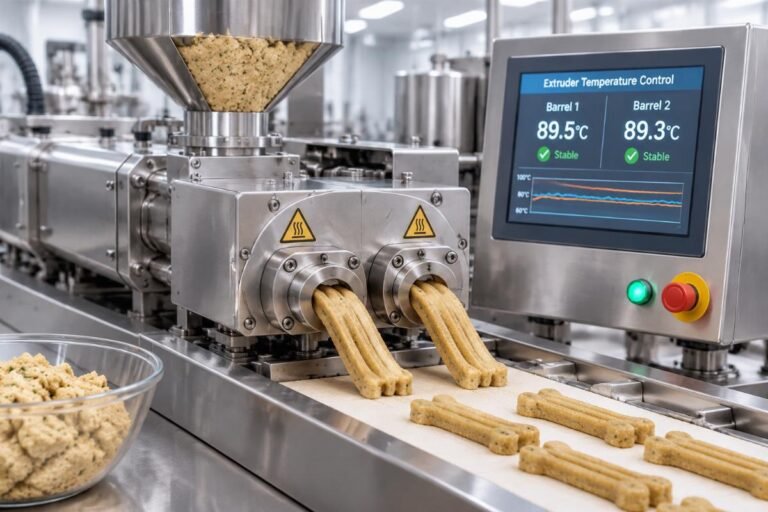
I recall a premium treat producer in Europe who wanted to push their fresh meat content to attract a high-end market segment. They initially just swapped the host machine. However, the new extrusion mechanics produced a denser pellet with a different moisture profile. Because they ignored the downstream equipment, the existing dryer could not handle the increased moisture evaporation rate. The kibble came out either too hard or moldy during storage. It was only after we integrated a customized drying and cooling sequence that the texture stabilized. A true twin screw pet food extruder case study always shows that the host is just the beginning of the transformation.
What Are the Hidden Bottlenecks in Line Upgrades?
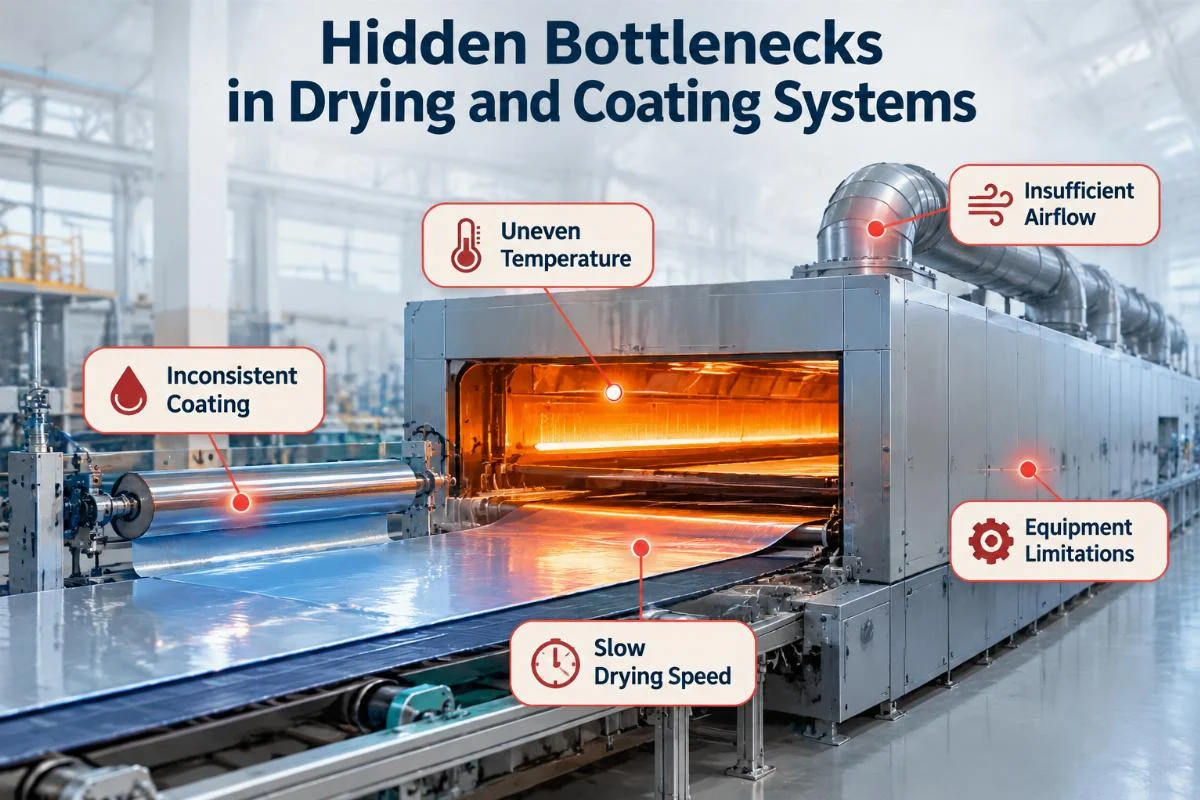
Focusing solely on the host ignores downstream drying and coating mismatches, which are the actual drivers of production waste.
During a cat food production line optimization, the most common mistake is assuming the existing dryer and coater can handle the new throughput. A twin-screw extruder outputs product at a different density and moisture level than a single-screw machine. If the dryer length and airflow are not recalibrated, the evaporation rate will be completely unbalanced.
Consider a contract manufacturer in the Middle East who upgraded their capacity. They bought a robust DS85 twin-screw host but kept their old cooling and coating setup. The newly extruded kibble was too hot and dense for the old cooler to handle efficiently, leading to condensation inside the coating drum. The fat would not adhere to the kibble surface; instead, it pooled at the bottom of the drum. The waste rate was catastrophic. We had to redesign the cooling integration and adjust the spray nozzles in the flavor coating system to ensure proper fat retention. The host was perfect, but the peripheral equipment ruined the batch.
How Does Formula Support Impact the Upgrade?
New extrusion mechanics require adjusted recipes to maintain texture, digestibility, and nutritional value.
You cannot simply run an old single-screw recipe through a new twin-screw machine and expect identical results. The residence time, shear history, and thermal profile are entirely different. When executing a twin screw extruder upgrade cat food plant project, formula R&D support is not an optional add-on; it is a critical necessity.
A startup in Latin America tried to scale up their puppy food line. They kept their exact raw material ratios, including the binder types and moisture additions. The twin-screw extruder, operating with higher shear, over-cooked the starches, resulting in a kibble that expanded too much and became too fragile for the coating process. By adjusting the formula—reducing certain starches and modifying the moisture injection points—we restored the kibble’s crunch and ensured it could withstand the tumbling in the coating drum. Without this formulation flexibility, the mechanical upgrade is useless.
How to Ensure a Smooth Transition and Minimize Waste?
Holistic line matching and on-site commissioning are critical for stable operations and waste reduction.
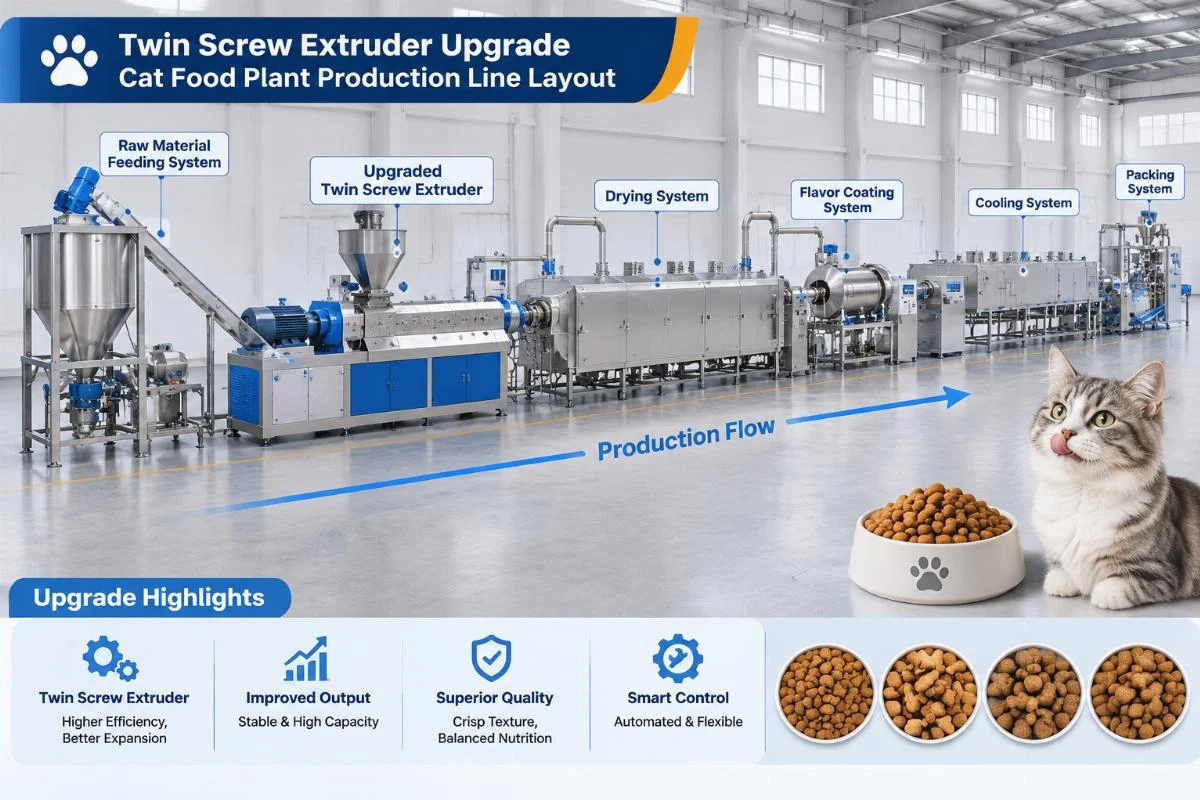
To guarantee a successful twin screw extruder upgrade cat food plant, the entire system must be evaluated as a single organism. This means calculating the throughput capacity ratios, matching the dryer’s thermal dynamics to the new extrusion output, and calibrating the coating system’s spray pressure for the specific kibble density.
When we design a turnkey line, we do not just ship the DS95 or DS135 extruder and wish the client luck. We map out the entire flow from raw material intake to the final coating. During on-site commissioning, our engineers monitor the fat coating retention percentages and adjust the nozzle angles in real-time. We also provide operator training so the local team understands how to tweak the barrel temperatures and feeder speeds when raw material batches vary. This comprehensive approach ensures that the transition is smooth, the product quality is premium, and the waste rate drops noticeably.

Conclusion
Upgrading a feline kibble facility is an exercise in system integration, not just equipment replacement. A successful twin screw extruder upgrade cat food plant demands that buyers look beyond the main host price tag and invest in matched drying, cooling, and coating systems, backed by precise formula adjustments. Only by treating the entire production line as a unified ecosystem can manufacturers achieve the high meat inclusion, superior oil coating, and low waste rates required in today’s premium pet food market.
Machines Mentioned in This Article
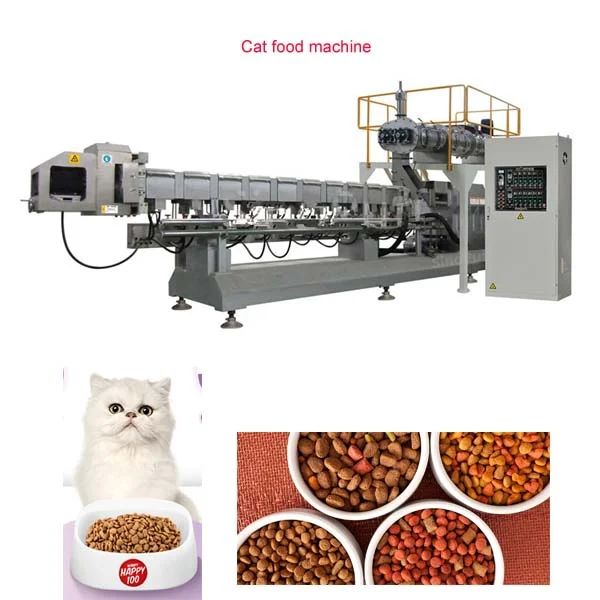
cat food machine
Cat Food Machine Manufacturer & Production Line
View Machine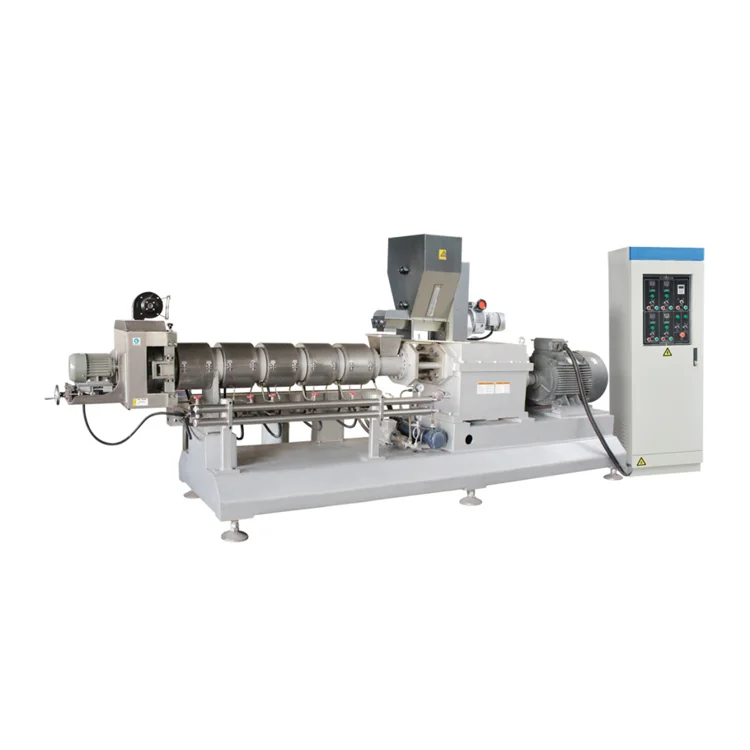
cat food machine
Pet Food Pellet Extruder Machine Manufacturer for Dog Cat
View Machine
cat food machine
Pet Food Processing Equipment Plant Manufacturer Dog Food
View Machine
cat food machine