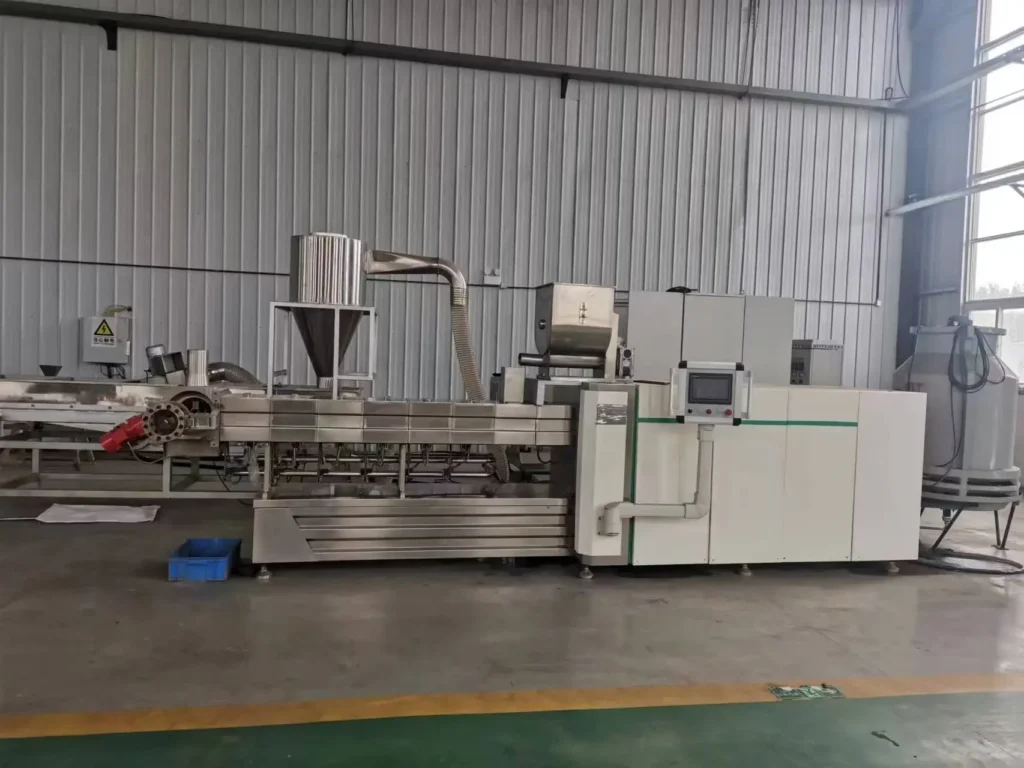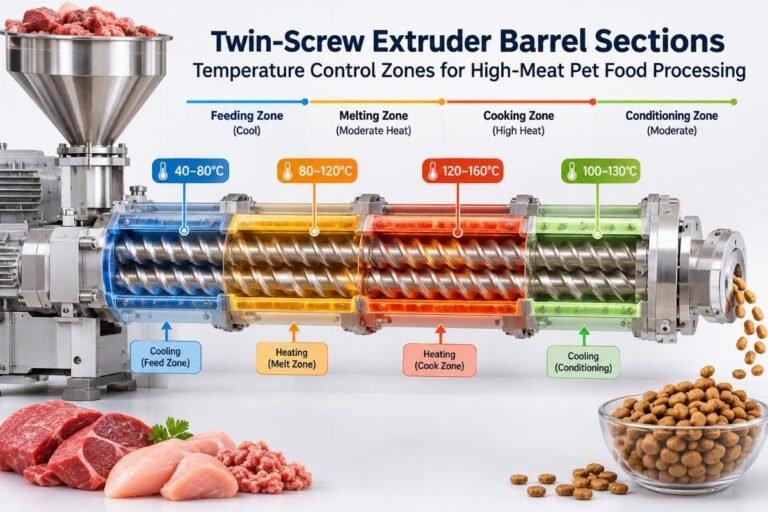

Capacity means nothing if the weld seams fail the FDA audit.
Achieving pet food line USA compliance hinges entirely on strict adherence to FDA material traceability and 3-A sanitary welding standards, where surface roughness and crevice corrosion resistance outweigh mere throughput specs.
Years ago, while overseeing the assembly of twin-screw extruders in Dongguan, I learned that a machine’s true quality is hidden in its welds. Later, handling overseas orders, I shipped a mid-capacity dry dog food line to a startup in Texas. The client was thrilled with the output until the FDA现场审核 (on-site audit) arrived. The inspectors flagged microbial contamination in the barrel seams. The welds lacked mirror polishing, creating hidden sanitary dead zones where bacteria thrived. The entire line was shut down for rectification. Replacing the affected parts via air freight resulted in a mid-six-figure loss for our side. Since that painful lesson, I have obsessively focused on 3-A sanitary standards and 316L material grades for the American market. When buyers evaluate a pet food line USA compliance, they must look past the brochure capacity and scrutinize the microscopic details of the steel and the welding.

Let us break down the exact specifications and compliance checkpoints you need to verify before signing a purchase order.
What Are the Core FDA Requirements for Pet Food Machinery?
The FDA mandates that all food contact surfaces must be non-toxic, non-absorbent, and corrosion-resistant under normal operating conditions.
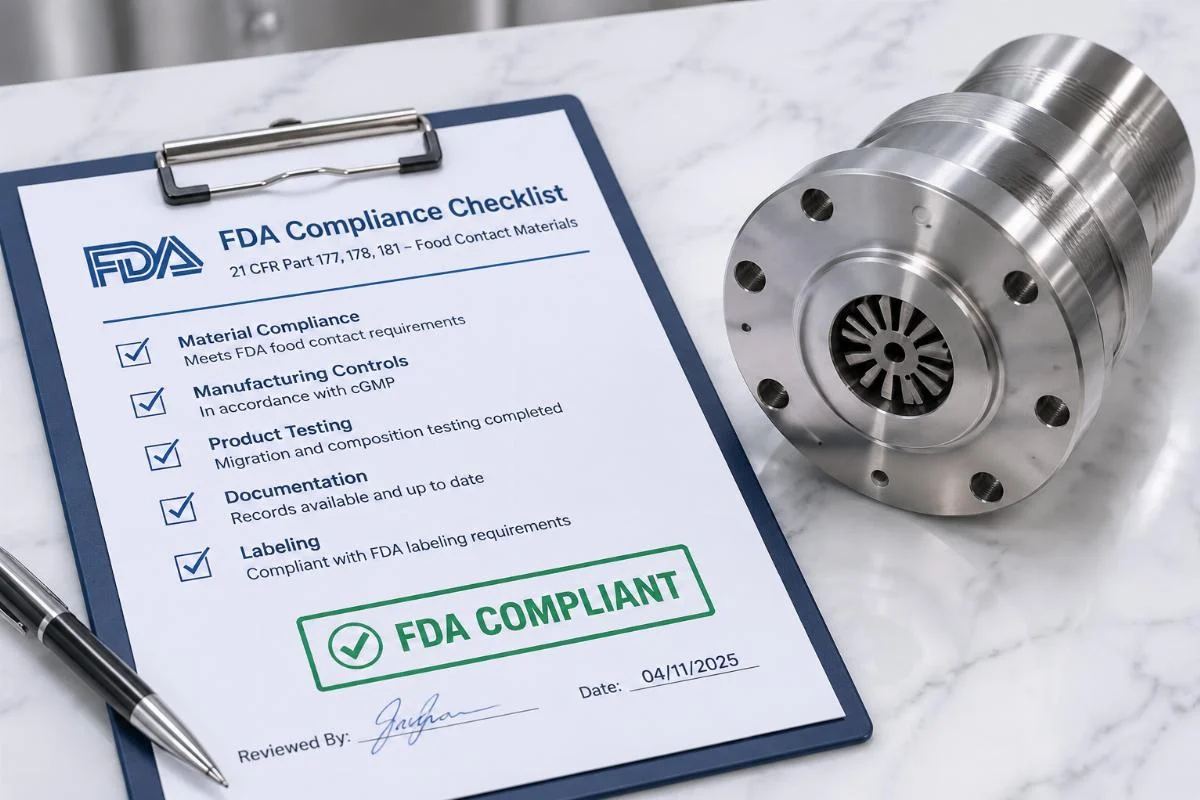
Unlike general industrial machinery, equipment destined for the US market must comply with the Federal Food, Drug, and Cosmetic Act. The FDA does not “approve” individual machines; rather, they enforce that the materials and construction methods do not adulterate the food. For a pet food line USA compliance strategy, this means the manufacturer must provide verifiable documentation proving that every component touching the raw dough or final kibble meets food-grade specifications.
A common trap buyers fall into is assuming that a generic “food-grade” certificate is enough. The FDA requires traceability. If a batch of steel cannot be traced back to the mill test report, the equipment is considered non-compliant. Furthermore, all lubricants used in the gearbox or bearings near the product zone must be H1 registered, meaning they are safe for incidental food contact.
Consider the risk of unverified supply chains. A US buyer once received a line where the supplier substituted standard gaskets with non-approved rubber to cut costs. During an FDA audit, the chemical composition of the gaskets could not be verified, leading to a mandatory line halt. The risk清单 (risk list) for non-compliance includes product recalls, import alerts, and facility shutdowns.
Why Do 3-A Sanitary Standards Matter for Extruders?
3-A Sanitary Standards dictate the physical design of the equipment to ensure it can be cleaned and sanitized effectively, preventing cross-contamination.
While the FDA sets the legal safety requirements, 3-A Sanitary Standards provide the engineering blueprint for hygienic design. For a twin-screw extruder, this is critical. The transition from standard mechanical design to 3-A compliant design changes how the barrel sections are joined, how the screws are supported, and how the discharge is configured.
When evaluating a pet food line USA compliance, you must compare the physical design of the extruder against 3-A principles. Standard designs often use threaded connections or exposed bolts in the product zone. These create crevices where old dough can accumulate, bake, and harbor pathogens like Salmonella. A 3-A compliant design utilizes flush surfaces, self-draining angles, and quick-release clamps that eliminate these harborage points.
| Design Feature | Standard Twin-Screw Design | 3-A Sanitary Compliant Design |
|---|---|---|
| Barrel Joint Connection | Exposed threaded bolts | Flush clamp or smooth flange |
| Screw Shaft Support | Grease-lubricated bearing near product | Purgeable seal or magnetic coupling |
| Surface Finish | Standard machined (Ra > 0.8) | Mirror polished (Ra ≤ 0.4) |
| Cleanability | Requires partial disassembly | CIP/SIP flow dynamics compatible |
| Cross-Contamination Risk | High due to dead zones | Noticeably reduced |
I recall a contract manufacturer producing acidic fruit-flavored treats. They bought a standard extruder to save money. The acidic formula reacted with the microscopic peaks of the standard machined finish, causing pitting. The pitting became a permanent trap for bacteria. They had to scrap the entire barrel section. Upgrading to a 3-A compliant design with proper surface roughness values eliminated the issue entirely.

304 vs. 316L Stainless Steel: Which Do You Really Need?
Material selection is not just about cost; 316L is often the mandatory threshold for specific formulas to prevent crevice corrosion.
Most buyers assume that 304 stainless steel is the universal standard for food-grade equipment. While 304 is acceptable for many dry, neutral applications, the reality of pet food line USA compliance is much stricter when dealing with complex formulas. The addition of vitamins, minerals, acidic flavor coatings, or high-moisture meat slurries changes the chemical environment inside the barrel.
304 stainless steel is vulnerable to chloride attack and pitting corrosion when exposed to certain salts and acids. 316L, with its molybdenum addition, offers substantially higher resistance to these corrosive elements. For a turnkey pet food production line targeting the US market, specifying 316L for all product contact parts is a defensive strategy against FDA rejection.
| Material Grade | Corrosion Resistance | Cost Implication | Best Application |
|---|---|---|---|
| 304 Stainless Steel | Basic resistance to neutral foods | Lower initial capital cost | Dry, basic kibble, simple starches |
| 316L Stainless Steel | Robust resistance to acids and chlorides | Higher initial capital cost | Meat-inclusion treats, acidic coatings, high-mineral formulas |
A startup in the Midwest wanted to produce premium salmon and sweet potato treats. They initially quoted a line with 304 contact parts. I advised them to switch to 316L for the barrel and screw elements. The salmon oils and added mineral premixes would have caused rapid degradation of the 304 surface within months. By investing in 316L, they ensured the surface roughness values remained intact, maintaining their FDA compliance and extending the service life meaningfully.

How to Verify Supplier Compliance Before Shipping?
Never rely on verbal assurances; demand verifiable documentation and physical testing before the machine leaves the factory.
Securing pet food line USA compliance requires a rigorous Factory Acceptance Test (FAT) and document review process. Many suppliers claim to meet US standards, but the proof lies in the data. You must establish a verification protocol that leaves no room for ambiguity.
Here is the step-by-step methodology to verify your supplier’s claims:
- Request Mill Test Certificates (MTC): Demand EN 10204 3.1 or 3.2 certificates for all 316L steel used in product contact zones. This verifies the chemical composition and traceability.
- Verify Surface Roughness (Ra) Reports: The supplier must provide profilometer readings for the inner barrel and screw surfaces. The target is typically Ra ≤ 0.4 micrometers for 3-A compliance.
- Review Welding Procedures and Records: Ask for the Welding Procedure Specification (WPS) and welder qualifications. Inspect the weld logs to ensure automated orbital welding was used where specified, rather than manual welding which is prone to inconsistency.
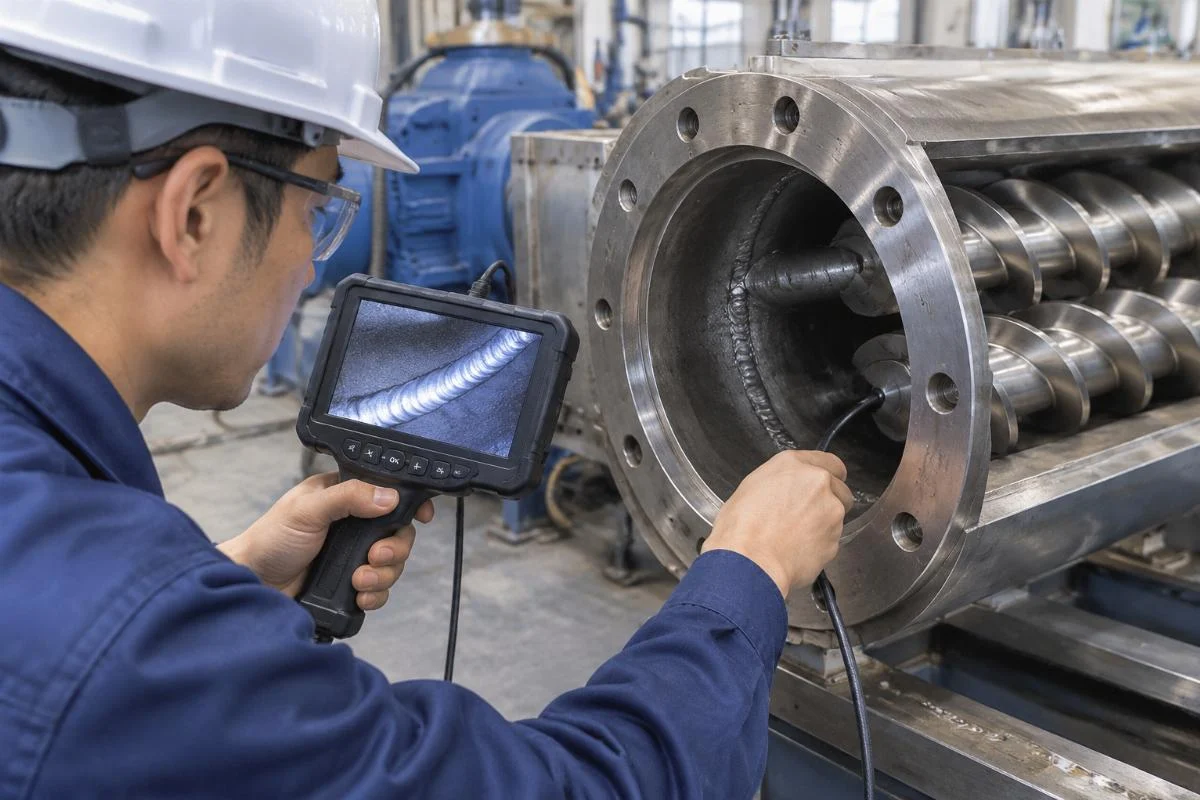
- Conduct a Physical Borescope Inspection: During the FAT, use a borescope to inspect the internal welds of the barrel sections. Look for uniform penetration, lack of porosity, and smooth transitions without slag inclusion.
- Check Lubricant Certificates: Verify that all greases and oils used in the machine have NSF H1 registration certificates for incidental food contact.
I once worked with a buyer who skipped the physical weld inspection and only looked at the paperwork. When the machine arrived, the internal welds were heavily oxidized and required manual grinding on-site, which destroyed the sanitary finish. By insisting on a live video FAT with a borescope feed, you can catch these flaws before they become a mid-six-figure shipping mistake.
Conclusion
Compliance is engineered into the steel, not added as an afterthought.
Navigating pet food line USA compliance requires a shift in focus from mere production capacity to the microscopic realities of surface finish, material metallurgy, and hygienic design. By demanding 3-A sanitary principles, specifying 316L for corrosive formulas, and rigorously verifying weld and material documentation, you protect your investment and ensure uninterrupted market entry.
Machines Mentioned in This Article

cat food machine
Pet Dog Food Extruder Manufacturer Production Line
View Machine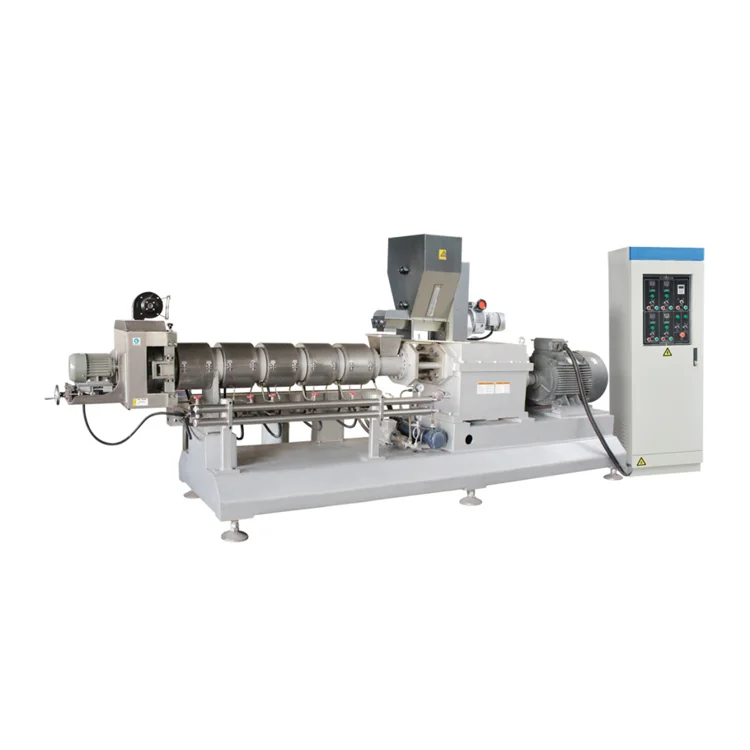
cat food machine
Pet Food Pellet Extruder Machine Manufacturer for Dog Cat
View Machine
cat food machine
Pet Food Extruder Machine Manufacturer Production Line
View Machine
cat food machine