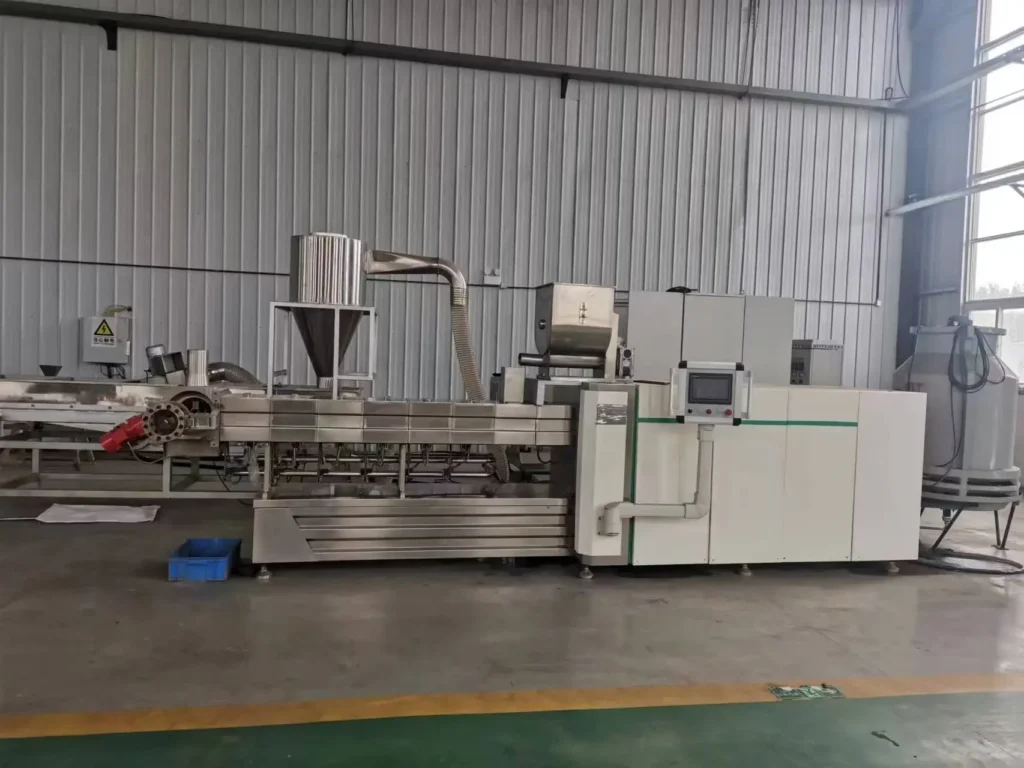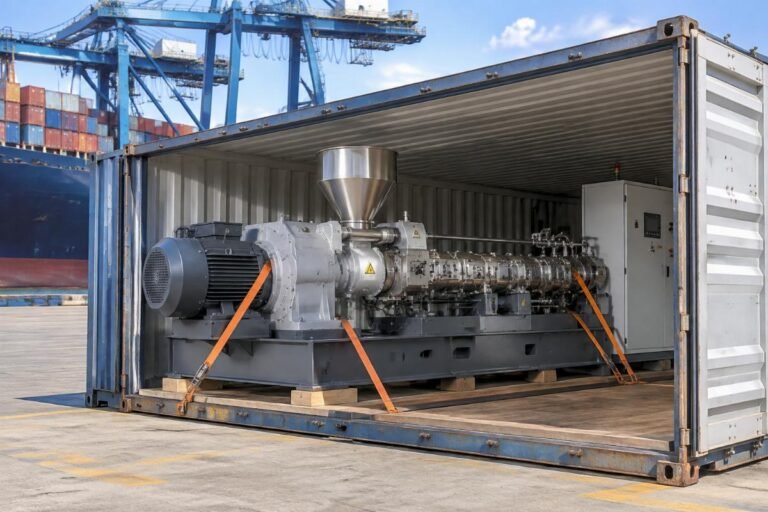

A stamped paper certificate means absolutely nothing if the physical safety guards fail an on-site audit.
Yes, a Pet Food Extruder CE Certification is legally mandatory for any machinery sold and operated within the European Economic Area. However, holding the physical document is only the baseline; true compliance requires that every physical safety interlock, emergency stop logic, and food-contact material traceability perfectly aligns with the Machinery Directive and Low Voltage Directive on the factory floor.
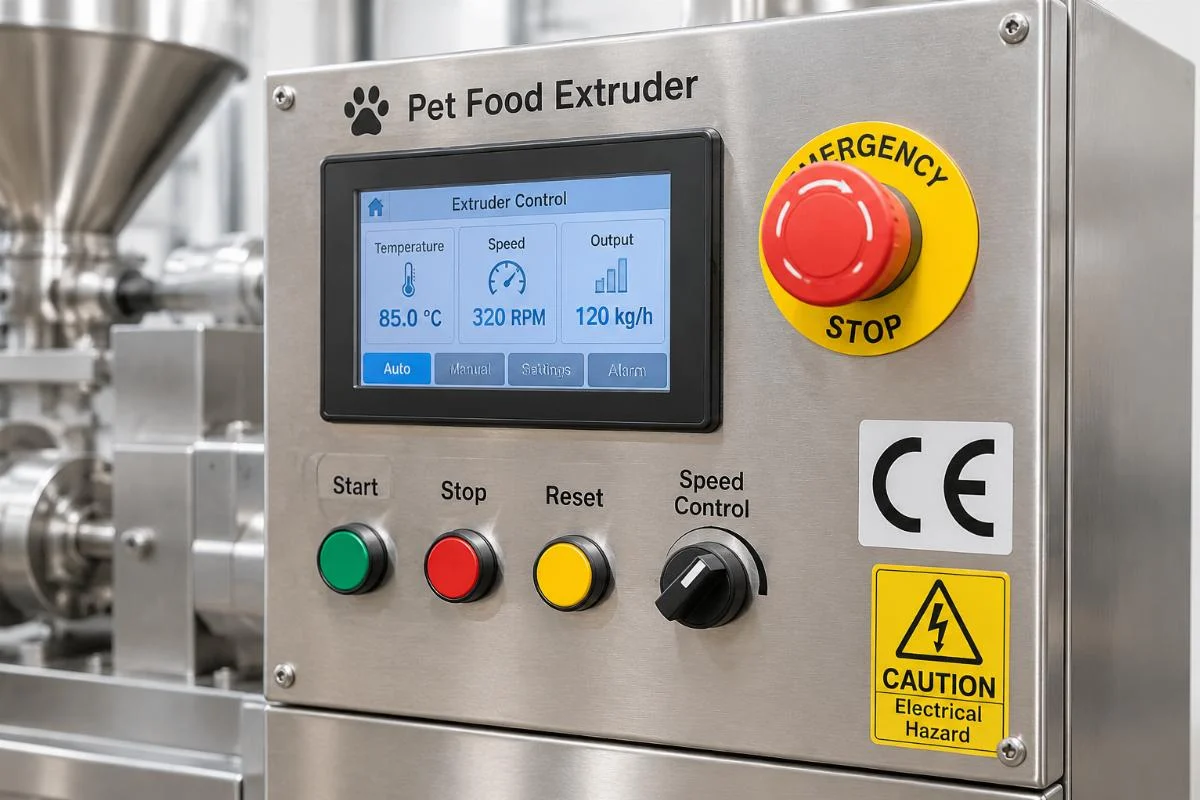
I started my career on the factory floor in Jinan, inspecting twin-screw extruders before transitioning into international trade. Early on, I managed a shipment of a complete pet food extrusion line to Germany. The extruder itself ran perfectly during our factory acceptance test. Yet, customs held the entire container at the port because the emergency stop buttons and safety interlocks on the downstream cooling conveyor did not fully comply with the CE machinery directive. We had to fly a technician across the continent to rewire the control panel on-site, costing the buyer a mid-four-figure sum and delaying production by weeks. That harsh reality drilled into me that European buyers do not just purchase a machine; they purchase verified compliance. Now, whenever I review procurement specifications, I inspect the CE electrical specs and material traceability documentation first, because a paper certificate cannot save a production line from a failed local safety inspection.
Securing the correct paperwork is merely the first step in a rigorous procurement journey, and understanding the specific regulatory framework is critical to avoiding costly border delays.
Is CE Certification Mandatory for Pet Food Extruders in Europe?
Yes, it is a strict legal requirement for all industrial machinery entering the European Economic Area.
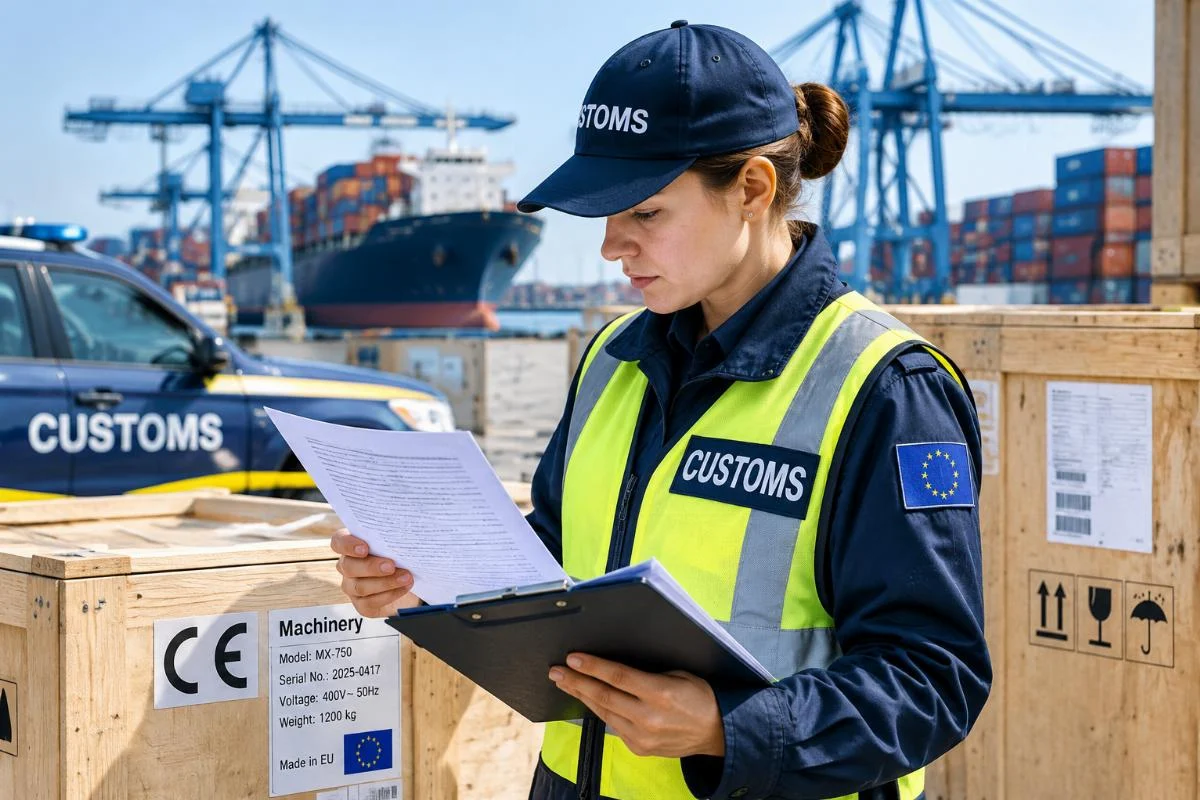
You cannot legally operate or sell a pet food extruder in Europe without it. The CE mark is not a voluntary quality badge; it is a mandatory declaration by the manufacturer that the equipment meets all applicable EU health, safety, and environmental protection legislation. When importing a twin-screw or single-screw extruder, customs authorities will immediately halt the shipment if the CE Declaration of Conformity is missing or improperly formatted.
Many startup owners assume that a general machinery certificate covers the entire production line. This is a dangerous misconception. The extrusion host, the dryer, the flavoring drum, and the cooling conveyor must all be evaluated. If a single component lacks proper documentation, the entire line can be rejected at the port. Furthermore, the responsibility ultimately falls on the importer of record. If the original manufacturer disappears or provides forged documents, the European buyer faces severe legal and financial liabilities. Therefore, verifying the authenticity of the Pet Food Extruder CE Certification through the manufacturer’s technical file is a non-negotiable step in the procurement process.
Which Specific EU Directives Apply to Pet Food Extruders?
A Pet Food Extruder CE Certification is actually a composite of multiple overlapping directives, primarily the Machinery Directive, Low Voltage Directive, EMC Directive, and Food Contact Material regulations.
It is a common pitfall to focus solely on the mechanical safety of the extruder barrel while ignoring the electrical and hygienic requirements. To achieve full Europe pet food machine safety compliance, the equipment must satisfy several distinct frameworks:
- Machinery Directive (MD): This covers the physical safety of the machine. It mandates the integration of safety interlocks, guarding of moving parts like the cutting face and drive shafts, and fail-safe emergency stop circuits..
- Low Voltage Directive (LVD) & EMC Directive: These govern the electrical control panels. The motors, heaters, and variable frequency drives must meet EU voltage tolerances and electromagnetic compatibility standards to prevent interference with other factory equipment.
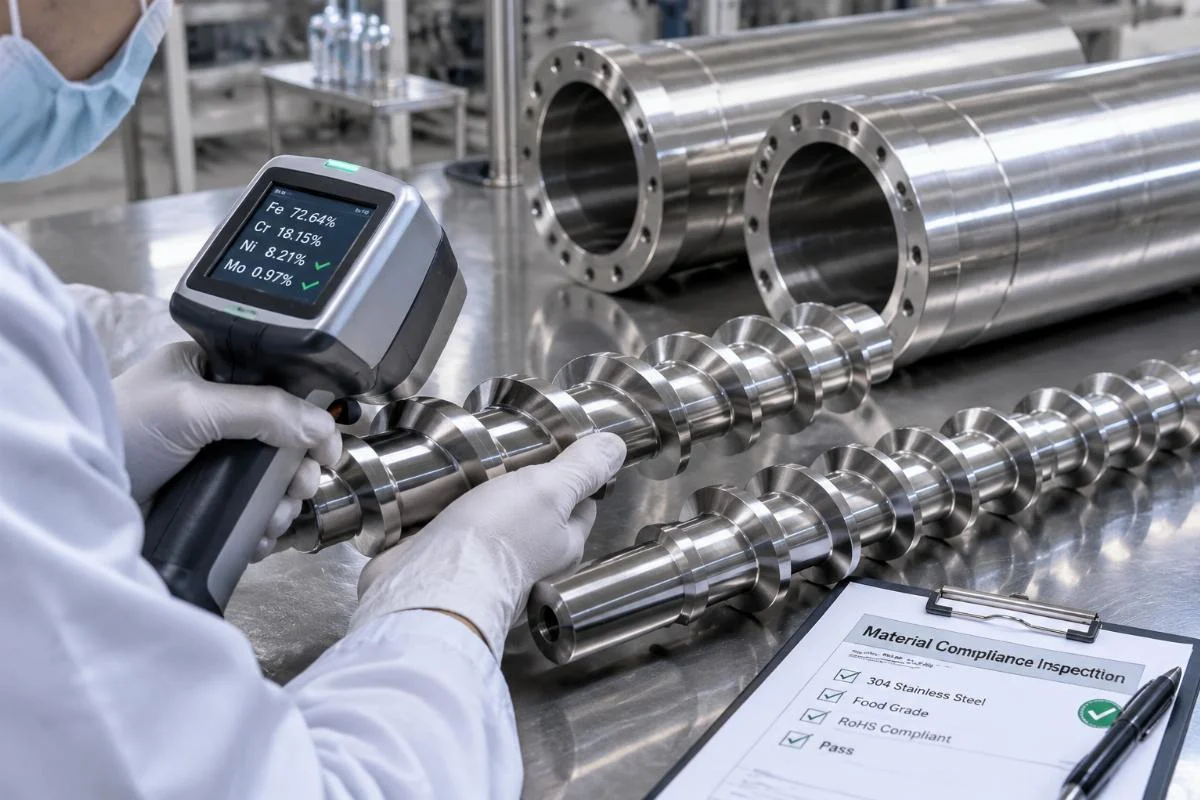
- Food Contact Materials (FCM): This is often the most overlooked aspect. Any part of the extruder that touches the raw dough or finished kibble—such as the barrel, screws, and die molds—must be manufactured from certified food-grade materials.
When evaluating a supplier, you must request the specific test reports for each of these areas. A valid Pet Food Extruder CE Certification will include a comprehensive technical file proving that the 304 or 316 stainless steel components have passed migration testing, ensuring no heavy metals or harmful chemicals leach into the pet food during the high-temperature, high-pressure extrusion process.
Why Do Physical Safety Audits Matter More Than Paper Certificates?
Local inspectors and customs agents prioritize physical safety interlocks and emergency stop logic over the mere possession of a paper certificate.
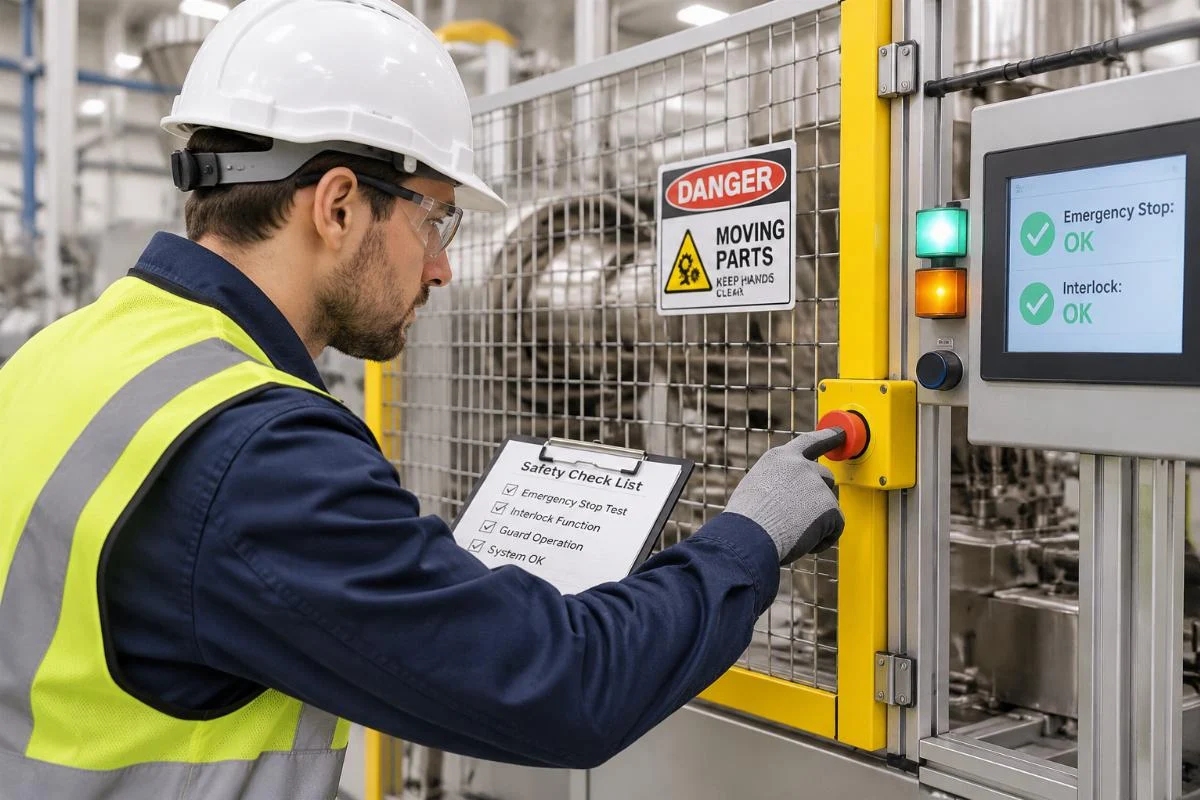
Most buyers believe that once the CE paper is in hand, the compliance journey is over. The reality is that physical safety guards must pass rigorous on-site audits. During my early days in trade, the German customs hold I mentioned earlier happened precisely because the physical wiring of the emergency stops did not match the safety logic required by the CE machinery directive. The buttons were present, but the control relay lacked the mandatory redundant safety monitoring.
When a local safety inspector visits a pet food manufacturing plant, they do not just ask to see the certificate; they will physically press the emergency stops, open the safety guards, and check if the machine halts immediately and prevents restart until reset. If the machine fails this physical test, the factory can be shut down, regardless of what the paperwork says.
To mitigate this risk, rigorous pre-shipment verification is essential. At Meiteng, we conduct exhaustive pre-shipped CE electrical checks on every control panel. We simulate fault conditions and test the safety interlock logic before the machine ever leaves our facility in Jinan. This ensures that the physical reality of the machine perfectly mirrors the Pet Food Extruder CE Certification documentation, guaranteeing a smooth on-site audit pass rate for our clients.
What Are the Most Common Compliance Pitfalls in Downstream Equipment?
Cooling conveyors and dryers frequently lack proper safety guards and material documentation, often triggering customs holds and delaying the entire extrusion line.
Most buyers focus intensely on the extruder barrel and the die design, assuming the downstream equipment is simple and less regulated. This is a critical error. Downstream equipment often triggers the most frustrating compliance hurdles.
A common scenario involves the cooling conveyor. It may seem like a simple belt system, but it involves moving parts, pinch points, and electrical motors. If the side guards are easily removable without tools, or if the emergency stop pull-cords are not properly tensioned and wired into a safety relay, the entire line is non-compliant. I have seen shipments delayed for weeks because the cooling conveyor was treated as an afterthought during the manufacturing process.
Another major pitfall is the material audit failure. Downstream equipment like the flavoring drum and cooling bins must also comply with food contact regulations. If the supplier cannot provide the 304 stainless steel food-grade documentation and material traceability certificates for these secondary components, the on-site audit will fail. To prevent this, we ensure that our integrated drying, cooling, and flavor-coating systems are built with the same food-grade 304 stainless construction and are accompanied by complete 304 stainless documentation, matching the main extruder’s compliance level.

Conclusion
True compliance is built into the physical machine, not just printed on a document.
Securing a Pet Food Extruder CE Certification requires a holistic approach that encompasses mechanical safety, electrical standards, and strict food-contact material traceability across the entire production line. By prioritizing physical safety interlocks and comprehensive downstream equipment documentation, buyers can avoid costly customs delays and ensure uninterrupted, compliant pet food manufacturing in Europe.
Machines Mentioned in This Article

cat food machine
Pet Dog Food Extruder Manufacturer Production Line
View Machine
cat food machine
Pet Food Pellet Extruder Machine Manufacturer for Dog Cat
View Machine
cat food machine
Pet Food Extruder Machine Manufacturer Production Line
View Machine
cat food machine