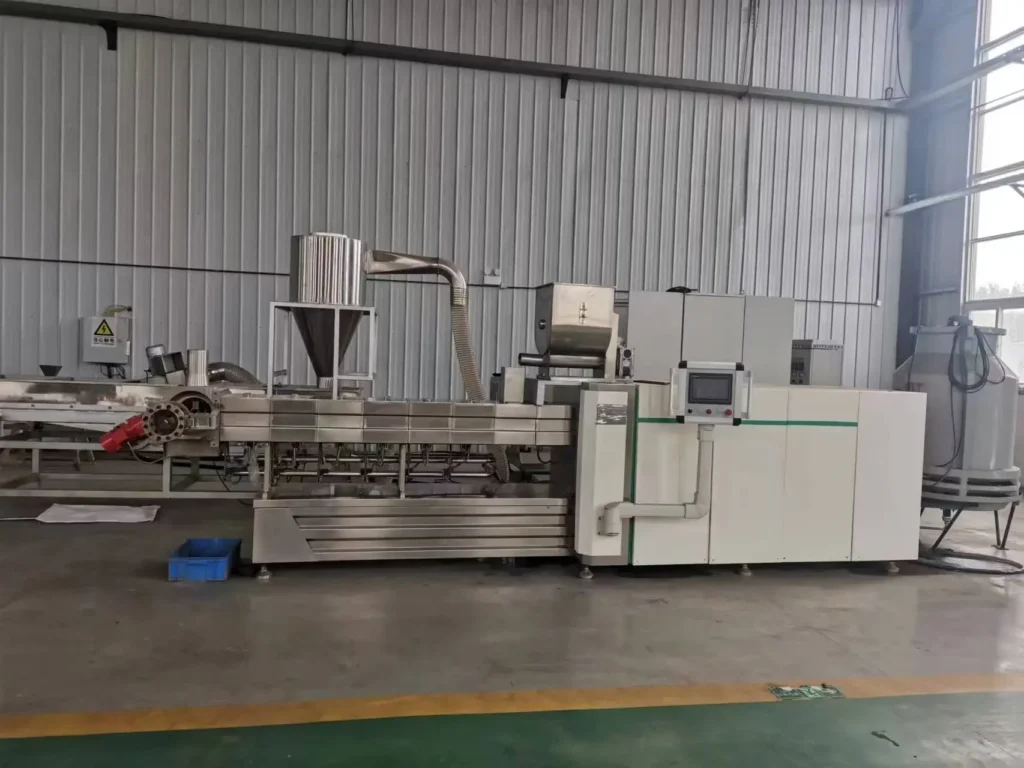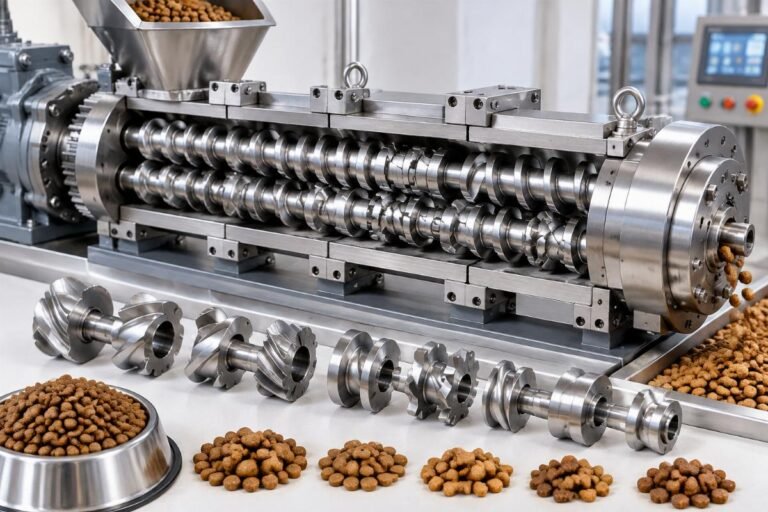

Most buyers assume a single standard screw fits all recipes, but specific ingredients require tailored compression ratios for proper gelatinization.
Running multiple recipes on one extruder requires flexible screw configurations and precise starch ratio adjustments to ensure proper gelatinization and avoid product waste, allowing contract pet food manufacturers to scale diverse formulas without buying multiple machines.
I still remember the frantic phone call from a client who had just received a DS70 twin-screw extruder. They were furious because the dog food kibble coming out of the barrel was under-gelatinized, turning into a pile of fragile crumbs. I flew out overnight to inspect the line at their facility. The root cause was not the machine itself; the formula’s starch ratio was miscalculated, and the screw arrangement was never customized for their high-meat ingredients. The entire batch was scrapped, resulting in a mid-six-figure loss that nearly triggered a contract breach. Since that night, I never approve a DS70 configuration based on output capacity alone. I dig into the exact formula traits and site conditions before finalizing any order. This hands-on reality is what separates a true flexible pet food production line from a costly paperweight..
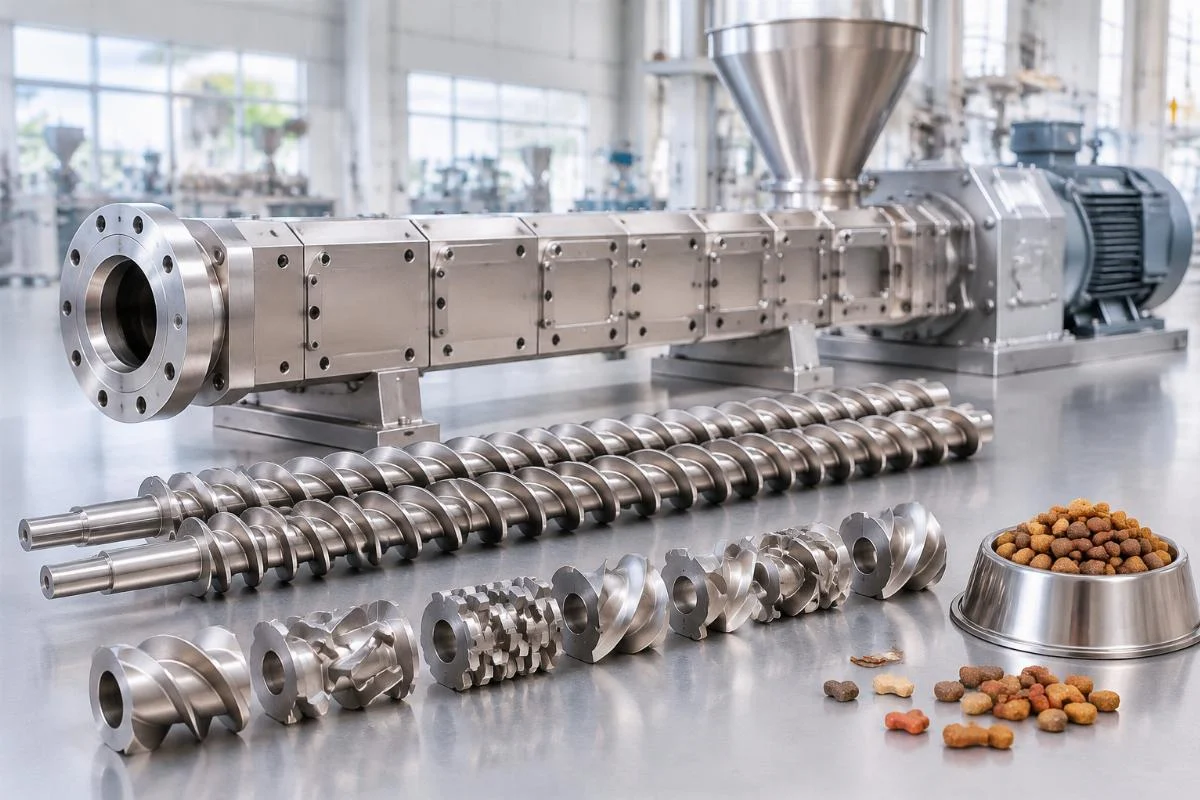
Transitioning from single-formula runs to diverse product lines reveals the true mechanical demands of modern contract pet food manufacturing.
Why Run Multiple Recipes on One Extruder?
Capital expenditure reduction drives the shift toward single-machine flexibility, allowing producers to test and scale diverse formulas without duplicating heavy machinery.
The economic landscape for contract pet food manufacturing has shifted dramatically over the past few years. Startups and established co-packers alike face immense pressure to offer diverse product lines, from high-meat grain-free kibble to delicate multi-shape treats. Historically, this meant purchasing dedicated extruders for each recipe profile, locking up massive capital in idle iron. Today, the industry trend heavily favors a flexible pet food production line that can handle frequent changeovers..
When I consult with new facility planners, they often want to run everything from a high-starch biscuit to a protein-dense treat on the same DS70. The DS70, with its capacity range fitting perfectly into the 200kg/h to 2000kg/h spectrum, is built for this exact versatility. However, flexibility is not just about turning a dial. It requires a deep understanding of how different raw materials behave under shear and heat. A machine capable of handling multiple recipes must feature a modular design that allows operators to swap screw elements and adjust barrel temperature zones rapidly. This adaptability ensures that contract pet food manufacturing remains profitable even when running short, specialized batches.
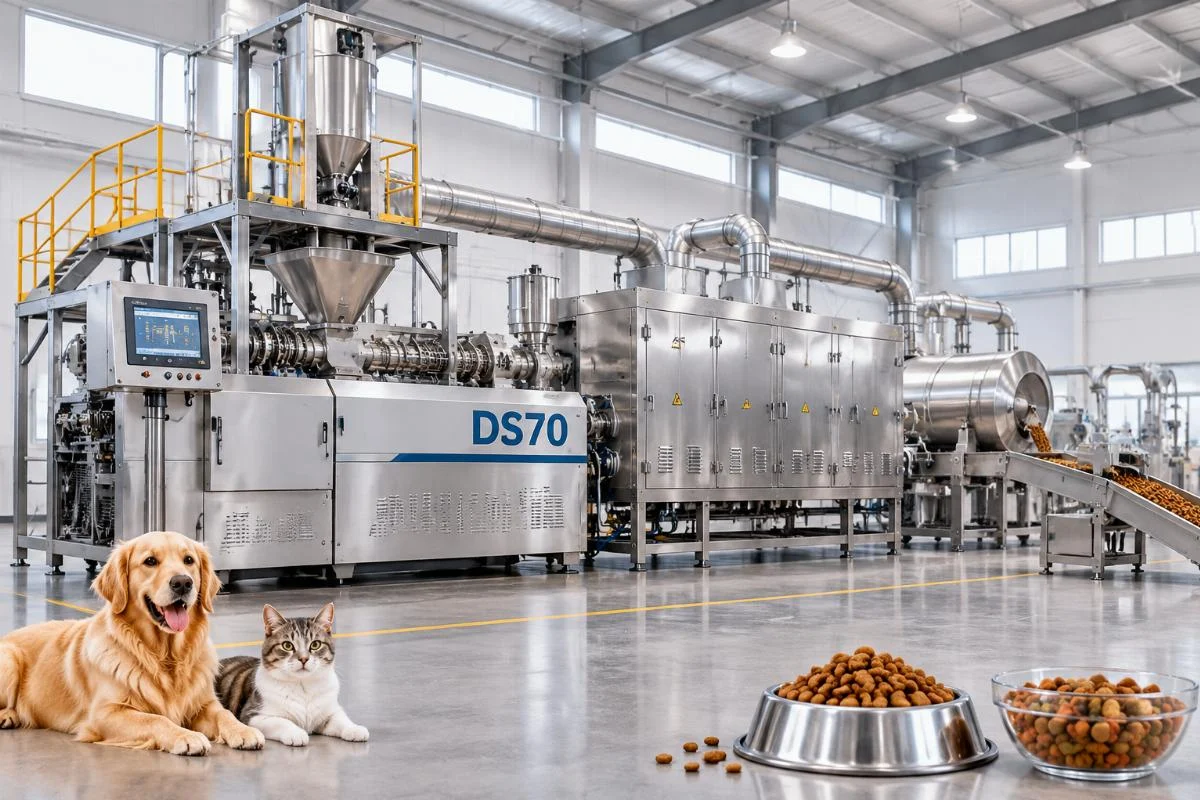
How Does Screw Configuration Affect Recipe Switching?
Modular screw design dictates the success of recipe switching, as specific ingredients demand tailored compression ratios to achieve the necessary mechanical energy input.
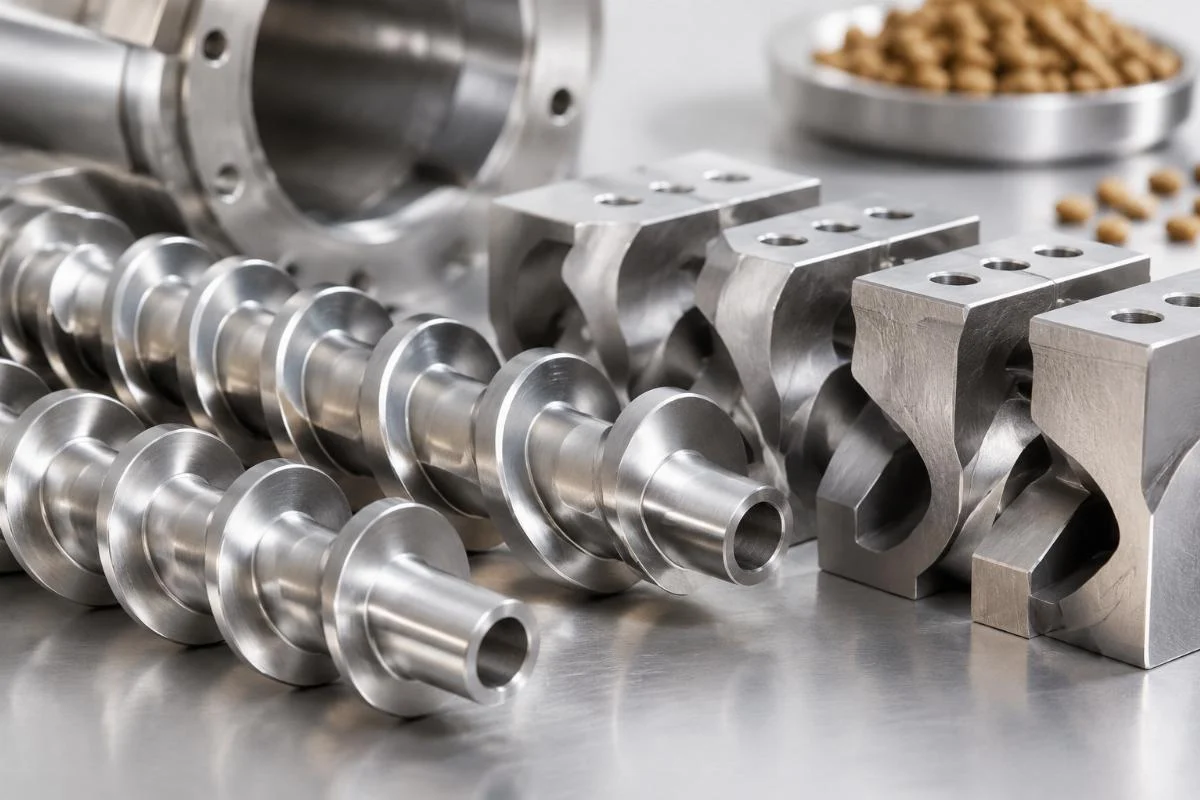
The heart of any twin screw extruder for multiple pet food recipes lies in the screw element arrangement. You cannot simply run a high-meat formula using the same screw profile designed for a corn-based snack. Meat proteins and plant starches require entirely different shear histories..
In contract pet food manufacturing, the ability to execute a custom screw configuration for pet food is non-negotiable. For instance, a sensitive ingredient like fish meal requires gentle conveying and specific kneading blocks to ensure complete gelatinization without burning the delicate proteins. If the shear heat is not controlled, the ingredients will scorch, ruining the batch. Conversely, a high-starch treat needs aggressive mixing to break down the starch granules. The DS70 addresses this through its modular barrel and screw design. Operators can reconfigure the L/D ratio and shear zones based on the raw material traits. This mechanical adaptability is what transforms a standard machine into a genuinely flexible pet food production line, capable of producing both dense nutritional kibble and airy, expanded treats.
What Are the Common Pitfalls in Multi-Recipe Extrusion?
Ignoring raw material traits during recipe switching leads to poor gelatinization and fragile kibble, turning profitable runs into costly waste.
The most frequent disaster I witness in contract pet food manufacturing stems from treating all recipes as mechanically identical. A common misconception is that higher screw speed automatically means better output. In reality, pushing the speed without adjusting the water injection and barrel temperatures can easily burn heat-sensitive ingredients if the shear heat spirals out of control..
Consider a client attempting to switch from a standard poultry recipe to a novel protein source with vastly different moisture absorption rates. They kept the original screw setup and temperature profile. The result was incomplete gelatinization. The kibble looked fine exiting the die but shattered into dust during the cooling and coating phases. The specific mechanical energy was entirely wrong for the new matrix. Another major pitfall involves frequent shape changes for multi-shape treats. Without a quick-clean design and modular screw swapping capabilities, downtime eats into margins. Contract pet food manufacturers must respect the unique thermal and rheological boundaries of every new formula. Failing to do so guarantees that the flexible pet food production line will produce nothing but expensive debris.

How to Optimize Formulas for Flexible Production?
Balancing starch ratios and moisture content is the fundamental key to achieving consistent expansion across diverse recipes on a single machine.
Mechanical flexibility must be paired with formula intelligence. In contract pet food manufacturing, the extruder can only work with what the formula provides. If a high-meat dog food recipe lacks sufficient structural carbohydrates, the expansion will fail, regardless of how perfectly the screws are arranged..
When developing formulas for a twin screw extruder for multiple pet food recipes, adjusting binder ratios and understanding the gelatinization threshold of the specific starch source is critical. I always advise clients to map out the moisture and fat content before touching the machine controls. A custom screw configuration for pet food can compensate for minor formula variations, but it cannot fix a fundamentally unbalanced matrix. Meiteng provides extensive formula R&D support and on-site operator training to ensure that recipe switching is driven by data, not guesswork. By aligning the starch ratios with the mechanical action of the DS70, producers ensure that every batch, whether a dense training treat or a light adult kibble, expands uniformly and maintains its structural integrity through the drying and coating stages.

Conclusion
True extrusion flexibility demands a marriage of modular mechanics and precise formula science.
Running diverse recipes on a single machine is entirely achievable when operators respect the rheological limits of their ingredients and leverage adaptable screw configurations. Contract pet food manufacturing thrives not just on heavy iron, but on the meticulous alignment of starch ratios, shear profiles, and thermal control to eliminate waste and ensure consistent quality.
Machines Mentioned in This Article

cat food machine
Factory Pet Dog Food Manufacturing Machine Production Line
View Machine
cat food machine
Pet Food Processing Equipment Plant Manufacturer Dog Food
View Machine
cat food machine
Dry Dog Food Production Line Pet Food Pellet Machine
View Machine
cat food machine