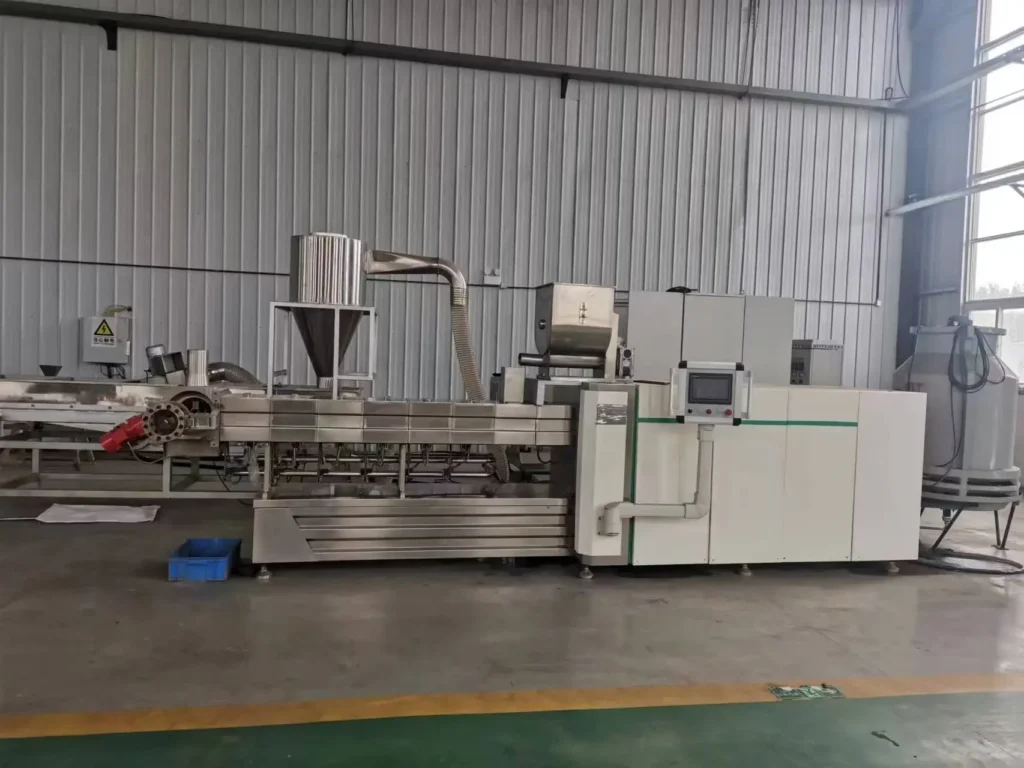

More fresh meat does not mean stronger motors; it demands exact moisture evaporation control to prevent mold clogging.
Dog Food Manufacturing Mexico offers massive opportunities for new brands, but success requires aligning local fresh-meat formulas with precise twin-screw extrusion parameters to avoid costly production halts.
Years ago, while traveling through Latin America with my mentor, I assisted a local pet brand in Mexico City with commissioning a DS70 twin-screw extruder. The client was eager to launch a high fresh-meat recipe but skipped calculating the moisture evaporation rate beforehand. The extruded kibble stuck entirely to the mold, forcing a two-day shutdown for cleaning. This taught me that selling equipment means locking in the formula process and mechanical parameters. Now, when engaging with clients for Dog Food Manufacturing Mexico, I always inspect the mixing workshop first before discussing screw L/D ratios.
Navigating these technical nuances is essential for any brand aiming to scale effectively in this region.
Why is Mexico the Next Hotspot for Dog Food Startups?
Rising pet ownership and local manufacturing incentives are driving rapid market expansion across the region.
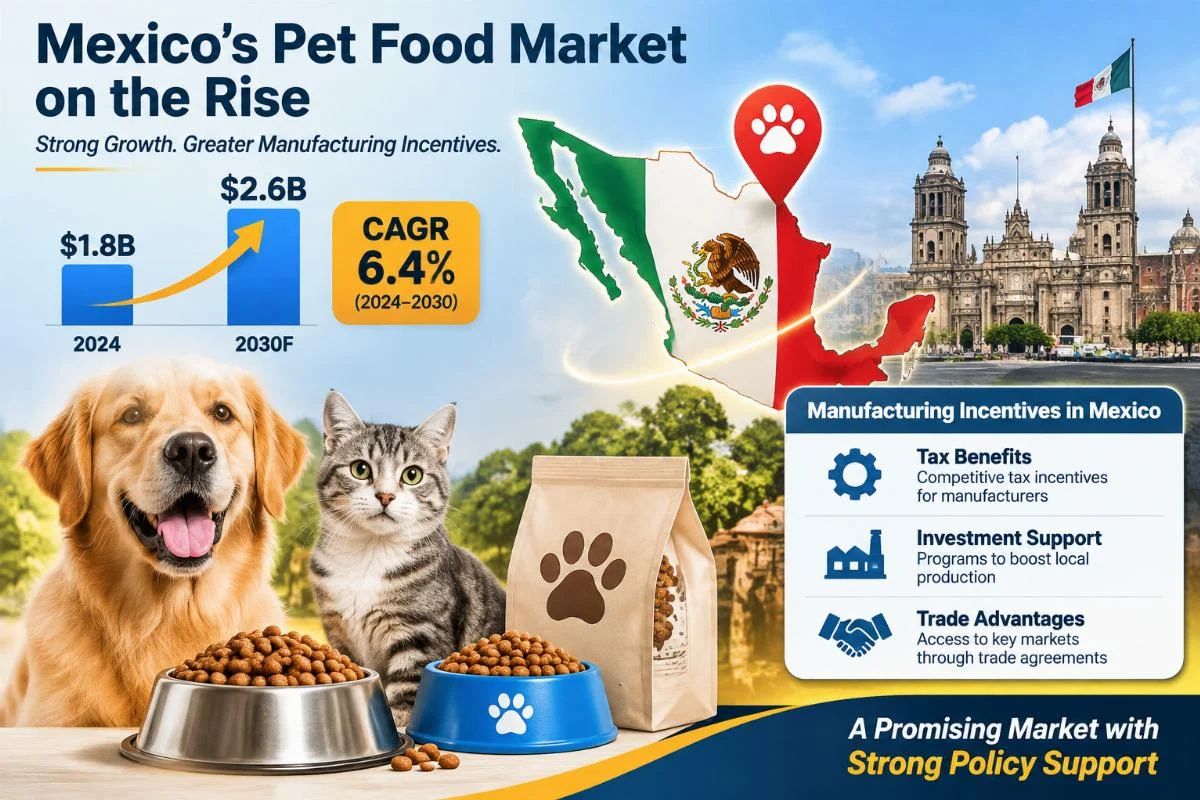
The landscape of Dog Food Manufacturing Mexico is shifting dramatically. Local consumers are increasingly premiumizing their pet care routines, moving away from basic fillers toward high-protein, fresh-meat-inclusive diets. This consumer behavior creates a lucrative entry point for new brands. However, capitalizing on this demand requires more than just marketing; it demands robust local production capabilities.
Many startups initially consider importing finished goods, but the logistical costs and import tariffs quickly erode margins. Establishing a local footprint allows brands to adapt to regional taste preferences and maintain fresher supply chains. The Mexican government has also been rolling out incentives for domestic manufacturing, particularly in the agro-industrial sector, making it financially viable to set up local processing plants.
Yet, entering this market means confronting the technical realities of processing local ingredients, which leads directly to the challenges of formulation.
What are the Hidden Technical Traps in Fresh-Meat Formulas?
High fresh-meat inclusion requires exact moisture and temperature control to prevent mold clogging and ensure product consistency.
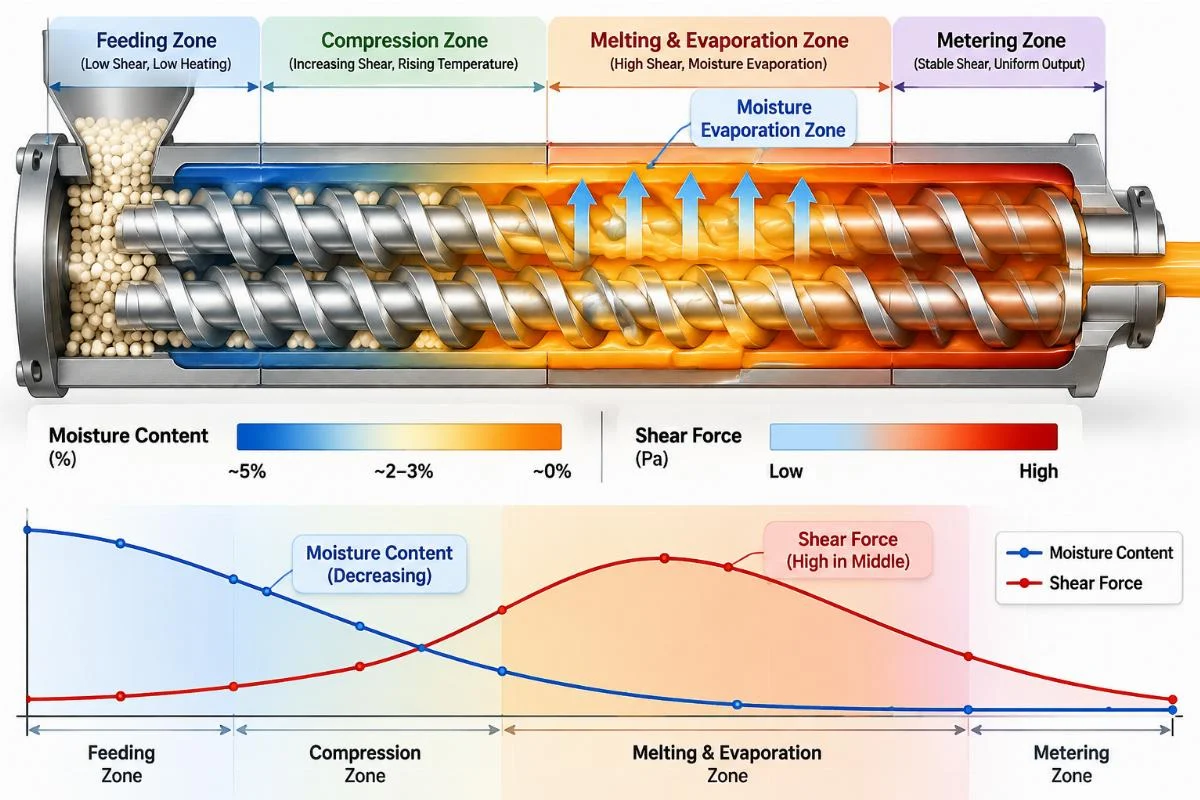
Many newcomers to Dog Food Manufacturing Mexico assume that simply increasing the motor power will handle the dense, wet nature of fresh meat. This is a fundamental misconception. Fresh meat introduces significant free moisture and fats into the extrusion process. If the moisture evaporation rate is not meticulously managed, the material turns into a sticky paste rather than a cohesive dough.
When I review a new project, the first thing I check is the barrel temperature zoning. Fresh meat requires a carefully calibrated thermal profile to flash-evaporate surface moisture without cooking the proteins prematurely inside the barrel. If the temperature zones are misaligned, the protein matrix denatures unevenly, leading to severe mold clogging.
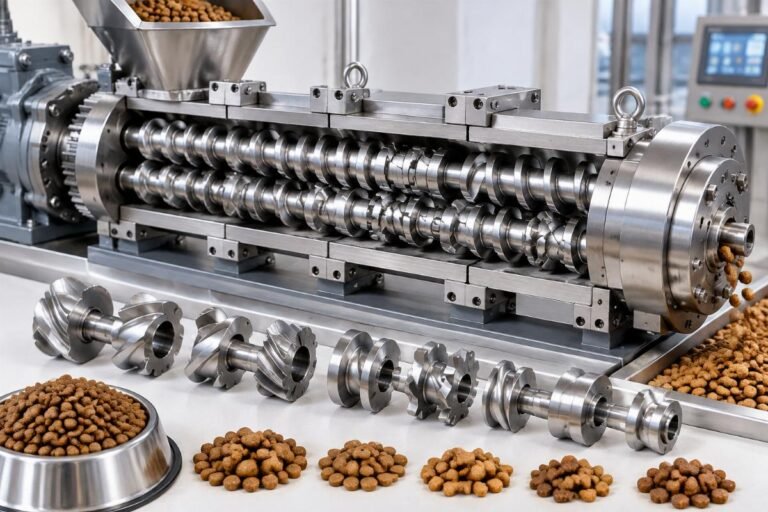
Furthermore, the shear force distribution within the barrel must be optimized. Standard single-screw configurations often fail to generate the necessary homogeneous mixing for fresh meat, resulting in unprocessed meat chunks that block the die. A twin-screw configuration provides the self-wiping action and controlled shear needed to integrate fresh meat smoothly into the carbohydrate matrix.
Understanding these traps is only the first step; selecting the right mechanical configuration is equally critical.
How to Choose the Right Twin-Screw Extruder for Your Line?
Matching screw L/D ratios and shear configurations to your specific recipe is critical for stable output and kibble density control.
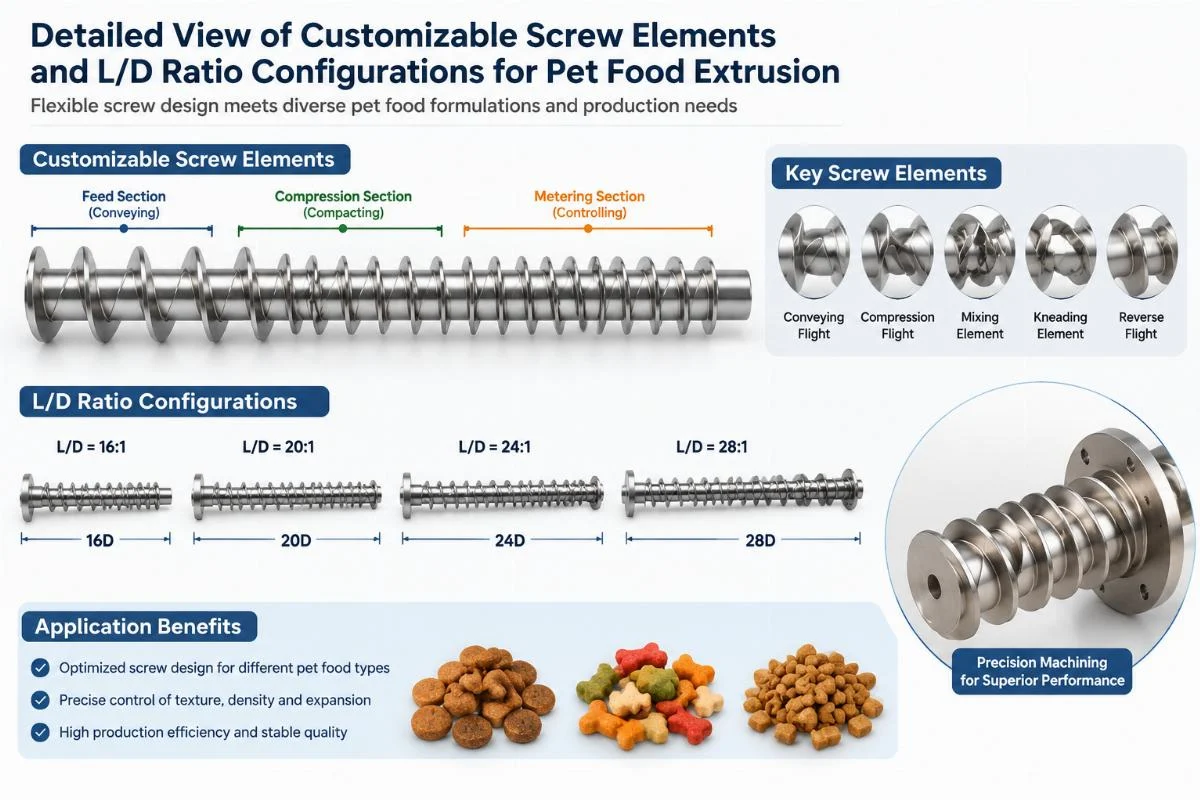
When evaluating equipment for Dog Food Manufacturing Mexico, the screw Length-to-Diameter (L/D) ratio is the most critical parameter. A longer L/D ratio provides more residence time, which is essential for thoroughly gelatinizing starches and evaporating the high moisture content of fresh meat recipes. However, an excessively long barrel can lead to protein degradation if the shear energy is not properly managed.
| Configuration Aspect | Standard Single-Screw | Optimized Twin-Screw |
|---|---|---|
| Fresh Meat Integration | Vulnerable to clogging | Robust and homogeneous |
| Moisture Evaporation Control | Uncontrolled | Controlled and precise |
| Kibble Density Modification | Limited flexibility | Highly adjustable via screw elements |
| Shear Force Distribution | Uneven | Uniform and self-wiping |
For brands targeting specific regional preferences, such as a denser kibble for larger breeds or a more porous texture for palatability, the ability to reconfigure screw elements is non-negotiable.
During a recent project in the region, a local brand needed to tweak their kibble density to match consumer preferences. By modifying the screw elements and adjusting the shear configurations on a DS70 twin-screw extruder, we achieved the exact texture without altering the core nutritional formula. This level of mechanical flexibility is what separates a reliable production line from a constant maintenance burden.
Once the extrusion technology is selected, the focus must shift to the complete production environment.
What Does a Turnkey Production Line Setup Actually Include?
From raw material intake to packaging, integrated drying and flavor-coating systems ensure product consistency and operational efficiency.
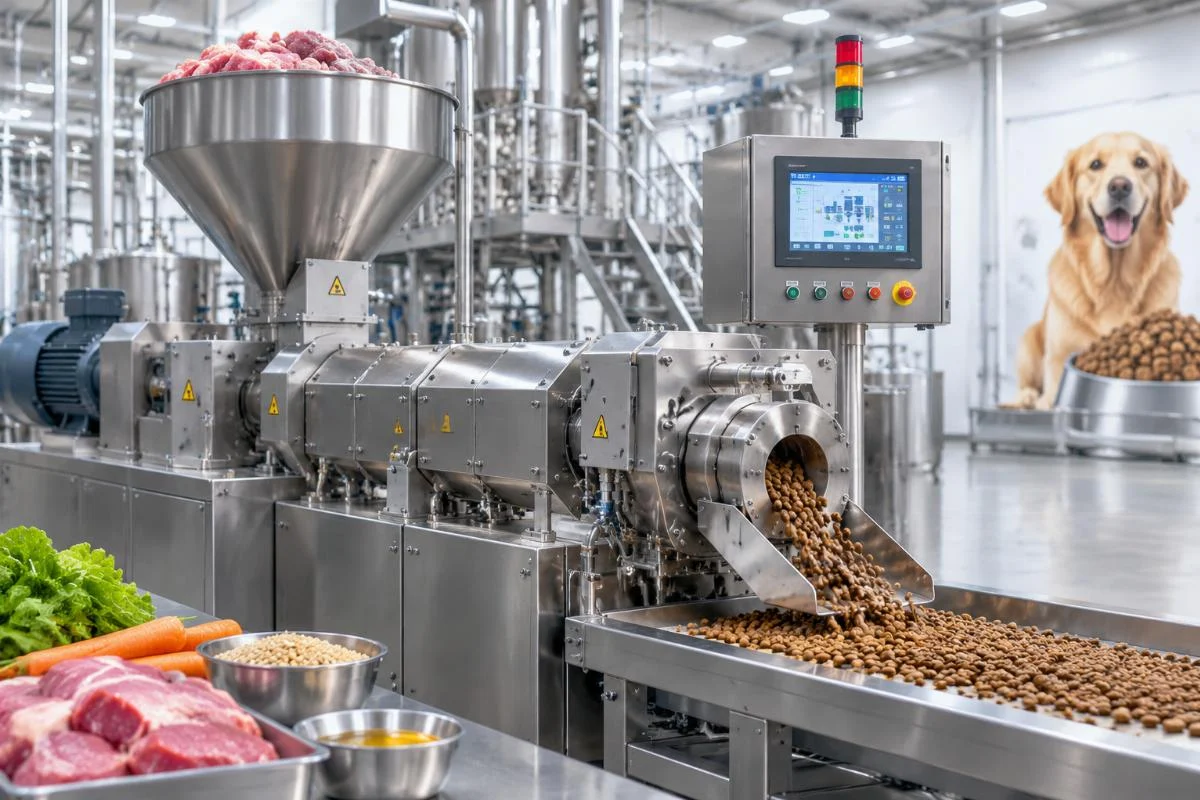
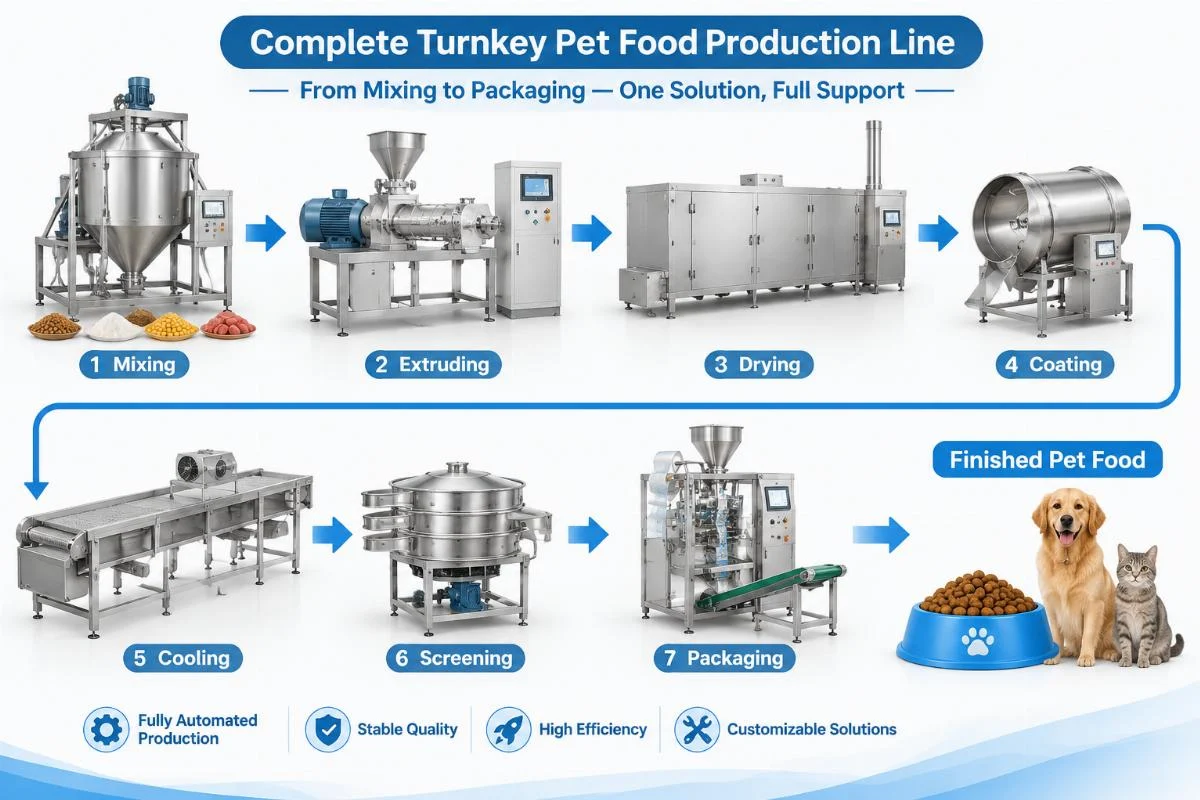
A successful Dog Food Manufacturing Mexico operation is never just about the extruder itself. The extruder is merely the heart of a much larger circulatory system. A true turnkey production line must seamlessly integrate every stage of the process to maintain product integrity and maximize throughput.
The journey begins with raw material intake and precise dosing. Fresh meat must be ground and mixed with dry ingredients to a specific moisture content before entering the preconditioner. This preconditioning step is vital for hydrating the starches and initiating the gelatinization process, which reduces the mechanical work required inside the extruder.
After extrusion, the kibble enters a multi-pass dryer. Drying high-meat kibble requires a gentle, multi-stage approach to remove internal moisture without case-hardening the exterior, which would trap moisture inside and lead to mold growth during storage. Following drying, the kibble passes through a cooling system to stabilize its temperature before entering the flavor-coating drum. Here, fats and palatability enhancers are applied evenly to ensure every piece meets the brand’s taste profile.
Integrating these systems requires deep expertise in material flow and thermal dynamics. Providing comprehensive formula development support and on-site operator training ensures that the local team can manage these complex interactions independently, transforming a capital investment into a reliable, long-term asset.
Conclusion
Technical precision and integrated line design are the true drivers of profitability in pet food manufacturing.
Dog Food Manufacturing Mexico presents a highly lucrative landscape for new brands, but success hinges on mastering the thermodynamics of fresh-meat extrusion and deploying a fully integrated turnkey production line. By prioritizing precise moisture control, adaptable twin-screw configurations, and comprehensive operational training, brands can secure a sustainable competitive advantage in this rapidly expanding market.
Machines Mentioned in This Article

cat food machine
Pet Dog Food Extruder Manufacturer Production Line
View Machine
cat food machine
Pet Food Pellet Extruder Machine Manufacturer for Dog Cat
View Machine
cat food machine
Pet Food Extruder Machine Manufacturer Production Line
View Machine
cat food machine