Most manufacturers assume recipe ratios alone dictate chew hardness, but barrel temperature profiling and screw configuration actually govern the final texture.
Producing premium Extruded Dental Chews for Dogs requires synchronizing recipe gelatinization with precise mold matching and twin-screw extrusion parameters, rather than merely purchasing basic hardware. Success hinges on balancing starch-protein interactions, maintaining die hole density, and controlling multi-layer drying residence times to prevent structural deformation and cracking.
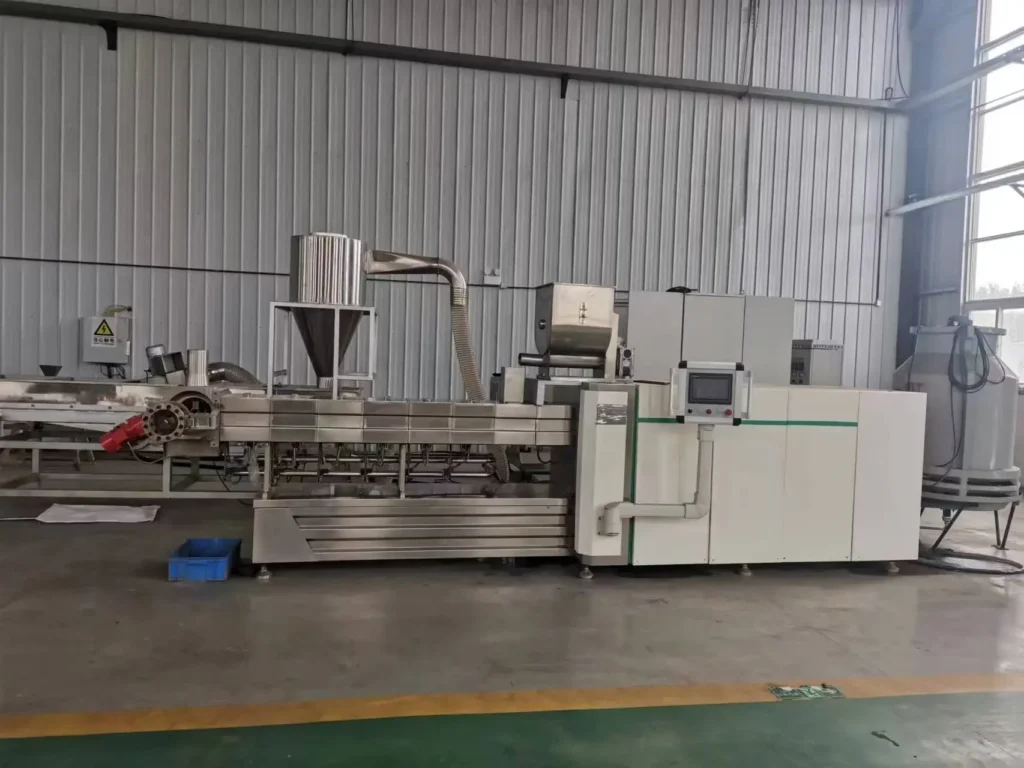
Standing inside a sweltering factory in Lagos years ago, I watched twin-screw extruders spit out dental treats that instantly glued themselves to the cutting blades. The scrap pile grew into a mountain, and the root cause was glaringly obvious: the material gelatinization temperature was entirely mismatched with the die pressure. Back when I handled shipping documents, I thought my job ended once the machines were loaded into containers. Transitioning to on-site business development across multiple regions changed my perspective completely. Delivering turnkey lines is not enough; if the formulation lacks proper gelatinization control and the mold matching is off, the entire production line halts. I have witnessed countless startups face severe blockages and broken treats simply because they ignored the rheology of food extrusion.
Mastering these variables transforms a chaotic startup trial into a stable, high-yield operation.
What Defines a Premium Dental Chew Recipe?
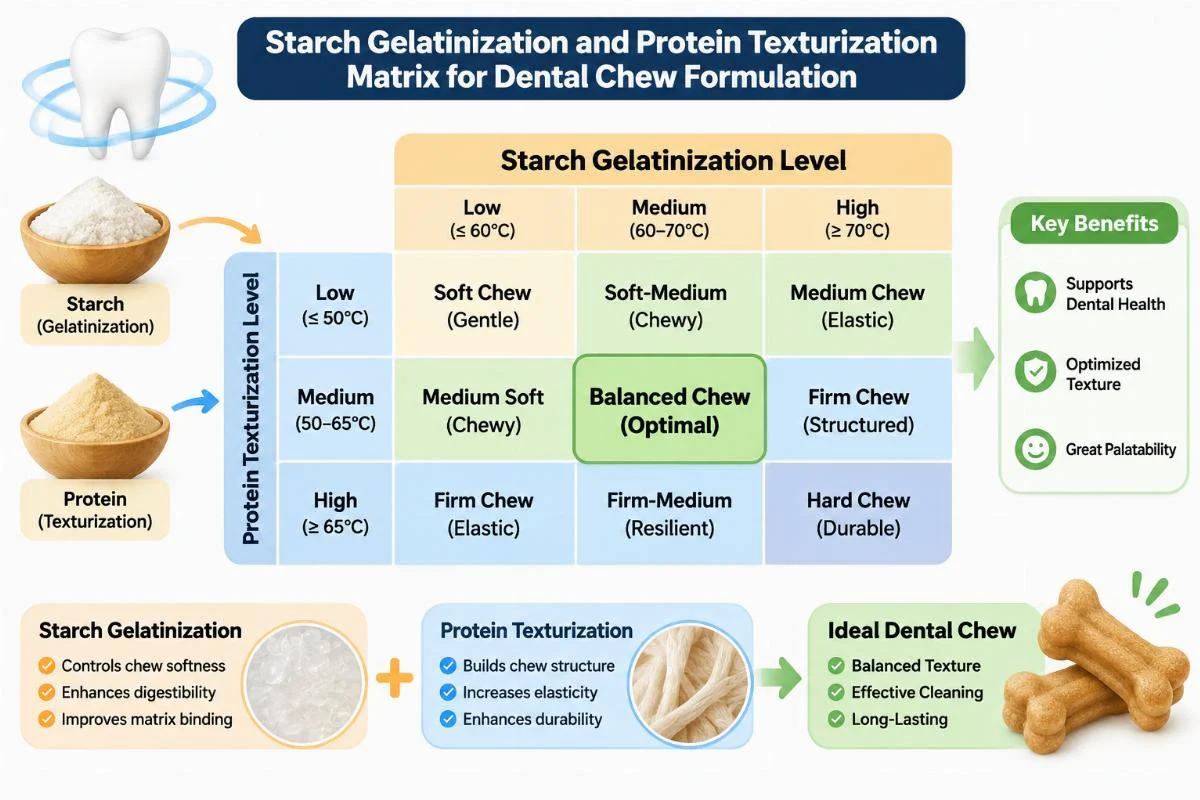
Achieving the optimal hardness for Extruded Dental Chews for Dogs relies on balancing starch gelatinization and protein texturization through controlled thermal and mechanical energy inputs.
The foundation of any successful treat lies in how the raw materials react under shear and heat. Starch needs to reach a specific gelatinization degree to provide the necessary chew structure, while protein texturization ensures the treat does not shatter immediately upon biting.
Here is the systematic approach to tuning the formulation:
- Starch-Protein Ratio Adjustment: Formulators must carefully balance the carbohydrate and protein sources. Too much starch leads to excessive expansion and brittleness, while excess protein prevents proper gelatinization, resulting in a dense, unpalatable product.
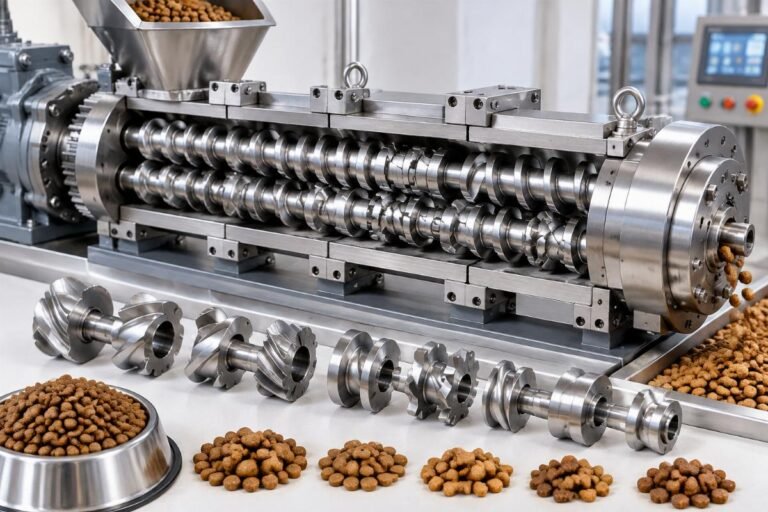
- Barrel Temperature Profiling: Instead of relying on a single temperature setting, the extruder barrel must be divided into distinct heating zones. The feed zone requires lower heat to prevent premature bridging, while the metering and die zones demand precise, elevated heat to ensure complete starch gelatinization without burning the proteins.
- Moisture Content Control: The preconditioner must inject exact amounts of steam and water. Inadequate moisture prevents starch from gelatinizing, leading to high die pressure and eventual blockages, whereas excessive moisture causes the treats to collapse during drying.
A pet food startup in South America once struggled with treats that were either too hard to chew or too soft to hold their shape. By recalibrating the steam injection and adjusting the screw configuration to increase shear heat, they achieved a consistent texture without altering their core ingredient list.
How to Design and Extrude Complex Dental Shapes?
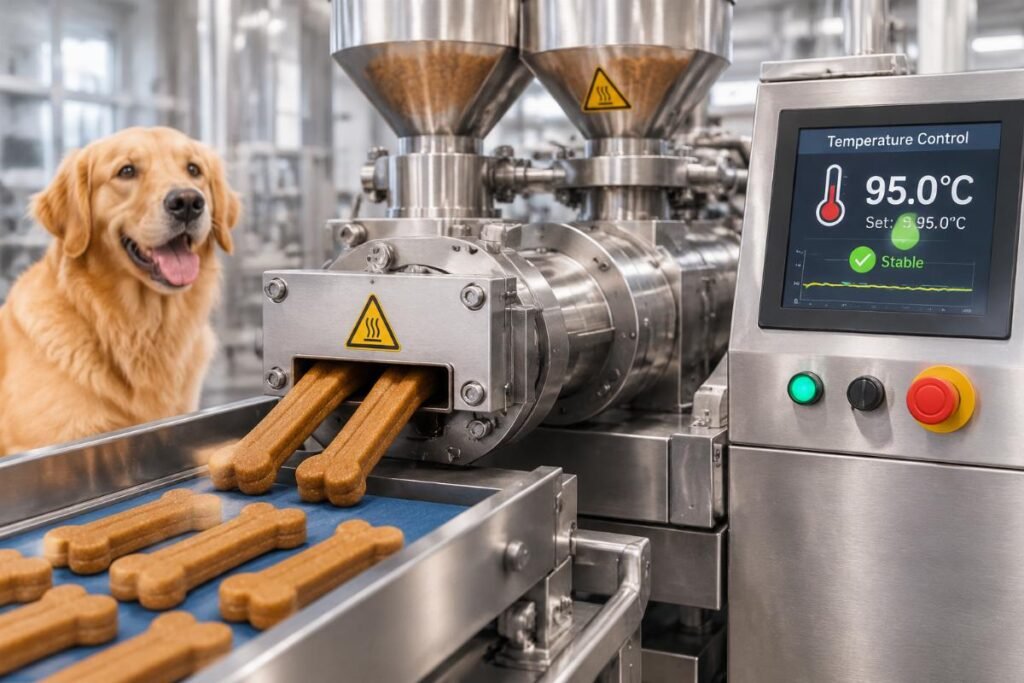
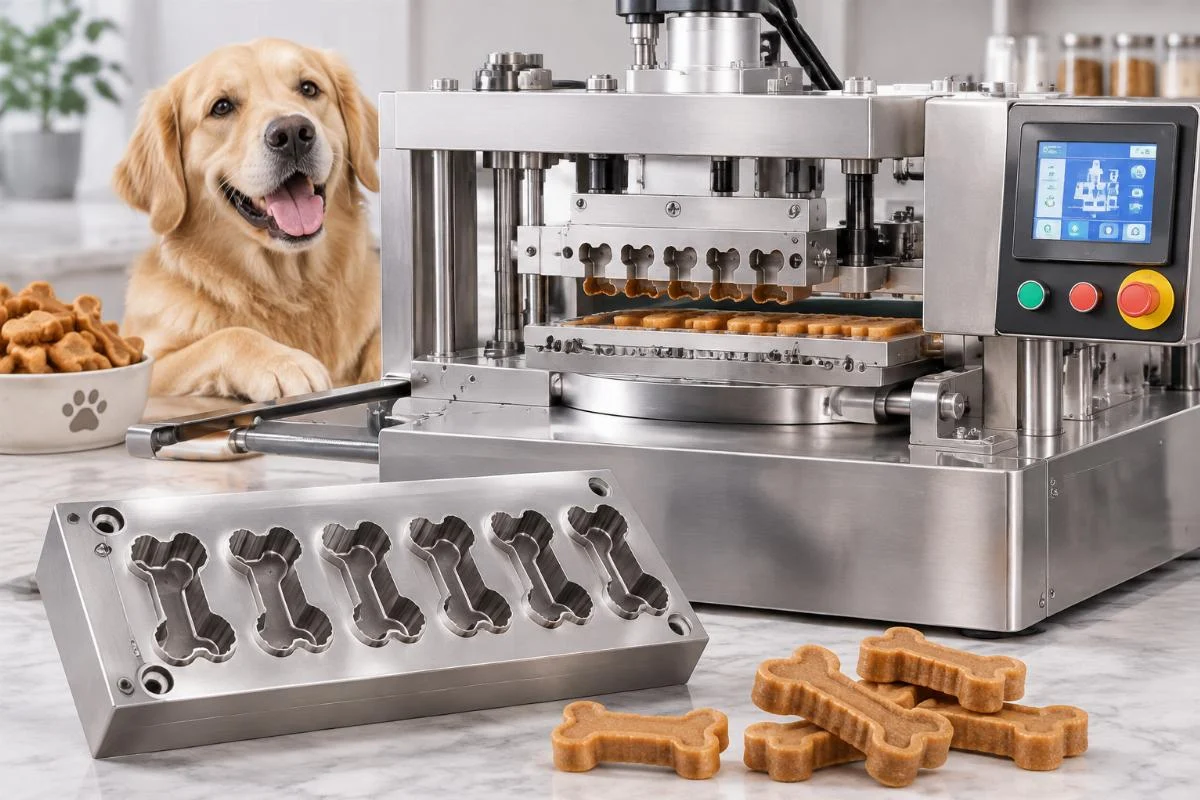
Extruding complex dental ridges for Extruded Dental Chews for Dogs demands strict synchronization between die mold design and cutting system speeds to maintain ridge integrity.
Pet owners increasingly seek treats with specific geometries designed to scrape plaque from their dogs’ teeth. However, pushing complex shapes through a die is where many production lines fail. The misconception that complex shapes require slower extrusion speeds often leads to uneven material flow and severe deformation.
To successfully form intricate shapes, follow these critical steps:
- Die Hole Density and Layout: The die face must be engineered so that the flow resistance is uniform across all cavities. Uneven resistance causes some ridges to extrude faster than others, tearing the treat apart before it even reaches the cutter.
- Cutter Speed Synchronization: The rotating cutter must match the extrusion speed perfectly. If the cutter moves too slowly, it smears the soft ridges; if it moves too fast, it creates micro-fractures that cause the treats to break during the drying phase.
- Blade Sharpness and Clearance: Dull blades or incorrect clearance between the blade and the die face will drag the material, destroying the delicate dental ridges required for effective cleaning.
During a commissioning project in Southeast Asia, a contract manufacturer attempted to produce a multi-ridged bone shape. The initial die design caused severe material buildup at the corners. By redesigning the die to include flow-balancing channels and synchronizing the servo-driven cutter, the ridge integrity was perfectly maintained at high throughput rates.
Why Do Production Lines Fail During Treat Extrusion?
Production line failures during the manufacturing of Extruded Dental Chews for Dogs are predominantly caused by poor moisture control and mismatched screw elements, leading to catastrophic blockages.
It is incredibly frustrating to see a brand-new line shut down within the first week of operation. The culprits are rarely the main motor or the gearbox; they are almost always related to the internal flow dynamics of the barrel.
When moisture levels fluctuate, the viscosity of the melt changes unpredictably. A sudden drop in moisture turns the material into a dry, abrasive paste that generates excessive friction, spiking the torque and tripping the safety sensors. Conversely, high moisture creates a slippery slurry that fails to build the necessary pressure for proper expansion, resulting in a dense, unpuffed product that clogs the downstream dryer.
Furthermore, the screw configuration must match the recipe. Using a highly shear-intensive screw profile for a delicate, heat-sensitive recipe will burn the proteins, creating carbonized blockages inside the barrel. I have seen operators spend hours digging out burnt material because they used a standard meat-texturizing screw setup for a starch-heavy dental chew recipe.
A Middle East pet food producer faced continuous downtime due to unexplained blockages. Upon inspecting the screw elements, we discovered they were using a neutral conveying setup that failed to build adequate pressure for their specific starch blend. Rearranging the screw elements to include reverse-pitch sections for better mixing and pressure buildup completely eliminated the blockages and stabilized the output.

How to Select the Right Twin-Screw Extruder for Dental Chews?
Selecting the optimal equipment for Extruded Dental Chews for Dogs requires evaluating specific mechanical energy control, precise temperature zoning, and seamless turnkey line integration.
Buying a basic extruder will not suffice for premium dental treats. The equipment must offer granular control over the extrusion environment to accommodate the delicate balance of gelatinization and texturization. When evaluating potential machinery, buyers must look beyond basic capacity and focus on the machine’s ability to maintain consistent product quality under varying conditions.
| Evaluation Factor | Basic Hardware | Professional Turnkey Line |
|---|---|---|
| Temperature Zoning | Uncontrolled | Controlled |
| Screw Configuration Flexibility | Fixed | Modular |
| Die Pressure Monitoring | Not provided | Verifiable |
| Moisture Preconditioning | Manual | Automated |
| Downstream Integration | Disconnected | Fully Integrated |
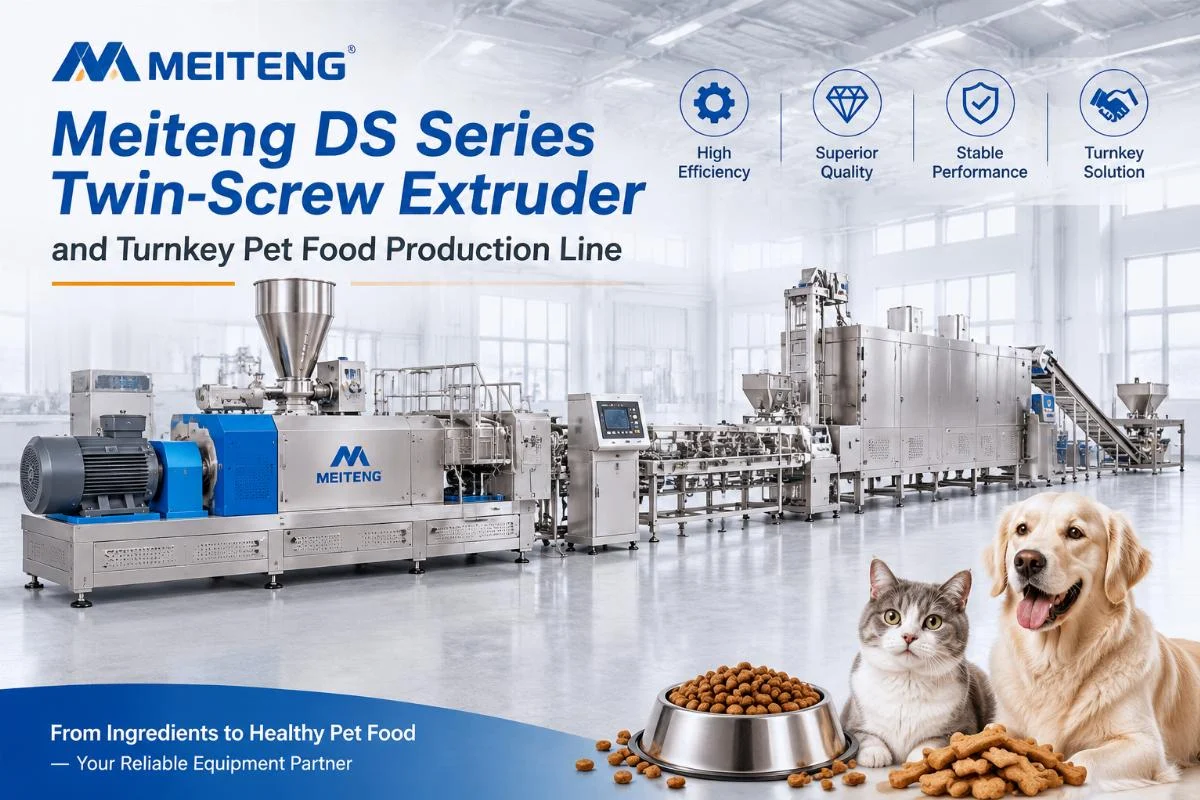
Meiteng provides comprehensive solutions tailored to these exact challenges. Our DS series twin-screw extruders, ranging from the DS32 to the DS135 models, are engineered specifically for the demanding requirements of pet treat extrusion. Constructed from food-grade 304 and 316 stainless steel, these machines meet strict 3-A sanitary standards and hold CE and ISO 9001 certifications.
The true value lies in the turnkey approach. Capacity ranges from 200kg/h to 3000kg/h, ensuring that whether you are a startup or a large contract manufacturer, there is a scalable solution. The integration of multi-layer dryers and cooling systems ensures that the treats dry evenly without cracking, preserving shelf life. Furthermore, Meiteng offers formula development support and on-site mold matching, addressing the exact blockage and texture issues discussed earlier. Operators receive thorough training, and multi-language technical support ensures that remote diagnostics are always available.
Conclusion
Manufacturing premium Extruded Dental Chews for Dogs is a complex symphony of formulation science, precision machining, and thermal dynamics. Success demands a holistic approach where recipe gelatinization, die mold synchronization, and advanced twin-screw extrusion parameters work in perfect harmony. By prioritizing controlled processing environments and leveraging comprehensive turnkey line integration, manufacturers can consistently deliver high-quality, structurally sound dental treats that satisfy both pet owners and discerning dogs.
Machines Mentioned in This Article

cat food machine
Pet Dog Food Extruder Manufacturer Production Line
View Machine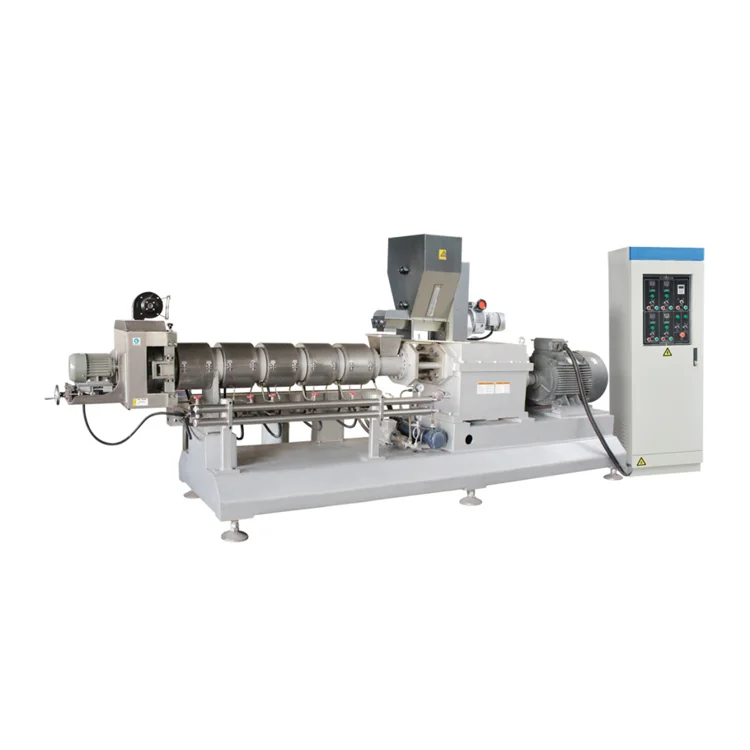
cat food machine
Pet Food Pellet Extruder Machine Manufacturer for Dog Cat
View Machine
cat food machine
Pet Food Extruder Machine Manufacturer Production Line
View Machine
cat food machine