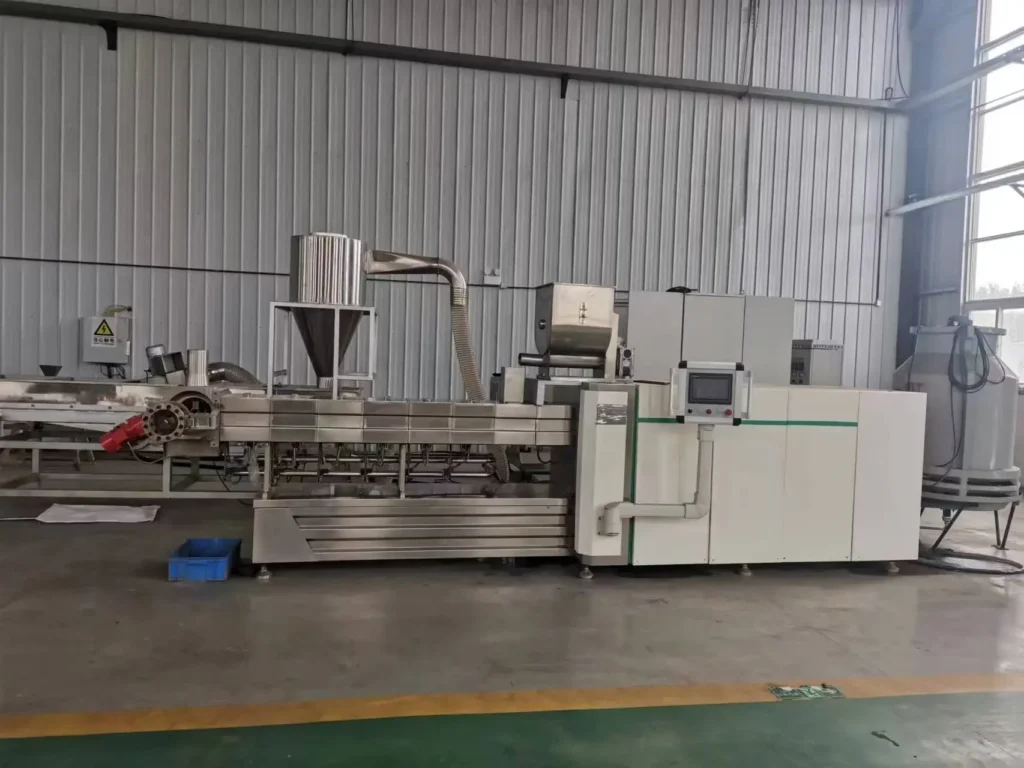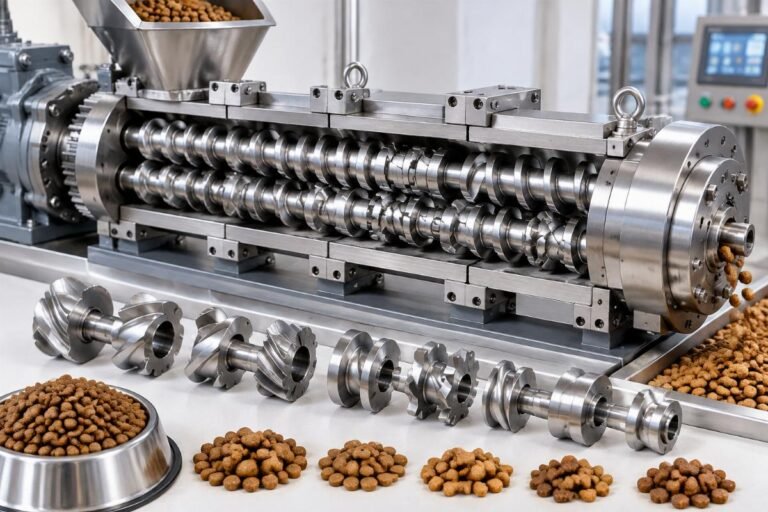

Pushing more fish meal into the mixer does not guarantee a premium kibble; it often guarantees a jammed die.
Successful fish meal extrusion for cat food relies entirely on matching screw torque and barrel thermal profiling to the unique high-fat denaturation curve of marine proteins, rather than simply applying standard poultry or beef settings.
Early in my transition from logistics documentation to project management, I supervised the dispatch of a twin-screw line to a Southeast Asian startup. They wanted to run an aggressive marine inclusion rate. Relying on standard pet food screw configurations, we shipped the machine with conventional conveying and kneading ratios. During the initial commissioning, the high-lipid paste simply slipped inside the barrel. The material never built enough friction to cook, let alone push through the die plate. We ended up airfreighting a completely reconfigured screw set to unblock the die head. That emergency taught me that marine lipids behave entirely differently from terrestrial fats. You cannot treat fish meal extrusion for cat food as a simple ingredient swap; the mechanical energy input must be meticulously calibrated to prevent slippage and thermal degradation.
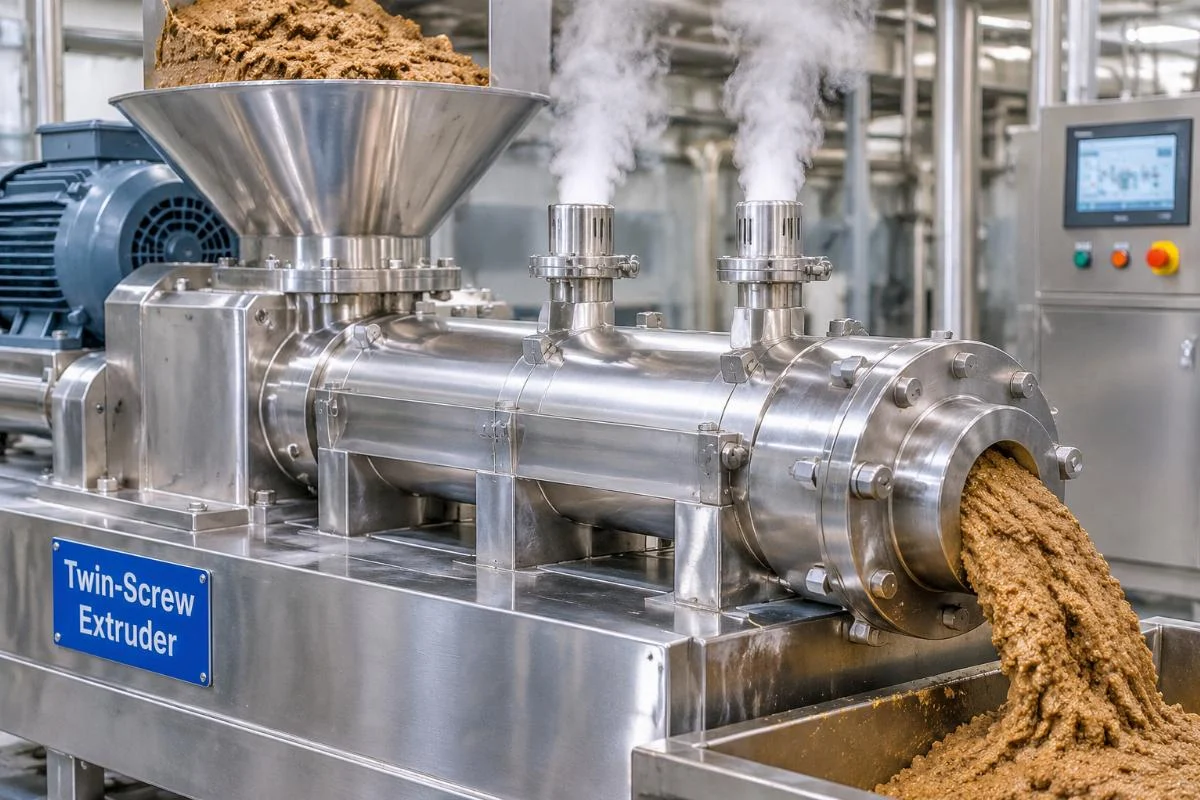
Transitioning from standard recipes to marine-heavy formulations requires a fundamental shift in how we approach mechanical shear and pressure dynamics.
Why Does Fish Meal Clog the Die in Standard Extruders?
The root cause of die blockage in marine-heavy recipes is the severe mismatch between the lubricating effect of free lipids and the insufficient shear force generated by standard screw profiles.
Most formulators operate under the assumption that higher fat content automatically translates to better palatability and smoother extrusion. In reality, when free fat levels exceed a certain threshold without corresponding screw shear adjustments, the mixture turns into a slippery slurry. The material slides past the screw flights instead of being compressed and cooked.
During a project with a contract manufacturer scaling up their marine recipes, they attempted to process a formula with massive lipid inclusion using a legacy single-screw setup. The result was immediate motor stalling. The fish proteins denature much faster than mammalian proteins. When standard compression zones are applied, the outer layers of the paste burn and carbonize before the core reaches the necessary gelatinization temperature. This creates a viscous, charred plug that locks the die.
To resolve this in fish meal extrusion for cat food, the mechanical energy input must be aggressively managed. The solution involves abandoning standard conveying elements in the feed zone and introducing specialized kneading blocks that generate controlled friction without causing localized burning.
How to Configure Screws for High-Fat Fish Formulations?
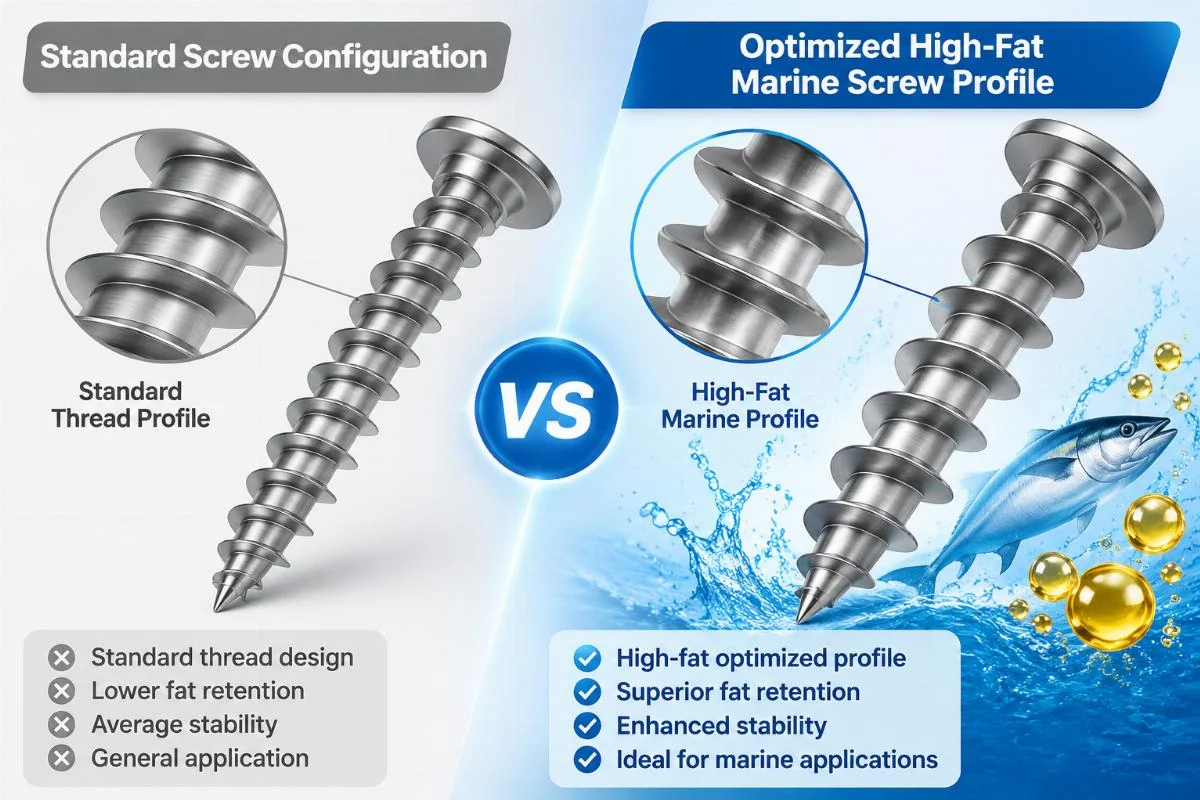
Optimizing the screw profile for marine recipes demands extended length-to-diameter ratios and strategic placement of reverse-pitch elements to build pressure without generating destructive heat.
When dealing with slippery, high-lipid pastes, the screw must grip the material effectively. Standard setups fail because the material simply rides over the flights. By extending the length-to-diameter ratio, we provide the necessary residence time for the lipids to emulsify properly with the proteins.
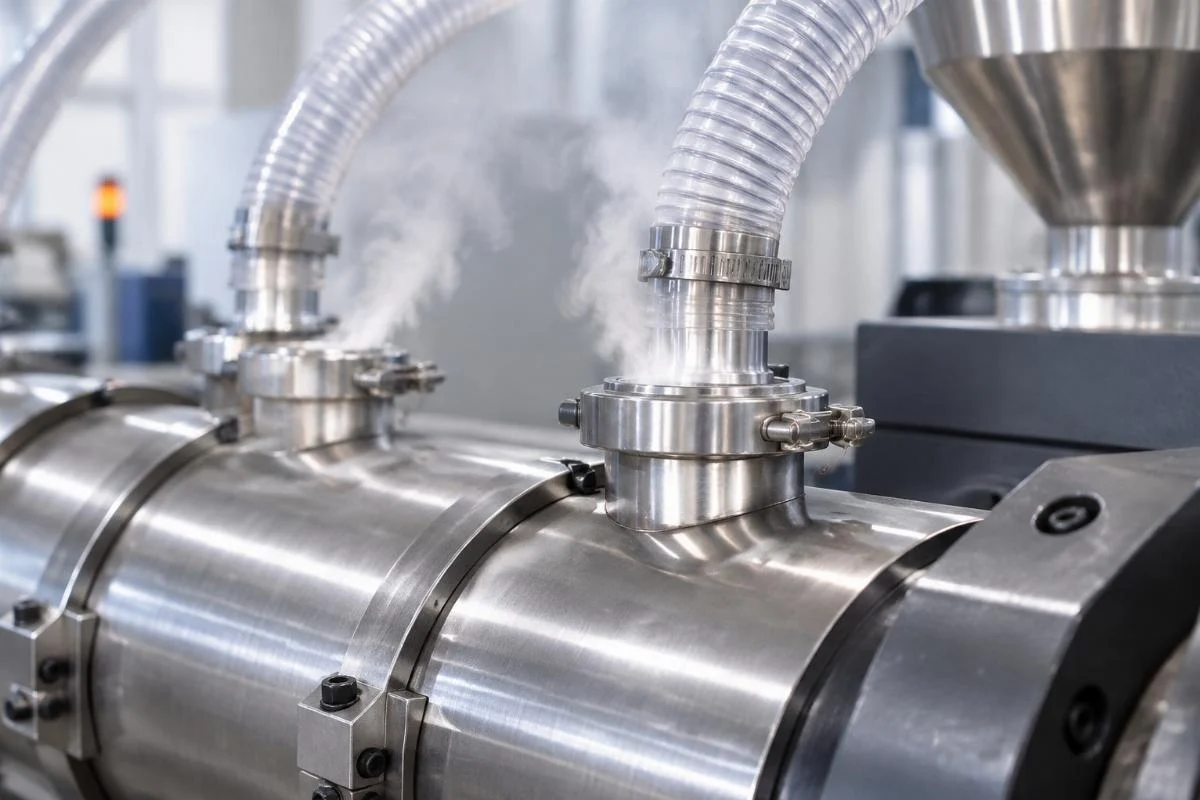
Furthermore, fish meal carries significant moisture and a potent marine odor. If trapped, this moisture turns to steam during the expansion phase, causing the kibble to crack or puff uncontrollably. To counter this, multiple vacuum venting zones must be integrated into the barrel design. These ports actively extract excess moisture and volatile compounds before the material reaches the final die zone.
A startup launching a premium ocean-fish formula initially struggled with kibble that smelled overly fishy and had a porous, weak structure. By reconfiguring the screw to include dedicated degassing sections with multiple vacuum ports, we successfully stripped the excess moisture and volatile odors. The resulting kibble was dense, uniform, and had a clean, appetizing aroma. This level of customization is a core part of the formula development support provided during turnkey line design, ensuring the mechanical setup perfectly mirrors the biological reality of the ingredients.
What Torque and Temperature Limits Prevent Motor Stalling?
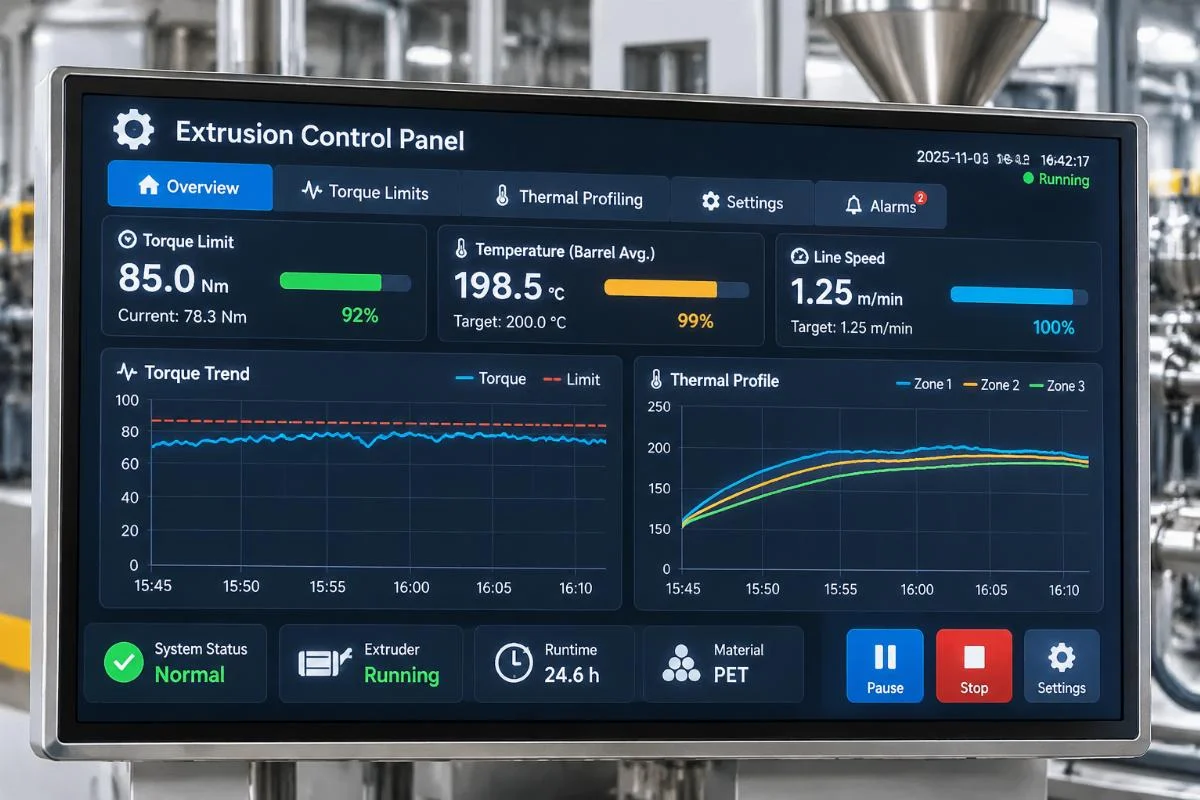
Preventing motor stalling requires setting strict torque thresholds and utilizing advanced thermal profiling to keep the viscosity of the marine paste within a workable window.
High-viscosity fish pastes place immense mechanical stress on the drive system. If the torque limit is set too high, the motor will draw excessive current and trip. If set too low, the screw will stall under the load of the dense, cold paste. The solution lies in monitoring the specific mechanical energy and adjusting the torque limit to a high-load threshold that allows the kneading blocks to work without overtaxing the gearbox.
Temperature control is equally critical. Marine proteins require a precise thermal profile. If the barrel temperatures are too low, the paste remains raw and blocks the die. If too high, the proteins scorch, turning black and ruining the batch. By implementing independent heating and cooling zones along the barrel, operators can maintain a strict thermal gradient.
During a troubleshooting session for a client experiencing frequent shutdowns, we adjusted the control system to cap the torque at a calculated maximum load while simultaneously tightening the temperature tolerances in the metering zone. This dual approach stabilized the dough viscosity, allowing the screw to convey the material smoothly without triggering the safety stops. The DS70 twin-screw extruder is engineered with this exact level of torque management and thermal precision, making it highly effective for demanding marine applications.
How to Ensure Consistent Kibble Expansion and Density?
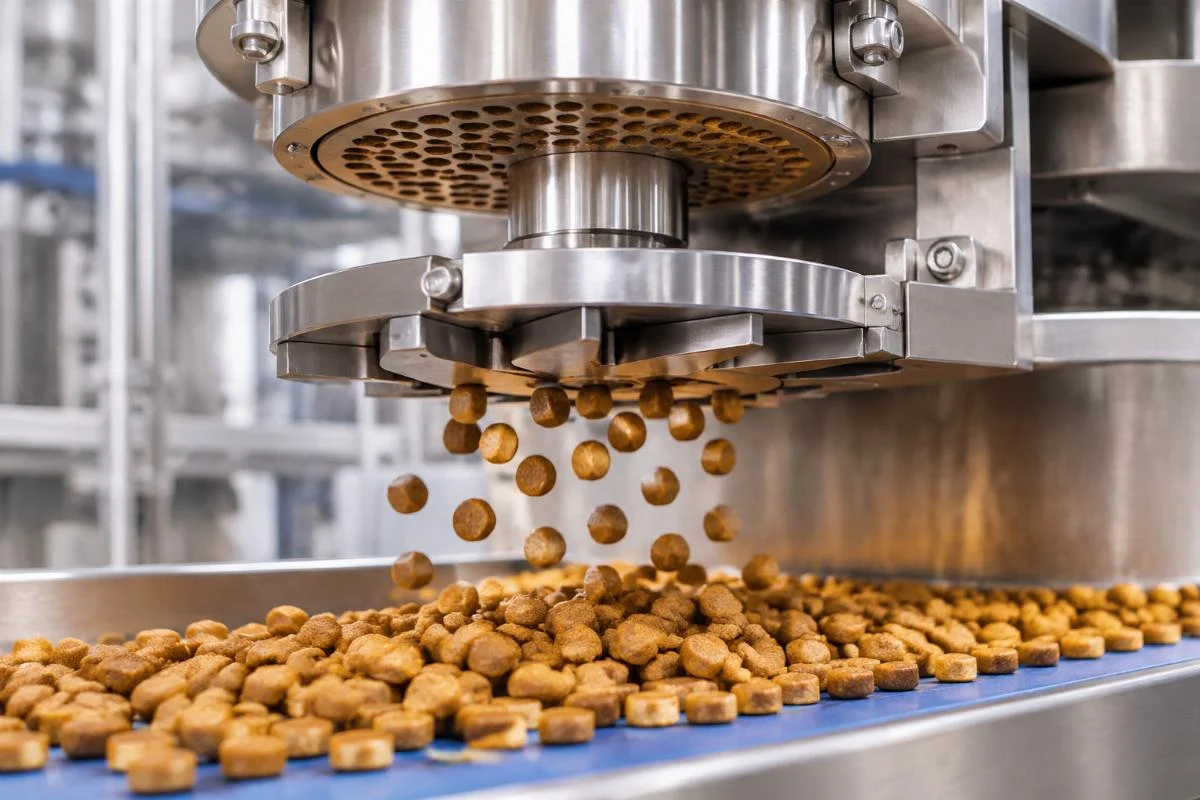
Achieving uniform expansion and density in marine kibble requires matching the die hole open area ratio to the cutter speed, ensuring every piece exits the die under identical pressure.
The final texture of the kibble is determined in the last few milliseconds inside the die. If the pressure drops unevenly across the die plate, some kibble will expand massively while others remain dense and hard. This inconsistency is unacceptable for premium pet food brands.
To maintain uniformity, the die plate must be custom-machined to balance the flow resistance across all holes. Furthermore, the cutter speed must be perfectly synchronized with the extrusion rate. A dull cutter or a mismatched speed will tear the kibble rather than slicing it cleanly, leading to fines and irregular shapes.
A contract manufacturer scaling up their production noticed that their kibble bulk density varied wildly from batch to batch. The issue was traced back to an improperly balanced die plate and a cutter that was operating slightly out of sync with the main drive. By redesigning the die to ensure equal flow distribution and upgrading to a precision face cutter with variable speed control, we achieved a perfectly consistent bulk density. This level of integration, from the extruder to the downstream drying and coating systems, is what defines a true turnkey production line capable of handling the rigorous demands of fish meal extrusion for cat food.
Conclusion
Mastering marine-based kibble production demands a complete departure from standard terrestrial protein extrusion parameters.
Success hinges on configuring specialized screw profiles with extended ratios and vacuum venting, strictly managing torque limits to prevent stalling, and synchronizing die mechanics for uniform expansion. Treating fish meal extrusion for cat food as a standard process guarantees operational failure, while embracing its unique rheological properties ensures a premium, consistent final product.
Machines Mentioned in This Article

cat food machine
Dog Food Extruder Machine Manufacturer for Pet Food Kibble Making Line
View Machine
cat food machine
Pet Food Processing Equipment Plant Manufacturer Dog Food
View Machine
cat food machine
Dry Dog Food Production Line Pet Food Pellet Machine
View Machine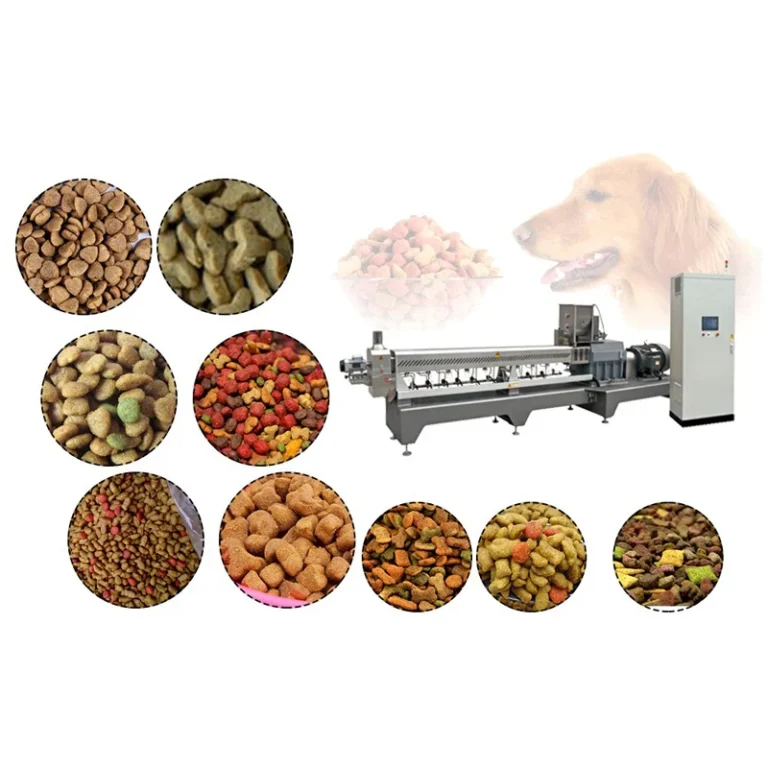
cat food machine