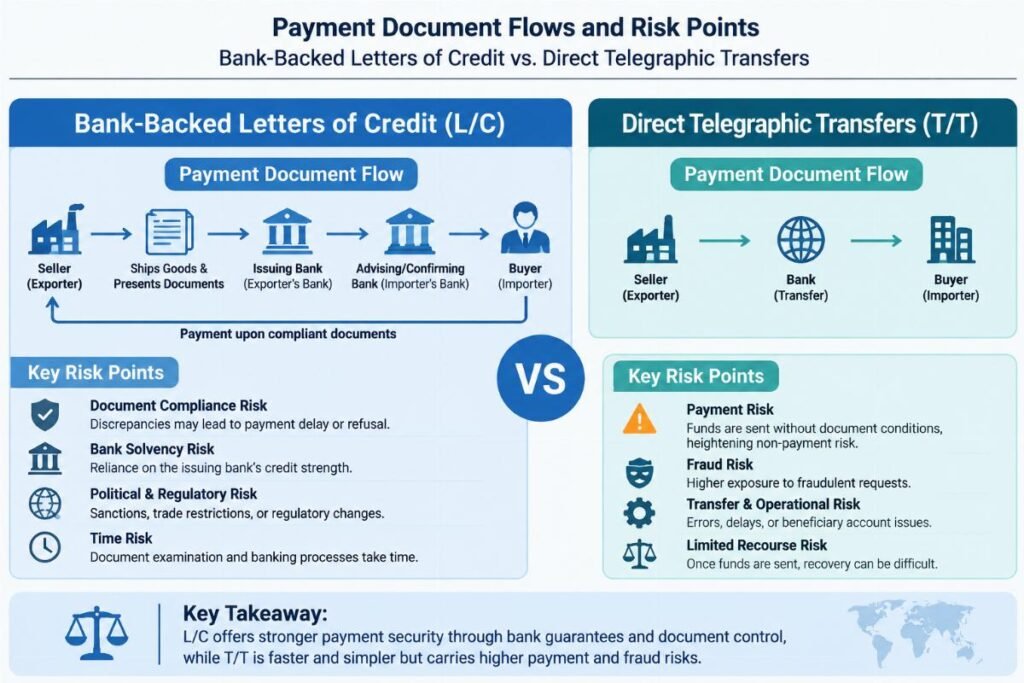
Most buyers assume a Letter of Credit guarantees their capital, but in the machinery trade, it often guarantees bank penalties and shipment paralysis.
When evaluating the Letter of Credit vs T/T pet food machine payment options, T/T milestone payments are significantly safer and more cost-effective for custom extrusion lines. L/C structures frequently invite costly soft clauses, subjective inspection traps, and hidden bank discrepancy fees that delay production and erode profit margins.
When my mentor first brought me into the machinery export business, he warned me that choosing the wrong payment method for a DS70 pet food extruder could wipe out an entire project’s margin. Years later, sitting on the front lines of international trade, I still see buyers falling into the exact same traps. I remember a startup scaling up a medium-capacity line that insisted on opening a Letter of Credit. The document included a soft clause requiring the buyer’s on-site inspection sign-off before the bill of lading could be released. The machines were sitting at the port, fully palletized and wrapped, but the buyer delayed the sign-off for weeks to renegotiate the final price. To avoid the astronomical costs of demurrage and return freight, the seller had no choice but to accept a heavy discount on the final T/T settlement. Every word in a banking document is tied to real capital. Understanding the true mechanics behind the Letter of Credit vs T/T pet food machine debate is the only way to protect your investment.
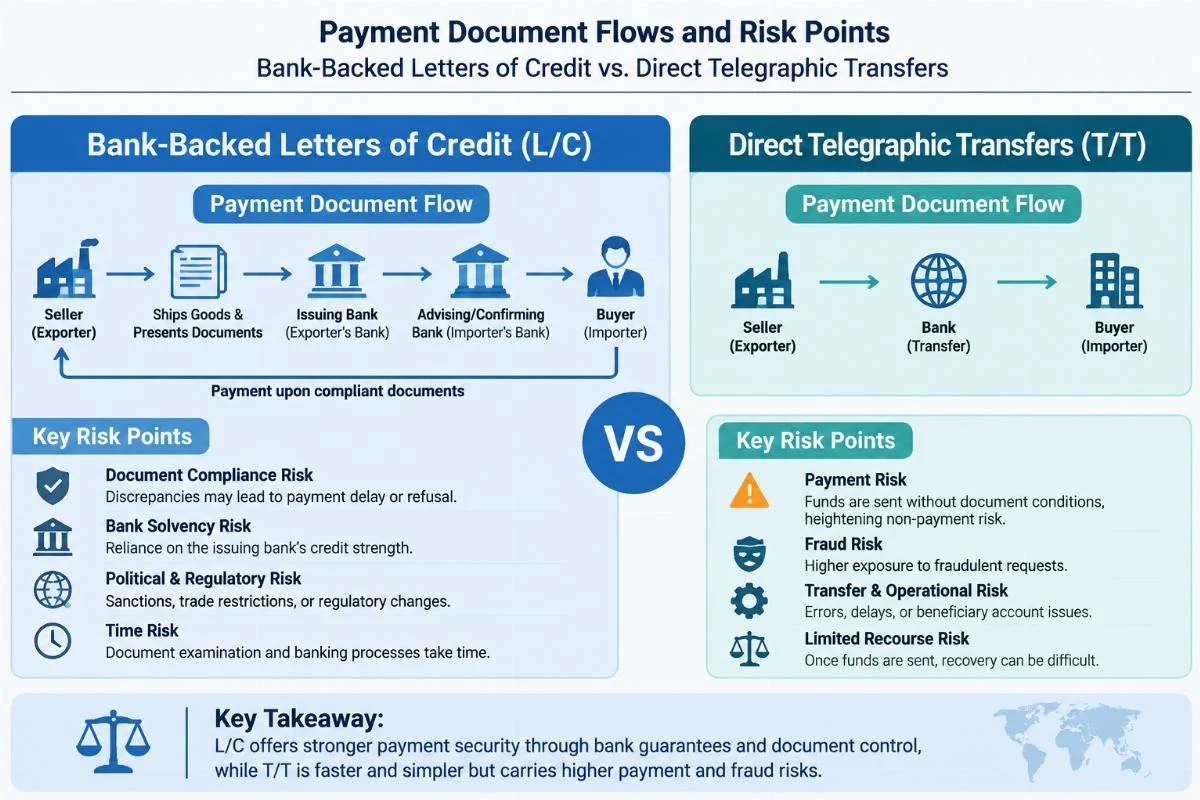
Let us break down the operational realities of these payment structures.
Why is T/T preferred over L/C for custom extruders?
T/T aligns directly with physical production milestones, whereas L/C relies on abstract document compliance that ignores machine reality.
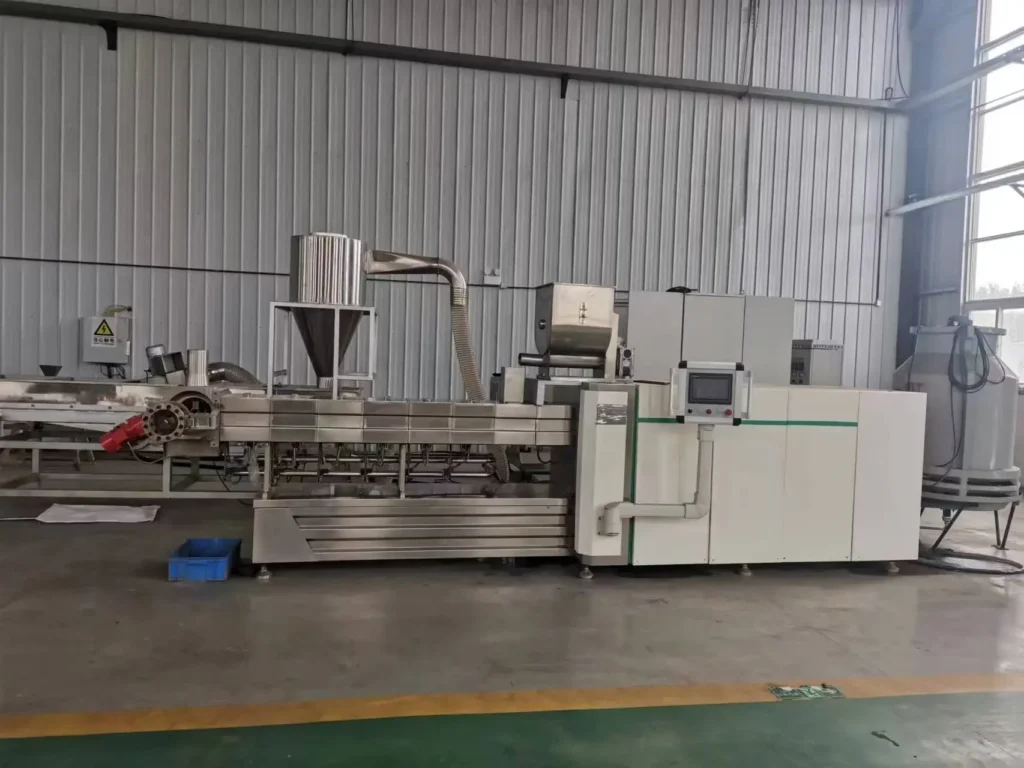
When you are procuring a complex twin-screw extrusion system, the manufacturing process involves multiple critical phases: barrel machining, screw element profiling, electrical panel wiring, and final assembly. T/T milestone payments allow you to release funds only when physical progress is verified. In contrast, a Letter of Credit operates purely on the presentation of paper documents. A factory can present a perfectly compliant set of shipping documents even if the machine’s PLC panel is not fully debugged, as long as the paper says it is.
According to international trade compliance data, document discrepancy is the leading cause of delayed payments in machinery imports. I have seen cases where a minor typo on a commercial invoice or a missing stamp on a certificate of origin caused banks to withhold funds for weeks. For a pet food startup waiting to begin trial runs, this delay is catastrophic.
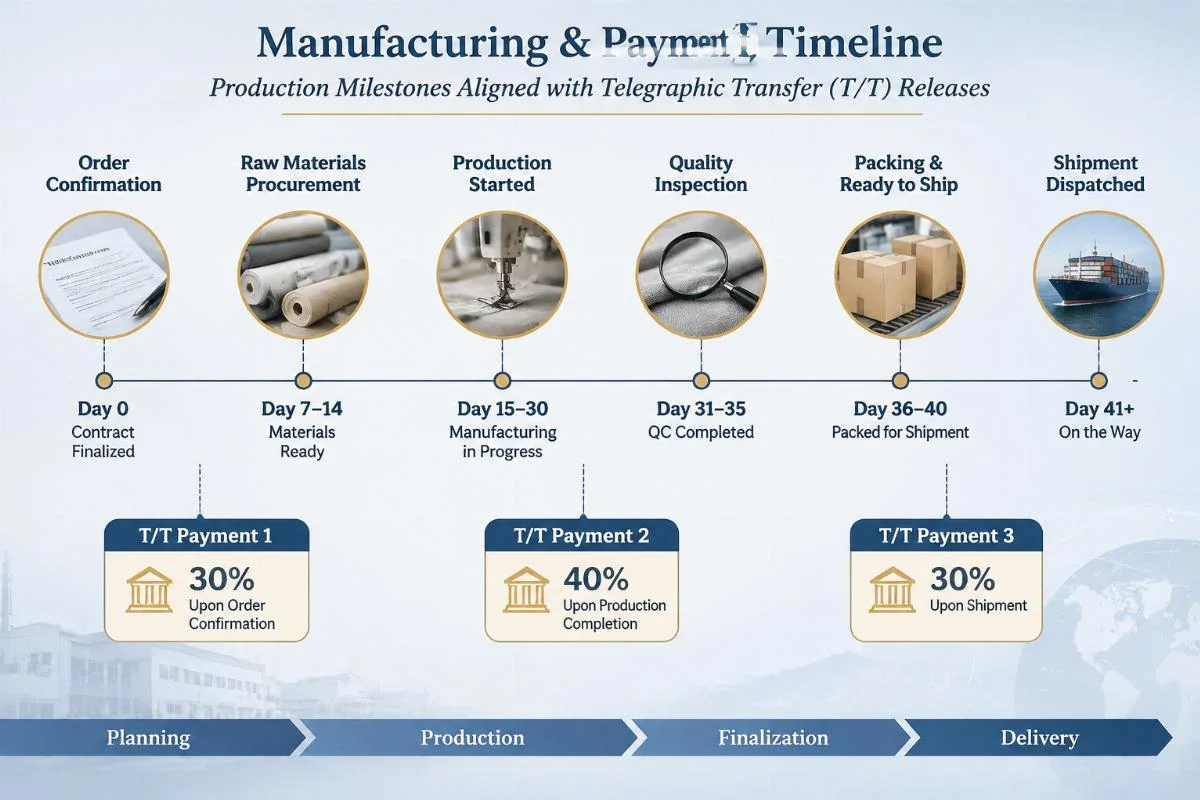
When we structure a T/T agreement for a turnkey pet food line, the payment schedule mirrors the physical reality of the factory floor. You pay a deposit to initiate raw material procurement, a mid-term payment when the main extruder barrels are machined, and the balance after the machine runs successfully on your specific recipe. This physical verification is impossible under a strict L/C framework, where the bank only looks at the paper, not the steel.
What are the hidden risks of L/C soft clauses?
Subjective terms like buyer approval or third-party inspection certificates act as financial traps, giving the buyer leverage to freeze funds arbitrarily.
The most dangerous aspect of the Letter of Credit vs T/T pet food machine discussion is the prevalence of soft clauses. These are conditions in the L/C that require documents which are impossible to obtain independently or are entirely controlled by the buyer.
Consider a contract manufacturer who recently ordered a high-capacity DS70 twin-screw extruder. They opted for an L/C to feel secure. However, the L/C contained a clause requiring a “Certificate of Inspection signed by the applicant’s representative.” The machines were built, tested, and ready to ship. But the buyer’s market conditions changed, and they suddenly decided to delay the shipment. Because the L/C required their own signature to release the funds, they simply refused to send their inspector. The manufacturer was stuck. The bank would not pay without the signature, and the machines were taking up floor space. Eventually, the manufacturer had to pay hefty bank amendment fees and offer a price concession just to get the documents cleared and the machines shipped.
Common soft clause risks include:
- Beneficiary Approval Clauses: Requiring a shipping advice or inspection certificate that must be countersigned by the buyer.
- Vague Quality Certificates: Demanding certificates from specific, hard-to-reach local authorities rather than standard international bodies.
- Restrictive Routing: Mandating shipment on specific, often unavailable, vessel lines controlled by the buyer’s associates.
These clauses transform a bank guarantee into a buyer-controlled hostage situation. The bank’s obligation to pay becomes conditional on the buyer’s cooperation, completely defeating the purpose of using a Letter of Credit.

How do bank fees impact total machine cost?
L/C discrepancy penalties and bank processing charges frequently exceed the perceived risk premium of direct T/T transfers.
Many global pet food startup owners believe that the bank fees associated with an L/C are a small price to pay for security. In reality, these hidden costs can severely damage the economics of your extrusion line project.
When an L/C is opened, both the issuing bank and the advising bank charge handling fees. These are usually calculated as a percentage of the total machine value. But the real financial bleed happens when discrepancies occur. If the documents presented by the manufacturer do not match the L/C terms to the exact letter—even a minor spelling variation in the port name—the bank will levy a discrepancy fee.
I recall an aquaculture feed producer importing a floating fish feed line. They chose an L/C. During the document presentation, the bill of lading listed the port of loading with a slight abbreviation difference from what was stated in the L/C. The bank flagged it as a discrepancy. The resulting penalty fees, combined with the courier charges for correcting and resubmitting the documents, cost several times the standard T/T wire transfer fee. Furthermore, the funds were tied up in the banking system for over a month, affecting the buyer’s cash flow just as they needed to purchase raw ingredients for their first production run.
When evaluating the Letter of Credit vs T/T pet food machine options, you must calculate the total landed cost, including bank friction. T/T wire fees are fixed, transparent, and minimal. L/C costs are variable, unpredictable, and can escalate rapidly if your manufacturer’s documentation team misses a single comma.

What is the safest T/T payment structure?
Milestone payments tied to rigorous factory acceptance tests and standardized certification provide optimal security without banking friction.
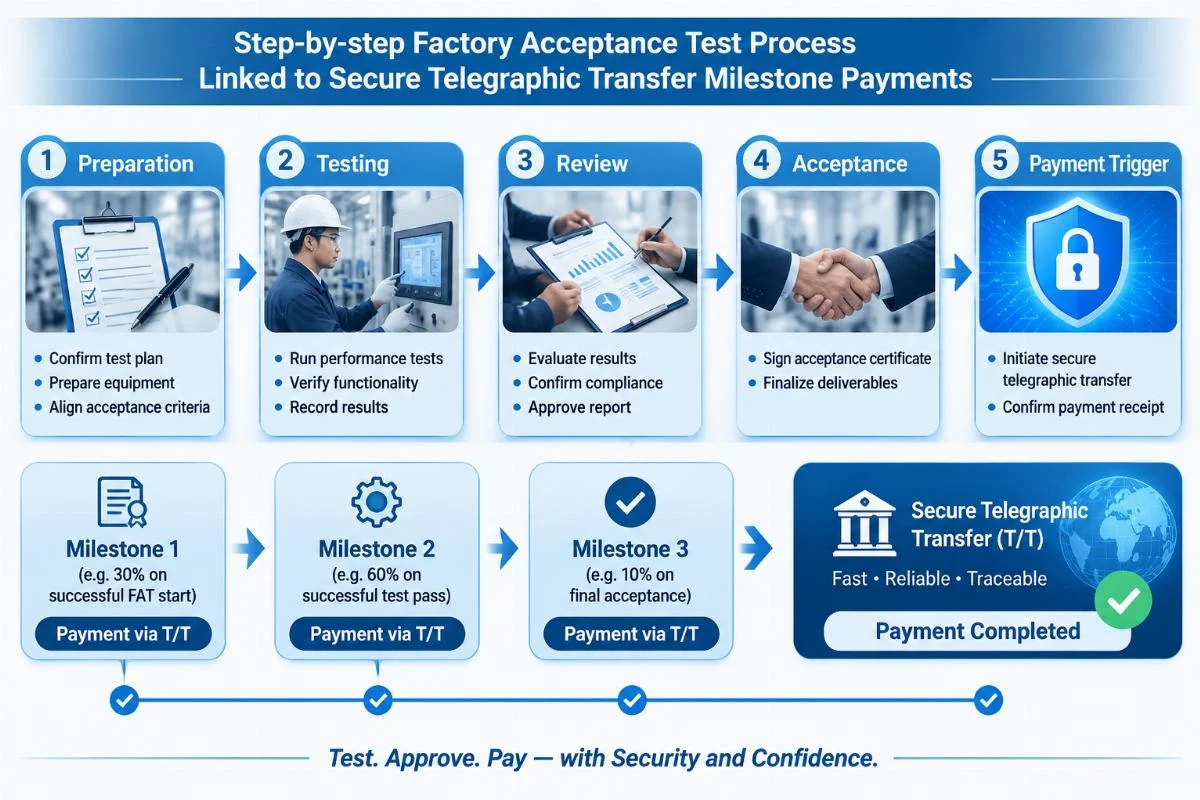
The safest approach to payment terms for buying pet food extruder from China relies on leveraging physical verification rather than bank intermediaries. A well-structured T/T agreement protects both parties by linking fund releases to verifiable, physical achievements.
A secure T/T structure typically follows this logic:
- Initial Deposit: Mobilizes the manufacturer to procure food-grade stainless steel components and begin machining the screw elements.
- Pre-Shipment Balance: Released only after a comprehensive Factory Acceptance Test (FAT).
During the FAT, the manufacturer runs the extruder using your specific raw materials. You verify the pellet durability, moisture content, and output capacity. Once the machine passes, the manufacturer provides the CE and ISO documentation, along with video evidence and test reports. Only then is the final balance wired.
This structure works seamlessly when the manufacturer has robust quality control and standardized export documentation. For instance, a manufacturer equipped with full turnkey line design capabilities and certified sanitary standards can easily provide the exact test reports and compliance certificates required for your local customs, eliminating the need for a bank to verify the paperwork. You get to see the DS70 extruder processing your actual recipe before the final money leaves your account. This physical proof is worth far more than any piece of paper stamped by a bank clerk.
Conclusion
Banking instruments do not create security; they only shift the risk from commercial trust to documentary compliance. Choosing T/T milestone payments tied to physical factory acceptance tests ensures your capital is protected by the actual performance of the machinery, not by the flawless execution of paperwork. Avoid the hidden traps of soft clauses and bank penalties by demanding transparent, milestone-based transactions that align with your production reality.
Machines Mentioned in This Article

cat food machine
Pet Food Processing Equipment Plant Manufacturer Dog Food
View Machine
cat food machine
Dry Dog Food Production Line Pet Food Pellet Machine
View Machine
cat food machine
Pet Food Production Line Manufacturer
View Machine
cat food machine