
Most buyers assume installation is just bolting parts together; in reality, mechanical assembly is merely the starting line, while crew coaching and PLC familiarization consume the vast majority of the schedule.
The realistic Meiteng kibble line installation time for a full turnkey setup typically spans a few weeks to a couple of months, heavily dictated by crew readiness, automation complexity, and the depth of operator training required.
I still listen to the machine like an engineer, even though my days are now spent in sales. Years ago, I was chasing after extruders across Latin America for after-sales support. I remember installing a DS85 twin-screw kibble line in Monterrey. The local crew had never touched a PLC screen before. What was supposed to be a standard commissioning dragged on for several months, as I ended up teaching them to change dies using hand gestures and broken Spanish. That project proved that on-site installation and training are never just about turning wrenches; time calculation and crew coaching are where the real details lie.
Let us break down the actual timeline and what drives it.
What is the standard timeline for a turnkey kibble line installation?
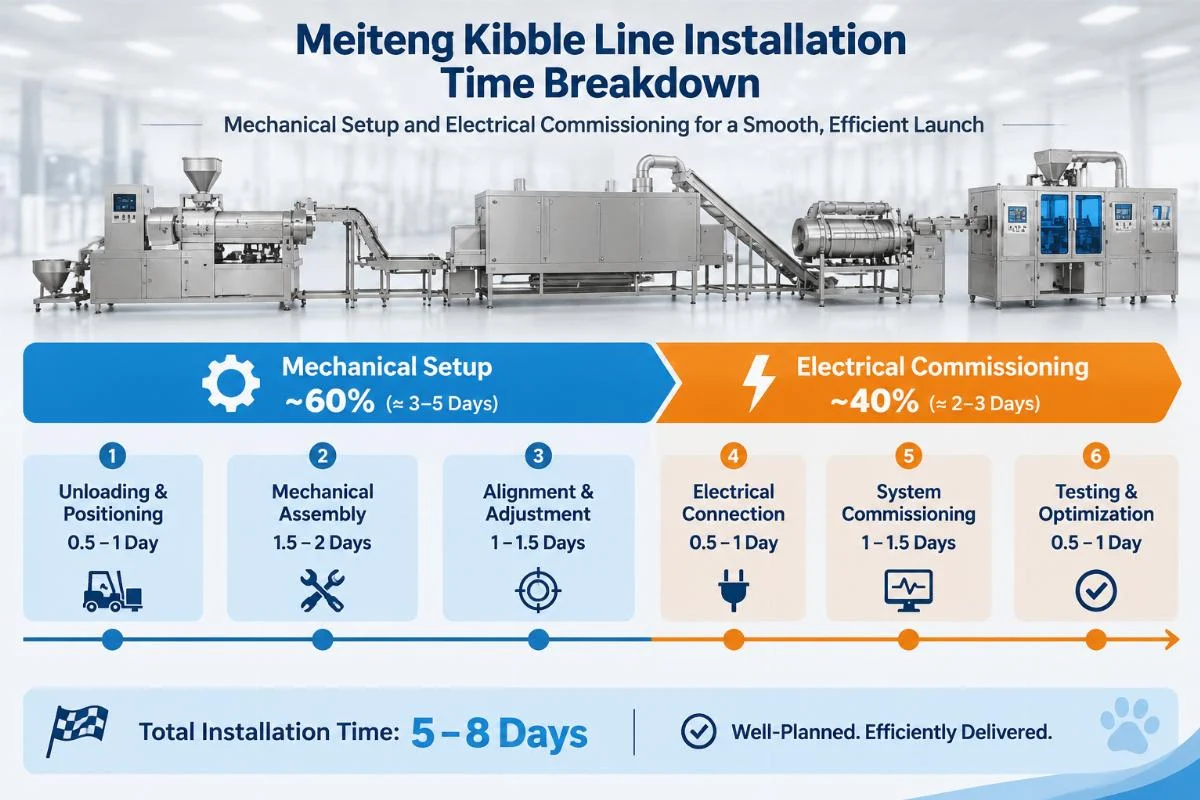
Mechanical setup takes a few weeks, while electrical commissioning and training require several additional weeks to ensure line stability.
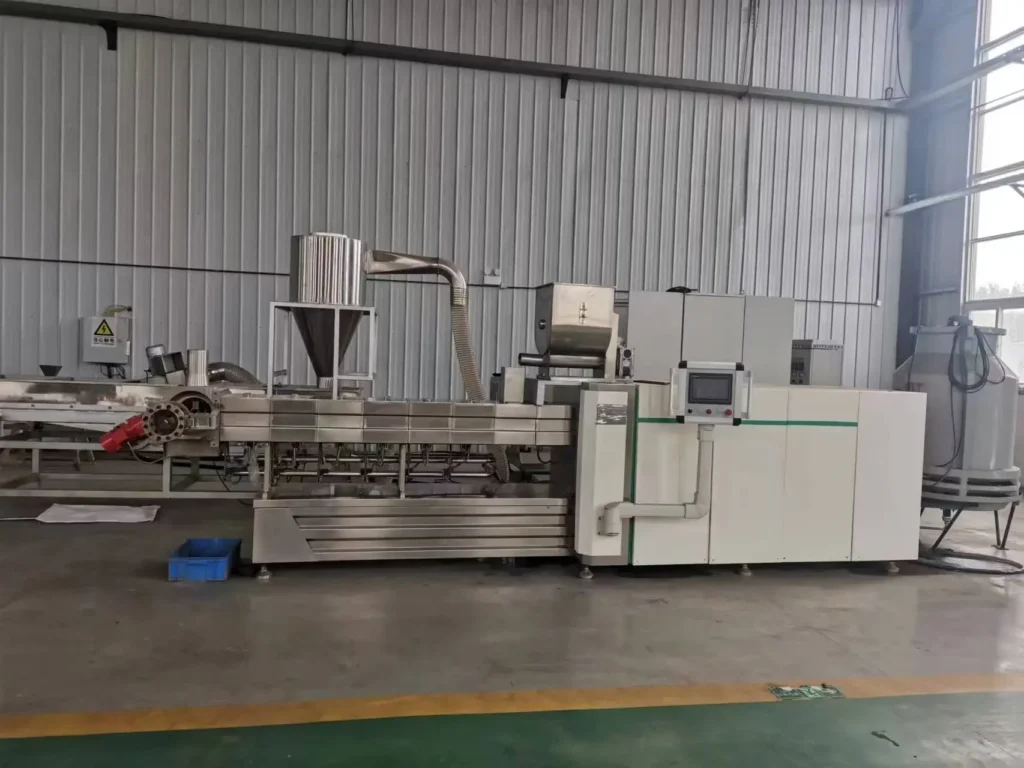
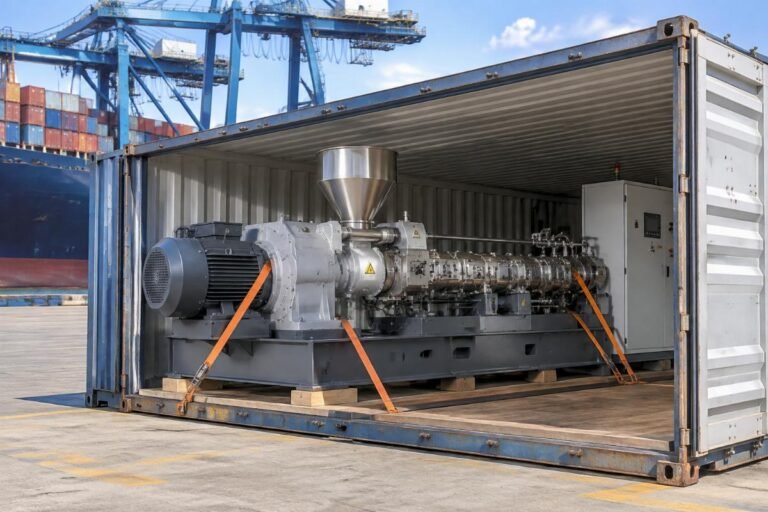
When procurement managers ask about the Meiteng kibble line installation time, they often expect a single fixed number. The reality is that the schedule is split into distinct phases. The mechanical phase involves aligning the twin-screw extruders, connecting the integrated drying and cooling systems, and setting up the flavor-coating units. This physical assembly is relatively straightforward if the site is prepared.
However, the electrical and control phases are where the timeline expands. Testing the PLC I/O, calibrating the HMI screens, and verifying the safety interlocks require meticulous attention. For a compact capacity line producing around a few hundred kilograms per hour, the entire process from unloading to the first test run can wrap up in a few weeks. For larger integrated systems handling up to 2000kg/h, the complexity of multi-point calibration naturally extends the Meiteng kibble line installation time into a couple of months.
How does crew experience affect the commissioning schedule?
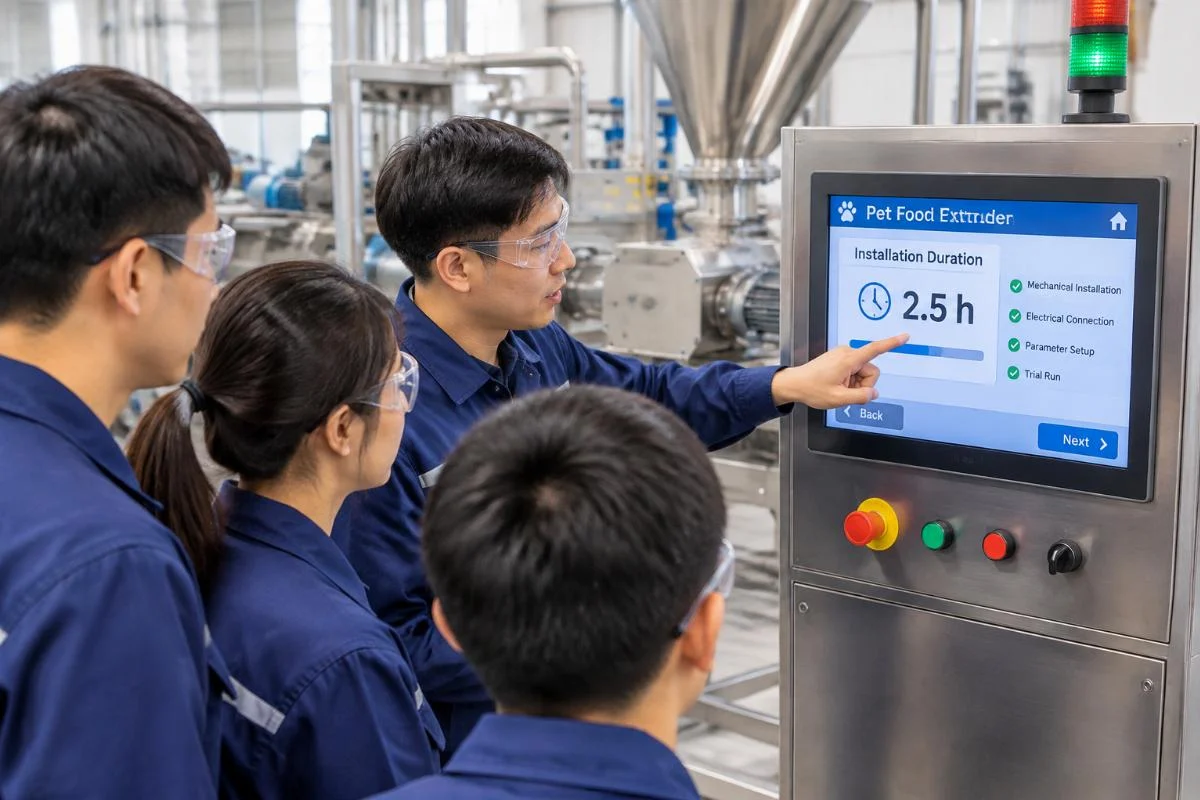
Zero PLC experience can easily double the training phase compared to crews with prior extrusion background.
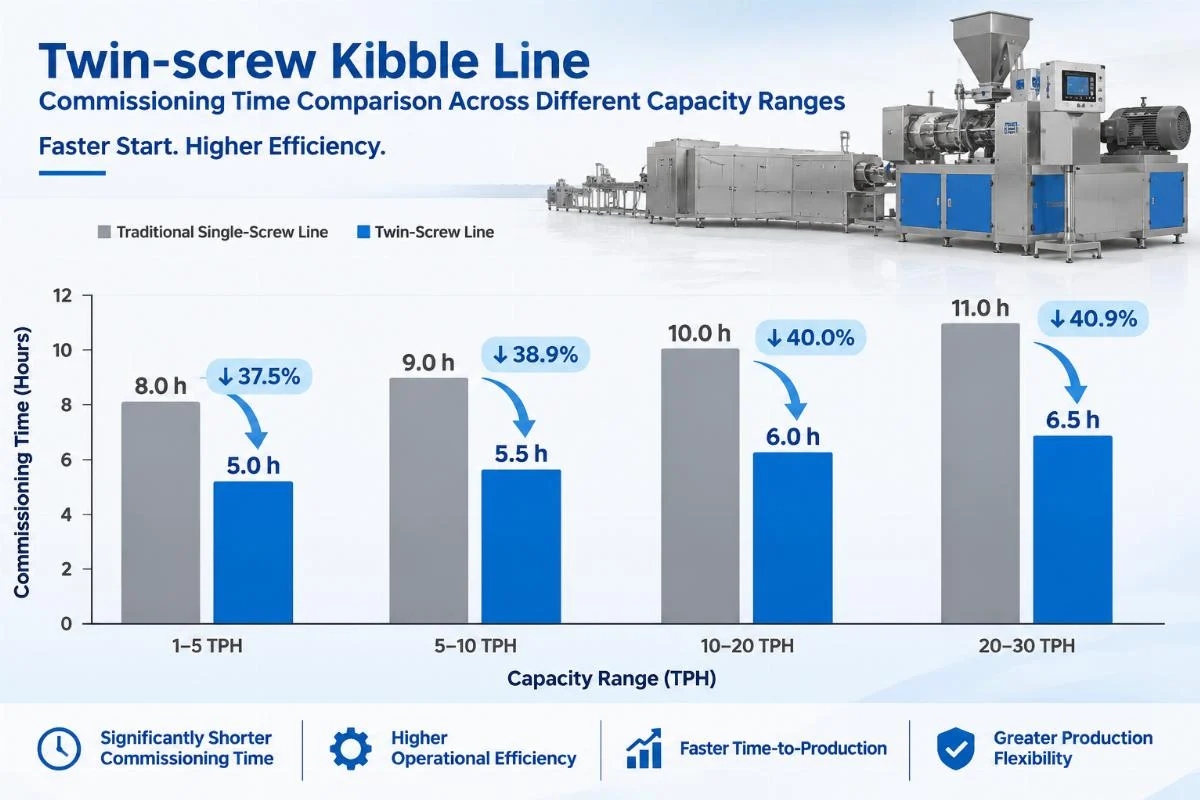
The twin-screw kibble line commissioning time is rarely about the machine’s speed; it is about the human element. I have seen experienced crews grasp the die-changing logic and temperature zone adjustments within days. Conversely, operators who have only worked with manual single-screw setups or older mechanical systems struggle with the HMI logic.
When a team lacks familiarity with automated recipe management, our engineers must spend extended hours on hands-on coaching. We do not just show them which buttons to press; we walk them through the logic of moisture control in the dryer and the shear heat generation inside the extruder barrel. If the local team has prior extrusion background, the on-site machine installation lead time shrinks noticeably because they already understand the cause-and-effect relationship of the process parameters.
What factors cause installation delays?
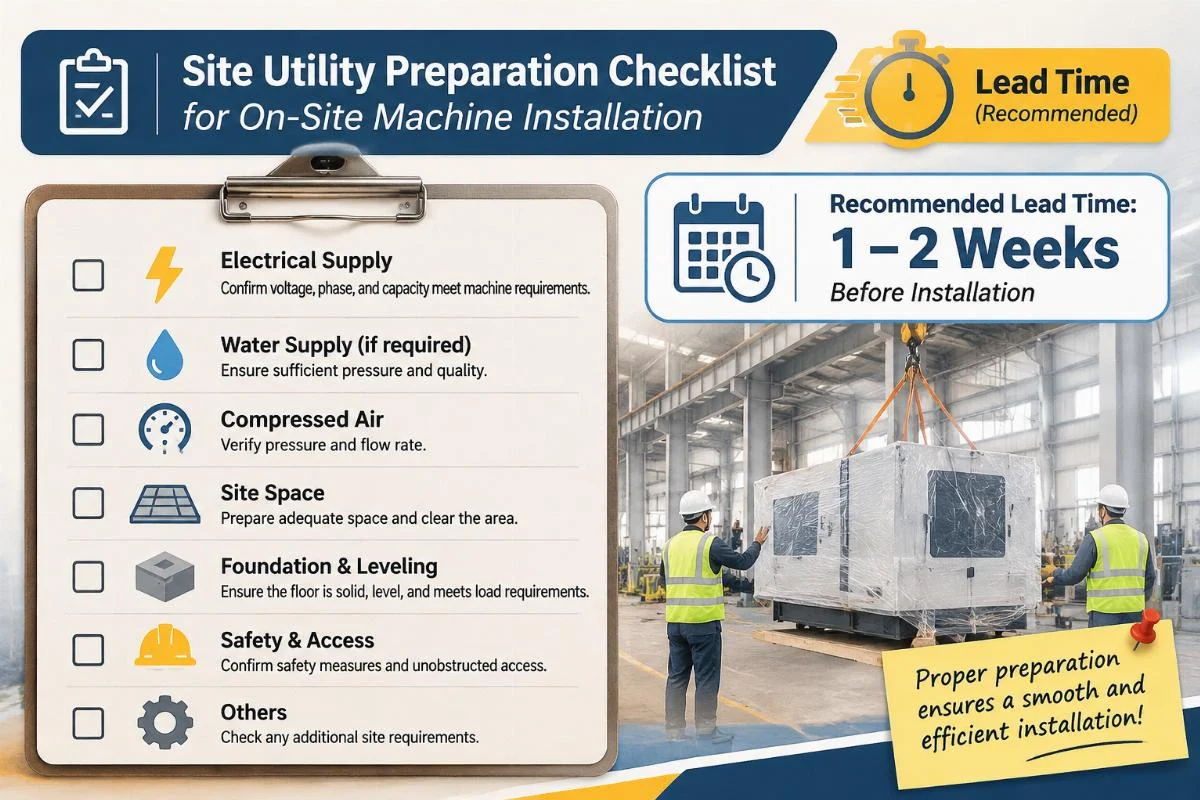
Site utility unpreparedness and language barriers in technical training are the primary bottleneck causes.
Even with a flawless Gantt chart, the Meiteng kibble line installation time can slip if the foundation is shaky. The most common culprit is site utility unpreparedness. I have walked into facilities where the compressed air lines were undersized, or the steam boiler pressure fluctuated wildly, making it impossible to stabilize the conditioning process. Without stable utilities, the extruder cannot reach the required thermal profile, and the drying system fails to achieve the target moisture content.
Another major factor is the communication gap. Technical training requires precise vocabulary. If the on-site translators lack food processing terminology, explaining the difference between specific mechanical energy and simple friction heat becomes a frustrating loop. This forces our engineers to rely on visual demonstrations and repetitive physical coaching, which naturally extends the on-site machine installation lead time.
How does Meiteng ensure efficient on-site training?
Multi-language support and visual, hands-on coaching accelerate operator independence and line stability.
To optimize the pet food extruder installation duration, we do not just send a manual and hope for the best. Our approach focuses on bridging the gap between the machine’s logic and the operator’s intuition. We utilize visual, hands-on coaching where engineers physically guide the operators through the die-changing process, the screw element configuration checks, and the HMI alarm troubleshooting.
Furthermore, providing multi-language technical support ensures that the core concepts of automation are not lost in translation. When operators understand the “why” behind a PLC alarm, they stop treating the machine as a black box and start treating it as a controllable process. This depth of training is what ultimately defines the true success of the Meiteng kibble line installation time, transforming a foreign piece of equipment into a reliable production asset.
Conclusion
A successful launch requires aligning mechanical precision with human readiness. The Meiteng kibble line installation time is ultimately a reflection of site preparation and operator engagement. By prioritizing comprehensive training and utility verification, startups and contract manufacturers can transform a complex setup into a smooth, profitable operation.
Machines Mentioned in This Article

cat food machine
Pet Food Processing Equipment Plant Manufacturer Dog Food
View Machine
cat food machine
Dry Dog Food Production Line Pet Food Pellet Machine
View Machine
cat food machine
Dog Food Pellet Making Machine Line, Automatic Pet
View Machine
cat food machine