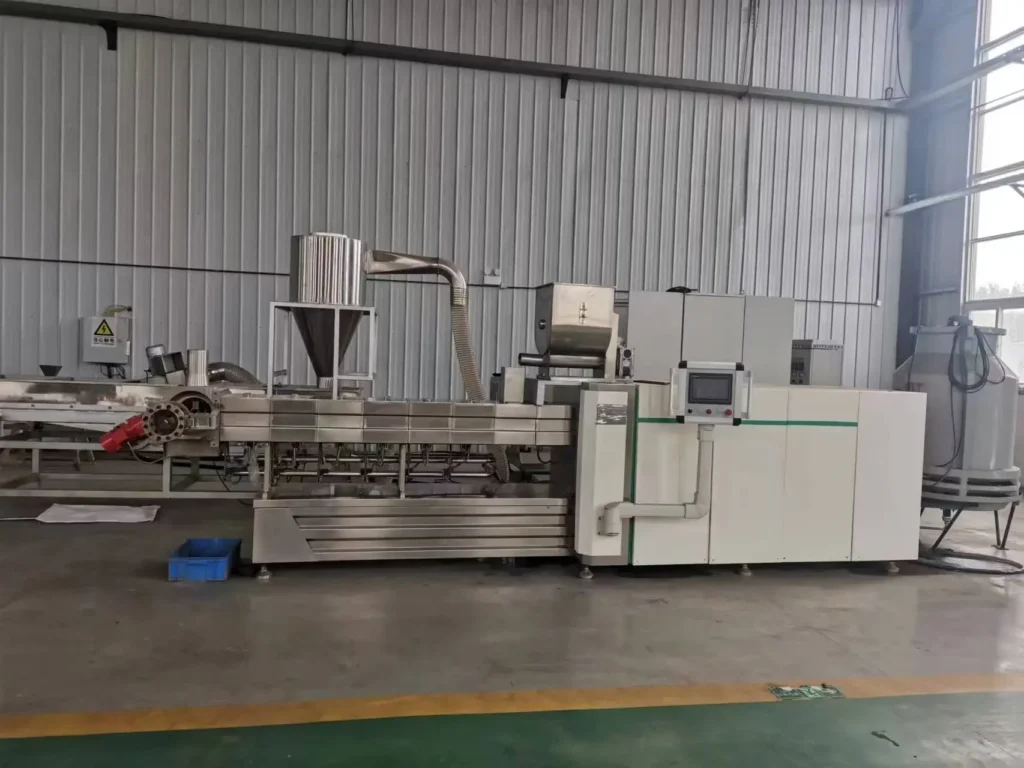

The cheapest freight quote often guarantees the highest port demurrage if your paperwork is flawed.
When you import pet food extruder to Russia, the true cost of ownership is not determined at the port of loading. It is decided by aligning maritime logistics with strict Eurasian customs compliance and verifying on-site industrial power grids to prevent catastrophic startup failures.
I still remember the first time I arranged a full twin-screw line for a client outside Moscow. Back then, I was focused entirely on locking down the trade terms and securing the best ocean freight rates. I completely neglected to verify the exact voltage frequency at their suburban workshop and the moisture content of their local raw materials. When the equipment finally arrived and we powered it up, the main screw jammed within half an hour. The expansion degree was completely unacceptable for their recipe. The emergency air-freight for replacement parts and the cost of flying a technician team overseas wiped out the entire profit margin of that order. Since that day, I never finalize a quote without a rigorous site assessment. Machinery is built for continuous production, not just for sitting in a factory. If you plan to import pet food extruder to Russia, you must look beyond the shipping invoice.
Let us break down the exact logistics, compliance, and site-preparation protocols you need to execute.
What Are the Best Freight Routes to Russia?
Selecting the right transit corridor is the first critical step when you import pet food extruder to Russia, as it dictates your cash flow timeline and equipment exposure to harsh climates.
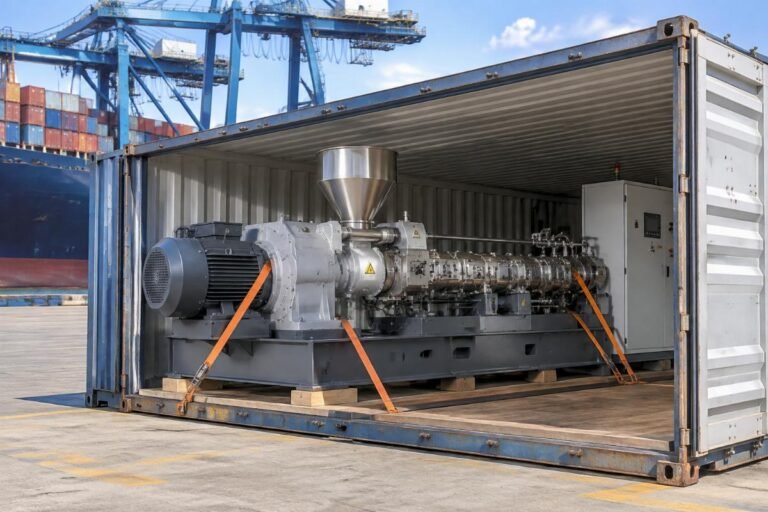
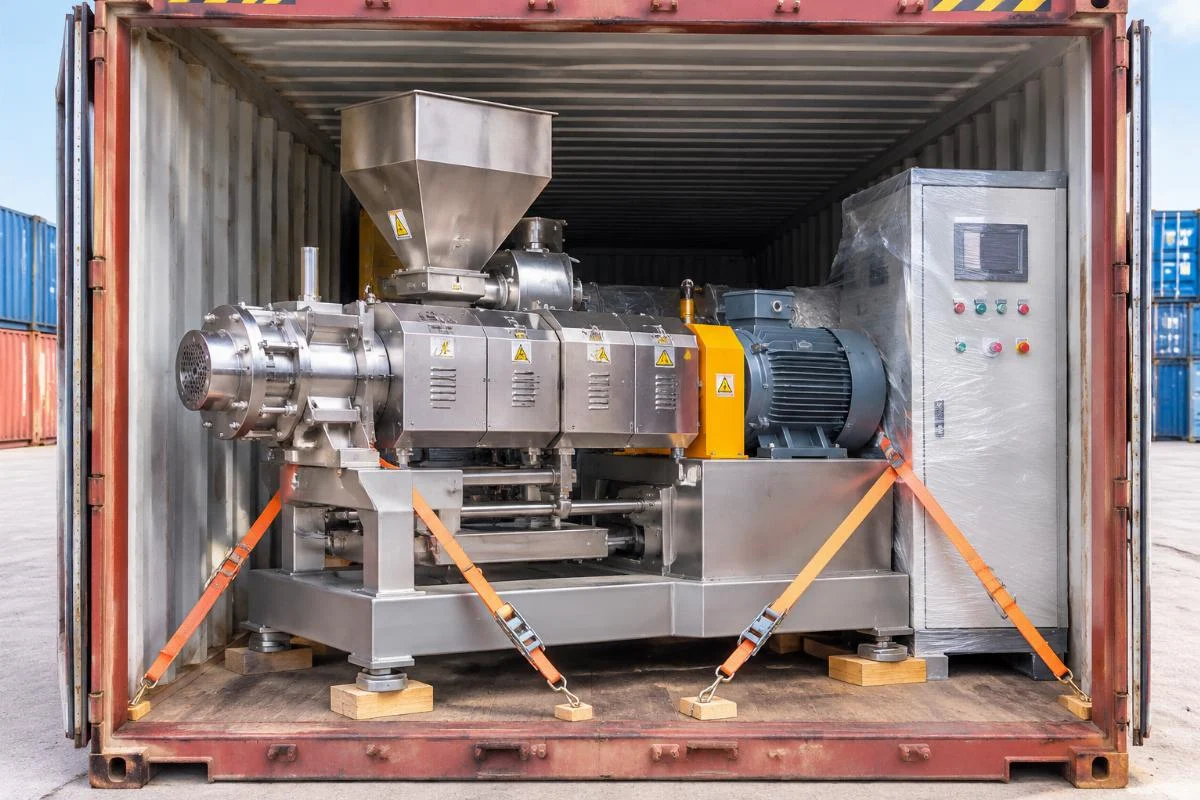
Shipping heavy food machinery to Moscow involves a complex trade-off between transit speed and freight costs. Sea freight to St. Petersburg followed by inland trucking is the traditional route, but it exposes your equipment to prolonged maritime humidity and extended port handling times. Alternatively, the rail freight network offers a much faster transit window directly to the Moscow region. However, rail transport requires meticulous container weight distribution and specialized shock-absorption packaging for the extruder barrels.
A European contract manufacturer once opted for the absolute lowest sea freight bidder to save on initial capital expenditure. The vessel faced severe congestion at the destination port. Because the shipping terms were not optimized for local inland clearance, the container sat at the terminal for weeks. The resulting demurrage and storage fees far exceeded the initial savings on the ocean freight. When you import pet food extruder to Russia, you must negotiate Incoterms that account for these inland bottlenecks.

Which Documents Are Mandatory for Russian Customs?
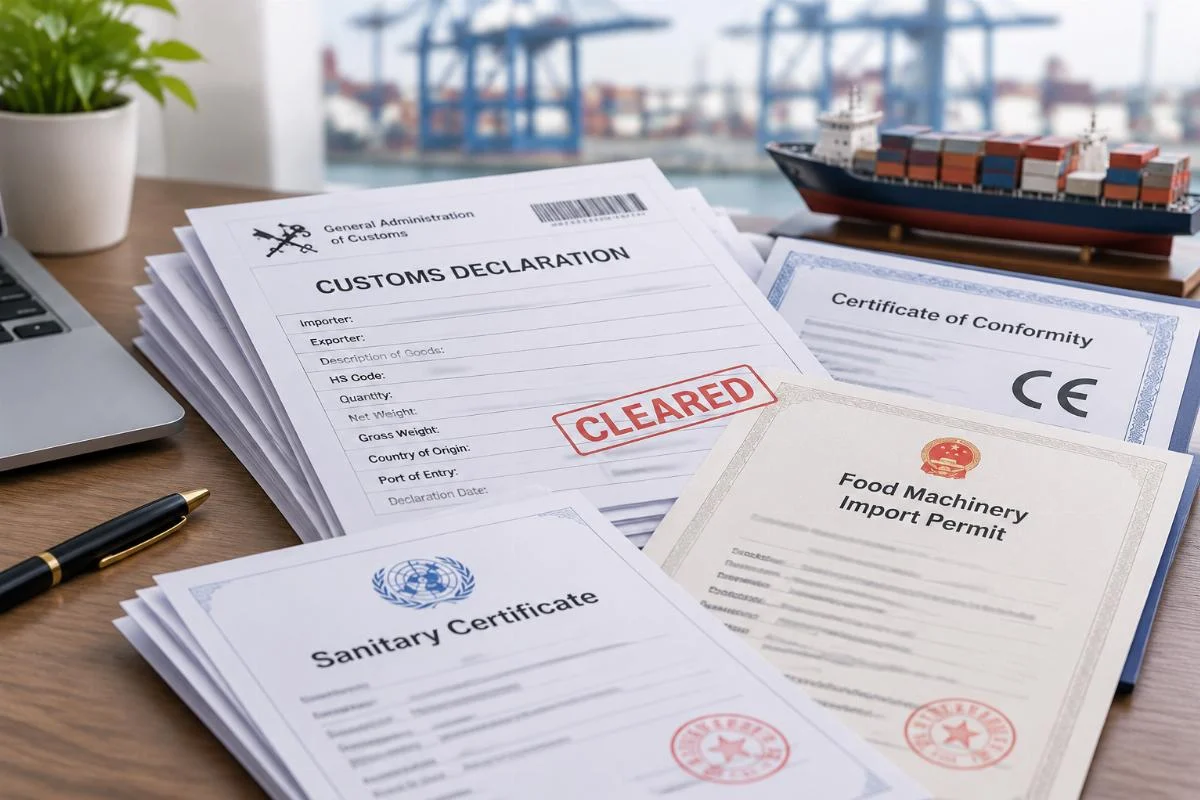
Missing a single sanitary certificate or CE declaration will halt your machinery at the border, turning a routine delivery into a costly storage nightmare.
Russian customs operates under strict Eurasian Economic Union technical regulations. Food machinery is not just classified by its HS code; it is scrutinized for safety and hygiene compliance. You must provide comprehensive documentation, including CE certificates, ISO quality management system proofs, and specific sanitary declarations for food-contact materials.
I have seen entire production lines held in bonded warehouses because the supplier provided a generic machine manual instead of the specific sanitary test reports required for food-grade stainless steel components. The customs officers will not release the equipment until every technical dossier matches the physical machine perfectly. When you import pet food extruder to Russia, ensure your supplier has dedicated export documentation teams who understand these regional nuances. The clearance delay days can easily stretch into weeks if the paperwork is incomplete, incurring massive penalty costs.
How to Avoid On-Site Power and Voltage Mismatches?
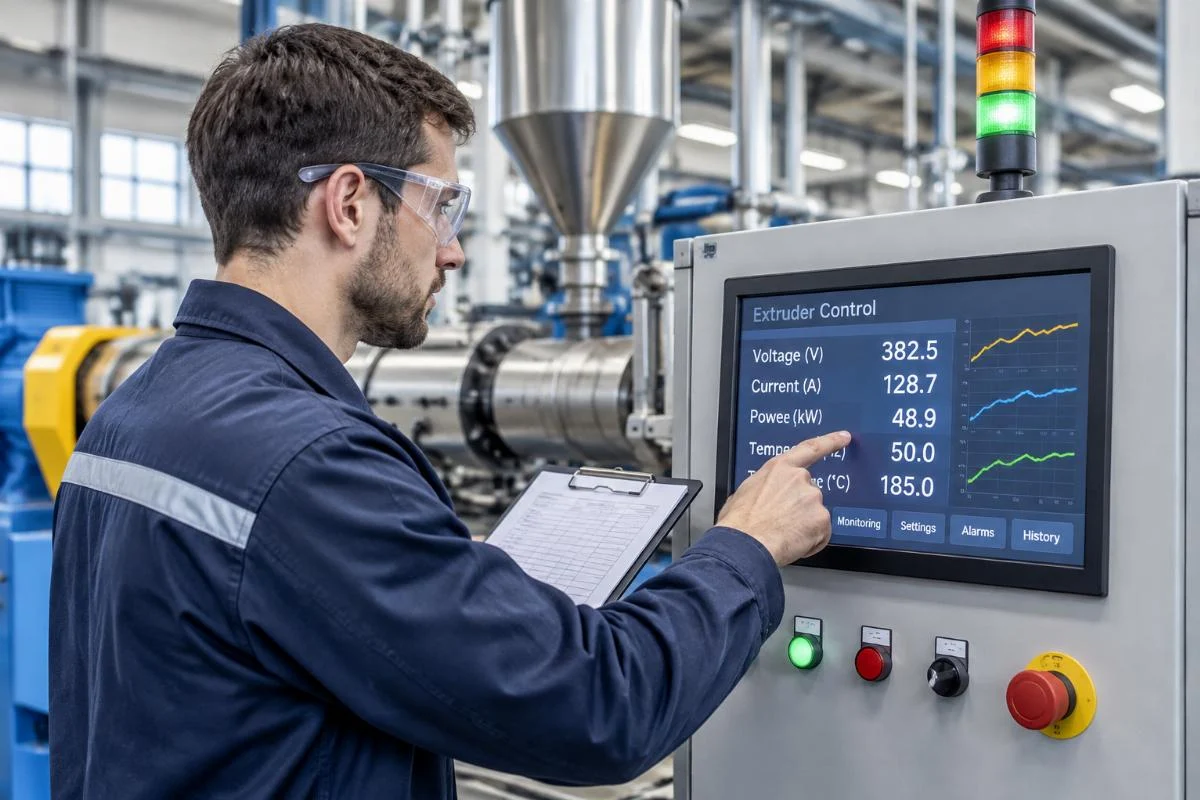
Industrial power grids vary significantly by region, and plugging a mismatched extruder into the wrong socket will instantly destroy the main drive motor.
Russia generally utilizes a 380V/50Hz three-phase industrial power standard. However, older facilities or specific industrial zones might have legacy systems or fluctuating voltage baselines. If your extruder is configured for a 220V/60Hz system or lacks the proper phase-sequence protection, the heavy-duty motors will overheat, trip the breakers, or suffer insulation breakdown during the initial load test.
During a site audit for a startup pet food brand, we discovered their workshop transformer was stepping down to an unstable voltage that would have starved the extruder heaters of necessary wattage. By verifying the exact power topology before manufacturing, the engineering team customized the heating barrel zones and the main drive control panels. When you import pet food extruder to Russia, pre-shipment voltage customization is not an optional upgrade; it is a mandatory survival step. Meiteng handles this by mapping the exact electrical blueprint of your facility and adjusting the control cabinets accordingly, ensuring seamless integration with your local grid.
Why Must Raw Material Moisture Be Checked Pre-Import?
The physical properties of your local raw materials dictate the screw geometry and barrel compression ratio; ignoring this leads to immediate mechanical failure.
An extruder is essentially a highly calibrated chemical reactor. The moisture content of your flour, meat meal, or starch blend determines the friction coefficient inside the barrel. If the raw material is too dry, the dough will not form a proper viscoelastic melt, leading to massive pressure drops and unexpanded product. If it is too wet, the internal pressure spikes, causing the main shaft to torque beyond its yield limit and jam the screws.
Recall my early mistake in Moscow. The local grain supplier delivered a batch with a significantly higher moisture profile than the standard European wheat the machine was originally calibrated for. The dough became overly adhesive, wrapping around the shaft and blocking the discharge die. The emergency fix required dismantling the entire barrel and air-freighting custom-compression screws. When you import pet food extruder to Russia, you must send your actual raw material samples to the manufacturer for physical testing. Meiteng conducts rigorous moisture content testing protocols and adjusts the screw configuration and barrel temperature profiles based on your specific local ingredients, guaranteeing the correct expansion degree from day one.

Conclusion
Successful equipment deployment requires treating logistics, compliance, and site engineering as a single unified process.
When you import pet food extruder to Russia, the physical arrival of the machine is merely the beginning of the project. By securing the correct freight routes, preparing flawless customs documentation, and rigorously matching the machine’s electrical and mechanical parameters to your local facility, you eliminate the hidden costs that destroy project profitability. Turnkey support that includes on-site installation and operator training ensures that your production line reaches full capacity safely and efficiently.
Machines Mentioned in This Article
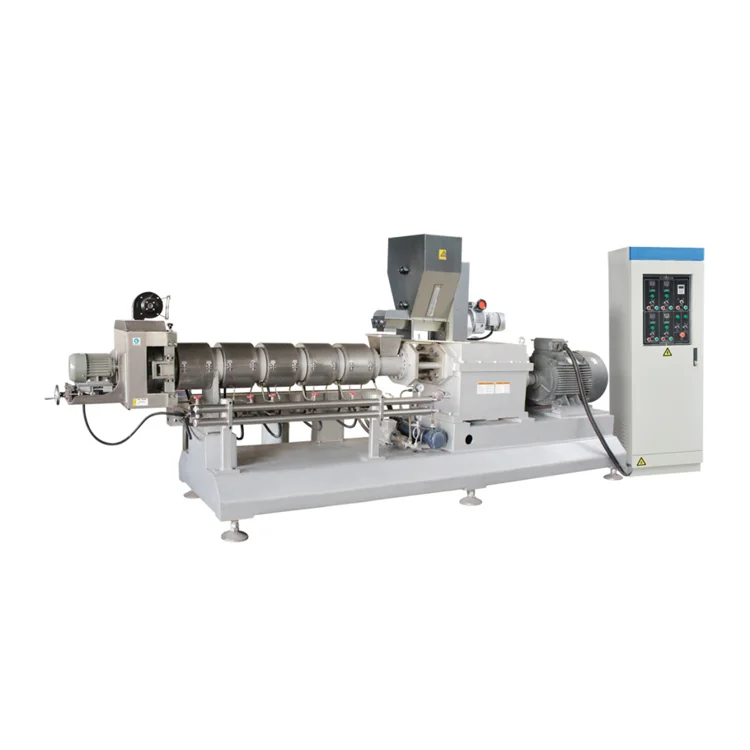
cat food machine
Pet Food Pellet Extruder Machine Manufacturer for Dog Cat
View Machine
cat food machine
Pet Food Extruder Machine Manufacturer Production Line
View Machine
cat food machine
Dog Food Extruder Machine Manufacturer for Pet Food Kibble Making Line
View Machine
cat food machine