Buying a standalone extruder and tweaking a recipe is the fastest way to bankrupt a local kibble startup.
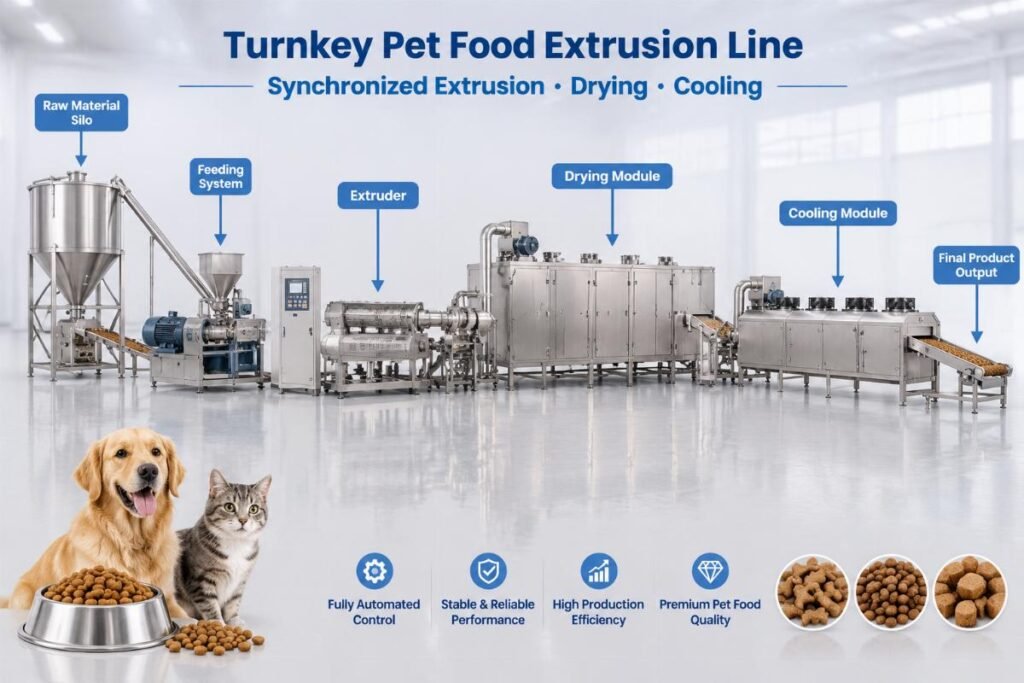
Successfully executing Pet food production South Africa requires a fully integrated turnkey extrusion line where processing parameters are perfectly synchronized, rather than just purchasing isolated machines.
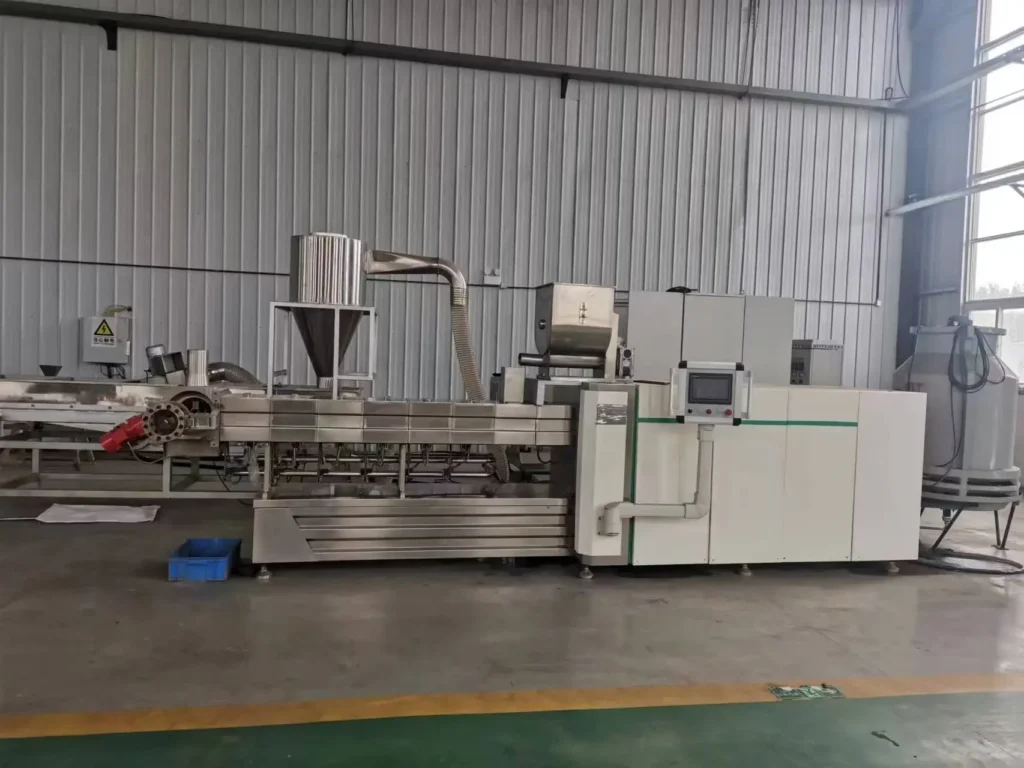
I used to spend my days staring at quality control metrics on the workshop floor before transitioning to walking the floors of Hannover and Chicago pet expos. I have seen countless buyers complain after purchasing a DS95膨化机 (wait, must use English: DS95 extruder) and assuming they could start production immediately. The result? The air velocity in the drying section was never balanced, the moisture content of the kibble exceeded safe limits, and entire shipping containers were rejected due to mold. Over the years, I have realized that a true turnkey project is never just about bolting machines together. From raw material extrusion to cooling and fat coating, the precise meshing of parameters at every single stage is the actual core. Buyers who only focus on the standalone machine quotation usually end up taking a massive hit in after-sales losses and production waste..
When setting up a Pet food production South Africa facility, the real challenge is not just the machinery, but the invisible thermal and mechanical synchronization that prevents catastrophic post-production losses.
Why Local Ingredients Change the Extrusion Game?
Local grains require heavily adjusted shear and thermal profiles to ensure proper gelatinization, completely invalidating standard international recipes.
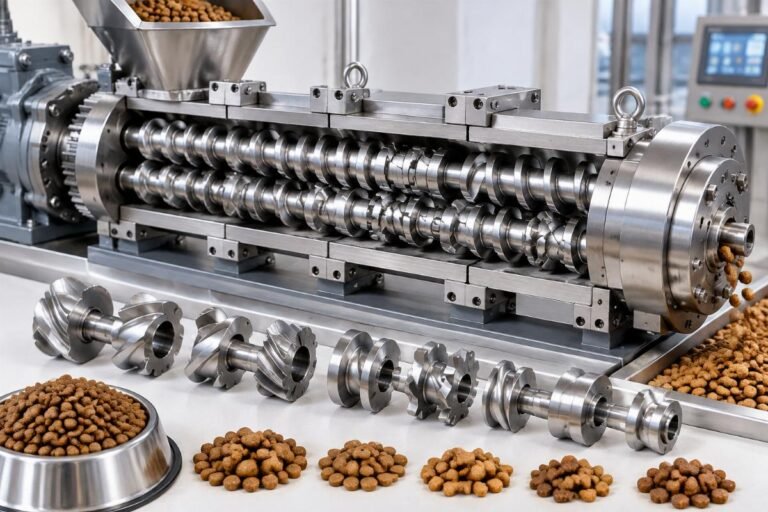
Most startup owners assume that utilizing local ingredients for kibble simply requires minor recipe tweaking. The counter-intuitive reality is that these regional crops demand highly specific shear and heat profiles inside the extruder barrel. During my time observing various Pet food production South Africa projects, I noticed that high-fiber local grains behave entirely differently from the standard corn and wheat blends used in North America. The fiber matrix resists standard expansion rates, meaning the screw configuration and temperature profiling must be radically altered to achieve the desired kibble density..
I recall a specific case where a regional startup attempted to process a locally sourced, high-fiber sorghum variant. They kept the barrel temperatures identical to their previous wheat-based runs. The result was a dense, under-expanded kibble that destroyed the teeth of local dogs and failed to float properly in water tests. The issue was not the recipe; it was the lack of mechanical shear generated by the screw elements. By reconfiguring the screw L/D ratio and adjusting the thermal zones to increase the specific mechanical energy input, the gelatinization degree improved drastically.. This highlights why a South Africa pet food extrusion line must be engineered with flexible screw configurations rather than fixed, off-the-shelf setups.
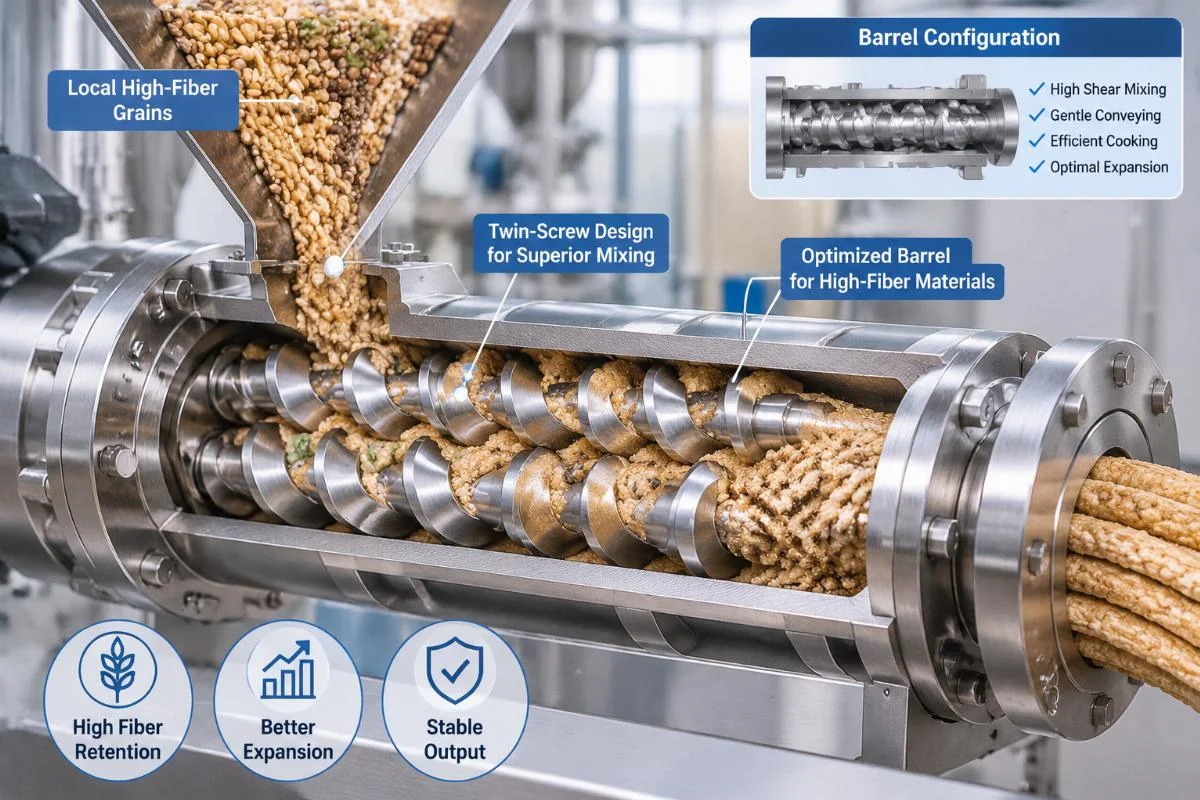
The insight here is clear: local raw materials dictate the mechanical design of the extruder, not the other way around.
How to Balance the Turnkey Line Parameters?
Extrusion, drying, and coating must be perfectly synchronized to prevent moisture-related defects that ruin entire batches.
The majority of financial losses in a new Pet food production South Africa venture do not happen at the extruder; they happen in the drying and cooling tunnels. Most buyers think buying the cheapest extruder saves money. The real cost is in post-production losses from unmatched drying and cooling systems. I have walked into facilities where the kibble came out of the DS70 or DS95 extruder perfectly formed, only to be ruined hours later because the multi-pass dryer lacked uniform airflow distribution..
Consider a startup scaling up their operations in the region. They faced severe moisture control issues during the drying phase, leading to mold growth inside the packaging. The problem was not the extrusion moisture, but the airflow uniformity direction inside the dryer. Some lanes received too much heat, case-hardening the kibble surface and trapping moisture inside, while other lanes remained under-dried. Furthermore, when it came to the coating phase, fat coating unevenness occurred due to poor cooling. The kibble entered the coating drum while the core temperature was still too high, causing the fat to pool rather than absorb. By extending the cooling drum retention time and synchronizing the exhaust fans across the dryer beds, the moisture gradient was eliminated..
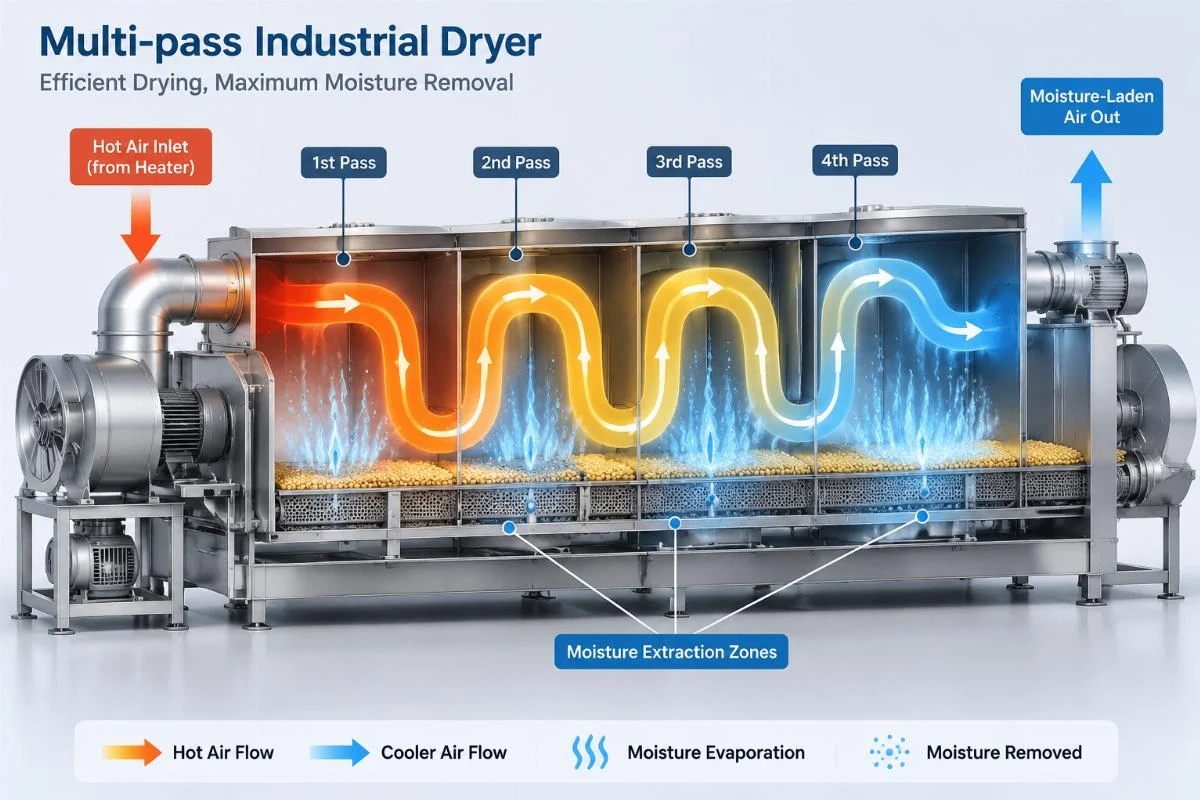
A turnkey pet food manufacturing approach ensures that the thermal mass of the wet kibble dictates the dryer length and cooling capacity, preventing these silent batch-killers.
What Equipment Specs Matter for African Climates?
Food-grade stainless steel and robust cooling systems are critical for humidity control in extreme ambient conditions.
When engineering a South Africa pet food extrusion line, the ambient climate is a massive, often ignored variable. Standard machines designed for temperate European or North American climates will fail miserably when exposed to high ambient humidity and temperature fluctuations. The cooling systems must be oversized to handle the latent heat load, otherwise, the kibble will never reach the safe moisture threshold required for fat coating and packaging..
I have seen contact surfaces on cheaper machines corrode rapidly when exposed to the combination of local humidity and the acidic nature of certain local ingredient profiles. This is why specifying food-grade stainless steel construction across all product contact zones is non-negotiable. It is not just about hygiene; it is about maintaining the dimensional stability of the drying belts and cooling drums. If the metal warps due to thermal stress or corrosion, the airflow and product bed depth become inconsistent, leading back to the moisture and coating issues mentioned earlier. A robust, climate-adapted design ensures that the Pet food production South Africa facility can run consistently regardless of the seasonal weather shifts.
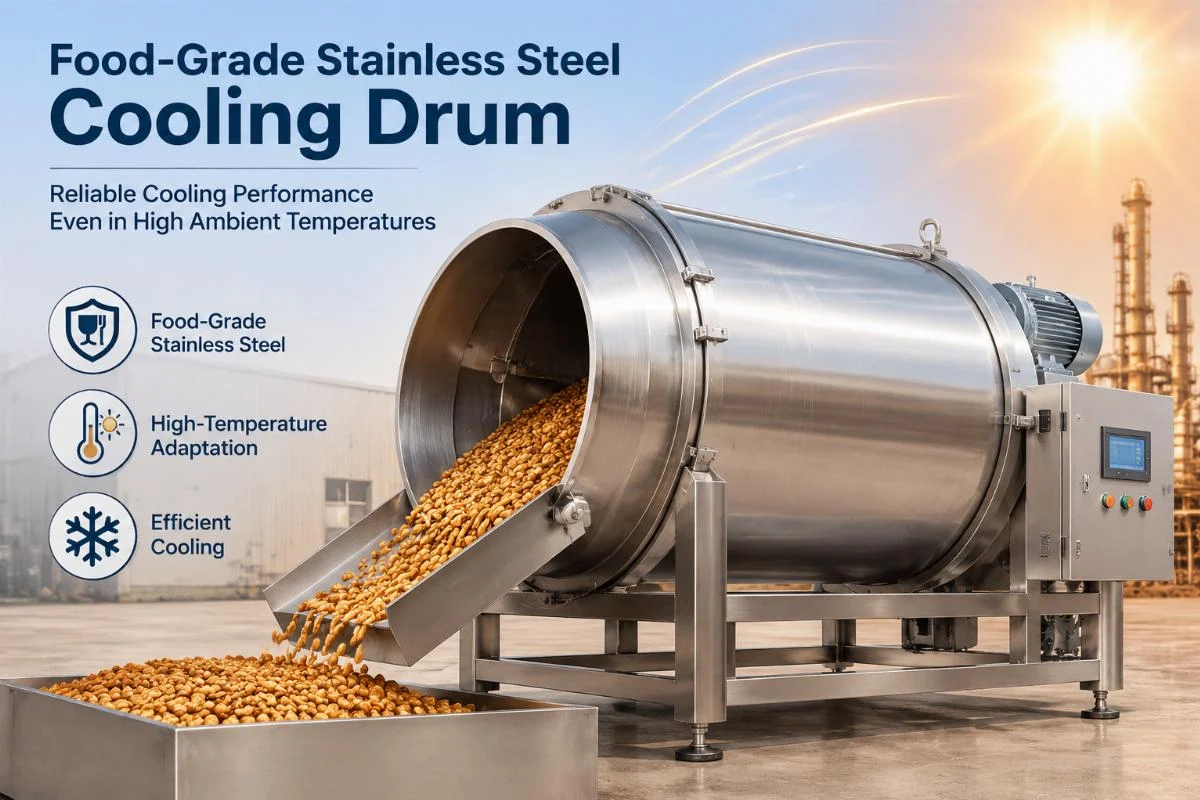
Equipment specifications must be viewed through the lens of local environmental stress, ensuring longevity and consistent parameter control.
How to Ensure Startup Success with Operator Training?
Proper parameter management and rigorous maintenance routines prevent costly downtime and batch inconsistencies.
Even the most perfectly engineered turnkey pet food manufacturing plant will fail if the local operators do not understand the thermodynamic principles behind the process. I have witnessed million-dollar lines sit idle because the night shift operator adjusted the feeder speed without compensating the steam injection and barrel temperature, resulting in hours of off-spec product..
This is where comprehensive on-site training becomes the most valuable asset. It is not just about teaching someone which button to press; it is about teaching them how to read the rheology of the dough inside the barrel. When Meiteng provides installation and operator training, the focus is heavily placed on understanding the relationship between raw material moisture, specific mechanical energy, and final kibble density. Operators are trained to listen to the motor load, observe the die face cut quality, and adjust the dryer zones dynamically. This deep, experiential knowledge transfer ensures that the Pet food production South Africa facility maintains its EEAT-level quality standards long after the engineering team has left the site. Proper maintenance routines, especially regarding the cleaning of the screw elements and the calibration of the coating nozzles, are instilled as daily habits rather than afterthoughts.
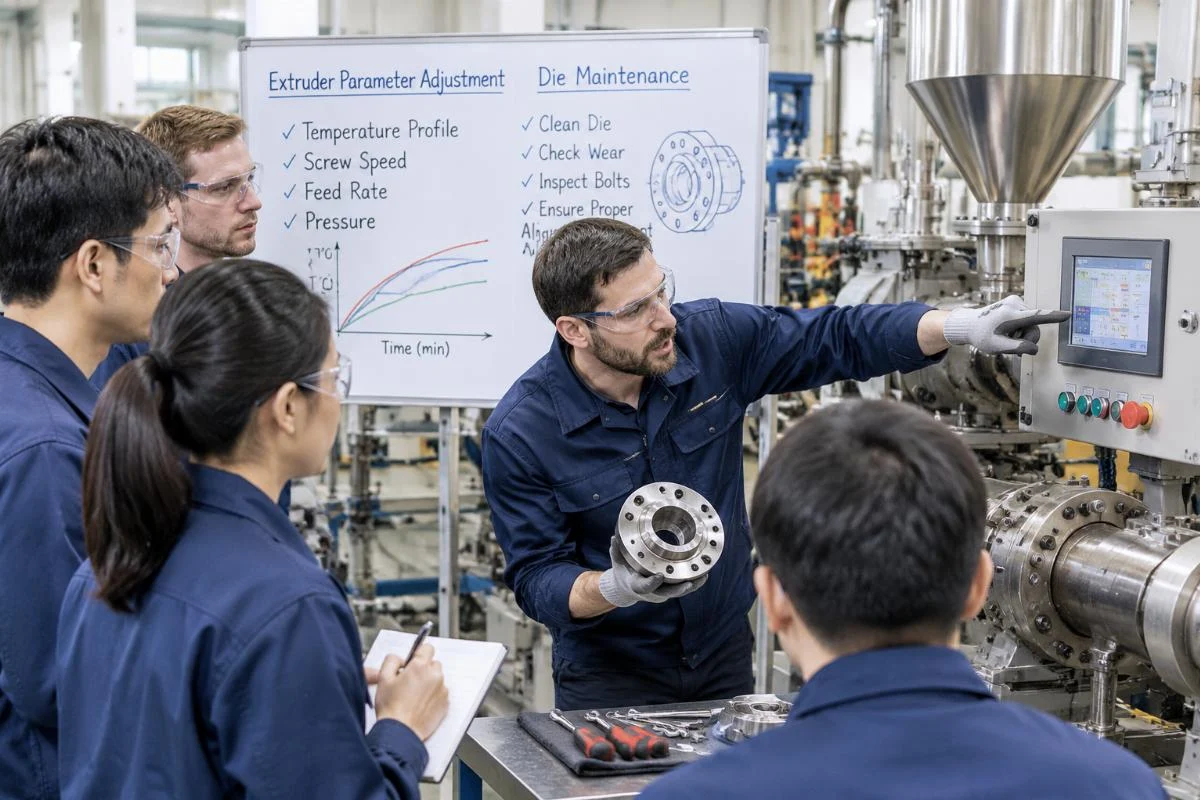
Human capital, trained in the specific nuances of the local supply chain, is the ultimate safeguard against production variability.
Conclusion
Parameter synchronization, not just machine procurement, defines the profitability of local kibble manufacturing.
Establishing a viable Pet food production South Africa operation demands a holistic view where extrusion shear, drying thermodynamics, and cooling retention are engineered as a single, breathing system. By prioritizing turnkey integration and deep operator training over standalone machine savings, manufacturers can successfully transform local ingredients into premium, export-ready kibble.
Machines Mentioned in This Article

cat food machine
Dog Food Extruder Machine Manufacturer for Pet Food Kibble Making Line
View Machine
cat food machine
Pet Food Processing Equipment Plant Manufacturer Dog Food
View Machine
cat food machine
Dry Dog Food Production Line Pet Food Pellet Machine
View Machine
cat food machine