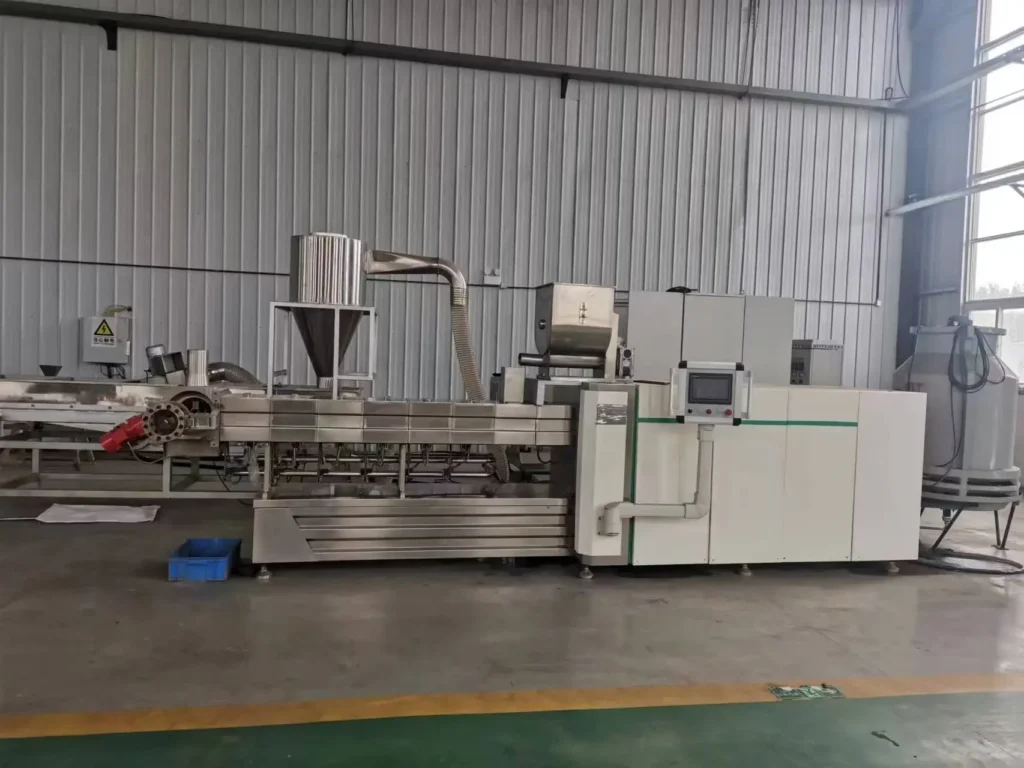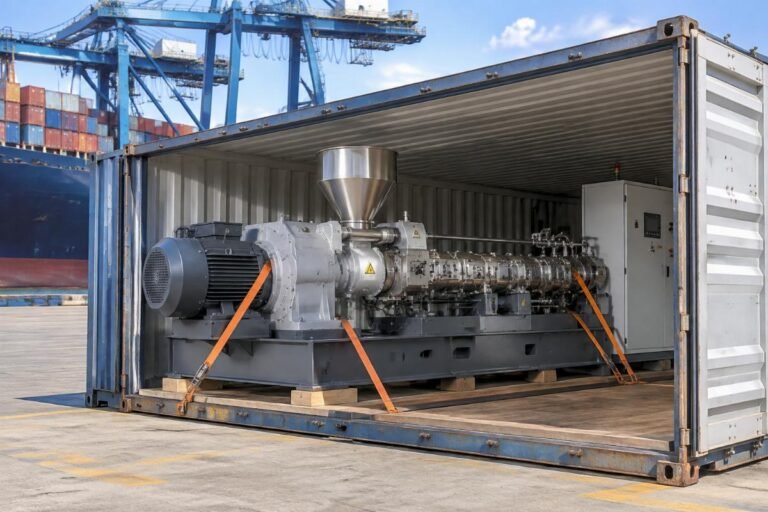

Standard export packaging and a spotless shipping container will not save your equipment from being impounded at the border.
Passing Australian biosecurity checks for a pet food extruder shipping Australia requires equipment designed with crevice-free sanitation, 316 stainless steel contact parts, and verifiable high-temperature sterilization capabilities, rather than just relying on basic exterior cleaning.
I learned this the hard way a couple of years ago when a pet snack extrusion line I supplied to a client in Dubai arrived at the Port of Perth and was immediately detained. The Australian Department of Agriculture flagged the twin-screw extruder because the machine cavity had cleaning dead corners that could harbor residual organic matter and breed bacteria. I spent the next fortnight on daily video calls guiding local workers to dismantle and polish the machine manually. The rework costs nearly wiped out the entire profit margin of the project. Since then, running operations from Riyadh to Melbourne, I have realized that selling machinery to this market is not just about throughput capacity. Material grades, sanitary design, and thermal validation are the true currency for customs clearance.
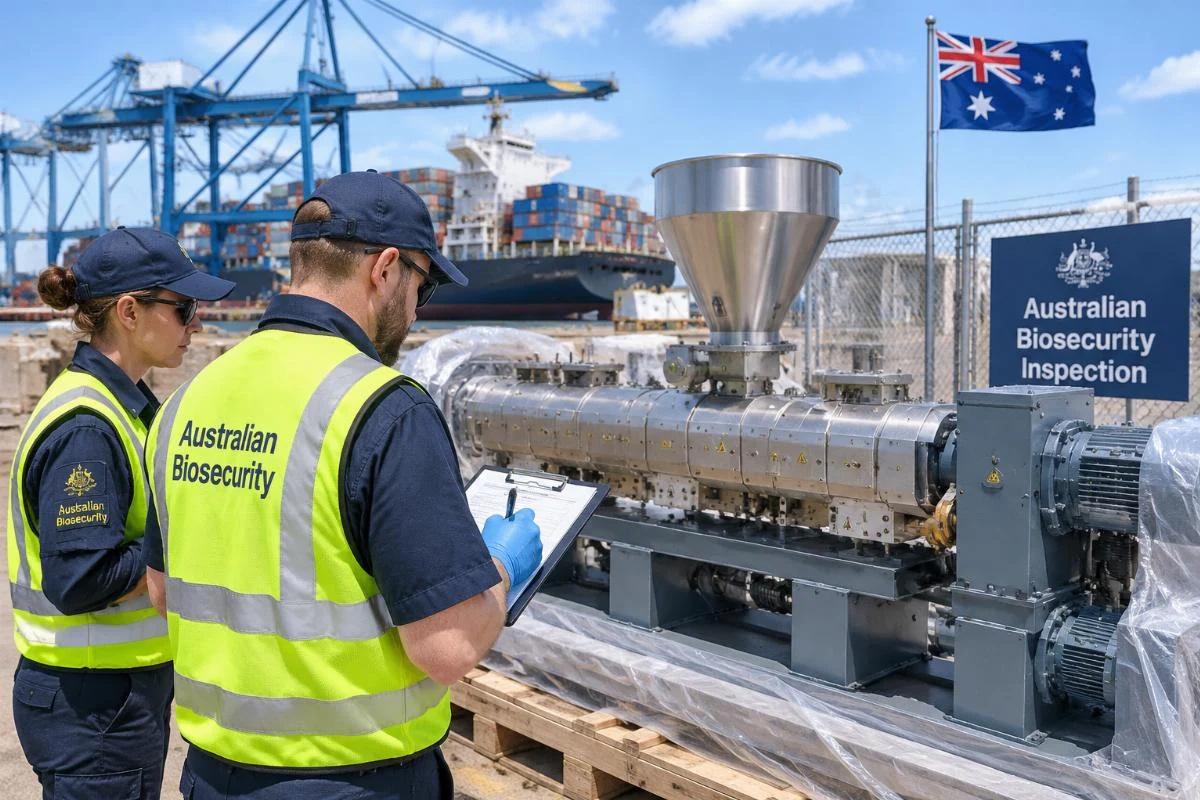
Let us break down exactly what triggers these holds and how to engineer your production line to bypass them.
What triggers a biosecurity hold for imported food machinery?
Internal crevices and residual organic matter are the primary culprits, not external packaging.
Many buyers assume that if the wooden crate and the outer shell of the machine look clean, the biosecurity officers will wave it through. This is a dangerous misconception. Australian border force protocols focus heavily on the internal geometry of food-contact zones. When a machine arrives, inspectors conduct swab testing for residual organic matter. If the internal architecture of the extruder has blind spots where dough or meat paste could dry and accumulate, the entire container is flagged for deep inspection.
During the Perth incident, the officers identified microscopic gaps around the screw shaft seals and the barrel flange connections. These areas are impossible to clean without full disassembly. Because the machine had been tested with raw materials at the factory before shipping, trace amounts of organic residue had settled into these micro-gaps. The external container was pristine, but the internal geometry failed the initial risk assessment.
To avoid this, your pet food extruder shipping Australia must feature a fully polished internal flow path. The design must eliminate any right angles or unpolished welds where material can stagnate. Surface roughness metrics for food-contact parts must be strictly controlled to ensure a mirror-like finish that prevents bacterial adhesion. If your supplier cannot provide detailed 3D models showing the internal flow path and weld polishing standards, you are buying a potential port delay.
Why is 316 stainless steel mandatory for Australian pet food lines?
Superior corrosion resistance prevents micro-pitting where bacteria hide, ensuring compliance.
There is a widespread belief in the industry that standard 304 stainless steel is sufficient for food processing equipment. For the Australian market, this is simply not true. Australian biosecurity strictly demands 316L stainless steel for specific wet zones and high-salinity applications to prevent micro-pitting.
304 stainless steel is highly susceptible to chloride attack. Pet food formulations often contain high levels of salt, minerals, and acidic additives. Over time, even minor exposure to these elements during factory testing or initial cleaning can cause micro-pitting on 304 surfaces. These microscopic pits become perfect harbors for bacterial biofilms, which are notoriously difficult to eradicate and easily detected during border swab tests.
Upgrading to a 316 stainless steel pet food line Australia eliminates this vulnerability. The addition of molybdenum in the 316 alloy drastically improves resistance to pitting corrosion. When we transitioned our twin-screw barrels and screw elements to 316L for the Oceania market, we noticed a dramatic shift in inspection outcomes. The material maintains its smooth surface integrity even after aggressive caustic cleaning cycles, ensuring that the surface roughness remains within the safe threshold required by inspectors. It is not just about durability; it is about maintaining a verifiable sanitary surface that passes scrutiny.

How does crevice-free design speed up customs clearance?
Quick-release mechanisms and polished surfaces eliminate blind spots, passing swab tests instantly.
A machine that takes hours to dismantle for cleaning is a machine that will fail a biosecurity audit. Inspectors need to verify that the operator can easily access all internal surfaces for routine sanitation. If the design requires specialized tools or excessive labor to open the barrel, it is deemed a hygiene risk.
Implementing a 3-A sanitary standard quick-release design is the solution. This involves using hinged barrel halves, quick-release clamps, and pull-out screw shafts that can be disassembled without complex tooling. When a twin-screw extruder customs clearance Perth is processed, having a machine that demonstrates rapid, tool-free access to the cavity proves to the officers that daily sanitation will be effective.
In a recent project for a contract manufacturer in Melbourne, the initial prototype used traditional bolted flanges. The cleaning time was extensive, and the risk of human error during reassembly was high. By redesigning the barrel with a split-hinge mechanism and integrating quick-release screws, the cleaning time was reduced by half. More importantly, during the final pre-shipment inspection, the swab tests returned zero organic residue because the operators could actually reach every corner. The equipment cleared customs on the first pass, avoiding the demurrage charges that plague poorly designed imports.
What sterilization documentation do inspectors demand?
Verifiable high-temperature control modules and validated thermal kill-step records.
Physical cleanliness is only half the battle. The Australian biosecurity framework also requires proof that the equipment can achieve and maintain the thermal conditions necessary to eliminate pathogens. This is where many standard extruders fail. They might melt the product, but they cannot guarantee a validated kill-step for bacterial control.
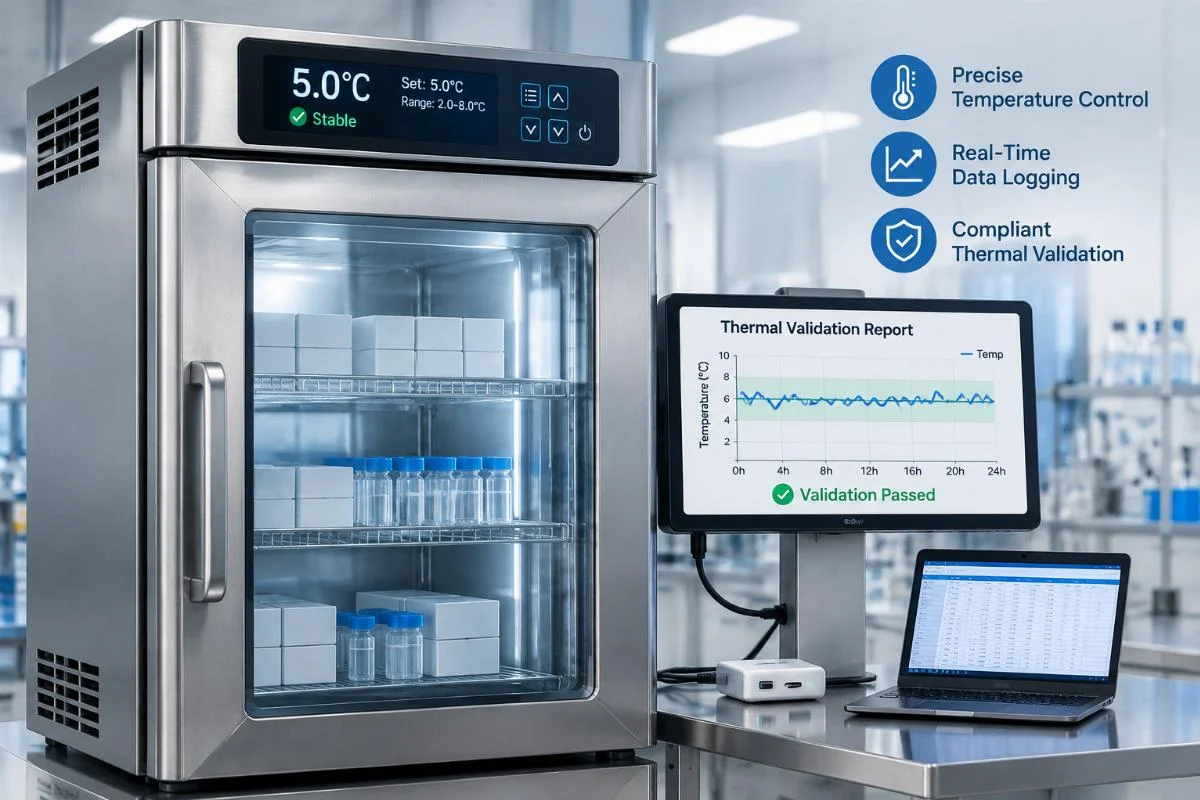
Inspectors demand documentation showing that the machine’s thermal profile aligns with established thermal death time curves for sterilization validation. Your pet food extruder shipping Australia must be equipped with integrated high-temperature sterilization modules. These are not just basic heating bands; they are precision-controlled zones capable of sustaining specific temperature thresholds required by local inspectors for bacterial control.
When we configure a line for this region, we include advanced temperature control cabinets that log real-time thermal data. This data provides a verifiable record that the product and the machine cavity reached the necessary thermal lethality during the extrusion process. Without this integrated module and the accompanying data logging capabilities, you are relying on manual temperature checks, which biosecurity officers will not accept as proof of systemic sterilization. The ability to present a certified thermal kill-step record transforms your equipment from a suspected risk into a compliant, verified asset.
Conclusion
Navigating Australian border regulations requires engineering equipment for sanitation, not just production.
Securing a smooth customs process for your pet food extruder shipping Australia hinges on eliminating internal harborage points through crevice-free design, utilizing 316L stainless steel to prevent micro-pitting, and integrating verifiable high-temperature sterilization modules. By prioritizing these sanitary engineering principles, you transform your production line from a biosecurity liability into a compliant, efficient asset ready for immediate operation.
Machines Mentioned in This Article

cat food machine
Dry Dog Food Production Line Pet Food Pellet Machine
View Machine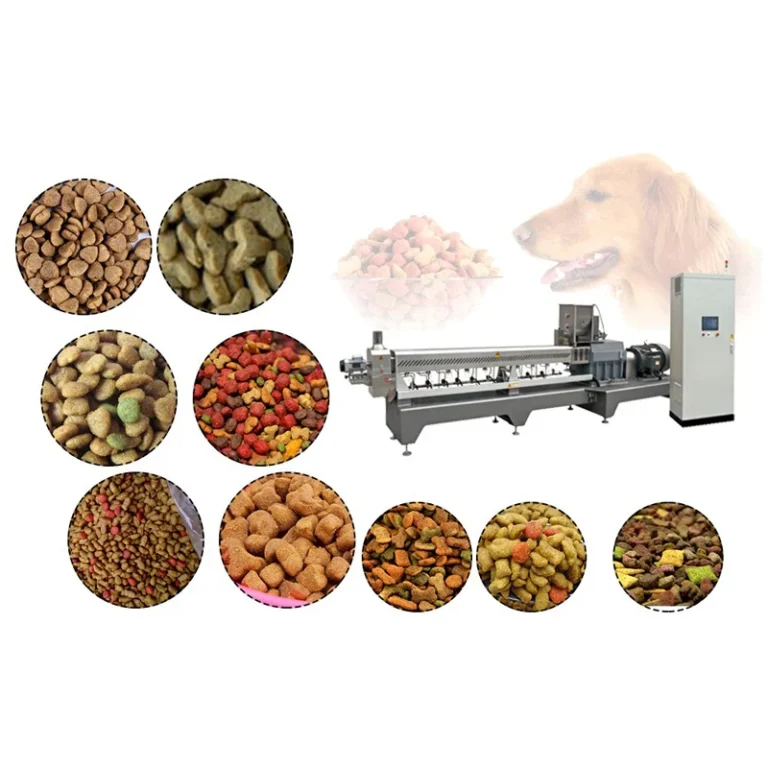
cat food machine
Dog Food Pellet Making Machine Line, Automatic Pet
View Machine
cat food machine
Pet Food Production Line Manufacturer
View Machine
cat food machine