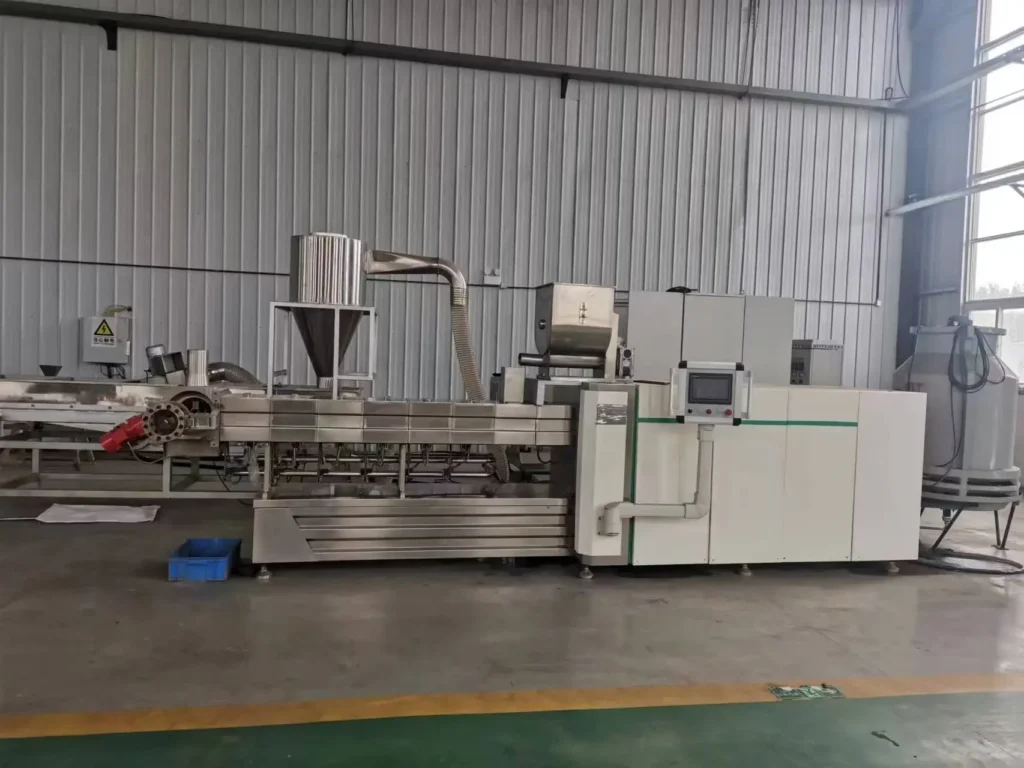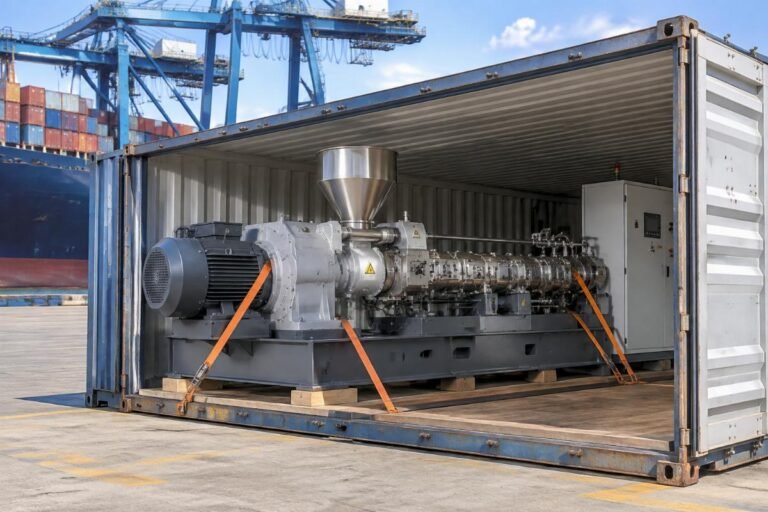

Machine specs only prove it can run; paperwork and regional adaptability prove it will actually clear customs and stay running.
To properly verify a Chinese pet food extruder factory before paying, you must look past the main extruder’s motor size and demand a full turnkey line audit. This means pre-checking the HS code classification for every single auxiliary component, verifying food-grade material certificates against actual export documents, and demanding video proof of the exact machine model operating under your local voltage and water conditions.
I still remember the endless email threads from a client in Brazil. We had shipped a DS85 twin-screw pet food extruder to the Santos port. The main machine was perfect, but the cooling conveyor and the flavoring drum were classified under a completely different HS code than the extruder itself. The local customs broker flagged the mismatch, and the entire container was stuck at the port for weeks. We had to scramble, redo the certificate of origin, and provide exhaustive technical breakdowns just to get the auxiliary parts released. That single paperwork mismatch cost the client dearly in storage fees and delayed their market launch. Since transitioning from documentation to managing turnkey projects, I make it a non-negotiable rule to map out the customs classification for every single piece of equipment before a contract is even signed. Building a great machine is only half the job; getting it legally and smoothly onto your factory floor is the other half.
Moving forward, let us break down exactly how to audit a supplier to ensure your investment does not turn into a customs nightmare or a debugging headache.
Why Do Most Buyers Fail at Customs When Importing Extruders?
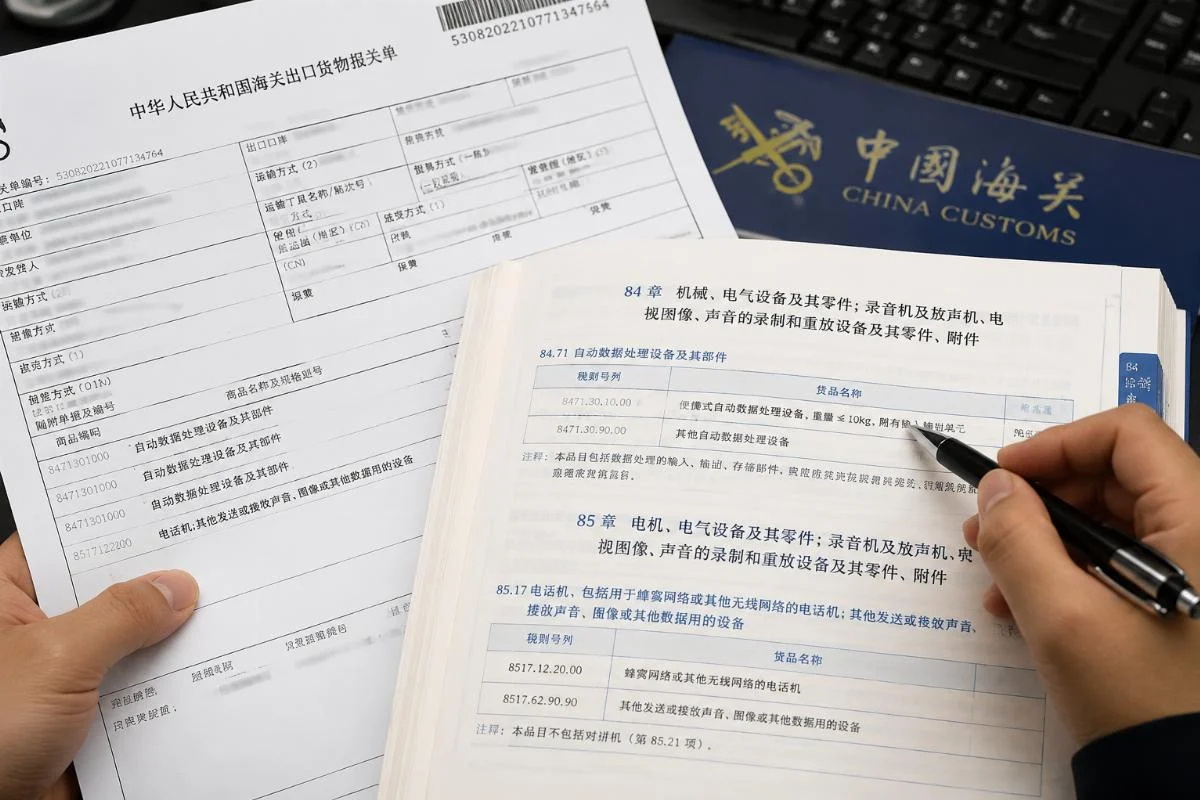
The primary reason for customs delays is the HS code classification conflict between the main extruder and its auxiliary equipment.
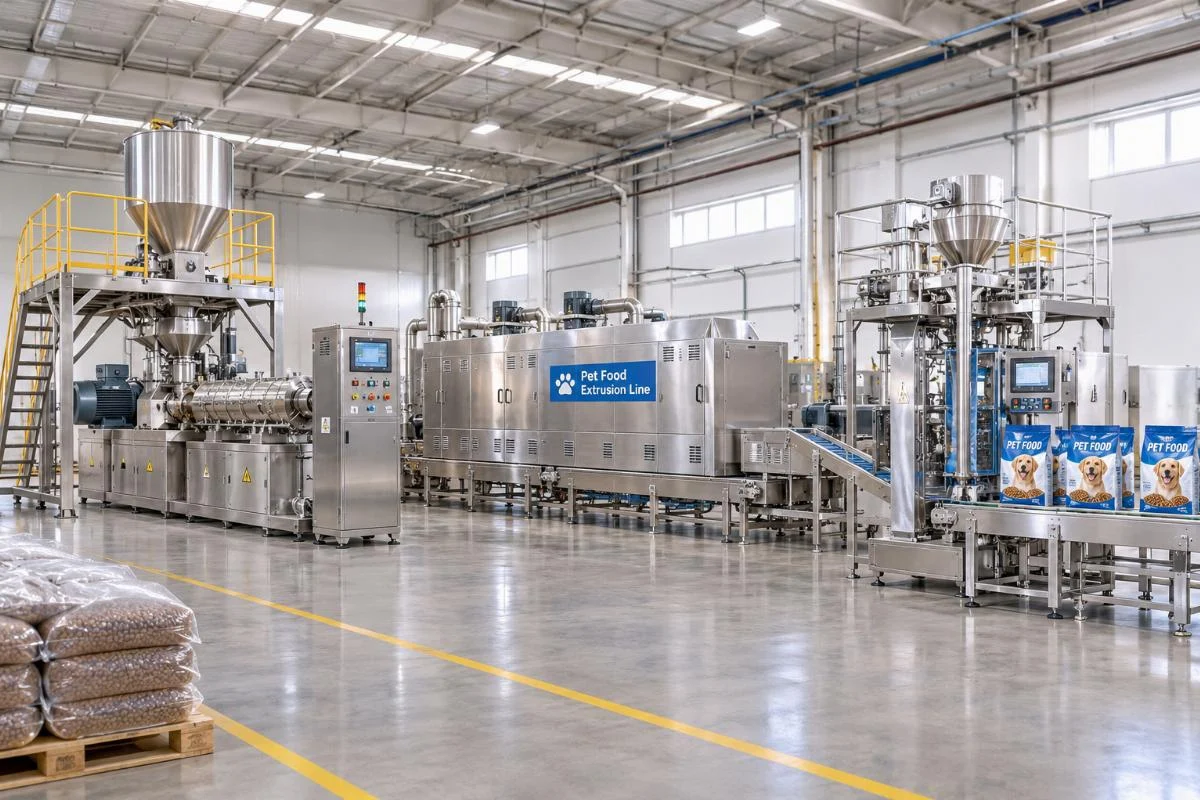
Most buyers focus entirely on the extrusion capacity and screw configuration, assuming the rest of the line will follow the same customs category. This is a critical mistake. A pet food production line is not a single machine; it is a complex ecosystem of mixers, conveyors, dryers, coolers, and coating drums.. When the main extruder is declared under a food processing machinery code, but the multi-layer belt dryer is declared under a general industrial heating code, customs authorities in regions like South America or Africa will immediately flag the shipment for inspection.
To avoid this, you must ask your supplier how they handle the pet food production line HS code clearance. A reliable manufacturer will provide a detailed equipment list with pre-verified HS codes for every single component before you pay the deposit. They will also prepare separate technical manuals for the auxiliary systems to justify their classifications if queried by customs officers.
Furthermore, the origin certificate must perfectly match the commercial invoice and the packing list. Even a minor discrepancy in the weight declaration or the machine model number can lead to severe demurrage charges. When evaluating how to check pet food extruder supplier capabilities, check their export documentation team. Do they have dedicated staff who understand the specific import regulations of your country? A factory that simply copies and pastes HS codes from previous shipments without verifying your local customs updates is a massive risk.
How to Audit a Factory’s Turnkey Capability Beyond Machine Specs?
A true turnkey capability means the factory can design the entire flow from raw material intake to final packaging, not just sell you a standalone extruder.
Many manufacturers claim to offer turnkey solutions, but in reality, they only manufacture the main twin-screw extruder and outsource the rest. This leads to integration nightmares on your factory floor. When you conduct a twin-screw extruder factory audit China, you need to verify their engineering depth. Can they calculate the required airflow for the drying oven based on your specific recipe’s moisture content? Do they understand the cooling curve required for different kibble sizes to prevent case hardening?
For a pet food startup, the capacity range is typically between 200kg/h and 2000kg/h. At this scale, the difference between a single-screw and a twin-screw setup is massive in terms of recipe flexibility and expansion control. A competent factory will guide you through the selection boundary. They will explain why a twin-screw configuration is necessary for high-meat-inclusion recipes, while a single-screw might suffice for basic cereal-based treats.
Moreover, the factory must provide robust formula development support. The machine is just a tool; the recipe is the product. You need a supplier that has an in-house application center where they can test your specific raw materials.. During the audit, ask to see their R&D lab. Do they have equipment to test the nutritional retention and physical durability of the extruded product? If they cannot show you a structured process for recipe optimization and operator training, they are merely selling you iron and steel, not a production solution.
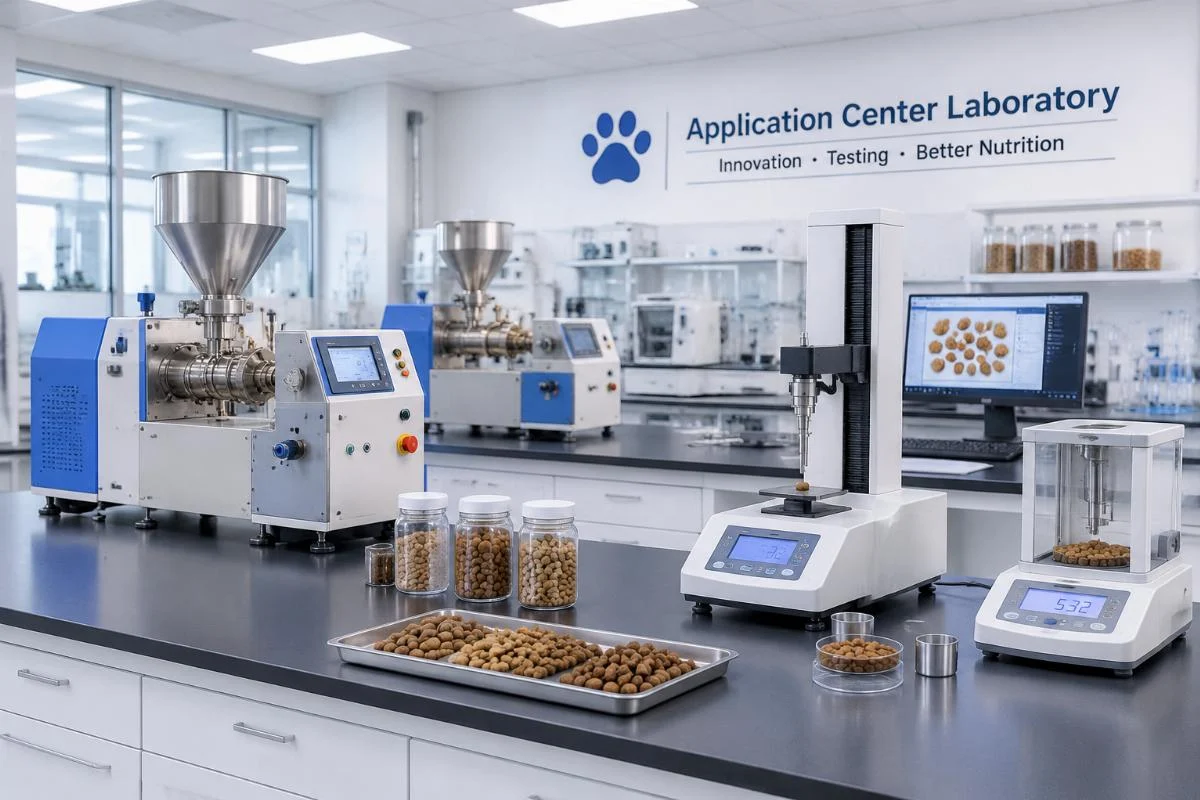
What Documents Prove the Factory’s Quality and Compliance?
Verifiable material certificates and international safety standards are the only acceptable proof of quality, not just glossy brochures.
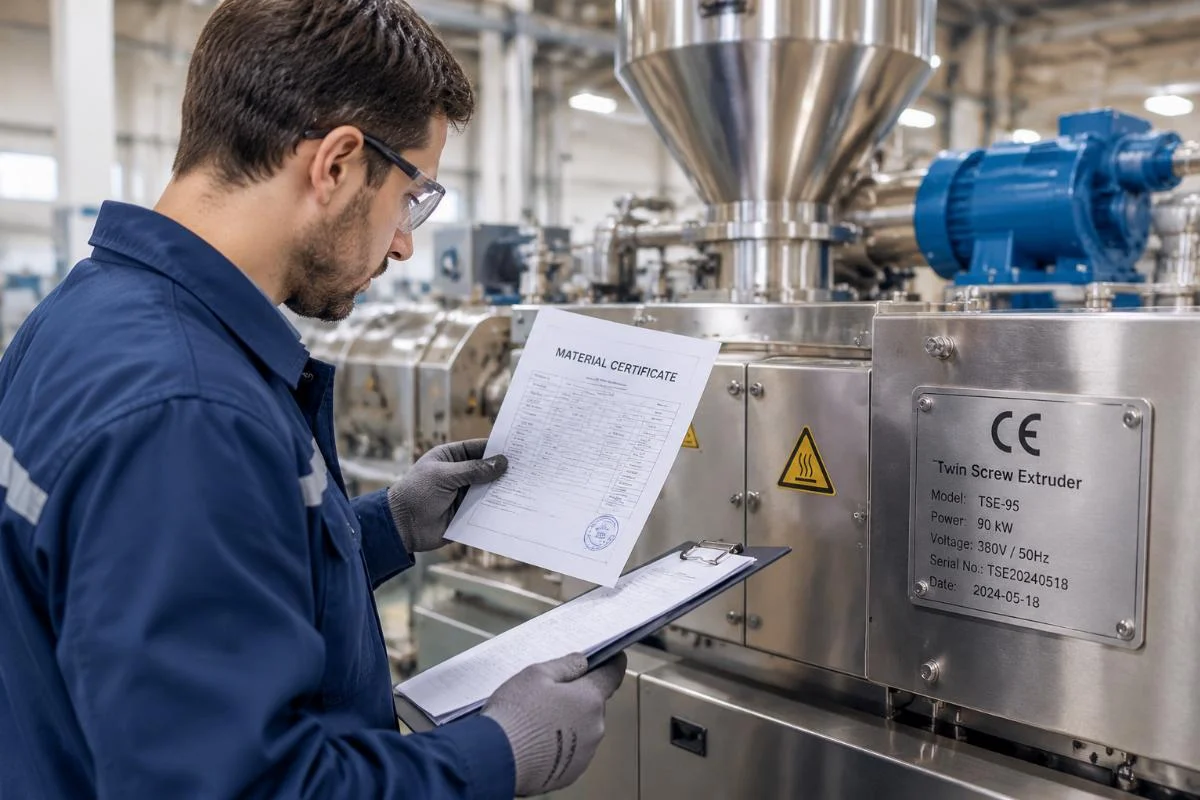
When importing food processing equipment, the contact materials must be strictly food-grade. You must demand the original mill certificates for the 304 or 316 stainless steel used in the barrels, screws, and food conveyors.. A trustworthy factory will provide these certificates with batch numbers that you can cross-verify. If they only offer a general “food-grade” statement without specific material test reports, walk away.
Additionally, safety and quality management systems must be certified by recognized international bodies. The CE certification is mandatory for entering many markets, but you must verify its scope. Does it cover the entire electrical control panel and the specific safety interlocks of the DS series extruders? Similarly, ISO 9001 certification proves they have a standardized quality control process, but you need to see their actual inspection records. Ask for the factory acceptance test (FAT) reports of recent machines.
During the twin-screw extruder factory audit China, inspect their assembly workshop. Are the screws and barrels stored properly to prevent deformation? Is the electrical wiring done according to international standards, with proper labeling and grounding? These details separate a professional manufacturer from a basic workshop..
How to Verify Real Installation Cases in Your Region?
Past performance in your specific geographic region is the ultimate predictor of your project’s success.
A factory might have hundreds of installations, but if none of them are in your country or a region with similar infrastructure conditions, their experience is irrelevant to you. You need to verify how to check pet food extruder supplier track records by asking for case studies from your specific continent, whether it is South America, Africa, or Southeast Asia.
Infrastructure varies wildly across the globe. A machine designed for the stable 50Hz grid in Europe might face severe voltage fluctuation issues in parts of Africa or Latin America. Similarly, the local water quality affects the cooling system’s efficiency and the boiler’s lifespan. When you request installation videos, look for the specific environmental adaptations the factory made. Did they install voltage stabilizers? Did they modify the cooling tower design to handle high-temperature ambient conditions or hard water?
A client in West Africa once bought a line from a supplier who had no prior experience in the region. The local water had high mineral content, which quickly scaled up the cooling channels of the conditioner, leading to frequent overheating and shutdowns. The supplier had no idea how to troubleshoot it remotely. When you verify a Chinese pet food extruder factory, ensure they have a proven history of remote diagnostic assistance and on-site commissioning in your region.. Ask for references you can actually call. A real supplier will confidently connect you with previous clients who can vouch for their after-sales responsiveness and the machine’s long-term stability.

Conclusion
Securing a reliable production line requires looking far beyond the main motor’s horsepower.
To successfully verify a Chinese pet food extruder factory, you must rigorously audit their HS code documentation for the entire turnkey line, demand verifiable food-grade material certificates, and insist on proof of successful installations in regions with similar infrastructure challenges. Only by validating these operational and compliance details can you ensure your equipment clears customs smoothly and runs efficiently from day one.
Machines Mentioned in This Article

cat food machine
Pet Food Processing Equipment Plant Manufacturer Dog Food
View Machine
cat food machine
Dry Dog Food Production Line Pet Food Pellet Machine
View Machine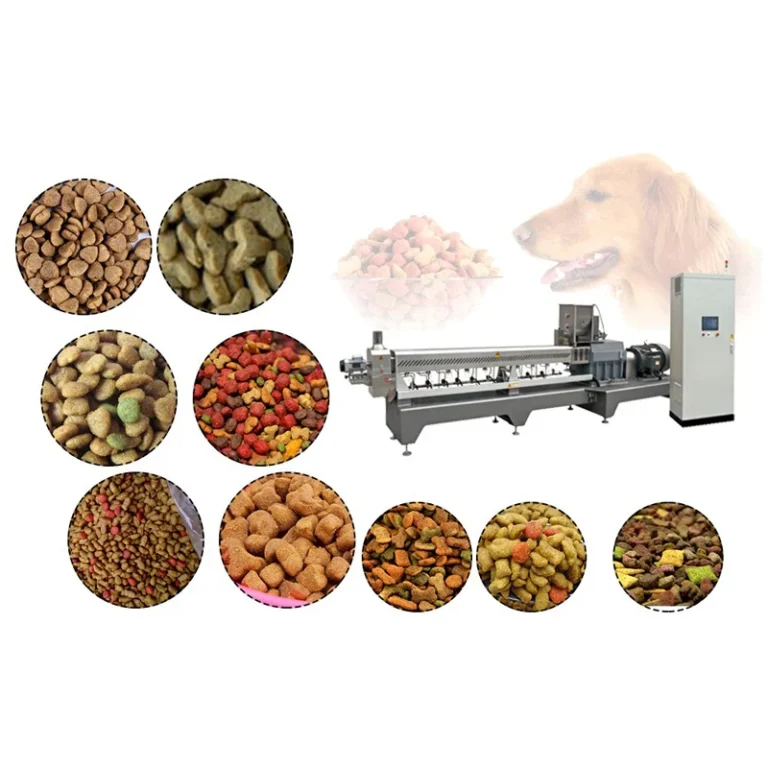
cat food machine
Dog Food Pellet Making Machine Line, Automatic Pet
View Machine
cat food machine