High equipment price does not guarantee high uptime; local spare parts availability matters far more.
Budget-conscious pet food producers can achieve Almex-level capacity and stability with Chinese twin-screw alternatives, redirecting saved capital to downstream processing like multi-layer drying ovens.
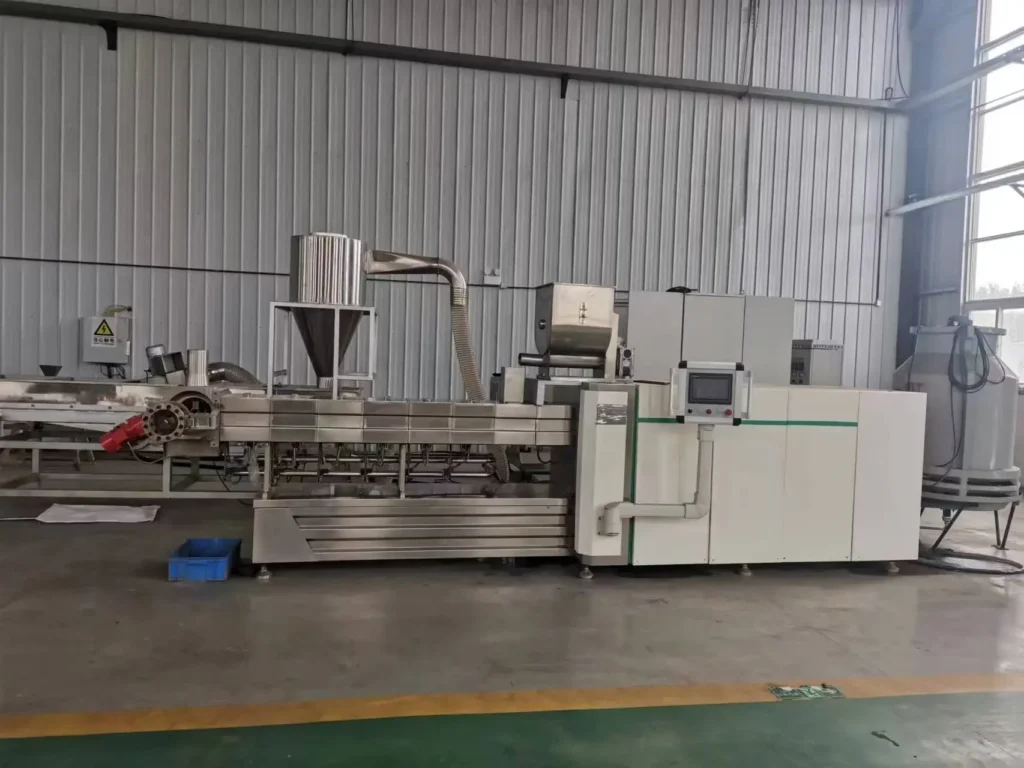
Handling customs documentation for heavy machinery taught me a harsh reality early in my career. I spent countless nights dealing with delayed clearances for European twin-screw extruders destined for Mexico. The高昂的进口关税和漫长的配件清关流程经常把初创企业的现金流吃得死死的。后来 I transitioned into sales and focused on finding practical replacements for the Latin American market. Spending time around the Port of Santos made it abundantly clear that pet food manufacturers care about throughput and mechanical stability, not brand premiums. Sourcing Almex extruder alternatives from established Chinese facilities allows buyers to bypass these financial bottlenecks while maintaining rigorous production standards.

Let us break down how shifting your sourcing strategy can optimize your entire production line.
Why Look Beyond Almex for Pet Food Extrusion?
European brand premiums and hidden import costs routinely consume the capital that startups actually need for downstream quality control.
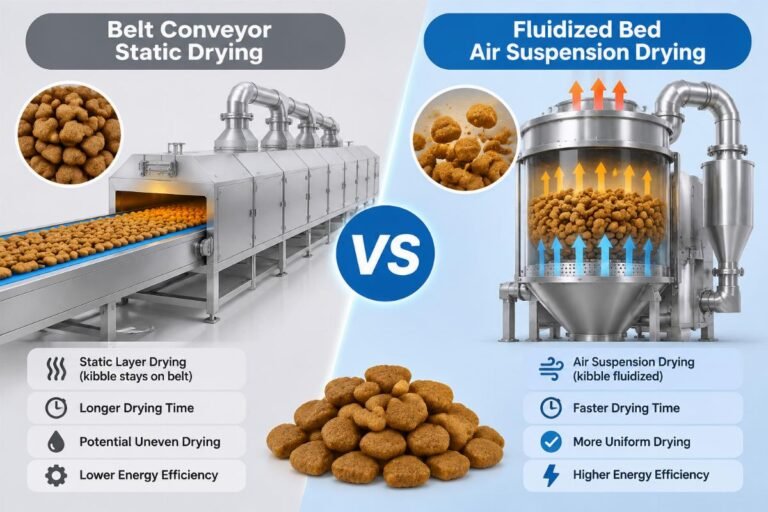
When evaluating Almex extruder alternatives, the initial sticker shock of premium European brands is only the beginning. The real financial drain comes from freight, import duties, and the inevitable delays at customs. A Latin American startup once allocated nearly their entire equipment budget to the extruder itself, leaving almost nothing for the drying and coating systems. This is a critical mistake because the extruder only shapes the kibble; the drying and flavor-coating systems actually define the final product quality and shelf life. By choosing cost-effective alternatives, that same startup redirected a significant portion of their budget to build a multi-layer drying oven, which noticeably boosted their product shelf life and market competitiveness.
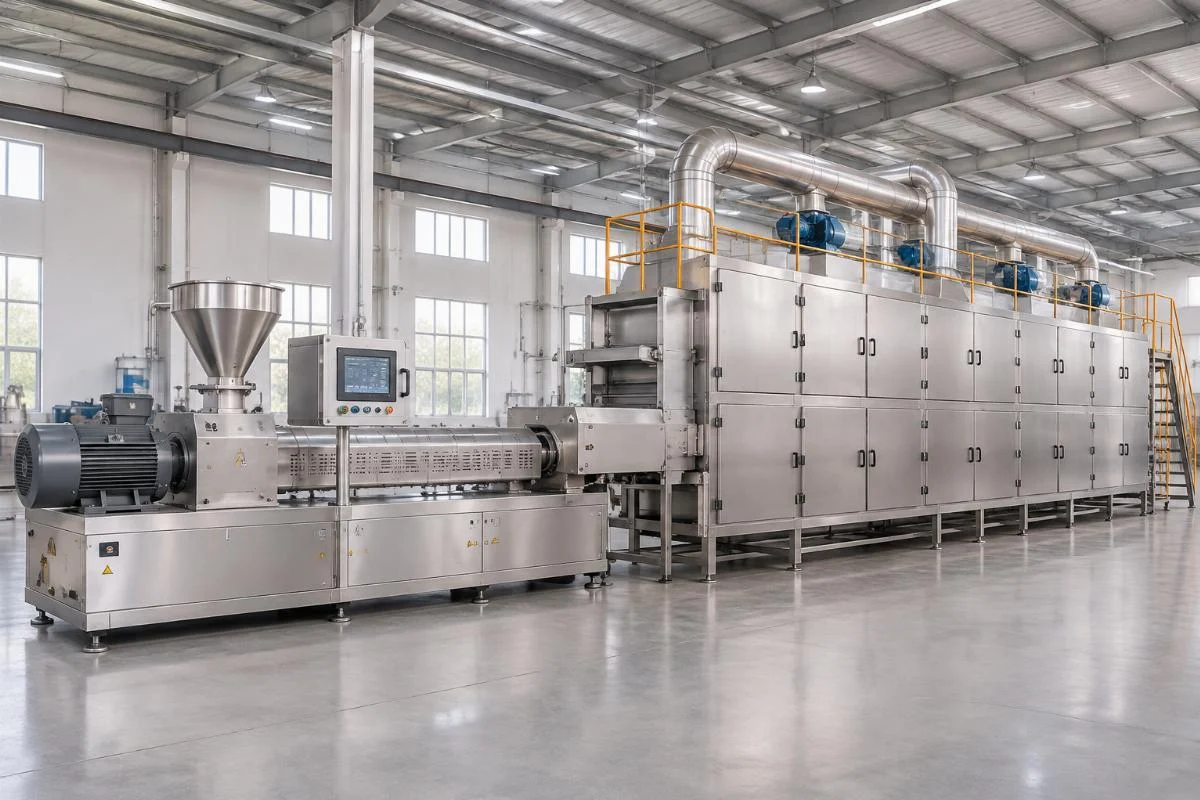
The lesson here is straightforward. Over-investing in the extruder while under-investing in post-extrusion processing compromises the final product. Smart producers look for Almex extruder alternatives that free up capital for these critical downstream stages.
How Do Chinese Twin-Screw Alternatives Compare in Specs?
Modern Chinese twin-screw extruders match the core mechanical parameters of premium European brands without the associated brand markup.
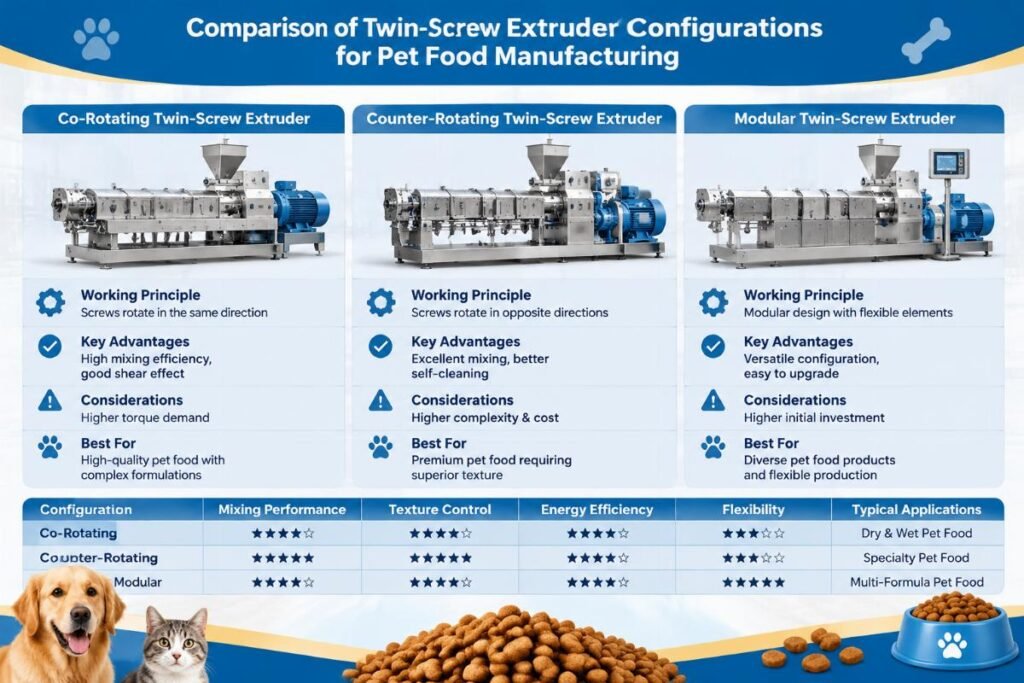
When sourcing Almex extruder alternatives, buyers need to look past the logo and examine the actual engineering specifications. The screw configuration, barrel material, and automation levels are what truly dictate performance. Below is a specification comparison matrix evaluating standard European imports against high-quality Chinese alternatives.
| Specification Factor | Premium European Import | High-Quality Chinese Alternative |
|---|---|---|
| Throughput Capacity Range | Standard | Standard |
| Screw Configuration Flexibility | Modular | Modular |
| Food-Grade Steel Ratio | Certified 316 | Certified 304/316 |
| Automation Level | Fully Automated | Fully Automated |
| Specific Mechanical Energy | Controlled | Controlled |
| Sanitary Standard Compliance | Verifiable | Verifiable |
A contract manufacturer in South America recently replaced their aging European equipment with a mid-capacity Chinese twin-screw line. The throughput rates and specific mechanical energy remained consistent, but the food-grade stainless steel construction ensured strict hygiene compliance. The real victory, however, was in the supply chain.
When comparing Almex extruder alternatives, the specs tell the same story: you do not need to sacrifice mechanical performance to stay within budget.
What Are the Real Total Cost of Ownership Differences?
Factoring in tariffs, customs delays, and spare parts logistics reveals that the true cost of European equipment is substantially higher than the initial invoice.
The total cost of ownership is where Almex extruder alternatives truly shine. A common trap is focusing solely on the purchase price. However, when a critical component fails, the lead time for spare parts from Europe can stretch from weeks to months. During this downtime, the entire production line halts, costing several times the savings from buying cheaper components elsewhere.
| Cost Factor | European Brand | Chinese Alternative |
|---|---|---|
| Initial Equipment Price | High | Moderate |
| Import Tariffs & Freight | Substantial | Noticeably Reduced |
| Spare Parts Lead Time | Extended | Expedited |
| Customs Clearance Risk | Vulnerable | Resistant |
| Maintenance Downtime | Noticeably Extended | Substantially Reduced |
A regional distributor once faced a catastrophic failure on a European line. The replacement part was stuck in customs for an extended period, resulting in a mid-six-figure loss in delayed orders. Switching to Chinese alternatives cut spare parts lead times from months to mere weeks, ensuring continuous operation.

Evaluating Almex extruder alternatives through the lens of total cost of ownership proves that local availability and streamlined logistics are far more valuable than a prestigious badge on the hopper.
How to Ensure Quality and Stability from Alternative Suppliers?
Verifying international certifications, food-grade materials, and turnkey support guarantees that budget alternatives do not compromise on safety or output.
Finding reliable Almex extruder alternatives requires strict due diligence. It is not just about the machine; it is about the entire ecosystem. You must verify that the manufacturer adheres to international food safety standards and holds proper certifications. Furthermore, the supplier should offer comprehensive turnkey support, from raw material intake to final packaging.
| Quality Assurance Factor | Unverified Supplier | Verified Manufacturer |
|---|---|---|
| International Certifications | Not Provided | Certified |
| Material Traceability | Self-Reported | Verifiable |
| Turnkey Line Design | Basic | Full Batch-Level |
| Formula R&D Support | None | Comprehensive |
| On-Site Training | Basic | Comprehensive |
An emerging pet food brand utilized the provided formula development support from a verified Chinese manufacturer to launch a new kibble line. This avoided costly third-party trial-and-error and ensured the product met all nutritional benchmarks right out of the gate. The manufacturer’s production facilities utilize controlled nitrogen infusion and micron-level precision for critical components, ensuring the barrels and screws withstand high specific mechanical energy over extended service life.
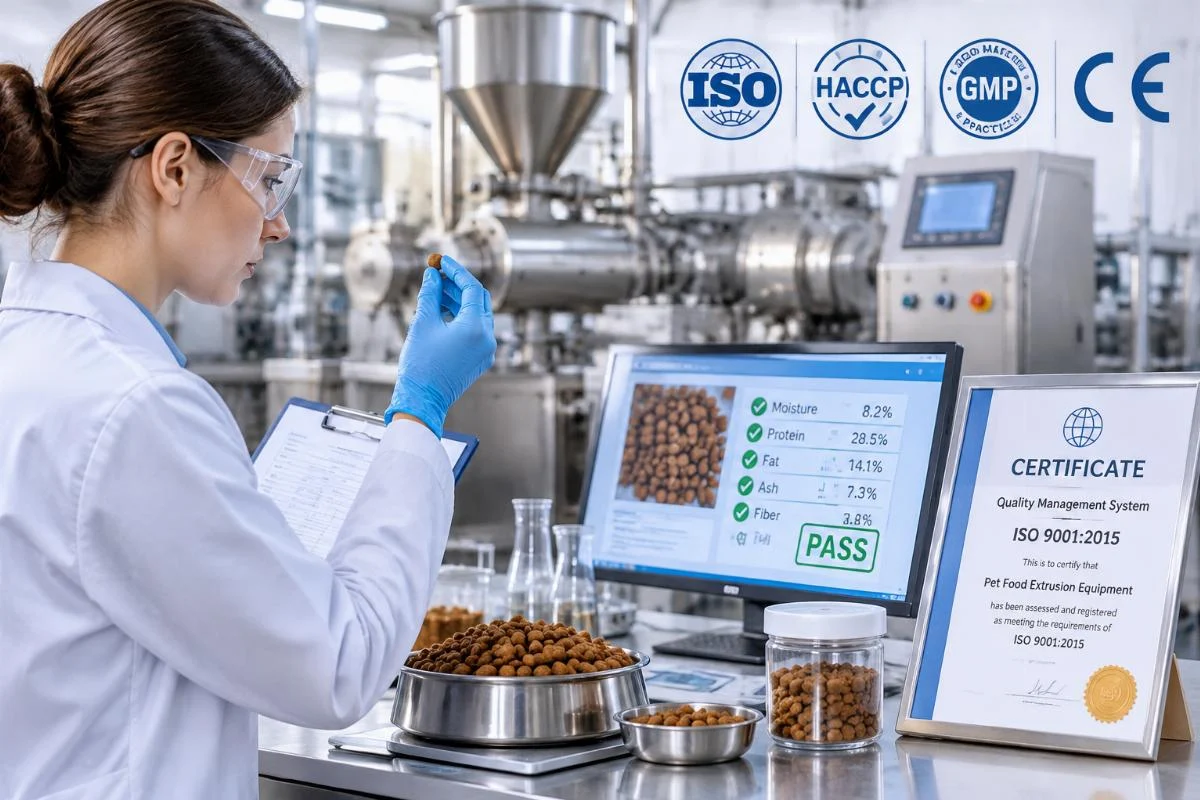
When selecting Almex extruder alternatives, prioritizing suppliers with verifiable certifications and robust technical support ensures your investment is protected and your product quality remains uncompromised.
Conclusion
Redirecting capital from equipment premiums to downstream processing is the smartest move for modern pet food producers.
Evaluating Almex extruder alternatives allows manufacturers to secure high-capacity, stable twin-screw extrusion lines while preserving vital funds for drying, coating, and formula development. By focusing on total cost of ownership and verifiable quality standards, producers can build resilient operations that prioritize product excellence over brand prestige.
Machines Mentioned in This Article

cat food machine
Pet Food Processing Equipment Plant Manufacturer Dog Food
View Machine
cat food machine
Dry Dog Food Production Line Pet Food Pellet Machine
View Machine
cat food machine
Pet Food Production Line Manufacturer
View Machine
cat food machine