A larger laboratory extruder does not equal a pilot line; the shear history and thermal dynamics differ entirely.
Scaling pet food recipes from a Brabender lab extruder to a pilot line requires matching the L/D ratio and specific mechanical energy (SME) to avoid thermal degradation, rather than simply trusting laboratory moisture data.
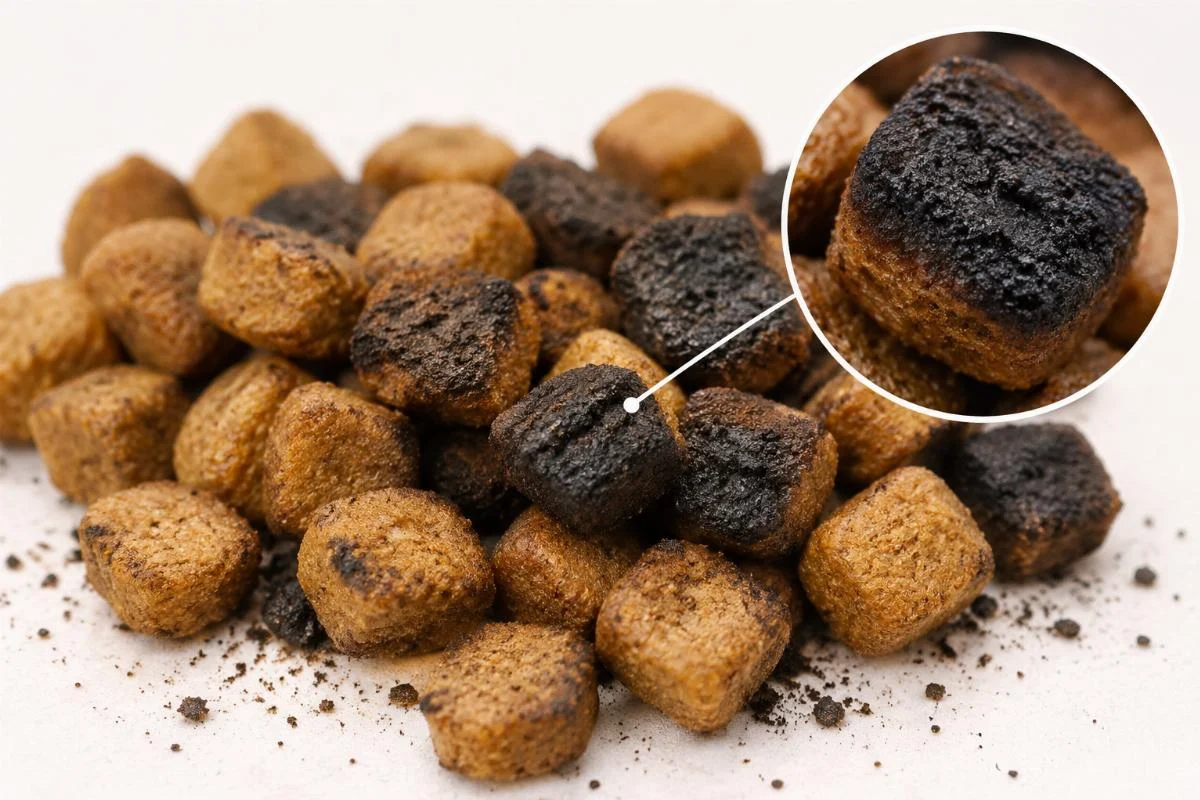
I spent years in the workshop in Suzhou adjusting screw configurations for a local machinery plant. I still remember a pet food startup owner who insisted on scaling up directly from an imported Brabender lab extruder to a mid-sized pilot run. He assumed that because the lab batch looked perfect, the pilot line would just be a matter of multiplying the throughput. The reality was brutal. The length-to-diameter (L/D) ratio and the shear force profile were completely mismatched. The high-meat dough stayed in the barrel too long under excessive friction, turning into blackened charcoal before it even reached the die. Hundreds of kilograms of premium raw materials were scrapped on the spot. That incident perfectly illustrates the core trap of lab extruder scale up challenges: laboratory equipment is strictly for formula screening, while a twin screw extruder pilot plant operates on an entirely different thermodynamic logic.
Transitioning from a successful pet food recipe trials pilot line concept to actual mass production requires understanding these mechanical gaps before committing to heavy capital expenditure.
Why Does My Brabender Lab Recipe Fail on the Pilot Line?
The primary reason for failure is the mismatch in L/D ratios and shear force profiles, which causes severe thermal degradation and moisture variance.
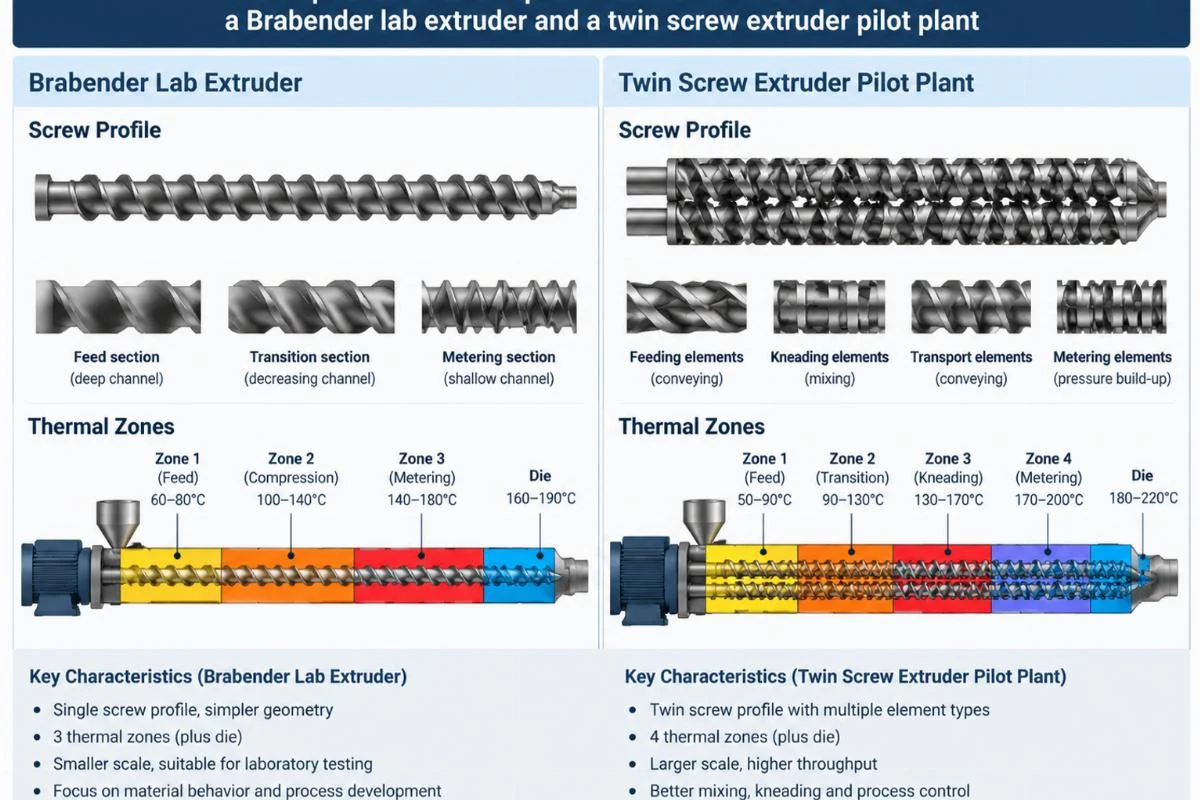
When you run a recipe on a Brabender lab extruder, the material experiences a very specific shear history. The L/D ratio is typically short, and the heating is often jacket-based, meaning the thermal transfer is relatively uniform but lacks the intense, localized friction of a continuous commercial screw. When you move to a continuous pilot line, the material undergoes a completely different residence time distribution (RTD).
Consider a case involving a high-meat pet food recipe. In the lab, the shear force was just enough to gelatinize the starches without burning the proteins. However, when scaled to a continuous twin screw extruder pilot plant, the longer L/D ratio meant the meat dough was subjected to prolonged mechanical work. The specific mechanical energy (SME) spiked dramatically. Because the lab equipment could not replicate the continuous shear profile of the pilot line, the proteins denatured excessively, resulting in a burnt flavor and a dark, unappealing kibble color.
Another common failure point is temperature control lag. A Brabender lab extruder often relies on jacket heating, which responds slowly but evenly. A commercial pilot line uses independent barrel zone heating with liquid cooling. This scale-dependent heat transfer lag means that the moisture data you trusted from the lab is virtually useless for the pilot run. The core of the dough might remain under-processed while the outer layers overcook, leading to massive moisture variance and inconsistent expansion at the die.
Lab Extruder vs. Pilot Line: What Are the Key Specification Gaps?
The key specification gaps lie in throughput capacity, screw configuration flexibility, and thermal control logic, which dictate the final product texture and stability.
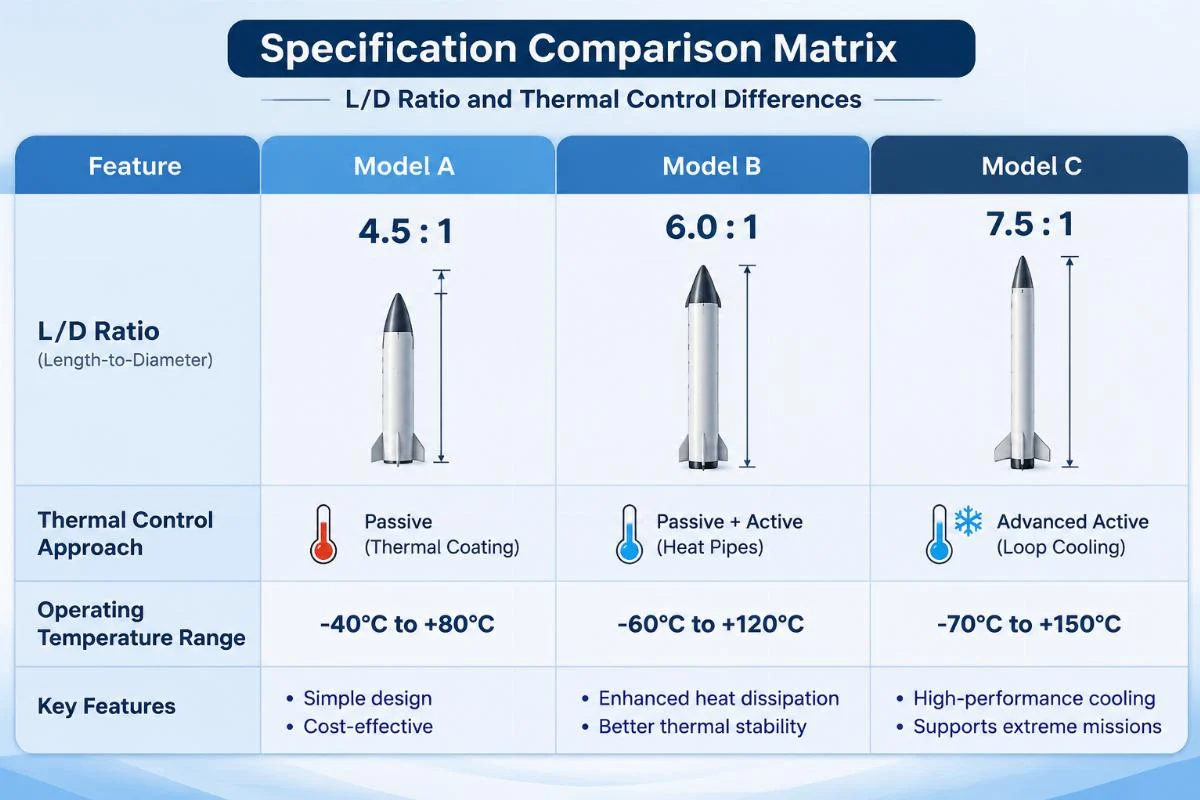
To successfully navigate lab extruder scale up challenges, you must look beyond the ingredient ratios and focus on the mechanical specifications. A specification comparison matrix reveals why direct scaling fails.
| Specification Factor | Brabender Lab Extruder | Twin Screw Extruder Pilot Plant |
|---|---|---|
| L/D Ratio | Short, fixed geometry | Extended, modular configuration |
| Shear Profile | Uniform, low-intensity mixing | High-intensity, localized friction zones |
| Thermal Control | Jacket heating, slow response | Independent barrel zone heating/cooling |
| Residence Time | Broad, uncontrolled distribution | Precise, segmented RTD control |
| Scale-Up Logic | Formula feasibility screening | SME and shear history matching |
In a recent pet food recipe trials pilot line project, a client attempted to process a novel plant-based protein blend. The lab data showed perfect expansion. However, the pilot line required a completely different screw element reconfiguration. The lab shear force was too low to break down the fibrous structures, meaning the pilot line had to incorporate specific kneading blocks to generate the necessary SME. Without matching the shear profile, the final product lacked the required chewiness and dissolved instantly in water.
How to Validate Scale-Up Before Mass Production?
You must validate the scale-up by matching the Specific Mechanical Energy (SME) and Residence Time Distribution (RTD), not just the ingredient ratios.
Relying solely on lab moisture data or visual appearance is a recipe for disaster. The true validation of a pet food recipe trials pilot line requires mapping the thermodynamic journey of the dough.
First, measure the SME in the lab. While a Brabender provides torque and temperature data, you must calculate the energy input per unit mass. When moving to the pilot line, adjust the screw speed and feed rate until the SME matches the lab baseline.
Second, analyze the RTD. The time the material spends in the barrel dictates the degree of cooking and starch gelatinization. A continuous twin screw extruder pilot plant allows you to alter the screw configuration to mimic the RTD of the lab batch. If the lab batch took a certain thermal path, the pilot line must be configured to replicate that exact thermal and mechanical history.
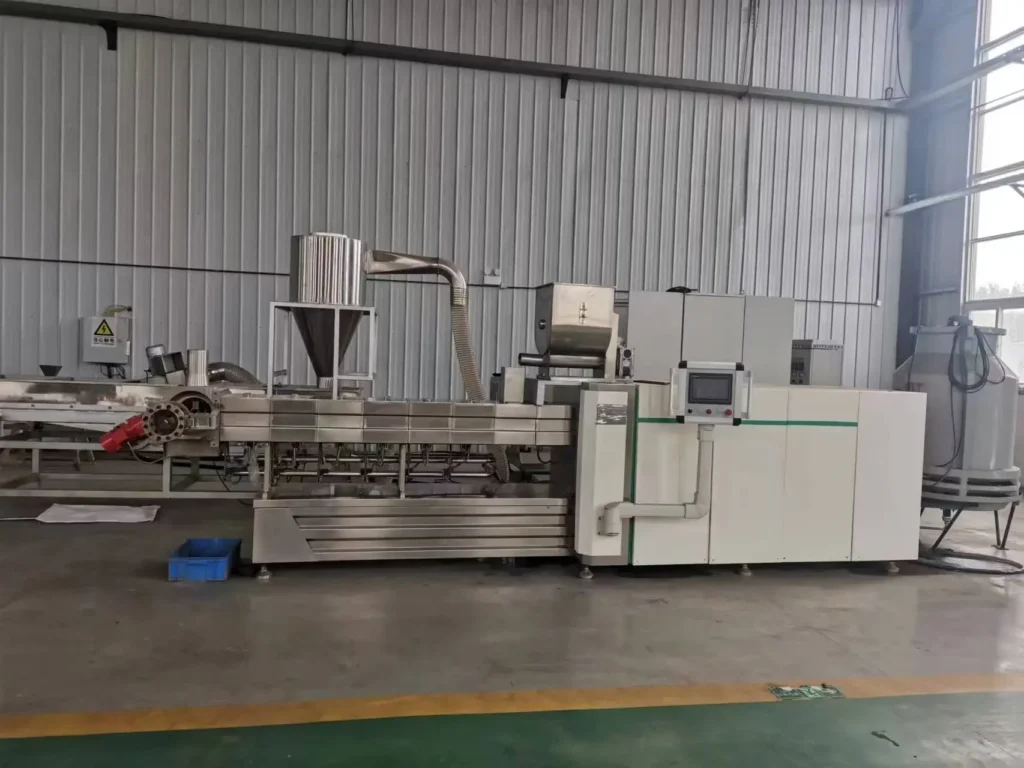
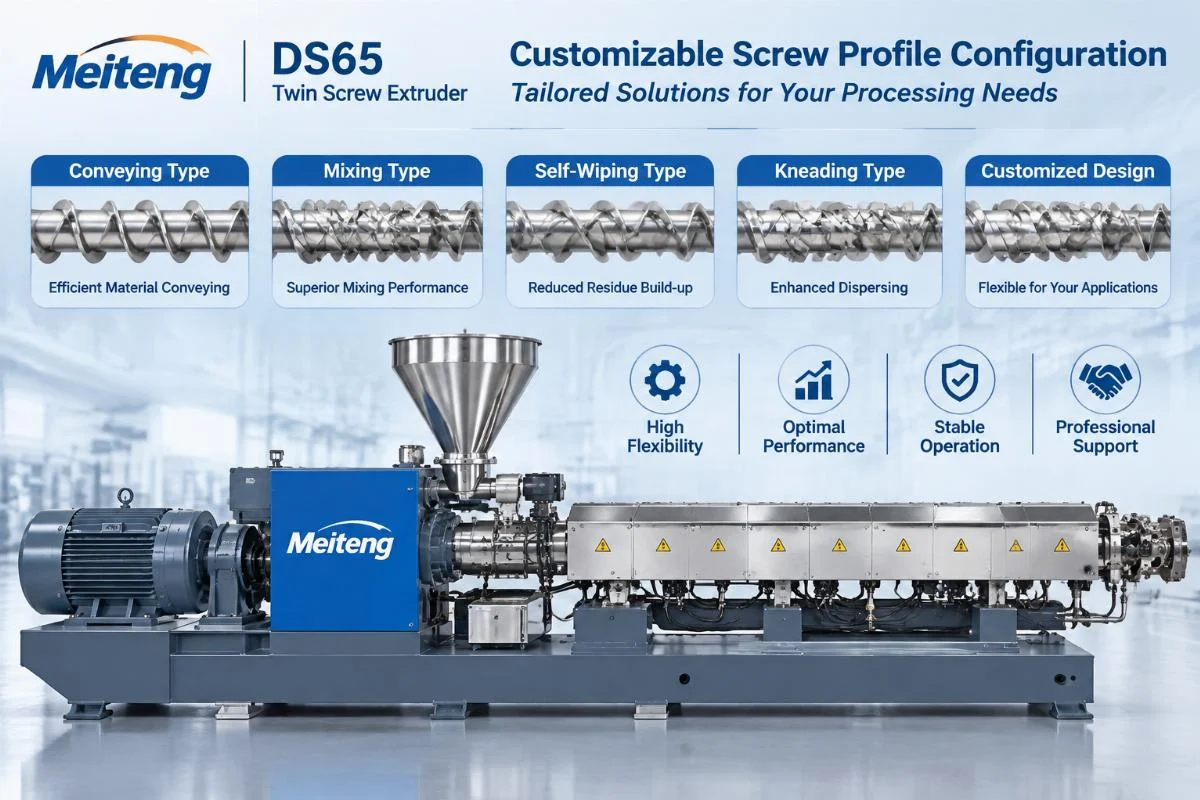
This is where partnering with an experienced manufacturer becomes critical. Meiteng’s pilot-to-production twin-screw lines, such as the DS65 and DS70 series, are engineered specifically to bridge this scale-up gap. Unlike standard off-the-shelf machines, these lines offer deep screw profile customization. When a client brings a recipe developed on a lab extruder, the engineering team can reconfigure the barrel zones and screw elements on the DS65 to match the exact shear history and thermal dynamics required. This turnkey design approach ensures that the transition from a lab batch to a continuous pilot run is seamless, preserving the nutritional integrity and texture of the pet food.
When Should You Skip the Pilot Line and Go Straight to Production?
For simple, well-understood recipes, skipping the dedicated pilot line and utilizing a turnkey pilot-to-production setup saves significant time and capital.
Not every project requires a prolonged, multi-stage scaling process. If you are producing a standard dry pet food recipe with established ingredient ratios and no novel, highly sensitive proteins, the lab extruder scale up challenges are minimal. In these cases, running a massive batch on a dedicated pilot line is an inefficient use of resources.
Instead, the smart move is to utilize a production-ready twin screw extruder pilot plant that can seamlessly transition into mass production. Meiteng’s DS70 series is designed for this exact scenario. It offers the flexibility to run initial validation batches at lower capacities, which can then be immediately scaled up by simply increasing the throughput and adjusting the thermal zones, without needing to change the core screw geometry.
This turnkey pilot-to-production approach eliminates the “translation loss” that occurs when moving between different machine classes. The formula development support provided during the initial runs on the DS70 directly informs the mass production parameters. For startup food businesses and contract manufacturers, this means you can validate the recipe, train the operators, and begin commercial production on the exact same mechanical platform, ensuring absolute consistency from the first bag to the ten-thousandth.

Conclusion
Scaling pet food extrusion requires matching mechanical energy, not just multiplying ingredients.
The leap from a Brabender lab extruder to a commercial twin screw extruder pilot plant is fraught with thermal and shear mismatches that can destroy product quality. By focusing on SME, RTD, and utilizing customizable equipment like the Meiteng DS65/DS70 lines, manufacturers can bypass the traditional scale-up traps and achieve consistent, high-quality pet food production from the very first run.
Machines Mentioned in This Article

cat food machine
Pet Food Processing Equipment Plant Manufacturer Dog Food
View Machine
cat food machine
Dry Dog Food Production Line Pet Food Pellet Machine
View Machine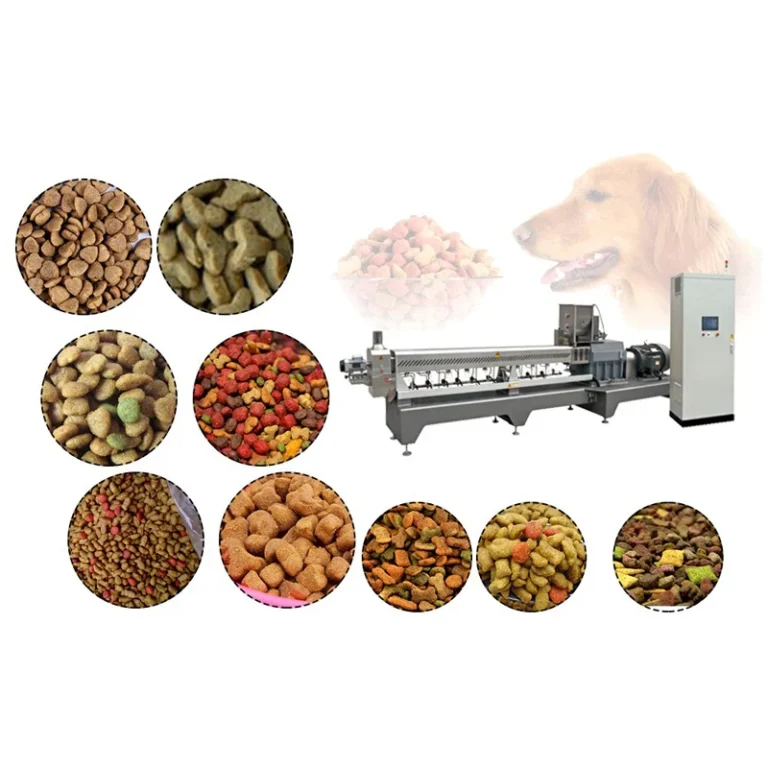
cat food machine
Dog Food Pellet Making Machine Line, Automatic Pet
View Machine
cat food machine