Buying a premium used extruder without matched downstream systems is the fastest way to bankrupt a startup.
For startups operating on a tighter budget, the smart choice is a fully integrated, formula-supported turnkey line rather than just a branded barrel. When evaluating Bühler vs Meiteng pet food extruder options, prioritizing complete line integration over premium single-machine branding delivers comparable extrusion quality while ensuring final product stability.
Running the pet food machinery market in Riyadh for years, I have watched too many startup owners crash their businesses on equipment choices. A few years ago, a Saudi client with a strictly capped budget insisted on importing a second-hand European extruder, refusing to invest in a complete drying and coating setup. The result was disastrous. The kibble lacked proper expansion, the fat coating was severely uneven, and an entire warehouse of inventory nearly spoiled from mold. We eventually had to bring in engineers from a domestic source factory to fly out and rebuild the line on-site. The old guard in my team taught me a strict rule early on: buy the whole line on a small budget, and stop worshipping single machines from Western brands. While the Swiss giant is undeniably excellent, a high-value turnkey solution is the actual lifeline for small factories trying to survive.
Let us break down why this shift in perspective matters and how the numbers actually play out on the factory floor.
What Does a Smaller Budget Actually Buy in Pet Food Extrusion?
A smaller budget buys operational stability through full-line integration, not just a prestigious machine nameplate.
Most newcomers assume the extruder barrel dictates the final kibble quality. In reality, the drying and coating systems determine the ultimate product stability and shelf life. When you analyze the market, the debate often centers on whether to stretch the budget for a European brand or opt for a comprehensive domestic setup.
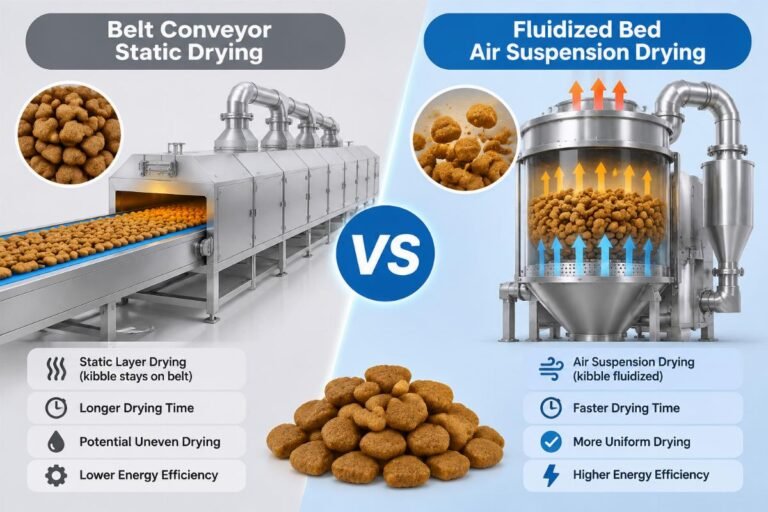
During a recent project in the MENA region, a regional factory faced severe mold issues stemming from poor oil coating. They had prioritized equipment prestige over practical integration. By switching to a complete setup that included on-site commissioning and operator training, they resolved the coating uniformity issues entirely. The specific mechanical energy input during extrusion is only half the battle; managing the moisture evaporation rates in multi-pass dryers is where the real profit margin is protected.

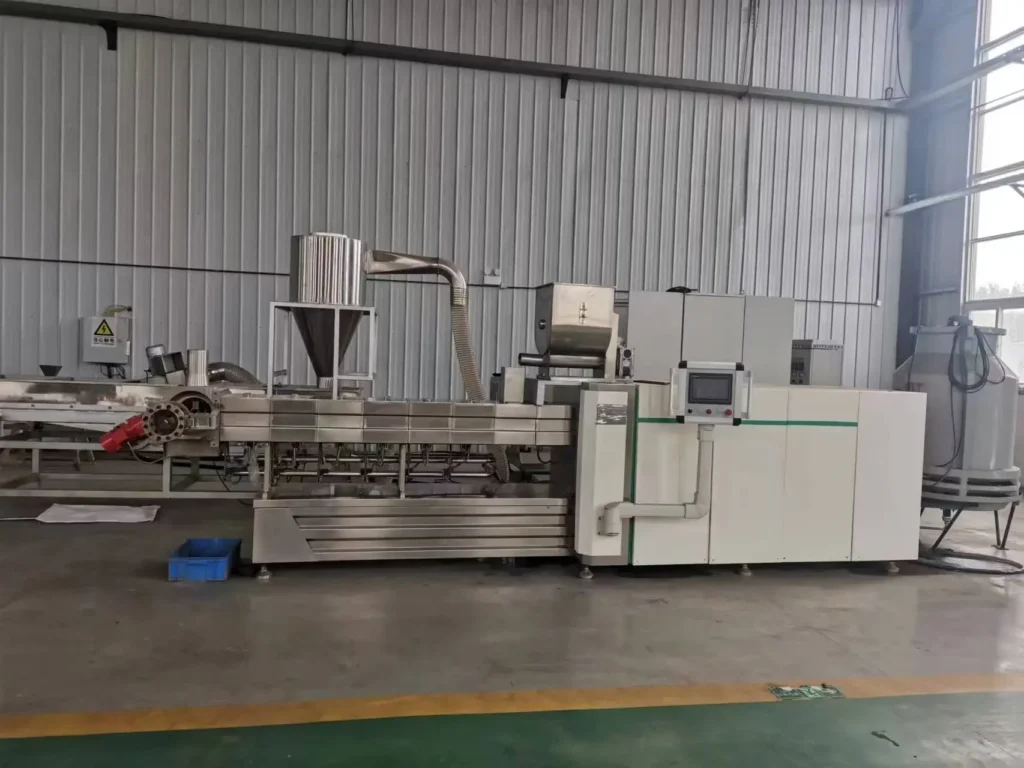
When comparing a Bühler vs Meiteng pet food extruder strategy, the smaller budget actually secures a turnkey ecosystem. This means you get the raw material intake, the extrusion core, the multi-pass drying, and the flavor-coating systems working in harmony, rather than a mismatched collection of standalone units.
Bühler vs. Meiteng: Core Extruder Specs and Line Integration
How do the core specifications and integration capabilities compare when evaluating a Bühler vs Meiteng pet food extruder setup?
The Swiss manufacturer is renowned for its heavy-duty, premium single-machine engineering. However, for a startup scaling from zero to a moderate capacity, matching the twin-screw core parameters while securing superior downstream integration is the real victory. The Chinese alternative matches the essential twin-screw shear temperature control and specific mechanical energy input required for proper starch gelatinization, but it shines in how seamlessly the extruder talks to the dryer.
Let us look at the specification matrix for a typical startup line.
| Integration Factor | Premium Standalone Approach | Turnkey Alternative Approach |
|---|---|---|
| Extruder Core Quality | Premium branded barrel | Matched twin-screw core parameters |
| Downstream Integration | Manual matching required | Factory-calibrated line ratios |
| Material Construction | Standard food-grade | Food-grade 304/316 stainless |
| Certification Status | Varies by region | CE and ISO 9001 certified |
| Formula Support | Basic manual provision | Dedicated R&D and R&D support |
A contract manufacturer upgrading their capacity recently needed strict food-grade 304/316 steel compliance. They spent months comparing CE and ISO certification costs and lead times between importing a standalone premium unit and sourcing a complete certified line. The turnkey approach eliminated the compliance guesswork.
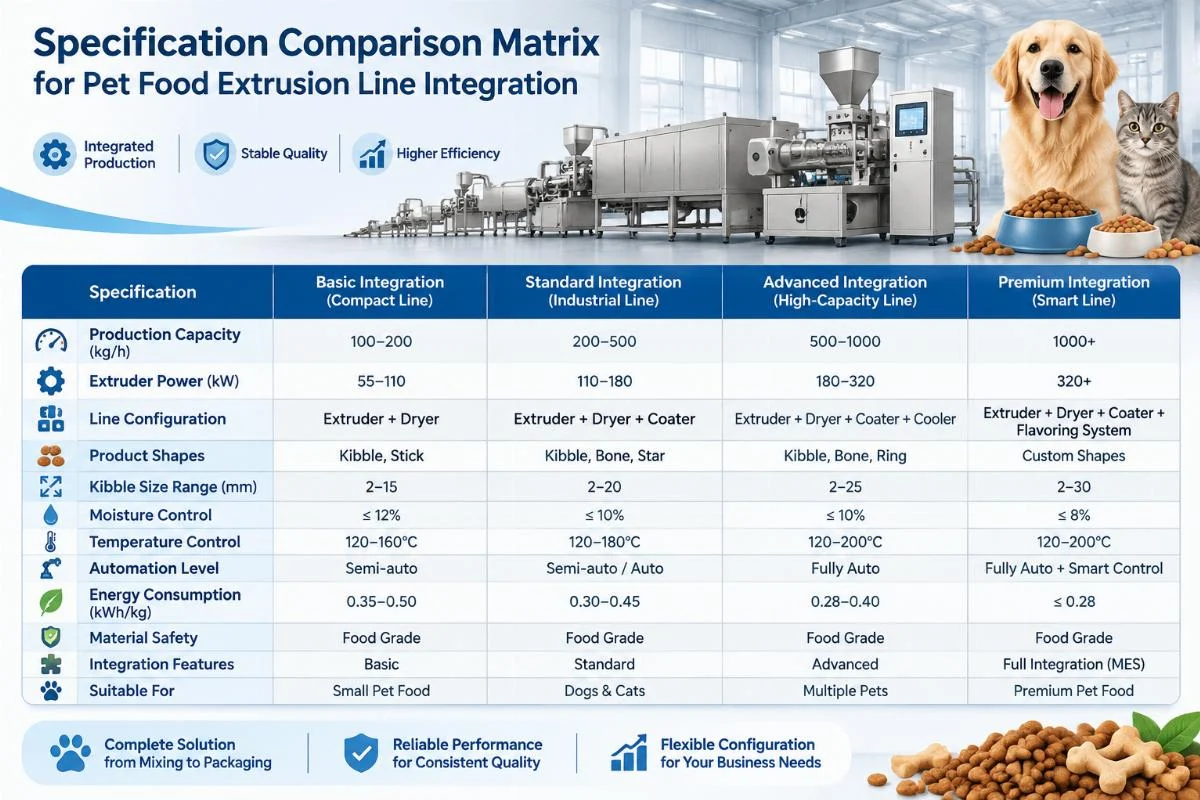
The conclusion is clear: the alternative matches the core extrusion physics while offering superior downstream drying and coating integration for the price point.
The Hidden Costs of “Premium” Single Machines
Why does buying a premium used machine often lead to hidden startup failures?
The prevailing myth is that buying a premium used machine saves money. The reality is that missing turnkey integration causes hidden failures that cost several times the initial savings. When a startup buys a standalone premium extruder without matched dryers, they inevitably face moisture and coating failures.
I recall a case where a startup scaling their operations chose a full turnkey line over a single used premium extruder. They focused heavily on the drying and coating integration ratios. The used premium machine they initially considered lacked the automated feedback loops required to adjust the multi-pass dryer based on the extruder’s real-time output. This mismatch led to inconsistent moisture evaporation rates, forcing them to reprocess batches and waste massive amounts of energy.

When evaluating a Bühler vs Meiteng pet food extruder investment, you must account for the invisible costs. A standalone premium barrel might look like a bargain on the invoice, but the subsequent engineering required to make it work with a generic dryer will drain your capital. The turnkey approach ensures that the fat coating uniformity percentages remain stable because the entire line is calibrated as a single organism.
Turnkey Support: Formula Development and On-Site Training
How does turnkey support bridge the technical gap for new market entrants?
Equipment is only as good as the recipe running through it and the operator pressing the buttons. Most startups lack the in-house food science team to perfect a new kibble formula from scratch. This is where the support structure becomes the deciding factor.
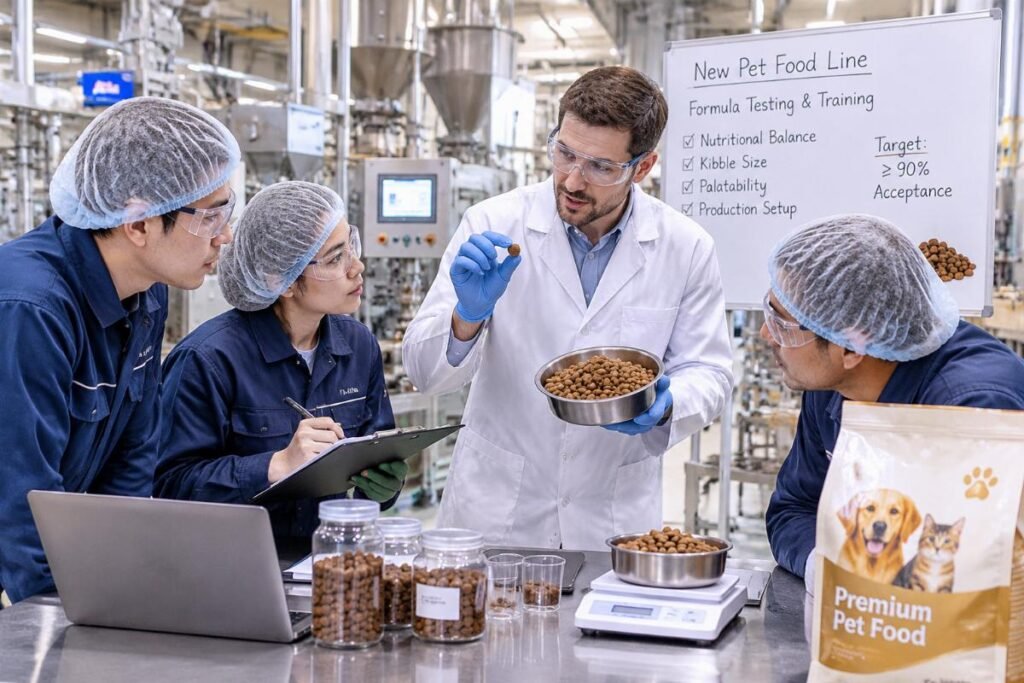
The turnkey provider offers comprehensive formula development and R&D support for new product startups. Instead of just handing over a machine, they provide the exact parameters for textured vegetable protein blends, high-meat inclusions, or specific grain-free recipes. Furthermore, on-site installation, commissioning, and operator training ensure that the local team understands the twin-screw shear temperature control nuances.
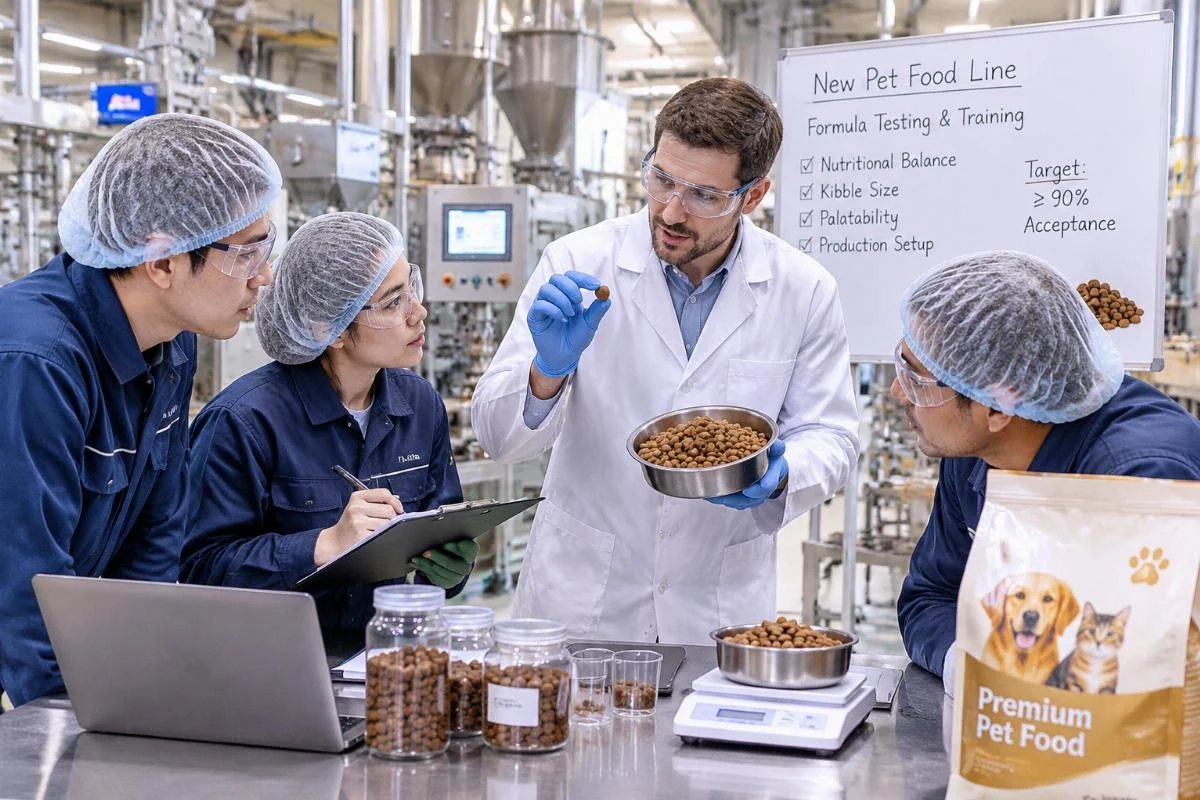
In the final analysis of the Bühler vs Meiteng pet food extruder debate, the smaller budget buyer is not just purchasing metal; they are purchasing a bridge over the technical divide. The turnkey model delivers the formula support and hands-on training that allows a startup to scale confidently, ensuring that the final product is as stable and profitable as the machinery itself.
Conclusion
A smaller budget demands complete line integration, not just a prestigious extruder barrel.
Startups must prioritize turnkey solutions that combine matched twin-screw extrusion with calibrated drying and coating systems to guarantee product stability and avoid the hidden costs of mismatched standalone equipment.