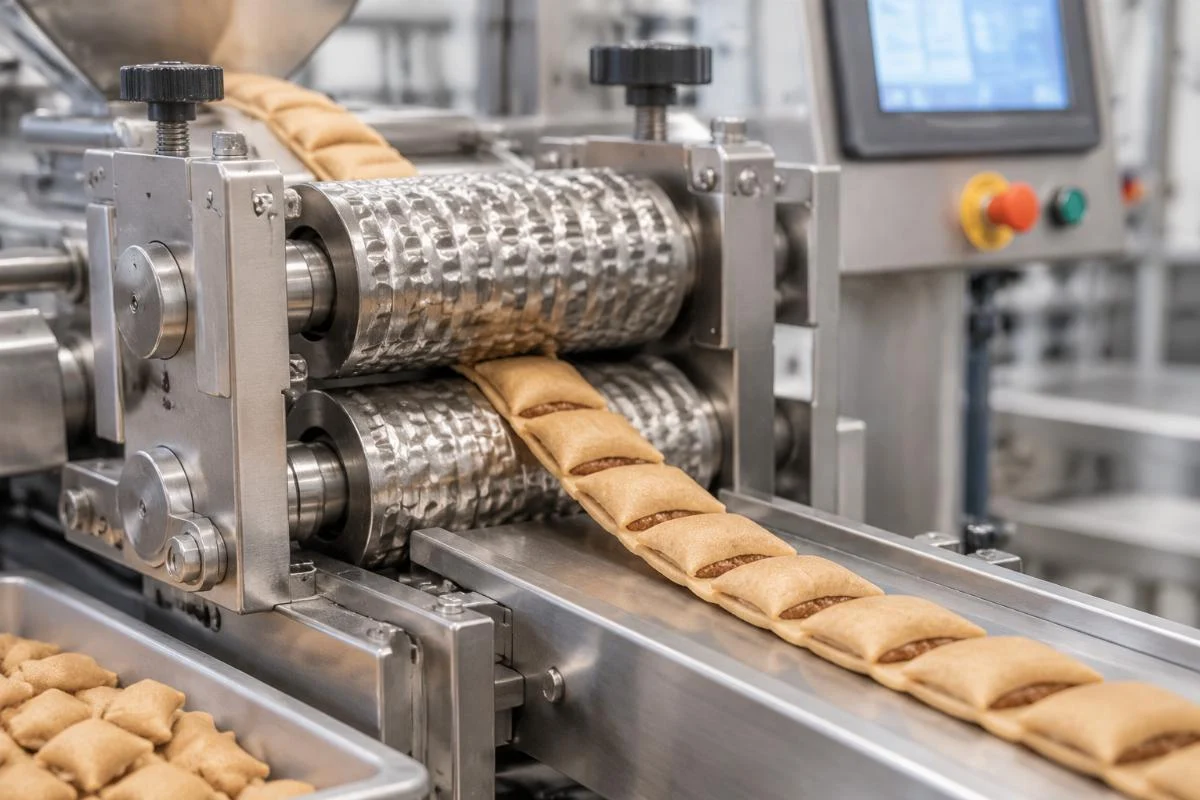
Pushing the crimper rollers closer together does not guarantee a better seal; it often crushes the core and causes the filling to blow out.
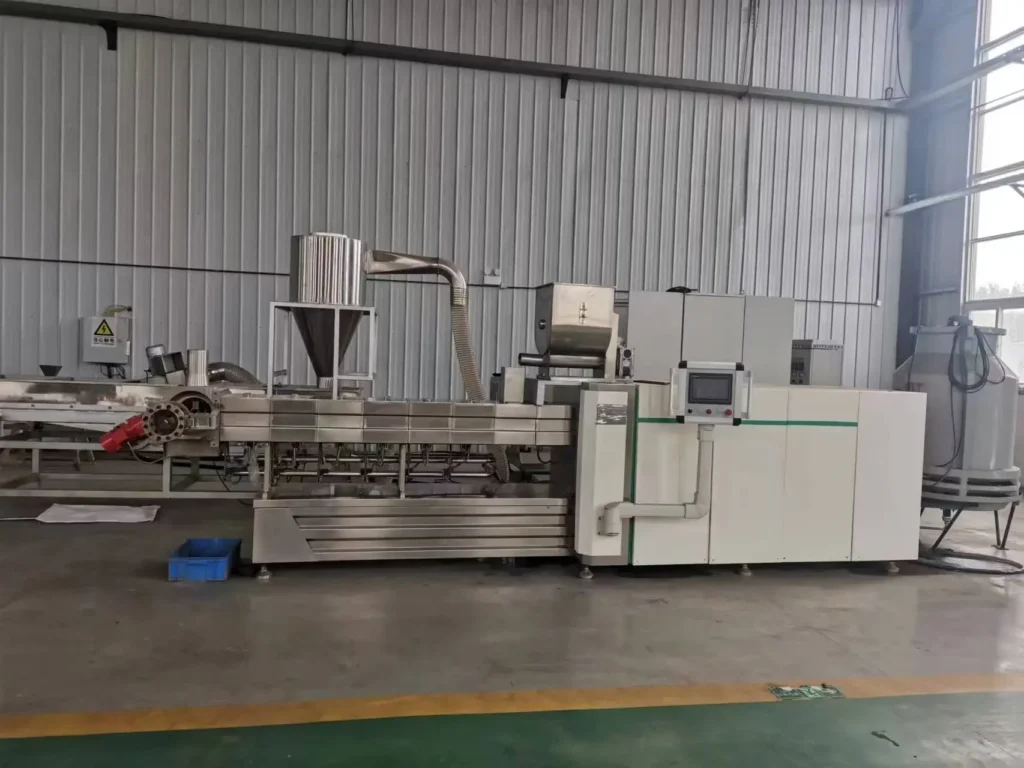
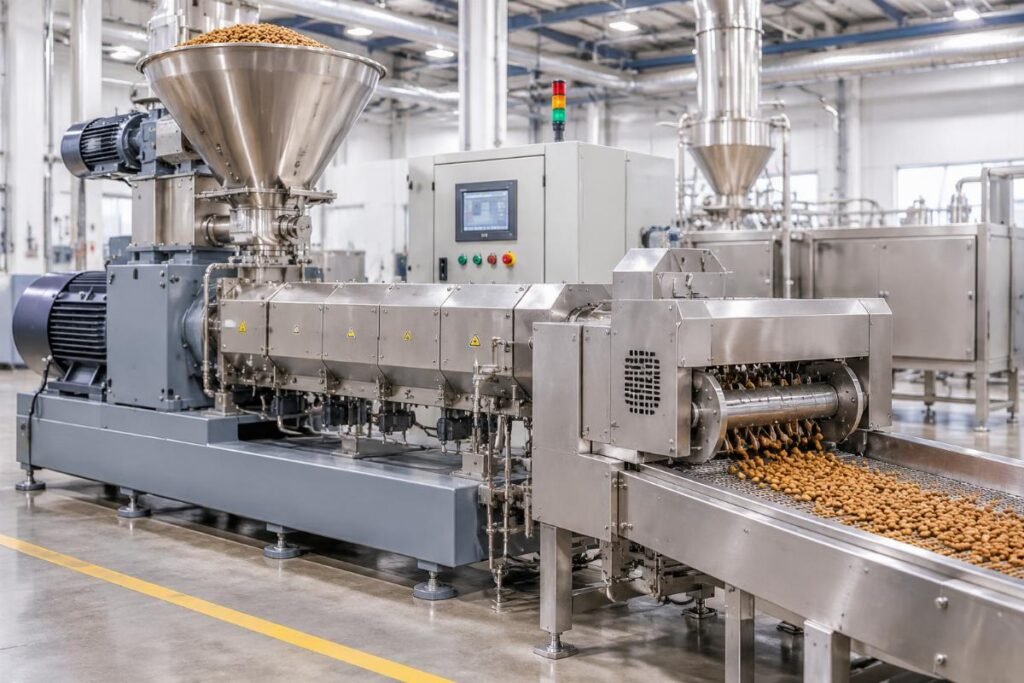
A core-filled cat treat production line relies on the precise synchronization of the twin-screw extruder, crimper, and cutter to ensure perfect filling and shaping.
Setting up a core-filled cat treat production line requires more than just reading equipment manuals; it demands a deep understanding of how ambient conditions and mechanical tolerances interact on the factory floor. I started my career as an apprentice in a workshop in Jinan, eventually traveling overseas to commission equipment. During a project in Riyadh, I was tasked with调试 a core-filled cat treat production line for a local pet food facility. I failed to fully account for the extreme summer heat, which caused the cutter blade cooling system to fall behind. The resulting thermal expansion led to severe sticking at the cutting interface, forcing the entire core-filled cat treat production line to halt for days. Since that incident, I always prioritize understanding the actual site conditions before finalizing the setup for any pressurized or cutting modules. Equipment selection must never rely solely on blueprint parameters; it must be validated against real-world environmental performance.
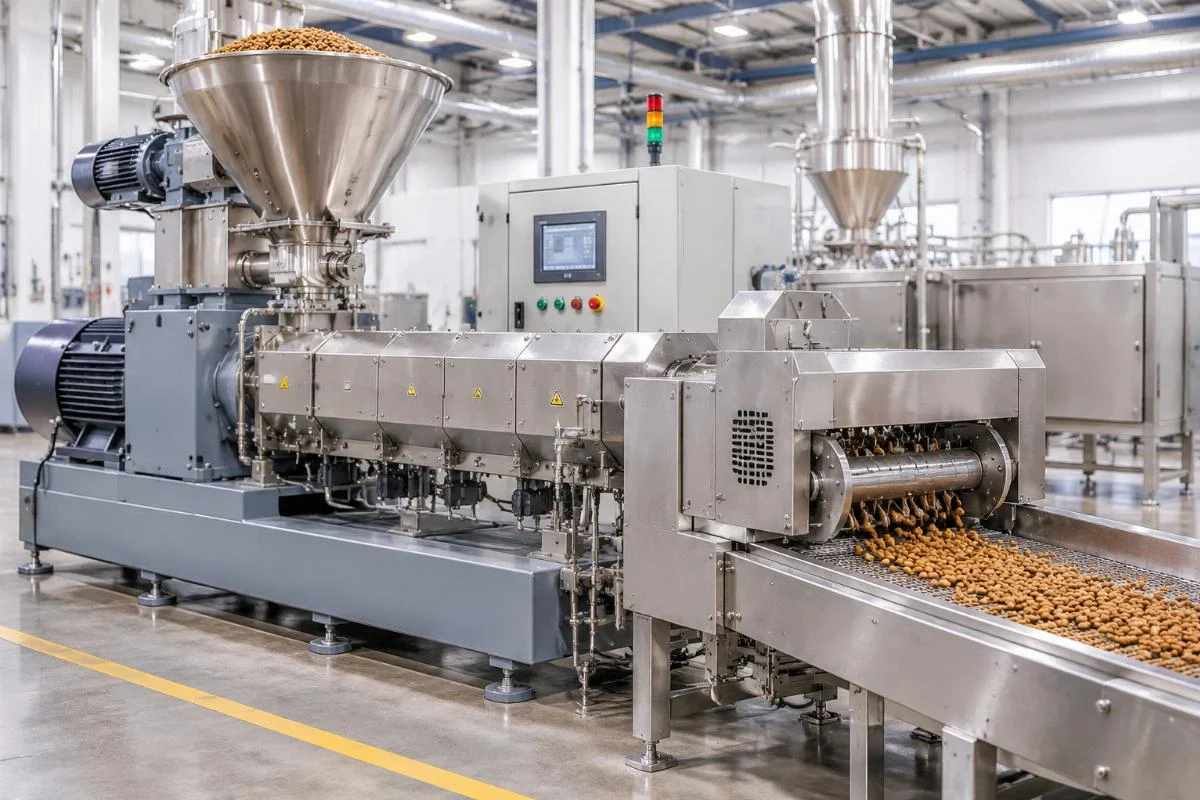
Moving from raw material handling to the final shaped product requires a systematic approach to module synchronization.
How Does the Twin-Screw Extruder Encapsulate the Core?
The screw configuration inside the barrel dictates the uniformity of the filling and the final texture of the treat.
Encapsulation in a core-filled pet treat extruder is not merely about pushing dough and filling through a die; it is about managing shear heat and pressure differentials to form a stable outer shell around the liquid or semi-solid core. The twin-screw extruder for cat treats utilizes specific screw element arrangements to build the necessary pressure for encapsulation without overheating the sensitive filling ingredients.
- Feed Zone Preparation: The outer dough ingredients are hydrated and mixed in the initial barrel sections, establishing a uniform viscosity baseline.
- Pressure Building: Reverse screw elements are introduced to create a melt seal, increasing the pressure required to push the dough through the co-extrusion die.
- Core Injection: The filling pump injects the core material directly into the high-pressure dough stream at the die head, where the outer shell completely envelops the center.
- Temperature Profiling: Barrel heating and cooling zones are adjusted to maintain the dough’s structural integrity while keeping the core at its optimal flow state.
During an early commissioning job, a mismatch between the main extruder speed and the filling pump speed caused severe filling ratio deviations. The outer shell became too thin in certain sections, leading to a massive rejection rate because the treats lacked structural integrity. Adjusting the pump calibration to match the extruder’s throughput stabilized the ratio and eliminated the waste.

Why is the Crimper Crucial for Core-Filled Treats?
Proper roller gap settings ensure a secure seal without crushing the delicate filling inside the treat.
The crimper module is responsible for creating the characteristic crimped edges that seal the core-filled treats, preventing leakage during the subsequent drying and cooling phases. The mechanical pressure applied by the crimper rollers must be meticulously calibrated; excessive force will rupture the outer shell, while insufficient force will leave the edges open.
- Gap Calibration: The distance between the crimper rollers is set based on the thickness of the extruded treat strand, ensuring consistent edge compression.
- Pattern Alignment: The roller patterns are synchronized with the extruder pull speed to create uniform crimps at precise intervals.
- Pressure Monitoring: Sensors track the resistance of the dough strand, allowing for micro-adjustments to maintain seal integrity without over-compressing.
I once observed a facility where operators believed that increasing the crimper pressure would yield a stronger seal. Instead, the excessive force crushed the core, causing the filling to blow out through the sides of the treats. This not only ruined the product’s appearance but also created a severe hygiene issue on the conveyor belts, requiring extensive downtime for cleaning.
How to Prevent Cutter Sticking in Extreme Environments?
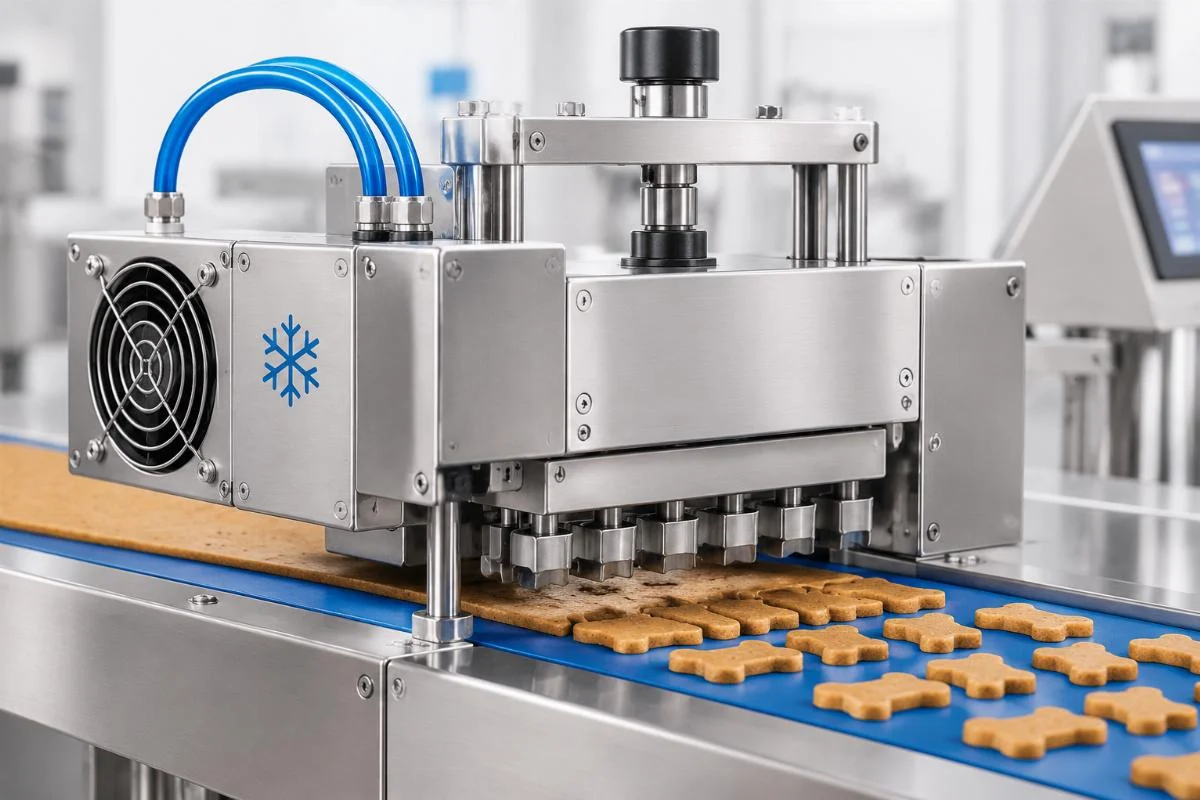
Adequate blade cooling and synchronized cutting speeds prevent material adhesion and extended downtime.
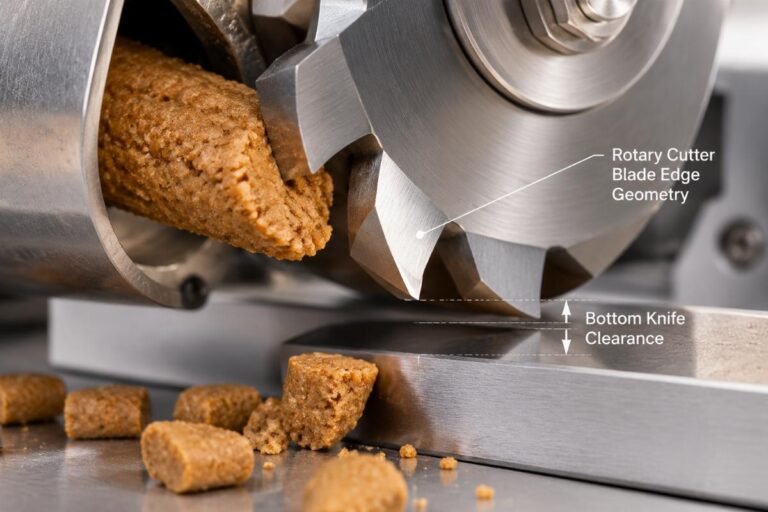
The cutting phase is where the continuous extruded strand is portioned into individual treats. In a core-filled cat treat production line, the cutter must slice through both the outer dough and the inner filling simultaneously. If the blade temperature rises due to friction or high ambient heat, the filling material can melt and adhere to the blade, causing sticking and irregular cut lengths.
- Cooling System Activation: Liquid or air cooling circuits are engaged to maintain the blade temperature well below the melting point of the filling ingredients.
- Speed Synchronization: The cutter RPM is matched to the extruder throughput to ensure clean cuts without dragging the blade through the soft core.
- Blade Material Selection: Food-grade, non-stick coated blades are utilized to minimize friction and reduce the likelihood of material buildup.
- Environmental Shielding: Enclosures or localized climate control are applied to the cutting zone to mitigate the impact of high factory ambient temperatures.
Returning to the Riyadh project, the high ambient temperature overwhelmed the standard air cooling of the cutter blades. The friction generated enough heat to melt the filling, causing it to stick to the blades and drag the core out of the treats. We had to redesign the cooling circuit to include a chilled liquid system and adjust the cutting speed to reduce friction time. Meiteng’s turnkey line design and on-site commissioning protocols specifically address these environmental variables, ensuring that all modules, especially the cutter, operate flawlessly in the client’s specific climate.
How to Synchronize the Entire Core-Filled Line?
Matching extruder throughput with filling pump and cutter speeds minimizes waste and ensures product consistency.
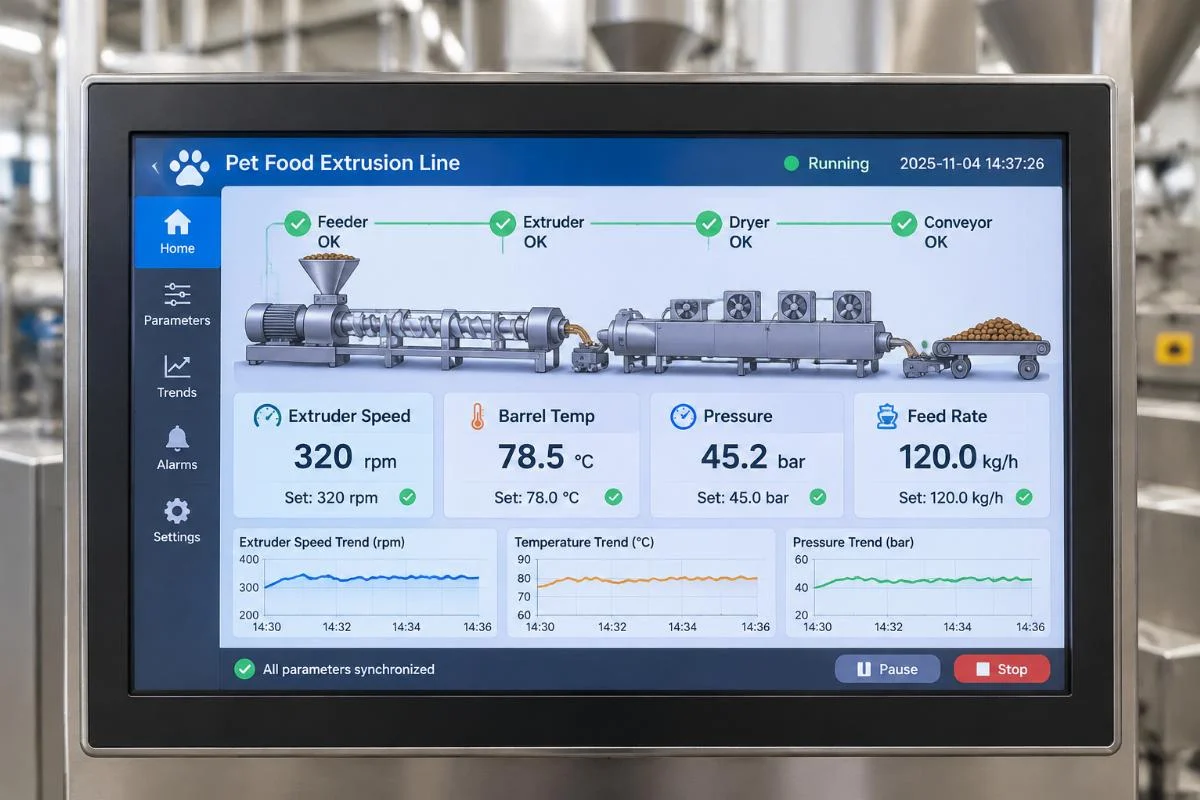
The final challenge in operating a core-filled cat treat production line is achieving perfect harmony across all modules. A slight delay in the cutter or a surge in the filling pump can disrupt the entire process, leading to off-spec products and material waste.
- Centralized PLC Control: A unified programmable logic controller monitors and adjusts the speeds of the extruder, filling pump, crimper, and cutter in real-time.
- Throughput Mapping: The maximum capacity of the extruder is mapped against the optimal cutting speed to establish the baseline production rate.
- Feedback Loops: Sensors at the die head and cutting zone provide continuous feedback to the PLC, allowing for instantaneous corrections to maintain the filling ratio and cut length.
- Startup Sequencing: The line is started in a specific sequence, beginning with the extruder, followed by the filling pump, and finally the cutter, to prevent material buildup and ensure a smooth transition to full speed.
A common misconception is that cutter speed only affects the length of the treat. In reality, if the cutter is unsynchronized with the extruder pull, it can dictate core leakage by tearing the outer shell rather than slicing it cleanly. Proper synchronization ensures that the blade meets the strand at the exact right moment, creating a clean seal at the cut edge.
Conclusion
Successful treat manufacturing hinges on mechanical precision and environmental adaptation. A core-filled cat treat production line requires the seamless integration of extrusion encapsulation, crimping seals, and thermal-managed cutting. By prioritizing real-world site conditions and precise module synchronization, producers can achieve consistent quality and minimize operational disruptions.