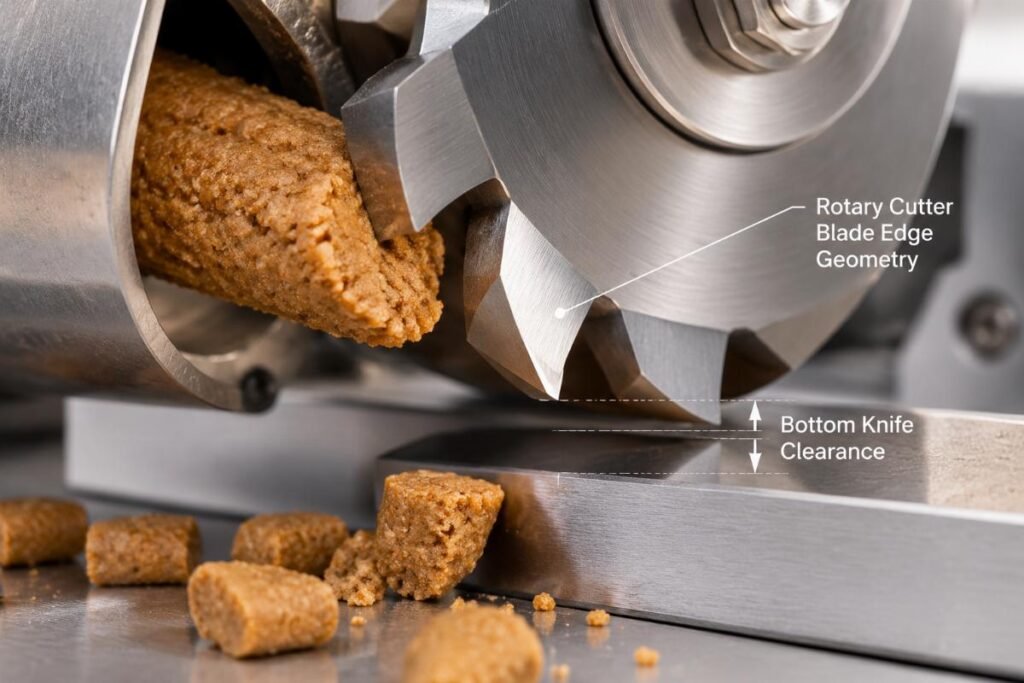
Sharper edges do not guarantee cleaner cuts; optimal edge geometry prevents fat smearing.
Selecting the right rotary cutter for extruded kibble and optimizing the setup based on formula fat and moisture is critical to prevent kibble tailing and downtime. The core solution lies in matching blade coatings to fat content and micro-adjusting the bottom knife clearance per formula moisture, rather than relying on fixed gaps or maximum sharpness.
Early in my career running the front lines for extrusion machinery out of Jinan, we shipped a batch of rotary cutters to a Middle East client. They were running a high-fat recipe with massive meat lipid content. We supplied standard blades, and within a couple of hours, the edges were sticking and chipping, producing kibble with long tails that forced the entire line to stop. Since then, I have obsessively tracked blade metallurgy and clearance tolerances. High-fat formulas demand specific coatings, and rotational speed alongside bottom knife clearance must be fine-tuned according to moisture levels. Choosing a cutting setup is never just about reading a catalog; it requires matching the metallurgy to the recipe and the actual floor conditions. Most operators assume a fixed gap works universally, but the truth is that clearance must be micro-adjusted per formula moisture to avoid smearing or crushing the extrudate.

Getting the kibble cutting setup right means moving past generic assumptions and treating the cutter as a dynamic component that reacts to your specific dough rheology. Let us break down how to configure your system for different formulations.
What Blade Options Exist for High-Fat Kibble?
Standard alloy blades fail on high-fat recipes because they lack the surface tension required to repel lipids, leading to rapid buildup and edge degradation.
When dealing with formulas pushing past the typical fat thresholds, the metallurgy and surface treatment of the pet food extruder rotary cutter become the primary variables. The blade must slice through a sticky, lipid-heavy matrix without allowing the fat to weld onto the edge geometry.
| Blade Configuration | Surface Treatment | Lipid Resistance | Edge Retention | Recommended Formula Profile |
|---|---|---|---|---|
| Standard Alloy | None | Vulnerable | Basic | Low-fat, standard dry meal |
| Coated Alloy | Advanced PVD/Nitride | Robust | Noticeably extended | High-fat, heavy meat inclusion |
| Ceramic Insert | Composite Bonding | Resistant | Substantially extended | Ultra-high fat, abrasive minerals |
A European contract manufacturer once struggled with a premium puppy diet that contained massive amounts of rendered poultry fat. They were using standard alloy blades and faced constant tailing issues. By switching to a coated alloy configuration specifically engineered for lipid repulsion, the buildup was drastically reduced. The extruder blade options available today allow for precise matching to the recipe’s chemical profile.
At Meiteng, we do not just supply the base machinery; we customize the rotary cutter configurations to match the specific fat and moisture profiles of your recipe. Whether you are launching a startup pet food line or scaling an existing contract manufacturing operation, having the correct extruder blade options integrated into your turnkey line design prevents early-stage bottlenecks.

How to Set Up the Rotary Cutter Gap?
A static gap setting will inevitably lead to either crushed kibble or severe tailing as the dough viscosity changes during the run.
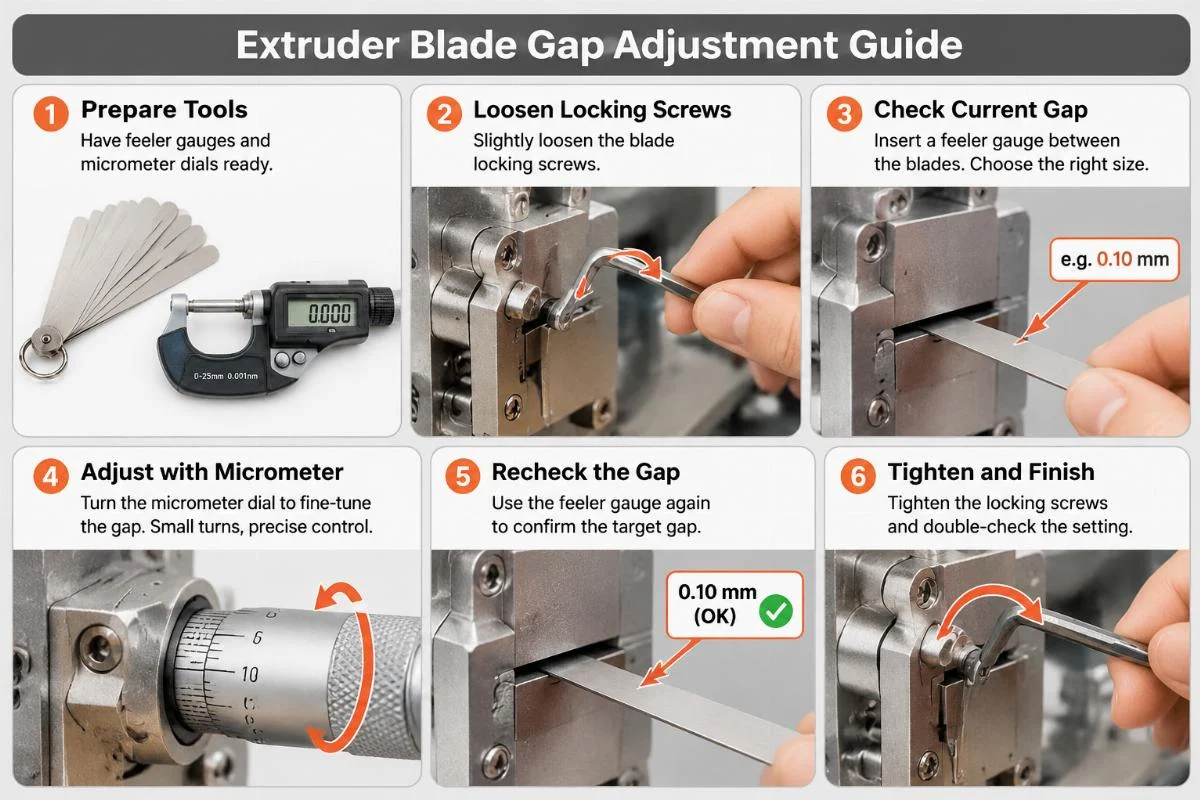
The extruder blade gap adjustment is not a set-and-forget parameter. It is a dynamic calibration that dictates the shear force applied to the extrudate at the exact moment of separation. The principle relies on balancing the cutting velocity against the extrusion feed rate to ensure a clean shear rather than a tear.
Follow this sequence to establish a baseline for your kibble cutting setup:
- Initial Clearance Measurement: Use precision feeler gauges to establish the baseline distance between the rotating blade tip and the stationary bottom knife. The target is a micron-level clearance that allows the blade to pass without metal-on-metal contact.
- Dry Run Verification: Run the cutter assembly without extrudate to listen for harmonic vibrations or subtle scraping sounds, which indicate uneven rotor alignment.
- Live Feed Calibration: Introduce the dough at a low feed rate. Observe the cut face of the kibble. If you see smearing, the gap is too wide; if you see crushed edges, the gap is too tight.
- Micro-Adjustment: Engage the micrometer dials on the cutter housing to adjust the bottom knife position incrementally.
- Thermal Stabilization: Allow the system to run until the cutter housing reaches operational thermal expansion, then re-verify the clearance, as heat alters the metal dimensions.
A startup owner in Southeast Asia was producing a high-moisture fresh meat formula and kept experiencing smearing. They assumed the blades were dull. In reality, the extruder blade gap adjustment was set too wide for the soft, high-moisture dough, causing the blade to push the material rather than slice it. Once we guided them through a live feed calibration and tightened the clearance to a much tighter tolerance, the smearing vanished completely.
How Does Formula Moisture Affect Blade Speed?
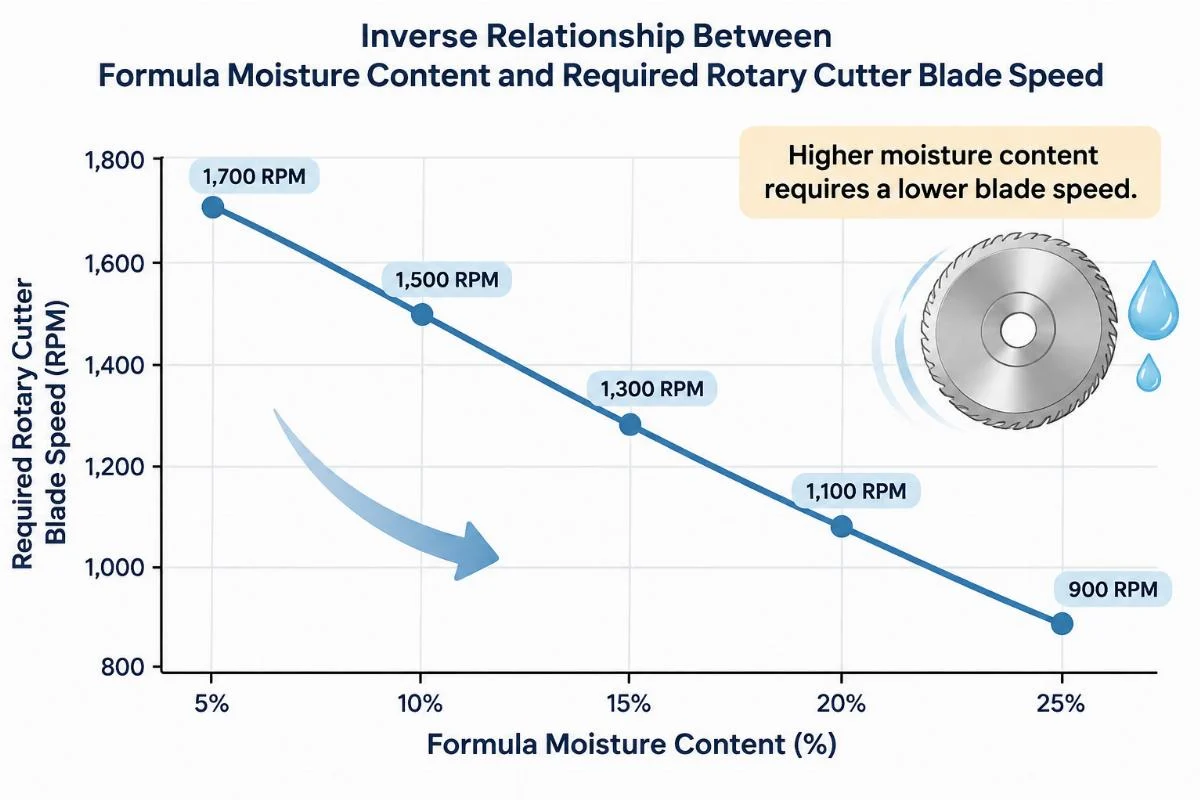
Blade speed must be inversely proportional to dough moisture content to prevent the extrudate from stretching before it separates.
The relationship between the rotational speed of the pet food extruder rotary cutter and the feed rate is the hidden variable that dictates kibble shape integrity. When formula moisture increases, the dough becomes more extensible. If the blade speed remains static, the rotating edge will drag the soft dough, creating long tails or deformed shapes before the cut is finalized.
For high-moisture fresh meat formulations, the blade speed must be increased to match the faster extrusion velocity, ensuring a high-velocity shear that snaps the dough cleanly. Conversely, for standard dry meals with lower moisture, a slower, more deliberate blade speed prevents the brittle extrudate from shattering upon impact.
During a trial run for a plant-based protein kibble line, the moisture content fluctuated due to a mixer inconsistency. The operators kept the blade speed constant, resulting in a mixed batch of perfectly cut pieces and severely tailed pieces. By implementing a variable frequency drive that allowed them to tune the speed-to-feed ratio in real-time, they maintained shape integrity despite the moisture variance. This level of control is essential when you are developing new recipes and need to isolate variables during the R&D phase.
When Should You Replace Extruder Blades?
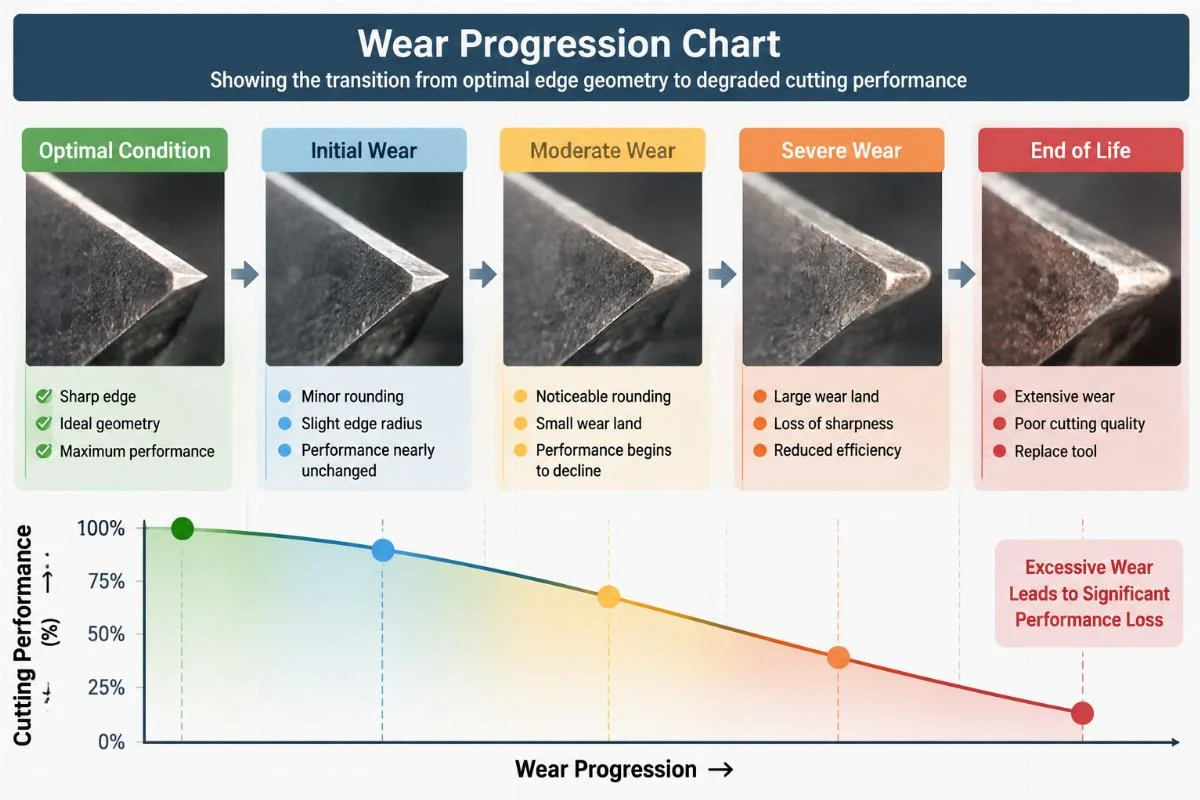
Waiting for a visible chip on the blade edge guarantees that you have already produced batches of out-of-spec kibble with microscopic tailing.
Wear indicators on a rotary cutter are not always visible to the naked eye. The degradation of the edge geometry happens progressively, altering the shear angle and increasing the friction against the dough. Relying solely on visual inspection is a reactive approach that leads to unnecessary downtime and product waste.
Instead of waiting for catastrophic failure, monitor the cut quality and the motor load. A noticeable increase in the cutter motor’s amperage draw indicates that the blade is dragging rather than slicing, meaning the edge geometry has degraded. Furthermore, if you observe a gradual increase in the percentage of tailed kibble on your cooling conveyor, the blade lifecycle has likely reached its limit.
For standard dry meal production, establishing a preventive replacement schedule based on running hours is the most cost-effective strategy. It is far cheaper to replace a blade on a planned schedule than to halt a multi-ton production run to troubleshoot sudden quality drops. When sourcing replacement parts, ensure your equipment manufacturer provides blades with verifiable material certifications to maintain consistency across your production lifecycle.
Conclusion
Mastering the cut requires treating the blade as a dynamic variable, not a static component. Optimizing your rotary cutter for extruded kibble demands a precise alignment of metallurgy, gap clearance, and rotational speed tailored to your specific fat and moisture profiles. By moving beyond generic settings and implementing micro-adjustments based on real-time dough rheology, manufacturers can eliminate tailing, extend blade lifecycles, and ensure perfect shape integrity across every production run.
Machines Mentioned in This Article

cat food machine
Pet Food Processing Equipment Plant Manufacturer Dog Food
View Machine
cat food machine
Dry Dog Food Production Line Pet Food Pellet Machine
View Machine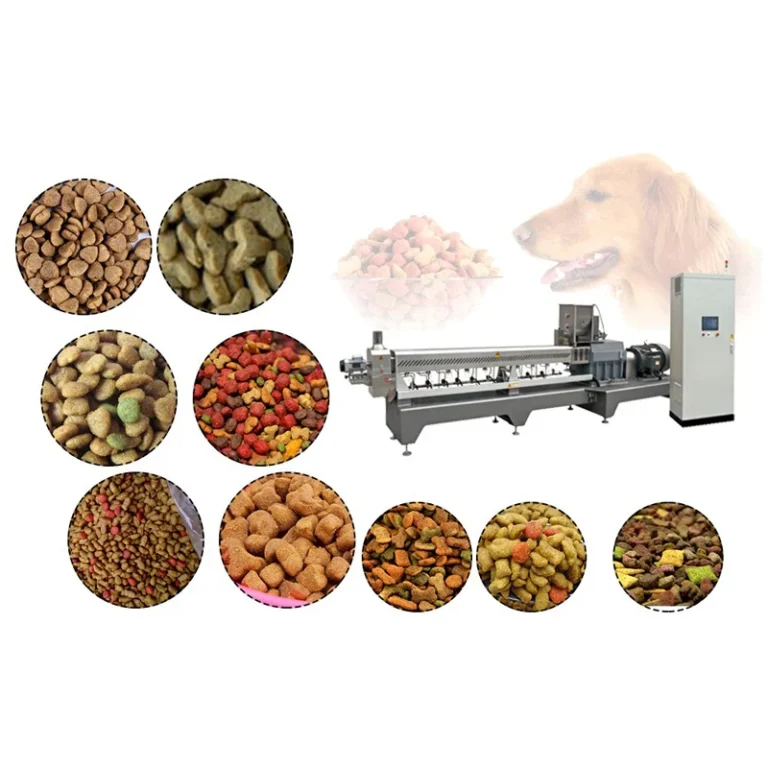
cat food machine
Dog Food Pellet Making Machine Line, Automatic Pet
View Machine
cat food machine