Choosing a larger pilot machine does not guarantee safer small-batch trials; oversized equipment routinely destroys expansion data and ruins mass production scaling.
Selecting between the DS32 and DS50 models depends entirely on matching specific R&D torque density and die-hole configurations to your target commercial line. Mismatching these pilot parameters with mass production specifications leads to catastrophic expansion variance and cutter synchronization failures during scale-up.
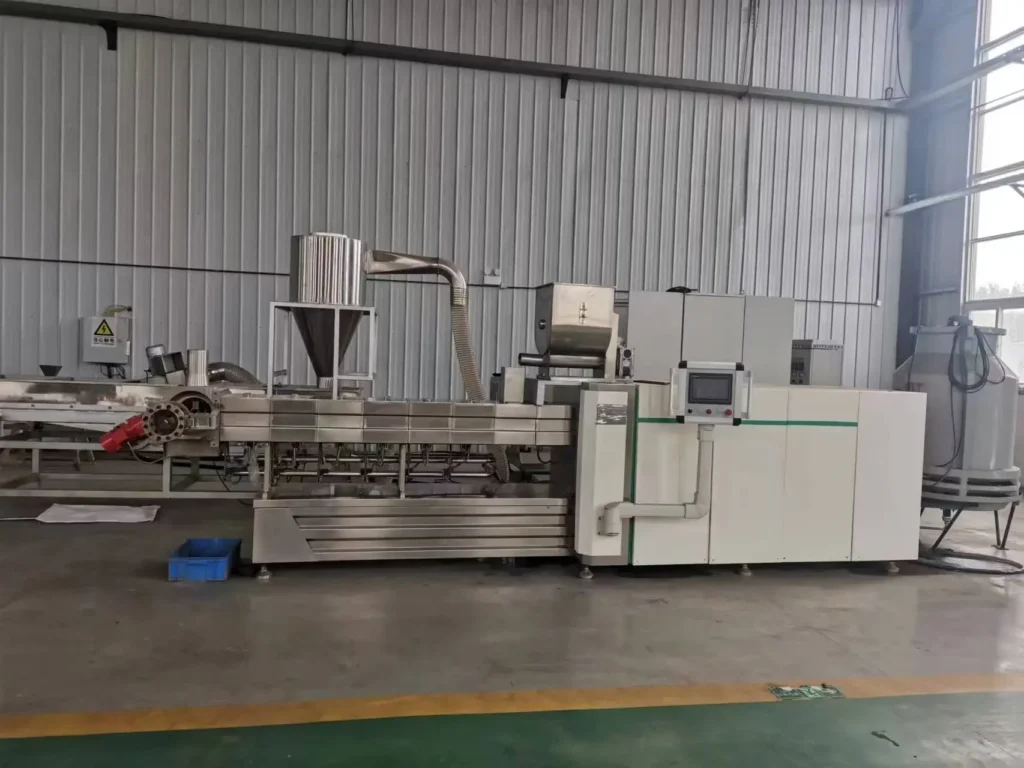
Years ago, I was overseeing a pet treat extrusion line installation in Nigeria. The client’s R&D team decided to bypass the recommended small-scale twin screw extruder for pet food trials, opting instead for a much larger machine to “save time” on formulation. The result was a complete disaster. When they transitioned to commercial mass production, the expansion rate was entirely chaotic, and the high-speed cutters could not keep up with the pilot-scale output. I spent weeks on-site in extreme heat, completely reconfiguring the screw profiles and troubleshooting the mechanical energy input just to salvage the production run. This exact scenario repeats globally because buyers fundamentally misunderstand that the DS32 vs DS50 pilot extruder debate is not about physical footprint; it is about replicating the exact specific mechanical energy and shear forces of the final commercial line.
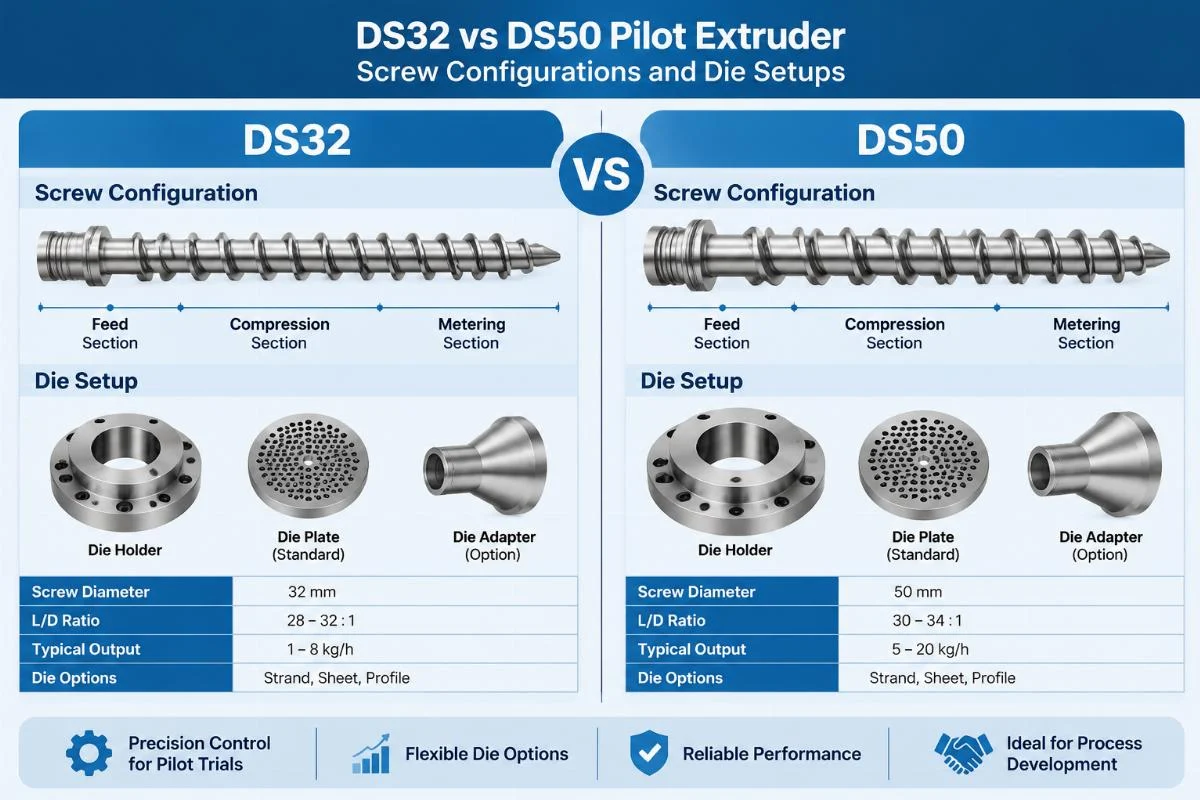
Understanding these底层 mechanical differences is the only way to prevent costly formulation bottlenecks and ensure a seamless transition from benchtop recipes to full-scale manufacturing.
Why Does Pilot Extruder Selection Dictate Mass Production Success?
Scaling up pet treat formulations requires exact replication of shear history and thermal profiles, which is impossible if the pilot machine’s torque density does not mirror the commercial line.
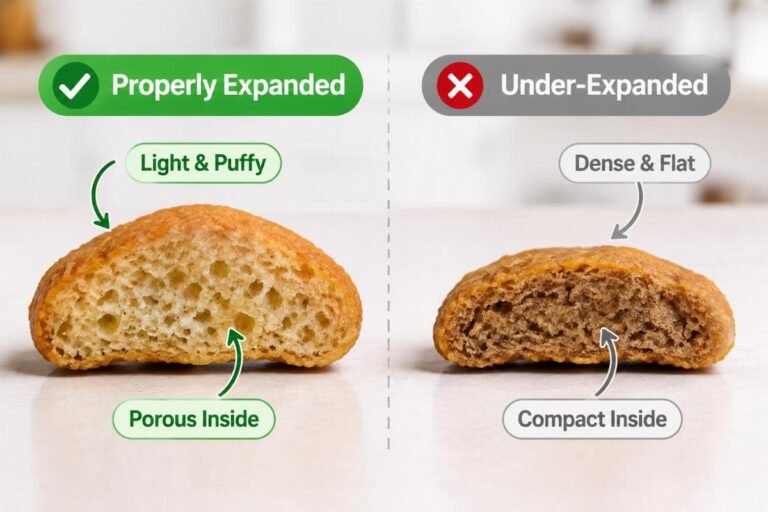
When formulating high-meat or high-fiber pet treats, the specific mechanical energy input dictates the final texture and expansion ratio. Using a machine with mismatched torque characteristics alters the shear history of the dough. Academic research in extrusion processing consistently highlights that varying the screw L/D ratio and torque density between pilot and commercial stages causes unpredictable starch gelatinization and protein texturization. If the pilot stage does not replicate the exact mechanical stress of the production line, the expansion variance ratio will fluctuate wildly during mass production.
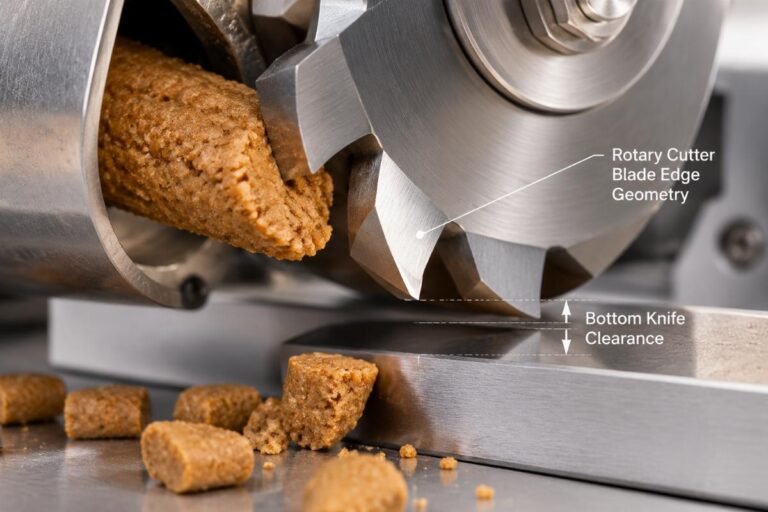
Furthermore, the die-hole diameter mapping must align perfectly. A common misconception is that adjusting the cutter speed can compensate for inconsistent extrudate velocity. In reality, a pilot-scale cutter setup operating out of sync with the mass production conveyor creates severe bottlenecks. The cutting speed synchronization gap leads to malformed treats, increased waste, and ultimately, a mid-six-figure loss in wasted raw materials and downtime.
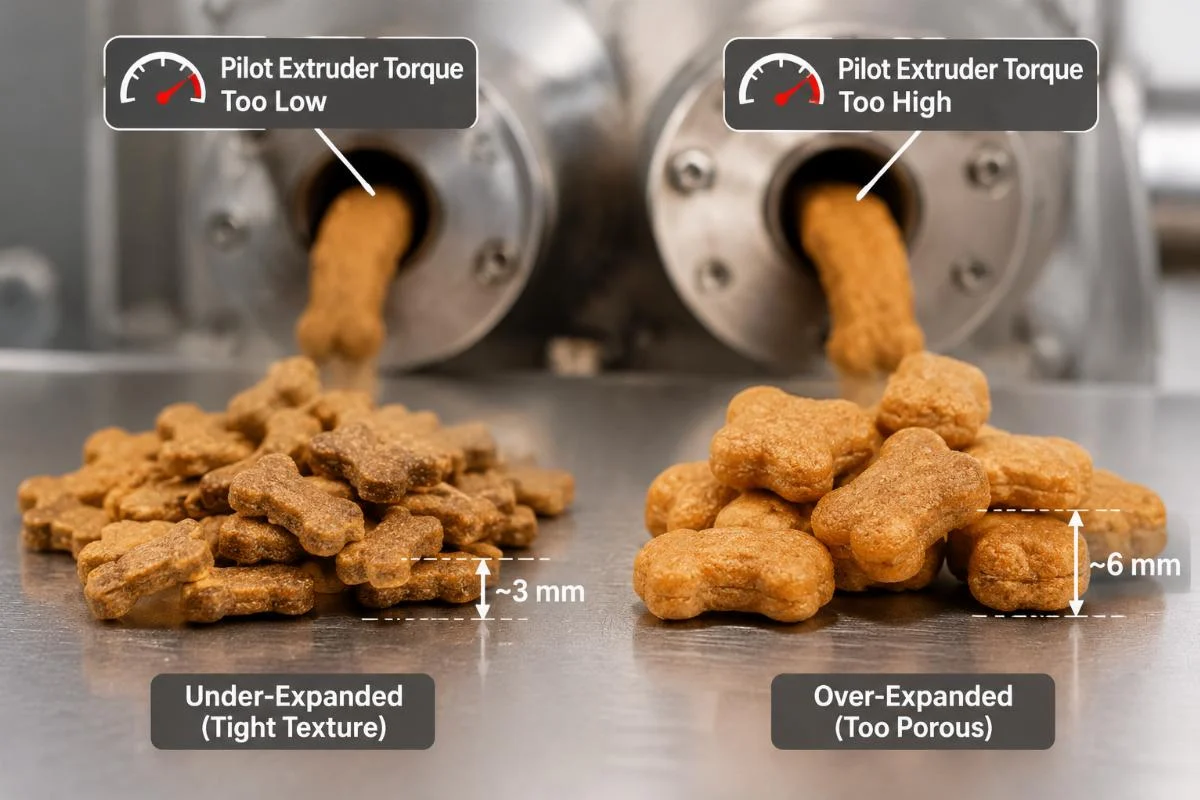
Selecting the correct DS32 vs DS50 pilot extruder ensures that the rheological behavior of the dough remains consistent from the R&D lab to the factory floor.
DS32 vs DS50: Core Specification Comparison Matrix
The fundamental differences between these two models lie in their torque density, specific mechanical energy limits, and die-hole configurations, which dictate entirely different R&D outcomes.
Many buyers assume these machines are merely different sizes of the same platform. In truth, their internal mechanics serve distinct formulation requirements. The following matrix breaks down the qualitative differences to help you align your R&D needs with the correct hardware.
| Parameter Category | DS32 Configuration Profile | DS50 Configuration Profile |
|---|---|---|
| Torque Density | Noticeably reduced; optimized for delicate, low-shear formulations | Substantially extended; built for high-torque, high-meat doughs |
| Specific Mechanical Energy | Standard; suitable for basic starch-based treats | Controlled high-energy; essential for complex protein texturization |
| Die-Hole Diameter Mapping | Fine-tuned for micro-dies and intricate treat shapes | Robust; handles larger die plates and high-viscosity flows |
| Screw L/D Ratio Flexibility | Standard modularity for gentle mixing | Extended modularity for intense kneading and shear development |
| Scale-Up Translation | Maps directly to small-to-medium commercial lines | Maps directly to heavy-duty, high-capacity commercial lines |
A European contract manufacturer recently faced a severe formulation bottleneck when developing a new high-protein dental treat. They initially used a machine with insufficient torque density, resulting in incomplete protein texturization and a dough that stalled in the barrel. By switching to the DS50 configuration, they achieved the necessary shear forces to properly align the protein matrix. Conversely, a startup in Southeast Asia developing a delicate, low-density puffed snack found that the high-torque environment of the larger model caused excessive degradation of their vitamin premix. Switching to the DS32 profile preserved the nutritional integrity while achieving the desired porous structure.
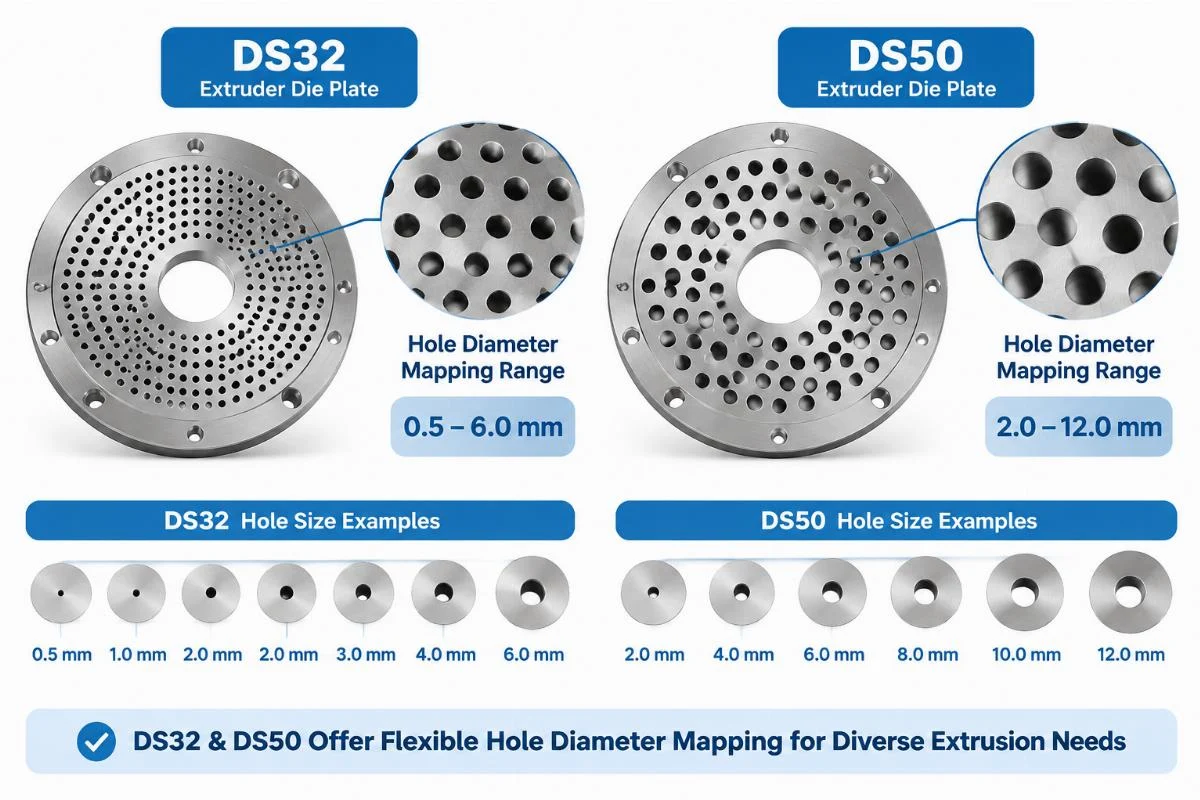
Matching the torque density to your specific recipe prevents the formulation from failing before it even reaches the commercial dryer.
How to Match Pilot Parameters with Commercial Lines?
Aligning the specific mechanical energy and screw profiles between the pilot and commercial stages is the only reliable method to avoid costly scale-up failures.
The transition from pilot trials to mass production requires a meticulous audit of the thermal and mechanical history the product experiences. Industry guidelines emphasize that the specific mechanical energy input must remain within a narrow tolerance band when scaling up. If the DS32 vs DS50 pilot extruder you choose cannot replicate the commercial line’s shear rate, the dough will either under-cook or suffer from thermal degradation.
To achieve seamless scale-up, follow these alignment principles:
- Calculate Commercial Shear History: Determine the exact torque and RPM required on your mass production line to achieve the target texture.
- Map Screw Profiles: Ensure the pilot machine’s screw elements (conveying, kneading, mixing) mimic the commercial line’s L/D ratio and element arrangement.
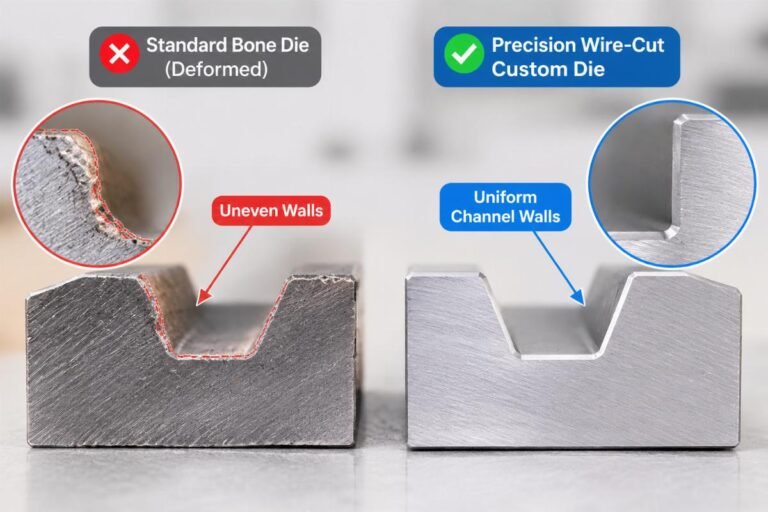
- Verify Die-Hole Mapping: The pressure drop across the pilot die must proportionally match the commercial die to ensure identical extrudate velocity.
- Test Cutter Synchronization: Run the pilot cutter at the exact speed ratio planned for the commercial line to verify cut quality.
A Middle East pet food startup attempted to scale a high-inclusion fish treat from a mismatched pilot machine. The commercial line experienced continuous die blockages because the pilot data suggested a lower viscosity than what actually occurred under mass production shear forces. By recalibrating their pilot trials to match the commercial torque density, they eliminated the blockages and stabilized the expansion rate.
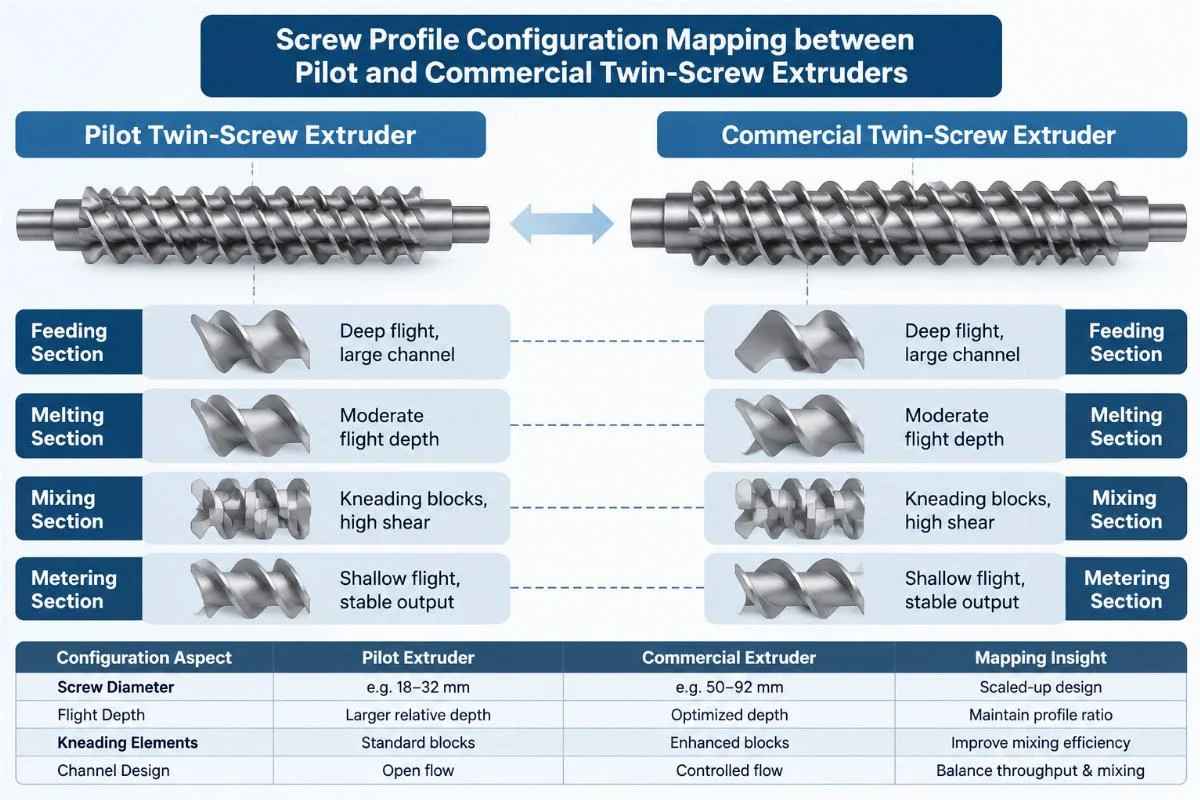
Precise parameter alignment transforms unpredictable pilot data into a reliable blueprint for mass production.
Real-World R&D Scenarios: Avoiding Costly Trial Errors
Analyzing typical formulation bottlenecks reveals that mismatching pilot parameters with commercial lines is the root cause of the majority of scaling failures.
In the realm of pet treat R&D, the margin for error is incredibly slim. Formulations often contain sensitive ingredients that react violently to incorrect shear forces or thermal profiles. When the pilot stage fails to replicate the commercial environment, the resulting data is not just inaccurate; it is actively misleading.
Consider the scenario of a contract manufacturer developing a novel joint-health treat loaded with sensitive functional oils. They utilized a pilot setup that generated excessive frictional heat due to an incorrect screw configuration. The pilot data indicated a successful expansion rate, but the functional oils were entirely degraded by the unmeasured thermal spike. When scaled to production, the treats failed nutritional verification. The troubleshooting time cycle to identify the thermal degradation and reconfigure the pilot screw elements cost the client months of delayed market entry.
Similarly, high-moisture meat treats require precise control over the specific mechanical energy to achieve the correct chewy texture without turning the dough into a homogeneous paste. Using a model with inappropriate torque density leads to a cutter bottleneck, where the extrudate stretches and tears rather than cutting cleanly. The on-site troubleshooting required to fix the screw configuration and adjust the feeder rates after such initial failures often exceeds the initial cost of selecting the correct DS32 vs DS50 pilot extruder from the start.
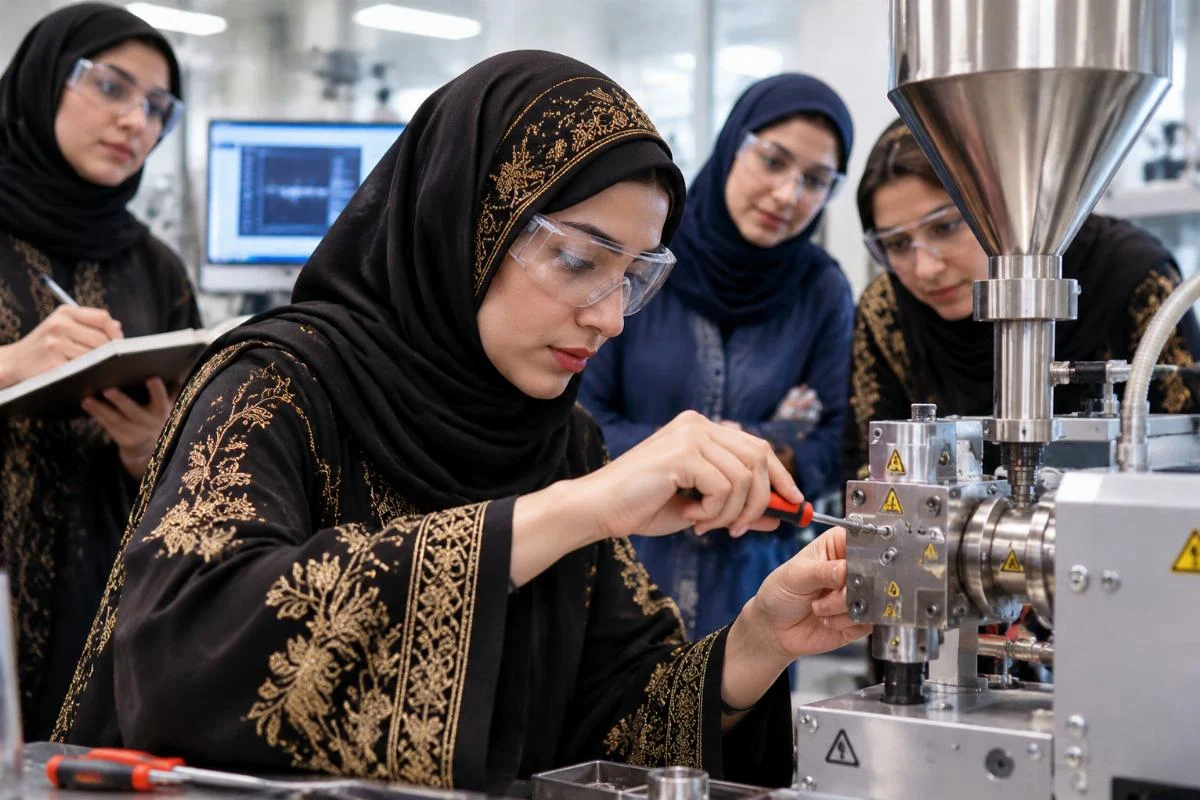
Anticipating these bottlenecks through rigorous parameter matching saves significant capital and accelerates time-to-market.
Conclusion
Selecting the correct pilot extruder is a critical engineering decision, not a mere purchasing choice. Mismatching torque density and die configurations between the pilot and commercial stages guarantees expansion chaos and cutter bottlenecks. By rigorously aligning specific mechanical energy and screw profiles, manufacturers ensure that R&D data translates flawlessly into mass production success.
Machines Mentioned in This Article

cat food machine
Pet Dog Food Extruder Manufacturer Production Line
View Machine
cat food machine
Pet Food Pellet Extruder Machine Manufacturer for Dog Cat
View Machine
cat food machine
Pet Food Extruder Machine Manufacturer Production Line
View Machine
cat food machine