
Higher screw speed does not guarantee higher output for high-meat treats; excessive speed often causes fat smearing and die clogging.
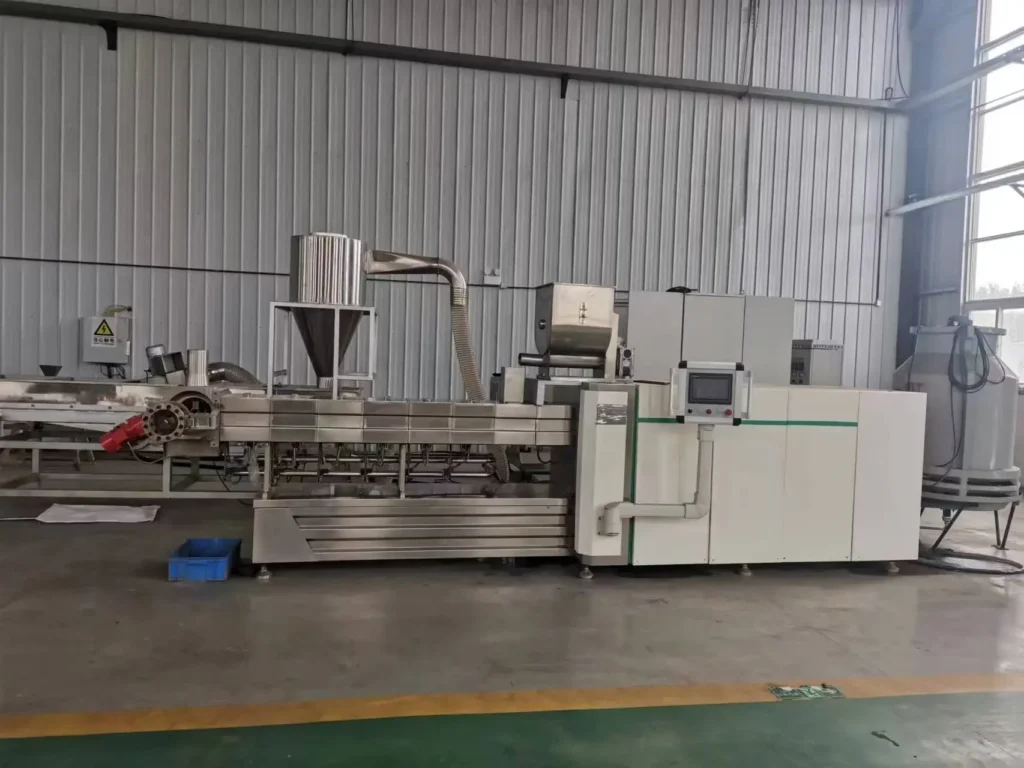
The DS50 Twin-Screw Extruder is the optimal choice for small-scale dog treat startups, perfectly balancing a compact footprint with precise shear control for diverse formulations, especially in challenging high-humidity climates.
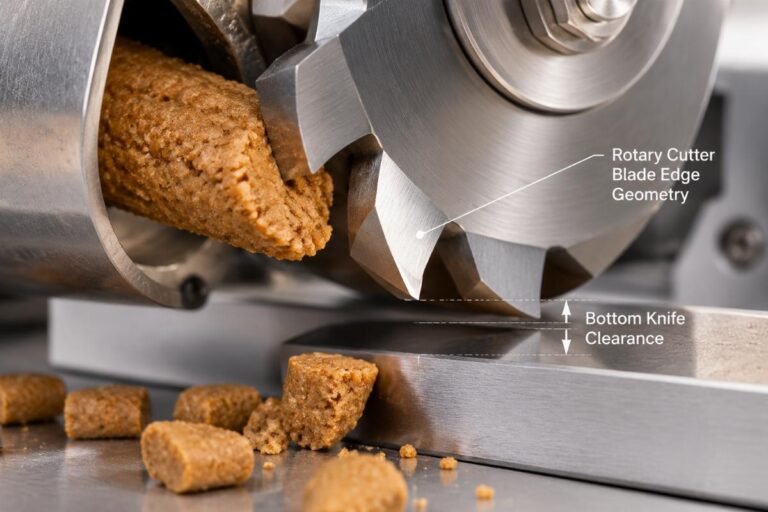
Years ago, while commissioning a DS50 Twin-Screw Extruder in Lagos, Nigeria, a client urgently needed to produce small-breed dog treats. The result was a disaster: the cutter failed to slice cleanly, and the pellets stuck together into massive clumps. I spent days crouching beside the machine troubleshooting, only to discover that the die-hole diameter and material moisture were completely mismatched, resulting in insufficient screw shear force. This现场 (on-site) reality taught me that selling equipment cannot rely solely on rigid parameters; one must deeply understand the formulation and the local environment. Later, when transitioning to sales, I started interrogating every client about their local raw material characteristics before recommending the DS50 Twin-Screw Extruder. The true test of a machine is whether it can maintain stable discharge under extreme heat and humidity.

Transitioning from raw material analysis to equipment selection requires a clear understanding of how different machine scales handle specific treat formulations.
Why Choose the DS50 for Small-Scale Dog Treats?
The DS50 Twin-Screw Extruder offers the ideal capacity and shear flexibility for startups, avoiding the over-investment of large-scale lines while outperforming lab-scale models in commercial consistency.
When launching a small-scale dog treat production line, founders often face a dilemma: scale up too fast and risk capital drain, or start too small and fail to achieve commercial texture. The DS50 Twin-Screw Extruder sits in the sweet spot. It provides enough specific mechanical energy to properly gelatinize starches and denature proteins for high-meat inclusions, which is critical for treat texture.
In tropical regions, ambient humidity severely affects the drying phase of extrusion. If the barrel temperature and screw speed are not adjusted correctly, semi-moist treats will retain too much surface moisture, leading to mold or sticking. The DS50 allows for precise barrel temperature zoning and variable screw speed adjustments, enabling operators to drop the specific temperature at the metering zone to prevent sticking while maintaining core cooking.
Furthermore, scaling a recipe from a lab mixer to commercial production often fails due to shear differences. The DS50 handles meat inclusions ranging from moderate to high percentages smoothly, provided the screw configuration is optimized. Startups appreciate this adaptability, as it allows them to test multiple recipes without changing the core hardware.
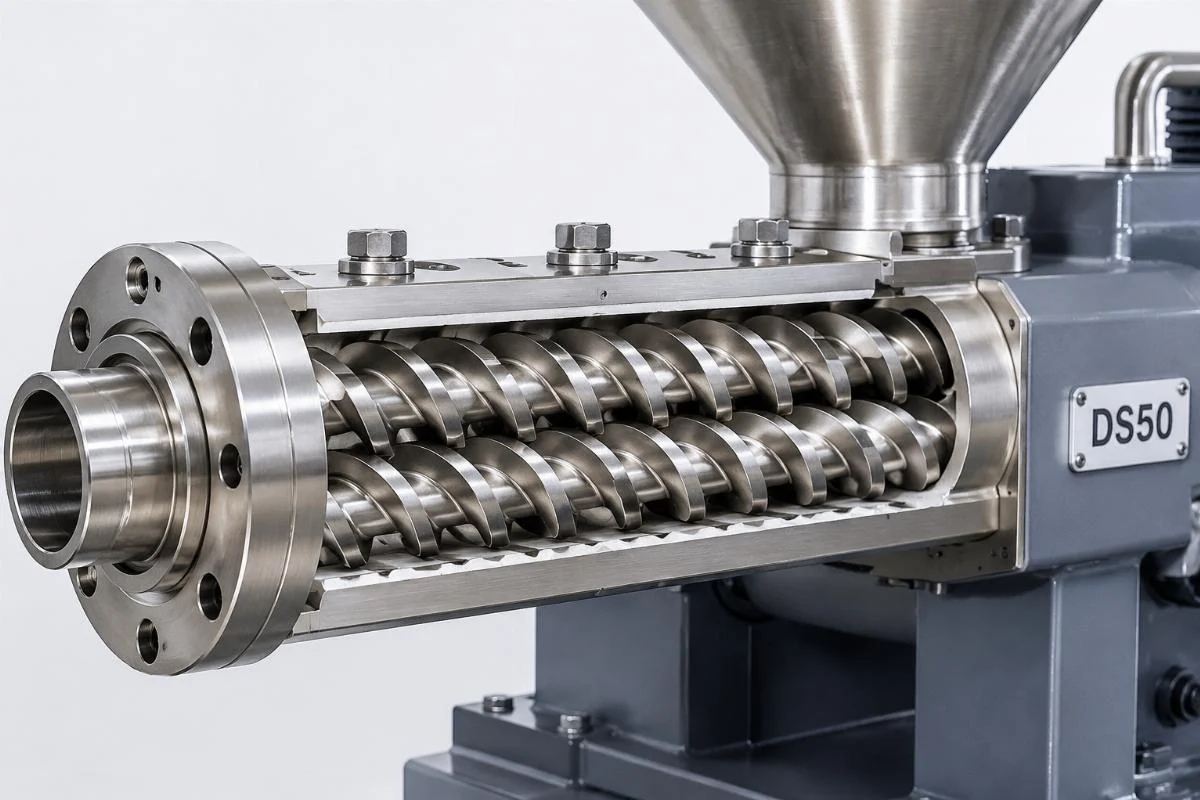
DS50 Specifications vs. Other Models: Which Fits Your Treat Line?
Selecting the right extruder requires matching the screw diameter and motor power to your target treat density, rather than simply chasing maximum throughput.
For a small-scale dog treat production line, comparing the DS50 against smaller and larger models reveals distinct operational boundaries. The following matrix evaluates how these machines handle typical treat applications based on qualitative performance tiers.
| Feature | DS32 (Lab/Pilot) | DS50 Twin-Screw Extruder | DS65 (Commercial) |
|---|---|---|---|
| Screw Diameter | Small | Medium (50mm class) | Large |
| Motor Power | Basic | Standard | High |
| Shear Control | Limited | Precise & Adjustable | Aggressive |
| High-Meat Adaptability | Poor | Excellent | Excellent |
| Small-Breed Shape Precision | Vulnerable | Robust | Noticeably reduced |
| Footprint | Minimal | Compact | Extensive |
| Turnkey Integration | Sample-level | Full batch-level | Full batch-level |
When producing small-breed treats, matching the die-hole diameter and cutter speed is non-negotiable. The DS50 Twin-Screw Extruder excels here. Its torque and cutter RPM matching allow for precise shapes using small-diameter dies without causing excessive back-pressure. In contrast, larger models might process the volume faster but can struggle with the delicate cutting required for tiny, intricate shapes, leading to deformed treats.
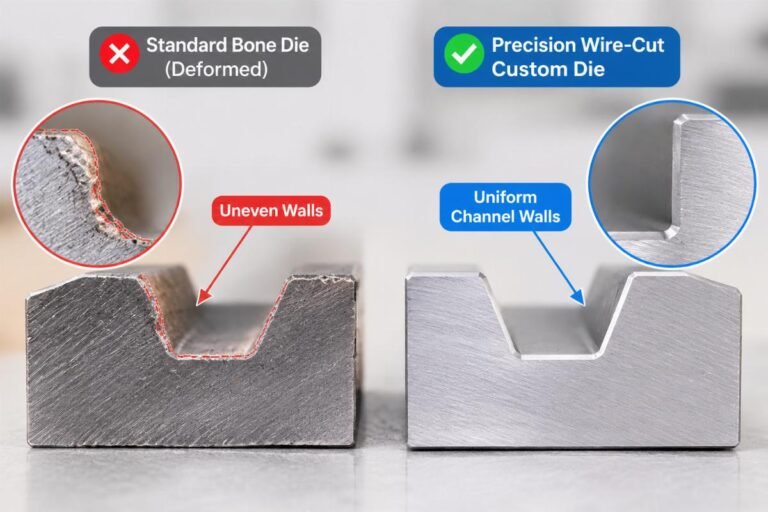
A common myth is that standard dies work globally. However, in high-humidity areas, die hole length-to-diameter ratios must be customized to prevent extrusion swelling and sticking. The DS50 provides the stable pressure required to push formulations through these customized dies consistently.

Overcoming Formulation Challenges: High-Meat & Humidity
Success in extruding high-meat treats relies entirely on matching screw configurations and die specs to local raw material traits, not just on the motor power.
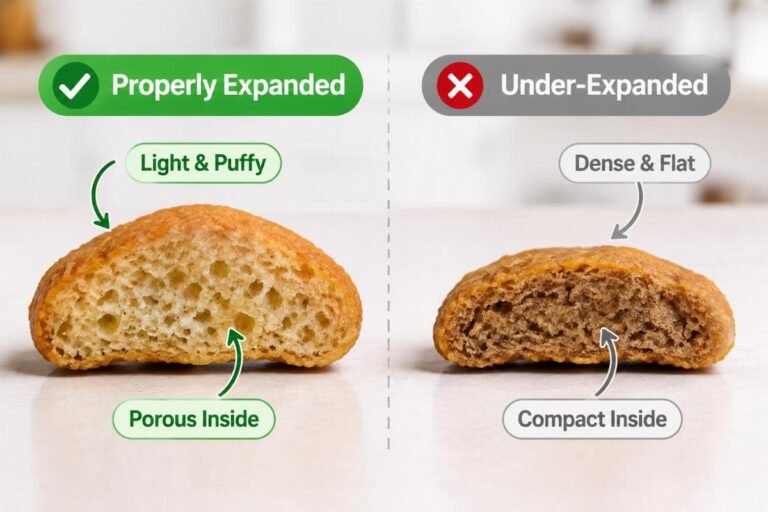
High-meat formulations introduce massive amounts of fat and moisture into the barrel. A frequent counter-intuitive reality is that pushing the screw speed to the maximum to handle this volume will cause fat smearing and die clogging. Instead, a lower speed with an optimized length-to-diameter ratio ensures the proper texture and prevents the fat from separating out prematurely.
During a project in Southeast Asia, a client attempted to scale a high-poultry recipe. The initial output was greasy and misshapen. By recalibrating the screw elements to increase the shear in the cooking zone while reducing the overall throughput speed, the DS50 Twin-Screw Extruder achieved a clean cut and a uniform texture. This adjustment is a core part of the formula development support provided during turnkey line setups.
Humidity also dictates the cooling and drying strategy post-extrusion. The DS50 pet food extruder specifications include advanced ventilation and exhaust ports that help manage the initial moisture flash-off, reducing the burden on downstream dryers. Understanding these formulation challenges is what separates a functional small-scale dog treat production line from a constant maintenance headache.

Turnkey Support: From Formula to Final Product
Equipment is only half the equation; stable output from day one requires on-site commissioning and recipe tuning tailored to local raw materials.
Many startups purchase extruders only to find that the machine cannot process their specific local ingredients. The DS50 Twin-Screw Extruder is backed by comprehensive turnkey solutions that bridge this gap. This involves far more than just dropping off a pallet of steel.
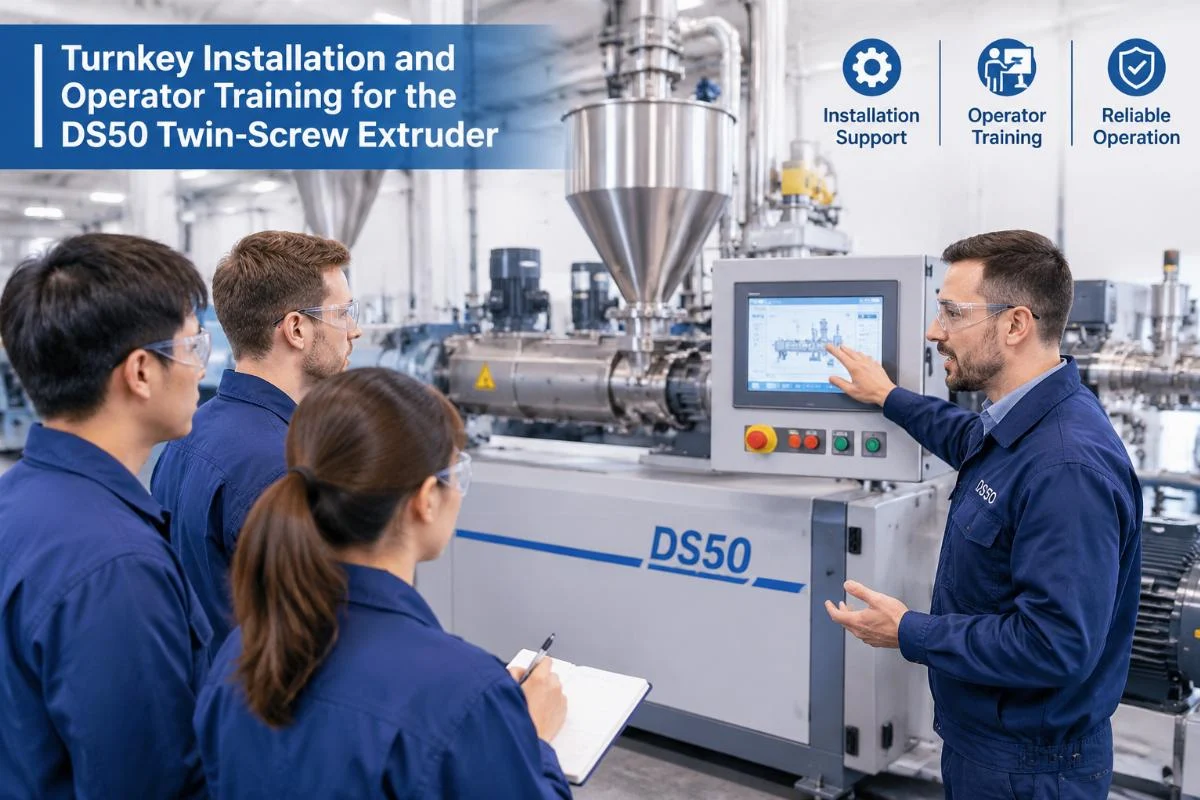
It begins with formula development support. Engineers analyze the client’s available raw materials—whether it is a specific local grain or a regional meat by-product—and adjust the barrel profile and screw arrangement accordingly. Then, on-site installation and operator training ensure that the local team understands not just how to turn the machine on, but how to react to minor variations in raw material moisture.
For contract manufacturers, this means the DS50 can handle recipe transitions with minimal downtime. The ability to quickly swap screw elements and adjust the DS50 pet food extruder specifications on the fly allows for a diverse product catalog. This level of support ensures that the small-scale dog treat production line remains profitable and adaptable in a competitive market.
Conclusion
The DS50 Twin-Screw Extruder delivers the precise shear control and formulation adaptability required for small-scale dog treat startups. By prioritizing local raw material traits and environmental conditions over raw speed, producers can achieve consistent, high-quality treats. Comprehensive turnkey support ensures that the transition from recipe to commercial production is seamless and sustainable.
Machines Mentioned in This Article

dog food machine
Pet Food Dog Treats Production Line Manufacturer Plant
View Machine
cat food machine
Pet Food Processing Equipment Plant Manufacturer Dog Food
View Machine
cat food machine
Pet Food Production Line Manufacturer
View Machine
cat food machine