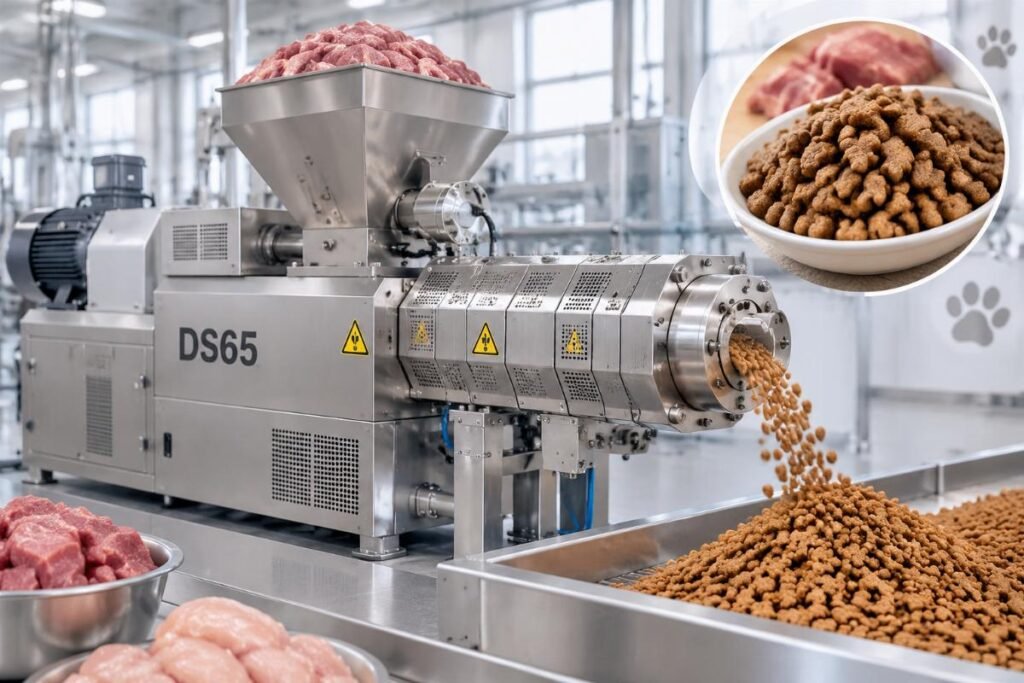
Bigger screws do not guarantee better output; precise shear force and temperature control dictate pellet survival in high-meat formulations.
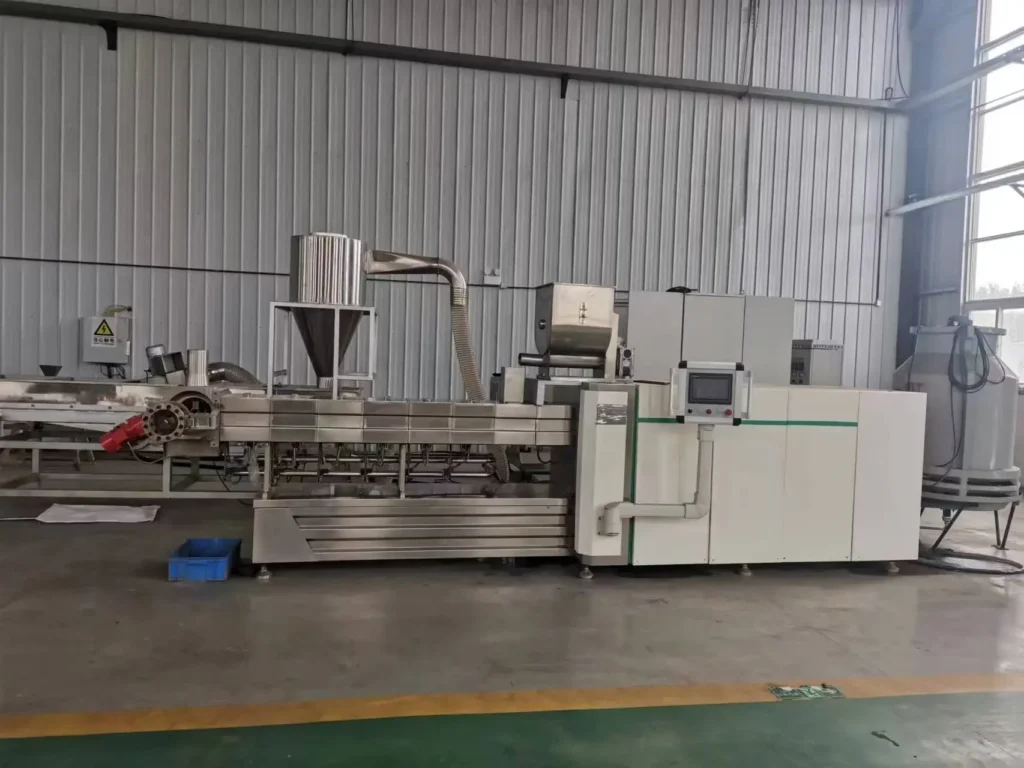
The DS65 twin-screw extruder provides the optimal balance of specific mechanical energy and thermal zoning required for startup kibble factories to process high-meat recipes without suffering early-stage batch failures.
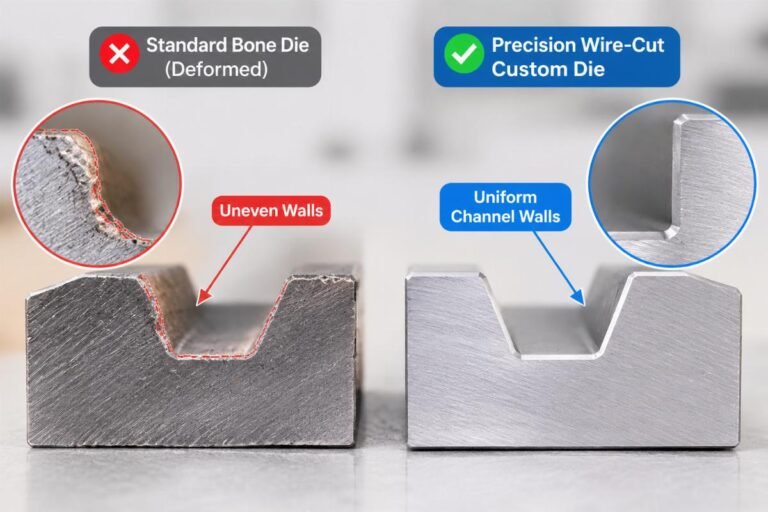
Years ago, while sourcing equipment for a fledgling pet food plant in Bangkok, I opted for a cheaper, smaller model to save on initial capital. When we attempted to run a high-meat cat food recipe, the puffing rate plummeted. The kibble crumbled at the slightest touch, and the entire batch was scrapped, leaving the factory owner furious. We eventually upgraded to a DS65 twin-screw extruder, and the formation rate finally stabilized. Now, when advising new pet food entrepreneurs, my first piece of advice is never to cut corners on the main engine. The die sizing and thermal management of this machine are explicitly tailored for high-meat scaling and startup capacity ramp-ups, saving you from costly tuition fees in the market.
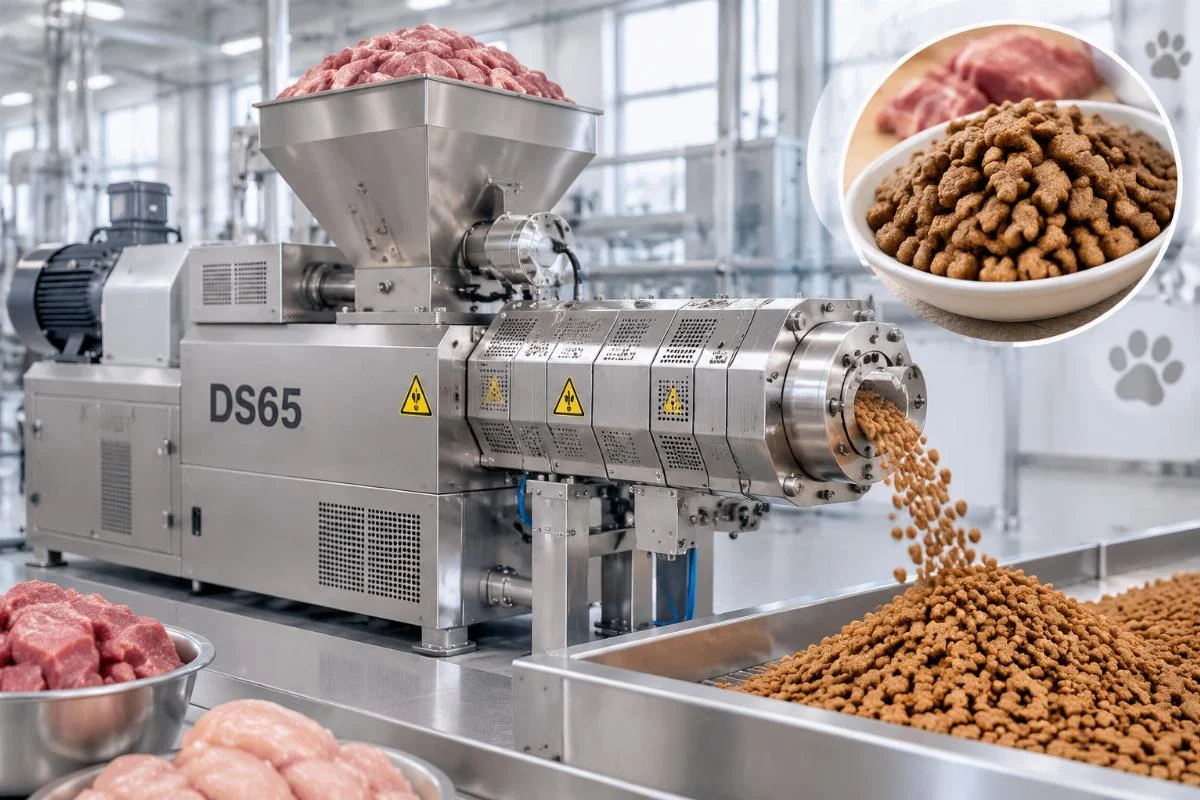
Transitioning from pilot trials to continuous commercial production requires equipment that respects the rheology of complex proteins.
Why is the DS65 the Right Choice for Startup Kibble Lines?
The DS65 twin-screw extruder balances shear force and capacity, making it the definitive choice for startups navigating high-meat recipe ramp-ups.
Many new manufacturers assume that scaling up simply means buying the largest machine available. However, true scalability in pet food manufacturing relies on maintaining consistent texture and nutritional integrity as meat inclusion rates climb. When transitioning to recipes with massive fresh meat inclusions, the material behaves differently under heat and pressure. The DS65 pet food extruder handles this transition by delivering controlled mechanical energy, ensuring that the protein matrix sets correctly before exiting the die.
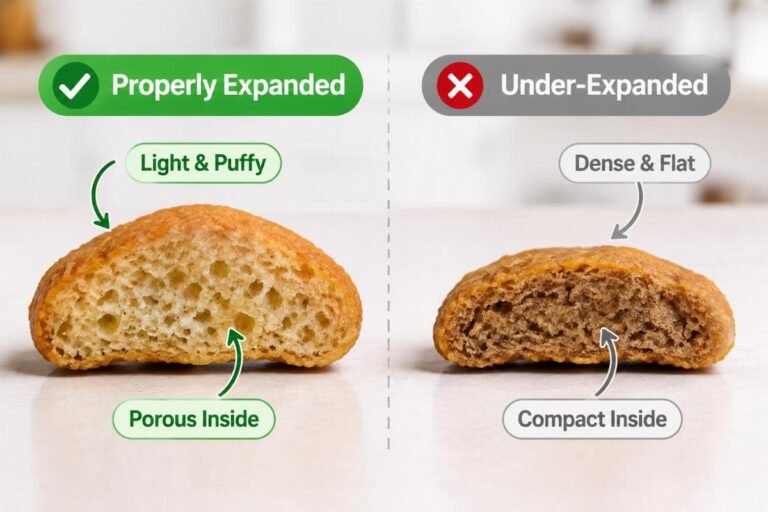
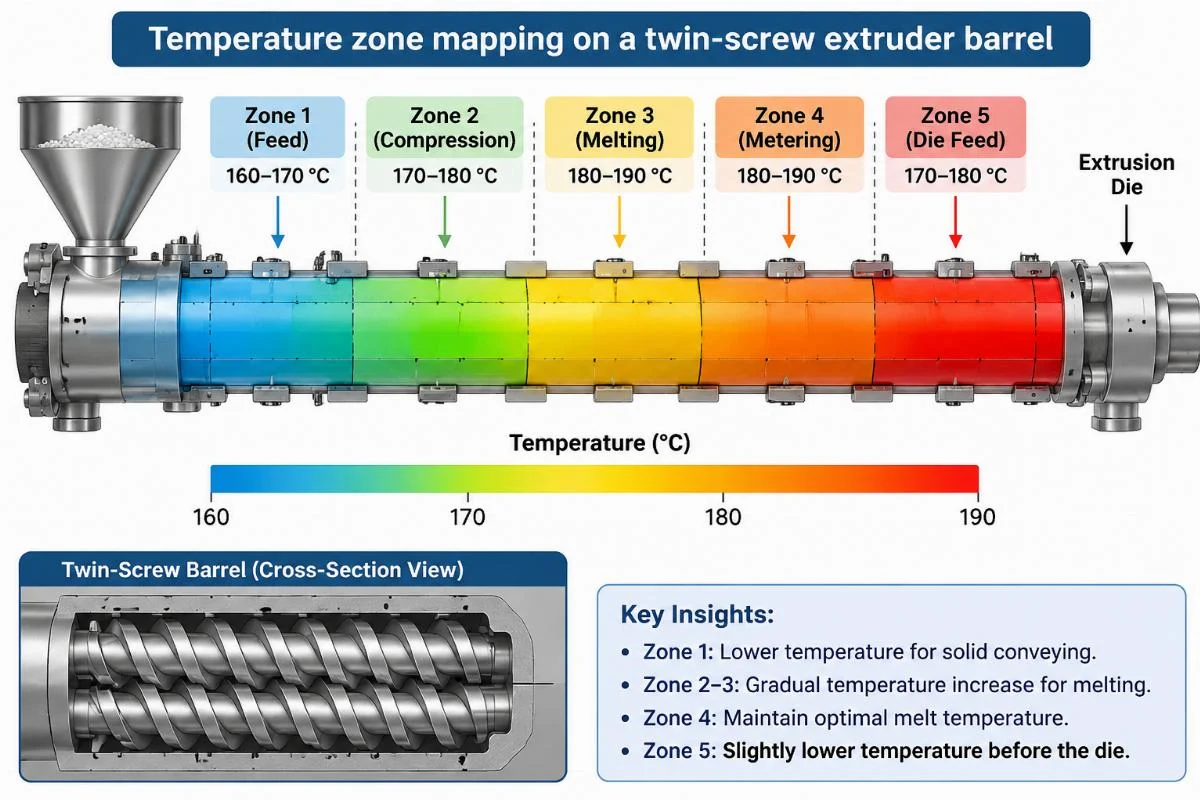
Startups often face the challenge of moving from small-batch testing to continuous commercial runs. A machine that cannot maintain steady uptime and energy ratios will destroy your profit margins through inconsistent product quality. The DS65 twin-screw extruder is engineered to prevent the under-puffed kibble phenomenon that plagues poorly temperature-controlled lines. By mapping the temperature profile across multiple zones, it ensures that the core of the kibble reaches the necessary gelatinization point without burning the exterior sugars. This precision is what separates a viable commercial product from a batch of waste.
How Do DS65 Specs Compare to Smaller Models?
The specification matrix reveals that the superior length-to-diameter ratio and advanced temperature zones of the DS65 twin-screw extruder actively prevent the batch waste common in smaller, entry-level machines.
When evaluating equipment, startups often look at the initial price tag rather than the total cost of ownership. Cheaper, smaller extruders might seem like a smart financial move, but poor puffing causes massive batch waste, which ultimately costs significantly more in the long run. The physical architecture of the machine dictates how well it can handle the friction and heat generated by dense meat batters.
| Factor | Smaller Entry-Level Models | DS65 Twin-Screw Extruder |
|---|---|---|
| Shear Force Control | Uncontrolled / Vulnerable to burning | Controlled / Robust protein setting |
| Temperature Zoning | Basic / Prone to hot spots | Multi-zone / Precision thermal mapping |
| High-Meat Adaptability | Poor / High rate of structural collapse | Excellent / Optimized for dense batters |
| Batch Waste Risk | Noticeably high / Frequent scrapping | Substantially reduced / Consistent formation |
A Southeast Asian contract manufacturer once attempted to run a premium poultry formula on an undersized single-screw setup. The result was a mid-six-figure loss in scrapped material and damaged brand reputation before they finally integrated a twin-screw extruder for startup kibble factory operations. The difference in specific mechanical energy input meant that the smaller machine simply could not generate the necessary pressure to force the dense meat paste through the die uniformly.
What Screw Configurations Work Best for High-Meat Formulas?
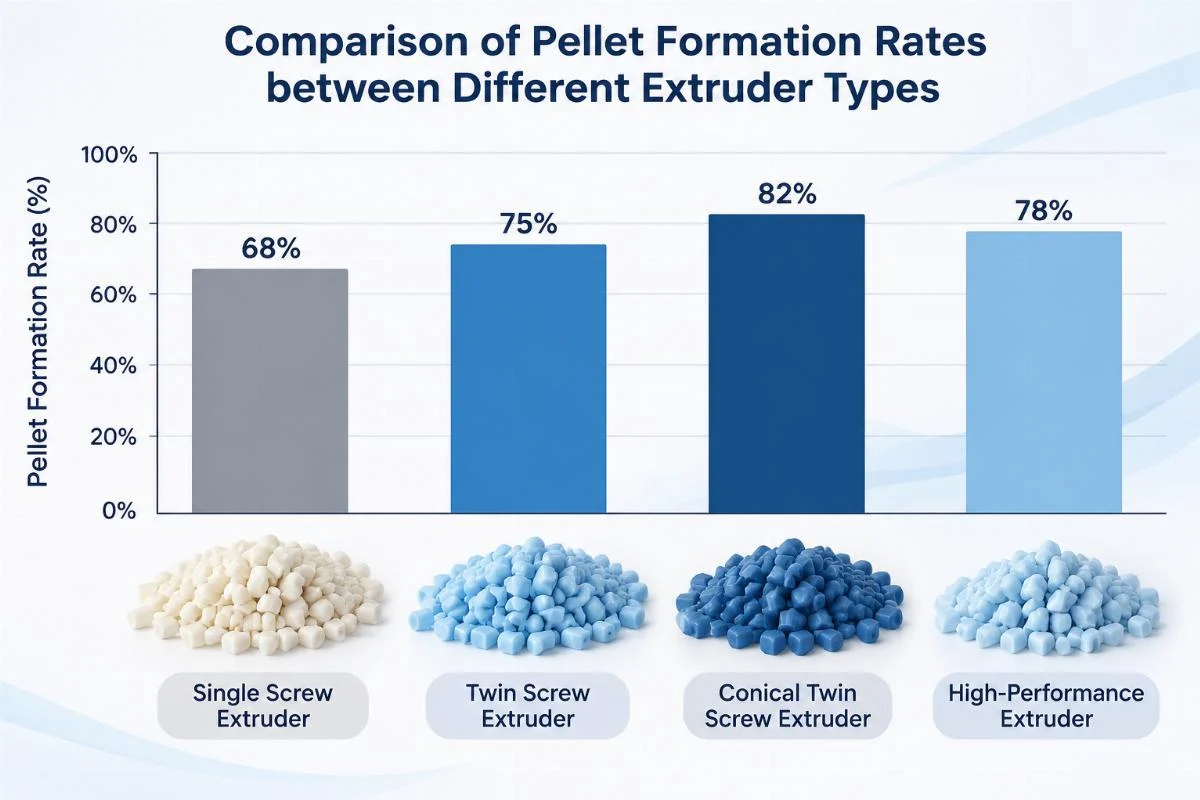
Specific mechanical energy inputs and precise die sizing within the DS65 twin-screw extruder ensure a crisp texture without burning the delicate proteins found in high-meat recipes.
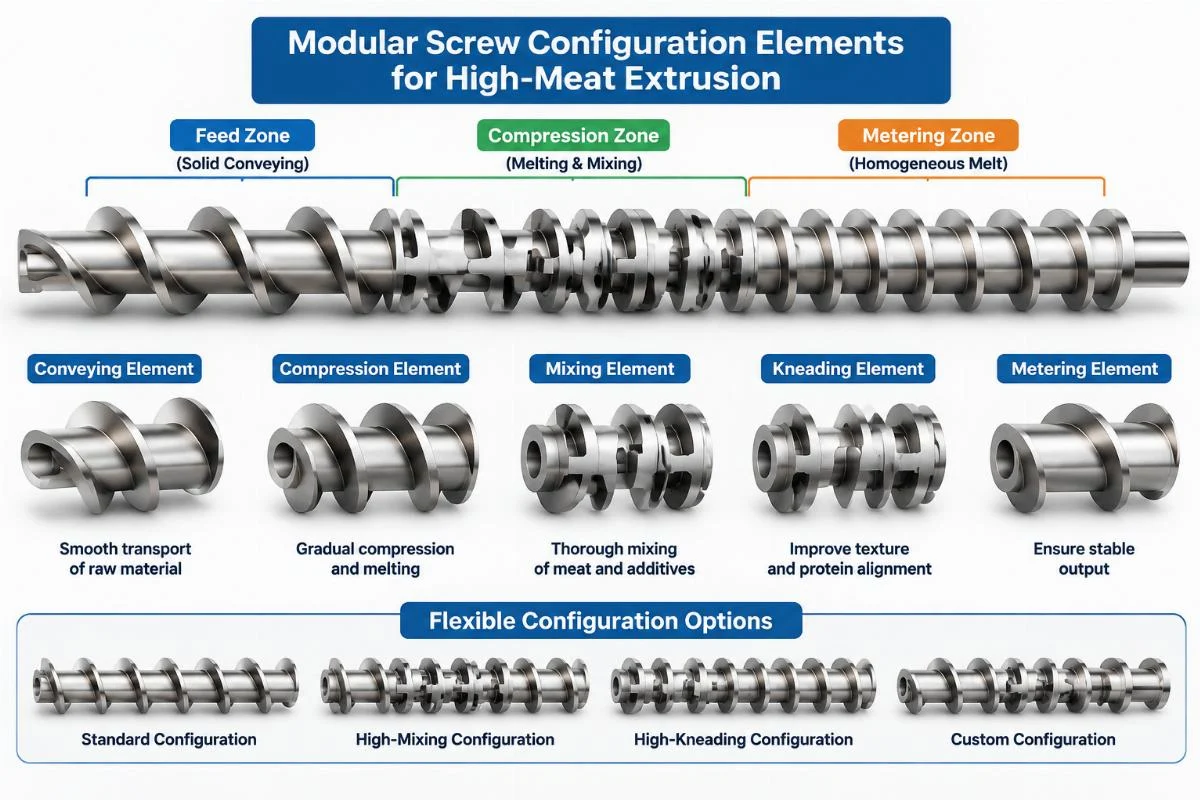
The heart of any extrusion process lies in the screw configuration. For high-meat cat food extruder applications, the goal is to achieve complete gelatinization and protein texturization without exceeding the thermal degradation limits of the amino acids. The modular design of the screws allows for precise manipulation of the residence time and shear intensity.
- Feed Zone: Utilizing elements with a large pitch to gently capture the dense, cold meat slurry without causing premature bridging or compaction.
- Kneading Zone: Introducing reverse elements and kneading blocks to build the necessary pressure and friction, generating the internal heat required to cook the meat thoroughly.
- Metering Zone: Employing deep-channel elements to stabilize the flow and ensure a uniform temperature profile right before the material reaches the die face.
If the shear force is too low, the kibble will be dense and hard, failing to puff correctly. If it is too high, the friction will scorch the meat, destroying the nutritional value and creating an unappealing color. The DS65 twin-screw extruder allows operators to fine-tune these zones, ensuring that the specific mechanical energy is applied exactly where the formulation demands it. This level of control is non-negotiable when dealing with expensive, high-quality meat ingredients.
How to Integrate the DS65 into a Turnkey Pet Food Line?
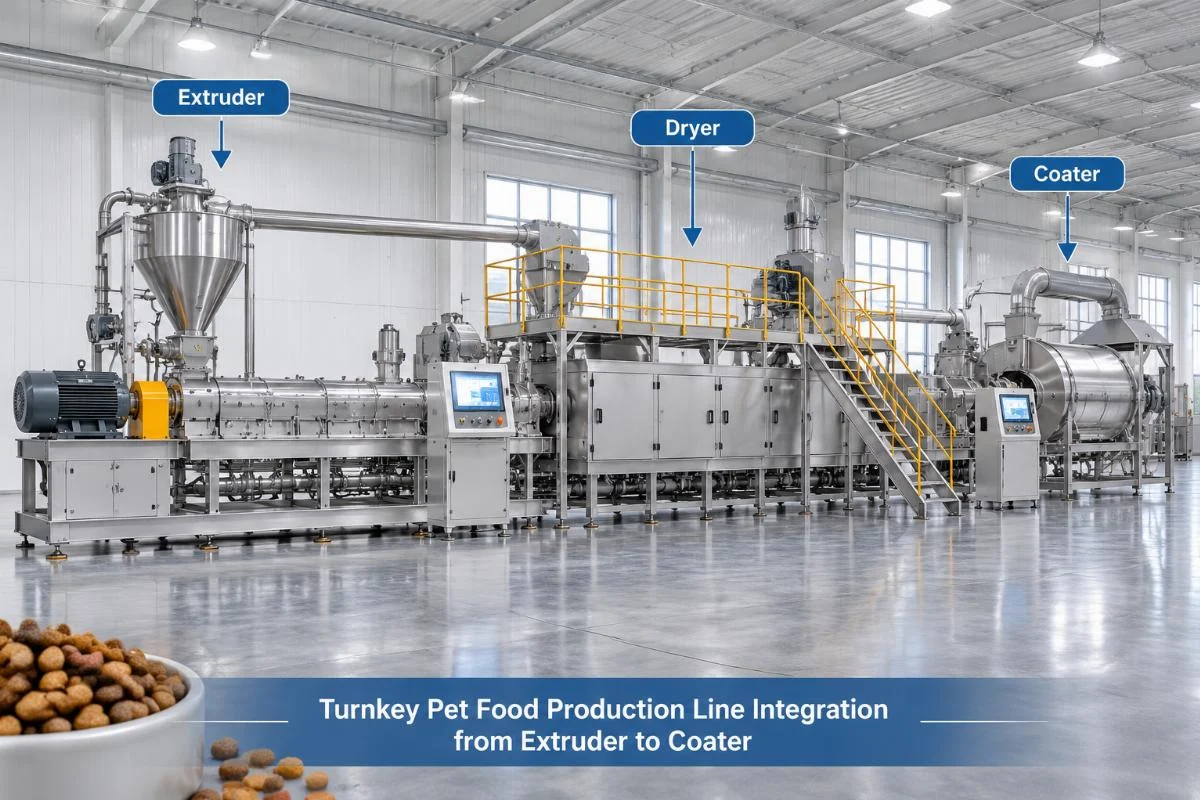
Seamless integration with downstream dryers and coaters within a turnkey setup ensures the final product quality matches the precision achieved at the extrusion stage.
Buying a standalone extruder is only the first step. The true challenge for a startup kibble factory is integrating that machine into a cohesive production ecosystem. The moisture content of the kibble as it exits the die is significantly higher than the safe storage limit. If the drying phase is not perfectly synchronized with the output rate of the DS65 twin-screw extruder, the kibble will either remain too moist, leading to mold growth, or become too brittle, shattering during the coating process.
This is where comprehensive line design becomes critical. A holistic approach ensures that the airflow, temperature, and retention time in the multi-pass dryer are calibrated to the specific density and size of the kibble produced by the extruder. Following drying, the cooling and flavor-coating stages must apply fats and palatants evenly without breaking the fragile structure of the high-meat pellet.
When setting up a new facility, relying on fragmented equipment from various vendors often leads to bottlenecks and blame-shifting when things go wrong. Engaging a unified partner for turnkey line design, formula development, and on-site operator training eliminates these risks. For instance, a startup in Latin America recently launched a novel insect-protein kibble line. By utilizing a unified approach that covered everything from raw material intake to the final coating drum, they avoided the typical months-long调试 phase. The formula development support ensured that the unique binding properties of the insect protein were perfectly matched to the shear profile of the machine, while the installation and operator training empowered their local team to run the line independently from day one.
Conclusion
Precision shear and thermal control are the true drivers of startup success in high-meat pet food manufacturing. The DS65 twin-screw extruder eliminates the batch waste associated with entry-level machines by providing the exact mechanical energy required for complex protein matrices. By integrating this core engine into a synchronized turnkey line, new manufacturers can scale their capacity confidently, ensuring that every pellet meets the rigorous standards of modern pet nutrition.
Machines Mentioned in This Article

cat food machine
Pet Food Processing Equipment Plant Manufacturer Dog Food
View Machine
cat food machine
Dry Dog Food Production Line Pet Food Pellet Machine
View Machine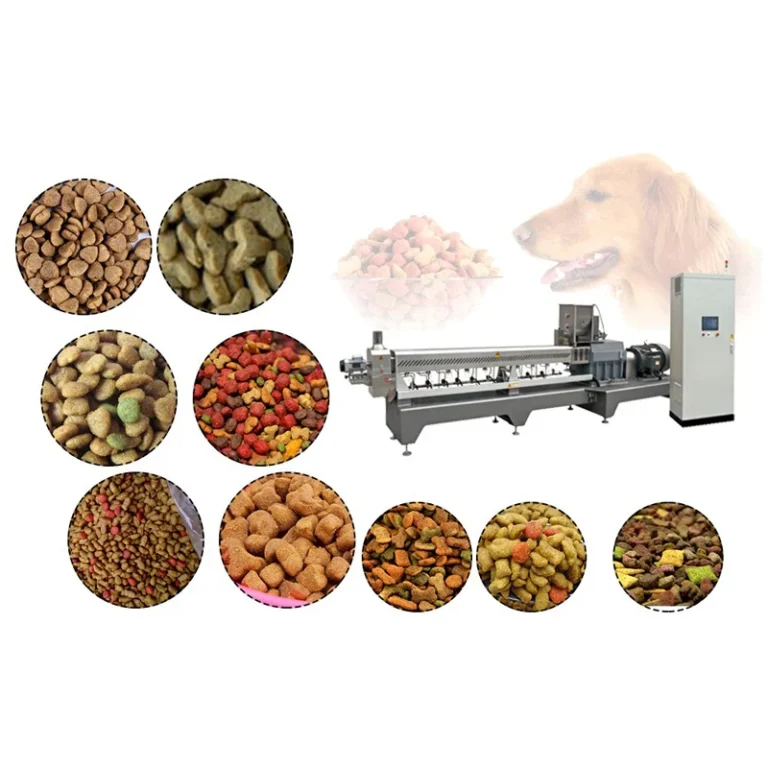
cat food machine
Dog Food Pellet Making Machine Line, Automatic Pet
View Machine
cat food machine