Cold-pressing is not simply low-temperature extrusion; it fundamentally lacks the shear-induced gelatinization required for proper starch digestion.
When evaluating extruded vs cold-pressed dog food equipment, twin-screw extrusion delivers high gelatinization and stable texture for mass production, whereas cold-pressing retains heat-sensitive nutrients but demands strict moisture control and specific screw configurations to prevent catastrophic batch failures.
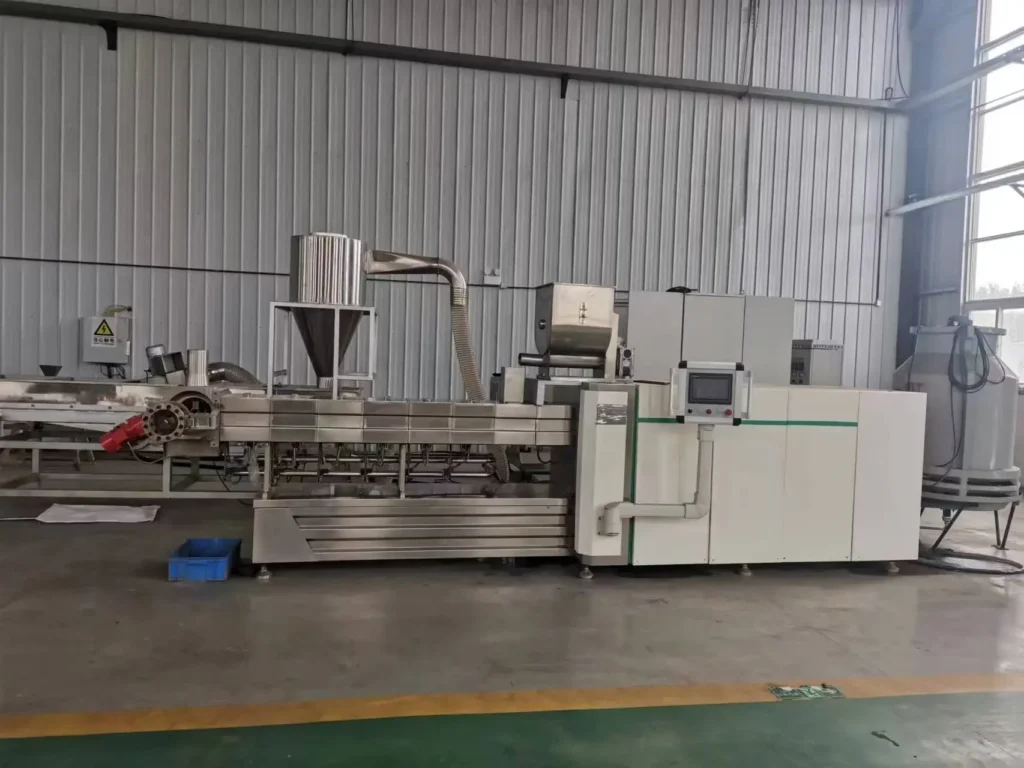
Back when I was stationed in Lagos overseeing pet food line installations, a client insisted on modifying a DS70 twin-screw machine for cold-pressing without adjusting the screw elements. The result was a disaster: the puffing rate plummeted, and the kibble shattered at the slightest touch, ruining the entire batch. I ended up squatting in the workshop to reconfigure the screw combination and recalibrate the temperature zones just to pull the gelatinization degree back to acceptable standards. Now, whenever I evaluate extruded vs cold-pressed dog food equipment, I look past the marketing claims and focus on the physical shear forces and barrel pressure profiles. Machines do not lie, and choosing the wrong setup guarantees downstream processing nightmares.
Understanding these mechanical differences is the first step toward building a production line that actually scales without constant downtime.
What Are the Core Equipment Differences?
The fundamental divide lies in how each machine generates pressure and applies shear force to the raw material.
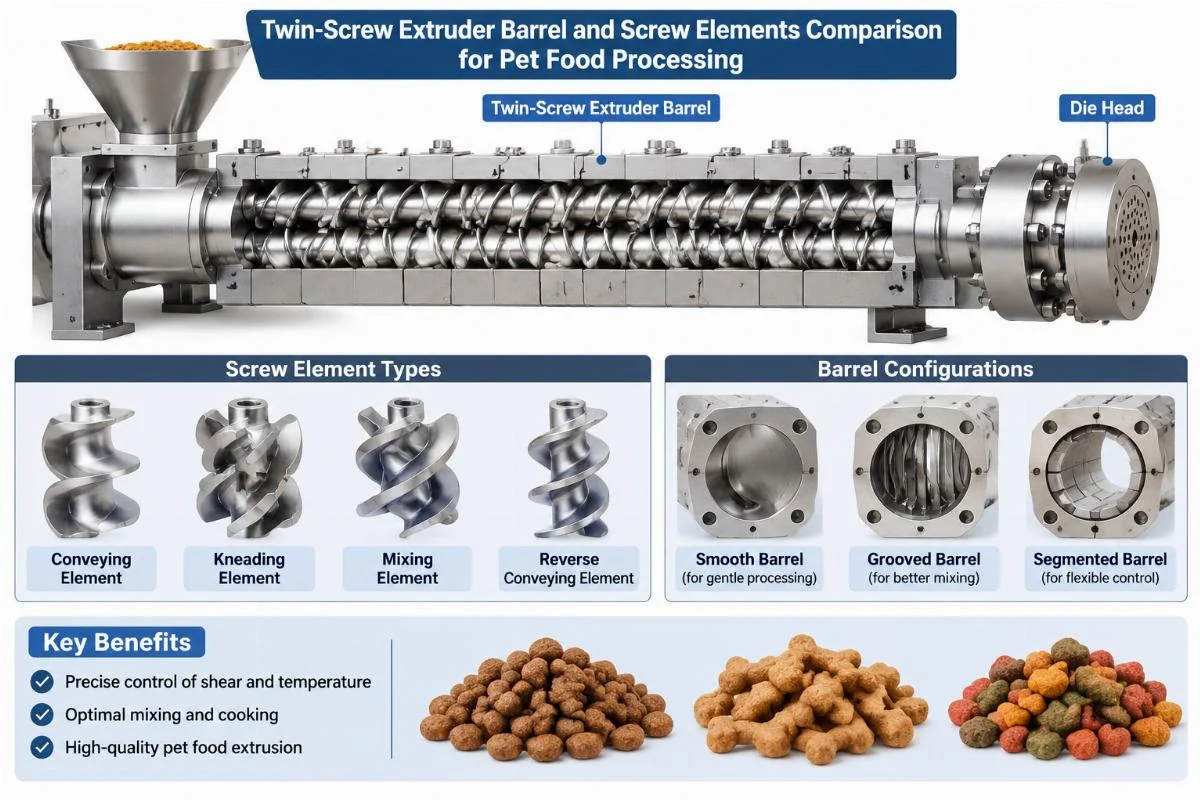
When analyzing extruded vs cold-pressed dog food equipment, you are looking at two entirely different mechanical philosophies. Twin-screw extruders rely on intermeshing screws to create intense friction, high pressure, and controlled thermal profiles. This environment forces starch molecules to unpack and bond with water, achieving the gelatinization necessary for canine digestion. Cold-press machines, conversely, operate at much lower pressures and rely on mechanical compression rather than thermal-shear gelatinization.
| Equipment Parameter | Twin-Screw Extrusion | Cold-Press Compression |
|---|---|---|
| Shear Force Generation | High (Controlled via screw elements) | Low (Mechanical compression only) |
| Gelatinization Degree | Fully gelatinized | Partially gelatinized |
| Barrel Temperature Control | Multi-zone precise heating | Ambient to slightly warmed |
| Moisture Sensitivity | Forgiving (Evaporates during flashing) | Highly vulnerable to variation |
| Pellet Structural Integrity | Porous, stable, expansion-controlled | Dense, prone to moisture absorption |
A startup in Southeast Asia initially tried to run a high-meat formula through a modified cold-press setup. The lack of sufficient shear force meant the proteins never properly denatured, leading to severe digestibility issues. They eventually shifted to a DS-series extrusion line to achieve the necessary thermal-mechanical energy input.

The hardware must match the biochemical goal; you cannot force a cold-press mechanism to deliver extrusion-level gelatinization.
How Does the Process Affect Final Texture?
Texture is not just about consumer appeal; it dictates shelf stability, coating adherence, and the physical breakdown of the kibble during chewing.
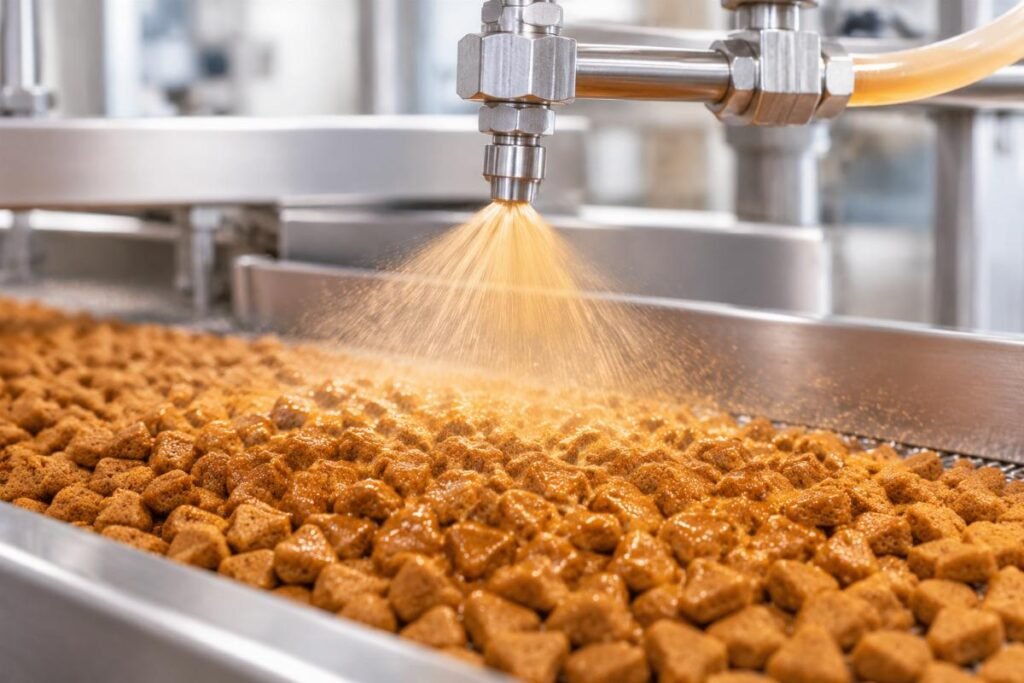
The debate over extruded vs cold-pressed dog food equipment often centers on the final pellet structure. Extrusion creates a porous, expanded matrix. As the superheated dough exits the die, the sudden pressure drop causes moisture to flash off, expanding the kibble and locking in a stable, crunchy texture. This porous structure is ideal for post-extrusion fat and flavor coating, as the surface area absorbs liquids evenly.
Cold-pressed pellets, however, are dense and compact. Because they lack the expansion phase, they retain a higher internal moisture density if not perfectly dried beforehand. This makes them highly susceptible to mold and rancidity if the ambient humidity fluctuates. Furthermore, the dense surface resists flavor coating, often resulting in uneven seasoning that fails to appeal to picky eaters.
A contract manufacturer in Europe faced this exact issue. Their cold-pressed batches consistently failed the pellet durability index tests, turning to dust in the packaging bags during transit. By switching to a twin-screw extrusion process, they stabilized the matrix, ensuring the kibble maintained its structural integrity from the factory floor to the end consumer’s bowl.

If your formula relies on heavy fat coating or requires long-term ambient storage, the extrusion matrix provides the necessary physical foundation.
Which Method Suits Your Production Scale?
Scalability is determined by throughput consistency, energy efficiency, and the ability to run continuous shifts without degradation.
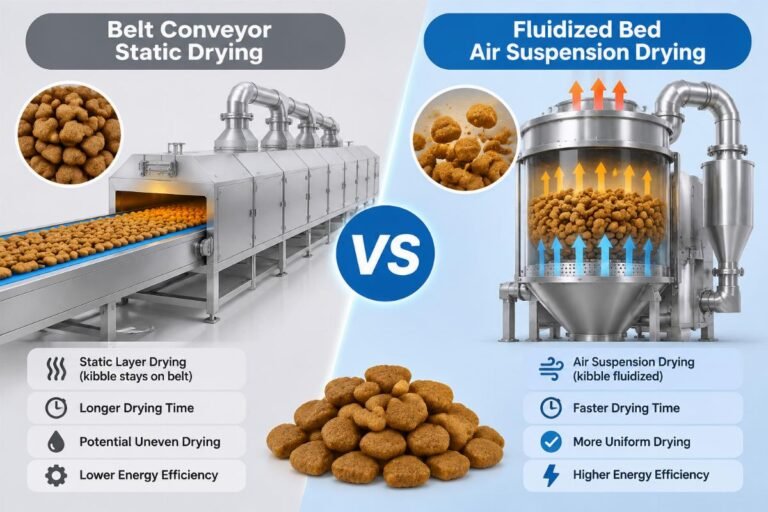
For pet food startups and contract manufacturers, the choice of extruded vs cold-pressed dog food equipment defines your capacity ceiling. Twin-screw extrusion lines are engineered for continuous, high-volume mass production. Systems like the DS-series can handle outputs ranging from small batch trials to massive industrial runs, maintaining consistent thermal energy input hour after hour. The turnkey integration of drying, cooling, and coating systems ensures that the bottleneck is never the extruder itself.
Cold-pressing, by its nature, is limited by mechanical compression speeds and the strict moisture requirements of the raw mix. Scaling a cold-press operation often requires multiplying the number of individual presses, which complicates quality control and increases the footprint exponentially. It is difficult to achieve the same volume efficiency as a single, properly configured twin-screw line.
A mid-sized producer in Latin America attempted to scale their cold-press operation to meet a new retail contract. They quickly realized that adding more presses did not solve the moisture inconsistency between batches. They transitioned to a fully automated extrusion line, which allowed them to meet the volume demand while standardizing the gelatinization process across all shifts.

When volume demands increase, the mechanical reliability of continuous extrusion far outpaces the limitations of compression-based methods.
What Happens If You Choose the Wrong Setup?
Selecting the wrong equipment configuration does not just lower output; it guarantees product failure, wasted raw materials, and damaged brand reputation.
The most common trap in the extruded vs cold-pressed dog food equipment debate is assuming you can easily modify an existing machine to switch processes. Modifying a standard extruder for cold-pressing without a complete screw redesign will invariably ruin pellet durability. The screw elements in a twin-screw extruder are precisely calculated to generate specific shear and pressure profiles. If you remove the thermal input but keep the screw geometry, you get a dense, under-gelatinized mess that crumbles under minimal stress.
I witnessed a client try to save money by adapting an older single-screw setup for a new cold-pressed line. The screw L/D ratio was entirely wrong for the required shear force, resulting in a product that disintegrated during the cooling phase. The entire batch was scrapped, representing a mid-six-figure loss in raw materials and downtime. Correcting this required a complete overhaul of the barrel temperature zones and a custom screw element arrangement to restore the necessary mechanical work.
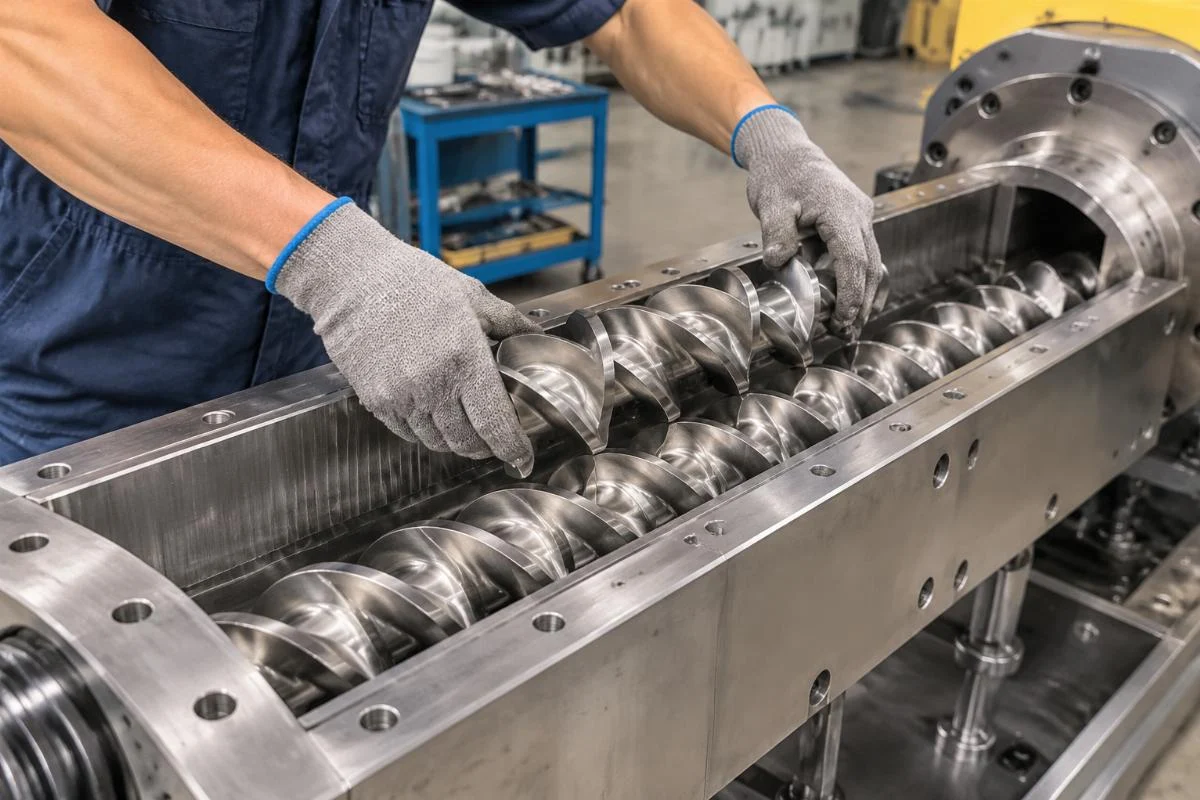
On-site commissioning and precise screw mapping are not optional luxuries; they are the only way to prevent physical product failures.
Conclusion
Equipment selection dictates biochemical reality, not just physical shape.
Choosing between extruded vs cold-pressed dog food equipment requires aligning your mechanical setup with your nutritional and textural goals. Twin-screw extrusion provides the shear force and thermal control necessary for stable, gelatinized mass production, while cold-pressing demands rigorous moisture management and custom screw designs to avoid structural collapse. Match the machine’s physical capabilities to your formula’s biological requirements to ensure consistent, scalable results.
Machines Mentioned in This Article

cat food machine
Pet Dog Food Extruder Manufacturer Production Line
View Machine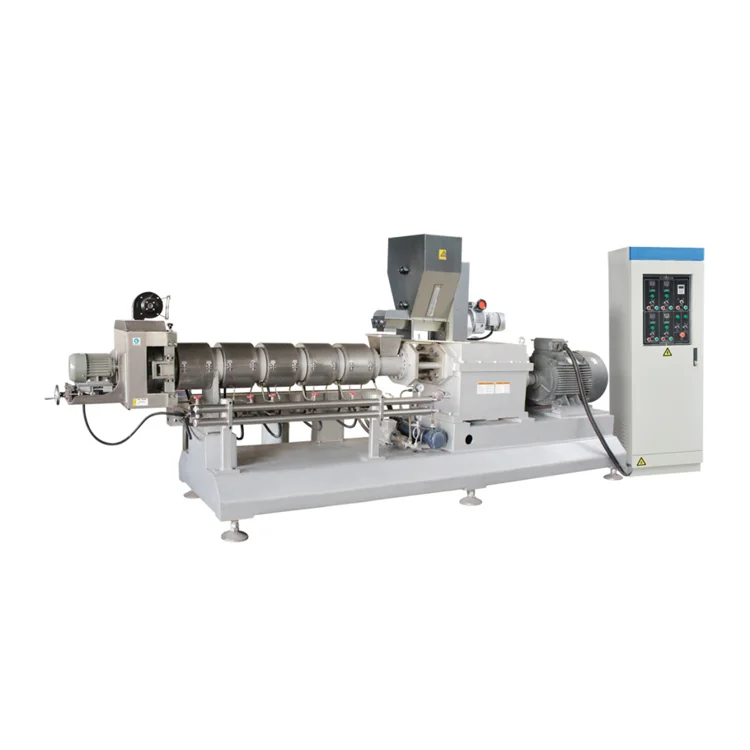
cat food machine
Pet Food Pellet Extruder Machine Manufacturer for Dog Cat
View Machine
cat food machine
Pet Food Extruder Machine Manufacturer Production Line
View Machine
cat food machine