
Choosing between the DS70 and DS85 is not about picking the bigger machine; it is about matching the specific torque requirements of your high-meat recipes and your target throughput to avoid severe screw wear and hidden operational costs.
When startup owners and contract manufacturers evaluate a twin screw extruder for pet food, the initial instinct is often to minimize capital expenditure by selecting a smaller model. However, the DS70 vs DS85 pet food extruder decision must be driven by your fresh meat inclusion rates and long-term scalability. I remember my mentor taking me through the Vietnamese market years ago. We visited a client who insisted on saving money by installing a smaller model for a high-meat cat food formula. The moment the machine started, the capacity fell drastically short, and the screws wore out at an alarming rate. Ultimately, they had to pay the difference to upgrade. Over the years, running sites across Southeast Asia, I have witnessed countless factories paying the tuition for choosing the wrong equipment. Today, we will break down the core differences, recipe requirements, capacity needs, and total cost of ownership to help you make the right pet food production line selection.

What Are the Core Differences Between DS70 and DS85?
The fundamental divergence lies in the screw diameter, torque output, and motor power, which directly dictate the machine’s ability to handle dense, high-moisture meat slurries.
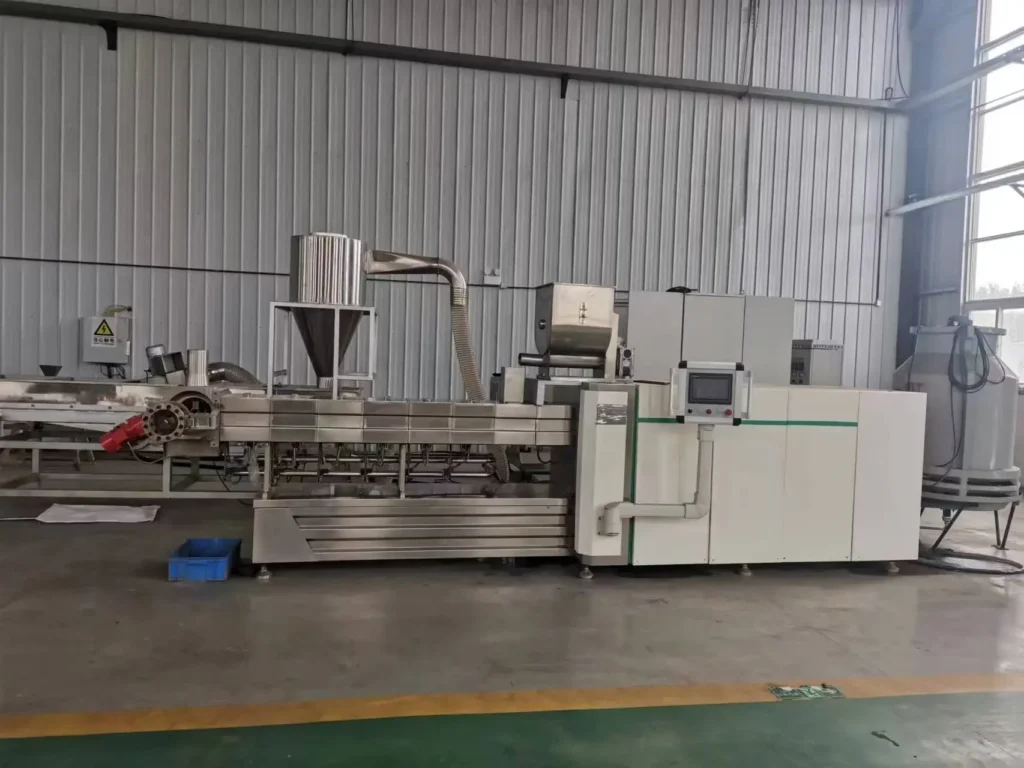
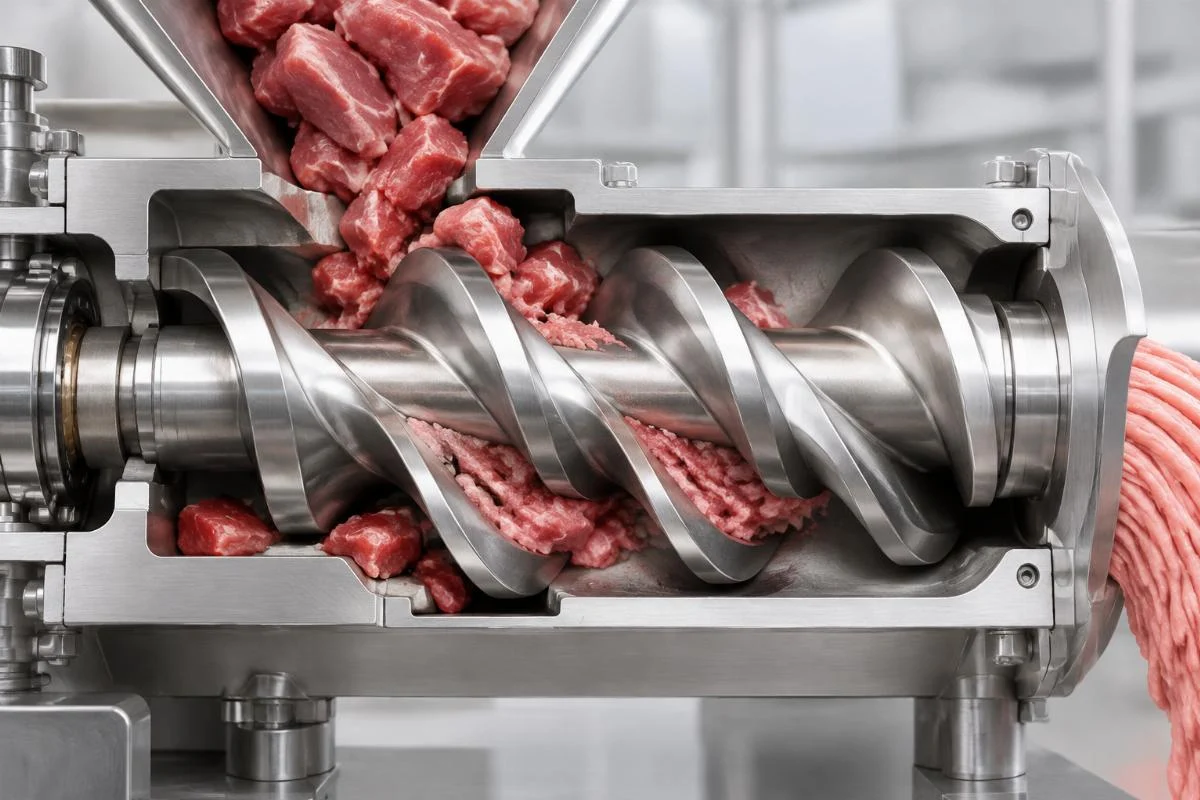
When comparing the DS70 vs DS85 pet food extruder, the physical dimensions tell only half the story. The DS70 is engineered for standard dry pet food applications where meat meal is the primary protein source. Its screw configuration and motor power are optimized for lower specific mechanical energy (SME) input, ensuring efficient cooking of starch-heavy recipes. On the other hand, the DS85 features a significantly larger screw diameter and a reinforced gearbox designed to deliver higher torque. This extra torque is non-negotiable when processing recipes with high fresh meat inclusion.. The larger barrel and screw elements of the DS85 provide the necessary shear force to emulsify fats and proteins without stalling the motor.
In a recent DS70 DS85 capacity comparison, it becomes evident that the DS85’s mechanical advantage allows it to maintain stable conditioning even when the recipe viscosity spikes. The DS70, while highly efficient for its intended purpose, lacks the mechanical leverage to push dense meat batters through the die consistently. This is not merely a matter of size; it is a matter of mechanical physics.
How Does Your Recipe Dictate the Machine Choice?
Your fresh meat inclusion rate and the types of proteins used will strictly determine which extruder model can process your formula without causing rapid component degradation.
The choice of a twin screw extruder for pet food is inextricably linked to your recipe’s physical properties. If your brand focuses on standard poultry dog food with low fresh meat percentages, the DS70 is a highly cost-effective workhorse. I have seen contract manufacturers maximize their return on investment by running the DS70 for these medium-volume, starch-dominant lines. The shear force generated is perfectly adequate to cook the dough and form the kibble.
However, the narrative shifts dramatically when high-meat cat food enters the picture. A Southeast Asian startup attempted to run a high-meat feline recipe on a smaller model. The high fat and moisture content from the fresh meat drastically increased the resistance inside the barrel. The DS70’s torque limit was quickly reached, leading to frequent motor trips and incomplete cooking. They had to upgrade to the DS85, which provided the robust torque needed to handle the high-meat slurry.. The DS85’s screw element configuration is specifically designed to manage the lubricating effect of high fats while still applying enough shear to cook the proteins. Choosing the wrong model for your recipe does not just affect output quality; it accelerates the wear on the screws and barrels, turning a minor initial saving into a major operational headache.

Capacity and Scalability: Which Model Fits Your Growth?
Hourly output ranges and future expansion flexibility must be evaluated against your brand’s growth trajectory, not just your current day-one volume.
When conducting a DS70 DS85 capacity comparison, it is crucial to look beyond the nameplate capacity and consider the real-world throughput under your specific recipe conditions. The DS70 offers a respectable output range for standard recipes, making it an ideal entry point for startups testing the market. It provides enough volume to establish a foothold without overcommitting capital.
Conversely, growing brands that anticipate scaling their multi-protein recipes require the DS85. The DS85 delivers a substantially higher throughput capacity, particularly when running complex formulas that require extended conditioning times.. A brand expanding into multiple protein lines needs the flexibility to switch recipes without sacrificing hourly output. The DS85’s larger volume and higher torque ensure that production bottlenecks do not emerge as order volumes increase. Furthermore, the turnkey line design from raw material intake to packaging must be scaled accordingly. The DS85 integrates seamlessly with larger drying and cooling systems, ensuring that the increased extruder output is matched by downstream processing capabilities. This holistic approach to pet food production line selection prevents the common pitfall of having a fast extruder bottlenecked by an undersized dryer.

Total Cost of Ownership: Initial Investment vs. Long-term Wear
Evaluating the true cost requires looking past the initial purchase price to factor in screw lifespan, energy efficiency, and maintenance downtime over the machine’s operational life.
The most counter-intuitive aspect of the DS70 vs DS85 pet food extruder debate is the total cost of ownership. Many buyers assume that saving money on the initial purchase of a smaller model is the smartest financial move. However, if that smaller model is pushed beyond its mechanical limits by a high-meat recipe, the long-term costs will far exceed the initial savings.
Frequent screw replacements, unplanned downtime for cleaning, and the energy inefficiency of a motor constantly struggling against high resistance all compound the operational expenses. The DS85, while requiring a higher initial investment, offers a substantially extended screw lifespan when processing abrasive or high-fat recipes.. The energy consumption ratio is also more favorable under load, as the motor operates within its optimal efficiency band rather than near its stall point. Additionally, the CIP (Clean-In-Place) cleaning efficiency on larger models like the DS85 reduces the time and labor required for recipe changeovers. For a contract manufacturer running multiple formulas, this efficiency translates directly into increased billable hours and reduced material waste. The DS70 remains a brilliant choice for its specific application, but using it outside its design parameters is a false economy.

Conclusion
Selecting the right extruder model is a strategic alignment of recipe mechanics, capacity goals, and long-term operational economics.
The DS70 vs DS85 pet food extruder choice ultimately depends on your specific fresh meat inclusion rates and target throughput. While the DS70 maximizes ROI for standard, medium-volume lines, the DS85 provides the essential torque and scalability required for high-meat recipes and growing brands. By matching the machine’s mechanical capabilities to your formula’s physical demands, you avoid the severe screw wear and production bottlenecks that plague mismatched operations. A comprehensive pet food production line selection process, supported by turnkey line design and formula development expertise, ensures your equipment investment drives sustainable growth rather than hidden costs.
Machines Mentioned in This Article

cat food machine
Pet Dog Food Extruder Manufacturer Production Line
View Machine
cat food machine
Pet Food Pellet Extruder Machine Manufacturer for Dog Cat
View Machine
cat food machine
Pet Food Extruder Machine Manufacturer Production Line
View Machine
cat food machine