
Most buyers assume European equipment guarantees zero downtime, but localized service and parts supply are the actual lifelines for capacity security in emerging markets.
When evaluating European vs Chinese pet food production lines, the core answer is clear: while European lines offer high initial precision, Chinese lines provide superior service response and spare parts availability, which are critical for minimizing downtime and securing continuous production in emerging markets.
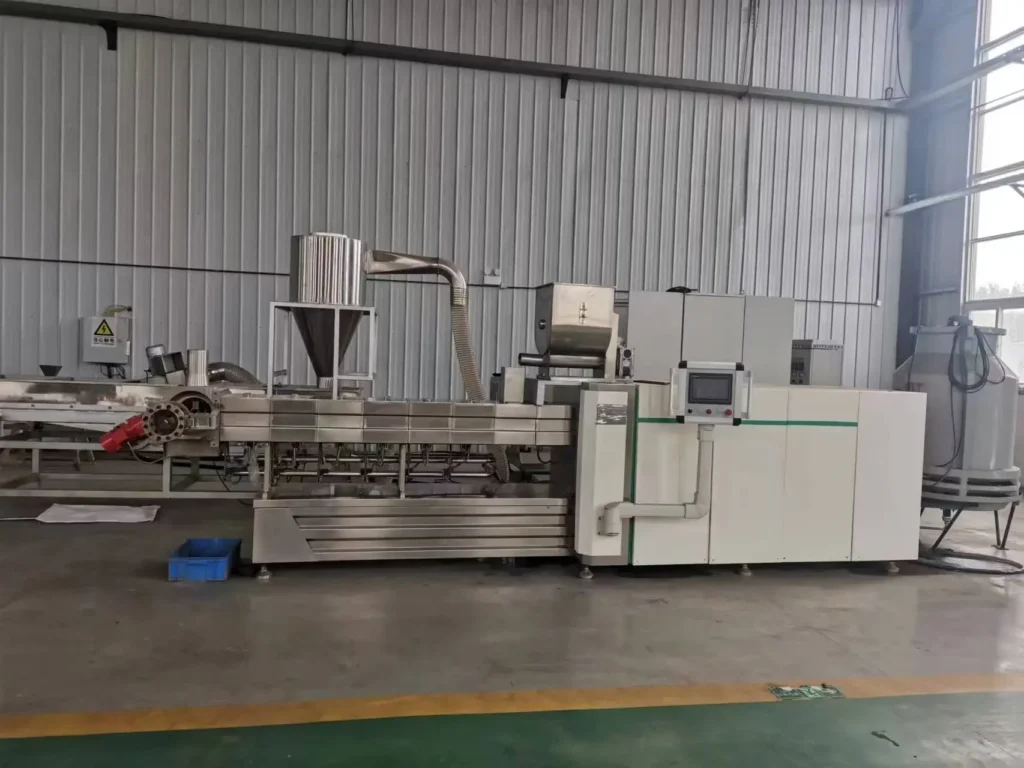
Walking through pet food manufacturing facilities across Southeast Asia, the most common frustration I hear is not about the initial extrusion quality, but about the agonizing wait for maintenance. Years ago, while helping a contract manufacturer in Bangkok troubleshoot a twin-screw extruder, the cutting blades wore out prematurely. The factory had to idle for weeks waiting for replacement components from Europe, leaving the老板 staring at a completely silent production floor. Later, they switched to a domestic twin-screw line, and replacement components arrived within days, with engineers flying in directly to guide the installation. Selling equipment ultimately means selling service. European lines are indeed precise, but when racing to secure capacity in Southeast Asia, the response speed and parts supply of Chinese lines are the real lifelines.

Let us break down how these two options truly perform on the factory floor.
How Do European and Chinese Lines Compare in Core Precision?
European lines traditionally lead in initial mechanical precision, but Chinese lines have closed the gap to match daily production stability under heavy loads.
When sourcing equipment, buyers often fixate on the initial machining tolerances. European manufacturers have long been recognized for their meticulous assembly and high-grade metallurgy. However, precision in pet food extrusion is not just about the day-one specifications; it is about maintaining those specifications over thousands of hours of continuous operation.
| Precision Factor | European Lines | Chinese Lines |
|---|---|---|
| Initial Machining Tolerance | Certified High | Standard High |
| Daily Production Stability | Robust | Robust |
| Barrel Wear Resistance | Noticeably Extended | Substantially Extended |
| Screw Flight Consistency | Verifiable | Verifiable |
A Southeast Asian contract manufacturer once compared the two. The European line showed marginally better initial torque consistency. However, when processing high-meat inclusion recipes, the Chinese twin-screw extruder demonstrated superior resistance to barrel wear, thanks to the use of food-grade stainless steel construction that meets strict sanitary standards. The daily output stability remained remarkably consistent across both, proving that for most commercial applications, the theoretical precision advantage does not always translate to a noticeable difference in final kibble quality.

What is the Real Impact of Spare Parts Lead Times?
Chinese lines cut parts waiting time from weeks to days, securing continuous production and protecting profit margins.
The true test of any machinery is not how it runs when new, but how quickly it recovers when a component fails. This is where the difference between European vs Chinese pet food production lines becomes starkly visible. The pet food production line downtime cost is rarely just the price of the broken part; it includes lost production, spoiled raw materials, and missed shipment penalties.
Consider the supply chain reality. European manufacturers often centralize their spare parts inventory in their home countries. If a critical sensor or a specialized seal fails in an emerging market, the replacement part must clear international customs and cross oceans. I have seen factories forced to halt operations for extended periods because a single specialized bearing was stuck in transit.
In contrast, Chinese manufacturers have heavily localized their spare parts networks. Chinese twin-screw extruder spare parts are now stocked in regional hubs across Asia, Latin America, and the Middle East. The delivery cycle for essential components has dropped from weeks to mere days. This rapid availability ensures that a minor mechanical hiccup does not cascade into a major financial loss. For a startup scaling its treat production, this responsiveness is the difference between fulfilling a major retail contract and losing a client.

How Does On-Site Service Response Affect ROI?
Chinese manufacturers offer rapid engineer deployment, minimizing costly downtime and accelerating the path to profitability.
When a complex extrusion line goes down, remote troubleshooting has its limits. You need boots on the ground. The speed of pet food machinery after-sales service directly dictates the return on investment.
European service models typically rely on scheduled regional visits or require the client to fly technicians to a central hub. This approach works well in mature markets with dense infrastructure but falls apart in emerging economies where factories might be located in remote industrial zones. The delay in getting a qualified engineer on-site can stretch into weeks, during which the factory bleeds revenue.
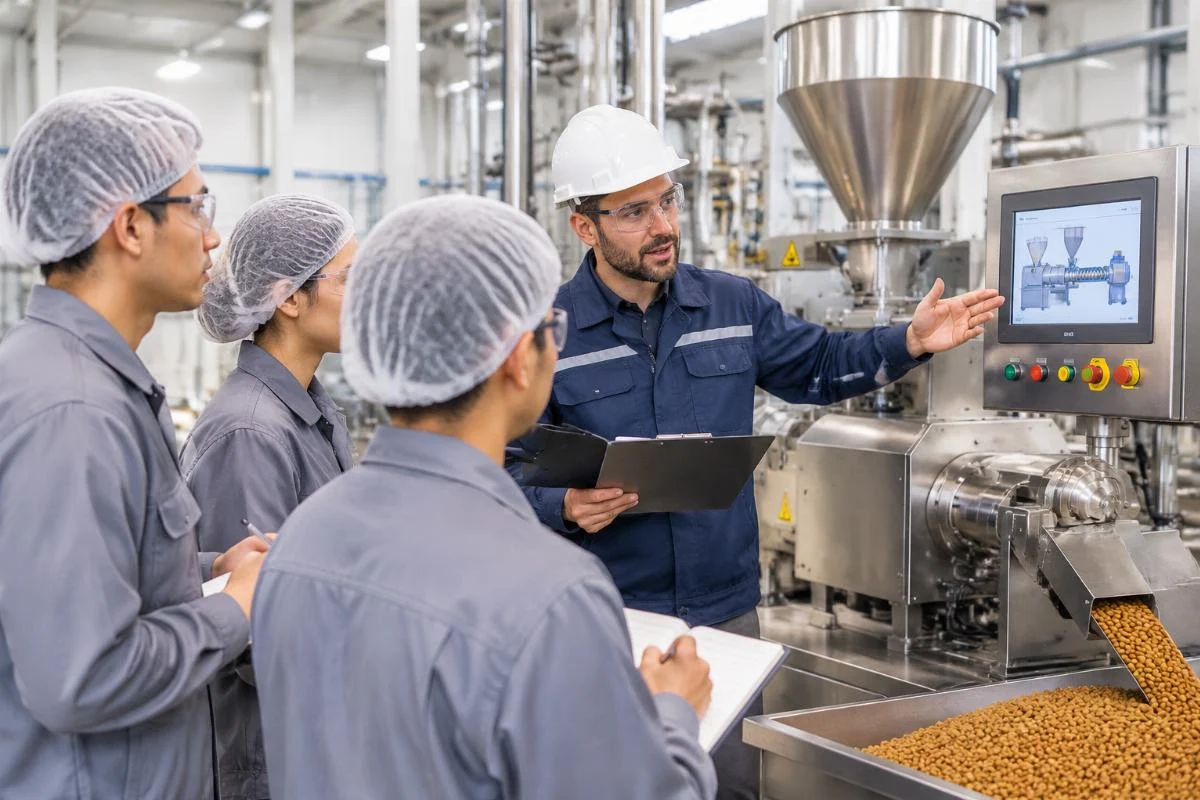
Chinese manufacturers have flipped this model. They prioritize immediate flight deployment for critical failures. When a Middle East pet food startup faced a complex PLC logic error during their launch phase, the manufacturer dispatched a multi-language technical support team immediately. The engineers did not just fix the code; they conducted extensive on-site operator training to prevent recurrence. This turnkey approach, combining rapid physical deployment with comprehensive knowledge transfer, ensures that the client’s team is empowered to handle daily operations smoothly, drastically reducing the reliance on expensive emergency call-outs in the future.
Which Line Offers Better Total Cost of Ownership?
Faster service and local parts make Chinese lines more cost-effective over a multi-year lifecycle, offsetting initial price perceptions.
Evaluating equipment requires looking beyond the initial purchase price to the Total Cost of Ownership. This includes maintenance, energy consumption, downtime losses, and part replacements.
Many buyers operate under the misconception that cheaper initial lines inevitably lead to higher long-term costs. This is a flawed assumption when applied to modern Chinese manufacturing. The reduced downtime from fast parts delivery and rapid engineering support offsets any initial price differences. Furthermore, the durability of the equipment plays a massive role. The use of robust materials, such as 304 and 316 stainless steel for all food-contact parts, significantly reduces the frequency of part replacements due to corrosion or wear.
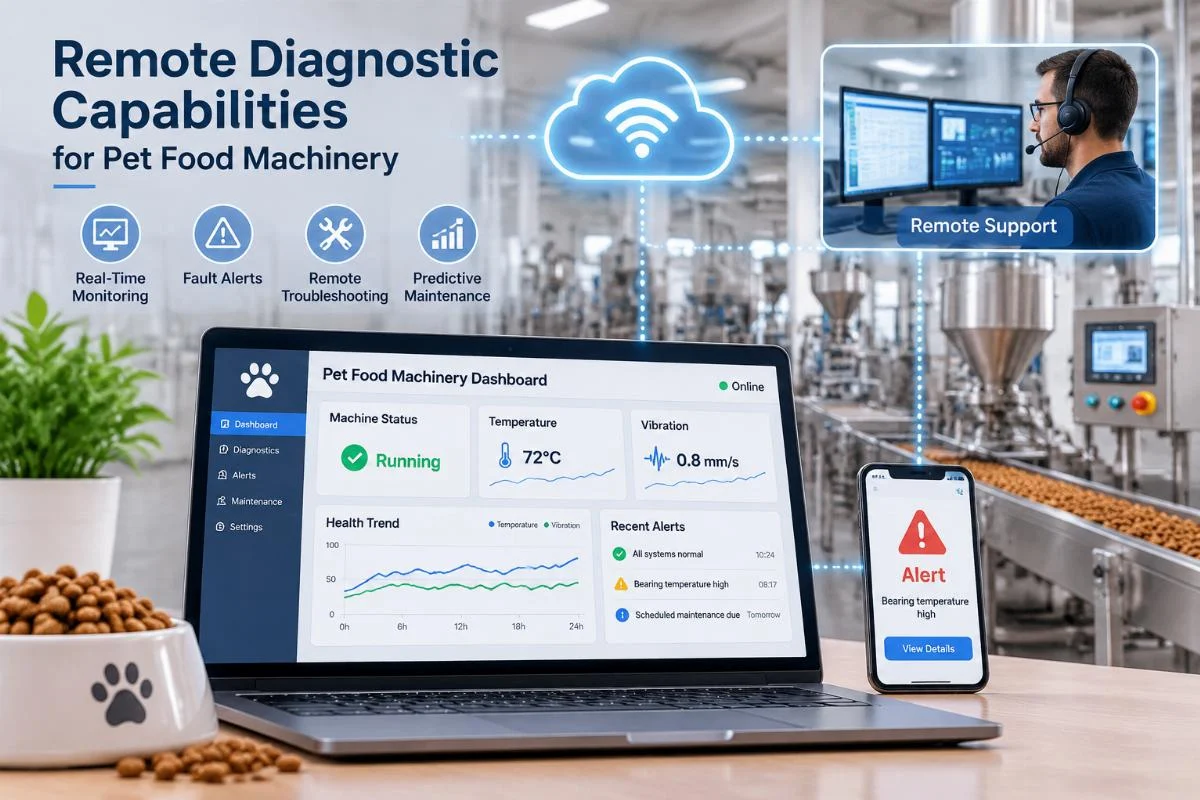
Additionally, the integration of multi-language remote diagnostic assistance allows engineers to monitor machine health and resolve minor software or sensor issues in hours rather than days. When you factor in the avoided losses from halted production, the financial advantage shifts decisively. For a contract manufacturer operating on thin margins, the ability to guarantee continuous operation through superior after-sales support is the ultimate driver of profitability.
Conclusion
The true value of extrusion equipment lies in its operational continuity, not just its initial specifications.
When comparing European vs Chinese pet food production lines, the narrative has shifted. While European lines maintain a reputation for precision, Chinese lines have mastered the logistics of continuous production through localized spare parts and rapid on-site service. For buyers in emerging markets, prioritizing pet food machinery after-sales service and minimizing pet food production line downtime cost is the most reliable strategy for long-term success.