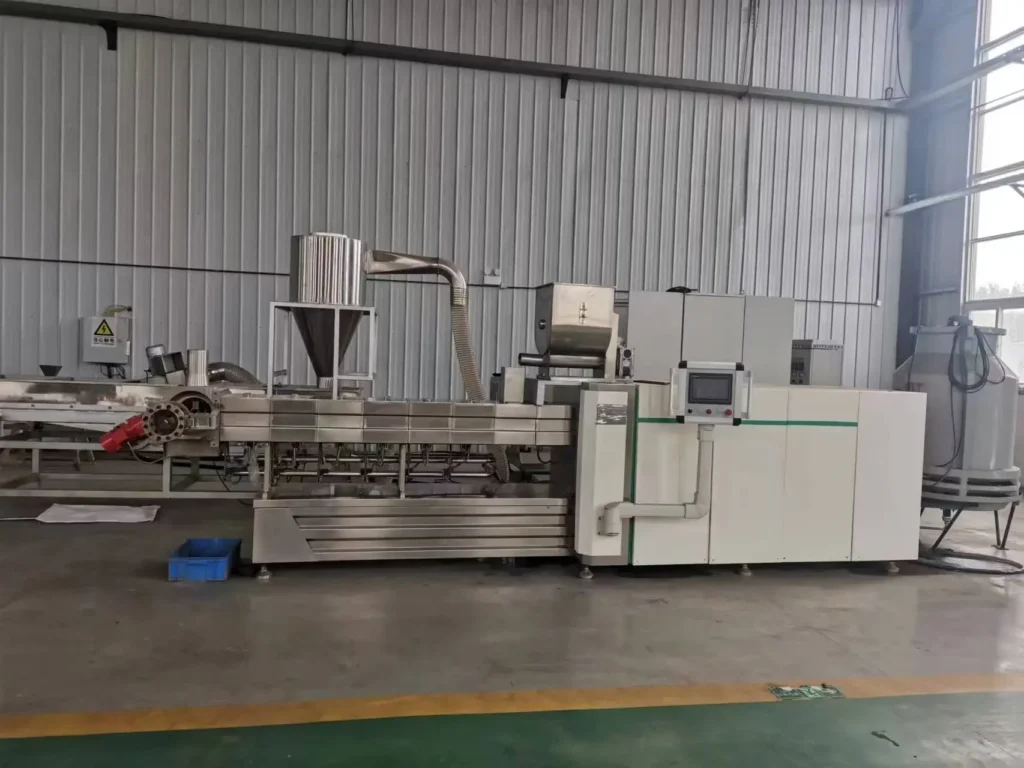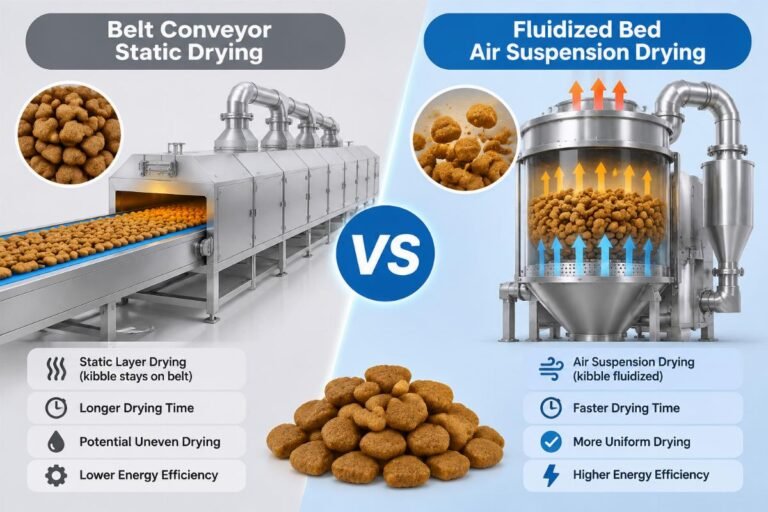
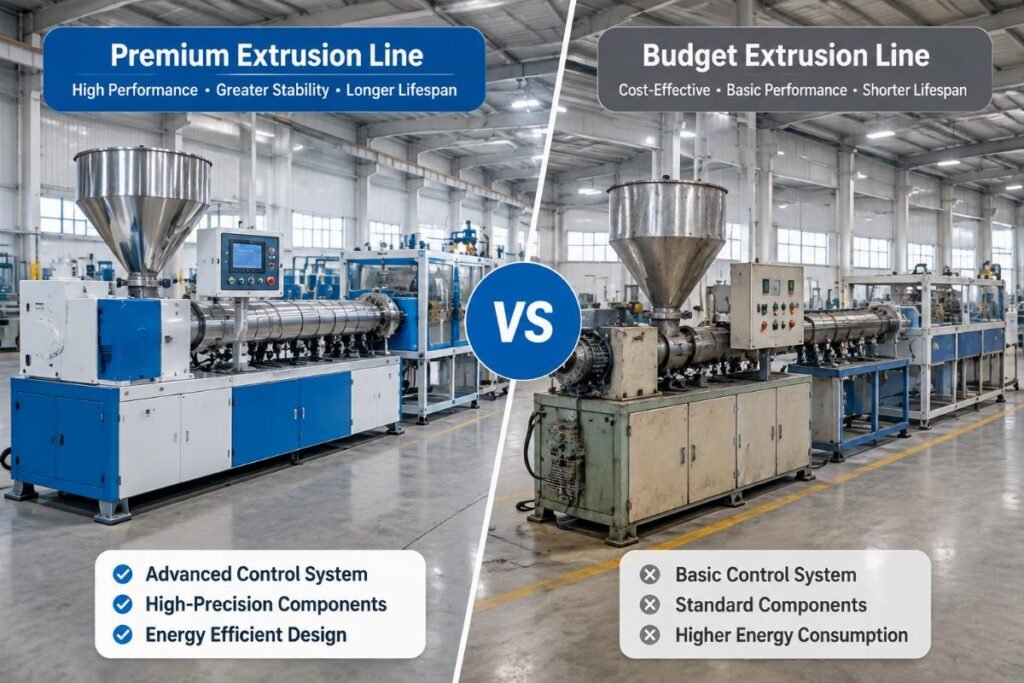
The initial machine price is merely the tip of the iceberg; the real financial trap lies in mismatched drying systems and unsupported formulas.
When evaluating Extru-Tech vs Asian pet food extruders, buyers must look beyond the main machine invoice. The true total cost of ownership hinges on system integration, energy efficiency during drying, and the depth of formula support provided for turnkey production lines.
Walking the aisles at the Chicago trade shows over the years, I have watched countless buyers flip through brochures, comparing premium brands with budget-friendly alternatives. Back when I was on the procurement side, I fell into the exact same trap. I focused entirely on the twin-screw extruder comparison of the main units, ignoring the downstream equipment. When the machines arrived at our facility, the extruded pet food simply could not achieve the required crispness because the dryers were completely mismatched. The entire line stalled. Transitioning to the sales side with Meiteng, my first step with every client is calculating the true lifetime operational costs. The real leverage for a smooth-running line lies in formula support and ring die customization, not just the barrel diameter.

Let us break down the actual differences when navigating the market for pet food extrusion line cost and system reliability.
How do Extru-Tech and Asian extruders compare in total cost?
Focusing solely on the initial capital expenditure for the main extruder often leads to severe operational deficits due to energy inefficiencies and premature part replacements.
When analyzing the pet food extrusion line cost, the sticker shock of premium brands is real, but the operational bleed of poorly integrated budget lines is far worse. Cheaper main machines frequently cause higher energy costs due to mismatched dryers that run continuously without achieving the target moisture reduction. A startup scaling to a mid-tier capacity quickly realizes that utility bills and replacement screws eat away any initial savings.
| Cost Factor | Premium Turnkey Integration | Fragmented Budget Setup |
|---|---|---|
| Initial Capital Outlay | Substantially higher | Noticeably lower |
| Lifetime Energy Consumption | Standardized | Uncontrolled |
| Wear Part Lifespan | Substantially extended | Noticeably reduced |
| Drying Efficiency | Controlled | Vulnerable |
A contract manufacturer in the Midwest once purchased a highly rated main unit from a premium supplier but pieced together the rest of the line from various budget vendors. The moisture reduction curves were entirely inconsistent, leading to massive product rework. Conversely, a Southeast Asian startup utilizing a fully integrated approach from Meiteng saw their operational costs drop noticeably within the first year, simply because the thermal dynamics of the extruder and dryer were engineered as a single ecosystem.
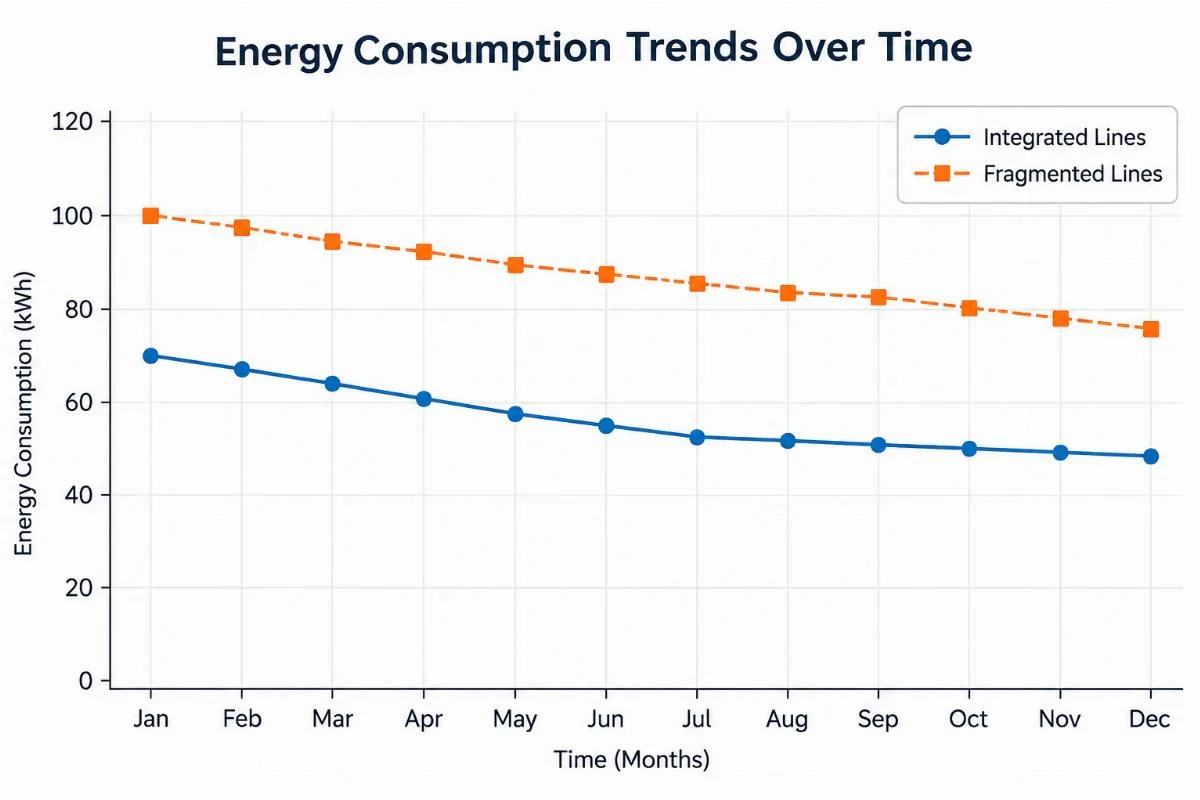
Ultimately, the true pet food extrusion line cost must account for the thermal synergy between the extrusion and drying phases.
Why does system integration matter more than the main machine?
A standalone twin-screw extruder is useless if the downstream drying and flavoring systems cannot handle the specific throughput and moisture profile of the kibble.
The most critical aspect of any twin-screw extruder comparison is not the barrel length, but how well the entire system communicates. Premium brands often design their dryers specifically for their extruder output, ensuring that the airflow and retention time perfectly match the product density. When buyers mix and match Asian extruder suppliers for the main machine with generic dryers, they frequently encounter soggy kibble or case-hardened surfaces that trap moisture inside.
| Integration Aspect | Engineered Turnkey Line | Mismatched Component Setup |
|---|---|---|
| Thermal Matching | Standardized | Uncontrolled |
| Airflow Distribution | Controlled | Vulnerable |
| Flavor Coating Uniformity | Full batch-level | Sample-level |
Consider a new recipe launch where a startup attempted to produce a high-meat inclusion kibble. They sourced a robust main extruder but used an undersized, poorly matched dryer. The result was a product that looked dry on the outside but spoiled within weeks due to internal moisture. By switching to a turnkey design where the drying capacity was explicitly calculated to match the extruder’s output, the texture optimization was achieved without altering the core recipe.

System integration ensures that the physical output of the extruder is perfectly met by the mechanical capabilities of the downstream equipment.
What hidden support do startups actually need?
Formula development and ring die customization are the actual bottlenecks for startups, far more critical than the motor horsepower of the main drive.
Many new entrants assume that buying a premium machine guarantees a perfect product. However, premium brands do not always provide better formula support for startups; they often expect the buyer to already have perfected recipes. The real hidden support needed lies in the metallurgy of the ring dies and the rheology of the dough. A custom ring die dictates shape consistency and density, which in dict
ates how the product dries and coats.
| Support Element | Dedicated R&D Partnership | Standard Equipment Vendor |
|---|---|---|
| Formula Optimization | Full batch-level | None |
| Ring Die Customization | Verifiable | Self-reported |
| Texture Adjustment | Standardized | Basic |
A pet food startup in Europe wanted to launch a novel plant-based treat but struggled with texture. They had the extruder but lacked the metallurgical data to design a die that could handle the high-fiber matrix without excessive backpressure. Through dedicated R&D support, the die geometry was adjusted to control the shear and heat profile inside the barrel, resulting in a consistent expansion ratio that generic suppliers simply could not replicate.

Startups must prioritize partners who offer deep formula development and precise ring die customization over those who merely sell heavy iron.
How to verify an Asian supplier’s turnkey capability?
Verifying a supplier requires moving beyond glossy brochures to inspect their engineering methodology, certification standards, and actual project execution.
The market is flooded with manufacturers claiming to offer complete solutions, but the gap between a welded frame and a true turnkey engineering firm is vast. When evaluating Extru-Tech vs Asian pet food extruders, buyers must rigorously audit the supplier’s ability to integrate food-grade materials, sanitary design, and automated controls. It is not enough to build a machine; the supplier must understand the sanitary requirements of the food industry and the automation logic required for consistent output.
| Verification Metric | Certified Turnkey Engineer | Basic Fabricator |
|---|---|---|
| Material Certification | Verifiable | Not provided |
| Sanitary Design | Standardized | Basic |
| Automation Logic | Controlled | Uncontrolled |
| On-site Commissioning | Full batch-level | None |
A contract manufacturer in Latin America was evaluating several vendors for a new facility. They requested the welding logs and material certificates for the product contact zones. While one vendor provided self-reported documents, the chosen partner provided verifiable, batch-level traceability for their food-grade stainless steel, along with a comprehensive on-site commissioning plan that included operator training. This level of transparency is what separates a reliable partner from a risky gamble.

True turnkey capability is proven through verifiable certifications, sanitary design adherence, and comprehensive on-site commissioning.
Conclusion
The cheapest machine on the showroom floor often becomes the most expensive asset on the factory floor.
Navigating the choice between Extru-Tech vs Asian pet food extruders requires a shift in focus from initial capital expenditure to total lifetime operational efficiency. Success in pet food manufacturing relies on the seamless integration of extrusion, drying, and flavoring systems, backed by deep formula support and precise ring die customization. Buyers must verify turnkey capabilities through strict sanitary standards and material traceability to ensure a profitable, scalable production line.
Machines Mentioned in This Article

cat food machine
Pet Food Processing Equipment Plant Manufacturer Dog Food
View Machine
cat food machine
Dry Dog Food Production Line Pet Food Pellet Machine
View Machine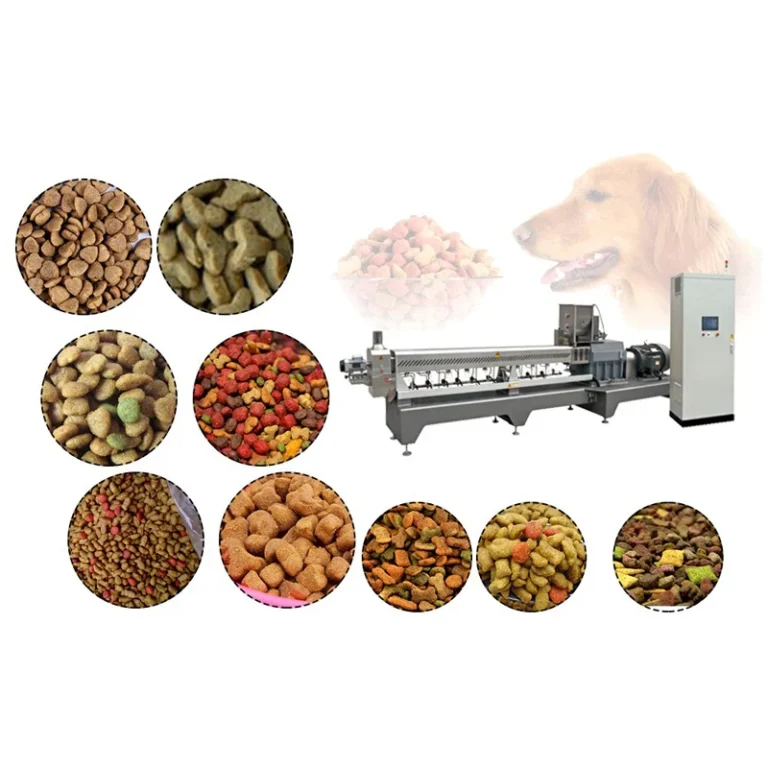
cat food machine
Dog Food Pellet Making Machine Line, Automatic Pet
View Machine
cat food machine