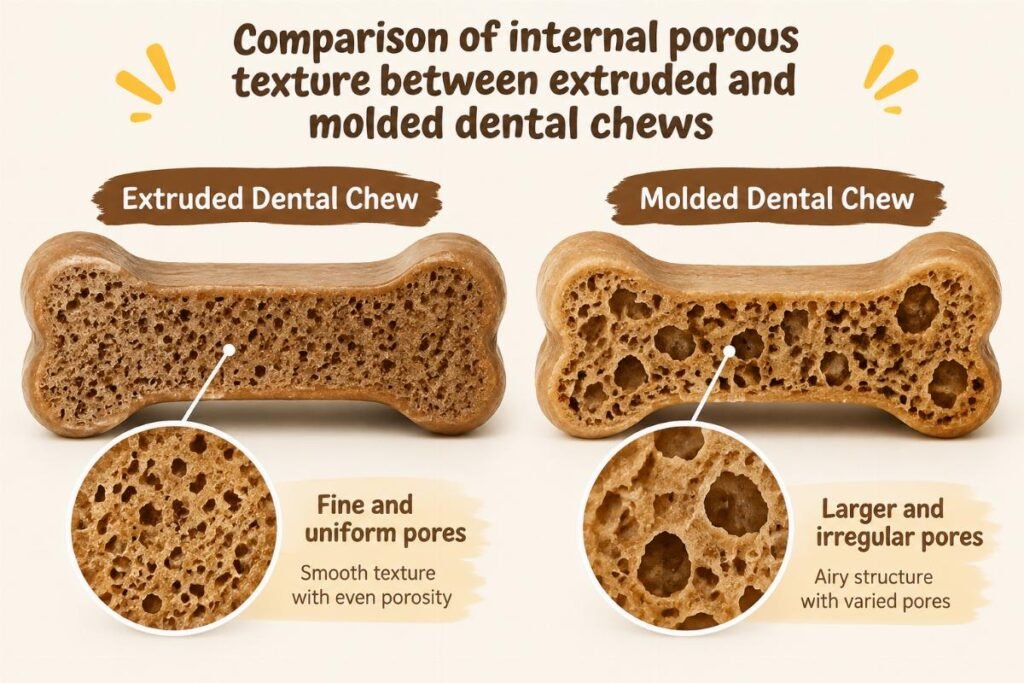
Molded chews look premium but lack the internal porous texture that actually cleans teeth.
When evaluating injection molded vs extruded dental chews, the core answer lies in texture and flexibility: extrusion creates a porous, friction-rich matrix ideal for dental health, while molding produces dense, uniform shapes better suited for rigid aesthetics. Ultimately, screw configuration and starch gelatinization dictate the final hardness, making the extrusion process vastly superior for functional pet treats.
Years ago, while sourcing pet supplies in Dubai, I approved a purchase for a local clinic based purely on a cheap equipment quote. I completely ignored the formula and screw configuration. When the machine started, the puffing degree was insufficient, and the chew hardness failed standard tests. Dogs broke them in a few bites, the entire batch was rejected, and the equipment turned into scrap metal. After taking that massive loss, I shifted to machinery manufacturing in Jinan. Now, when discussing a pet treat extrusion line with clients, my very first step is to talk about the recipe. Even the best hardware will ruin your reputation if the screw combination is wrong and the gelatinization degree falls flat.

Understanding these structural differences is the first step toward building a profitable production strategy.
What Are the Core Differences Between Injection Molded and Extruded Chews?
Extrusion allows internal porous textures via puffing, while molding creates dense, uniform shapes.
When buyers analyze injection molded vs extruded dental chews, they often focus on the visual appeal of the final product. However, the manufacturing mechanics dictate the functional outcome. Injection molding forces a thick, viscous batter into a metal cavity under high pressure, resulting in a dense product with minimal air pockets. In contrast, a twin screw extruder for dental chews utilizes shear, heat, and pressure drop to flash-boil moisture, creating a micro-porous structure.
| Feature | Injection Molding | Twin-Screw Extrusion |
|---|---|---|
| Internal Texture | Dense, uniform, low porosity | Micro-porous, highly frictional |
| Formula Flexibility | Restricted to high-viscosity batters | Highly adaptable to varied starch ratios |
| Dental Friction | Noticeably reduced due to smooth surface | Substantially extended via porous scraping |
| Tooling Cost | High initial mold investment | Low initial die cost, rapid iteration |
A European contract manufacturer once struggled with a high-meat recipe. They attempted injection molding, but the dense structure caused the chews to shatter under moderate bite force. Switching to extrusion allowed them to incorporate a specific starch ratio that provided the necessary structural integrity without sacrificing the porous texture required for plaque removal.

The physical reality is that a smooth, dense surface simply slides over a dog’s teeth, whereas a porous matrix actively scrapes away plaque.
How Does Formula Gelatinization Affect Dental Chew Hardness?
Proper starch gelatinization in twin-screw extruders ensures optimal hardness without causing tooth fractures.
The debate around injection molded vs extruded dental chews often misses the most critical variable: the degree of gelatinization. Hardness is not merely a function of cooling time; it is a direct result of how completely the starch molecules unravel and bond during the thermal-mechanical process inside the barrel. If the gelatinization is incomplete, the chew will be brittle and prone to high breakage rates. If it is over-processed, the chew becomes too hard, risking dental fractures.
Achieving the perfect balance requires precise control over specific mechanical energy input and barrel temperature profiles.
- Feed Zone Preparation: Raw materials are preconditioned to ensure uniform moisture distribution.
- Gelatinization Zone: Heat and shear force break down starch granules. The screw element arrangement here must generate enough friction without burning the proteins.
- Pressure Build-up: The melt is forced through a restrictive section to align the protein-starch matrix.
- Die Expansion: The sudden pressure drop at the die causes moisture to flash off, setting the porous structure.
A startup in the Middle East faced a severe issue where their chews were snapping during the cooling conveyor transit. The root cause was not the dryer temperature, but an improperly configured screw element that failed to generate sufficient shear in the gelatinization zone. By adjusting the screw direction and increasing the residence time in that specific barrel section, the breakage rate dropped noticeably, and the final hardness met the required toughness standards.

Hardware alone cannot fix a poorly gelatinized formula; the screw configuration must match the specific ingredient mix.
Which Production Process Offers Better ROI for Pet Food Startups?
Extrusion lines provide lower mold costs, higher formula flexibility, and faster recipe iterations.
For new entrants in the pet treat market, capital allocation is a massive hurdle. When comparing injection molded vs extruded dental chews from a financial perspective, the extrusion process offers a vastly superior return on investment for startups and contract manufacturers.
Injection molding requires expensive, custom-machined metal molds for every single shape and size variation. If a brand wants to launch a new seasonal shape or adjust the dimensions for a different dog breed, they must commission entirely new molds, incurring heavy upfront costs and long lead times.
Conversely, a pet treat extrusion line relies on interchangeable dies. Changing the shape of the chew is as simple as swapping a metal plate at the end of the extruder. This allows brands to test multiple market variations with minimal capital expenditure. Furthermore, the twin screw extruder for dental chews can handle a much wider variety of formulations, from high-starch budget recipes to premium high-meat blends, simply by adjusting the temperature profile and screw speed.
A North American startup initially considered molding for their premium line but realized the tooling costs would consume their entire marketing budget. They pivoted to a twin-screw extrusion setup, which allowed them to iterate through dozens of recipes and shapes in a single month. This agility enabled them to secure a major retail contract based on rapid prototype delivery.

Flexibility in both shape and formula is the true driver of profitability in the early stages of a pet food brand.
How to Choose the Right Extruder Configuration for Your Recipe?
Screw element arrangement and barrel temperature profiles must be customized to your specific ingredient mix.
The final piece of the puzzle when evaluating injection molded vs extruded dental chews is understanding that the extruder is not a standalone machine; it is a highly customizable chemical reactor. The hardware matters far less than the internal configuration.
Selecting the right setup requires a deep understanding of your raw materials. High-meat recipes require gentle shear to prevent protein burning, while high-starch recipes demand aggressive shear to ensure complete gelatinization. The length-to-diameter ratio of the screws, the arrangement of kneading blocks, and the precise temperature mapping of each barrel zone all dictate the final texture and hardness.
This is where specialized engineering support becomes non-negotiable. Many startups fail because they buy a generic machine and attempt to force their unique recipe through a standard configuration.
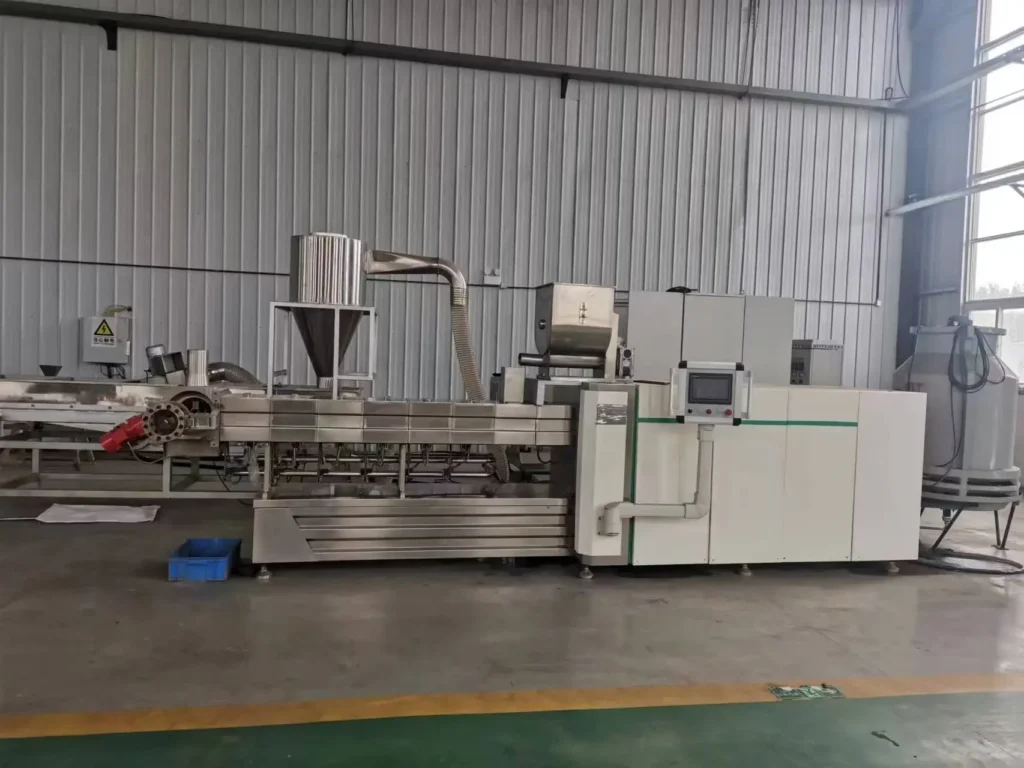
At Meiteng, we approach every project by analyzing the formula before we even discuss the DS series twin-screw extruders. Our turnkey production line design includes comprehensive formula development support. We help startups optimize the screw configurations and gelatinization parameters specifically for their ingredient mix, ensuring that the final chew achieves the exact hardness and porous texture required by the market. Whether you are scaling from a pilot batch to a full commercial run, having an engineering partner who understands the rheology of pet treat dough is the difference between a successful launch and a costly recall.

Matching the machine’s mechanical action to the formula’s rheological properties is the secret to consistent, high-quality dental chews.
Conclusion
Extrusion dominates functional pet treats through superior texture and unmatched production flexibility.
While molding offers dense aesthetics, extrusion delivers the porous matrix essential for dental health, alongside the formula adaptability startups need to survive. Success in this market relies entirely on mastering starch gelatinization through precise screw configuration and thermal profiling, rather than simply purchasing the most expensive hardware.