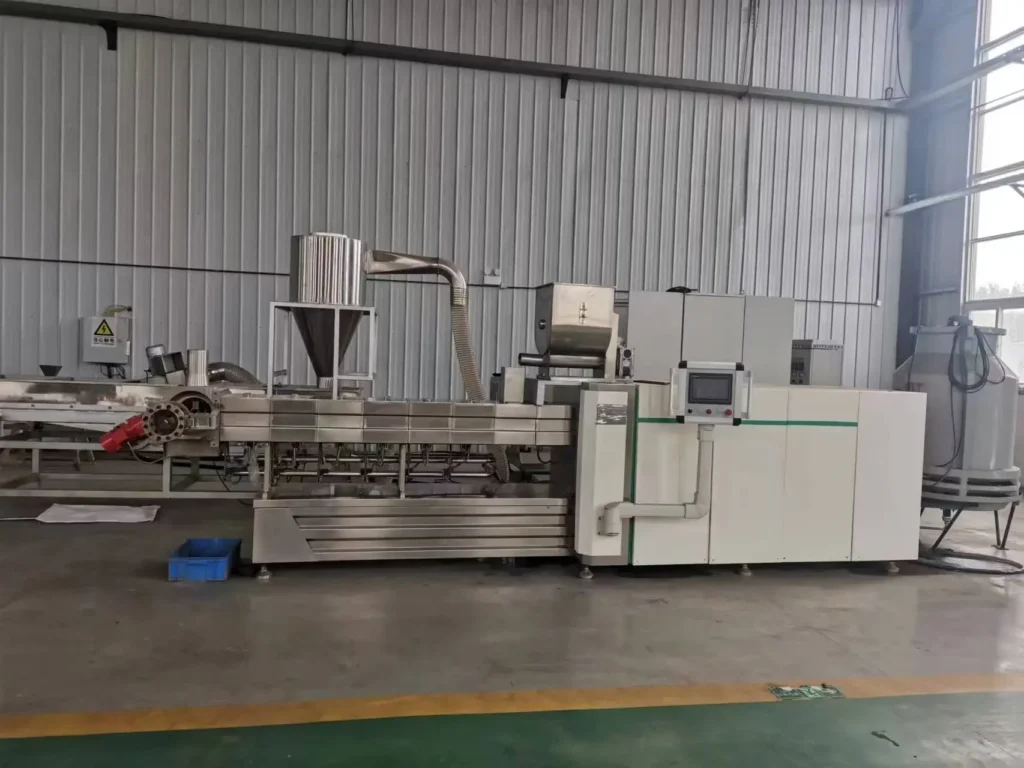

Higher meat content does not just demand premium ingredients; it requires massive shear force to prevent machine jamming.
Choosing between extruded and baked dog food depends entirely on your recipe meat content and required gelatinization degree. Selecting the wrong extruder, such as a single-screw machine for high-meat formulas, causes severe blockages and massive material waste, whereas a twin-screw extruder ensures proper mixing and digestibility.
I still remember my early days monitoring quality control at a workshop in Jinan. A client insisted on using a standard single-screw machine to process high-meat extruded dog food. I tried to warn them, but they wouldn’t listen. The result was catastrophic: the machine choked completely, the screws jammed so tightly they couldn’t be pulled out, and dozens of tons of raw material were scrapped. Later, when I transitioned to international trade, I saw countless buyers making the exact same mistakes—confusing extrusion with baking and cobbling together mismatched machinery. The reality is that high-meat formulas absolutely require a DS70 twin-screw extruder to generate enough shear force for adequate gelatinization. No matter how brilliant your recipe is, choosing the wrong equipment means your production line will just output waste the moment you turn it on.

Let us break down the technical realities of these production methods and how to select the right machinery for your facility.
What Are the Core Process Differences Between Extruded and Baked Dog Food?
Extrusion relies on high-temperature, high-shear conditions to achieve full starch gelatinization, while baking utilizes low-temperature, slow heating to retain heat-sensitive nutrients.
The fundamental difference lies in the mechanical and thermal energy applied to the raw materials. In the extrusion process, the dog food extrusion process differences become obvious when you look at the shear force and pressure inside the barrel. The friction and mechanical work generate intense heat, cooking the starches completely and making them highly digestible for dogs. This method is ideal for standard kibble and allows for complex shapes.
Conversely, a baked dog food production line operates more like a traditional oven. The materials are formed into pellets or shapes and then baked slowly at lower temperatures. This approach is often marketed as “healthier” because it avoids the extreme thermal shock of extrusion. However, a counter-intuitive reality is that baking is not always healthier; improper low-temperature setups fail to achieve the necessary starch gelatinization for proper digestibility. If the starch isn’t fully gelatinized, the dog cannot absorb the nutrients effectively, defeating the purpose of using premium ingredients.

Why Does High-Meat Recipe Require Twin-Screw Extruders Instead of Single-Screw?
Single-screw extruders lack sufficient shear force for high-meat mixtures, leading to frequent blockages, while twin-screw extruders ensure proper mixing, conveying, and gelatinization.
When you increase the meat content in a recipe, the physical properties of the dough change drastically. Meat is high in fat and moisture, and it lacks the structural friction that dry carbohydrates provide. A single-screw machine relies on the friction between the material and the barrel wall to convey and melt the mix. With high-meat recipes, the material simply slips, causing the screw to spin uselessly while the meat paste blocks the discharge die. I have seen entire batches ruined because the operators didn’t understand this mechanical limitation.
Twin-screw extruders solve this by using two intermeshing screws that actively pump the material forward, regardless of its friction coefficient. This positive displacement ensures that even highly lubricated, high-fat meat mixtures are subjected to the necessary shear force and thermal energy. The self-wiping action of the screws also prevents material from stagnating and burning inside the barrel.
| Equipment Type | Shear Force Generation | High-Meat Handling | Gelatinization Control |
|---|---|---|---|
| Single-Screw | Friction-dependent | Vulnerable | Uncontrolled |
| Twin-Screw | Mechanically forced | Robust | Controlled |
Upgrading to a twin-screw system dramatically improves the gelatinization degree and allows for capacity scaling without the constant downtime associated with clearing blockages.

How to Choose the Right Equipment for Your Pet Food Production Line?
You must match your target meat content and capacity needs with specific extruder models and baking oven specs to avoid mismatched equipment failures.
Selecting the right extruded vs baked dog food equipment starts with a clear definition of your end product. If your goal is a traditional, highly digestible kibble with moderate meat inclusion, a well-tuned single-screw line might suffice. However, if you are targeting the premium market with high-meat, grain-free, or fresh-meat-included formulas, a twin-screw extruder is non-negotiable.
For startups and contract manufacturers looking to scale high-meat production, the DS70 twin-screw extruder is the industry workhorse. It provides the precise shear force required to emulsify high-fat meat batters and cook them uniformly. The DS70 model offers flexible screw configurations, allowing you to adjust the residence time and shear intensity based on the specific recipe. This flexibility is crucial when you are developing new products and need to iterate on formulas without buying new hardware.
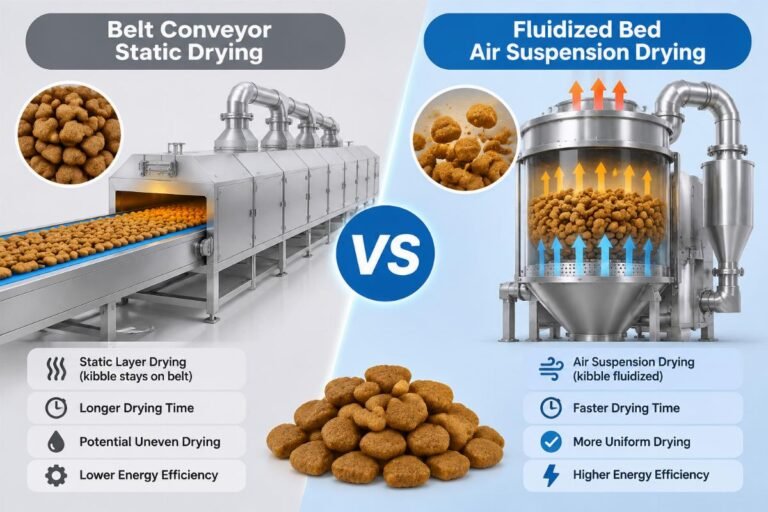
When considering a baked dog food production line, the focus shifts to the forming and drying stages. Since baking does not provide the same expansion force as extrusion, the dough must be sheeted or molded precisely before entering the oven. The drying time reduction and energy consumption comparison between a well-integrated baking line and a poorly ventilated one can make or break your profit margins.

What Are the Turnkey Solutions for Startup Pet Food Manufacturers?
From formula development to installation, integrated turnkey lines prevent mismatched equipment failures and ensure seamless production flow.
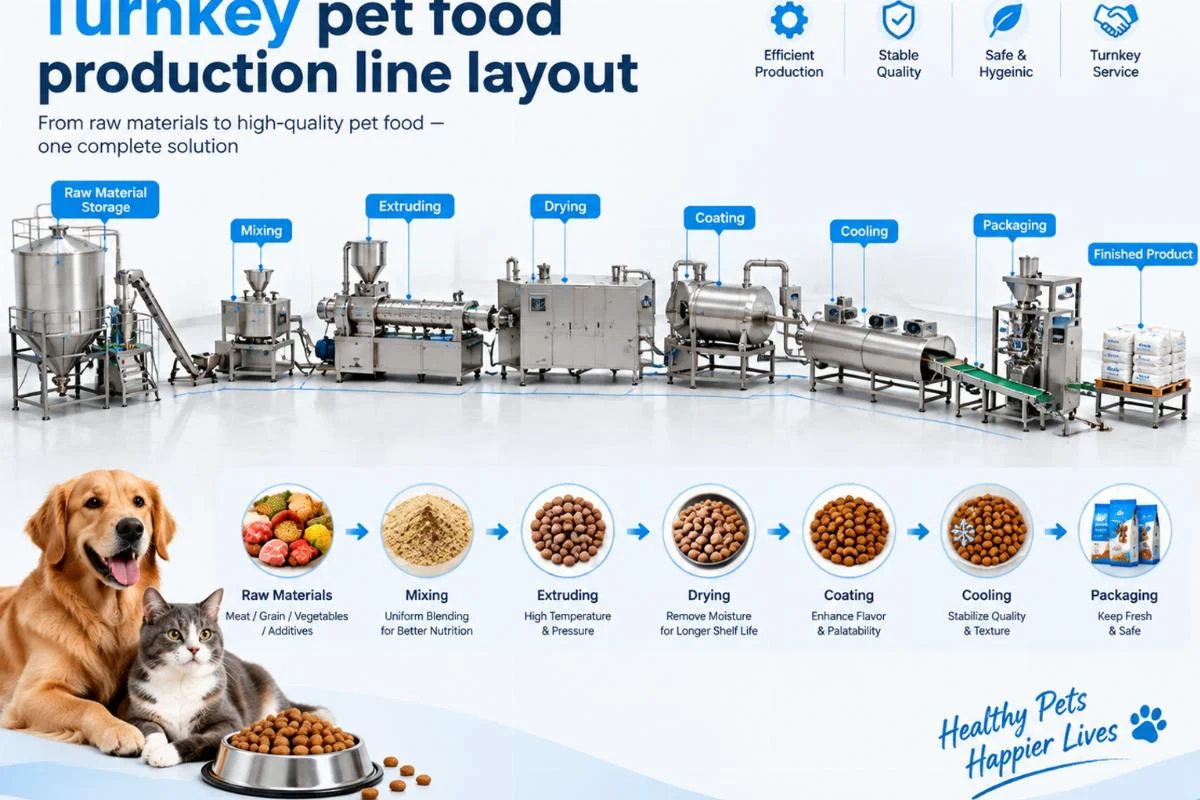
Buying a standalone extruder is a common trap for new pet food manufacturers. The extruder is just one component; the entire line must be balanced. If your dryer cannot handle the moisture output of the extruder, or if your coating system cannot apply flavors evenly to the specific kibble shape, the entire operation bottlenecks.
Turnkey solutions address this by engineering the entire flow from raw material intake to packaging. This includes precise dosing systems for meat and liquids, the extrusion host machine, multi-layer dryers for moisture reduction, cooling conveyors, and dual-drum flavor coaters. For high-meat recipes, the pre-conditioner and dryer specifications must be perfectly matched to the DS70 extruder’s output rate.
A comprehensive turnkey approach also includes formula development support. Equipment manufacturers who understand the rheology of pet food dough can help you adjust your starch-to-meat ratio to ensure the kibble expands properly and maintains its shape during drying. On-site installation and operator training are equally critical; a machine is only as good as the person running it. Proper training ensures your team knows how to adjust barrel temperatures and screw speeds in real-time to maintain product consistency.
Conclusion
The choice between extrusion and baking dictates your equipment architecture, and high-meat formulas strictly demand twin-screw technology.
Selecting the right extruded vs baked dog food equipment is not about following market trends; it is about matching mechanical capabilities to your recipe’s physical properties. High-meat formulas require the intense, controlled shear force of a twin-screw extruder to achieve proper gelatinization and prevent catastrophic blockages. Investing in a fully integrated, turnkey production line ensures that every stage of the process supports your quality goals, turning premium ingredients into consistent, digestible nutrition.
Machines Mentioned in This Article

cat food machine
Pet Food Processing Equipment Plant Manufacturer Dog Food
View Machine
cat food machine
Dry Dog Food Production Line Pet Food Pellet Machine
View Machine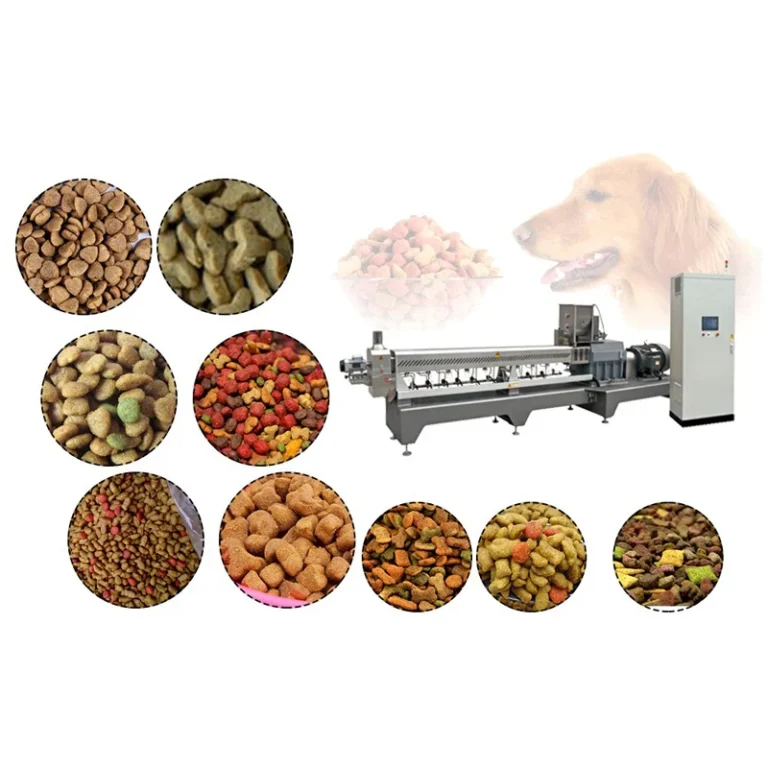
cat food machine
Dog Food Pellet Making Machine Line, Automatic Pet
View Machine
cat food machine