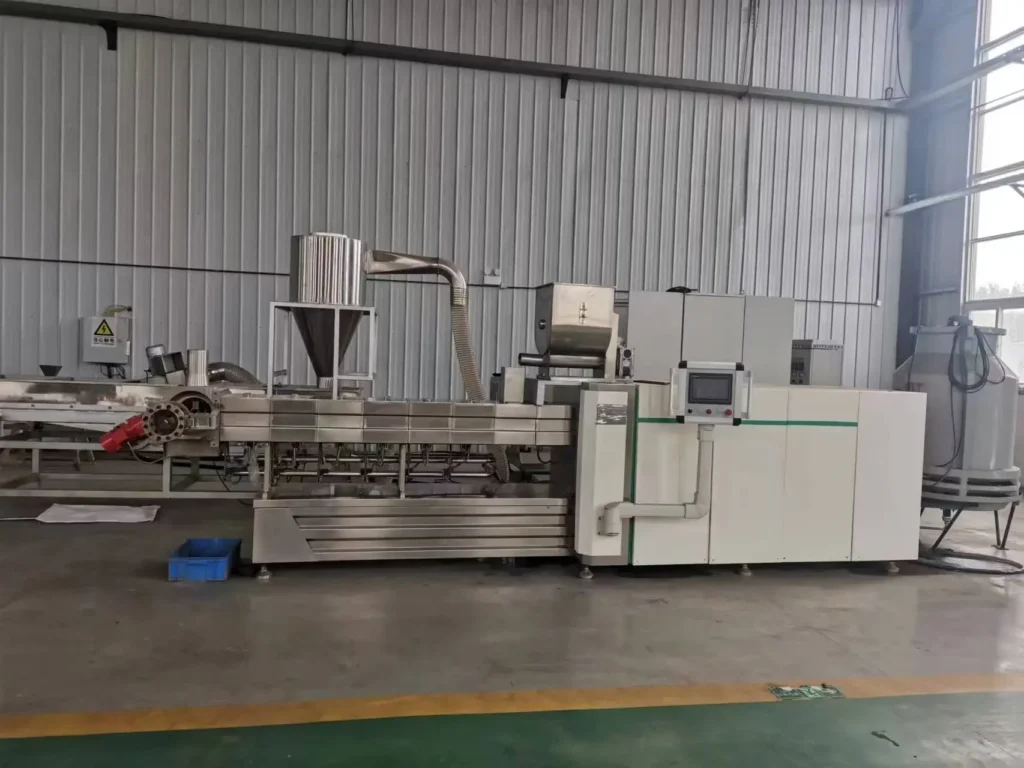
Ring-die pelleting is not a cheaper alternative for high-meat dog food; it is a guaranteed path to massive material waste and equipment failure.
When formulating dog food with high fresh meat inclusion, twin-screw extrusion is the only viable process. It provides the necessary shear force for complete starch gelatinization and prevents the severe die clogging that inevitably destroys ring-die pellet mill operations.
Before I moved into international trade, I spent years turning screws on the shop floor in Jinan. Early in my外贸 career, a Southeast Asian client insisted on using a ring-die pellet mill to process a high-meat dog food formula. I tried to warn them, but they pushed forward to save on initial capital. When the machine arrived, the ring die pellet mill clogging was catastrophic. The pellets crumbled the moment they left the die, and the client sent an angry email calling the equipment garbage. That incident made me obsess over process selection. Making dog food through extrusion versus ring-die pelleting is completely different; choosing the wrong path guarantees hidden pitfalls, while choosing the right one maximizes throughput and gelatinization.

Understanding the mechanical differences between these two methods is the first step toward building a profitable pet food manufacturing business.
Why Ring-Die Pellets Fail with High-Meat Dog Food?
Ring-die pelleting fundamentally lacks the shear force required to properly cook and bind high-moisture, high-protein fresh meat formulas.
When fresh meat inclusion exceeds a minimal threshold, the material behaves more like a wet paste than a dry powder. In a ring-die system, the rollers simply press this paste into the die holes without generating enough frictional heat. The result is immediate ring die pellet mill clogging. Operators spend more time cleaning the die than running the machine. Furthermore, the lack of intense shear means the starches in the formula never reach the necessary gelatinization degree. The resulting pellets are structurally weak, dusty, and highly susceptible to mold during storage.
The majority of pet food startups assume that pelleting cooks the food, but ring-die machines lack the mechanical energy for proper starch gelatinization.
I recall a case where a contract manufacturer attempted to process a formula with heavy fresh meat inclusion using a standard ring-die setup. The rejection rate was so high that the material waste completely destroyed their return on investment. They thought they were saving money on equipment, but the operational downtime and ruined batches cost them a mid-six-figure loss over a single production season.

Ultimately, forcing high-meat formulas through a ring-die is a mechanical mismatch that compromises both product safety and production continuity.
How Twin-Screw Extrusion Solves High-Meat Processing?
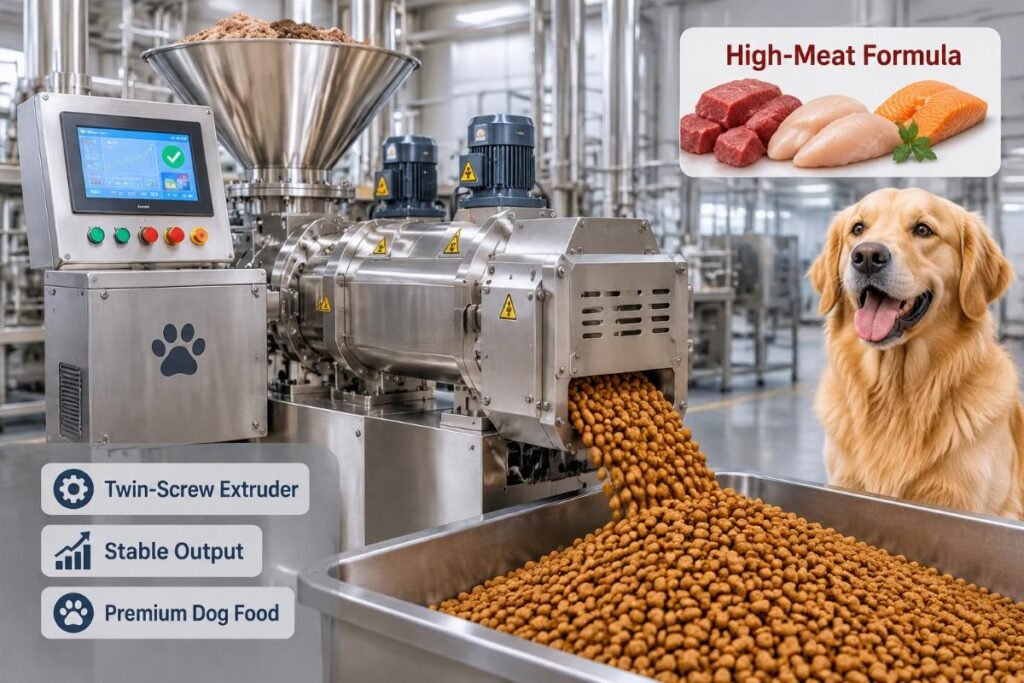
Twin-screw extrusion delivers the high shear force and precise thermal control needed to transform high-meat, high-moisture pastes into stable, fully gelatinized kibble.
Unlike single-screw or ring-die systems, a twin-screw extruder for high meat dog food actively mixes, shears, and cooks the material inside the barrel. The intermeshing screws create intense friction, generating the exact thermal profile required to melt fats and gelatinize starches, even when the recipe is loaded with fresh meat and moisture. This high shear environment ensures that the material flows smoothly through the die without sticking or clogging.
Proper gelatinization is critical for kibble digestibility and structural integrity, a standard strictly monitored in modern pet food manufacturing.
After the Southeast Asian client’s ring-die failure, they finally listened and upgraded to a twin-screw system. The transformation was immediate. They successfully incorporated a massive amount of fresh meat into their recipe. The output was stable, the pellets were hard and uniform, and the gelatinization degree was exceptionally high. The twin-screw action essentially pre-cooked the meat and starch matrix before it even reached the die, eliminating the clogging issue entirely.

By leveraging the mechanical advantages of twin-screw technology, manufacturers can confidently formulate premium, high-meat diets without fearing process failure.
Extrusion vs Ring-Die: A Specification Comparison Matrix
Evaluating processing technologies requires looking beyond the initial equipment price tag and focusing on operational stability, formulation limits, and final product quality.
When comparing Extrusion vs Ring-Die Pelleting for Dog Food, the differences in material handling and thermal application become stark. The following matrix highlights how these two systems perform under the stress of high-meat formulations.
| Processing Parameter | Twin-Screw Extrusion | Ring-Die Pelleting |
|---|---|---|
| Fresh Meat Inclusion Limit | Robust (Handles high moisture/paste) | Vulnerable (Fails with wet pastes) |
| Shear Force & Mixing | Controlled (High shear, intensive mixing) | Basic (Low shear, simple compression) |
| Starch Gelatinization | Certified (Complete gelatinization) | Uncontrolled (Partial or poor gelatinization) |
| Die Clogging Risk | Resistant (Self-cleaning screw action) | Vulnerable (High risk with wet materials) |
| Output Stability | Robust (Consistent density and shape) | Noticeably reduced (Frequent stops for cleaning) |
| Maintenance Frequency | Standard (Routine screw/barrel checks) | Noticeably reduced (Frequent die cleaning/replacement) |
The data clearly shows that ring-die systems are only suitable for dry, powder-based formulas with minimal fat and moisture. When the formulation shifts toward fresh meat, the twin-screw extruder for high meat dog food becomes the only logical choice.
Industry engineering studies consistently demonstrate that mechanical energy input in twin-screw systems directly correlates with kibble durability and shelf-life stability.
A European pet food startup initially considered a ring-die line to cut costs. After reviewing a specification comparison similar to this, they realized the hidden costs of die replacement and product rejection would bankrupt them. They chose extrusion, securing their ability to scale a premium fresh-meat recipe without process bottlenecks.

Selecting the right technology based on your target formulation is the most critical decision in pet food plant design.
What Makes a Turnkey Extrusion Line Profitable?
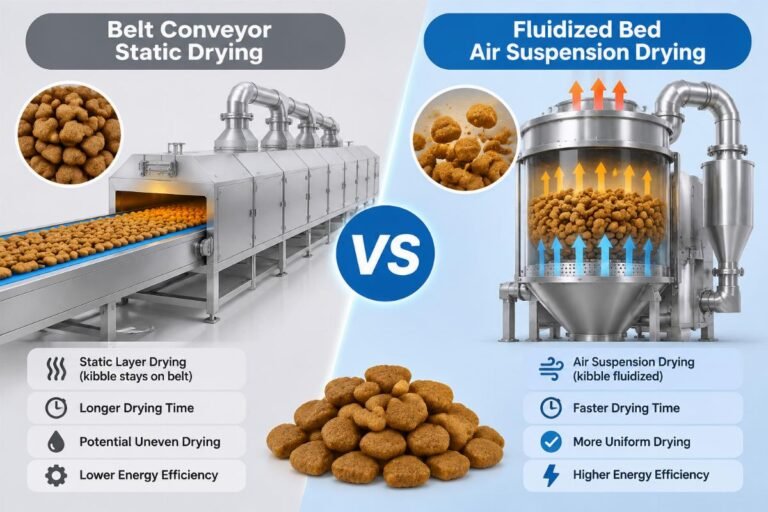
A successful pet food extrusion production line relies on seamless integration of post-extrusion drying and flavor coating to ensure product safety and palatability.
Extruding the kibble is only half the battle. The product exits the extruder with high moisture content and requires immediate, precise drying to reach safe storage levels. Following drying, an effective coating system applies fats and palatants evenly, which is crucial for consumer acceptance. A fragmented line with mismatched dryers and coaters leads to uneven moisture, rancidity, and poor flavor distribution.
Integrating advanced drying and coating systems is essential for meeting strict moisture reduction curves and ensuring long-term shelf stability.
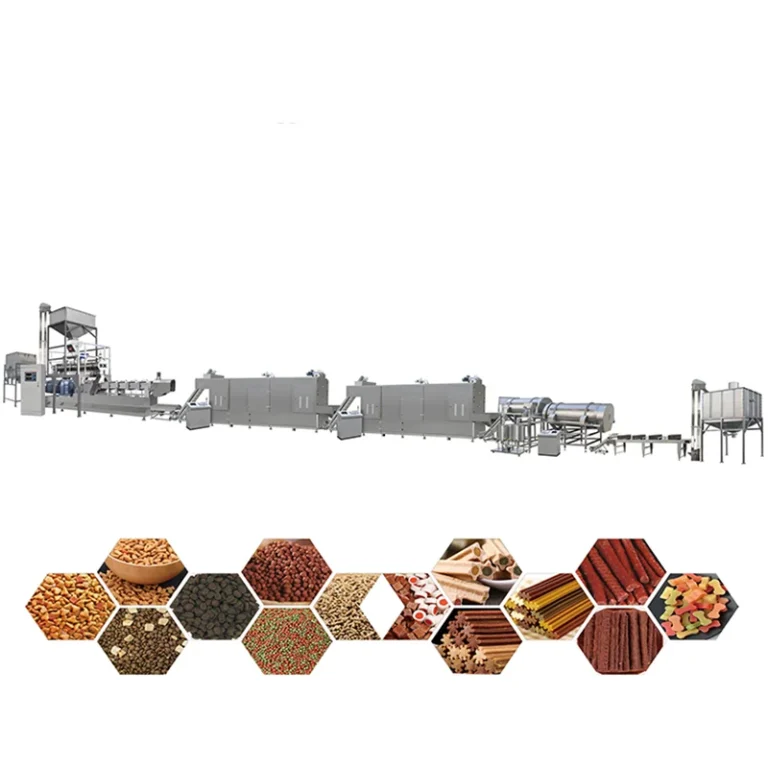
This is where Meiteng’s approach to line design makes a difference. We do not just sell a DS series twin-screw extruder; we engineer a complete pet food extrusion production line. From raw material intake to the final coating drum, every component is balanced for your specific capacity and recipe.
When a Middle East contract manufacturer approached us to scale their high-meat recipe, we didn’t just ship the extruders. Our team provided comprehensive formula R&D support to optimize their starch-to-meat ratio for our specific screw configurations. During installation, our engineers conducted on-site training, teaching their operators how to manage thermal profiles and adjust coating parameters. This turnkey integration prevented processing pitfalls and ensured their first batch met all quality standards.

A truly profitable line is one where the extruder, dryer, and coater work in perfect harmony, backed by the expertise to keep them running smoothly.
Conclusion
Choosing the correct thermal and mechanical process dictates the survival of high-meat pet food manufacturing. Extrusion vs Ring-Die Pelleting for Dog Food is not a matter of preference, but a strict requirement dictated by formulation moisture and fat content; twin-screw extrusion guarantees the shear force needed for gelatinization and prevents die clogging, while ring-die systems inevitably fail under high-meat conditions. Securing a fully integrated line with professional formula support ensures that your premium recipes translate into stable, profitable, and safe kibble.
Machines Mentioned in This Article
cat food machine
Dog Food Extrusion Machine Manufacturer Production Line
View Machine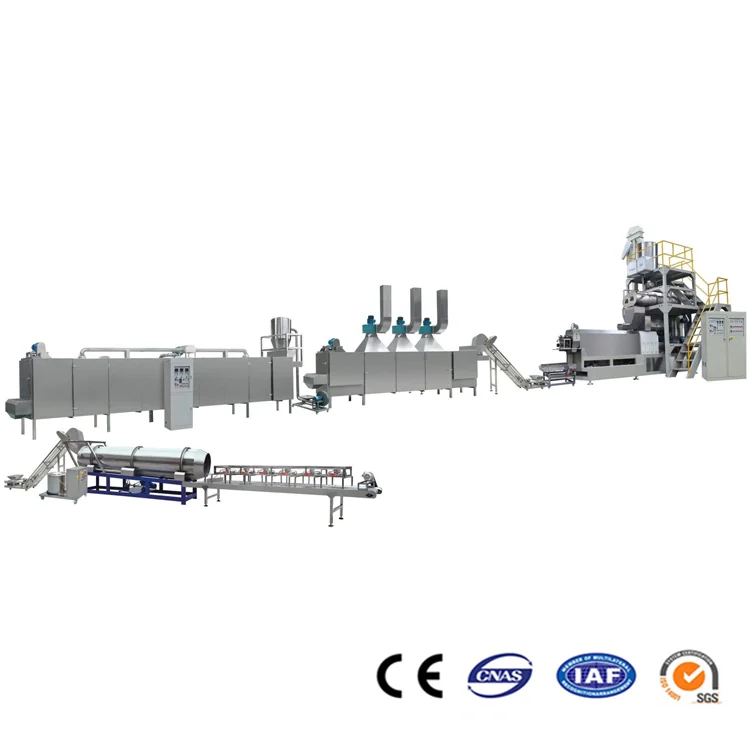
cat food machine
Dog Feed Extrusion Machine Manufacturer Production Line
View Machine
cat food machine
Pet Food Processing Equipment Plant Manufacturer Dog Food
View Machine
cat food machine