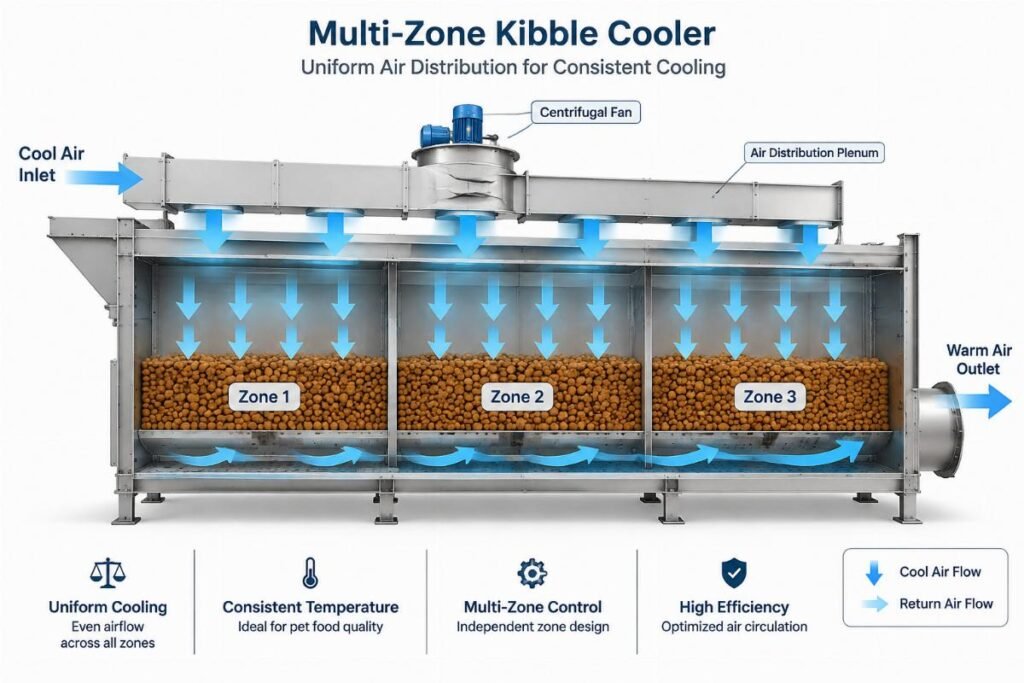
Higher fan speed does not equal better cooling; it often causes case hardening, trapping core moisture inside the pellet.
Specifying a kibble cooler requires balancing uniform airflow and retention time to drop the core pellet temperature rapidly, preventing post-packaging condensation and mold.
I used to source extruded pet food lines for a major brand before switching to the equipment side. At a major trade show in Chicago last year, a buyer complained that their kibble cooler left the center of the pellets warm, causing condensation and mold inside the bags after sealing. I knew that pain intimately. Years ago, when I was on the purchasing end, a poorly designed cooler from another supplier ruined an entire batch of premium kibble due to uneven airflow. That costly mistake shaped how I approach OEM specs now. When I review cooling system designs for our twin-screw extrusion lines, I obsess over uniform air distribution and retention time, because I have seen exactly what happens when the core temperature is not dropped fast enough. Understanding the exact kibble cooler specifications is the only way to eliminate these quality defects.
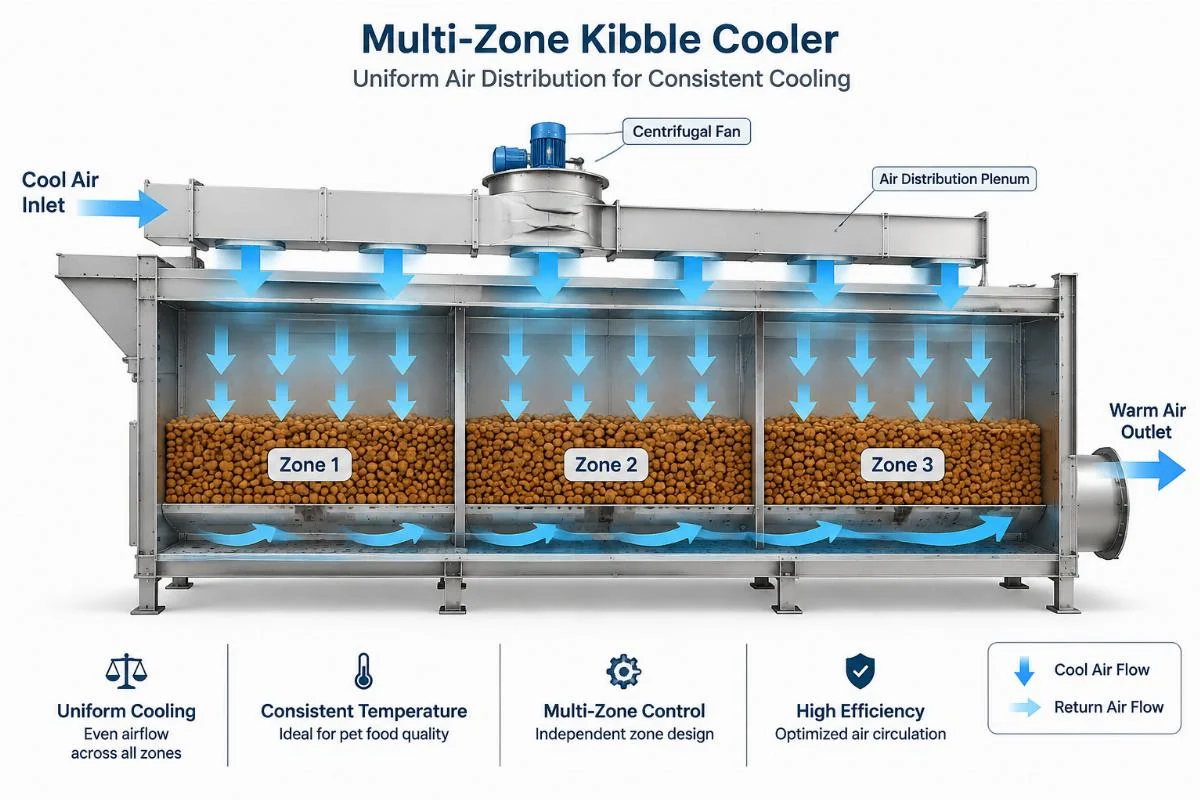
Evaluating kibble cooler specifications means looking beyond the exterior dimensions and focusing on the internal aerodynamics and thermal dynamics that dictate product safety.
What Are the Critical Airflow Specs for Kibble Coolers?
Uniform air distribution prevents core moisture trapping, which is the primary cause of post-packaging spoilage.
When reviewing kibble cooler specifications, buyers often fixate on the total fan capacity, ignoring how the air is distributed across the pellet bed. A massive fan pushing air through a poorly baffled chamber creates channeling, where some pellets are over-dried and others remain warm and moist. The core argument here is that airflow velocity and internal baffle design matter far more than raw motor power.
| Airflow Characteristic | Basic Design | Standard Design | Advanced Multi-Zone Design |
|---|---|---|---|
| Air Distribution Uniformity | Vulnerable to channeling | Standard distribution | Robust, multi-zone control |
| Baffle Configuration | Uncontrolled | Standard fixed baffles | Controlled, adjustable baffles |
| Exhaust Humidity Management | Not provided | Sample-level monitoring | Full batch-level control |
| Core Moisture Trapping Risk | High | Moderate | Noticeably reduced |
A contract manufacturer I consulted for recently upgraded to a multi-zone airflow system. They were struggling with varying pellet sizes across different recipe batches. By adjusting the kibble cooler specifications to include adjustable internal baffles, they achieved uniform cooling without needing to replace the entire main fan assembly. The exhaust humidity control was optimized, solving surface moisture issues and extending the shelf life of their premium diet lines.
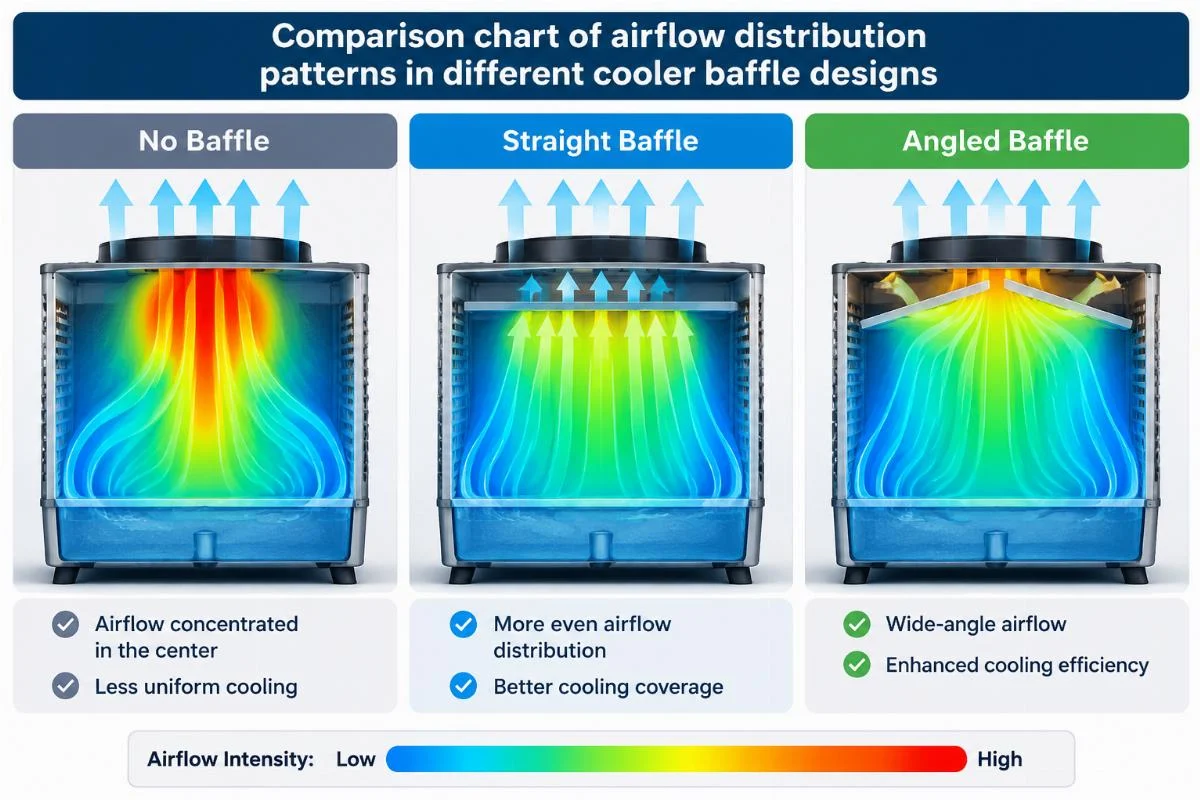
The lesson is clear: true efficiency relies on internal baffle design for uniform air distribution, not just the size of the cooler volume.
How to Calculate Required Retention Time?
Matching cooler length to pellet size and throughput capacity ensures the core temperature reaches ambient levels safely.
Retention time is a critical parameter within kibble cooler specifications. If the pellets move through the cooling chamber too quickly, the core remains hot. If they move too slowly, production bottlenecks occur, and energy is wasted. The calculation is not a simple division of volume by throughput; it requires accounting for the thermal mass of the specific recipe and the initial moisture content post-extrusion.
To determine the correct retention time, you must evaluate the temperature drop rate required for your specific product. A startup scaling to mid-capacity recently faced this exact issue. They upgraded their system and focused on the retention time metrics within their kibble cooler specifications, dropping the core temperature to ambient within a specific, optimized window. This eliminated bag condensation entirely.
When defining these specifications, consider the following operational factors:
- Pellet Density and Size: Denser, larger pellets require substantially extended retention times compared to small, porous treats.
- Initial Core Temperature: The temperature of the kibble exiting the dryer directly dictates the cooling curve required.
- Ambient Environmental Conditions: Facility humidity and temperature fluctuations can alter the required cooling duration.
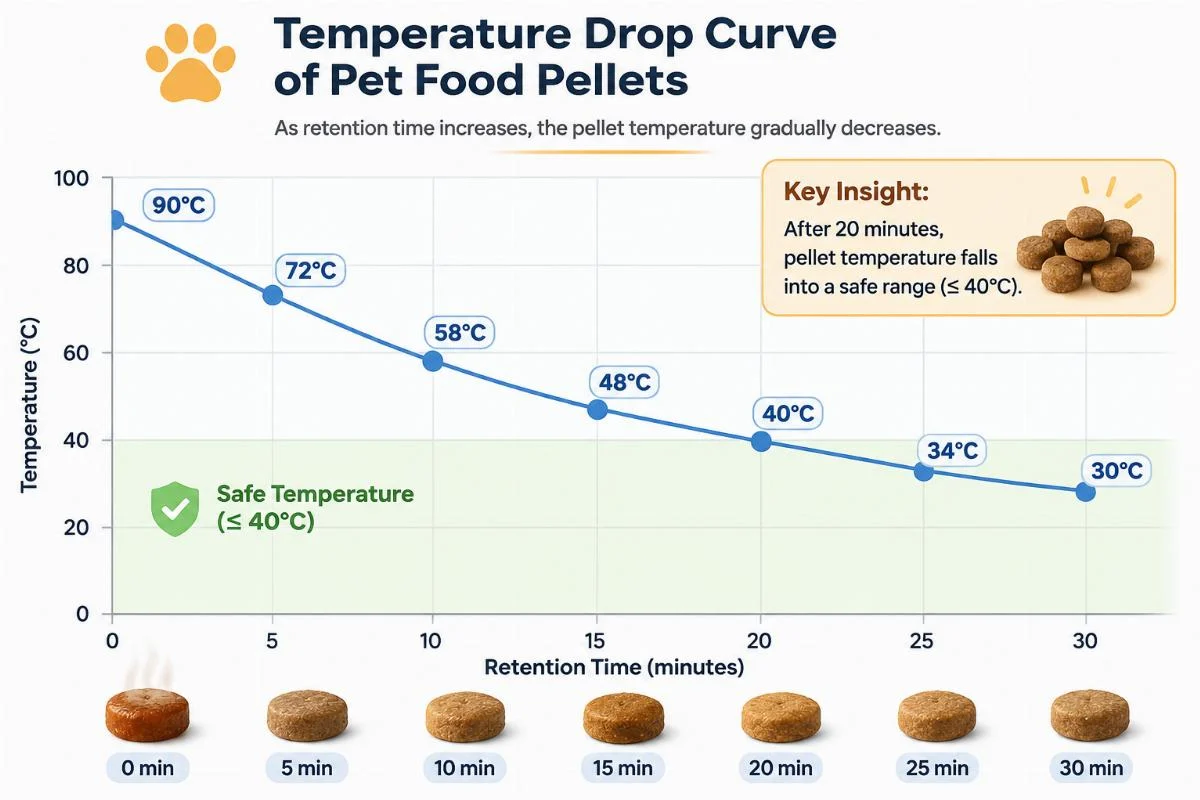
Ignoring these variables in your kibble cooler specifications will inevitably lead to inconsistent batch quality and potential microbial growth.
Which Material and Construction Standards Ensure Food Safety?
Food-grade stainless steel construction is non-negotiable for preventing cross-contamination and meeting sanitary requirements.
The physical materials used in the construction of the cooler are just as vital as the thermal dynamics. When auditing kibble cooler specifications, the material grade must align with international sanitary standards. Pet food production is highly susceptible to cross-contamination, and the cooling environment is where the product is most vulnerable before packaging.
| Material & Construction Factor | Basic Compliance | Standard Compliance | Premium Sanitary Compliance |
|---|---|---|---|
| Primary Contact Material | Basic carbon steel | Standard stainless steel | Certified 304/316 stainless steel |
| Surface Finish | Rough, porous | Standard polished | Mirror-polished, crevice-free |
| Sanitary Standard Alignment | Self-reported | Standard alignment | Verifiable 3-A sanitary alignment |
| Corrosion Resistance | Vulnerable | Resistant | Robust against cleaning agents |
A European pet food producer once faced a severe recall due to rust particles found in the final packaged bags. The root cause was traced back to the cooling chamber, where condensation had caused basic steel components to degrade. By updating their kibble cooler specifications to mandate 304 and 316 stainless steel for all contact surfaces, they eliminated the contamination risk and passed rigorous third-party audits.
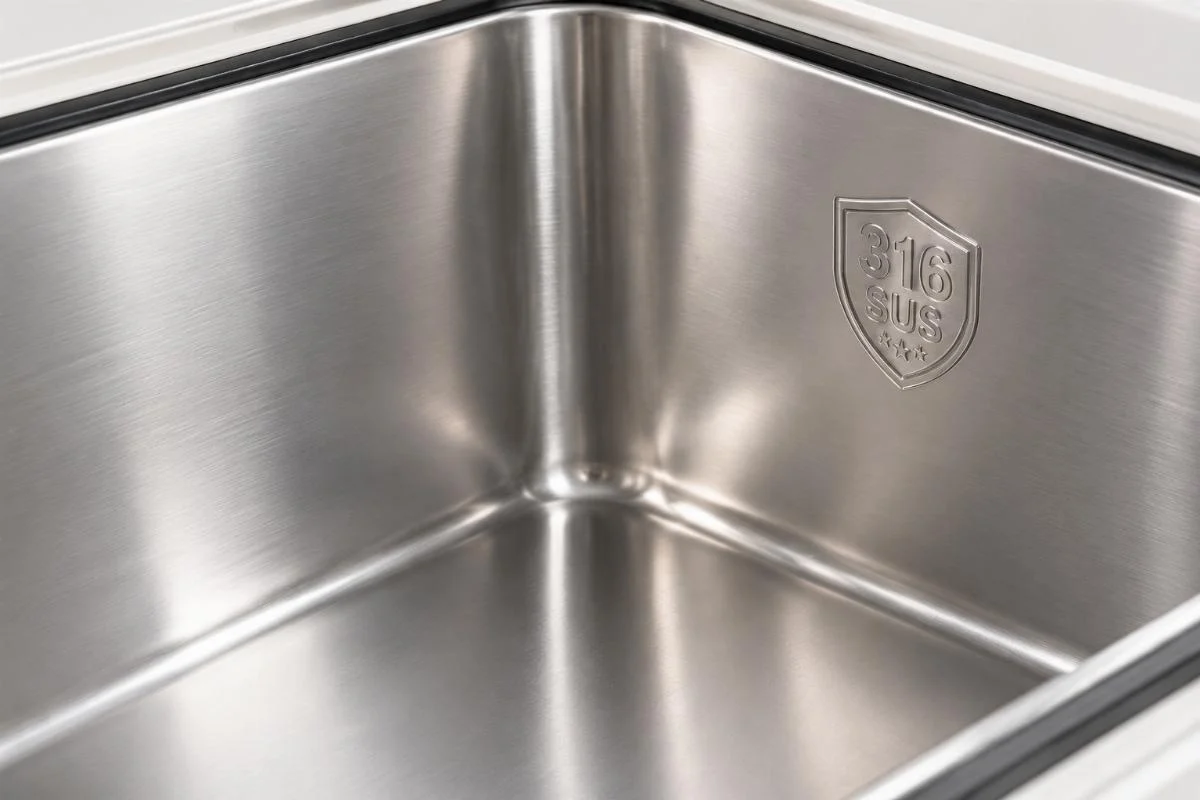
Ensuring your kibble cooler specifications include strict material certifications protects both the consumer and your brand reputation.
How to Integrate the Cooler with Twin-Screw Extrusion Lines?
Seamless connection with drying and flavor-coating systems maximizes line efficiency and product consistency.
The cooling stage does not exist in isolation; it is the critical bridge between the drying process and the final flavor coating or packaging. Evaluating kibble cooler specifications must include how the unit interfaces with the rest of the extrusion line. Poor integration leads to heat loss, moisture re-absorption, and physical degradation of the kibble during transfer.
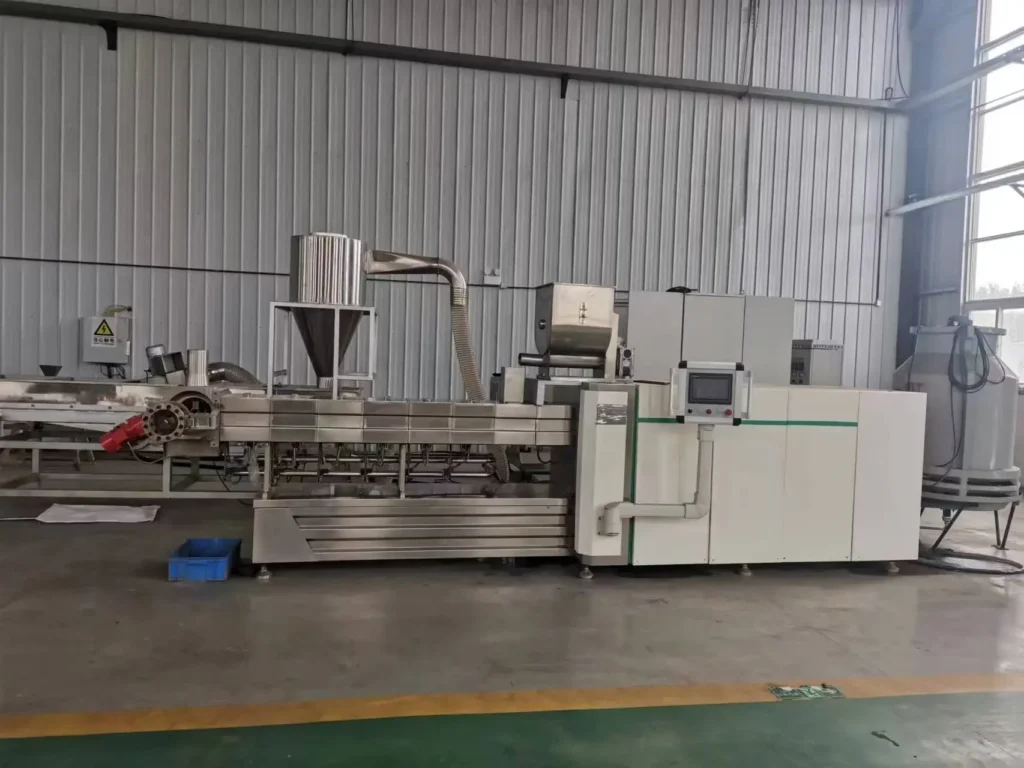
Integrating a cooler requires precise alignment of the discharge conveyors, airflow synchronization with the dryer exhaust, and automated controls that match the throughput of the twin-screw extruder. Meiteng approaches this by designing turnkey production lines where the integrated drying and cooling systems are engineered as a single, cohesive unit. By utilizing food-grade 304 and 316 stainless construction throughout the entire sequence, we ensure that the kibble cooler specifications align perfectly with the upstream and downstream equipment, eliminating transfer bottlenecks for pet food startups.
When planning integration, focus on these operational links:
- Transfer Points: Minimizing drop heights to prevent kibble breakage and dust generation.
- Airflow Synchronization: Balancing the cooler’s exhaust with the dryer’s humidity output to prevent facility-wide condensation.
- Automated Control Integration: Ensuring the cooler’s variable frequency drives communicate seamlessly with the extruder’s feed rate.
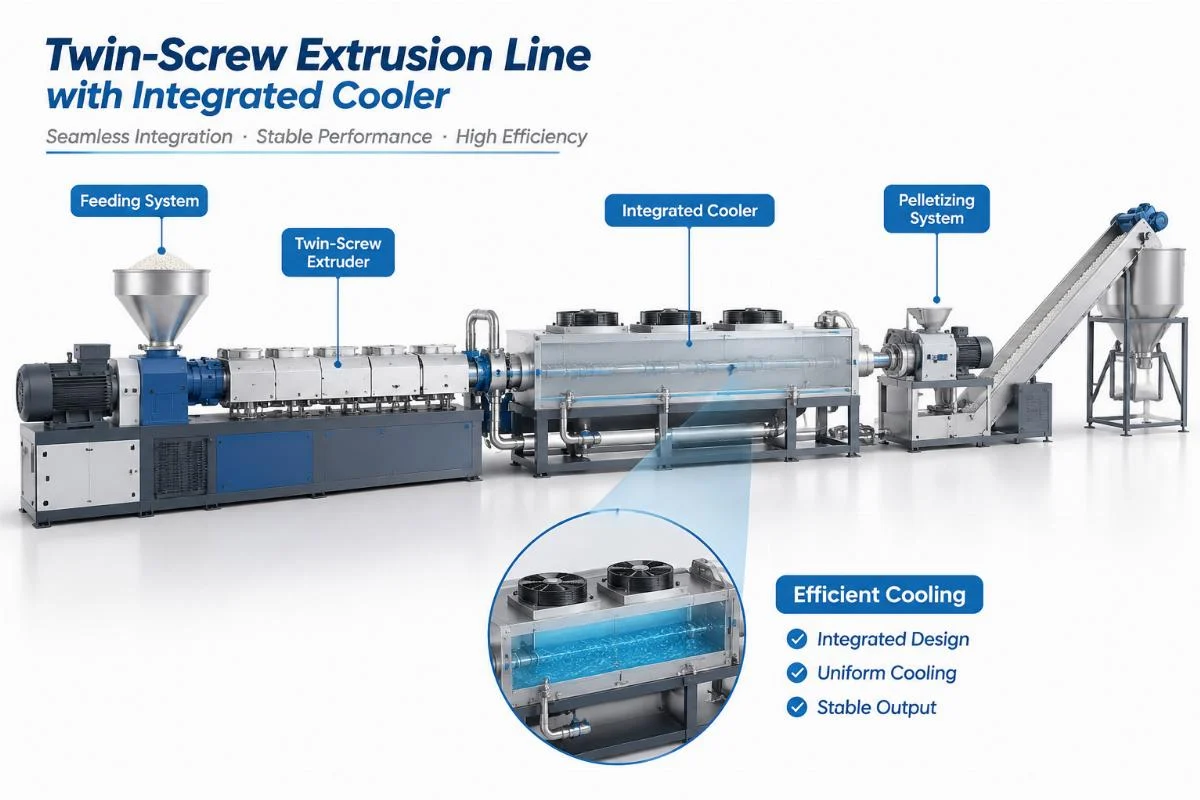
Properly defined kibble cooler specifications ensure that the cooling phase enhances, rather than hinders, the overall production line performance.
Conclusion
Balancing airflow uniformity and retention time is the definitive factor in preventing post-packaging condensation. Specifying the right equipment requires looking past basic volume metrics and focusing on internal baffle design, material safety, and seamless line integration. By prioritizing these critical parameters, manufacturers can eliminate quality defects and ensure product safety from the extruder to the final bag.
Machines Mentioned in This Article

cat food machine
Pet Food Processing Equipment Plant Manufacturer Dog Food
View Machine
cat food machine
Dry Dog Food Production Line Pet Food Pellet Machine
View Machine
cat food machine
Pet Food Production Line Manufacturer
View Machine
cat food machine