
Maximizing motor power will never compensate for a mismatched screw geometry when processing high-meat pet food formulas.
Scaling large-scale pet food production requires matching the DS135 twin-screw extruder’s screw configuration and temperature profile to high-meat formula rheology, rather than simply maximizing raw mechanical power to force throughput.
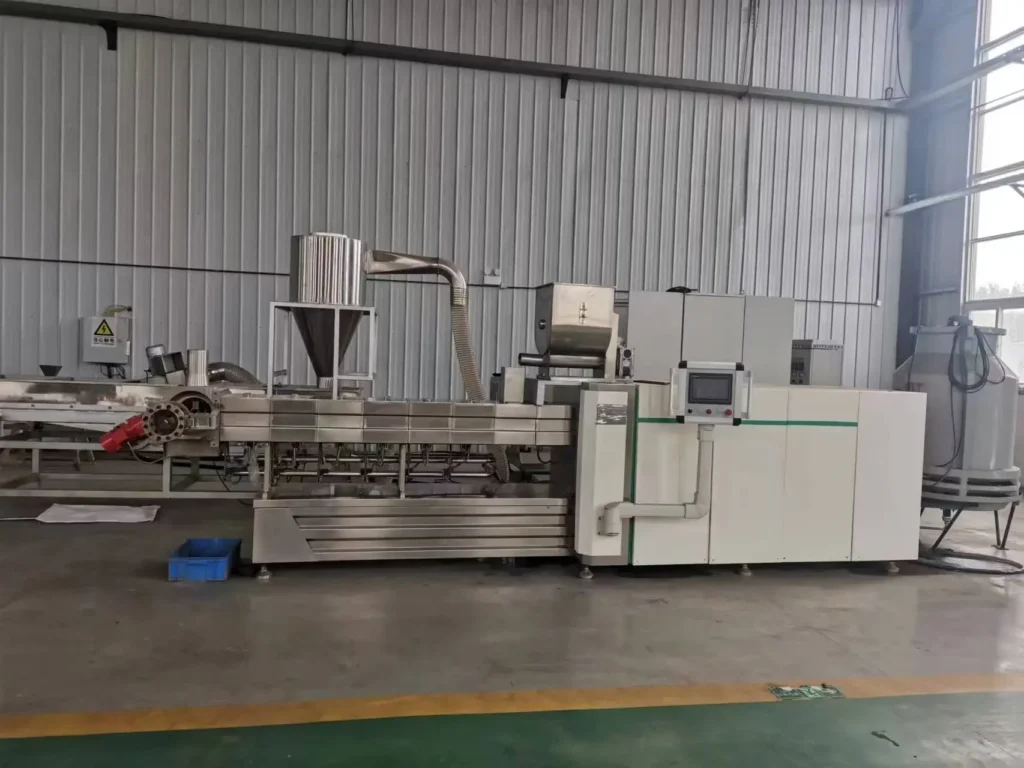
I still remember the sweltering heat inside a massive pet food plant in Riyadh. The DS135 twin-screw extruder was running at full capacity, but the kibble coming out of the die was pale and half-cooked. The client was furious, pointing at the extrudate that completely failed to meet gelatinization standards. The root cause was not a lack of motor power; the screw configuration and barrel temperature profile were entirely mismatched for their high-meat formula rheology. We had to tear down the barrel, rearrange the screw elements, and recalibrate the heating zones on the spot to achieve the proper specific mechanical energy input. That现场复盘 proved that selling a large-capacity line is about understanding dough physics, not just quoting horsepower.

Transitioning from formula rheology to mechanical design reveals why standard extrusion parameters fail at industrial scales.
Why Does Motor Power Fail to Cook High-Meat Pet Food?
True gelatinization relies on precise screw shear and barrel temperature profiling, not just raw electrical power.
Many buyers assume that upgrading to a higher kilowatt motor guarantees better cooking. In reality, mismatched screw geometry causes half-cooked kibble even with massive power reserves. High-meat formulas require controlled shear to break down protein structures without generating excessive frictional heat that burns the product. The DS135 twin-screw extruder addresses this through modular screw elements that distribute specific mechanical energy evenly across the barrel length.
| Parameter | Standard Low-Meat Setup | High-Meat Optimized Setup |
|---|---|---|
| Shear Intensity | Uncontrolled | Controlled |
| Temperature Variance | Vulnerable | Resistant |
| Gelatinization Degree | Noticeably reduced | Substantially extended |
| Protein Denaturation | Uncontrolled | Standard |
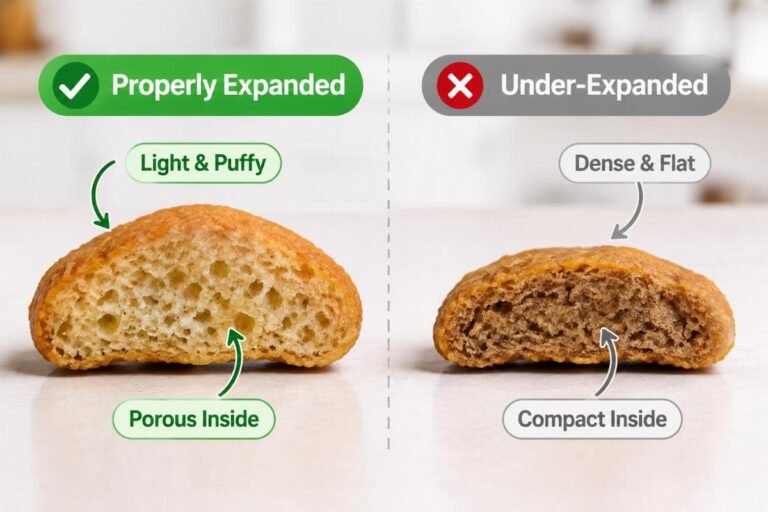
A contract manufacturer in Southeast Asia initially blamed their motor drive for poor kibble expansion. After analyzing the residence time distribution, we realized the conveying elements were too aggressive, pushing the dough through before the thermal zones could penetrate the dense meat matrix. By swapping to reverse-pitch elements to increase fill degree, the cooking degree improved drastically without touching the motor settings.
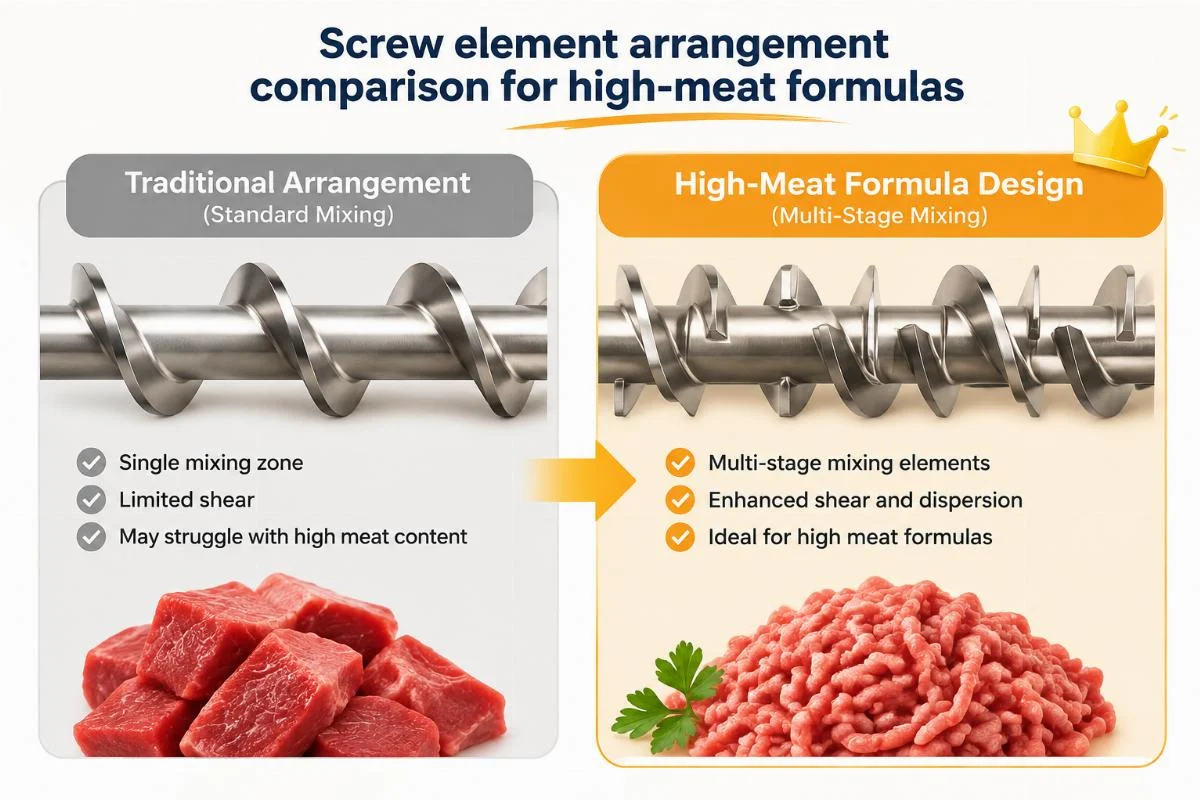
Understanding shear mechanics naturally leads to the challenge of scaling this balance to industrial volumes.
How to Configure the DS135 for Large-Scale Capacity?
Matching screw element arrangement and length-to-diameter ratio to high-meat rheology ensures stable large-scale output without thermal degradation.
When scaling from pilot runs to industrial volumes, the material behavior inside the barrel changes fundamentally. The DS135 twin-screw extruder is engineered to handle this transition by allowing precise adjustments to the effective cooking length. Blindly increasing barrel diameter to boost throughput often ruins the residence time alignment with specific formula shear requirements.
| Scaling Factor | Blind Capacity Increase | Engineered Scale-Up |
|---|---|---|
| Throughput Stability | Vulnerable | Robust |
| Energy Consumption per Ton | Noticeably reduced | Substantially extended |
| Shear History Match | Uncontrolled | Controlled |
| Die Pressure Fluctuation | Uncontrolled | Standard |
A startup in Latin America attempted to triple their output by simply speeding up the feed rate on a smaller machine. The result was severe die pressure fluctuation and inconsistent kibble density. By migrating to the DS135 twin-screw extruder with a customized screw profile that maintained the exact shear history of their pilot batch, they achieved stable output while keeping energy consumption per ton strictly managed.
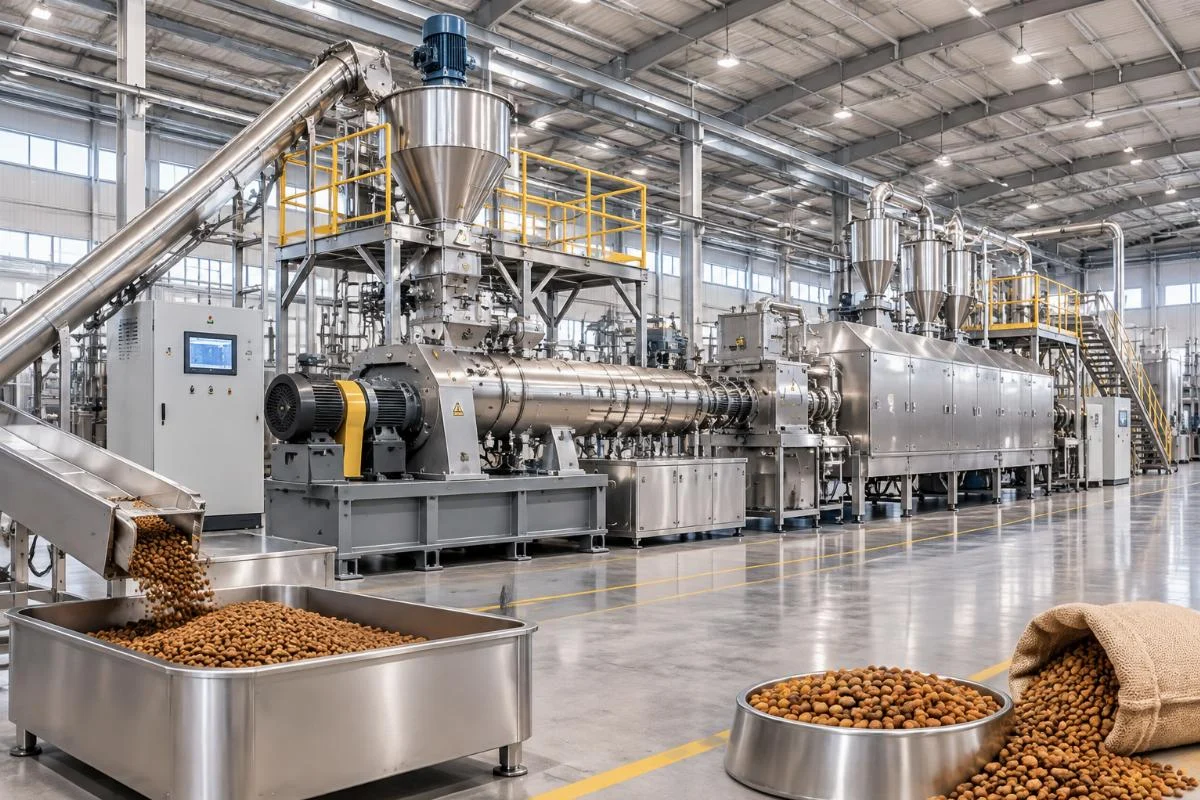
Stable extrusion is only the first step; downstream integration determines the final product quality.
What Turnkey Integrations Prevent Post-Extrusion Bottlenecks?
Multi-pass drying and flavor coating must be perfectly balanced with the peak extrusion rate to prevent moisture-related spoilage and coating waste.
The fastest extruder in the world is useless if the downstream dryer cannot handle the moisture flash-off. High-meat kibble exits the die with significant internal moisture that requires precise, multi-stage drying to prevent case hardening. The DS135 twin-screw extruder is designed to integrate seamlessly with continuous dryers and coating drums, ensuring the entire line operates at a synchronized pace.
| Integration Aspect | Disconnected Line | Turnkey Balanced Line |
|---|---|---|
| Moisture Removal | Uncontrolled | Controlled |
| Coating Uniformity | Vulnerable | Robust |
| Line Synchronization | Uncontrolled | Standard |
| Product Shelf-Life | Noticeably reduced | Substantially extended |
A Middle Eastern facility faced massive coating waste because their flavoring drum was overpowered relative to the extruder’s output, leading to uneven fat distribution on the kibble surface. By recalibrating the entire DS135 twin-screw extruder line to synchronize the extrusion peak with the coating application rate, they eliminated the waste and achieved uniform flavor coverage.
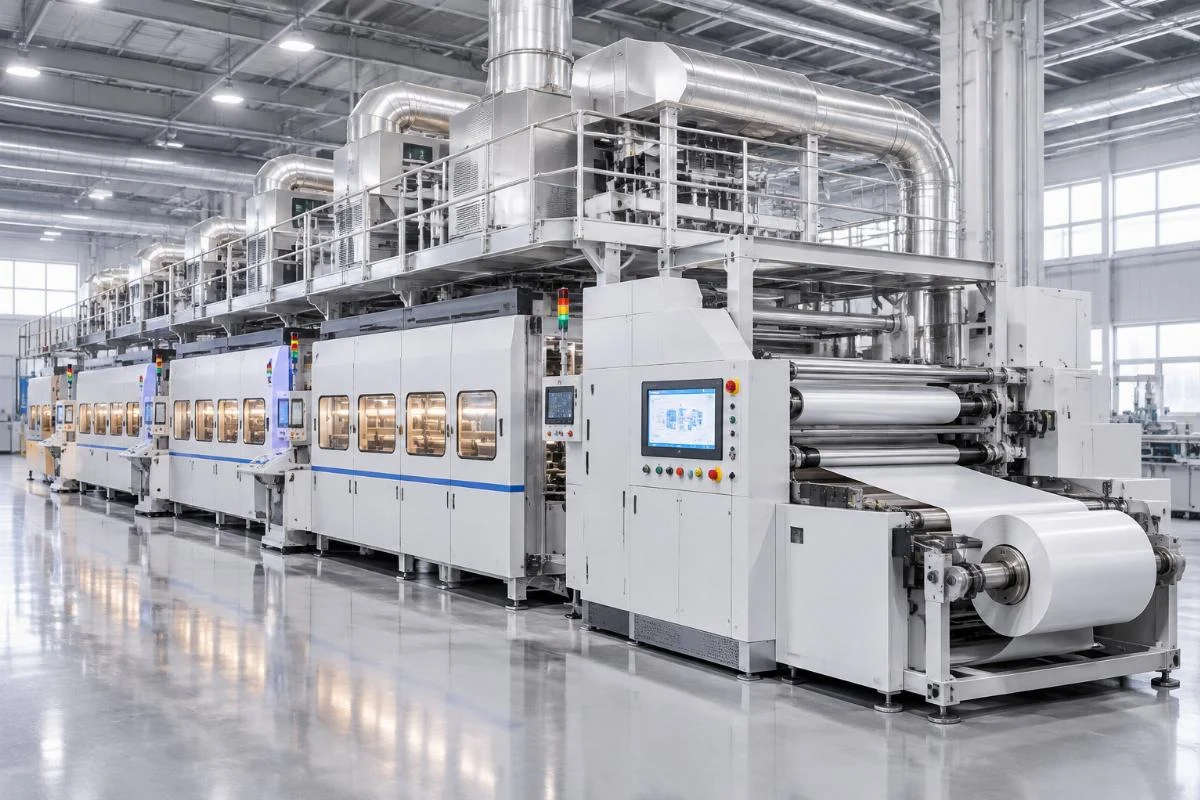
Verifying these integrations requires looking beyond the brochure to the supplier’s actual engineering capability.
How to Verify Supplier Expertise Before Purchasing?
Demanding formula-specific screw design proofs and on-site commissioning separates true engineers from mere assemblers.
Purchasing a DS135 twin-screw extruder is a major capital commitment. The true test of a manufacturer is their willingness to analyze your specific formula before finalizing the screw design. A genuine engineering partner will request your ingredient list and rheological data to simulate the extrusion process, ensuring the machine is built for your product, not just a generic catalog model.
| Verification Step | Catalog Assembler | True Engineering Partner |
|---|---|---|
| Formula Analysis | None | Full batch-level |
| Screw Design Proof | Self-reported | Verifiable |
| On-site Commissioning | None | Full batch-level |
| Operator Training | Basic | Certified |
When a European contract manufacturer was evaluating suppliers for a new high-meat line, they demanded a physical extrusion trial using their exact recipe. The DS135 twin-screw extruder was configured based on that trial data, and the manufacturer provided full on-site commissioning and operator training, ensuring the client’s team could independently manage the complex temperature profiles.
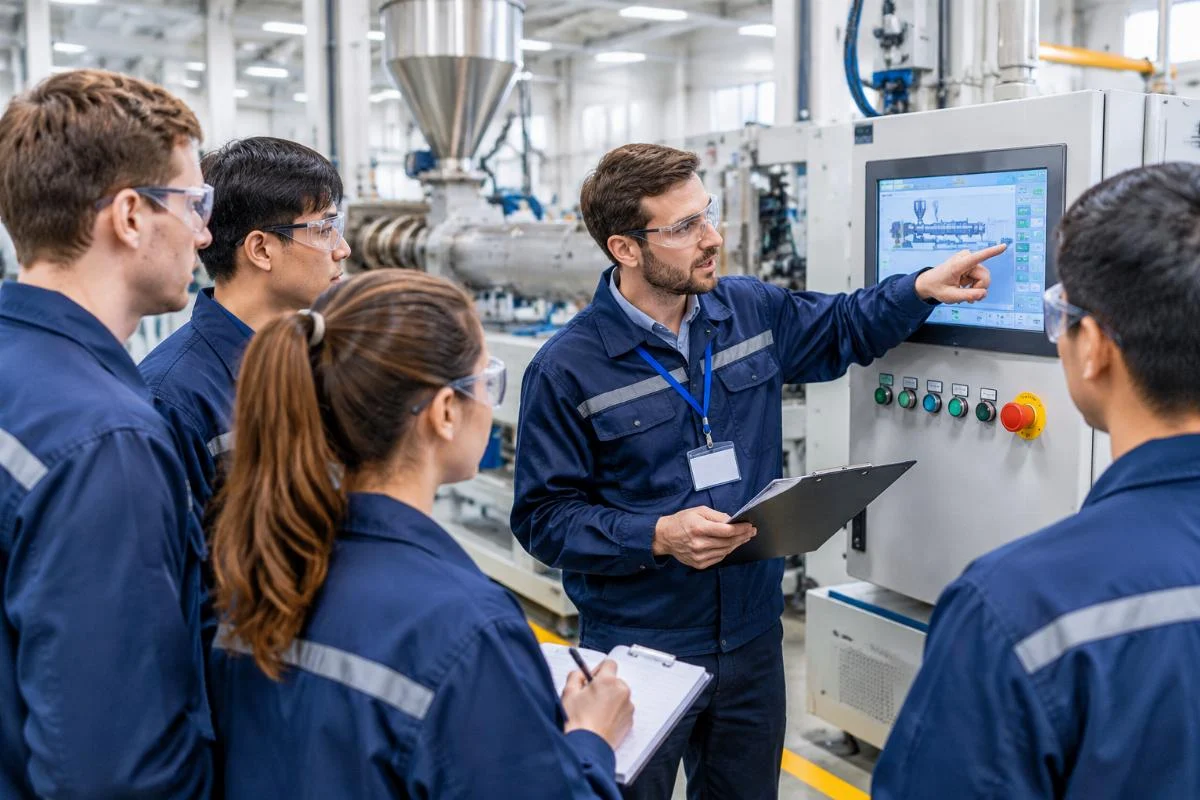
Conclusion
Scaling pet food production demands a deep understanding of formula rheology over raw mechanical power. Matching the DS135 twin-screw extruder’s screw configuration and thermal profiling to high-meat ingredients ensures stable throughput, proper gelatinization, and seamless downstream integration, turning complex recipes into consistent, premium kibble.
Machines Mentioned in This Article

cat food machine
Pet Dog Food Extruder Manufacturer Production Line
View Machine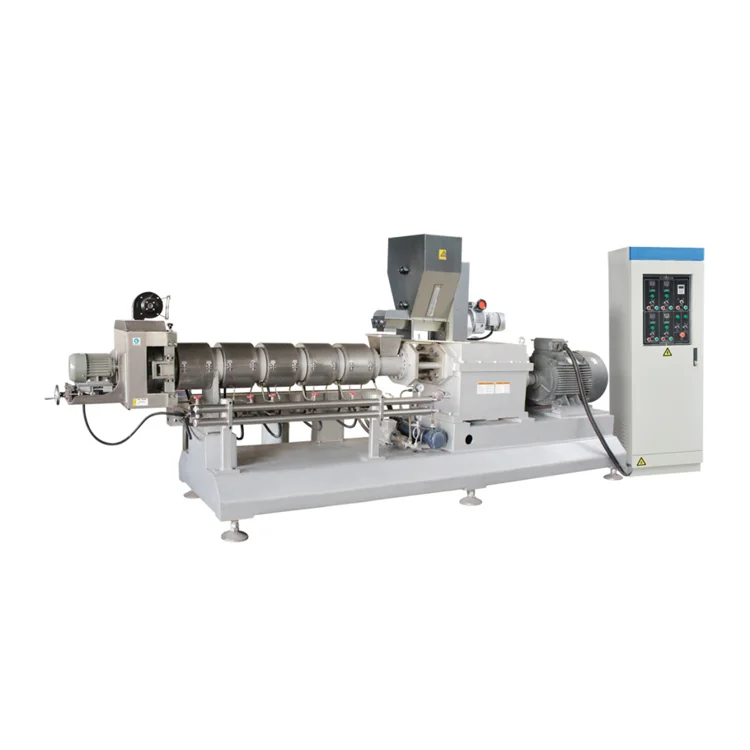
cat food machine
Pet Food Pellet Extruder Machine Manufacturer for Dog Cat
View Machine
cat food machine
Pet Food Extruder Machine Manufacturer Production Line
View Machine
cat food machine