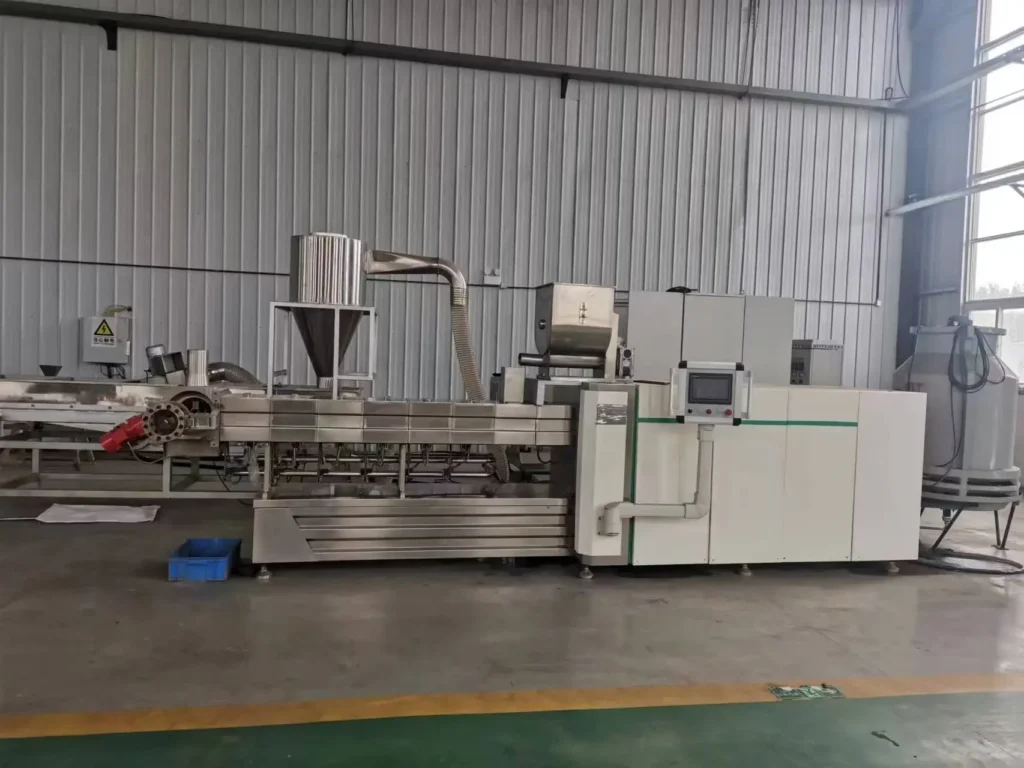
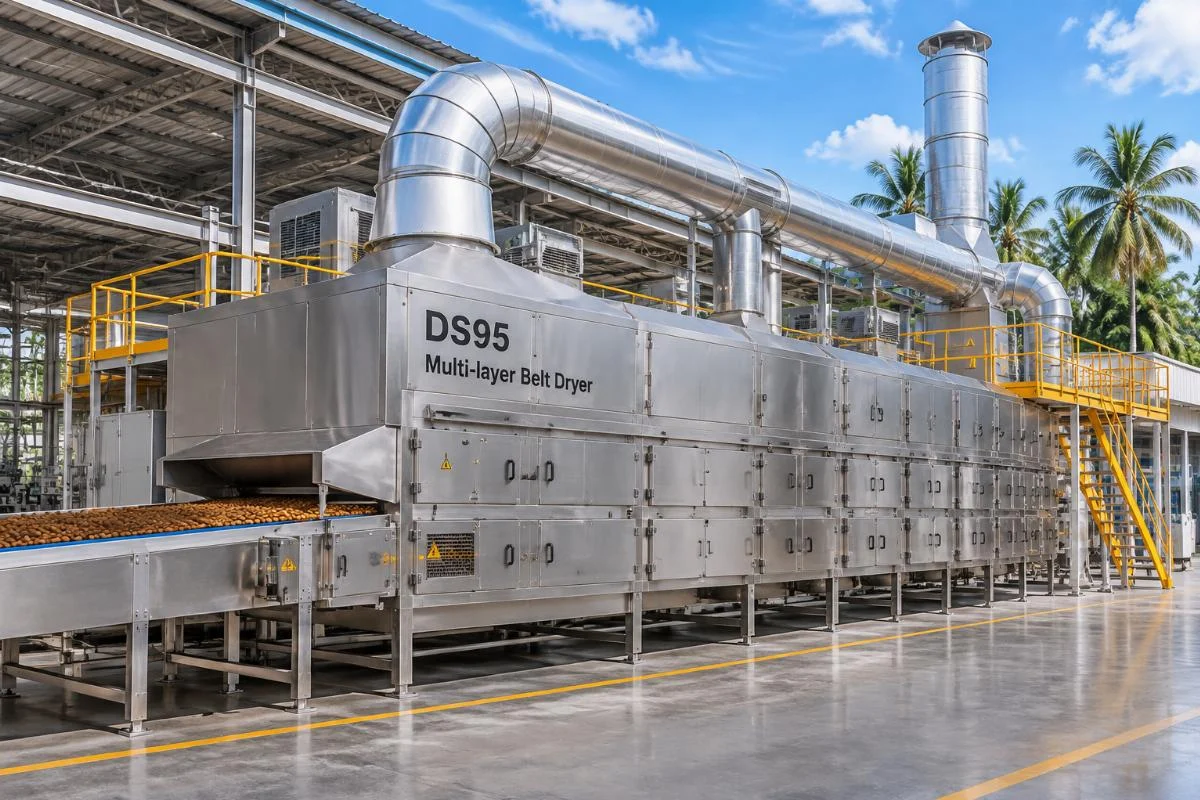
Matching exhaust capacity to local ambient humidity dictates the success of a multi-layer belt dryer for DS85 and DS95 kibble lines, far beyond simply mirroring the extruder’s throughput. When integrating a high-capacity extrusion setup, the drying phase is where profit margins either solidify or dissolve into moldy waste. The core answer to achieving consistent kibble quality is not buying the largest fan or setting the highest temperature, but engineering the airflow and thermal zones to counteract the specific dew point of your factory’s geographic location.
I still remember a relentless rainy season in Jakarta. A client’s DS85 pet food line was equipped with our multi-layer belt dryer, but the standard exhaust fans could not handle the ambient humidity hovering near saturation. The kibble clumped on the third layer and went moldy within days. The client dragged me to the workshop, pointing at the ruined batch, frustrated that the equipment matched the extruder’s output perfectly on paper but failed in reality. That moment cemented a fundamental truth: selling a drying system is not about copying spec sheets; it is about climate-matched engineering.
Transitioning from standard specifications to climate-adapted designs requires a deep understanding of how environmental variables interact with thermal dynamics.
Why Standard Dryer Specs Fail in High-Humidity Climates?
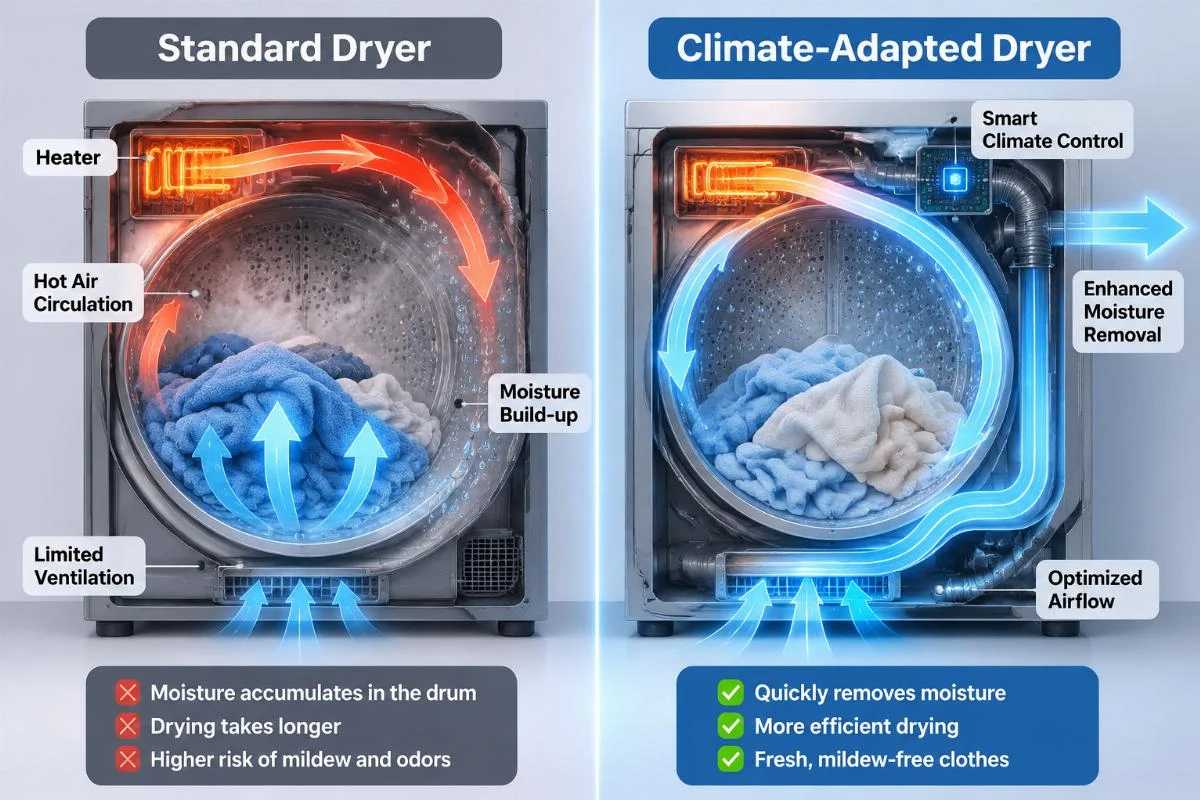
Standard dryer specifications often fail in high-humidity climates because they assume a baseline ambient condition that does not exist in tropical or monsoon regions. Most manufacturers design exhaust systems based on temperate climate averages. When a multi-layer belt dryer for DS85 and DS95 kibble lines operates in an environment where ambient humidity is extremely high, the incoming air is already saturated with moisture.
A common misconception is that installing bigger exhaust fans will solve the problem by pulling more air through the chambers. In reality, oversized fans in humid climates pull in significantly more moist air, which lowers the internal drying temperature and worsens kibble clumping. The air simply cannot absorb the moisture evaporating from the kibble.
During my time troubleshooting in Southeast Asia, I observed that a standard exhaust setup would cause the internal dew point to rise rapidly. The moisture evaporating from the first-layer kibble had nowhere to go. By the time the product reached the third layer, the environment inside the dryer was essentially a steam room. This trapped moisture leads to surface gelatinization, making the kibble sticky and prone to severe mold growth post-packaging. To prevent this, the exhaust design must include a surplus capacity specifically calculated to overcome the local vapor pressure deficit, ensuring that the air entering the drying chambers is actively dehumidified or sufficiently heated before contacting the product.
How to Match the Multi-Layer Belt Dryer to DS85/DS95 Output?
Aligning the multi-layer belt dryer for DS85 and DS95 kibble lines with extruder output requires synchronizing belt speed, layer count, and heat zones with the specific moisture removal rate, rather than just the hourly kilogram throughput. The DS85 and DS95 extruders are workhorses capable of massive output, but the drying system must act as a precise buffer, not a simple conveyor.
When scaling up to high-capacity lines, the residence time of the kibble inside the dryer must be carefully mapped against the initial moisture content post-extrusion. If the belt speed is set too fast to match the extruder’s peak output, the kibble exits with a wet core. If it is too slow, the exterior over-dries.
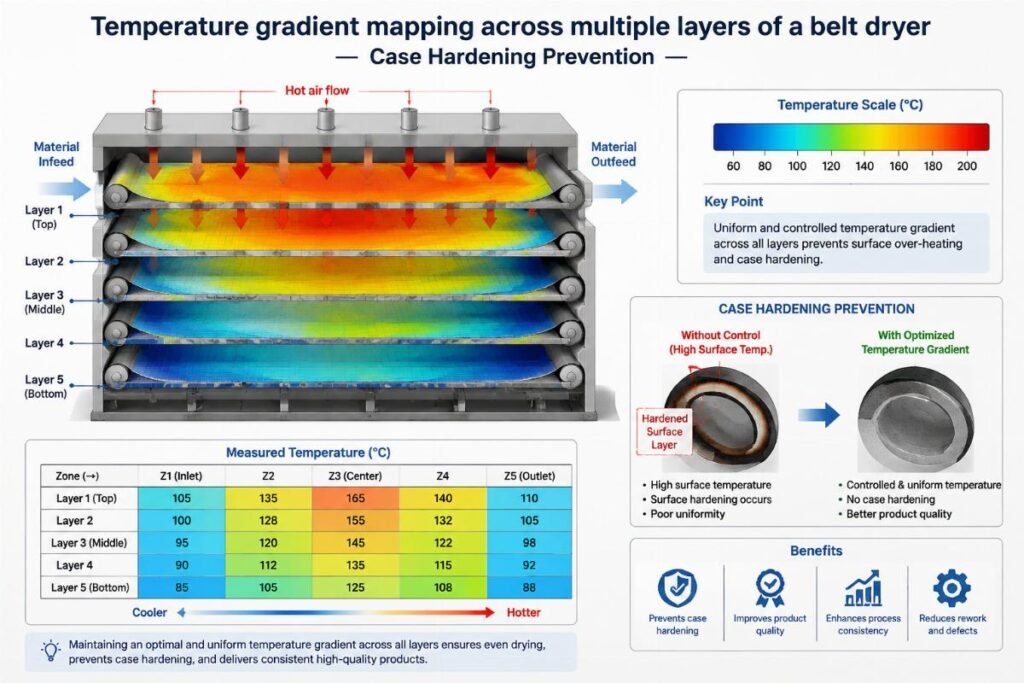
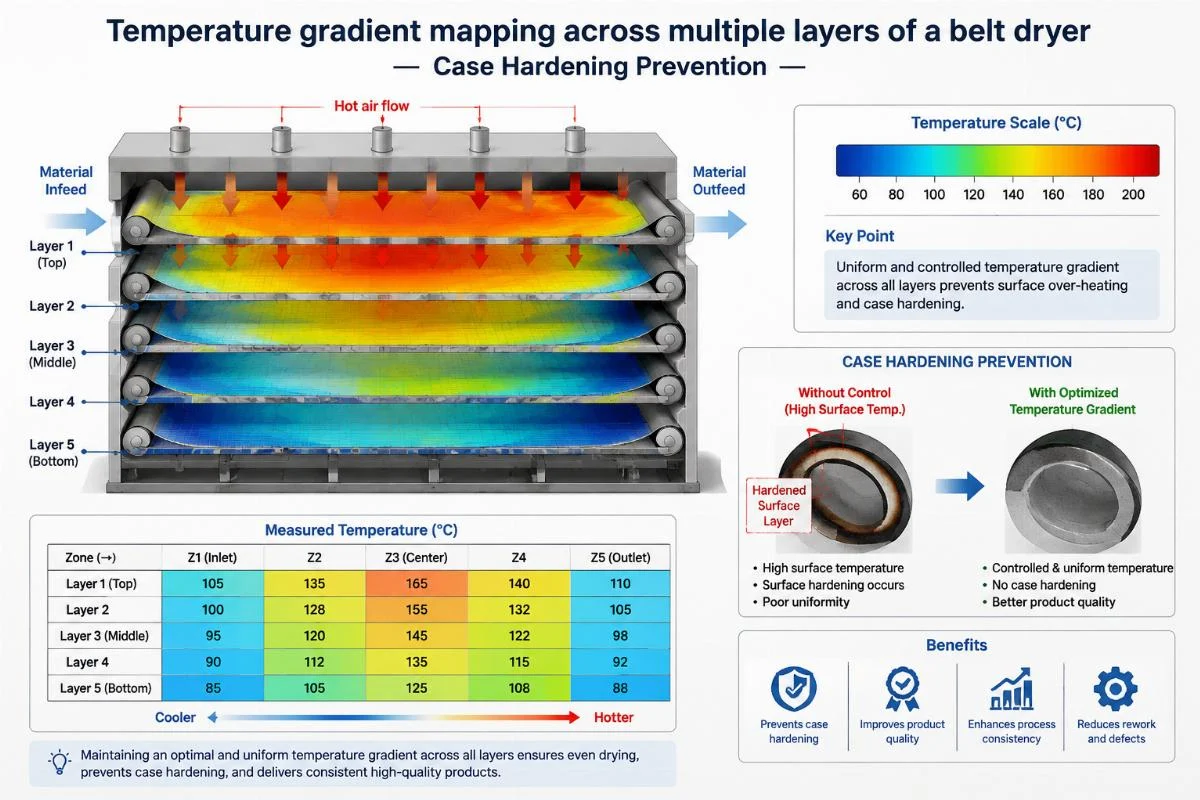
For high-capacity scaling, such as running a heavy-duty DS95 line, the focus must shift to multi-zone temperature control. Applying intense heat immediately to wet kibble causes case hardening. The exterior forms a crust that traps moisture inside. Once packaged, this internal moisture migrates outward, creating a perfect environment for mold. A properly matched system utilizes a gradient mapping approach: gentle, lower-temperature zones at the intake to allow surface moisture to evaporate without sealing the pores, followed by higher-temperature zones in the middle to drive out internal moisture, and finally, cooling zones to stabilize the kibble before packaging. Meiteng’s multi-layer belt dryers address this by offering customizable heat zones and variable frequency drives on the belt motors, allowing operators to fine-tune the residence time precisely to the DS85 or DS95 output without compromising the structural integrity of the kibble.
What Are the Key Exhaust and Airflow Design Parameters?
The critical exhaust and airflow design parameters for a multi-layer belt dryer for DS85 and DS95 kibble lines revolve around dehumidification ratios, multi-zone airflow velocity, and dew point monitoring integration. Airflow is not just about moving air; it is about moving the right amount of dry air at the correct velocity to strip moisture without blowing the kibble off the belt or creating cold spots.
In arid or dry climates, where ambient humidity is naturally low, the challenge shifts from preventing mold to preventing over-drying and kibble cracking. Here, the airflow design must prioritize heat recovery and energy-saving recirculation. Pulling in massive amounts of dry, cold air and heating it from scratch is thermally inefficient and can shatter the kibble’s structure through rapid moisture loss.
Conversely, in tropical environments, the exhaust system must incorporate dedicated dehumidification ratios. This means a portion of the exhaust air is actively cooled to condense and remove moisture before being reheated and recirculated, or the fresh air intake is heavily restricted in favor of recirculating partially dried air. The specific moisture removal rate must be continuously monitored. Integrating dew point sensors across the different layers allows the control system to adjust the exhaust dampers in real-time. If the dew point in the third-layer chamber rises above a safe threshold, the system automatically increases the exhaust rate or adjusts the heat input. Meiteng integrates these advanced airflow controls and constructs the internal chambers using food-grade stainless steel to prevent corrosion from the highly humid, acidic environment created by wet pet food kibble, ensuring long-term hygiene and operational stability.

How to Verify Dryer Performance During Factory Acceptance?
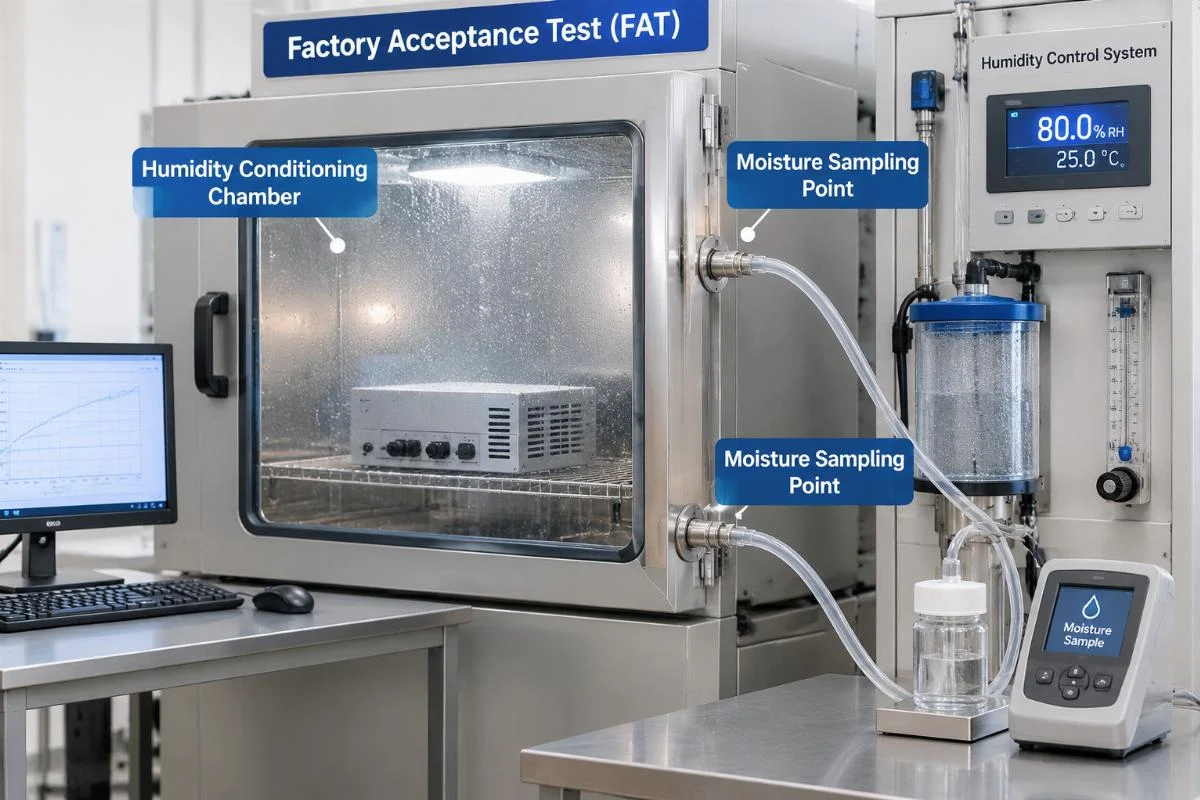
Verifying dryer performance during factory acceptance requires simulating local climate conditions and checking moisture uniformity before the multi-layer belt dryer for DS85 and DS95 kibble lines is approved for shipping. Relying solely on mechanical run-tests in the manufacturer’s facility is insufficient, as the ambient conditions in the factory will never replicate the extreme humidity of a tropical production floor.
A rigorous factory acceptance test must include a simulated load using product that matches the exact density and moisture profile of the target kibble. More importantly, the air intake must be artificially conditioned. If the dryer is destined for a high-humidity region, the test facility must use humidifiers to raise the ambient air entering the dryer to match the target climate’s worst-case scenario.
During one such acceptance test for a Southeast Asian contract manufacturer, we conditioned the intake air to mimic the monsoon season. The standard exhaust settings immediately failed to keep the third-layer moisture within the safe margin, proving that the initial fan curve was inadequate for the target environment. We adjusted the exhaust fan pulley ratios and modified the internal baffles to redirect airflow away from the direct drop zones, which resolved the clumping issue before the machine left the factory. Verifying moisture uniformity involves taking core samples from multiple points across the belt width and through all layers, ensuring that the variance in final moisture content is minimal. This level of rigorous, climate-simulated validation ensures that when the multi-layer belt dryer for DS85 and DS95 kibble lines arrives on-site, it is ready to perform exactly as engineered, eliminating the costly trial-and-error phase during installation.
Conclusion
Selecting and configuring a drying system is an exercise in thermodynamic matching, not just capacity scaling. The success of a high-throughput extrusion line depends entirely on the dryer’s ability to manage moisture migration in harmony with the local environment. By prioritizing climate-specific exhaust design, multi-zone temperature gradients, and rigorous simulated acceptance testing, manufacturers can secure consistent kibble quality and protect their profit margins from the hidden costs of moisture-related failures.