Buying the cheaper machine for a premium recipe is the fastest way to burn through your startup capital.
When comparing a twin-screw vs single-screw extruder for cat food, the single-screw model handles basic, high-starch grain formulas efficiently, but the twin-screw extruder is strictly mandatory for high-meat and complex recipes due to its superior shear mechanics and independent temperature control.
Years ago, I was on a factory floor in Indonesia helping a client start up a new pet food line. We had spec’d out a budget-friendly single-screw machine to process a recipe containing over forty percent fresh meat. Within days of running the high meat cat food extrusion machine, the expansion rate dropped to almost nothing. The kibble came out dense, and the powder rate at the cooling belt was unacceptable. The gelatinization degree was terribly low because the single screw simply could not generate the right shear force to cook the high-protein and high-fat mix properly. The client nearly rejected the entire batch. That physical reality on the factory floor dictates how I approach every pet food extruder comparison today: the formula must dictate the machine, not the other way around.

Understanding these mechanical realities is the first step in building a viable production line.
What Are the Core Differences Between Twin and Single-Screw Extruders?
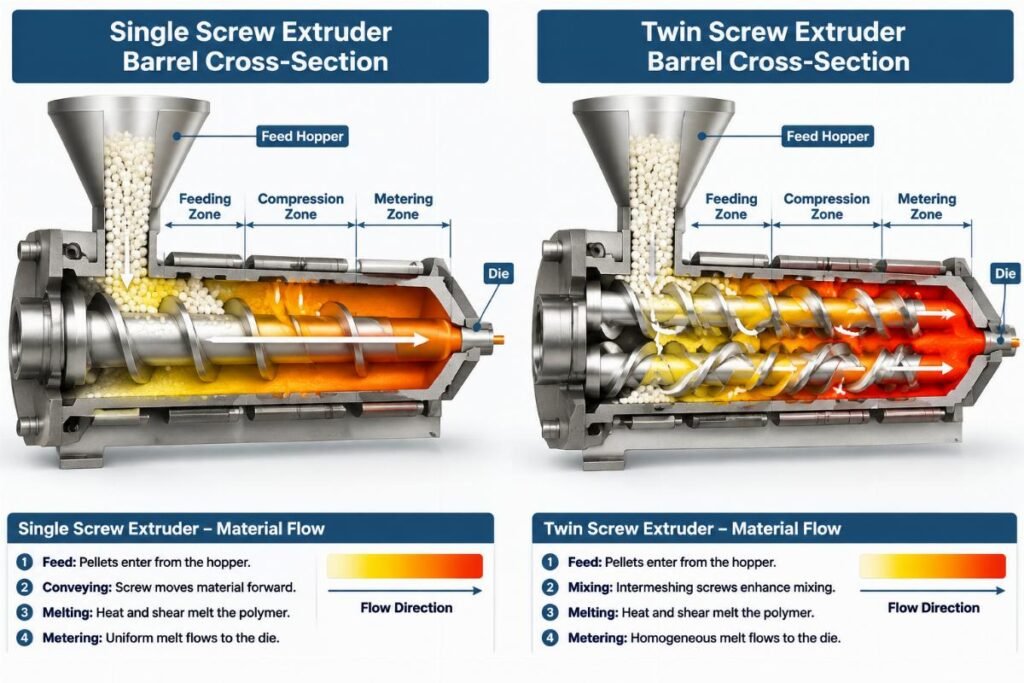
The fundamental difference lies in how the screws interact with the barrel and the material, which directly impacts mixing uniformity and self-cleaning capabilities.
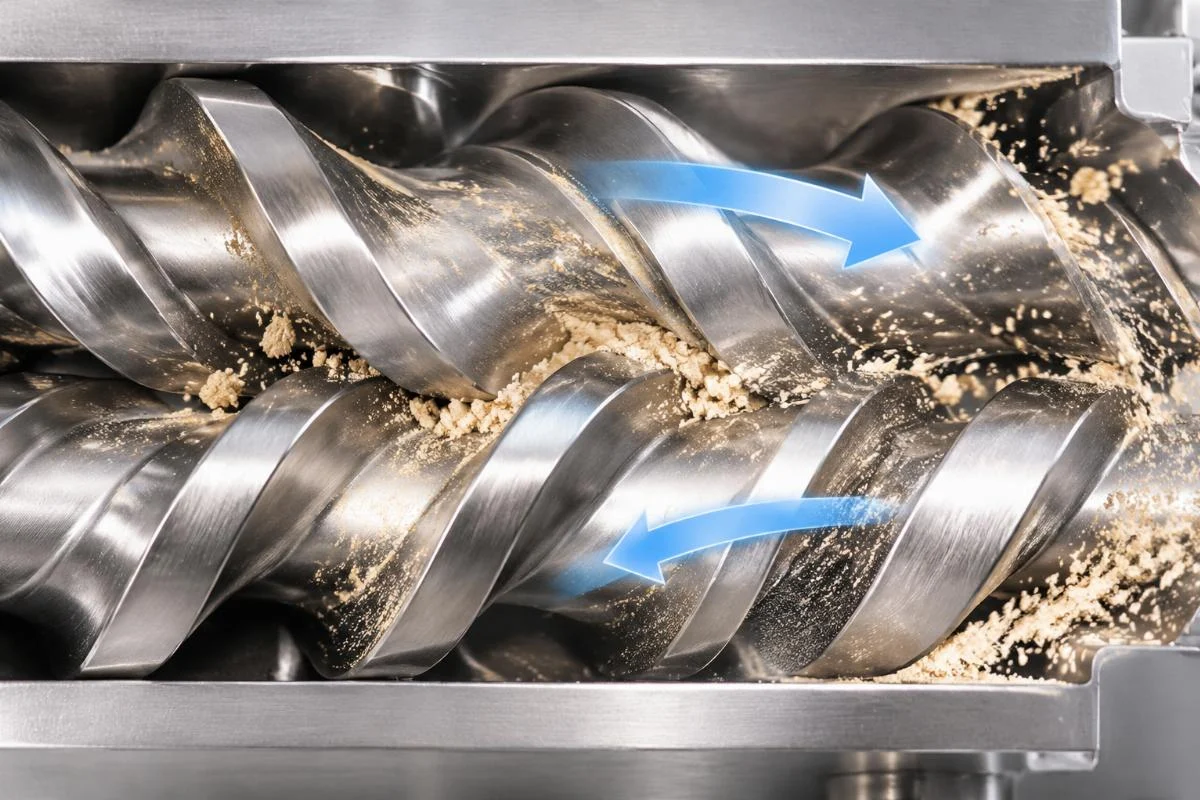
In a single-screw design, the material relies heavily on friction against the barrel wall to move forward. This drag flow is excellent for simple, abrasive-free grain dust but struggles with sticky, high-moisture, or high-fat inputs. Conversely, a twin-screw configuration features two intermeshing screws that positively convey the material. This positive displacement ensures that every particle is subjected to intense mechanical work.
Here is a structural comparison for a standard pet food extruder comparison:
| Design Factor | Single-Screw Extruder | Twin-Screw Extruder |
|---|---|---|
| Material Conveyance | Friction-dependent drag flow | Positive displacement intermeshing |
| Mixing Intensity | Basic shear, limited radial mixing | Intense distributive and dispersive mixing |
| Self-Cleaning Ability | Poor, prone to material buildup | Excellent, screws wipe each other clean |
| Recipe Flexibility | Low, restricted to high-starch bases | High, handles variable moisture and fat |
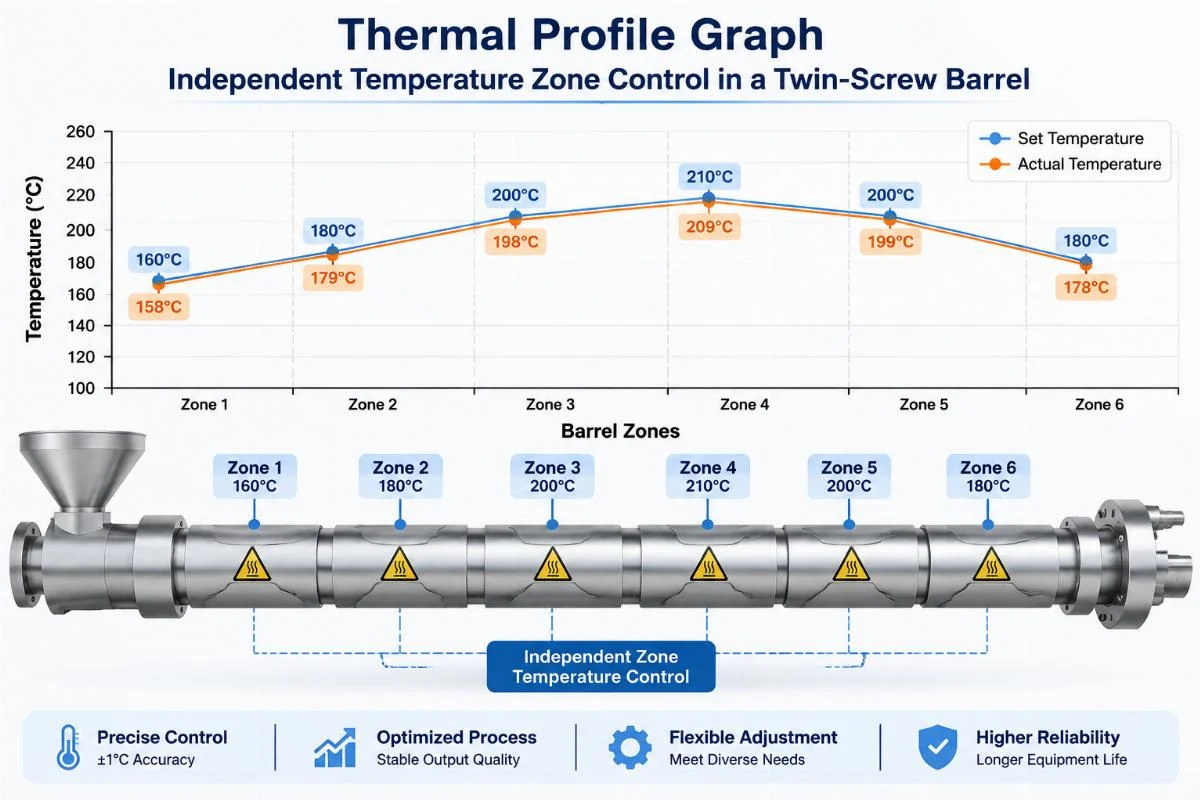
| Temperature Control | Coupled with screw speed | Independent barrel zone control |
A startup in South America initially tried to push a high-fiber, moderate-meat recipe through a basic single-screw setup. The material simply slipped inside the barrel, causing severe output fluctuations. They eventually had to abandon the recipe entirely. When selecting your equipment, you must evaluate the physical interaction between the screw elements and your specific ingredient viscosity.
The mechanical action inside the barrel is only half the story; the thermal management is equally critical for food safety and texture.
Why Does High-Meat Cat Food Require Twin-Screw Technology?
High-meat formulations demand precise shear and thermal management to achieve proper gelatinization without burning the proteins.
Fresh meat and meat meals introduce massive amounts of fat and moisture into the conditioning process. Fat acts as a lubricant, which drastically reduces the friction inside a single-screw barrel. Without friction, the material does not heat up adequately, leading to undercooked starch and poor kibble durability. A twin-screw extruder solves this by relying on mechanical shear rather than wall friction. The intermeshing screws forcefully knead the high-fat mixture, generating the exact specific mechanical energy required to cook the starches and denature the proteins evenly.
Furthermore, twin-screw barrels are divided into multiple independent heating and cooling zones. This allows operators to apply exact thermal profiles to different stages of the cook.
Consider a premium brand in Europe that wanted to launch a grain-free, eighty-percent meat kibble. Their initial trials on older friction-based equipment resulted in a product that disintegrated in water and had a severe bacterial survival risk due to inadequate core temperatures. By switching to a high meat cat food extrusion machine with modular screw configurations, they achieved the necessary lethality steps and a crisp, uniform expansion. The shear mechanics do the work that friction cannot.
Once the recipe is perfectly cooked, the focus shifts to the economics of running the line at scale.
How Do Production Capacity and Energy Consumption Compare?
While the initial capital expenditure for a twin-screw setup is higher, the operational efficiency and yield improvements drastically reduce the long-term cost per kilogram of premium kibble.
When evaluating a twin-screw vs single-screw extruder for cat food, buyers often fixate on the upfront invoice price. A single-screw machine might save a noticeable percentage on initial capital expenditure. However, this perspective ignores the hidden costs of waste. If a single-screw machine produces a high reject rate due to poor expansion or inconsistent sizing, the cost of rework, lost raw materials, and downtime quickly eclipses the initial savings.
Twin-screw systems are engineered for continuous, stable output across a wide range of capacities, from pilot runs to full-scale commercial production. The modular screw design allows for quick recipe changeovers, which is vital for contract manufacturers running multiple SKUs in a single shift.
| Operational Metric | Single-Screw Line | Twin-Screw Line |
|---|---|---|
| Initial Capital Cost | Noticeably lower | Substantially higher |
| High-Meat Yield Rate | Vulnerable to high fines | Robust and consistent |
| Recipe Changeover Time | Extended downtime required | Noticeably reduced via modularity |
| Energy Utilization | Inefficient on high-fat slips | Highly optimized shear heating |
A contract manufacturer in the Middle East was struggling with margin erosion because their single-screw line wasted nearly a fifth of its output as off-spec powder when running complex recipes. After upgrading their main line, the reduction in waste paid for the equipment differential within a few production cycles. The true cost of extrusion is measured in sellable product, not just kilowatt-hours.
Making the right choice requires an honest assessment of your product roadmap.
Which Extruder Should You Choose Based on Your Formula?
The decision must be anchored entirely in your target recipe’s meat content and complexity, not just your initial budget constraints.
If your business model relies exclusively on basic, high-corn, low-maintenance dry dog food or simple treat shapes, a single-screw extruder is a perfectly viable and cost-effective tool. It is robust, easy to maintain, and handles high-starch formulas with ease. However, the pet food market is rapidly shifting toward high-protein, grain-free, and functional treats. If your roadmap includes these premium categories, a single-screw machine will become a bottleneck almost immediately.
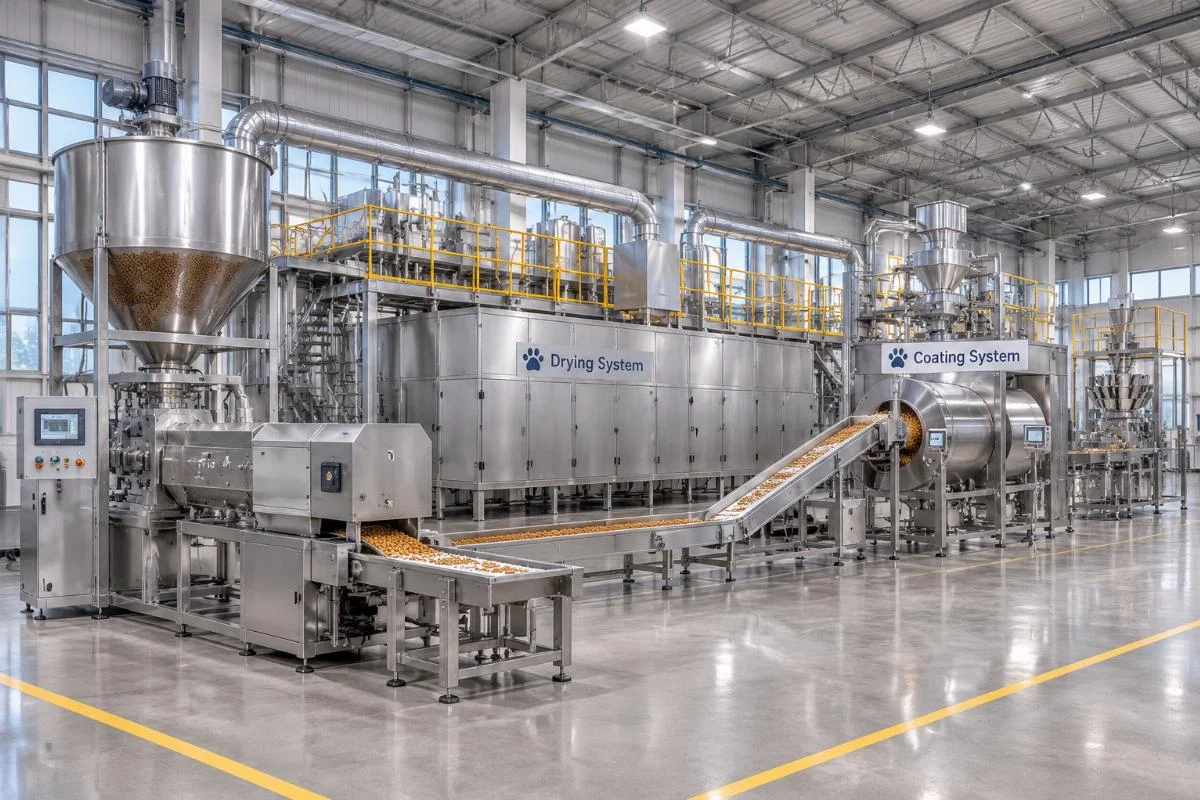
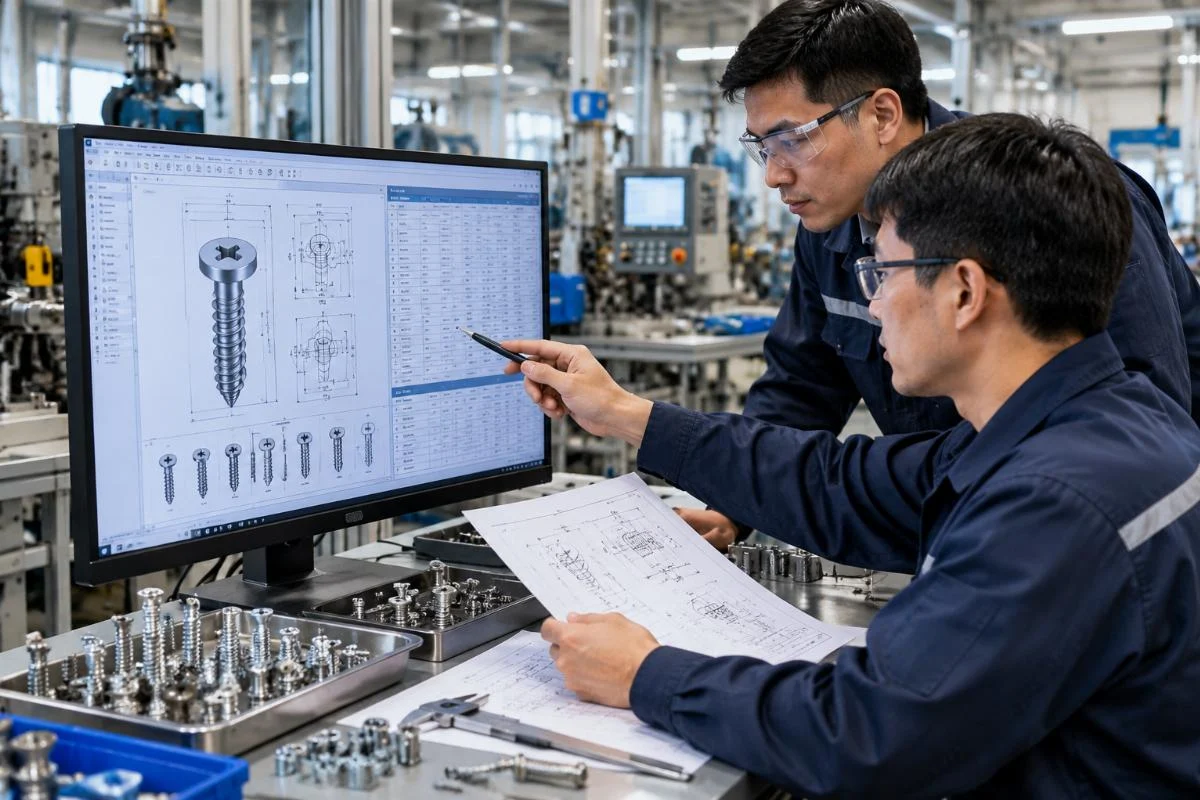
When you partner with a manufacturer for your production line, the consultation must start with the formula. Engineers need to map the specific mechanical energy requirements of your ingredients to the screw profile. Whether you are looking at a DS series twin-screw setup for complex wet-meat injection or an SLG single-screw line for basic kibble, the integration of the dryer, cooler, and flavor coater must match the extruder’s output dynamics. Proper installation and operator training ensure that the theoretical shear advantages are actually realized on the factory floor.
A startup in Southeast Asia initially wanted to buy the cheapest single-screw option to save cash. After reviewing their target formula of sixty percent fresh chicken, the engineering team advised a complete pivot to a twin-screw configuration. They provided full line design, formula development support, and on-site commissioning. The result was a stable, premium kibble that secured them major retail contracts. Choosing the machine is easy when the formula leads the engineering.
Conclusion
The mechanical reality of the barrel dictates the quality of the kibble.
A twin-screw vs single-screw extruder for cat food debate always ends with the formula. Single-screw extruders remain highly effective for basic, starch-heavy recipes where friction-based conveying is sufficient. However, the moment a recipe introduces high levels of fresh meat, complex fats, or functional additives, the superior shear, self-cleaning action, and independent thermal control of a twin-screw system become non-negotiable for commercial viability and product safety.
Machines Mentioned in This Article
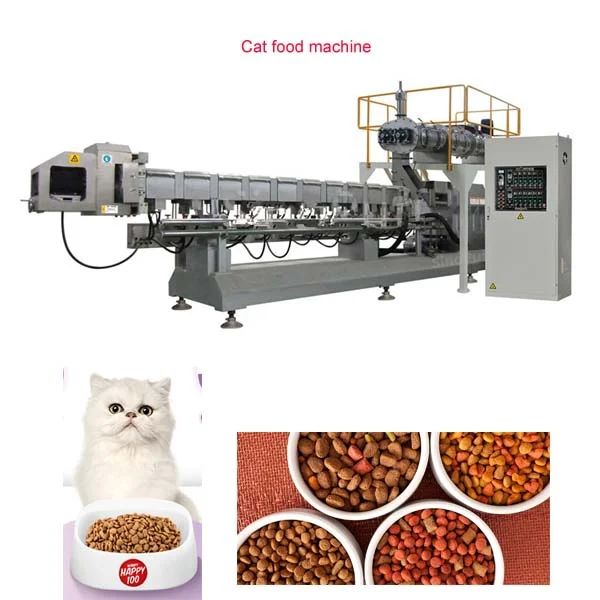
cat food machine
Cat Food Machine Manufacturer & Production Line
View Machine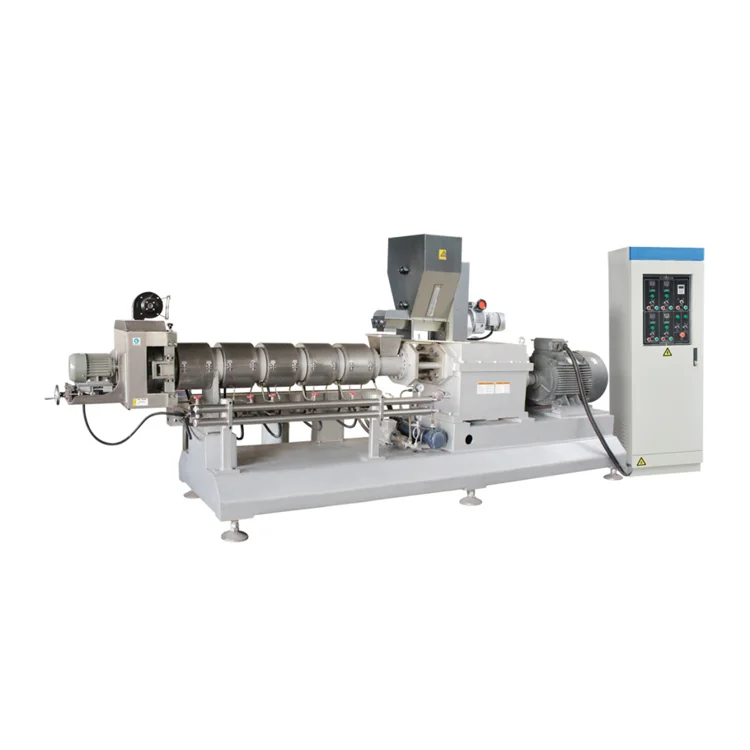
cat food machine
Pet Food Pellet Extruder Machine Manufacturer for Dog Cat
View Machine
cat food machine
Pet Food Processing Equipment Plant Manufacturer Dog Food
View Machine
cat food machine