Buying a cheaper single-screw machine for complex dental treats is the fastest way to burn through your raw material budget.
When evaluating the twin-screw vs single-screw extruder for dental chew production, the definitive answer is that twin-screw technology is mandatory for high-starch and high-meat formulas. The intense mechanical shear and independent barrel temperature zoning provided by twin-screw extruders guarantee proper gelatinization and uniform puffing, which single-screw machines physically cannot achieve without causing structural failure in the final product.
Years ago, I was on-site at a pet food facility in Monterrey, Mexico, overseeing an equipment installation. The plant owners decided to cut their initial capital expenditure by forcing a standard single-screw setup to process a complex dental chew recipe. The results were catastrophic. The machine simply lacked the shear force required to properly gelatinize the dense starch and meat powder blend. The extruded dental chews lacked the necessary expansion, and the final hardness was completely off. They shattered the moment a dog bit into them. The entire batch was scrapped, and the financial hit ended up costing far more than the equipment itself. Since then, transitioning into equipment consulting, I have watched countless buyers across Latin America and beyond repeat this exact mistake, trying to save on upfront costs only to bleed money through massive rejection rates. Understanding the true mechanics behind the twin-screw vs single-screw extruder for dental chew manufacturing is the only way to avoid this trap.
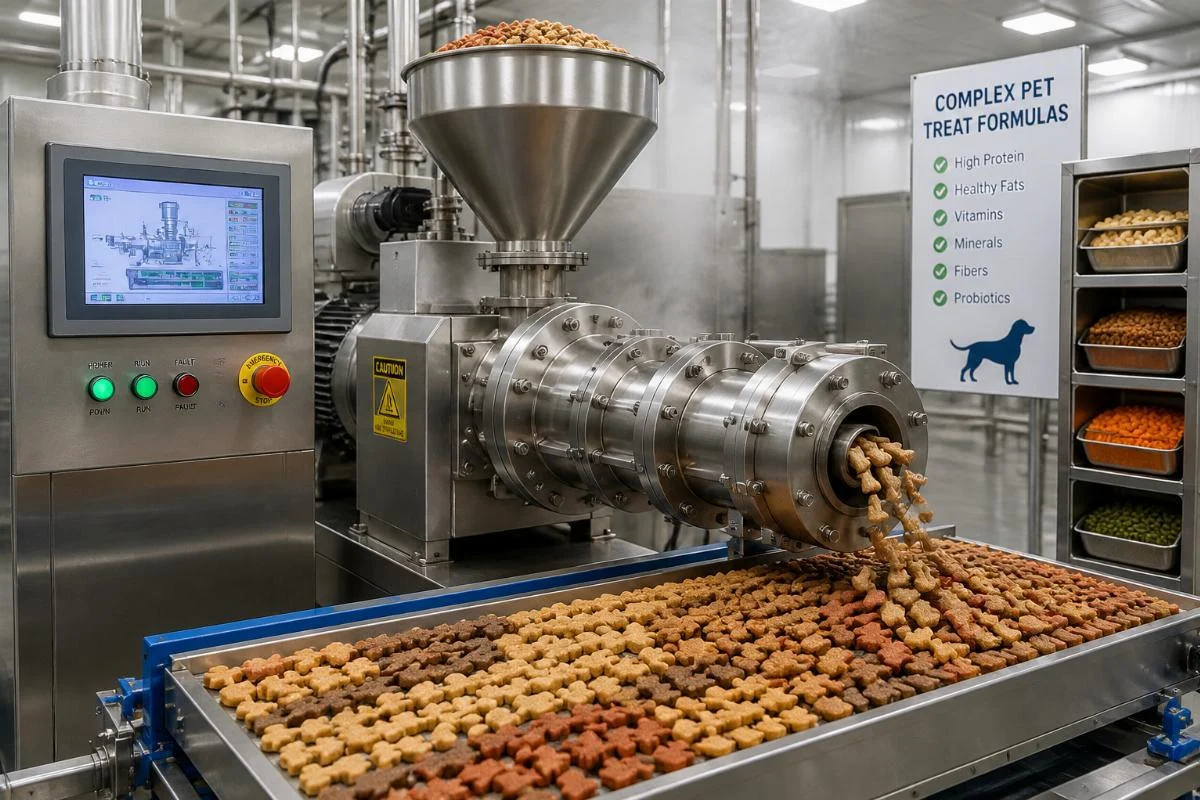
If you are scaling a treat line, the physics of your extruder will dictate your profitability, making the choice between these two technologies the most critical decision you will make.
Why Do Most Dental Chew Formulas Fail on Single-Screw Extruders?
The fundamental failure of single-screw machines in dental chew production stems from inadequate shear force, which prevents the proper gelatinization of high-starch and high-meat mixtures.
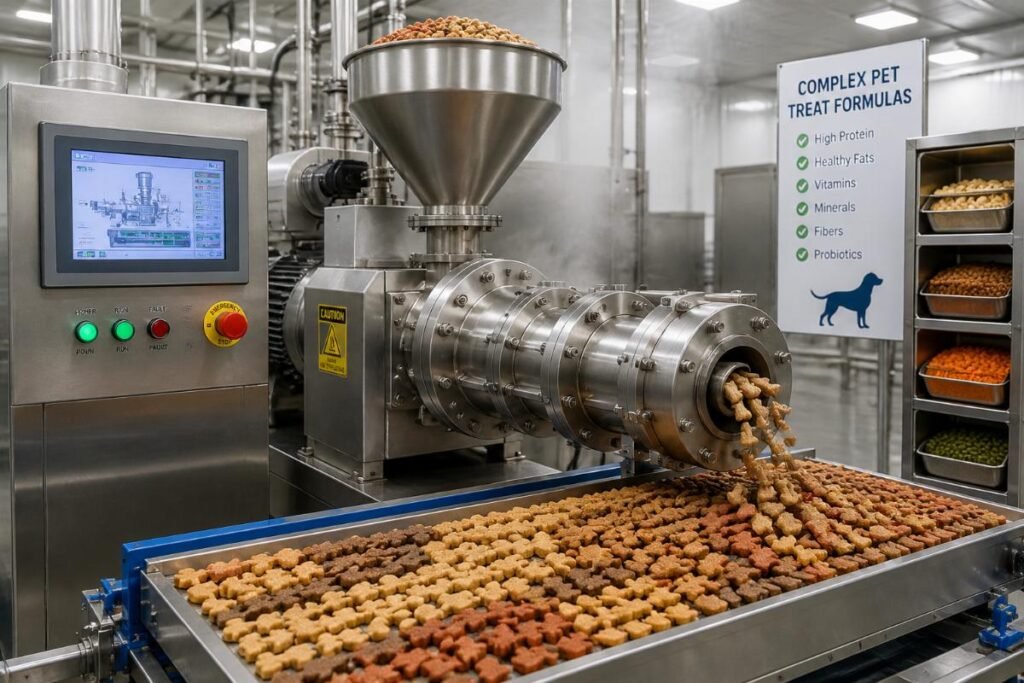
When you push a dense, protein-heavy formula through a single-screw barrel, the material relies heavily on drag flow and friction against the barrel wall. This creates uneven heating and massive dead zones where the starch never fully cooks. In contrast, a twin screw extruder for pet treats utilizes intermeshing screws that actively convey, knead, and shear the dough. This mechanical action generates the exact specific mechanical energy required to break down the protein structures and fully gelatinize the starches without burning the meat components.
| Processing Factor | Single-Screw Extruder | Twin-Screw Extruder |
|---|---|---|
| Shear Force Distribution | Uncontrolled / Highly Variable | Precisely Controlled / Uniform |
| Starch Gelatinization | Incomplete / Patchy | Complete / Homogeneous |
| High-Meat Formula Tolerance | Poor / Frequent Blockages | Excellent / Smooth Conveyance |
| Temperature Profile Stability | Vulnerable to Friction Spikes | Robust / Actively Cooled Zones |
A contract manufacturer in South America once tried to run a high-poultry dental treat on an older single-screw line. The friction caused localized barrel overheating, degrading the meat proteins and resulting in a burnt odor and a brittle texture that failed bite tests. They had to halt production entirely.
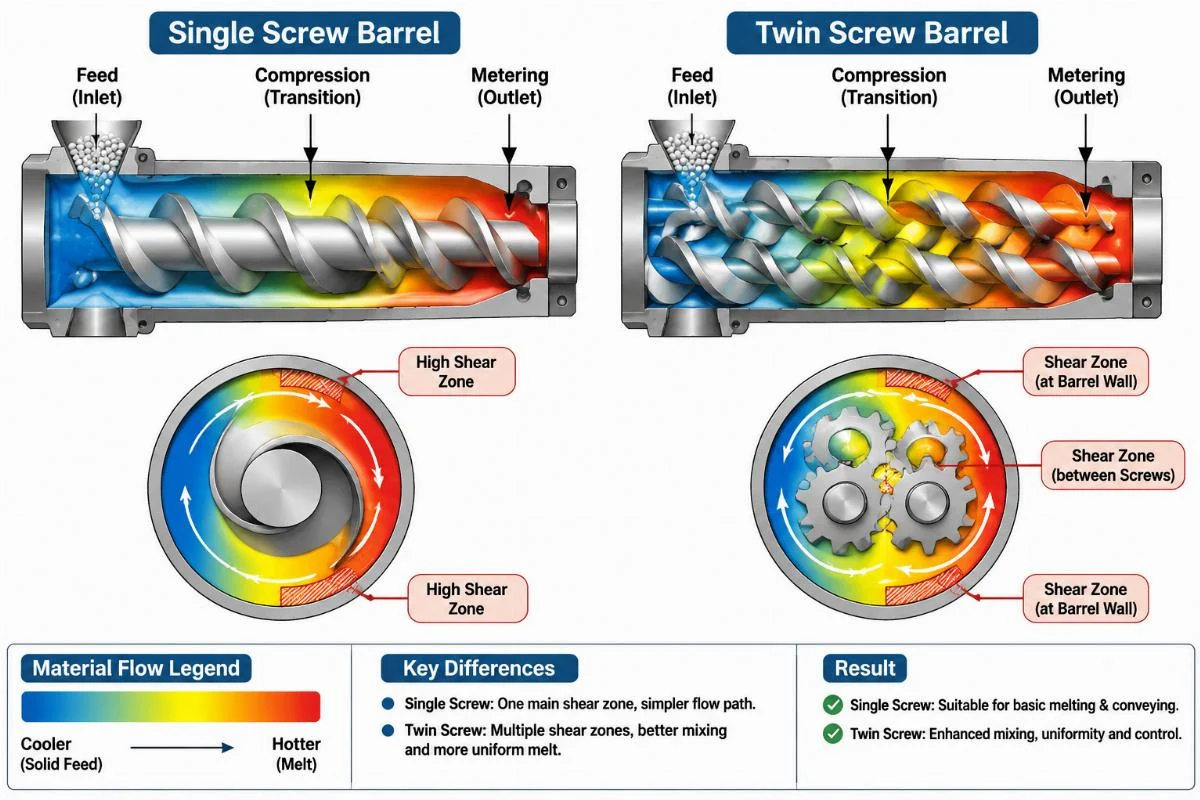
Without the positive displacement and intense mixing of co-rotating screws, single-screw machines simply cannot handle the rheology of modern dental chew recipes.
How Does Twin-Screw Shear and Temperature Control Ensure Dental Chew Quality?
Independent barrel zoning and intense mixing in a twin-screw setup guarantee uniform puffing and exact hardness, which are non-negotiable for dental hygiene efficacy.
Dental chews require a very specific texture: hard enough to scrape plaque, but resilient enough not to fracture into choking hazards. Achieving this requires precise control over the melting and pressure profiles inside the barrel. A twin-screw extruder allows operators to configure screw elements to create specific shear zones, followed by cooling zones to stabilize the melt before it hits the die. This level of control ensures that the puffing degree remains consistent across the entire batch.
Many assume that simply adjusting the screw speed on a single-screw machine can fix poor puffing. This is a dangerous misconception. Without the twin-screw shear profile, increasing speed merely generates destructive friction heat, degrading the nutritional value of the meat proteins rather than expanding the starch matrix.
A startup brand launching a new veterinary dental line struggled with inconsistent hardness. Every tenth batch was either too soft or too dense. After switching to a twin-screw configuration, the independent temperature control allowed them to lock in the exact thermal profile needed for their specific starch blend. The variation in their bite-test hardness metrics dropped noticeably, stabilizing their quality control process.
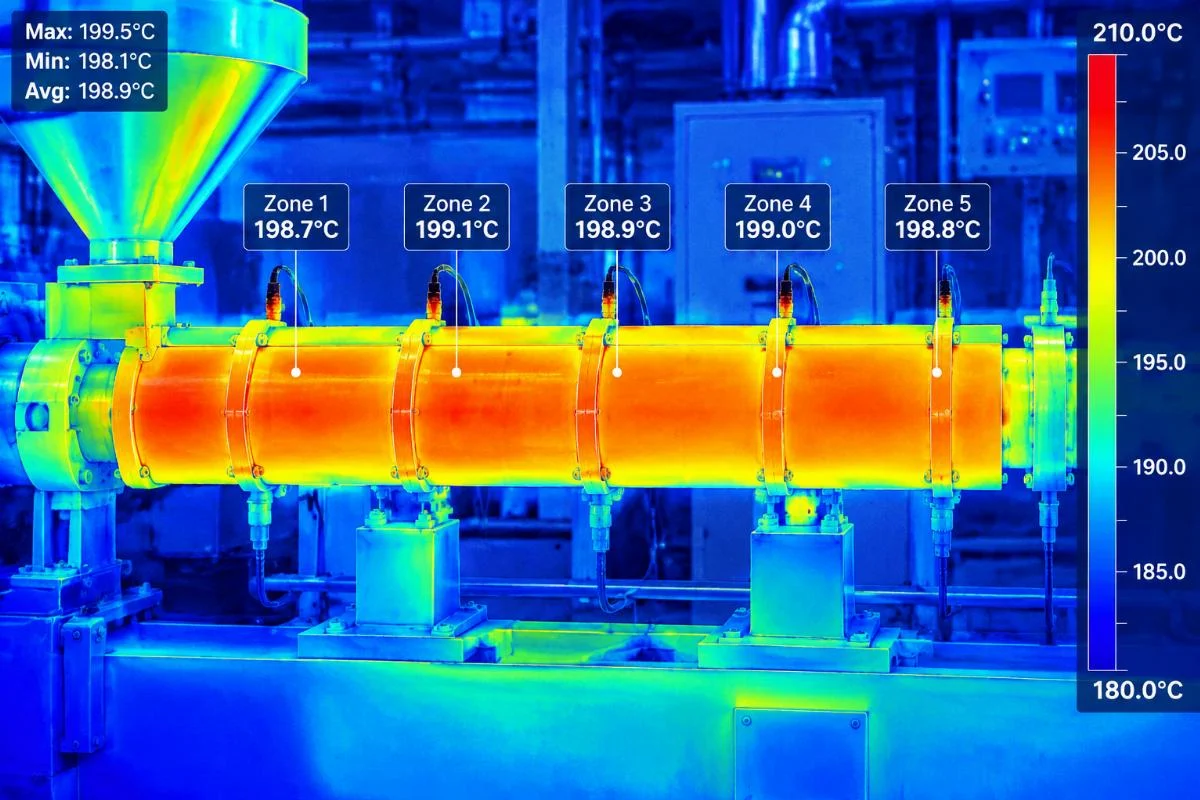
The ability to decouple shear generation from heating means you can cook the formula perfectly without relying on destructive friction.
What is the True Cost of Choosing Single-Screw for Complex Treats?
The initial capital savings of a single-screw machine are quickly erased by high rejection rates, excessive downtime for cleaning, and inconsistent product texture.
When evaluating the twin-screw vs single-screw extruder for dental chew projects, buyers often fixate on the purchase price. It is true that a single-screw machine carries a lower initial price tag. However, this view ignores the total cost of ownership in a complex manufacturing environment. Single-screw extruders require frequent stops for manual purging when changing formulas or dealing with burnt material buildup in dead zones. The scrap rate from inconsistent extrusion often forces manufacturers to run the line at reduced speeds just to maintain minimal quality, severely bottlenecking throughput.
Consider a mid-sized pet food startup that opted for a single-screw line to save on their initial budget. Within months, their batch rejection rate skyrocketed because the machine could not maintain a stable pressure at the die face. The cost of wasted raw materials and the labor required to clean the single-screw barrel between batches inflated their operational expenses massively. They ended up selling the single-screw unit at a loss and upgrading to a twin-screw system, realizing that the initial savings were an illusion.
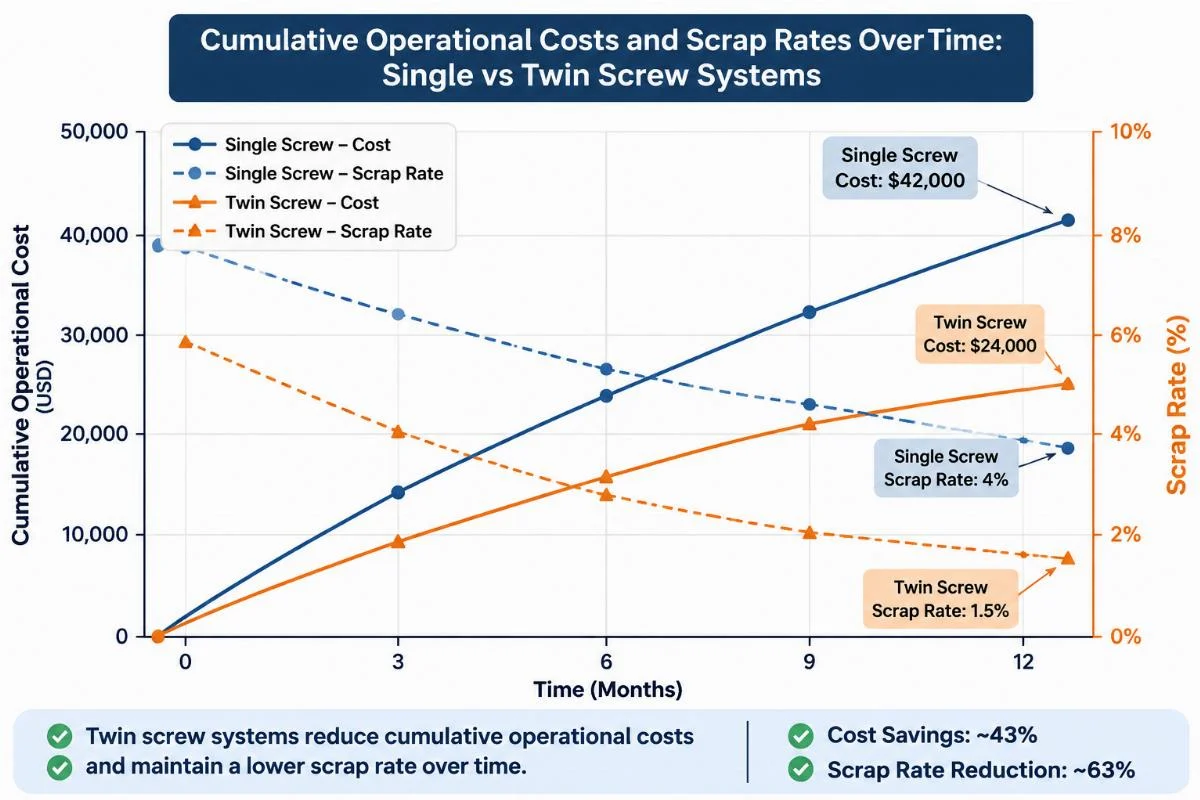
Paying more upfront for the correct technology protects your margins from the hidden costs of poor manufacturing consistency.
How to Select the Right Extruder Capacity for Your Dental Chew Line?
Matching your required throughput with the flexibility of a twin-screw system ensures scalable production and future-proof formula development.
Selecting the right equipment goes beyond just choosing the screw type; it involves aligning the machine capacity with your business goals. For dental chew production, you need a system that can handle everything from initial recipe trials to full-scale commercial runs without needing a complete hardware swap. The market offers various pet dental chew extrusion machine options, but scalability is the key differentiator for growing brands.
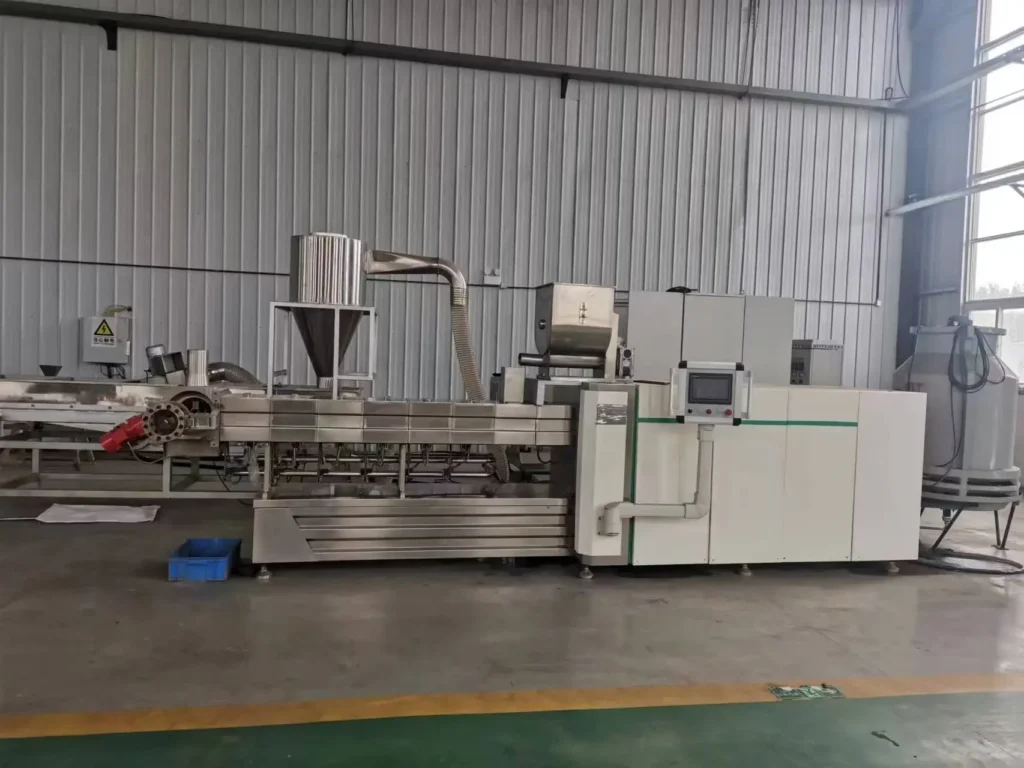
When planning a new treat line, capacity requirements typically range from pilot runs to full commercial output. Meiteng’s DS-series twin-screw extruders are engineered specifically to bridge this gap. Covering models from the DS32 up to the DS135, these machines handle capacities from 200kg/h to 2000kg/h, allowing you to start with a smaller footprint and scale up seamlessly. The DS-series provides the exact shear and thermal control needed for complex dental recipes, ensuring that the texture you perfect in the lab is perfectly replicated on the factory floor.
Beyond the hardware, successful dental chew production requires deep process knowledge. Meiteng provides full turnkey line design, from raw material intake to the final cooling and coating systems. More importantly, their engineering team offers formula development support and on-site operator training. This ensures your team understands how to manipulate screw configurations and temperature zones to master your specific dental chew recipe, eliminating the guesswork that leads to batch failures.

Investing in a comprehensive solution that pairs robust twin-screw hardware with expert formula support guarantees a smoother launch and a higher quality final product.
Conclusion
Choosing the wrong extrusion technology will inevitably compromise your product integrity and destroy your profit margins. The twin-screw vs single-screw extruder for dental chew manufacturing is not a matter of preference, but a strict requirement of food physics. Twin-screw systems provide the indispensable shear force and thermal precision required to gelatinize complex, high-meat formulas into safe, effective dental treats. By prioritizing processing capability over initial equipment savings, manufacturers ensure consistent quality, minimize scrap, and build a scalable foundation for their brand.
Machines Mentioned in This Article

cat food machine
Pet Food Processing Equipment Plant Manufacturer Dog Food
View Machine
cat food machine
Pet Food Production Line Manufacturer
View Machine
cat food machine
Dog Food Production Line Manufacturer
View Machine
cat food machine