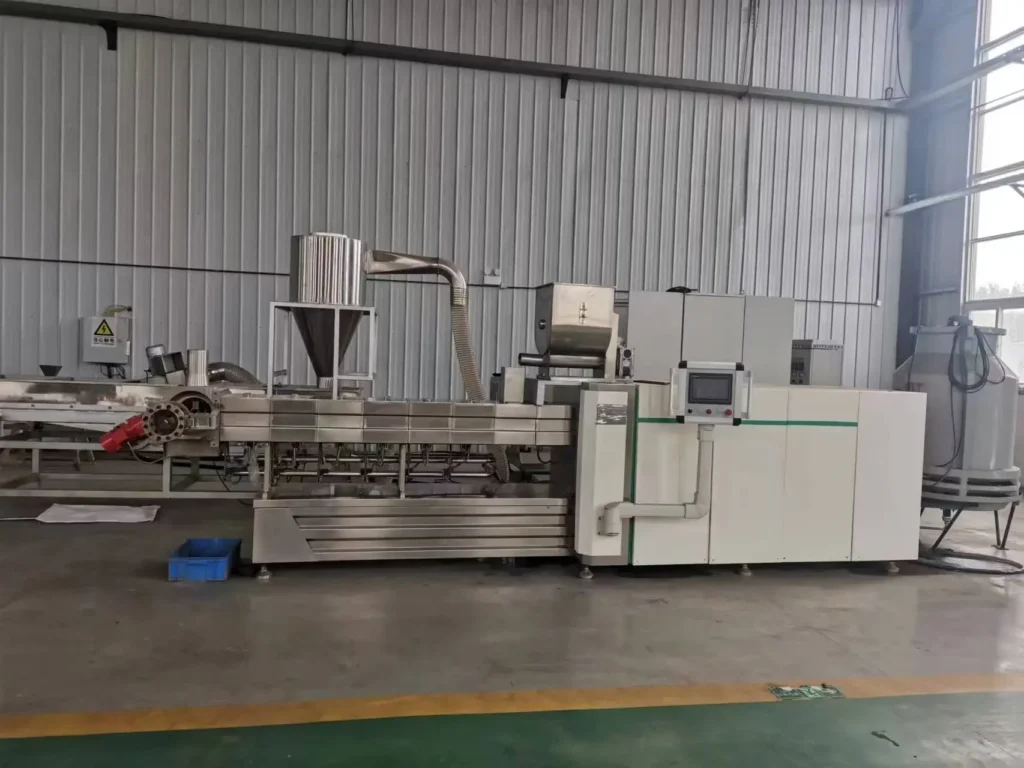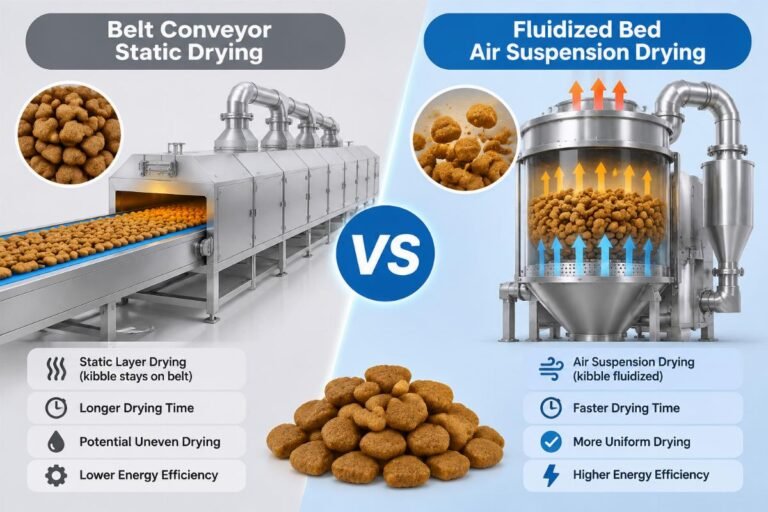
Premium European badges do not guarantee zero downtime; localized supply chains actually prevent catastrophic production halts.
When comparing Wenger and Chinese pet food extruders, the core reality is that modern Chinese twin-screw extruders now match the expansion ratios and gelatinization capabilities of premium European brands for standard kibble applications, while eliminating the hidden operational risks of imported spare parts delays and drastically reducing initial CAPEX.
I learned this the hard way when I was sourcing feed machinery for a mid-sized pet food plant in Jinan. Back then, we blindly trusted a premium European brand, assuming the massive price tag guaranteed flawless operation. That illusion shattered during a critical trial run when a custom ring die failed. Waiting weeks for imported spare parts nearly bankrupted our third-quarter production schedule, resulting in a mid-six-figure loss and delayed market entry. That headache pushed me to switch to the seller’s side, working directly with local twin-screw extruder manufacturers. I have seen too many buyers overpay for foreign brands while ignoring the rapid capability leap of domestic equipment. The debate over Wenger vs Chinese pet food extruders is no longer about basic extrusion physics; it is about supply chain resilience and total cost of ownership.

For startup owners and contract manufacturers evaluating Wenger vs Chinese pet food extruders, understanding the technical parity and supply chain realities is the first step toward optimizing your production line.
How Do Wenger and Chinese Extruders Compare in Core Capabilities?
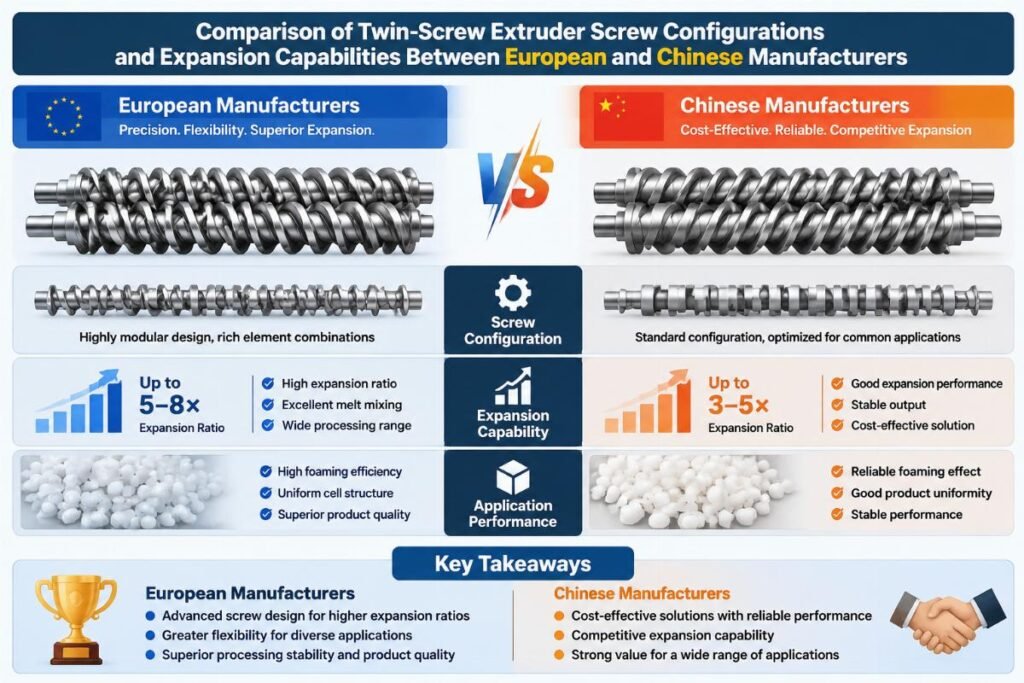
Chinese twin-screw technology has closed the gap for standard pet food kibble, achieving comparable specific mechanical energy input and wear resistance without relying on exclusive European patents.
The assumption that European brands hold exclusive extrusion technology is outdated. Modern Chinese manufacturers utilize advanced screw configuration flexibility and food-grade stainless steel construction that meets international hygiene standards. When analyzing Wenger vs Chinese pet food extruders, the physical extrusion parameters for standard dry kibble are virtually identical.
| Technical Parameter | Premium European Brand | Advanced Chinese Alternative |
|---|---|---|
| Screw Configuration Flexibility | Standard modular | Fully customizable modular |
| Specific Mechanical Energy Input | Controlled | Controlled |
| Wear-Resistant Alloy Lifespan | Extended | Noticeably extended |
| Food-Grade Material Certification | Certified | Certified |
| High-Meat Inclusion Capability | Robust | Robust |
A mid-sized plant in Southeast Asia recently faced this exact comparison. They needed to scale capacity for a high-meat inclusion formula. Instead of waiting months for a European build, they integrated a local twin-screw system. The local manufacturer provided on-site formula debugging, resulting in a commissioning timeline that was weeks faster than the imported alternative. The expansion ratio and gelatinization degree matched their previous European line perfectly.

When evaluating Wenger vs Chinese pet food extruders, the core capability for standard and high-meat kibble is no longer a differentiator; the advantage has shifted to integration speed and local support.
What is the Real Total Cost of Ownership?
Initial CAPEX is only the baseline; localized spare parts and formula support drastically reduce the hidden operational costs that plague imported machinery.
Most buyers focus solely on the purchase price, but the real financial impact of Wenger vs Chinese pet food extruders lies in the five-year total cost of ownership. A European machine might seem like a safe bet, but when a critical component fails, the localized supply chain of a Chinese manufacturer prevents catastrophic delays.
Consider the hidden costs of imported machinery:
- Spare Parts Lead Time: Waiting for custom ring dies or specialized barrels from overseas can halt production for weeks.
- Formula Debugging Costs: Flying in international technicians for every new product trial incurs massive travel and hourly fees.
- Downtime Penalties: Missing retail delivery windows due to machine downtime costs several times the savings from cheap maintenance.
A contract manufacturer in Latin America learned this after their imported line suffered a barrel wear issue. The downtime and expedited shipping for replacement parts wiped out the perceived premium quality advantage. Switching to a local alternative with integrated drying and coating systems saved them a massive portion of their CAPEX while ensuring that any future maintenance could be resolved within days, not months.
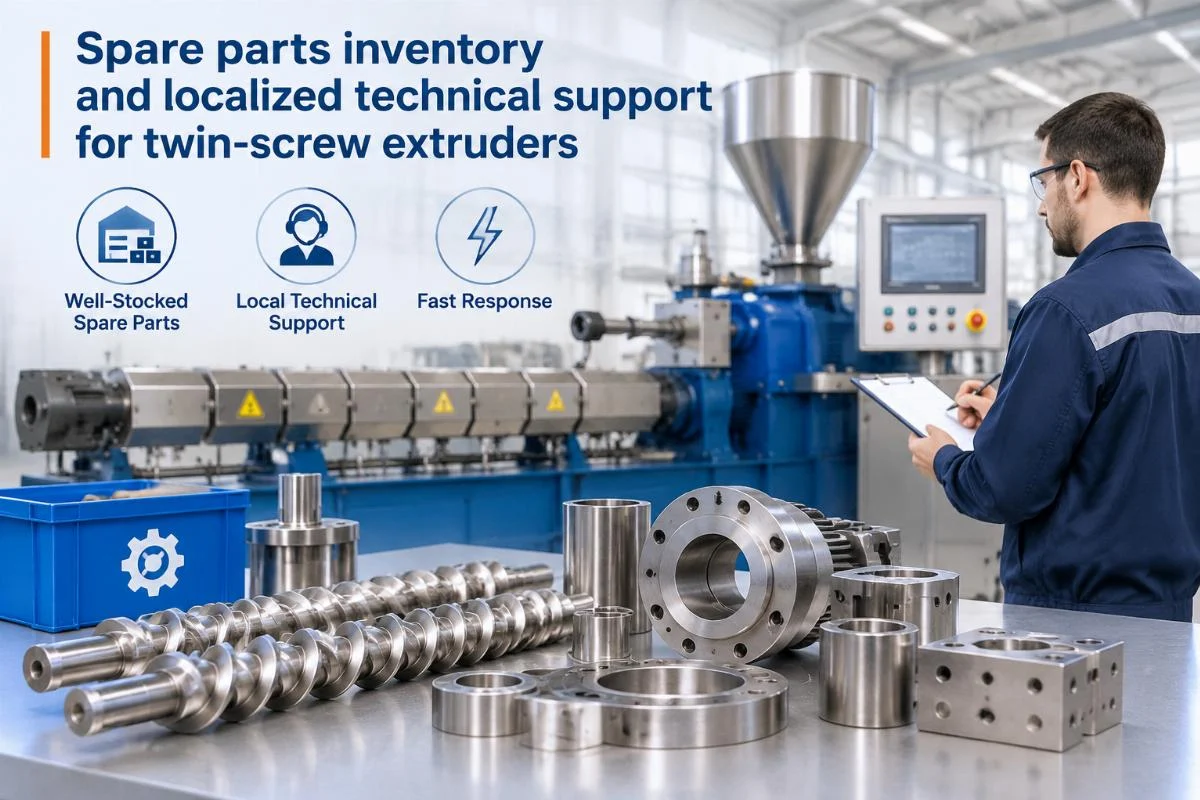
When calculating the true cost of Wenger vs Chinese pet food extruders, the elimination of imported spare parts delays and the inclusion of local formula support make the domestic alternative vastly superior for long-term operational stability.
How to Verify Chinese Extruder Quality Before Buying?
Focus on food-grade stainless steel construction, international certifications, and verifiable on-site commissioning records rather than relying on brand badges or marketing claims.
Navigating the market for Wenger vs Chinese pet food extruders requires a strict verification process. The market is flooded with low-end workshops, but professional manufacturers separate themselves through verifiable engineering standards and transparent testing protocols.
To verify quality, buyers must demand the following:
- Material Traceability: Insist on documentation proving the use of food-grade stainless steel for all contact parts.
- International Certifications: Verify valid CE and ISO certifications, ensuring the machinery meets global safety and hygiene standards.
- Commissioning Records: Request video evidence or client references of on-site formula development and installation for similar product lines.
- Screw Metallurgy: Ask for detailed specifications on the wear-resistant alloys used for the screws and barrels.
A startup in the Middle East nearly purchased a cheap, uncertified line that lacked proper sanitary design. By demanding CE documentation and visiting a local manufacturer’s facility to witness a full-scale trial run using their own raw materials, they avoided a disastrous investment. The local manufacturer’s ability to provide turnkey line design, from raw material intake to integrated drying and flavor-coating, proved their engineering maturity.
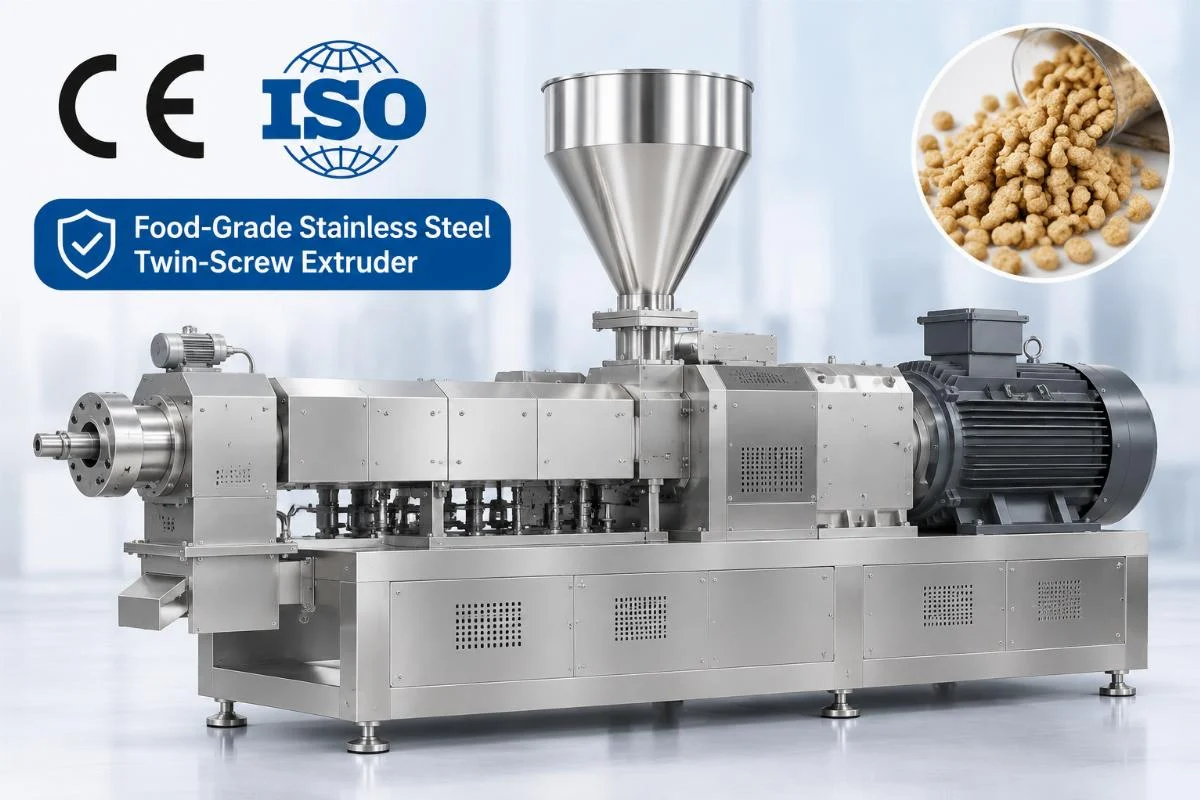
When comparing Wenger vs Chinese pet food extruders, rigorous verification of material standards and turnkey integration capabilities ensures you select a reliable partner rather than a risky gamble.
Which Applications Still Require Premium European Brands?
Highly specialized therapeutic diets or ultra-high temperature short time processes may still necessitate premium European engineering, but standard pet food production does not.
While the gap has closed for the vast majority of applications, there are niche scenarios where the debate over Wenger vs Chinese pet food extruders still leans toward the premium side. Ultra-high temperature short time extrusion for specific therapeutic diets, or highly sensitive nutritional bar formulations requiring micron-level precision in dosing, might still benefit from the legacy engineering of top-tier European brands.
However, for the core market—dry kibble, treats, aquatic feed, and textured vegetable protein—Chinese twin-screw designs have achieved complete parity. The specialization required for niche medical diets represents a fraction of the overall pet food market. For the overwhelming majority of startup owners and contract manufacturers, the agility, cost-effectiveness, and localized support of Chinese manufacturers offer a far more practical solution.

When evaluating Wenger vs Chinese pet food extruders, reserve premium European imports for ultra-specialized medical diets, and rely on advanced Chinese alternatives for all standard, high-volume commercial production.
Conclusion
The extrusion capability gap has closed, making localized supply chains the true differentiator in modern pet food manufacturing.
Buyers no longer need to risk catastrophic downtime or overspend on foreign badges to achieve premium kibble quality. By prioritizing verifiable engineering standards, food-grade construction, and turnkey integration, manufacturers can secure reliable, high-yield extrusion that protects both their margins and their production schedules.
Machines Mentioned in This Article

cat food machine
Pet Food Extruder Machine Manufacturer Production Line
View Machine
cat food machine
Dog Food Extruder Machine Manufacturer for Pet Food Kibble Making Line
View Machine
cat food machine
Automatic Pet Dog Food Extruder Making Machine Line
View Machine
cat food machine